
Saturday Night Live

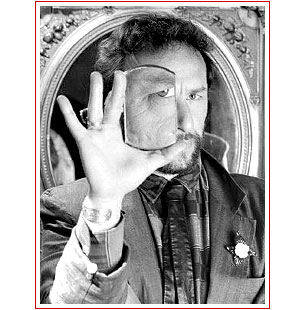
Joel-Peter Witkin

Is his darkly imaginative photography an intellectually camouflaged freak show or high art?

“We often look away when confronted with imagery of the sick, the deformed, the dead and dying, but in the nineteenth century there was a brisk trade in such photographs of “the other”; the circus freak, the bearded lady, Siamese twins, and so forth were popular subjects to be collected and traded. To the extent that we worry about exploitation of bodies which do not conform to the norm or suffer from some affliction, our reticence is humane; but to the extent that we refuse to confront the human condition, it is pathological.”

– William A. Ewing

“The Body: Photoworks of the Human Form”

- – - – - – - – - – - -

True perverts are born, not made.

Those who are truly bewitched by a good/evil power play in their sexuality, those who have a deep impulse to stick pins in their scrotums and hooks in their nipples, or be mummified, tied up and caned by mean women in tall boots, are slightly different from other people.

Those who have tried to embrace a more “kinky” sexuality than the one they naturally possess and found themselves lacking the vital chromosome necessary know what I mean. To the so-called normal brain of the average sexual pedestrian, the black latex, hardware and dire theatrics seem more campy and silly than erotic.

The true perv, however, needs and believes in a fearful, deviant badness and hellishness in sexuality, and responds to it with all the mordant, ritualistic seriousness and ceremony of a Black Mass. If you have ever watched someone handle a pair of spike-heeled shoes with trembling awe, while you giggled uncomfortably, you know what I’m talking about.

I believe that Joel-Peter Witkin is a true, born pervert - in the visual sphere that is. What his sexual predilections are I wouldn’t know. Witkin is a photographer who has been mistaken for a grave robber, whose works were described by Marina Isola in TheMet as “Part Hieronymus Bosch, part ‘Texas Chainsaw Massacre.’”

He has been the reigning king of deviant imagery — indeed, the thinking Goth’s favorite artist — since he came to public acclaim in the 1980s with his delicately posed corpses and bravely naked mutants, floridly arranged in beaten-silvertone, antique nightmare-scapes.

Witkin’s visual world evokes a Byronesque mortician’s playroom from some particularly grim 19th century fairy tale, or a weird and ghastly accident of the arts that everyone would sooner put behind them — the Renaissance, Picasso, Miro, Mapplethorpe and Buquel after a horrific spin through a large blender; everybody’s legs and arms missing, recognizable styles poking through among the tattered meats, genitals and mercury.

Joel-Peter Witkin tore his way out of the womb on Sept, 13, 1939, in Brooklyn, N.Y. His father was a Jewish glazier, his mother a Roman Catholic who worked in a DDT plant. His parents were unable to transcend their religious differences and the two divorced when Witkin was young, the boy remaining with his mother. He attended grammar school at Saint Cecelia’s in Brooklyn, and went on to Grover Cleveland High School.

In his 1998 book “The Bone House,” Witkin claims that his unique visual sensibilities began to churn when, as a small child, he witnessed a terrible car accident in front of his home, in which a little girl was decapitated. He recalls her head rolling to his feet, her dead eyes staring upward. Witkin also cites urban crime photographer Weegee as an early influence.

In an interview with Michael Sand that appeared in World Art in January 1996, Witkin credited his father for having instilled his own latent photographic ambitions in his young son:

He took me aside and showed me some clips from Life magazine or Look magazine, the Daily Mirror, or the News (he wasn’t a New York Times reader). I was about 5, and I knew when he was showing me these photographs that he was telling me he couldn’t do this, but maybe there was a chance that part of him could, somehow, through me. Without saying it, I looked at him, and I knew, and he knew, that I could try.

In his 1995 book “Witkin,” the photographer writes: “I began making photographs when I was sixteen. That same year, Edward Steichen selected one of my photographs to be included in the permanent collection of the Museum of Modern Art, New York. That was the beginning of a life devoted to photography.”

After high school, Witkin got jobs that would enable him to learn the nuts and bolts of photographic technique. He worked as a color photography printer until he enlisted in the Army in 1961, where he served as a technical sergeant and worked as a photo technician and a photographer, documenting assorted military accidents, until 1964.

After the Army, he returned to New York and worked as a professional freelance assistant for technical, medical and commercial photographers. He earned a BFA from Cooper Union on the G.I. Bill, studying sculpture, and received a fellowship in poetry from Columbia University. In 1974, Witkin was awarded a CAPS grant in photography through the New York State Council on the Arts.

In 1976, Witkin went on to pursue his graduate and postgraduate work in photography at the University of New Mexico at Albuquerque. While there, he received a Ford Foundation grant in 1977. And in 1978 he married his wife, Cynthia, a tattoo artist. The two live in Albuquerque with their son, Kirsten-Ahanu Witkin, and Mrs. Witkin’s lover, Cynthia Cook, and another woman by the name of Barbara Gilbert, whose apparent function is to care for the post-nuclear family’s three dogs.

The ’80s, in their naively serious, death-rock demimonde tone, were good to Joel-Peter Witkin. He was awarded a flurry of NEA grants in 1982, 1984 and 1986 and received his MFA in 1986 from the University of New Mexico.

Over the years he’d developed an involved and zealous process for making his prints, which resulted in the silvery, found-antique quality his work became known for. Witkin scratches the negatives, then prints them through tissue paper to fuzz the texture of the image, giving the prints a specifically blurry, “timeless” quality. He then mounts the image on aluminum and applies pigments by hand. Finally, he covers the photographs with hot beeswax and reheats them, then cools and polishes. With this procedure, Witkin, a rabid perfectionist, produces an average of 10 of his coldly luxurious finished prints in a year.

Witkin’s engrossing work paid off, and he continued to receive many of the best grants and awards the art world had to offer: In 1988, he received the International Center of Photography Award and the Distinguished Alumni Citation from Cooper Union; in 1990, the French minister of culture awarded Witkin the Chevalier des Arts et des Lettres; in 1993 he earned a residency in France through the NEA and the American Center in Paris. What’s more, he had the unquestioning reverence of all the ultra-cool, black-clad hipsters and morbid dirge-rock bands.

Witkin’s subject matter is, in fact, atrocity itself, or anyone who looks like a victim of it, by accident or unfortunate birth. In 1985, he ran this advertisement to solicit models, asking the following people to contact him:

Pinheads, dwarfs, giants, hunchbacks, pre-op transsexuals, bearded women, people with tails, horns, wings, reversed hands or feet, anyone born without arms, legs, eyes, breast, genitals, ears, nose, lips. All people with unusually large genitals. All manner of extreme visual perversion. Hermaphrodites and teratoids (alive and dead). Anyone bearing the wounds of Christ.

Witkin succeeded in reaching so many amputees, pre-operative transsexuals and other pinnacles of unseen society as modeling fodder that in 1989 he added to his original request: “women whose faces are covered with hair or large skin lesions willing to pose in evening gowns. People who live as comic-book heroes, boot, corset and bondage fetishists. Anyone claiming to be God. God.”

God is a big theme for Witkin. Like many good perverts, Witkin seems to suffer from what I like to call “Catholic burn.” As a practicing Roman Catholic, he appears to be obsessed with the fetishizing of everything nasty on the fringes of Jesus’ world, of all the “other” stuff ordinarily shunned by suburban philistines and the religiously repressed: freaks, violated corpses, fists up the ass, bondage, etc.

But Witkin routinely insists it’s not for prurient reasons. Oh, no. His work is a product of his higher religious leanings: “The images tended to repel and shock. Yet, I believe they possessed tender and enlightened qualities which were strangely moving … the figures were always isolated because the Sacred is always beyond nature, beyond existence.”

As Witkin explained to the Seattle Times in 1994, “My work shows my journey to become a more loving, unselfish person.”

While art-pop intellectuals devoured his work gleefully as an excellently trendy, shocking blackboard to wank long-haired Lacan/Foucault-inspired postmodern critiques over, the Christian Coalition was unmoved by Witkin’s search for the divine. Objecting to a $20,000 NEA grant Witkin received in 1992, NEA foes featured the Witkin print “Testicle Stretch With the Possibility of a Crushed Face” in their 1993 anti-NEA protest in Washington.

Fans celebrate Witkin’s ability to make the ugly beautiful, and champion his work as an explosion of mankind’s refusal to confront and embrace the abject. Others, like 1993 Artforum contributor Keith Seward, argue that Witkin

often claims to see himself as “loving the unloved, the damaged, the outcasts,” and such unconditional acceptance characterizes his work in general: like St. Francis of Assisi, who drank the pus of lepers in order to overcome his repulsion of them, Witkin is not a rubbernecker, an exploiter or a pessimist, but one who says Yes to everything questionable, even to the terrible. Why would you want to say Yes to death, dismemberment, or any of the other staples in Witkin’s banquet of the bizarre? It’s sort of like an extreme form of multiculturalism, a respect for that which is drastically foreign to you, even terrifying.

Germano Celant, who was curator of contemporary art at the Guggenheim Museum in New York in 1995 when Witkin had his retrospective, explains the photographer’s importance with the following:

The formless and the deformed, the base and the terrifying must be brought back into the light. In this sense Witkin works with Arbus and Robert Mapplethorpe to ensure that the notion of “cruelty” is no longer hostile but is transformed into a cognitive nucleus purged of its dark and negative connotations.

Despite all controversies, and despite the fact that Witkin’s photographs came to the art world at a time when works of photography were rarely permitted the mantle of “high art,” Witkin prints wormed their ways into the permanent collections of the world’s foremost museums, among others, the Bibliothhque Nationale in Paris, the San Francisco MoMA, Amsterdam’s Stedelijk Museum, the New York MoMA, the Whitney.

Witkin’s greatest artistic accomplishment may be the deal he was able to work out with a hospital morgue in Mexico City, which allowed him to sift through its daily supply of anonymous corpses picked up from the streets and cavalierly manipulate them into “art.” “I am no longer the helpless observer,” explains Witkin, “but the objectifier who chooses to share the ‘hell’ of his confusion visually, rather than confront the quality that distinguishes a vital and functional being from a dead body.”

The World Art interview with Sand fully demonstrates Witkin’s unflinchingly ghoulish approach to becoming a more loving, unselfish person: He discusses a time when he stayed a few extra days in Mexico City, because he “wasn’t getting the bodies [he] wanted.” Witkin was able to convince the men from the morgue to not simply throw the bloated corpses onto their faces in the truck, because this routinely broke their noses, making them unsightly.

Witkin described one of the dead men brought in on the last day as “a real punk, nothing good visually.” But he used him anyway: “For some people, the evidence of their spirit is either there or not there in death. Nonetheless, when I saw this last guy, I said, ‘I want him.’ I’m in this room with a dead guy. I’m propping him up, and I put a fish in his hand as a kind of prop, and I’m checking the lighting. I take a few photographs. And as soon as he’s being autopsied, he starts changing! … I turn to my Mexican translator, who is a very, very bright man, and we have seen the same thing. He says, ‘He’s being judged. This guy is being judged right now.’”

“Suddenly, he’s not a punk any more. He’s gone through this kind of transfiguration on the table, on the autopsy table. I say to the technician, ‘Don’t wash him down. I want all the blood from the suturing.’ When they were carrying the brain, I said, ‘Look at this brain — it may have contained thoughts of evil, but however he was judged, he is now a different presence!’”

Witkin goes on to claim the corpse’s fingers had miraculously grown an extra 50 percent, as if he were “reaching for eternity.”

In another Mexican morgue episode, Witkin described how he created “Feast of Fools,” one of his more fetching still-life prints, which features a dead baby slumped amid fruity abundance. He told Sand of his horror upon discovering a drawer full of bodily fluids with severed arms, legs, eyes, penises and little children floating around in them. “Because the bureaucracy is so incredibly corrupt, no one had said ‘get this stuff out of here.’ No one had the balls to do it. That time I did say, ‘Why am I doing this?’”

But Witkin’s divine mission prevailed over his outrage, and he liberally utilized the drawer’s contents. “I did have the belief that there was a purpose to my being there,” he concludes, “that I could make something beautiful.”

Witkin is undeterred by naysayers, maintaining that those who don’t like his work in actuality don’t understand it. Says Witkin, “Those who understand what I do appreciate the determination, love and courage it takes to find wonder and beauty in people who are considered by society to be damaged, unclean, dysfunctional or wretched. My art is the way I perceive and define life. It is sacred work, since what I make are my prayers.”

You can imagine Joel-Peter Witkin’s bloated statements explaining himself springing from the mouth of Dieter on “Saturday Night Live”: “I am a dark poem. When every moment is transcendent, then images presented here will be seen as they truly were, photographs from a time resplendent in the atrocity we once called life. Touch my monkey.”

In “Bone House,” Witkin speaks of his realization in adulthood that his camera was, in fact, his response to the child’s decapitated head that allegedly rolled into his childhood, that his camera is, in fact, “Her face!” (Mordant psycho-chord from echoey church organ. Bats flying out of belfry.)

Witkin, like a perfect ’80s persona-star, never drops the mask of Serious Diremaster, never lets on whether he is giggling at how he has been able to peddle a titillating rubberneck image as “high art” via his considerable talent. But he became king of his artistic niche: those who wholeheartedly embraced body modification and other outlaw alterations of kinkiness that the late ’80s and early ’90s wrought on the human body. All the kids with five pounds of metal on their lips and eyebrows who’ve stuck their dicks in dirty animals of the night to find that cool, tar-colored “truth” will always put a Witkin on their Web site, now and forever, because they don’t drop their masks, either.

For all of his nonstop posturing, at odd blasts in the Witkin collection there are simpler pieces that I feel actually pull off his higher intentions better than the more sensational, Rococo works.

“Baccante,” a photo of a woman from the back, leaning, with one shriveled arm and one large arm, next to a distorted skull, asks the viewer whether deformity is only a question of perspective: Is her arm shriveled, or is it just photographically distant? Like cubist works and those of Pablo Picasso, Witkin’s simpler images have less a feeling of deformity than of an illumination of the non-omniscient gaze of the viewer: You don’t see all sides, you can’t see everything, so don’t judge.

Much of his work, however, despite his darkly fertile imagination and masterful printing process, can be labeled a fairly straightforward freak show, with Witkin utilizing little more than a mask and the nudity of the abnormal subject as a means of transporting his lofty message — a message all too easily inferred as purely prurient.

The work is beautiful enough to be “real art,” but it is still an intellectually camouflaged, carny peep show of the most debased and obvious water. You can put as many flowery wreaths and as much gorgeous photo technique as you want around a dead baby, and it will be art, yes, but it is still a dead baby. It is still a sideshow for the morbidly curious, regardless of how much Witkin may drone on about the deeply religious quality of his work.

In my angrier years I thought Witkin’s photographs were a great metaphor for everything, especially Hollywood: “Look, at first sight, it is a sumptuous banquet, an abundant horn of plenty. Look closer, it is in reality a human arm, being eaten by a one-legged dog, etc.”

Now I say Joel-Peter Witkin’s photographs are pretty, a visually avant-garde and “hep” take on the standard Pottery Barn timelessness, a good post-punk twist on shabby chic. Yes, a Witkin would look perfect on my wall right over my zucchini-green velvet love seat. Ooh! Daring.

I’ve always liked his photographs; I like to look at them, the same way I used to like to look at the RESearch “Freaks” book, or read the National Enquirer or listen to Bauhaus. Now, however, like these other comestibles, they have become dated. Witkin has sifted down into my consciousness as being essentially the Anne Rice of photography, certainly deserving of his place on the shelf with all of the other fine staples of Goth-style shock-rock — Nine Inch Nails, Michael Gira and the Swans, all that nasty Baudelaire yadda yadda, black-clad ultra-serious teenaged Todesangst.

Ultimately, all that careful work just looks trivial to me, silly, lowbrow and campy, because of the hard-headed perversion of the subject matter. I laugh at Witkin pictures the same way I laugh at pictures of my former self in all that eyeliner I used to wear and those pointy “Cure” boots with the skull buckles.

We all need our fright-wig period, but only the most fearful artists feel such a heavy, pounding need to express adolescent, in-your-face ideas about life, death, mortality and culture for the entirety of their careers. The artists I respect get more irreverent with age while, at the same time, they humanize; they lighten up, they drop the old mask, they actually start to care about things more and open up a little, laughing about things they used to take to heart as deathly serious. They evolve — for better or worse.

While ’80s direness icons like Diamanda Galas and Henry Rollins have lightened up and are even capable of making fun of their old, dark disciplines of persona, Witkin is still cranking out big black books of self-important horror with titles like “Harm’s Way: Lust & Madness, Murder & Mayhem.” The enigma wears thin after a while; the mechanical Head of Fire becomes transparent. If the nerdy little wizard in the booth is able to get over himself and wave hello, you realize he isn’t such a bad guy after all.

It’s too much work, too much double talk, to try to art up the ruse any harder, past a certain point — to try to ascribe too much meaning to it all. Call it a good blast of horror fiction. It’s more fun that way.

Oh, Joel-Peter, take your black cape off and stop scowling at the picture window. Come in and eat Thanksgiving dinner with the rest of the family.

Cintra Wilson is a culture critic and author whose books include "A Massive Swelling: Celebrity Re-Examined as a Grotesque, Crippling Disease" and "Caligula for President: Better American Living Through Tyranny." Her new book, "Fear and Clothing: Unbuckling America's Fashion Destiny," will be published by WW Norton.

As Kristen Wiig departs “SNL,” what’s next for women?

"Saturday Night Live" says goodbye to a star -- and leaves late night without a queen

Mick Jagger and Kristen Wiig during the season finale of "Saturday Night Live"

What, you didn’t get to dance with Mick Jagger, hug Jon Hamm and be serenaded by Arcade Fire the last time you left a job? I guess you’re not Kristen Wiig.

After seven years on “SNL,” Wiig said goodbye on Saturday night’s season finale that will go down as one of the sweetest, most choked-up moments on the show since Steve Martin said goodbye to Gilda Radner on the day of her death almost exactly 23 years earlier.

Even without an official announcement, Wiig’s twirly, teary departure is enough to make even the most casual fans of the show crank up the Adele and mainline a tub of Edy’s Grand. It doesn’t matter that fellow castmates Andy Samberg and Jason Sudeikis have reportedly moved on from the show as well. They leave behind established male cast members like Seth Meyers, Fred Armisen and Bill Hader. Wiig, on the other hand, blows a gaping hole in the show’s female lineup. The 24-year-old Abby Elliott, who moves up the rung to the show’s senior lady cast member, is now its biggest female star. But she’s yet to display that versatility or command the clout that Wiig has. Kate McKinnon may yet bust out into full-blown “SNL” stardom, but she’s only been on the show for five minutes.

And so, after years of cultivating a stunning roster of formidable female talent — Tina Fey, Maya Rudolph, Amy Poehler and Wiig — the show is, for the moment anyway, back to a state of relative desolation it hasn’t seen since the ’90s, an era that reached its nadir when Janeane Garofalo bailed midseason. It’s a strange, disconnected moment for “SNL,” right as women are making grand enough strides in television and film comedy that we’ve magically attained “labia saturation.” And though Wiig will no doubt continue to dominate in movies as a writer and performer, it’s sad that she leaves behind no true heirs on a show that, especially in an election year, remains so influential.

Visibly emotional and flanked by current cast members as well as the likes of Chris Kattan, Rachel Dratch, Steve Martin and Chris Parnell, and an especially rollicking Amy Poehler, new alumna Wiig didn’t depart “SNL” alone. She took with her Gilly,  the tiny-handed Judice,  Target Lady, Suze Orman and even Tan Mom. Why were so many people red-eyed on Saturday? Because on the stage that night stood a woman with incredibly big shoes to fill – and one very small hat.

Continue Reading Close
Mary Elizabeth Williams

Mary Elizabeth Williams is a staff writer for Salon and the author of "Gimme Shelter: My Three Years Searching for the American Dream." Follow her on Twitter: @embeedub.

As ‘SNL’ season ends, signs of a coming shift

With election season looming, SNL will have to quickly replace several departing regulars

FILE - In this Nov. 14, 2011 file photo, Saturday Night Live cast member Kristen Wiig attends the Labyrinth Theater Comany's 9th Annual Gala Benefit at The Highline Ballroom in New York. Wiig, Andy Samberg and Jason Sudeikis have been reported to be leaving SNL, though Michaels has said any decision will wait until the summer. With a presidential election looming, an immediate exodus of all three is unlikely. Sudeikis plays both Republican candidate Mitt Romney and Vice President Joe Biden, and “SNL” has previously taken an all-hands-on-deck approach to election season shows. (AP Photo/EricReichbaum)(Credit: AP)

NEW YORK (AP) — How can “Saturday Night Live” possibly replace (fill in the blank)?

How many times have we asked that question across nearly four decades?

“Impossible!” said some in 2006 when Tina Fey, Chris Parnell, Horatio Sanz and Rachel Dratch headed for the door, only to be followed two years later by her friend and “Weekend Update” co-host Amy Poehler.

But in their wake grew one of the most versatile, multi-threat casts in “SNL” history, one that firmly established its own “SNL” era. Kristen Wiig, Andy Samberg, Bill Hader and Jason Sudeikis all became cast members in the 2005-2006 season, joining a group that already included Seth Meyers, Fred Armisen and Kenan Thompson.

At the time, “SNL” creator and executive producer Lorne Michaels pronounced them “the wave of the future” and Fey likened herself to a senior seeing “exciting freshmen” arrive. But as this latest season of the sketch institution comes to a close this Saturday night (with host Mick Jagger, and musical guests Arcade Fire and the Foo Fighters), there’s a growing sense that another “SNL” class is nearing graduation.

Wiig, Samberg and Sudeikis have been reported to be leaving, though Michaels has said any decision will wait until the summer. With a presidential election looming, an immediate exodus of all three is unlikely. Sudeikis plays both Republican candidate Mitt Romney and Vice President Joe Biden, and “SNL” has previously taken an all-hands-on-deck approach to election season shows.

Of course, the 2008 election season was a historic one for “SNL,” one that saw record ratings for the show as Fey returned — to much fanfare — to play Sarah Palin. This time around, no one is expecting Romney to choose a running mate that looks exactly like Andy Samberg.

A transition period, whether sooner or later, seems on the horizon. Perhaps more than any previous cast, this one has already expanded considerably from the show.

Wiig, of course, starred in and co-wrote the hit “Bridesmaids,” but even before that had notable roles in “Friends With Kids,” ”Paul,” ”Adventureland” and “Knocked Up,” among others. She has six films in some form of development, along with plenty of interest in a “Bridesmaids” sequel from her and her writing partner, Annie Mumolo.

Hader, who played Wiig’s husband in “Adventureland,” co-starred in “Superbad” and has numerous projects lined up, including a bit as Andy Warhol in the upcoming “Men in Black III.” Samberg, who made the film “Hot Rod” with his Lonely Island cohorts, Jorma Taccone and Akiva Shaffer, costars with Adam Sandler in the soon to be released “That’s My Boy.” Sudeikis’ films have included “Horrible Bosses,” ”A Good Old Fashioned Orgy,” ”Going The Distance” and “Hall Pass.” He’ll also be in Jay Roach’s comedy “The Campaign.”

The typical path used to be to exit “SNL” with a film based on a popular character — as Will Forte did recently with the box-office disappointment “MacGruber.” But this cast has been as visible outside of “SNL” as it’s been on it. Armisen even managed to launch another sketch show at the same time: IFC’s “Portlandia.”

With a cast of half-a-dozen stars, there hasn’t always been a lot of airtime for younger cast members. Most avid viewers would like to see more of featured player Jay Pharoah, whose knack for impressions of Denzel Washington and Will Smith is so good that he deserves a chance to show more range. The same goes for the more consistently used Bobby Moynihan (who’s made his strongest impact on “Weekend Update” appearances, including as “Drunk Uncle” and as “Jersey Shore’s” Snooki) and Nasim Pedrad, most famous for her sharp Kim Kardashian impression.

But this season has made clear that if anyone is being groomed for a larger role, it’s Taran Killam. As a featured player, he’s become a regularly highlighted performer, including impressions of Brad Pitt, Michael Cera and Bravo’s Andy Cohen. More than the other of the younger cast members, he’s frequently gotten sketches into the show, like the Parisian parody “Les Jeunes de Paris” and “J-Pop America Fun Time,” a similar, Japanese spoof of American perspectives on foreigners.

Still, it’s been an uneven season for such a strong cast. The show has sometimes been overly reliant on predictable cable news frames for political sketches and leaned too heavily on recurring character sketches with so little variety as to seem like reruns.

But when “SNL” is firing on all cylinders, it can be as good as it’s ever been. This year, those moments have typically come when an alum has hosted: Maya Rudolph in February and Jimmy Fallon for the Christmas show.

Such occasions usually bring back other former cast members, as well. If anything, the “SNL” universe has grown larger, spread out across TV shows and myriad movies — making a kind of constant revolving door for “SNL” cast members, past and present.

In that way, “Saturday Night Live” has more in common with the mafia than any other TV show: No one ever really leaves.


Continue Reading Close

Hollywood’s worst screenwriter strikes again

The man behind "Click" and "Jack and Jill" also wrote Eddie Murphy's latest bomb.

Scenes from "A Thousand Words," "A Night at the Roxbury" and "Bruce Almighty"
At the request of the writer, we've made the decision to remove this story from the site. The writer had promised not to write about the movie screening in question, which he did not reveal to Salon prior to submitting the piece. Since the writer had agreed in advance not to cover the event, we've agreed to take the piece down.

Toph Eggers is a screenwriter in Los Angeles.

Was Lana Del Rey really that bad?

A disastrous "Saturday Night Live" turn derails pop music's latest girl VIDEO

Lana Del Rey

Just one week ago, Lana Del Rey was pop music’s new It Girl, riding high on the hype from her “Hollywood sadcore” YouTube sensation “Video Games.” Her lushly pouty “Born to Die” was iTunes’ pick for single of the week. And, with almost zero live experience, she landed the plum spot as musical guest on “Saturday Night Live.” Then she got up and sang live on national television.

It took just moments for a scorching hot career to take an unexpected detour into the ditch of public scorn. Del Rey opened up her mouth and a collective “WTF?” went up across the land. Standing onstage with her glossy hair, dragon nails and slinky gown, she droned her way through “Video Games,” swaying awkwardly, fiddling with her hair, and rubbing her hands on her thighs in a manner that seemed more “I’m just wiping off the palm sweat” than “Come over and feel me up, Big Boy.” How bad was her performance? At one point she did a full 360 twirl. During a ballad.

As the horror unfolded in real time, the Twitterverse gaped in astonishment. Juliette Lewis dryly noted, “Wow watching this ‘singer’ on SNL is like watching a 12 yearold [sic] in their bedroom when theyre pretending to sing and perform #signofourtimes.” And though Lewis graciously later deleted the tweet, praising her “great haunting melodies!” others were not as generous. As Eliza Dushku asked, “Who…..is…..this wack-a-doodle chick performing on #SNL..? Whaaaa?”

In the aftermath, the horror did not subside; it seemed to take on a morning-after life of its own. Mediaite opined that “The level of excruciating badness was so palpable, it felt like a wake” and none other than slow-jam master Brian Williams sent a note to Gawker about “one of the worst outings in SNL history… booked on the strength of her TWO SONG web EP, the least-experienced musical guest in the show’s history,” in the hope of receiving a trademark Gawker “withering, detailed critique.”

How did no one see this coming? Del Rey told MTV last week that she was “a little nervous” about the gig. “You just hope it goes well and you don’t f*** it up,” she said, but promising  “I’m sure it will be good.” And when she did a similarly catatonic performance on Jools Holland’s show in the U.K. last fall, the performance passed without notice. Anyway, with her distinctively David Lynch movie sound and the kind of looks that have landed her a modeling contract, you’d think she’d be money in the bank.

But putting a virtually untried performer on such an iconic platform was a move fraught with potential pitfalls. And for all her moody, Guess? jeans posturing, there seems an air about Del Rey of a woman who has not yet found her true voice. She is, after all, a self-proclaimed “gangsta Nancy Sinatra” — which is perhaps her way of warning us that she’s intentionally going for that naughty blond deer in the headlights effect. And just like Nancy — and Rebecca Black, for that matter — she owes a big career debt to her bigshot dad. Del Rey’s father, millionaire investor Rob Grant, helped with the marketing of her first album two years ago. Back then, she was still Lizzy Grant, the rich kid who grew up in upstate New York and went to boarding school in Connecticut. Months later, she had morphed into Lana, a mystery lady who “at one time lived in a New Jersey trailer park” and whose name sounds like a Mexican brand of cigarettes. The image, she explained, “came from a series of managers and lawyers over the last five years who wanted a name that they thought better fit the sound of the music.”

The former Elizabeth Grant will likely solider on. Both Ashlee Simpson and Ke$ha managed to bounce back from their disastrous “SNL” performances and, God help all our ears, live to sing another day. Del Rey has just been booked for a coveted spot at the South by Southwest festival, and “Video Games” is a respectable No. 44 on the iTunes singles chart. It’s far from the kind of post-national television debut bounce any artist would hope for, but it’s a better deal than most working singer-songwriters ever get. And if you saw the rest of the “SNL” episode, you know that Del Rey was far from the only cringe-worthy element of the show.

The week’s host, the ever-gracious Daniel Radcliffe, said this week that “It was unfortunate that people seemed to turn on her so quickly. I also think people are making it about things other than the performance.” But really it’s just the opposite. In an elegantly orchestral music video or on a well-produced track, Del Rey is all smolder and pouts. She can sing of being a “bad girl” and sell it. On live national television, she’s a still inexperienced girl, awkward and stiff and, frankly, boring. Her album will be released Jan. 30. Only then will we learn whether anybody’s really buying the woman who seemed to be the next big thing.


Continue Reading Close
Mary Elizabeth Williams

Mary Elizabeth Williams is a staff writer for Salon and the author of "Gimme Shelter: My Three Years Searching for the American Dream." Follow her on Twitter: @embeedub.

“Saturday Night Live” phones it in, again

In a campaign so crazy that the jokes should write themselves, "SNL's" political humor has been flat and uninspired

Andy Samberg as Rick Santorum (Credit: NBC screen shot)

After a week in which Mitt Romney’s “I like to fire people” gaffe caught fire and fellow Republican candidates denounced him as a vulture capitalist, his campaign must have winced when they tuned into “Saturday Night Live” and saw Jason Sudeikis, as the GOP front-runner, sitting in a South Carolina diner. Turned out it had nothing to worry about — on “SNL,” Romney was the same mildly robotic guy as ever, only now he also liked to fire his breakfast. When his waitress asked him how he liked his eggs, Sudeikis-as-Romney cracked, “laid off.”

But even that was funnier than the cold open the week before, following Rick Santorum’s near-victory in the Iowa caucus. Santorum lost to the monotoned Mormon by just eight votes, and his statements on the trail since his rise in the polls must have seemed like belated Christmas presents to comedy writers. Surely Andy Samberg, the goofiest cast member, would let his freak flag fly, right? Instead, Samberg spent five minutes setting up a joke about Santorum’s 100-day, 99-county Iowa campaign, pledging to visit every county in America to beg for votes, even braving the “heavily armed population” of Monroe County, Tenn., that inspired “Deliverance” and the “thousands of angry pillow biters and doughnut bumpers” of San Francisco county. Why? Get ready for the punch line: “This is about the country that has given so much to me and to which I want to give something in return,” says Samberg-Santorum, “so that maybe one day, long after I’m gone, my grandchildren can look me up on Google and find something, you know, different from what’s there now.”

Samberg’s Santorum would’ve gotten more meaningful laughs if he’d just turned up wearing a foamy mocha-latte mustache, promoting the chocolate-frothy caffeinator as his official campaign beverage. Even Jay Leno had sharper barbs (“He lost by only eight votes … You know what’s ironic? He could have won if he’d just gotten the gay vote”).

It’s been that kind of year on “Saturday Night Live.” The Republican presidential field is an embarrassment of crazy-train riches. But the writers have been lazily broad-stroking caricatures of the candidates, and the result has been surprisingly edgeless and increasingly lame sketches. There’s no bite to Sudeikis’ Romney, played as a mere socially inept square. Kenan Thompson’s Herman Cain was a clueless, oversexed black man with dumb luck and box loads of pizza metaphors. “Fences. Jesus. Papilloma. Eyeballs,” is the essence to Kristin Wiig’s Michele Bachmann — exact words borrowed from Wiig-Bachmann’s actual post-Iowa closing statement on the Jan. 7 “Weekend Update” (even the pith of “Weekend Update” anchor and “SNL” head writer Seth Meyers has dulled this year).

The “SNL” writers wrote off Newt and Ron Paul as viable candidates early in the game — surge be damned — so Bobby Moynihan has been left to grin idly in his Phil Donahue wig, when he could have, at the very least, seized an opportunity to spoof Gingrich’s amazing concession speech in Iowa, a study in aggressive passive-aggression, directed at Romney. Why wasn’t more made of Romney’s relationship to Jon Huntsman, a distant relative from a rival Mormon clan — where’s the “Big Love” sketch? At the very least, a “Romeo and Juliet” number with one of Huntsman’s daughters and one of the Romney boys. I’d even take a “Brady Bunch” skit. With each GOP contender flitting away — after Huntsman’s exit on Monday, we might never see two Republican Mormons running for president — so too goes another missed opportunity, the unrealized jokes piling up like stacks of yesterday’s newspapers.

Though “SNL” is not strictly a political-satire show like “The Daily Show” or “The Colbert Report” — two shows that have had no problem doing both smart and funny work in recent months — it does have a reputation for edgy political commentary, for shaping the national conversation. And while the “SNL” cast and creators often dismiss criticism of the show by suggesting that everyone believes the show’s heyday is when they were in high school, you don’t have to go back far to find a golden age of political comedy. During the 2008 election, the sketch-comedy show was even lauded for being a game-changer: Tina Fey’s entitled, ignorant Sarah Palin (“I can see Russia from my house”) was spot-on, and Amy Poehler perfectly evoked the rage and righteous indignation of her Hillary Clinton, and made viewers appreciate her plight for the White House, her resentment of Obama, her outright hatred for Palin. Neither required too much embellishment — that was the beauty of the sketches, and the performances — and as a result, our hunches about the various candidates were confirmed, through these laugh-out-loud depictions, during an election when so many Americans were sitting on the fence. And so these enter the pantheon of iconic “SNL” political impressions: Chevy Chase’s buffoonish and clumsy Gerald Ford, Dana Carvey’s catchphrase-obsessed George H.W. Bush, Phil Hartman’s white-trashy fast-food-bingeing womanizer Bill Clinton (and later, Darrell Hammond as a cool-headed smooth-talker through Whitewater and Monica), and Will Ferrell’s willfully ignorant playboy Dubya.

“SNL” has had an undeniable impact on the culture, on the way candidates are perceived, and as recently as the last election, it has proven how persuasive it can be — or, at least how it can nudge us in a direction we were considering. And edgy is best left to the professionals, the Stewarts and Colberts. To be fair, that’s not “SNL’s” aspiration or mandate. They just need to make viewers laugh. Because if viewers are laughing, it means they’re listening.

And this is where “SNL” is failing viewers right now, by resting on those laurels of 2008. They’re writing as if, in the words of Vanessa Bayer’s moderator in “Yet Another GOP Debate” sketch from October, “No one is watching, so the stakes are low.” As the race whittles down, and Republicans seem more and more likely to settle for Romney, pens need to sharpen — right now, it is too easy to watch “SNL” on DVR, with a finger on the fast-forward button, searching for a chuckle. Sudeikis is leaving at the end of the season: It’s an opportunity to have more fun with Romney (please let it be Taran Killam). And must we really endure another year of Fred Armisen’s Obama, as a too-calm, emasculated, disempowered world leader? It’s a dreadfully boring narrative thread.

But if these writers had a hard time making the present cast of GOP characters interesting, it’s hard to imagine that they’ll be inspired by the next 10 months of Romney and Obama. We expect Romney and Obama to be cautious candidates — but that’s hardly an excuse for such timid and uninspired satire.

Continue Reading Close

Kera Bolonik is a freelance writer. She lives in Brooklyn, N.Y.

Page 1 of 17 in Saturday Night Live