
Social Security
Lie of the Week
Can you be a "Coal Miner's Daughter" if your daddy owned the mine?
Playing up humble roots in a campaign pitch has a long and distinguished history in American politics. Abraham Lincoln’s political handlers did it in 1860; and even then, it was probably a little tired. By-the-bootstrap tales have become such a campaign clichi that voters and the press are usually inclined to give candidates a pretty wide latitude in playing up their hardscrabble origins.
But it seems as though Beverly Perdue, a candidate for North Carolina lieutenant governor, went a bit too far.
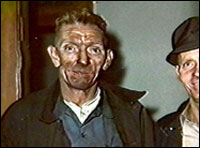
Perdue’s campaign video, “Coal Miner’s Daughter,” tells the story of how she grew up in the town of Grundy, VA “We never knew we were poor,” Perdue says, in her narration for the video. “We were surrounded by a tremendous amount of love.” As she tells viewers about her father the coal miner, the video pans over an image of a man, presumably Perdue’s father, that looks like something right out of “Let Us Now Praise Famous Men.”
It all makes for a pretty compelling stuff, not least because coal miners are special. They don’t just work hard. They work in dark holes in the ground. Occasionally they get buried alive. And many of those who survive a lifetime of work in the mines develop nasty diseases like lung cancer or black lung disease.
Only one problem. As pointed out by reporter Bob Geary in the Independent Weekly (the alternative weekly from North Carolina’s Research Triangle), Perdue’s father may have once mined coal; but he also eventually owned the mine. And the guy in the picture? Well, that wasn’t really her dad.
Watch the ad:
RealMedia – 56k | 100k
download player
There’s a grain of truth in Perdue’s story. Her father, Alfred Moore, did apparently have humble beginnings. And early on he did work in a small mine that he owned with his brother. But by the time Beverly came onto the scene, the family was apparently doing pretty well — a lot better than her video would have you believe. When questioned about this by Geary, she defended the video version of her poverty, saying, for example, that she had to go to a state school and not a private college because the latter was too “pricey.” (Perdue’s campaign did not return calls by Salon.) By 1970 — the year Beverly turned 22 — Moore was a retired multimillionaire living in Florida. No wonder she didn’t know she was poor!
This is the kind of puffery that catches up with you if youre running for political office. Perdue won the Democratic nomination for lieutenant governor on May 2 against a poorly funded opponent; but don’t expect the Republicans to give her such a free ride this fall.
Special Bonus! An extra Lie of the Week:
Beverly Perdue probably wouldn’t have been caught for her creative evocation of her childhood unless a few people who grew up in her hometown hadn’t gotten wind of the video. But how did retiring New York Senator Daniel Patrick Moynihan get away with stating a demonstrable falsehood on the Op-Ed page of the New York Times without anyone pointing it out?
In a piece published May 30, Moynihan outlines his plan to partially privatize Social Security and lambastes those who would charge that his plan would endanger current benefits. (He even calls the charge “obscene.”) Why is the charge “obscene”? Because, under his plan, “the present progressive benefit is fixed … There is no occasion to touch it.” So, according to Moynihan, the charge is obscene because current benefits are not reduced.
But this is simply false. Moynihan’s plan does call for cuts in current Social Security benefits. Who says? Moynihan says. And in the very same article. In paragraphs 9, 10 and 11 of Moynihan’s article, he describes specifically how his plan would reduce benefits in order to free up money for his individual accounts. If anyone else but Moynihan tried to pass off a line like that, he’d be skewered. So why does Moynihan get a pass?
Your tips
E-mail your suggestions for Lie of the Week to LieOfTheWeek@hotmail.com.
Joshua Micah Marshall, a Salon contributing writer, writes Talking Points Memo. More Joshua Micah Marshall.
How the rich created the Social Security “crisis”
The Bush tax cuts coupled with a decades-long smear campaign are the real threat to the successful program
(Credit: mountainpix via Shutterstock/AP) Now and then, George W. Bush told the unvarnished truth—most often in jest. Consider the GOP presidential nominee’s Oct. 20, 2000, speech at a high-society $800-a-plate fundraiser at New York’s Waldorf-Astoria. Resplendent in a black tailcoat, waistcoat and white bow tie, Bush greeted the swells with evident satisfaction.
“This is an impressive crowd,” he said. “The haves and the have-mores. Some people call you the elites; I call you my base.”
Any questions?
Eight months later, President Bush delivered sweeping tax cuts to that patrician base. Given current hysteria over what a recent Washington Post article called “the runaway national debt,” it requires an act of historical memory to recall that the Bush administration rationalized reducing taxes on inherited wealth because paying down the debt too soon might roil financial markets.
Continue Reading CloseArkansas Times columnist Gene Lyons is a National Magazine Award winner and co-author of "The Hunting of the President" (St. Martin's Press, 2000). You can e-mail Lyons at eugenelyons2@yahoo.com. More Gene Lyons.
The truth about the deficit and Social Security
Actually, it has almost nothing to with our soaring national debt. So why is there talk of cutting it?
President Barack Obama meets with Congressional leadership in the Cabinet Room of the White House in Washington, Thursday, July 7, 2011, to discuss the debt. From left are, House Majority Leader Eric Cantor of Va., House Minority Leader Nancy Pelosi of Calif., House Speaker John Boehner of Ohio, the president and Senate Majority Leader Harry Reid of Nev. (AP Photo/Pablo Martinez Monsivais)(Credit: Pablo Martinez Monsivais) This originally appeared at New Deal 2.0
This morning the Washington Post reported that the White House is offering to cut Social Security as part of a broader budget deal with the Republicans. At last we have the answer to the question everyone has been asking about the Democrats: How far can they go?
Continue Reading CloseSocial Security is not on Obama’s hit list
The president knows that Republicans won't agree to the revenue increases necessary for a "grand bargain"
Blank American Social Security card isolated over white background - With clipping path(Credit: Gino Santa Maria) What could Obama possibly be thinking? The Washington Post and New York Times are both reporting that the president has decided to “go big” on the debt ceiling negotiations: Suddenly, big cuts to Medicare and Social Security are supposedly on the table, and instead of seeking $2 trillion in overall spending reductions over the next 10 years, the White House is now proposing $4 trillion in cuts over the same period.
Continue Reading Close
Andrew Leonard is a staff writer at Salon. On Twitter, @koxinga21. More Andrew Leonard.
If Obama cuts Social Security…
The president indicates that funding for the hallmark Democratic program is on the table. Is this the last straw?
Wednesday night, the Washington Post reported that on top of the big cuts to Medicare he’s already proposed, President Obama is now considering endorsing cuts to Social Security. In making this announcement (which formally embraces the concept of Social Security cuts first proposed by Obama’s debt commission), the White House has lost all credibility in arguing that its 2012 political problems are the result of unfair expectations, particularly on the left. At the same time, the White House has finally exposed the strategy behind what so many of its apologists insisted was deft “three dimensional chess” on behalf of old-school liberalism — and as we see, these tactics have nothing to do with liberalism and everything to do with Orwell-ism.
Continue Reading Close
David Sirota is a best-selling author of the new book "Back to Our Future: How the 1980s Explain the World We Live In Now." He hosts the morning show on AM760 in Colorado. E-mail him at ds@davidsirota.com, follow him on Twitter @davidsirota or visit his website at www.davidsirota.com. More David Sirota.
Did Social Security just lose its biggest defender?
AARP now says it is willing to accept some cuts to the popular entitlement program
The lobby group for older citizens has 37 million members (Updated below with AARP statement and reaction from senior advocacy groups.)
The Wall Street Journal made some waves Friday morning when it reported that AARP — the powerful lobbying group for seniors — “is dropping its longstanding opposition to cutting Social Security benefits.” According to the WSJ, the move could rock Washington’s debate over how to revamp the nation’s entitlement programs.
Continue Reading CloseNatasha Lennard covers the Occupy movement for Salon. A British-born, Brooklyn-based journalist, she has been covering Occupy Wall Street since before the first sleeping bag was unrolled in Zuccotti Park. One of the first journalists arrested at an Occupy action, she has managed to enrage Andrew Breitbart, Rush Limbaugh and Glenn Beck. You can follow her on Twitter (@natashalennard), and email her any Occupy updates/videos/ideas to natasha.lennard@gmail.com More Natasha Lennard.
Page 1 of 21 in Social Security