
AIDS

Contributing to genocide

By giving HIV deniers a global platform, South African President Mbeki has put countless lives at risk.

  • more
    • All Share Services

Contributing to genocide

Paul’s parents carried his limp, cachectic body from their fancy car. They placed Paul in a hospital bed on our AIDS ward. They told me, Paul’s doctor, that they had driven from Oakland, Calif., to Tijuana, Mexico, to fetch their dying son and bring him home. The ozone therapies, curative fruit juices, cleansing enemas, nutritional supplements “and whatever else he tried” at the special clinic had failed to rid their son of AIDS. Minutes later, after they left, Paul awoke enough to recognize me. I told him that I’d like to sit him up to listen to his lungs. He closed his eyes and nodded, and, with one arm, I pushed up his thin trunk to a sitting position while adjusting my stethoscope with my free hand.

At first, I thought that Paul might be wearing an oddly knit undershirt, full of holes that my arm and fingers sensed as they pushed against his back. But when I removed his vest and pulled his shirt up, I saw that the holes bore through his skin. Dozens of irregular wounds, some weeping pus, spread across his shoulders. I stopped my exam and laid Paul back on the bed. I turned his face to mine and asked: “Paul, what are these holes?”

From the despair in his eyes, I immediately understood why the holes were there. We cleaned and dressed his wounds, and gave him fluids. Later, when Paul regained sufficient strength to explain, he told me that the holes had been caused by chemical compounds containing DMSO (dimethylsulfoxide), a worthless solvent that was supposed to draw out the human immunodeficiency virus from his body. He died a few days later.

As a physician who directed an AIDS ward during the early years of the epidemic, I remember scores of young men and women with AIDS whose dark, hollow eyes, vacated of hope, looked into mine. Many of these patients clutched talismen: magical herbs imported from Brazil or boxes of mysterious compounds concocted by local “underground labs.” You do not forget those looks. They are the desperate, haunting looks of dying people who want, however obliquely, to see what they know does not exist. These young men and women died with compound Q in their pockets, AL-721 in jars, Iscador on the nightstand, hypericin (St. John’s wort) under the bed — old medicines that had proved virtually powerless against the disease that had overrun their bodies. They died with newspaper clippings announcing the coming of a new drug called AZT taped to their walls or tucked under their pillows.

I remember how the world changed when AZT arrived. It was a potentially toxic drug, but it brought the first real light of hope back into people’s eyes. It had demonstrable activity against HIV, and, most important, some AIDS patients who took AZT actually got better. You could literally watch skeletal bodies flesh out to three-dimensional forms. In conjunction with therapies that helped prevent other infections, for the first time, patients began to live a little longer than the nine-to-11-month life span to which they had been destined before. Other drugs active against the retrovirus HIV (anti-retroviral therapies, or ARTs) were developed later and shown to prolong human survival and make people healthier. It was these drugs that so many of my now-dead patients had been hoping for during the 1980s. They wanted the chance to have more of their lives. Many would have opted for anti-retroviral therapy and some would have lived a lot longer.

But if the “HIV deniers” had their way, such powerful therapies would not be available today. These vocal dissidents insist that HIV does not exist, charging that the drugs that have been developed to combat it are part of a massive medical hoax propagated by a greedy pharmaceutical industry, a lockstep scientific community and a vapid media machine. In their view, AIDS is not a contagious disease at all, and so ARTs are toxic, if not downright evil, and safe sex is irrelevant. In my most generous moments, I understand their erroneous thinking as a byproduct of fear and anger about HIV, a lack of experience with the human history of AIDS and the usual anti-establishment sentiments. But, most of the time, what I see is that the cost of their rhetoric is an unknowable number of lives that could be lost because of it.

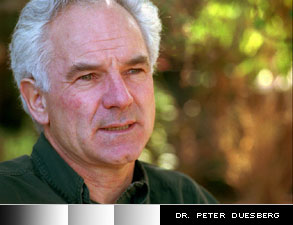
While most HIV deniers (who are mostly white Americans) neither give care to people with AIDS nor conduct HIV research, they do spend a considerable amount of time building a political base. For many years their ideas have languished in the margins of both the scientific and activist communities, but this summer they got a boost when South African President Thabo Mbeki allowed the work of famed HIV denier and University of California at Berkeley professor Peter Duesberg to be incorporated into this month’s 13th International AIDS Conference in South Africa. Duesberg, whose AIDS research has been criticized by most AIDS researchers, has consistently maintained that HIV does not cause AIDS. He cites as evidence the failure of HIV to comply with specific scientific postulates (the “Koch postulates,” created in 1840 and 1890, before the discovery of viruses) or to follow cardinal rules of virus behavior. Rather, Duesberg and the deniers believe that AIDS is caused by chromosomal damage, certain lifestyles, drug abuse, malnutrition, poor sanitation and parasitic infections.

Deniers pose some genuine challenges to current theories about HIV and its role in the development of immune suppression and the diseases (like cancers and infections) that follow and constitute AIDS. (You might want to read Bruce Mirken’s thoughtful review of the discourse.) But the science of HIV research is young, it continues to unfold and many questions about the virus remain unanswered. Where these questions remain, deniers see fraud while AIDS researchers see an opportunity for further inquiry.

While deniers rigidly believe that HIV is nonexistent or incidental, they have yet to articulate a coherent explanation for its nearly universal presence in people with AIDS. Nor have they explained the documented efficacy of drugs that specifically suppress HIV in prolonging AIDS patients’ lives and preventing infection in newborns of HIV-infected women. Furthermore, in the face of such data, they have not articulated a moral defense for their advice against anti-retroviral treatments that actually work to save human lives. At best, their position is surreal; at worst, it is blatantly immoral.

Deniers also believe that AIDS researchers are somehow organized into a conspiracy that profits in its singular and rigid focus on HIV as the cause of AIDS. Those of us who actually do research find this humorous. Like their hero, Duesberg, we tend to be a fiercely independent and competitive lot who keep our research secret from colleagues, hoping to be the one to find the new truth and debunk the old one. Any “mainstream” scientist would love to discover another cause of AIDS. The rush of excitement and notoriety that such a discovery would bring are what researchers strive for during their repetitive, dreary work in crowded and underfunded labs. Still, no one so far, including Duesberg, has found another cause for AIDS.

Interestingly, there exists much agreement between deniers and AIDS researchers. For example, both camps concur that poor nutrition, poverty, homelessness, drug abuse and infections can accelerate or promote the development of AIDS. Similarly, they agree that anti-retrovirals are toxic therapies. How these mutually accepted views have been misrepresented as disagreements by the deniers is mysterious — the tactic has the feel of a very thin line drawn in sand. Meanwhile, a war of rhetoric rages, threatening to blur the basic and irrevocable facts: So far deniers have found no cures for AIDS, and they are doing absolutely nothing to diminish contributing factors like poverty and malnutrition. AIDS researchers and activists, in contrast, are moving forward in search of less toxic ARTs.

Before the deniers caught Mbeki’s favor, the scientific community could afford to view them as deluded voices screaming in the wind. After all, as long as the scientists shared an overwhelming consensus that the deniers had got it wrong, their anti-retroviral campaign could go only so far. But with the dissidents’ growing public platform on the world stage, researchers have stepped up to the front lines. In anticipation of the AIDS conference in Durban, South Africa, more than 5,000 global AIDS scientists signed the “Durban Declaration.” Published in the prestigious scientific journal Nature, the declaration was a sharp rebuke to Mbeki’s refusal to acknowledge that HIV causes AIDS. The declaration states that the link between HIV and AIDS is “clear-cut, exhaustive and unambiguous … HIV causes AIDS. It is unfortunate that a few vocal people continue to deny the evidence. This position will cost countless lives.”

At the AIDS conference, more than 10,000 attendees heard Winnie Mandela, head of the African National Congress’ Women’s League, angrily proclaim, “Let me start by asserting what appears to have become less obvious in South Africa. AIDS exists! HIV causes AIDS. It is roaming the world, attacking the poor and marginalized. In our beloved Africa, it is swallowing up families and communities and villages.”

At the closing ceremony, South Africa’s former president, Nelson Mandela, joined the conference and offered what could only be taken as an attempt to reconcile both sides and thereby sidestep the maelstrom of controversy. “The ordinary people of the world — particularly the poor who are on our continent who will again carry a disproportionate burden of the scourge — would wish that the dispute about the primacy of politics or science be put on the back burner and that we proceed to address the needs and concerns of those suffering and dying,” he said. “And this can only be done in partnership. The challenge is to move from rhetoric to action, and action at an unprecedented intensity and scale.”

But for many researchers, such conciliatory gestures could not elide the potential dangers of the deniers’ position. Like many AIDS doctors I know, Paul Volberding, a UC-San Francisco professor of medicine who directs the Positive Health Program at San Francisco General Hospital, refrained from attending the AIDS conference, partly in response to Mbeki’s stand. “In the midst of a raging epidemic that threatens the survival of his country, we expect the strongest and most direct leadership from the highest levels,” he explained. “The sad situation in South Africa, and the encouragement of President Mbeki’s distraction from the task at hand by American AIDS denialists, underscore the need for clarity. HIV causes AIDS, and the continued devastation of the epidemic can only be limited by programs that help inform people of all lands how HIV transmission can be prevented. It’s time to get to work.”

Indeed, many AIDS scientists and activists worry that if Mbeki promotes the view that AIDS is neither infectious nor caused by HIV, South Africans will ignore effective behavioral strategies (like safer sex) that prevent HIV transmission. Reportedly, one in 10 of South Africa’s 43 million people are already HIV infected. If they fail to engage in safer sex and reject anti-retrovirals, the National Health Research Development Program of Health Canada projects that South Africa will witness 2.3 million new AIDS cases between 2000 and 2005, and that the country’s life expectancy will decrease to 46.5 years.

While some public health experts have pointed out that ARTs are far too expensive to treat every HIV-positive South African adult (the drugs cost $12,000 a year, but per capita healthcare spending is $268), but the use of ARTs with pregnant women could still do some good. At a cost of $50 per mother, short-course, single-drug ART would reduce perinatal transmission by 40 percent and could prevent 110,000 HIV-positive births by 2005 for $54 million. Not only would this save the government millions of dollars in healthcare costs for sick infants, it would shore up the workforce for the country’s tenuous economy.

But if Mr. Mbeki does not believe that HIV causes AIDS, then anti-retrovirals are a moot point, and “cost is not a problem.” Some observers wonder if this is exactly the purpose for Mbeki’s denial.

Dr. Bridget Farham, the health and fitness editor for iafrica.com, writes: “I suspect that neither the Department of Health nor our president truly believe that HIV does not cause AIDS. They have been overwhelmed by a problem that appears insoluble. To me it seems that they are clutching at any straw which may prevent the necessity of telling us that they are not going to spend millions on AIDS treatment and prevention programs — because, they will claim, we don’t know what causes the illness. They are looking for a rational reason for an irrational act — leaving us without the bulk of our economically active population within the next five years because they had neither the will nor the resources to confront the problem.”

In an ongoing Internet discussion on the topic, contributors suggest that Mbeki’s contention that AIDS is caused by poverty and malnutrition allows him to blame the AIDS epidemic on apartheid in order to draw attention away from his failure to manage it. Others claim that the government will not spend money to save children of HIV-infected pregnant women because the mothers will die and leave even more orphans under government care.

Some have suggested that Mbeki’s refusal to acknowledge the virulence of HIV and provide ART for pregnant women stems from his post-colonial wariness and his need to find a “uniquely African solution.” Irrationally, he postulated that ART use “may not work with African AIDS patients” because most of them are heterosexuals and many patients in the United States who use ART have contracted AIDS through homosexual sex. This remark is stunning for its inaccuracy (there are now more heterosexual HIV-infected patients in the United States than homosexual) and for its bizarre notion that the biology of gay men is somehow different than that of heterosexuals.

The fact is that he has aligned himself with a handful of white American deniers and disagreed with a vast multicultural group of world researchers who claim that HIV causes AIDS. In his alliance with people whose stubbornly abstract beliefs would deny millions of impoverished people one viable if partial remedy, Mbeki’s attempt to forge a “uniquely African solution” looks like a familiar picture of valuing political power over human lives.

It is especially poignant to watch Mbeki deny the central role of HIV in the deaths of millions of his countrymen at a time when the West is finally offering his country what seem to be substantial financial remedies for the AIDS epidemic. Last month, five global pharmaceutical companies and the United Nations began negotiations to lower the cost of drugs up to 90 percent for the treatment of HIV/AIDS in sub-Saharan Africa. Then President Clinton ordered that sub-Saharan Africa receive special leeway in importing or manufacturing patented ART. Finally, Western countries have recently launched new initiatives in debt reduction.

But as Mbeki knows all too well, even these multimillion dollar offerings will not stem the approaching tidal wave of AIDS in his country. South Africa lacks clean water, basic healthcare and nutrition that might make the new AIDS therapies effective. Mbeki has inherited a monstrous multi-tentacled problem fed by poverty, malnutrition, poor sanitation, migrant labor, commercial sex work, inadequate health care, STDs, negligible birth control and apartheid’s legacy of social and familial disintegration. It’s no wonder he’s grasping at straws, trying to explain that people will continue to die of AIDS in South Africa because the real origin of the disease has not been discovered, not because South Africa doesn’t have the resources necessary to save its people.

This is why the deniers opportunistic abuse of Mbeki’s vulnerability is so sinister. Why don’t deniers do something constructive about their beliefs? Finding their holy grail — whatever they think causes AIDS — is one thing; providing education and nutritious food to sub-Saharan Africans, improving their housing and sanitation or providing education and antimicrobials for parasitic infections through real action would be commendable.

But the deniers show no signs of curbing their program of noxious political grandstanding. Recently in San Francisco, a group plastered the city with posters proclaiming “AIDS is Over,” while others met with conservative congressional members to urge a decrease in AIDS funding. They barged into an educational forum for people living with HIV and claimed that ART killed people.

As Brenda Lein, moderator of the forum, put it, “of all the forces we have fought against in the battle against AIDS, nothing short of the virus, HIV, itself has been directly responsible for more deaths and suffering than the message being preached by these people. They are sowing the seeds of the future of the epidemic while attempting to divert those already ill from taking advantage of advances in therapy. It’s mind-boggling.”

As AIDS increasingly affects the poor and disenfranchised people of the world, one wonders about the political motivations of deniers who want HIV research to stop, who would capitalize on the desperation of leaders of poor economies. As AIDS claims increasingly larger percentages of women and non-white people, one wonders about the agenda of a small group of mostly white Americans who work so hard to make life-prolonging therapies unavailable and who discourage safer-sex practices. While denial, in a multiplicity of forms, has been part of the global landscape of AIDS from the beginning, it has never carried such an overtly lethal potential.

While deniers myopically focus on rare abstract anomalies, missing the forest by obsessing about isolated trees, real people have died without ART treatments. Real people are living because of them. While the deniers cling to theory, and Mbeki counts the number of phosphorylation particles that dance on the head of a cell in an effort to discredit anti-retroviral drugs, millions of people are dying from a preventable infection. Intended or not, the genocide is occurring.

Kate Scannell is an assistant clinical professor of medicine at UC-San Francisco and author of the book "Death of the Good Doctor: Lessons From the Heart of the AIDS Epidemic."

AIDS: Why Africa suffers for the West’s sins

Craig Timberg talks about the colonial origins of AIDS and the legacy of distrust between Africa and the West

  • more
    • All Share Services

AIDS: Why Africa suffers for the West’s sins

As a lens to explore the complex and deeply fraught relationship between Africa and the West, the AIDS epidemic is as revealing and disturbing as it gets. Born in colonial Africa and discovered in gay America, the devastating rise of AIDS has been fueled in no small part by the clash of cultures that played out over the past 130 years or so between Africa, Europe and the U.S. — and the rivers of resentment those conflicts have sown.

“Tinderbox,” an insightful new book from a journalist and an AIDS researcher, tells the story of the epidemic from its birth in colonial Congo — where it lingered undetected for decades — to its sudden spread around the globe in the 1980s, to its status today as the object of a global public health war directed from Washington and Geneva and targeting Africa, home to some 70 percent of all AIDS cases today.

Narrating this disturbing tale are Craig Timberg, former South Africa bureau chief for the Washington Post, and Daniel Halperin, an epidemiologist, AIDS researcher and former advisor to the U.S. government’s anti-AIDS program. Timberg met Halperin in the middle of his five-year stint as the Post’s Johannesburg bureau chief and the two began exploring questions that had bothered Timberg since his arrival in South Africa.

Timberg, now back in Washington as the Post’s deputy national security editor, spoke with Salon about the book.

Perceptions about the origins and spread of AIDS have changed over time in fascinating ways. First, it was seen as a gay disease. When it was detected in Africa, people assumed it came from the West. Over time, scientists showed it originated in Africa, a notion rejected by many Africans but in keeping with Western notions about third-world diseases. You show in the book that AIDS arose as a result of sweeping changes in social structure brought to Africa by European colonialism. Describe its origins.

Scientists have known for more than a decade that the version of HIV that has caused almost all cases of AIDS is virtually identical to a virus common in central African chimpanzees. That’s not controversial. The location of the transmission was determined by a group of scientists who narrowed it down to chimpanzees living in southeastern Cameroon by collecting their feces, detecting the virus and comparing it to other strains collected elsewhere. Michael Worobey from the University of Arizona and his team mapped the genetic structure of pieces of HIV from all over the world, looking at the extent of mutations between them. They were able to make assumptions about how many years it would have taken to produce these changes. The time frame puts you close to the turn of the 20th century for the original virus, the ancestor to all modern HIV.

How was the spread of AIDS to humans linked to colonialism?

In southeastern Cameroon, at the exact moment scientists now believe HIV entered the human population, you had steamships going up rivers that never had steamships before. You have porters who are virtually human pack animals carrying ivory or gear for colonial companies through dense forests. One of those porters would have been the first human to contract HIV. It looks like HIV goes from the chimp population into a hunter who cuts himself while butchering a chimpanzee for food. It then spreads in a localized way along these porter paths and colonial trading posts and eventually comes down river on a steamship into Kinshasa, then called Leopoldville, the first major city in that part of the world.

And that leads to what you call the Big Bang – when HIV explodes and moves out of the Congo.

That’s right. A single spark emanating from southeastern Cameroon works its way to colonial Leopoldville. But HIV doesn’t spread fast on its own. It needs particular conditions to race through a population and Leopoldville had them. It was big and growing fast. It had a high concentration of men working in factories, separated from their wives and girlfriends. It had an emerging population of sex workers and transport to get people back and forth. Gonorrhea, syphilis, chlamydia spread like wildfire; HIV doesn’t but starts to spread along railroad lines, porter paths and rivers during the early and middle part of the 20th century. When scientists look at the genetic structures of different types of HIV they all seem to have come from a single piece of ancestral HIV that existed in Leopoldville at the beginning of the 20th century.

So HIV lingered in small numbers of people but doesn’t exit this area. When researchers go back to blood samples collected during the 1976 outbreak of Ebola virus, they find HIV.

Yes, so in the middle part of the 20th century about 1 percent of adults in major population centers of the Congo had HIV. Before they died, they developed symptoms of other familiar maladies—pneumonia, tuberculosis, wasting. It wasn’t obvious there was a new epidemic loose in the land until gay men in the United States started getting sick in the early 1980s. Before that, it didn’t spread far and it didn’t spread fast. The reason seems to be that in colonial Congo, the majority of adult men would have been circumcised and circumcised men are much less likely to contract HIV and pass it on. It’s only when HIV makes its way out of the Congo River basin to other places more hospitable to its spread that we get a true explosion.

Many people assume AIDS must be a disease of poverty. But you argue that wealth, modern transportation and economic development were key factors that allowed AIDS to break out.

When I first went to Africa as a correspondent in 2004, I carried this question with me: Why is HIV so severe in some places and not in others? Logic said: Africa, poverty, poor medical systems — there had to be a connection. But when I started traveling to different countries I discovered that most truly outrageous hellholes — places with warfare and incredible poverty — didn’t have much HIV. Other places with modern transport and sophisticated economies had a lot. When I met my co-author, Daniel Halperin, it began to come together. I saw that while being poor and having HIV is certainly a very bad thing because you’re more likely to die when you can’t afford medicine, some degree of economic activity actually makes you more vulnerable. When the epidemic starts spreading widely in some African societies it’s in the cities. Wealthier people — doctors, teachers, politicians, singers — get HIV in completely disastrous numbers. Some of that has to do with access to resources and multiple sexual partners.

You begin with a chapter on the city of Francistown, Botswana, an affluent place with a horrendous HIV rate. What struck you about Francistown?

I drove to Francistown for the first time in 2006 and it felt like driving into anywhere, USA. I could buy a hamburger at Wimpy’s, order a shot of espresso. There were cafes and ATMs. Yet it had this horrendous HIV rate. Among women in their 30s, two-thirds were infected. The picture of poverty before HIV didn’t add up. When you scratch the surface you begin to realize that other factors — human movement, transport, sexual behavior, circumcision or lack of it — are decisive in how the virus spread.

You describe the AIDS belt, an area in southern Africa at the very heart of the African epidemic. What are the characteristics that made it, as you call it, a tinderbox?

There’s a giant swath of the continent that starts at the southern end of Sudan, goes down through east Africa to South Africa and out to the sea where you have this combination of sexual networks and low rates of male circumcision. Together they produce the tinderbox. Two centuries ago most of Africa had polygamous societies in which the richest, most powerful men had multiple wives. In contemporary Africa, in part because of that tradition and in part because of the ravages of colonialism and migratory labor, many men and women have more than one sexual partner over the course of a week or month. But to be part of the AIDS belt, you need one more thing: low rates of male circumcision. The people who migrated down the Nile River basin from Sudan never had circumcision as part of their tradition. In the southern part of the continent, it was a tradition pretty much everywhere until about 200 years ago when some ethnic groups began to give it up. In those places you see HIV rates of 10, 15, even 25 percent.

Why is circumcision effective and why was early evidence of its power missed?

A man’s foreskin is unusually vulnerable to HIV; the skin is thinner, softer and more easily penetrated by HIV and other pathogens. When it’s removed, the remaining skin is rougher and more resistant to infection. That makes no difference if you’re a gay man who is the receptive partner in anal sex. But the African epidemic is spread predominantly through heterosexual sex, particularly vaginal sex, and circumcision is crucial. Circumcised men are at least 70 percent less likely to get HIV. This science first began to appear in the mid-1980s.

That’s three decades ago!

That’s right. That data seemed to offer this miraculous new insight. But the global public health community was deeply uncomfortable with the subject. It took another 20 years to come up with evidence so definitive they accepted it. Peter Piot, one of the central characters in the AIDS response, was part of that research team. Yet during all the years he was head of UNAIDS he was not enthusiastic about this science. To be fair, establishing correlation is not the same as establishing causality. And it’s a pretty serious thing to contemplate altering men’s penises if you’re the global health community.

One area of culture clash between global health agencies and Africa is over condoms. What happened?

People who had watched AIDS in the U.S. were mindful of the way condoms seemed to slow the spread of HIV there and especially in Thailand, where the epidemic was transmitted mainly in brothels. It was hard for those officials to understand how different the African epidemics were. In several places, Africans were saying, “Hey, our best chance for surviving is for people to have fewer sex partners at a time.” But Westerners had condoms on their minds. The U.S. government and other organizations made a huge bet on condoms and reasoned that if you could just get enough of them to people in vulnerable places you could reverse the epidemic. Instead, reported usage of condoms in some African societies went to rates far higher than anywhere else but HIV also went up. That puzzled people until it became clear that people were using condoms with prostitutes or one-night stands but not in long-term relationships with their husbands, wives, boyfriends or girlfriends. And that’s how HIV is most likely to spread.

Uganda emerged in the early days of the epidemic as a place that took effective action, changed people’s behavior and lowered HIV transmission. 

In 1986 a new government took over and confronted the facts of AIDS. They knew it was fatal, they knew it was incurable, they knew it was spread by sex, and they knew a lot of people already had it. So political, religious and cultural leaders focused on changing the sexual behavior that was at the core of HIV’s spread. The most famous terms for this was zero grazing, a metaphor that worked well in an overwhelmingly agrarian society. When leaders said zero grazing, Ugandans understood at an intuitive level that having sex with your primary partner is much safer than having sex with a primary partner and others. If a large number of people make a relatively small change in their number of sex partners it can make a massive difference in the spread of HIV. That’s what happened in Uganda and hundreds of thousands of lives were saved.

Why were the powers that be in global health so reluctant to focus on behavior change?

The global health infrastructure was uncomfortable talking about differences in sexual behavior. That’s a shame because a sexually transmitted epidemic is by definition spread by sex. To understand why it’s worse in some places than others you have to dive into some inherently uncomfortable questions about a very private matter.

Yet there was historical evidence here that changing behavior made a difference. San Francisco closed the bathhouses and it helped. In New York, behavior changes led to lower rates of anal gonorrhea in the early days of the epidemic.

Those changes were instituted within coherent communities. Gay men advocated the closing of bathhouses and made the choice to have fewer partners or use condoms. In Africa that process was hampered by the slowness to accept that AIDS was real and the fact that people are understandably resistant to being told what to do by a large and powerful outside force. Many of these societies need our financial aid, our technical assistance to do things that matter to them, including improving public health. The tension over how much to listen to outsiders while not wanting to be told what to do has troubling consequences that have infused the world’s response to AIDS in all sorts of ways.

What lessons do you draw from the way the epidemic has been addressed in Africa?

The overriding lesson is that sex matters. Those of us who care about people getting this terrible disease can’t be squeamish in discussing sexual behavior because we’re afraid of how it makes us look. The research has to be good, the messaging has to be forceful and clear. It’s not enough to tell people to use condoms all the time because the evidence after more than 30 years is that people don’t, not often enough to be truly decisive. We also have to be willing to engage in questions about how many partners people are having, we need to tell people that from the viewpoint of sexually transmitted infections, anal sex is more dangerous than vaginal or oral sex. These things are uncomfortable to talk about. At the same time, if we take seriously the moral question of trying to prevent as many infections as we can, we can’t be frightened of these subjects.

Continue Reading Close

Rob Waters writes about health, mental health and science from his home in Berkeley, California. His investigative feature in Mother Jones, “Medicating Aliah,” examined pharmaceutical industry influence over prescribing guidelines and won the Casey Award in 2006. His articles have appeared in Bloomberg Businessweek, Mother Jones, Health, Reader’s Digest and other publications.

The new AIDS crisis: Funding

Scientists believe they can finally stem the epidemic, but money is a major obstacle

  • more
    • All Share Services

The new AIDS crisis: Funding (Credit: Reuters/Yiorgos Karahalis)
This article originally appeared on GlobalPost.

KISUMU, Kenya – Thirty years after the discovery of AIDS, scientists believe for the first time that they now have the tools to beat back the deadly virus.

Global Post

The evidence is found in HIV prevention research conducted here on the shores of Lake Victoria and in several other parts of sub-Saharan Africa, long the epicenter of AIDS. The most notable research discovery stems from the HIV Prevention Trials Network 052 clinical trial, a U.S.-funded, nine-country study that found early treatment reduced the risk of HIV transmission to an uninfected partner by 96 percent.

The 052 results – announced to a standing ovation in Rome at the International AIDS Society conference in July – was one in a line of recent breakthroughs, including the benefits of male circumcision to prevent infection, and smaller conceptual advances in an HIV vaccine candidate as well as with microbicides, or gels used by women to stop transmission.

But the gloomy global economic situation, and recent scale-backs in HIV funding around the world, have cast great doubt as to whether policymakers will take advantage of the combination of new prevention tools to fight AIDS.

This collision of scientific advances vs. economic realities also comes at a heightened political moment of the U.S.’s own making: Secretary of State Hillary Rodham Clinton earlier this month called for an “AIDS-free generation,” and the United States’ actions on AIDS will be in the spotlight during next July’s International AIDS Society conference in Washington, D.C., which is being held in the U.S. for the first time in 22 years due to the Obama administration’s decision last year to end U.S. entry restrictions on people who have HIV. The conference is expected to attract more than 25,000 people from around the world.

President Obama is expected on Thursday — World AIDS Day — to talk about his administration’s next steps on AIDS, following Clinton’s speech. This would be his first major speech on AIDS as president; he has remained largely silent on all global health issues. Even when Obama announced a bold new Global Health Initiative, the White House put out only an eight-paragraph statement.

“The terrific science in the last year is coming up against the fiscal constraints,” said Chris Collins, vice president and director of public policy amfAR, the Foundation for AIDS Research. “It is going to take choices. That is the big challenge for policymakers in the next couple of years: How to get above the day-to-day politics here and use the resources as strictly as possible. We now need to hear our president articulate his policy action plan for an AIDS-free generation.”

Several sources within the Obama administration said in interviews that Clinton’s speech at the National Institutes of Health was at least partially spurred by the realization that next year’s AIDS conference will shine a spotlight on the U.S. commitment to fighting the virus, both globally and domestically. The idea was that the United States will be able to report back to the conference on its plan of action globally, while also speak about ongoing research in several U.S. cities about the most effective ways of finding those who are infected and then putting them on treatment.

In the meantime, Obama’s top scientists are urging that the research discoveries to prevent HIV transmission are put to use. The one in the forefront is the best known of all: Dr. Anthony Fauci, director of the National Institute of Allergy and Infectious Diseases, who has advised U.S. presidents since Ronald Reagan on how best to address AIDS.

“All of a sudden we have a convergence of prevention approaches, which includes treatment as prevention, and that really validates the concept of combination prevention,” Fauci told GlobalPost in an interview earlier this month. “There is now an enthusiasm and an excitement if we can implement some of these scientific advances, we can have a major impact in turning around the trajectory of the epidemic.”

Fauci said that future modeling of the AIDS epidemic shows that if prevention tools are effective and if fewer people are infecting others, a precipitous fall in HIV infections could follow. Then, he said, the whole arc of the epidemic could crumble.

“When we can get the incidence of HIV down enough to turn the trajectory of the pandemic, it will assume a momentum of its own in diminishing HIV,” he said.

“That’s because the fewer people who are transmitting infection and the more people who are trying to protect themselves from infection – those are the two arms of the problem – that diminishes the pool of people capable of infecting the other people.”

A UNAIDS report released last week concluded that the global expansion of AIDS treatment has made a significant difference in terms of saving lives and almost surely in preventing infections. It estimated that new HIV infections were reduced by 21 percent since 1997, and deaths from AIDS-related illnesses decreased by 21 percent since 2005. It also found that 6.6 million people were on life-extending antiretroviral treatment in 2010, an increase of 1.35 million from the previous year.

Given the findings of the 052 study, scientists and researchers said that the more people who are put on treatment, the more infections will be averted. The experts said that funding isn’t the only issue. Another key one is making sure the prevention strategy matches the specific epidemic in a country.

“Funding is not enough today and probably will never be adequate,” said Robert Hecht, a principal and managing director at Results for Development who has done extensive modeling on what will happen in various scenarios with AIDS funding.

He continued: “What will be important is getting some of these countries to recognize that if they don’t have all the money they need, they need to target programs for the high-risk groups. If you had to choose, say, between a few more dollars for sex education in the schools, or spending it more to reach gay men, or injecting drug users, the countries would be better to use it in the latter programs.”

In Kisumu, the principal city of western Kenya, with a population of roughly 500,000, the 052 trial was stopped in May because it was working so well that researchers felt it was no longer ethically defensible to keep a control group on placebos. Dr. Lisa Mills, the principal investigator for the western Kenya part of the study, and chief of the HIV Research Branch at KEMRI-CDC (a long-time collaboration between Kenya and U.S. researchers), said the Kenyan government already had started people earlier on treatment, but she and others hoped that more funding would allow for another expansion.

“The modeling shows that the amount of funds used for treatment would be much lower by 2015 if you started earlier,” Mills said. “And 2020, there would be a huge savings. There is an increase in start-up costs, but with the costs of the drugs gradually dropping, more efficiencies in treatment, and a reduction in new infections, including pediatric infections, all those add up to fewer people on treatment” in a few years.

Mills said that in fighting AIDS, like other epidemics, “the real issue is when you turn off the tap,” referring to stopping the numbers of new infections. “When you have fewer and fewer new people getting infected every year, turning off the tap starts to happen,” she said.

Kayla Laserson, the director of KEMRI/CDC Research and Public Health Collaboration, said the AIDS research is part of a multi-pronged global health research agenda aimed at finding new drugs, vaccines, and diagnostic tools for a host of diseases. “We have the 052 trial here, but we also have the malaria vaccine trail, and the site for a TB vaccine trial, and many others,” she said. “We see how we make an enormous impact because the results from the community we serve are all around us.”

In the nearby village of Ematsayi, Peter Owiti Omotsi, 39, a father of five, is one of thousands of people in the region now on antiretroviral drugs to fight AIDS. He started treatment in 2008. His wife was HIV negative at the time of his diagnosis, and she has remained negative, he said. Omotsi said the drugs, plus changes to improve the nutrition in his diet, have made him much healthier.

“These drugs work,” he said. “I believe before I die, I will see my grandchildren. Without these drugs, that probably wouldn’t happen. But I have some years to live now. I can at least be proud of my grandchildren.”

In the months and years ahead, the U.S. government will need to make decisions on whether to expand AIDS treatment in the United States as well as around the world to people who are infected but are not acutely ill from the disease. No one is making any promises yet. But no one doubts either that the range of prevention approaches now available, taken together, create a new, powerful weapon to halt AIDS.

“In the last year or so, we have enough scientific advances so that we can start to see some significant turnarounds in the trajectory of the pandemic,” said Fauci, the longtime U.S. AIDS researcher. “But it’s not going to happen alone. We’re going to need a lot more host-country involvement, we’re going to need other donors, we’re going to need to be more efficient in what we do with the resources that we have. Now is a critical time in the history of the AIDS pandemic.”

Continue Reading Close

John Donnelly is a reporter for Defense Week.

The worst state in America to have HIV

Backward laws and ignorant legislators make Mississippi an especially deadly place to be sick

  • more
    • All Share Services

The worst state in America to have HIV (Credit: jocic via Shutterstock)

Recently, an elderly woman in Mississippi was left alone on the curb outside a hospital emergency room. The woman didn’t have a medical emergency. She’d been dumped by the nursing room employees who had learned that she had HIV, according to a lawyer at the Mississippi Center for Justice to whom she was eventually referred.

Mississippi’s neighbors have been known to thank God for Mississippi — when your state ranks 48th or 49th in just about every sad statistic about health or poverty in America, it’s nice to know you’ll always look better than someone. The state’s indicators for HIV and AIDS are about as horrific, although the 9,546 people in the state reported to have the virus probably aren’t particularly grateful about it.

The state has the highest new infection rate and greatest percentage of people living with HIV in the country, and by many measures, the least interest in helping them. Elsewhere, HIV/AIDS has become manageable with anti-retroviral therapy, but a Mississippian with HIV/AIDS is almost twice as likely to die than the average American with the virus; HIV-positive African-Americans in Mississippi are ten times as likely to die from it than their white neighbors. African-Americans are only 37.5 percent of the population, but represent 78 percent of new HIV infections. Meanwhile, an abstinence-education statute forbids even programs offering information about condoms to demonstrate how to use them, but does include a requirement to mention the anti-sodomy laws still on the books.

Combine racism and political indifference to poverty with homophobia — there’s been a rapid rise in infections among young men having sex with men in the state — and you’ve got a public health disaster that state politicians mostly ignore, or worse. ”I’ve been called a nigger and a faggot by state legislators right in the Capitol,” Alonzo Dukes, executive director of the Southern AIDS Commission in Greenville, Miss., told Human Rights Watch for a recent report. One of the few advocates for people living with HIV, state Rep. John Hines, says in the same report, “Legislators in Mississippi don’t see it as a public health crisis; they see it as a punishment for an unhealthy lifestyle.” The state contributes only $750,000 towards HIV/AIDS programs, out of a budget of $4.9 billion.

In other words, there’s very little to prevent employers and housing providers from discriminating against people with HIV, especially because the state doesn’t have any anti-discrimination laws and Mississippi also ranks 49th in funding civil legal services for the poor, according to the state’s Access to Justice Commission.

Even those who can afford a lawyer might have trouble. “I’ve heard stories of even lawyers turning clients away when they have AIDS,” says Marni von Wilpert, a fellow with the Mississippi Center for Justice. “People think they can get it from handshakes or hugs.”

Human Rights Watch also indicted the state for “punitive, stigmatizing, and discriminatory policies that undermine efforts to reach the population’s most vulnerable to HIV … leav[ing] people with HIV/AIDS without treatment at rates comparable to those in Botswana, Ethiopia, and Rwanda.” Advocates report hearing stories of public health officials showing up at workplaces and homes without any regard for confidentiality — terrifying in small rural communities where the stigma of HIV is brutalizing.

Robin Webb, executive director of A Brave New Day, which provides support services to people with HIV/AIDS, says this fans long-standing mistrust of government medical services in the African-American community going back to the Tuskegee syphilis studies. “The government actually plays out that whole Tuskegee scenario when it becomes a punitive force. The way they handle public health is all about authoritative punishment.” They are also terrified of what will happen to their lives if their infection is discovered. ”The No. 1 punishment is to kick people out of the church,” says Webb. “These are the people who talk about Jesus and the lepers.”

One MCJ client, admitted to the hospital for seizures, woke up to discover the doctor had informed a relative, in violation of medical privacy laws, that the patient had AIDS.  ”People are not going to seek care if they think everyone in their family is going to find out,” says Von Wilpert. Meanwhile, Von Wilpert says, the state has chosen only to distribute free AIDS drugs at limited Department of Health locations. “People are traveling two or three counties over to even get the drugs,” she says — or not traveling at all.

The good news is that advocates believe they have an ally in the state’s new STD/HIV director, Nicholas Mosca. Von Wilpert and her colleagues are launching a new medical-legal partnership program, as well as an office in the hard-hit Delta region. Webb, who grew up in the Delta but lived in New York during the AIDS crisis and subsequent activism, says he’s trying to import that language of empowerment and self-management to his home state, and try to undo the shame and stigmatization. “I think most of us realize that diseases, especially lethal diseases, love secrets,” he said.


Continue Reading Close
Irin Carmon

Irin Carmon is a staff writer for Salon. Follow her on Twitter at @irincarmon or email her at icarmon@salon.com.

The art of the AIDS poster

A new collection shows 30 years of fascinating, frustrating, beautiful attempts to educate the world about safe sex SLIDE SHOW

  • more
    • All Share Services

The art of the AIDS poster

View the slide show

Each of the more than 6,000 images in Dr. Edward Atwater’s peerless collection of AIDS-related posters — now owned by the University of Rochester’s Rare Books and Special Collections Library — freezes its viewer at a particular social, cultural, political and geographical point in the 30-year history of the disease.

Some of the posters are provocative, explicit or overtly sexual; others are straightforward, tame — even prudish. Some rely on shock-and-awe tactics to make a general point; others offer detailed advice for HIV protection. Some, created in the 1980s or ’90s, are already very clearly dated; others are triumphs of evergreen design. All offer glimpses of past understandings of the disease, its dangers and its prevalence.

The posters themselves hail from more than a hundred different countries — translating fears, concerns, misconceptions and public service announcements into languages as familiar as English and Spanish or as exotic as Latvian, Slovakian, Hebrew and Icelandic. What connects them is the wide-ranging interest (and prodigious curiosity) of Atwater himself — a former professor at the university’s medical center — who donated his collection to the institution several years ago in the hope that its contents would continue to educate viewers about the disease and its history.

Almost 1,500 of Atwater’s posters have so far been made available on the university’s browsable online database, and more are being added continually. See some of the highlights of the collection in the slide show that follows — and then head over to the database itself for further browsing.

View the slide show

Continue Reading Close

Emma Mustich is a Salon contributor. Follow her on Twitter: @emustich.

The terror of a bogus HIV test

After a false-positive shut down the porn industry, an actress opens up about her testing scare

  • more
    • All Share Services

The terror of a bogus HIV test

The details of how a bogus test result reportedly shut down the billion-dollar adult industry for a week are still shrouded in secrecy — but porn actress Dylan Ryan says she understands what the performer, known as “Patient Alpha,” must be feeling. That’s because she experienced firsthand the terror, and unparalleled relief, of a false-positive HIV test.

It happened before she entered the business, so she has unique insight on both the adult industry and what it’s like to experience an HIV scare as a non-performer. Eight years ago, she went to a reputable testing site in San Francisco — she was starting a new monogamous relationship and wanted to play it safe. They gave her an FDA-approved rapid fingerstick test that can turn around results in a mere 20 minutes — but 40 minutes later she was called into an office by a man “who had a worried look on his face,” she said in an email. He told her she had a positive result — but, as she started to cry, he added that a confirmation test, which would take a couple of days to process, was still needed. “It felt terrifying but also like it couldn’t possibly be,” she said. “I ran through all the possibilities over and over.”

She debated whether to tell anyone and ultimately decided against it: “It felt too shameful, too scary and if there was a chance I wasn’t positive, I wanted to hold on to that for as long as possible. I dreaded having to call partners and possibly tell and then lose my new person.” When the test results came in, she was called into the office and “sat in the waiting room, feeling like I was going to vomit at any moment,” she said. “I could have sworn that everyone was staring at me.” The same counselor from before called her into the same room where she had received the bad news just days before, but this time, as soon as he shut the door, he said, “I have good news.” Ryan started to cry, “even harder than the last time I was in the room,” she says.

False positives can arise because of certain medical conditions (like lupus, Lyme disease and syphilis), sample contamination, or clinicians’ failing to follow proper follow-up protocol. It’s estimated that the enzyme-linked immunosorbent assay (ELISA) test, which is currently the standard screening approach for the general population, has a false-positive rate of one to five per 100,000 tests. ELISA is sensitive enough that if someone gets a negative result, a follow-up test generally isn’t needed — but a positive result always calls for a confirmation test, most often by the more targeted Western blot test. That brings the rate of false positives to roughly 1 in 250,000 cases, according to the AIDS charity AVERT. The adult industry has relied on a different test with a smaller “window period” between exposure and possible detection: The pricey and specialized PCR/DNA technique can yield results as early as two weeks after exposure by detecting HIV itself rather than the antibodies caused by the virus.

The Free Speech Coalition, the organization currently working to create a new testing system following the bankruptcy of Adult Industry Medical (AIM), hasn’t revealed any specifics about how the performer in question received a false positive. Most have chalked that up to respect for patient confidentiality or the chaos of a business in transition, although one conspiracy-minded pornographer has suggested it’s a coverup. One thing is certain: Uncertainty and paranoia isn’t unusual following a false positive.

“I wouldn’t wish that on my worst enemy,” Ryan said of her experience with a false positive. “I know that testing has improved exponentially since [then] and I am glad that fewer people will experience that kind of momentary life upheaval.”

Continue Reading Close
Tracy Clark-Flory

Tracy Clark-Flory is a staff writer at Salon. Follow @tracyclarkflory on Twitter.

Page 1 of 33 in AIDS