
The Simpsons

John Waters

It's been a long, nauseating haul, but the director of "Pink Flamingos" and the new "Cecil B. DeMented" has made it as an American icon.

  • more
    • All Share Services

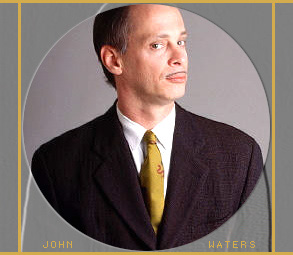
John Waters

“The Pope of Trash,” “the Prince of Puke,” “the P.T. Barnum of Scatology,” “the Sultan of Sleaze,” “the Baron of Bad Taste.” These are the words that have been used to describe John Waters, and for him, this has been the language of love (particularly coming from such luminaries as William Burroughs, who conferred upon him the pontiff remark). “I pride myself on the fact that my work has no socially redeeming value,” Waters has said, and even if in his last few films, socially redeeming values have been working their way into the mangy proceedings, at the very least there is — and always has been — Waters’ wickedly ironic and deeply queer sensibility, firmly in place.

He is nearly as famous for his persona as for the films he’s directed. With his pencil-thin mustache and his clean-cut look of suit and skinny tie, like some demented ’50s high school guidance counselor, he’s appeared frequently on TV talk shows, in movies and as a guest voice on “The Simpsons.” But mostly, of course, there are the movies. Waters’ place in movie history is such that you only need to hear his name to see the picture reeling in your head. You might imagine bodily fluids (both animal and human), rats, roaches and “actors” with bad skin and missing teeth. You might look back fondly on a 350-pound transvestite sensation named Divine. You might also think of deliciously ludicrous dialogue:

  • I wouldn’t suck your lousy cock if I was suffocating and there was oxygen in your balls!”

  • “Oh, honey, I’d be so happy if you turned nellie … you could change! Queers are just better. I’d be so proud if you was a fag and had a nice beautician boyfriend. I’d never have to worry. I worry you’ll work in an office, have children, celebrate wedding anniversaries. The world of a heterosexual is a sick and boring life!”

    Or you might think of your college days; at least I do. Generation after generation of us has delighted in being grossed out by the ultimate gross-out flick, the “Citizen Kane” of crap, “Pink Flamingos.” I saw it once freshman year, and feel no need to see it again. For more than a few of us, it’s part of the nostalgia package of our lives — the quintessential midnight show, alongside “Dawn of the Dead,” and we’ll always remember Waters fondly for providing us, the young and defiantly unshockable, with the consummate gag memory: Divine rolling dog doo around in her mouth, and gagging herself. You wanna talk neo-realism, Roberto Rossellini? You can keep your exploration of the division of mind and spirit, Ingmar Bergman! Just give us Divine lifting her dress and shoving a steak down her underwear!

    Waters has pursued a vision as singular as any American filmmaker. He has revitalized some of our big-time Hollywood stars (Kathleen Turner, Melanie Griffith), reintroduced us to the kitsch glory of others (Tab Hunter, Joe Delassandro, Joey Heatherton) and shown us a thing or two about some of the others we snidely thought we knew all about (Pia Zadora, Sonny Bono, former teen porn queen Traci Lords), at the same time faithfully maintaining, into a third decade, his “repertory” of actors, a regular Royal Shakespeare Company of Raunch called the Dreamlanders. Though untimely death has caught up with many of the greats in his magnificent motley stable of thespians, we would be much poorer without Divine emblazoned in our collective pop-culture memory, alongside Edith (“Edie the Egg Lady”) Massey, David Lochary, Cookie Mueller and those still going strong — Mink Stole and Mary Vivian Pearce.

    Though it’s highly unlikely he will ever be honored at the Kennedy Center alongside, say, Martin Scorsese or Francis Ford Coppola, Waters will always be loved as our most sublime schlockmeister. He is as American as John Ford and as tough-minded as Sam Peckinpah. His movies are far, far cries from cinematic works of art, but the best of them have as much kick as a Rogers and Astaire double feature. It’s been a long, nauseating haul, but Waters, in true pioneer spirit, has made it as an American icon.

    John Waters was born in 1946, the oldest son of conservative Catholics, in Baltimore, the “hairdo capital of the world,” where all his films are made, and where Waters has proudly been a lifelong resident. (Baltimore’s mayor declared Feb. 7, 1985, “John Waters Day.”) The final chapter of “Shock Value,” his autobiography, is titled “Do You Have Parents?” and includes a picture of a droll Waters posing in the living room with Mom and Dad, who look as knowing as he does, as if all three of them are in on the joke. (At this point, they would have to be.)

    Though he says he loves his parents very much, he has also acknowledged their utter mortification of him; it must have been a bitch to have your son spending his youth as an eternal truant, getting kicked out of the Catholic Youth Organization for lewd dancing, taking LSD and reading “anything published by Grove Press” (including Sade, Genet and Burroughs), as well as Freud’s case histories of abnormal psychology. And what parents wouldn’t blanch at having their son’s next-door-neighbor friend in their living room if that neighbor boy was Harris Glenn Milstead, who would soon be known to the world as Divine?

    After terrorizing his parents with his teenage delinquent exploits, Waters deigned to briefly attend NYU, then was expelled for smoking pot. The university suggested to Waters’ parents that he undergo psychiatric treatment; instead, he started making movies.

    It was actually his grandmother who, knowing that he was a movie fan, gave him, for his 17th birthday, his first camera, an 8 mm Brownie, and it was his father who bankrolled Waters’ initial efforts, including “Hag in a Black Leather Jacket,” “Eat Your Makeup,” “Mondo Trasho” and “Multiple Maniacs.” Local churches were somehow conned into providing their hallowed halls as the locales for his first screenings. The fledgling filmmaker’s adventures included getting busted for “conspiracy to commit indecent exposure,” by filming a nude hitchhiker on the campus of Johns Hopkins University, his father’s alma mater, which even made the front page of Variety: “Balto Mondo Trasho in Campus Pincho of Its Figleaved Hero.” “Multiple Maniacs” was quickly picked up for a tour of midnight shows in 16 cities.

    Then came “Pink Flamingos,” unleashed upon an unsuspecting world. “I’ve always tried to please and satisfy an audience that thinks they’ve seen everything. I try to force them to laugh at their own ability to still be shocked by something. This reaction has always been the reason I make movies … I like to think I make American comedies,” Waters wrote about “Pink Flamingos” in “Shock Value.” “Pink Flamingos” (first released in 1972, and splashily rereleased for its 25th anniversary) “is a very American film.” Billed as “an exercise in poor taste,” it deals, said Waters, with “very American subjects — competitiveness and war.”

    Shot over a period of six months, one day a week, on a budget of $10,000, the movie is a cinefest of depravity: Babs Johnson (Divine) and her family, also known as the “Filthiest People Alive,” have their benignly disgusting existence shattered when they find themselves under attack by a rival couple, the Marbles, who seek to claim the title of “Filthiest People” for themselves. While the upstart Marbles are well on their way to legitimately claiming that distinction through such crimes as kidnapping young women, impregnating them and selling their babies to lesbian couples, they don’t stop there; the Marbles mount an offensive against Babs herself, sending her a turd in the mail and burning down her trailer home. Angered into aggressive retaliation, Babs and kin hunt down the Marbles, convict them of “assholism,” hold a press conference of the sleaziest newspapers and shoot them to death. In a final scene that cemented the reputation of Waters and Divine forever, Babs/Divine indeed proves herself the Queen of Filth by ingesting excrement freshly dropped from a dog.

    “Surely one of the most vile, stupid and repulsive films ever made,” harrumphed Variety. Waters himself said that his favorite review came from the Detroit Free Press: “Like a septic tank explosion, it has to be seen to be believed.” In 1976, it was shown at Cannes, and exhibited all over the world, and the Museum of Modern Art included it in a Bicentennial Salute to American Humor.

    Though Waters had once flirted with the idea of making a sequel, he admitted that such a “pure” vision cannot be touched: “It would have to end with Divine taking a shit and the dog eating it.” It is also his signature work. “Even if I discover a cure for cancer, the first line of my obituary is bound to mention that I once made a film where Divine eats dog shit. Which would be OK with me.”

    Waters admitted that “Pink Flamingos” was a tough act to follow: “I knew that if I tried to top the shit-eating scene … I’d end up being 70 years old and making films about people eating designer colostomy bags.” Obsessed by the Manson family in particular, and violent crime in general, his next two movies, “Female Trouble” (1974) and “Desperate Living” (1977), satirically reflect his obsession with violence.

    He decided that the theme of his next movie should be “crime is beauty.” A big fan of high-profile sensational murder trials, he befriended lifer Charles “Tex” Watson, the principal murderer of Sharon Tate (Watson has since found God), and the plot of “Female Trouble” spread “like cancer” in his mind.

    “Female Trouble” concerns one Dawn Davenport (Divine), who follows a life of renegade crime that leads to her death by execution. It all starts with her running away from home as a juvenile delinquent and becoming impregnated by low-life Earl (also played by Divine). Dawn gives birth to Taffy (Mink Stole), who follows in her mother’s white-trash footsteps by killing her bastard father. Dawn meanwhile hooks up with hateful husband-and-wife beauticians Donna and Donald Dasher (Mary Vivian Pearce and David Lochary), who turn her into such an object of beauty that she is scarred by a viciously jealous Edith Massey (“Here’s some acid in your face, motherfucker!”). They also exercise a diabolical, Manson-like mind control, goading her into joining their “crime is beauty” terror campaign.

    “Female Trouble” is a perfect synthesis of Waters’ fascination with the origins of antisocial behavior manifesting itself into violent crime; the real-life insanity of the Mansons is turned into cinematic farce, with the sight of Divine mowing down members of her audience during her trampoline act in a nightclub, and ends uproariously, insanely, with Divine, face acid-ravaged and head shaved, bellowing her way into the electric chair.

    “Desperate Living” starred Mink Stole as Peggy Gravel, a bitter bipolar housewife who goes on the lam with her 400-pound ex-maid Grizelda, after Grizelda, at Peggy’s hysterical instigation, sits on Peggy’s husband’s head and smothers him to death. Escaping to the hellacious town of Mortville, where criminals can evade the law but must endure the mercurial humiliations of the evil Queen Carlotta (Massey), Peggy and Grizelda shack up with Mo, a butch psychotic pre-op transsexual wrestler and his/her girlfriend, Muffy St. Jacques. More perversions ensue, including those involving Princess Coo Coo (Pearce), the queen’s defiant daughter, who runs off with a janitor at the local nudist camp. He is gunned down by the queen’s leather-clad goons, and the princess is dragged back to the castle, where she inspires the wrath of her mother to such an extent that she is ordered gang-raped (“Take her and fuck her!” yells the queen with brain-damaged menace) and injected with rabies from a potion concocted by Peggy, who has become the princess’s hideous replacement. It all ends with the evil queen being deposed and eaten in a coup, and the criminals of Mortville dancing in celebration of their freedom.

    The make-it-up-as-you-go-along quality of the plots adds to the fun. With “Polyester” (1981), Waters’ odiferous valentine to kitsch American cinema of the 1950s and ’60s, the story is the usual Waters pastiche of inanity, irony and low-brow wit: Francine Fishpaw (Divine) is the long-suffering wife of Elmer, who spends his time cheating on her with his secretary (Mink Stole) and devoting himself to pornography, and the mother of two delinquent children — a trampy daughter who hangs with punks, and a son who is a foot fetishist. To make matters even worse, her dog commits suicide by hanging itself on the refrigerator and leaving a note that reads “Goodbye Cruel World,” and her mother is a kleptomaniac who steals from her.

    Poor, demoralized Francine descends into booze and obesity until one day she is rescued by Todd Tomorrow (Tab Hunter), the polyester-wearing suave owner of an art-house drive-in that specializes in obscure Marguerite Duras movies. In roles that would have once been played in some B-grade 1950s Warner Brothers sudser by Joan Crawford and, well, Tab Hunter, Divine and Hunter light up — and stink up — the screen, and Waters advertised his movie in true schlock style as being filmed in “Odorama” — with scratch-and-sniff cards being passed out to each audience member before the movie.

    “Polyester” was the last real John Waters exercise in poor taste, but was much more palatable than the previous films. In fact, its goofiness and retro quality was a sign of things to come from Waters. With the scratch-and-sniff cards polluting the audience’s olfactory nerves, Waters was seducing them into participating in their own debasement, to actively joining in the low-class antics being played out on the screen. What could be grosser than willingly sniffing Divine’s passing gas, even if it was only an incredible simulation? It was also a great gimmick, in the tradition of William Castle (` la “Mr. Sardonicus,” the 1961 film that allowed the audience to vote — or so it seemed — on the evil Sardonicus’ fate via something called the “Punishment Poll”), to involve the audience — or, at least, give the impression that the audience was being included.

    Of course, the more accepted Waters became, the larger the budgets he received for his projects. Some might think that this took his edge away, but I think the later movies are actually the better ones — technically better, without question, cinematically more polished and immeasurably more watchable, with professional actors enhancing the proceedings, adding to the enjoyment. With “Polyester,” Waters seemed to be poised to break into mainstream acceptability, and with “Hairspray” (1988), his next film, he achieved it; it is a near-perfect synthesis of everything Waters has always reveled in, minus the debauchery.

    “Hairspray” takes place in the early 1960s, when Jackie and Jack were in the White House, when foot-high bouffants were all the rage, when black soul filled white teenagers, and the tensions of the civil rights movement were just beginning to simmer. That’s all framework for a movie with Divine and Jerry Stiller as the parents of fat, bubbly Ricki Lake, who winds up on “The Corny Collins Show,” an “American Bandstand”-style program, wins the gorgeous guy and shows up the rich bitch daughter of deliciously hateful parents Sonny Bono and Deborah Harry. For many, it is his best film.

    It was also a swan song for Harris Glenn Milstead, known to the world as Divine, who died in his sleep from a massive heart attack. His death ended one of the most deliriously attuned partnerships between star and director in the history of pop culture. Divine was indeed the heart of every Waters movie he appeared in, and with his death, Waters continued valiantly, and with great spirit, in the new, vastly more mainstream direction heralded by “Hairspray.” Suddenly, or not so suddenly, Waters was cool with the money boys, and provided there were no on-screen blow jobs or other such nastiness, he was given real budgets that reflected his accessibility.

    With both “Hairspray” and “Cry-Baby” (1990), Waters was more than playing it safe — he was being downright cutesy, indulging in his love of the kitsch of ’50s and ’60s America. But there is so much exuberance in these later movies that it never feels forced; his sweetness feels completely right. And, like Robert Altman, Waters has a great affection for his characters, or the actors — which, in his early movies, anyway, is basically the same thing. His characters are no longer repulsive, they’re endearing. The good faith extends to his actors as well; all of them now look good, as opposed to being made to look deliberately bad (of course now they’re well-known actors), and Waters has been indulging his pleasure in having ravishingly pretty boy lead players such as Johnny Depp, Edward Furlong and Stephen Dorff. “Cry-Baby” is a homage to bikers, bad girls and Elvis wannabes, and Depp is sensational in the title role.

    Though “Serial Mom” (1994) was a disappointment, it did boast a rather nifty semi-comeback for Kathleen Turner, and one glorious scene in a courtroom where she unnerves her archenemy Mink Stole by opening and closing her legs in a hilarious parody of Sharon Stone in “Basic Instinct.” And about the only thing that’s naughty about “Pecker” (1999) is the title; Waters was using his notorious name recognition and a slang word to mischievous effect, but little Eddie Furlong’s dong is nowhere in sight (as it might have been in Waters’ mangy old glory days). Still, if Waters has gotten softer with age and success, he’s still true to his overall vision, which has always been the same: art in reverse, as Waters himself called it.

    “Cecil B. DeMented,” due out this week, stars Dorff in the title role, an insane film director who kidnaps big-time movie star Honey Whitlock (Melanie Griffith) and forces her to be in his movie, an epic called “Raving Beauty.” If the movie is half as good as the title, Waters will have another hit of “Hairspray” proportions. But has success spoiled the Prince of Puke? Has he gone soft? He is now comfortably settled in his third decade of filmmaking, the point at which most movie directors go “mature” on us, tackling “big themes” and boring us senseless. Yet the only real evidence of Waters’ maturity can be found in still photographs of him directing Griffith, in which he wears half-glasses (the kind your dad might wear). If he is no longer the Pope of Trash, he’s at least the unholy father to a new generation of renegade moviemakers — our perverted papa.

  • Daniel Reitz, a frequent contributor to Salon, is a writer living in New York. His film "Urbania," based on his play, "Urban Folk Tales," will be released in August.

    The Simpsons save Halloween, again

    Slide show: "The Simpsons'" Halloween special has managed to get better with time. Here are my favorite segments SLIDE SHOW

    • more
      • All Share Services

    The Simpsons save Halloween, again

    View the slide show

    “The Simpsons” airs its latest installment of “Treehouse of Horror” this Sunday — a long-standing tradition that lets an already formally daring cartoon show let its imagination run wild. The “Treehouse” segments have been the show’s most reliably inventive during its second decade; while composing this list of my personal favorite segments (not entire episodes) I was pleasantly surprised by how many installments from the later years ended up claiming slots.

    What else is there to say? Oh, right: If you’re wondering where “Dial Z for Zombies” is, it’s No. 11, which means it’s not on here. I love it — especially the immortal line “Is this the end of Zombie Shakespeare?” — but I like these just a little bit more. List your own favorites in the Letters section. To quote Marge in “The Shinning,” go crazy.

    View the slide show

    Should comedy worry about its shelf life?

    A Salon piece about how pop culture references date sitcoms sparks rebuttals -- and "Simpsons" celebrations

    • more
      • All Share Services

    Should comedy worry about its shelf life?Homer, Marge and Sideshow Bob in "The Simpsons."

    When a comedy builds a lot of its identity around pop culture references, is it hastening its own irrelevance? I asked that question last week in a TV column centered on a handful of new series (mainly “Glee,” “Community” and “Chuck”) and a classic show, “The Simpsons,” 22 years old and counting. The piece sparked many rebuttals, excerpts from which are collected here.

    The piece started with an anecdote about watching a fourth-season episode of “The Simpsons,” “Krusty Gets Kancelled,” with my kids. Upon hearing me laugh at a particular gag — action star Rainer Wolfcastle telling “Springfield Squares” host Kent Brockman about his new film, in which a man visits his son at college and is horrified to discover that he has become a nerd — my 7-year-old son laughed, too. Then he asked, “Dad, why is that funny?” I realized my reflexive laughter was generational. I’m in my early 40s, and the joke presumed thorough knowledge of pop culture made within my lifetime, much of it arcane. I realized the entire episode — one of the greatest of all “Simpsons” episodes, without question — was so strongly rooted in pop culture trivia that “if it were a poem, it would need to have nearly as many footnotes as ‘The Waste Land,’” and that “the further away from its original air date we get, the truer that’s going to be.”

    So many sitcoms from the post- “Simpsons” era are like that: “Seinfeld,” “Friends,” “Family Guy.” I called them “footnote shows” — programs built around references that feel universal and timeless to viewers of a certain age only because it’s what they grew up with. 

    Comedy writers needn’t feel obligated to make every joke and every episode a monument to the eternal verities; sometimes the audience is just looking to unwind after a long day, and a Britney Spears impression or a Charlie Sheen joke is all they want or need, and that’s fine. And pop culture references are not an inherently bad thing, of course, and I said that in the piece. And yes, it’s true, all entertainment — all art — dates eventually. We don’t look at a Rembrandt painting or listen to a Miles Davis record and assume they were made last week.

    But hopefully there’s something about the work that transcends the time in which it was created, otherwise it’s ephemeral, disposable. I probably singled out “The Simpsons” because it’s considered a pantheon series, a great and presumably lasting work. And during the first half of its run, it did have certain timeless qualities. The pop culture references were dense and sometimes deep, but there also frequent references to mythology, ancient history, biblical scripture, opera, Broadway musicals, painting and literature: Shakespeare, Vincent van Gogh, Gilbert and Sullivan, Edgar Allan Poe, Mark Twain, you name it. And the best episodes weren’t just a bunch of riffs strung together. There was a coherent, often scathingly funny vision of American life at the core of the series, as well as an intuitive, honest portrait of family and community and human nature; the gags were just wonderful embroidery. But in the last decade, the embroidery has taken over “The Simpsons” — and just about every other TV comedy of any profile that came after it. The only hugely popular half-hour comedy that escaped this fate is CBS’ “Everybody Loves Raymond,” which modeled itself on pre-1970s comedies and consciously strove to avoid topical references altogether.

    In a piece titled “Rest Assured, Your Kids Will Get ‘The Simpsons,’” Atlantic blogger Ray Gustini offered a list of five episodes he believed would not date, including “Das Bus,” which Gustini describes as “‘Lord of the Flies’ recast with the children of Springfield elementary. Without the book, we wouldn’t have the episode, which means we wouldn’t have the best last line in any fictional work, ever. Luckily, William Golding is still required high school reading.”

    But other writers took issue with the implication that comedy should strive to be anything but funny in any way that it can, using whatever material is handy. 

    “Worrying about whether future generations will find a joke funny seems like the perfect way to stifle anyone’s ability to produce something hilarious,” wrote Halle Kiefer of SplitSider. “Beyond that, the value of comedy specifically has often been its immediacy; why wouldn’t we want writers to make jokes that are relevant to their current audience? The reality is that comedy, or any kind of art, doesn’t have to be enduring to be worthy. Additionally, we’re selling kids short by assuming that not understanding a comedic reference will ruin their enjoyment of an entire episode, or movie, or cultural moment in time.”

    A couple of writers thought my anecdote about “Krusty Gets Kancelled” disproved my own point. They said the mere fact that I was watching a 1993 episode of “The Simpsons” in 2011 and laughing at it with my 7-year old proved it was, if not timeless, then certainly durable, pop culture references and all.

    In a Macleans article titled “Everything Gets Dated,” Jaime Weinman says there’s almost “nothing” TV series creators can do to keep a show from seeming dated, because “almost everything is an era artifact to some degree or another … They become period pieces anyway. Carl Reiner likes to boast about how he kept topical jokes to a minimum on ‘The Dick Van Dyke Show,’ but that show is the ultimate Kennedy/Johnson era time capsule for the hair, the look, and the attitudes encoded into it (like the unquestioned assumption that a talented performer like Laura will give up performing once she gets married).”

    Chris Holden of Charge Shot!!! wrote, “The worst sin of the pop culture nerd is to automatically assume that something is funny by mere fact that there’s an obscure cultural reference,” and cited “Family Guy and “South Park” as frequent offenders. But he went on to take issue with the idea that the pop culture references, however plentiful, would necessarily overwhelm a comedy episode, and speed its march toward irrelevance.

    “I don’t buy Seitz’ argument that this encyclopedic brain is necessary to understand these jokes on ['Krusty Gets Kancelled']. For one thing, these jokes come so quickly that, even if you miss one, there’s going to be three more in the next ten seconds. Background knowledge of Arnold Schwarzenegger and ‘Kindergarten Cop’ would certainly extend the appreciation of the gag, but it’s certainly not necessary.”

    Holden adds, “I’ve been rewatching old ‘Seinfeld’ episodes, and while there are references to Murphy Brown and C. Everett Koop, Kramer’s physical comedy remains funny regardless of what era he’s in.”

    The headline of a piece by Entertainment Weekly’s Darren Franich asked, “Will ‘The Simpsons’ still be funny when no one gets the references?” His conclusion: “Short answer: Yes, with an ‘if.’ Long answer: No, with a ‘but.’” Franich continues:

    “The ’90s-era ‘Simpsons’ episodes weren’t funny because of the references — they were funny because the writing was snappy, the characters were fully-realized, and the individual episode plots were structured so well. There was wordplay, and farce, and topical satire. (There was also just outright silliness — see Sideshow Bob getting hit by all those rakes.) The references were the icing, not the cake. Also, it’s worth considering that not all referential humor is created equal. Most episodes of ‘Family Guy’ are filled with scattered pop culture tangents, which can bring a pleasant ‘A-Ha!’ feeling if you’re aware of what’s being referenced. But the Christmas episode of ‘Community’ was funny even if you had never seen the claymation ‘Rudolph, the Red-Nosed Reindeer,‘ because the show had a point to make: About Christmas, about friendship, and about Abed’s specific character arc.”

    Todd VanDerWerff, a columnist for the Onion A/V Club and a former colleague of mine at The House Next Door, discovered that some of my concerns about “The Simpsons” also applied to the wonderful Simon Pegg-Jessica Stevenson-Edgar Wright sitcom “Spaced,” which VanDerWerff sees as the forerunner to NBC’s pop-culture-saturated and very self-aware “Community.” Fans of ‘Spaced’ have taken VanDerWerff to task for “not sufficiently putting myself in the headspace of someone who was watching the show for the first time in 1999 or 2001.” He continues:

    “And, yeah, I haven’t been doing that. Part of that has been because this series is putatively about someone watching the show for the first time in 2011 and seeing how it holds up (quite well, thank you). But another part of that is because no one can ever experience some piece of pop culture all over again and feel the impact of what it was like at the time when it first came into being. I can remember the hubbub that surrounded ‘The Matrix’ or the ‘Star Wars’ prequels. I can remember just how big ‘The X-Files’ was at the time. But I can’t re-experience those emotions, nor can I suddenly feel what it was like to stumble upon ‘Spaced’ in the middle of the night on the tube and realize that these people were talking directly to you. ‘Spaced’ now comes with expectations—expectations a British friend of mine argues have damaged the show, since it creates the idea that this is something more than just a silly comedy—and it’s impossible to entirely set those expectations aside, to pretend it’s 1999 or 2001 all over again.”

    Continue Reading Close

    Five signs we’ve reached the era of ’90s nostalgia

    "Beavis and Butt-Head" are coming back to MTV, but that's only the tip of this baggy jean iceberg

    • more
      • All Share Services

    Five signs we've reached the era of '90s nostalgiaThe 90s are back? As if!

    Approximately halfway through every decade, we take a look back at the era that preceded us and think, “What the hell was going on back then?” It seemed inconceivable in 1995 that anyone would suffer from ’80s nostalgia when we were too busy scrubbing the Reaganomics out of our Mohawks. But come 2011 and enough time has passed to make the choices of 20 years ago seem pretty cool. Now everyone is getting misty-eyed thinking of John Hughes movies, “Battlestar Galactica” was revived, and we were all talking about New Wave as if we just discovered it.

    So it only stands to reason that the next decade to look forward — er, back — to is the ’90s, which last time I checked was a bastion of huge hair, terrible fashion choices, and crappy rave music. But there must have been some good stuff that happened last decade, or this new nostalgia kick wouldn’t be in full swing. Here are five signs that we are all going to be wearing fluorescent-colored fanny packs and talking about Jordan Catalano sooner rather than later.

    1. Trend pieces: You know how newspapers are usually the last ones to catch on when something’s cool? That means that by the time a new cultural movement is getting reported on, it’s already too late to stop it. So yesterday’s piece in The Daily about a ’90s comeback is just an arbiter of the re-pre-millennial explosion. Expect the New York Times to figure this out in about 10 months when they write their own trend story … at which point the ’90s won’t be cool anymore.

    2. ’90s reprogramming: Announced today, Nickelodeon’s TeenNick will be launching “The 90s Were All That,” a new time slot from midnight to 2 a.m. that will focus exclusively on the retro shows of the station’s heyday. The lineup so far includes “Clarissa Explains It All,” “Kenan & Kel,” “Pete & Pete” and “Rugrats.” What, no “Are You Afraid of the Dark?”

    3. Boy band reunions: When New Kids On the Block joined up with Backstreet Boys for a tour last summer thousands of 20- and-30-somethings were suddenly glad they never threw out their Donnie Wahlberg dolls. Irony went out the window around the same time these concerts sold out. Maybe that’s why Justin Bieber recruited Boyz II Men for his Never Say Never tour … even if he was just a baby when the R&B group was selling out stadiums, he knew the power of the ’90s.

    4. “Simpsons” love: For awhile in the aughts, Matt Groening’s beloved cartoon had lost its place in the cultural dialogue. While “Family Guy” and “South Park” took center stage with their pop-relevancy, “The Simpsons” seemed content to die a slow death. (Even Groening’s move in creating “Futurama” was taken as a sign that “The Simpsons” had jumped the shark.) But Homer and the gang hung in there, and eventually we got sick of “South Park’s” preaching and “Family Guy’s” predictable cutaways. Matt Zoller Seitz’s new essay on the number of pop culture references in “The Simpsons” further proved that no matter how far we stray, we always come back to our favorite yellow family.

    5. “Portlandia”: Fred Armisen and Carrie Brownstein’s sleeper hit “Portlandia” needed more than six episodes on IFC to fill the need it created in our twee little hearts for putting birds on things, Aimee Mann, and a mayor played by Kyle MacLachlan. “Portlandia’s” opening scene is a huge musical number about a magical world that’s stuck in the ’90s (“The tattoo ink never runs dry! All the hot girls wear glasses!”); an epic love song to a decade of coffee shops and pseudo-intellectualism.

    Viva la ’90s! Or is it livin’ la vida ’90s?


    Continue Reading Close

    Drew Grant is a staff writer for Salon. Follow her on Twitter at @videodrew.

    Will future generations understand “The Simpsons”?

    When shows like "Glee" and "Community" make pop culture references, are they writing their own death certificates?

    • more
      • All Share Services

    Will future generations understand Clockwise from left, stills from "Community," "The Simpsons," "Chuck" and "Glee"

    I recently rewatched “Krusty Gets Kancelled” from Season 4 of “The Simpsons” with my 13-year-old daughter and 7-year-old son. Krusty the Klown was on “Springfield Squares,” a game show hosted by moonlighting Springfield newsman Kent Brockman and featuring special guest Rainer Wolfcastle, the action film icon. Brockman introduced Wolfcastle as the star of the new movie, “Help, My Son is a Nerd!”

    Wolfcastle: “My son returns from a fancy East Coast college, and I’m horrified to find he’s a nerd.”

    Kent Brockman: “Ha, ha, ha! I’m laughing already!”

    Rainier Wolfcastle: “It’s not a comedy.”

    I laughed at this. My son laughed, too — but after a moment he asked, “Dad, why is that funny?”

    I told him it was too complicated to explain, because it was.

    Wolfcastle was “The Simpsons”‘ stand-in for Arnold Schwarzenegger, a wildly popular movie star circa 1992-93, when that episode first aired. Schwarzenegger built his fortune on bloody action thrillers, but had recently begun playing against type in such dumb but harmless comedies as “Twins” and “Kindergarten Cop.” The movie Wolfcastle was promoting was obviously in that vein, but the plot evoked the 1986 Rodney Dangerfield comedy “Back to School.” Wolfcastle’s line, “It’s not a comedy” was also a joke at the expense of phony ’80s macho; the very idea of nerdiness would horrify a gym-muscled dolt like Wolfcastle.

    There were a couple of marginal jokes in the scene, too. Brockman’s moonlighting on “Hollywood Squares” acknowledged a long tradition of newscasters working as game show hosts and commercial pitchmen on the side (see Wallace, Mike). And “Springfield Squares” is a sendup of 1970s game shows in the vein of “Hollywood Squares” and “Tic Tac Dough.” The rest of the episode contained references to the 1929 film “The Great Gabbo,” Eastern European animation, Joey Bishop, “Howdy Doody,” Ed Sullivan’s censoring the lyrics of the Doors’ “Light My Fire,” the 1968 “Elvis” TV special, the Red Hot Chili Peppers’ penchant for nudity, and Bette Midler serenading Johnny Carson during his final week on “The Tonight Show.”

    Do all or even most of these gags connect with a viewer under 25 who isn’t a 20th century pop culture junkie? I doubt it. Granted, some of the jokes were inside even for 1992-93 – ”The Great Gabbo” and the Eastern bloc cartoon “Worker and Parasite,” for instance. But most weren’t. They referred to things that were current or that felt that way, thanks to syndication or shared childhood viewing experiences. Circa 2011 that’s no longer the case. “Krusty Gets Kancelled” is one of the greatest of all “Simpsons” episodes, but if it were a poem, it would need to have nearly as many footnotes as “The Waste Land” – and the further away from its original air date we get, the truer that’s going to be.

    So much post-”Simpsons” comedy is in that vein: “Seinfeld,” “Friends,” “South Park,” “Family Guy” and its spinoffs. Not to mention such recent arrivals as “Community,” “Chuck,” “Parks and Recreation,” “Glee,” “30 Rock” and the American version of “The Office.” They’re all footnote shows: amusing and perhaps hilarious right now, but likely to be dated in five years, quaint in 10, and borderline impenetrable in 20. Or inadvertently poignant. Or chilling.

    Remember Bart and Lisa watching the “School House Rock” parody “I’m an Amendment to Be” in a 1996 episode “The Day the Violence Died“? “It’s one of those campy ’70s throwbacks that appeals to Generation X-ers,” Lisa says. “We need another Vietnam to thin out their ranks,” Bart says coldly — a line that would be a lot funnier if the United States had not, in fact,  gotten involved in another Vietnam seven years later.

    Comedies saturated with pop culture references can be a lot of fun, and on a few recent occasions I’ve even used them as a way to connect with my kids. These shows are virtual museums of pop culture history, honoring certain entertainers and works and perhaps introducing them to future generations. After the Madonna and “Rocky Horror” episodes of “Glee,” my daughter and I watched bits of the source material being referred to, and had a fun conversation about appropriation and theft and whether there was any real difference between them. The Madonna episode was especially interesting because it referenced Madonna’s “Material Girl” video, which in turn was a parody of Marilyn Monroe’s “Diamonds Are a Girl’s Best Friend” — which made the “Glee” number a spoof of a spoof.

    But all things considered, if I want to bond with my daughter I’d rather take her to lunch or the park. If the first half of “The Simpsons’” endless run has held up, it’s because of the characters and stories, the timing of certain lines and sight gags, and the phenomenal voice work. (When my daughter was an infant, Krusty’s voice used to make her laugh hysterically.) Most episodes of “The Simpsons” made after 1998-99 — the last consistently watchable season — are gag-fests based around Homer’s escalating stupidity and selfishness, and fast-and-furious “SNL”-style pop culture references. “The Simpsons” used to mix highbrow and lowbrow gags, and timeless and timely humor, but that rich mixture was simply too difficult to sustain. So it became a pop culture reference factory, not unlike “The Family Guy” — a consistently ruder, funnier show that was nonetheless never as rich as “The Simpsons,” and that looted Matt Groening’s cartoon like a department store during a blackout.

    This season’s “Homer the Father” seemed to acknowledge the show’s tiredness by having Homer become obsessed with a TV Land-style cable channel showing repeats of “Thicker Than Waters,” a fictional 1980s sitcom written by David Mamet. Homer wore an early-’80s-style “Cosby Show”-type sweater the entire time, and when the episode was about to cut to a commercial, Homer said that Bart’s exit line “could be a hell of an act break” but “could use a button.”  That’s the default mode of TV comedy now: Reference-o-Rama. 

    You can see it exemplified on NBC’s “Community,” which never met a reference, or a meta-reference, that it didn’t want to embrace and that — like “The Simpsons” — already seems torn between character-and-story-based comedy and something flashier and more disposable. This season’s “Basic Rocket Science” episode  — which lampooned “Apollo 13,” ”2001,” 1980s video game graphics, KFC and TV product placement, among other subjects — was fitfully amusing but quite shallow and forgettable. The Christmas episode — which was built around 1970s-style Rankin-Bass puppetoon imagery — was more surprising, weirder and darker, and ultimately more about the psychology of one major character, Abed Nadir (Danny Pudi), than any of its marginalia. On March 24 the series is airing a sendup of “Pulp Fiction.” How much you wanna bet there’ll be a joke about the choice of subject being very mid-’90s?

    The show’s heart often plays like “heart” — much more so than NBC’s “Parks and Recreation,” a more earnest and authentically warm series that has more to do with observable reality than pop culture riffing. Where “Parks and Rec” expertly balances in-the-moment character comedy and reference-based humor (such as Mark’s “I Fell in the Pit” from Season 1, a sendup of pompous early-’90s grunge rock), “Community” is so acutely self-aware that it comments on its own jokes, comments on the fact that it’s commenting on its own jokes, and preemptively guesses how viewers might try to describe it. But the most self-consciously self-conscious episode of “Community” is less shallow and gimmicky than NBC’s “Chuck,” which really does feel like a long “Saturday Night Live” sketch — specifically one of those loopy, half-baked sketches that airs right before the final signoff when nobody’s watching. It’s the “Family Guy” of live-action comedy — which is to say if it were a person, it’d be that kid in the fourth grade who did the same funny catchphrase over and over and always made you laugh until you spit milk through your nose.  It’s a pleasure to know that kid, but his humor doesn’t travel well.

    To varying degrees, all these shows have given me joy, and no, I don’t think self-aware comedy is an inherently less worthy form than any other. But there’s a downside: a lack of durability.  Some of the most buzz-worthy TV comedies of the last 25 years have proved as sturdy as tissue paper. Even the great ones from the ’90s (“The Simpsons” and “Seinfeld”) are starting to seem as era-specific as high-top fades and Koosh balls. “I Love Lucy,” ”The Andy Griffith Show,” ”The Mary Tyler Moore Show,” ”Cheers” and other pre-’90s sitcoms didn’t start to seem dated or irrelevant for decades, probably because they kept the pop culture references to a bare minimum; the more recent hit comedies are starting to exude that expired fish stench while they’re still on the air.  Can a show still call itself a comedy if you have to explain why it’s funny?

    Continue Reading Close

    “Cedar Rapids”: “The Office” meets “The Hangover” in Iowa’s sin city!

    In "Cedar Rapids," John C. Reilly and "The Daily Show's" Ed Helms take one raunchy, often-hilarious trip to Iowa

    • more
      • All Share Services

    Ed Helms in "Cedar Rapids"(Credit: Zade Rosenthal)

    Relentlessly cheerful and arguably a bit too zany, “Cedar Rapids” takes the dudely, profane comic tradition of movies like “The Hangover” and nudges it toward the Middle American mockery of Mike Judge or Matt Groening. Whether you think director Miguel Arteta and writer Phil Johnston are making cruel sport of the motley crew assembled in Iowa’s second-largest city (“City of Five Seasons,” proclaims the municipal website!) for the fictional American Society of Mutual Insurance convention, or laughing along with their flawed but human characters, is exactly the tension that drives the movie.

    Either way, “Cedar Rapids” is often hilarious, although I found it so amped-up and overly broad that I was exhausted before the movie was over. Ed Helms of “The Hangover” and TV’s “The Office” stars as the severely unworldly Tim Lippe, a small-town Wisconsin insurance agent whose mettle will be tested in the crucible of Cedar Rapids. If the resulting movie resembles those two influences a bit too much, at least those aren’t bad starting points. Tim is 30ish without so much as a pet, and doesn’t seem to grasp that his clandestine liaisons with his one-time middle-school teacher (a nifty cameo for Sigourney Weaver!) are cougarish recreation, and not the pathway to matrimony.

    Tim is well liked by clients, but as his slime-bucket boss (Stephen Root) at BrownStar Insurance tells him, “When I first hired you, I thought: ‘This is a kid who might be going somewhere.’ And then you just didn’t.” But when BrownStar’s studly star agent is felled by a tragicomic calamity, it’s Tim’s turn to step up, go to Cedar Rapids, and come home with ASMI’s “prestigious Two Diamond Award” (almost always described with that epithet) that represents exemplary service to clients, community and God.

    Fortunately, right about the time I was getting truly sick of Helms’ Gomer Pyle act and Tim’s implausible, overplayed innocence, he goes to Cedar Rapids and gets sucked into the orbit of the notorious Deanzie (John C. Reilly), ASMI rebel, party animal and all-around speaker of truth to power. Reilly’s enjoyable in almost anything, but Deanzie is a masterwork, from the pitch-perfect Upper Midwest accent to the feverish, disheveled divorced-dad hedonism. Throwing his arms around their third roommate, Ronald (Isiah Whitlock Jr.), who appears to be the only black person at the ASMI meeting, Deanzie crows to Tim, “Haven’t you ever seen a chocolate-vanilla love sandwich?”

    That’s only one of several ambiguous gags surrounding Ronald, a buttoned-down, soft-spoken agent from St. Cloud, Minn., who is unmarried and mentions antiquing and community theater among his favorite leisure activities. No one seems to notice, and indeed Deanzie later jocularly accuses him of being scared to show love for another man (either before or after urging the gang toward what he calls the “all-you-can eat pussy buffet”). Whitlock, who once played a state senator on “The Wire,” is also called upon for some pseudo-gangsta talk late in the movie, while extricating Tim from a scrape. So Ronald is the focus of all the racial and sexual anxiety of “Cedar Rapids,” which is asking a lot from a Minnesota insurance salesman. Again, this is how the movie works: Arteta and Johnston try to push us right to the point of total discomfort with their reckless storytelling, and then make us laugh about it.

    I suppose it’s progress that this trio of guys is joined by a woman just as bawdy and eager to do shots of Jäger in suburban sports bars as they are. That would be Anne Heche as ASMI femme fatale Joan Ostrowski-Fox (the name is just perfect, isn’t it?), a married woman who actually tells Tim, “What happens in Cedar Rapids stays in Cedar Rapids.” Heche’s delicate performance is in many ways the film’s moral center, and I actually wish her character were explored more fully. Of course, there’s also Bree (Alia Shawkat), the convention hotel’s resident hooker, who introduces Tim to chemical substances and sexual practices he’s never even heard of before — but really, I’m getting ahead of myself. Johnston has a good ear for the quasi-inspirational language of sales culture, and “Cedar Rapids” features a bunch of essentially lovable characters who have to face the most morally compromised situation of all — being American adults. If it resembles an inflated pilot episode for a raunchy sitcom more than a motion picture, at least it looks like a show that won’t bore you or insult your intelligence. 

    Continue Reading Close

    Page 1 of 16 in The Simpsons