
Readers and Reading
Count on it
The author of "The Girl in the Flammable Skirt" picks five great books that play with numbers.
Counting has been on my mind these days, and these five books not only count forward or backward or sideways, they do it in the weirdest, most adventurous ways, reinventing the rules about how to use time and digits in the world of letters.
Cosmicomics by Italo Calvino
These short stories are narrated by a math equation, from the beginning of the Big Bang, with a few million (or billion) years counted forward in each chapter. How does he do it? This is my favorite book of Calvino’s — it’s so funny and warm, and the scope is so wide (what could be wider than the history of the universe?) — and yet it’s truly intimate at the same time.
Time’s Arrow by Martin Amis
This novel’s narrator finds himself born into the body of a dying man and then counts through his life backwards, including backwards lines of dialogue. We learn slowly about the cumulative effect of a life, in a world where violence heals, babies scramble back in and effect is cause. Amis takes a huge risk here: This one simple shift changes everything and has amazing emotional power.
The Freddie Stories by Lynda Barry
This is one of Barry’s comic novels (as in a novel comprised of comic strips), this time focusing on Freddie, brother of Maybonne and Marlys from Barry’s weekly cartoon, Ernie Pook’s Comeek. After a tragic incident, Freddie turns to incessant adding — 1+1=2, 2+2=4 — counting constantly to distract himself. Barry is masterful at marrying out-and-out boldness and subtlety of voice and characters. This short book really got to me, which I didn’t expect. I had to read each page three times to slow myself down and savor it.
The Man Who Mistook His Wife for a Hat by Oliver Sacks
This is Sacks’ first book of case studies. He’s a neurologist who tells miraculous tales of human limitation and compensation. In “The Twins,” Sacks talks of an autistic set of twins who, to amuse one another, sit across from each other and say prime numbers out loud. The bigger the number, the better. Sacks joins in with a book of primes and shows us what it’s like to be part of a marvelous secret club.
Cloud 9 Caryl Churchill
Churchill does the boldest thing in Act 2 of this play, and it works beautifully; I saw it first in college and kept going back to see it again. Act 2 takes place 100 years later, but the characters have only aged 20 years (and their ages, genders and races have been switched around as well). It seems bizarre, but somehow, breaking this basic rule of counting allows sociopolitical and individual growth to match up, coincide, clash and press forward.
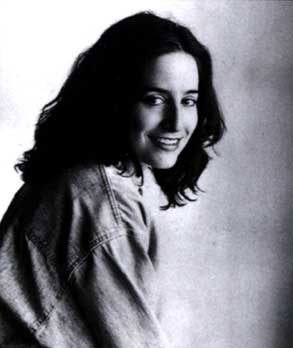
Aimee Bender is the author of "The Girl in the Flammable Skirt and Other Stories." Her first novel, "An Invisible Sign of My Own," was published in July. More Aimee Bender.
Can you identify?
Science shows that the only way around some readers' prejudices is to trick them
(Credit: Shutterstock/Salon) The news of recent research documenting how readers identify with the main characters in stories has mostly been taken as confirmation of the value of literary role models. Lisa Libby, an assistant professor at Ohio State University and co-author of a study published in the Journal of Personality and Social Psychology, explained that subjects who read a short story in which the protagonist overcomes obstacles in order to vote were more likely to vote themselves several days later.
The suggestibility of readers isn’t news. Johann Wolfgang von Goethe’s novel of a sensitive young man destroyed by unrequited love, “The Sorrows of Young Werther,” inspired a rash of suicides by would-be Werthers in the late 1700s. Jack Kerouac has launched a thousand road trips. Still, this is part of science’s job: Running empirical tests on common knowledge — if for no other reason than because common knowledge (and common sense) is often wrong.
Continue Reading Close
Laura Miller is a senior writer for Salon. She is the author of "The Magician's Book: A Skeptic's Adventures in Narnia" and has a Web site, magiciansbook.com. More Laura Miller.
Reading, revolutionized
A poet/book artist and a programmer team up to create a book that unites the traditional and the electronic
(Credit: via Between Page and Screen)
“Between Page and Screen,” a groundbreaking collaboration between poet and book artist Amaranth Borsuk and programmer Brad Bouse, is truly a first: a book that only can be read when simultaneously using a codex book and a computer’s webcam. When placed in front of a webcam, the black shapes printed on the pages, sans words, trigger animated text on the screen, revealing a correspondence between characters P and S.
Stories don’t need morals or messages
A "stupid" test shows that the Puritan ethic lives on. Why do we insist on learning lessons from the books we read?
(Credit: iStockphoto/Yayayoyo via Shutterstock) What is the purpose of reading stories, especially made-up stories? That’s the question lurking behind a recent posting to the New York Times’ education blog, SchoolBook. Ann Stone and Jeff Nichols, the parents of twins, wrote about taking their kids’ third-grade English Language Arts test with some friends as a party game on New Year’s Eve. The group read an inane little story about tiger cubs learning to tear bark off logs, but, to their surprise, couldn’t agree on a single answer to the multiple choice question that followed: “What is this story mostly about?”
Continue Reading Close
Laura Miller is a senior writer for Salon. She is the author of "The Magician's Book: A Skeptic's Adventures in Narnia" and has a Web site, magiciansbook.com. More Laura Miller.
Reader responses: Books you want banned
On Wednesday, we asked which books you think kids should never have to read in school. Here's what you said
Earlier this week, Laura Miller and other Salon writers weighed in on books they’d like to see banned from school reading lists — from “Lord of the Flies” (“Is it pure sadism [that makes teachers assign that book]?” asked Andrew O’Hehir) to “Ivanhoe,” which went a fair way toward dulling Life editor Sarah Hepola’s enthusiasm for high school English.
Continue Reading CloseEmma Mustich is a Salon contributor. Follow her on Twitter: @emustich. More Emma Mustich.
What did you really read this summer?
As August ends, Arthur Phillips, Laura Hillenbrand, Lev Grossman and others reveal their reading records to Salon
For readers, summer often starts with grand ambition. This will be the year we really tackle Roberto Bolaño or David Foster Wallace; it will be the summer of nothing but lemonade and Alice Munro. Or perhaps we’ll educate ourselves by delving deep into accounts of the financial crisis or the war on terror. Then the days turn lazy and even the most sincere intentions wilt in the heat.
With September looming, we thought it would be a good time to check in with some of our favorite authors — and some of the writers you’re likely to be reading this fall — to see what they really read this summer. Click through the following slide show to see what they had to say.
Emma Mustich is a Salon contributor. Follow her on Twitter: @emustich. More Emma Mustich.
Page 1 of 25 in Readers and Reading


