
Apple

The once and future Steve Jobs

How the comeback kid remade Apple -- from the "Think Different" campaign to a "loose lips sink ships" reign of terror.

On Sept. 16, 1997, Steve Jobs announced that he would serve as Apple’s “interim CEO.” He moved into a conspicuously small office, close to the boardroom. He inherited Gil Amelio’s secretary, Vicki, and told her that he didn’t like the pens that Apple kept in stock. He would only write with a certain type of Pilot pen, which he proclaimed was “the best.”

He took to walking around the Apple campus barefoot in cutoff shorts and a black shirt. One day he accosted Jim Oliver, a Wharton Ph.D. who had been Gil’s assistant.

“What do you do here?” Steve demanded.

“I’m wrapping things up.”

“You mean that in a while you won’t have a job?” Steve shot back. “Well, good, because I need someone to do some grunt work.”

What a strange way to motivate people, Jim thought. Then again, it was a chance to work for a legendary figure.

It turned out that the “grunt work” would give Jim a close-up view of Steve’s deliberations about how to save Apple. The job was to take notes at the meetings where Steve would review every part of the company and decide what to keep and what to kill.

The gatherings were held in the boardroom, which was in the only high-rise office building on the low-slung campus. It had a panoramic view of the expanse of Silicon Valley. Steve would call in the head of a product team and all of its key players. Anywhere from a dozen people to three dozen would crowd around the long wooden table. They had to show Steve all of their existing products and expound in detail about their future plans. If they made physical products, like monitors, they had to bring models of their upcoming lines. If they wrote software, they had to run Steve through the features of their programs.

Steve’s attitude wasn’t confrontational. He wanted to absorb a vast amount of information before he took action. Still, there was always an undercurrent of tension, and Steve would occasionally upbraid people if they didn’t seem to realize the urgency of the situation. Gil had made extensive cuts, but Steve was going to cut a lot more. Steve said that he would keep only the great products and the profitable products. If something were unprofitable but strategic, its managers would have to argue for its continued existence.

During the first review meeting with a group, Steve would listen and absorb. In the second meeting, he would ask a series of difficult and provocative questions. “If you had to cut half your products, what would you do?” he would ask. He would also take a positive tack: “If money were no object, what would you do?”

The series of group meetings helped Steve to get to know hundreds of people at Apple. And once he knew the players, he would deal with them directly. He had total disregard for the hierarchical chain of command. He would remember what several hundred people did and call on whomever he needed, always bypassing their managers. It was as though everyone in the company reported directly to Steve himself. “Steve has the ability to buffer so much in his head,” Jim Oliver explains. “He can remember the last conversation and the last e-mail exchange that he had with 300 people.”

He put especially intense pressure on the top executives. He tormented Heidi Roizen with constant calls to her office phone, home phone, cellphone and pager, starting at 7 a.m. almost every day. She was so unnerved by his interrogations and his frequent tirades that she decided the only way to preserve her mental health was to ignore his calls. She tried to communicate with him only by e-mail, which enabled her to consider the issues calmly and rationally, unaffected by the irresistible force of his compelling live presence.

Heidi talked with Bill Campbell, whom Steve had named to Apple’s board of directors. Bill was a bona fide tough guy, a former college football coach, but he confessed that he, too, was unnerved by Steve’s constant phone calls.

“Do what I do,” she advised him. “Don’t answer the phone.”

“That’s what my wife said. I tried that. But then Steve would come over to my house. He lives only three blocks away.”

“Don’t answer the door.”

“I tried that. But my dog sees him and goes berserk.”

In his first month as “interim CEO,” Steve began walking around the office carrying a sleekly curved piece of white foam. It was the model for the size and shape of a computer, which would eventually become known as the “iMac,” for “internet Macintosh.” It was the creation of Jonathan Ive, who was 30 and looked more like a scruffy bicycle messenger or skateboarder than the chief designer at a major manufacturer of consumer products.

While the physical look of the iMac had been conceived before Steve took over, everything else about the computer was still uncertain. Steve’s thinking was strongly influenced by his friendship with Larry Ellison as well as their unspoken rivalry. He believed the future belonged to stripped-down machines, called “network computers,” or NCs, that would connect to the Internet and cost only half as much as PCs. Larry had even started his own company, Network Computer Inc., to try to cash in on the idea.

Steve decided that the iMac would be a network computer. “We’re going to beat Ellison at his own game,” he told his Apple colleagues, who were surprised to see Steve secretly delighting in the competition with his best friend.

- – - – - – - – - – - -

In September, Steve began taking decisive action. Gil had cut the number of research and development projects from 350 to 50. Steve cut it from 50 to about 10. Instead of hoping for some stunning technical breakthrough that would save the company, Steve looked instead at improving Apple’s advertising and restoring its cool, hip image. He invited three ad agencies to pitch for Apple’s business, including Chiat/Day, which had created the famous “1984″ television commercial during Steve’s first run at Apple.

Chiat/Day still had the same creative director from the “1984″ campaign, Lee Clow, who came to Cupertino and proposed a new slogan: “Think Different.”

“That’s not grammatical,” thought Jim Oliver as he sat there taking notes for Steve. But no one in the room had the guts to say so.

Lee Clow said that the comeback of Harley-Davidson motorcycles was a good model for Apple to emulate. Harley’s advertising convinced people that they could feel its renegade spirit even if they were investment bankers rather than Hells Angels. It rehabilitated a counterculture icon for the baby boomers who had grown up and sold out.

That’s exactly what Apple needed to do.

- – - – - – - – - – - -

Apple’s new advertising campaign came together quickly.

Steve had always liked photos of cultural icons. At his first house in Los Gatos, Calif., near his mattress, he had kept pictures of Albert Einstein and an Eastern mystical guru. Steve also loved black-and-white photography. He hung Ansel Adams prints at the Palo Alto, Calif., house. Those were the elements: the slogan, the icons, the monochrome tableaux.

The first outsider to see the new ads was Newsweek’s Katie Hafner. She arrived at Apple’s headquarters at 10 on a Friday morning for an interview with Steve. He kept her waiting a long time. Finally he emerged. His chin was covered by stubble. He was exhausted from having stayed up all night editing footage for the “Think Different” television spot. The creative directors at Chiat/Day would send him video clips over a satellite connection, and he would say yes or no. Now the montage was finally complete.

Steve sat with Katie and they watched the commercial.

Steve was crying.

“That’s what I love about him,” Katie recalls. “It wasn’t trumped up. Steve was genuinely moved by that stupid ad.”

On Sept. 30, 1997, Steve assembled Apple’s employees for an outdoor party — with beer and strictly vegetarian cuisine — to celebrate the new campaign.

He explained that Apple’s ads were going to convey an image and an attitude rather than simply describing a product. As a model, he talked about how Nike’s ads projected a sense of athleticism and success without even showing its shoes.

“Apple spends $100 million a year on advertising,” Steve said, “and it hadn’t done us much good.” They were going to continue spending $100 million a year, but now they were going to spend it better, he said, because now they realized that the Apple brand was one of the most valuable things they had going for them.

One of the employees in the audience was a young woman named Kate Adams. It was the first time she had seen Steve speak close up, and she was very excited. “It was a good — no, great — speech, delivered in a ‘I might sound like I’m musing but I’m damned sure of what I’m saying’ tone,” she wrote in an e-mail message to a friend.

Her friend turned out to be a software entrepreneur, Dave Winer, who wrote DaveNet, a column that he e-mailed to hundreds of the most influential people in the industry, including CEOs like Bill Gates and Michael Dell. To Kate’s surprise, Dave published her e-mail in its entirety: a long, detailed account of Steve’s talk.

The next day, Kate received a voice-mail message.

“Hi, this is Steve Jobs. I’d like to get together and chat with you.”

Steve’s voice sounded cheerful. What did he want? Was this some management theory of his, calling random midlevel employees and picking their brains for a while? Or was he pissed off by the DaveNet column?

Kate called Steve’s secretary and made an appointment. She didn’t sleep well that night. The next morning at 10 she entered Steve’s office. He was in the corner, typing on his Next computer. Steve relied on three computers, and none of them was a Macintosh. He had black Next machines at his home and office and a Toshiba Tecra as his notebook.

With his back turned away from her, Steve waved and told her to sit down.

Kate eyed a pile of “Think Different” T-shirts as she waited for four minutes.

Steve turned to her.

“Hi, how ya doing?” he said amiably. Then he held up a printout of her message. “Can you tell me what this is?”

Steve had “sniffing” software that could screen and search his employees’ e-mail.

“I was encouraged by your talk, and I just wanted to tell my friend Dave.”

“You realize this is the kind of thing that can be published?” he asked.

“Well, it already has,” she said.

“Do you realize this $100 million figure is proprietary?” he continued. His tone was serious and confrontational but not outright hostile.

As she was walking out, he said:

“By the way, what do you do in the Quicktime group?”

“I’m on the engineering team,” she said.

“OK.”

She escaped. She knew that if she had said “marketing,” she would have been fired. He still needed Apple’s engineers, but he had no respect for its marketing people.

- – - – - – - – - – - -

Before Steve’s takeover, Apple people loved to leak. They did so partly because the company really did have lackluster marketing. If you were proud of your work, the only way to let other people in the industry know about it was to leak it yourself. A number of Web sites, like “Mac OS Rumors,” were devoted exclusively to Apple gossip.

Steve insisted on his old “loose lips sink ships” policy. At first the employees were incensed. Before long, though, they began to trust Steve to do Apple’s marketing for them.

Still, the Apple rank-and-file remained fearful of the Bad Steve persona. Word got around about Steve going into meetings, saying, “This is shit,” and firing people on the spot. People worried about getting trapped with him in an elevator for a few seconds, afraid that they might not have a job when the doors opened. The reality was that Steve’s summary executions were rare, but a handful of victims is enough to terrorize a whole company.

For a while there was an elevator in Steve’s building that had protective coverings on its walls because construction was going on, and someone said: “This must be Steve’s elevator since it’s padded.” Another employee responded: “Is it for him or for us?”

Apple needed some kind of shake-up. It was filled with people who had virtually ignored and ultimately outlasted three CEOs as they did their own things. “I don’t know if the previous CEOs at Apple had any effect on that company,” says John Warnock of Adobe, which is Apple’s biggest software provider. “We would have meetings with all those CEOs and nothing would happen, no traction, unless the group responsible went for the idea. The energy just dissipated into the organization, where the first person capable to make a decision is the one who makes it. But with Steve, he comes in with a very strong will and you sign up or get out of the way. You have to run Apple that way — very direct, very forceful. You can’t do it casually. When Steve attacks a problem, he attacks it with a vengeance. I think he mellowed during the Next years and he’s not so mellow anymore.”

Before Steve’s takeover, the campus had a leisurely atmosphere. Staffers loved to hang around smoking and chatting in the courtyard of the R&D complex, which always had ashtrays stocked at the outside and inside doors of all six of its buildings. Some employees seemed to spend most of their time throwing Frisbees to their dogs on the lawns.

Steve enforced new rules. He decreed that there would be no smoking anywhere on the Apple property. Then he banned dogs on campus, ostensibly because canines were messy and some people were allergic to them.

The employees were outraged: Why didn’t Steve understand them? Smoking in the courtyard was how they networked with their colleagues from other departments. It was a vital form of communications! Steve’s prohibitionism forced them to take long walks to De Anza Boulevard so they would be off the Apple property. It wasted a lot of time.

And their dogs were essential to productivity, too. A lot of people worked very long hours at Apple, even nights and weekends. They were hardly ever home. If they couldn’t care for and feed their dogs at the office, they would never get to see the pets.

It seemed as though Steve were pushing his own lifestyle on 10,000 others. At a company meeting, someone asked Steve what he thought was the worst thing about Apple.

“The cafeteria,” Steve said.

Steve proceeded to replace the entire food-service staff. He hired the chef from Il Fornaio in Palo Alto. Before long, tofu was prominent in the menu offerings.

And yet, somehow, the reign of terror was beginning to work. Apple had long been like a civil-service bureaucracy, with thousands of entrenched employees who did pretty much whatever they wanted regardless of which political appointees were temporarily at the top. Now that was changing. People started to realize that Steve could assert his authority over seemingly any aspect of the company’s life. Apple was going to follow the vision of a single person, from the no-smoking rules and the healthy cuisine to the editing of the TV advertisements. Steve was clearly in charge, and Steve was seemingly everywhere.

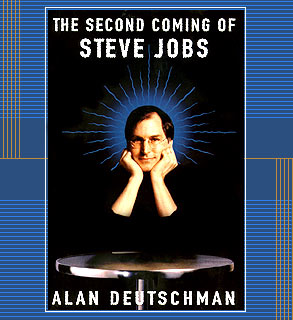
Alan Deutschman is the author of "The Second Coming of Steve Jobs."

The Foxconn raise paradox

The Apple manufacturer's decision to increase wages in China isn't necessarily good news for its workers there

In this May 26, 2010 file photo, staff members work on the production line at the Foxconn complex in the southern Chinese city of Shenzhen, southern China (Credit: AP Photo/Kin Cheung)
This article originally appeared on GlobalPost.

TAIPEI, Taiwan — Guilt-ridden iPad users were ready to rejoice last weekend, after Foxconn announced that it would bump up pay, reduce overtime and improve living conditions and safety protocols for its legions of Chinese workers producing Apple products in the coastal boomtown of Shenzhen.

Global PostFor years, the Taiwanese electronics giant has been dodging accusations of bad labor practices, charges that have tarnished the reputation of the world’s hottest gadget retailer.

But electronics industry insiders caution against celebrating a labor victory too soon.

It will only be a matter of time, they say, before contract suppliers simply shift operations to cheaper Asian destinations and replace hundreds of thousands of Chinese jobs with robots.

“It’s just cost efficiencies. Like any other company they’re trying to cut costs,” said John L’Epagnol, a managing partner of Goldhawk International, which marries Western buyers with Chinese factories.

“The increased labor demands will continue to push them into places like Vietnam or further into automation,” he said, adding that he’s been seeing “a lot more automation taking place,” even before Foxconn’s announcement.

The pressure on Apple and its key manufacturer has been particularly intense since May 2010, when labor activists claimed that at least 14 Chinese workers committed suicide at the strictly regimented plants.

Since the suicide revelations, there have been reports about illegal overtime hours, cramped dorm rooms, employee blacklists, shadowy security personnel and a weird corporate culture built around Foxconn founder Terry Guo, who owns a $30 million castle in the Czech Republic and counts 13th century Mongolian warlord Genghis Khan as his personal hero.

But insiders say that this latest round of pressure applied to Foxconn — which makes about 50 percent of global electronics and has a market capitalization equal to its 10 closest competitors — came about through its close ties to Apple, which first overtook Exxon as the world’s most valuable company in August last year.

The Taipei-based company — which also counts Sony, Nokia, Dell, Nintendo and Motorola among its clients — had already increased workers’ wages by 16 to 25 percent in February.

“The main reason Foxconn is under such a bright microscope is because it’s a foreign company and it works with Apple. Actually, for what it does, it has some of the highest wages in the industry and treats its workers much better than local Chinese outfits,” said L’Epagnol.

But critics claim that Foxconn, a subsidiary of Taiwan’s Hon Hai electronics company, is also under scrutiny because it dominates the global electronics supply chain and is a litmus test for industry-wide labor practices.

Where Foxconn goes, its competitors are likely to follow. So, the question is, where will Foxconn go?

“Robots and automation are definitely increasing trends. So are Foxconn’s moves into central China where labor costs are lower [than coastal China],” said Ying-dah Wong, a Taiwanese labor activist.

“They want the cheapest possible labor while escaping the most basic labor laws. That’s why you will see them connive with dictators and autocratic governments in places like Vietnam and Cambodia, so they can ensure their interests are always protected,” Wong added.

Foxconn has factories operating in Hungary, Mexico, India, Malaysia, Brazil and Vietnam. It’s the largest exporter in the Czech Republic. But it may be the communist state to the south of China that becomes the biggest recipient of the company’s “largess.”

The minimum wage in Vietnam is about $85 per month, a figure that’s substantially lower than Shenzhen’s $207. Guo, Foxconn’s founder, was also reportedly so impressed after meeting Vietnam’s president and other top brass that he offered to increase his $80 million investment in hardscrabble Bac Ninh province to $5 billion, sprinkled throughout the country.

“Communist and other autocratic countries just want jobs. It is as much a security and social order issue as it is an economic issue,” says Ying.

As for the iRobots, global industrial robot sales surged by 18 percent in 2011. Foxconn alone said it will produce 300,000 robots by next year, and 1 million by 2014. If all goes according to plan, an estimated 500,000 of Foxconn’s 1 million Chinese jobs will soon be obsolete.

In an email to GlobalPost, a Foxconn representative confirmed the move toward technology, but downplayed any potential negative impact. “Automation is playing an increasingly important role in our operations as our manufacturing processes and the products we produce become more sophisticated. This development is allowing many of our employees to move up the value chain,” the emailed statement read.

However, the International Federation of Robotics predicts that China will be the top robot market by 2014, and labor activists fear that if major companies like Foxconn set a precedent, millions of jobs in developing countries will be lost.

“Foxconn sets the pattern for others in the industry. Rising wages are a good thing for Chinese workers, the Chinese economy and the global economy, but only as long as productivity improves in tandem with wages,” said Chang-hee Lee of the U.N.-backed International Labor Organization.

But while much is made of the responsibility contract suppliers have in the developing world’s labor food chain, others aren’t so convinced.

“People don’t understand that companies like Apple drive these practices. Our margins are super, super low. They come in and say: ‘We want this produced. We want this many units. We want them delivered by this time. And this is what we are going to give you. If you can’t do it, someone else will,’” said a price analyst at a Foxconn rival who spoke on condition of anonymity.

“The days of bidding or putting quotes up with these big American companies are long gone,” he said.

Foxconn declined GlobalPost’s repeated interview requests.

Continue Reading Close

The trial of Mike Daisey

Salon writers debate the backlash around "This American Life's" retraction scandal

Mike Daisey and Ira Glass (Credit: mikedaisey.blogspot.com/AP/Seth Wenig)

Laura Miller: The retraction by the radio program “This American Life” of an episode based on Mike Daisey’s stage show, “The Agony and the Ecstasy of Steve Jobs,” raises (once more) the question of how much fiction we’re getting in our nonfiction. “This American Life” found that several incidents and facts in Daisey’s account of his firsthand investigation of working conditions in the Chinese factories where Apple devices are made were fabricated or otherwise inaccurate.

Daisey responded on his own blog that, as “a theatrical piece,” his one-man show “uses a combination of fact, memoir, and dramatic license to tell its story, and I believe it does so with integrity.” His mistake, he concludes, was allowing excerpts from the show to be excerpted on “This American Life,” which is “essentially a journalistic -­- not a theatrical ­– enterprise, and as such it operates under a different set of rules and expectations.”

I know the required response here is to jump all over Daisey for taking such liberties with the truth, but I have to say, I more or less agree with him — except for one crucial point. Personally, I wouldn’t be angered to learn that portions of any staged monologue, be it Daisey’s or Spaulding Grey’s “Swimming to Cambodia,” had been reshaped for dramatic effect — in fact, I’d be surprised if they weren’t. Drama does not present itself as documentary.

This is a matter of framing, rather than absolutes. “This American Life” is not drama. It’s not exactly reportage, either, and I expect some of the memoir-like segments the show airs also constitute “reshaped” events and facts. Nevertheless, the program presented “Mr. Daisey and the Apple Factory” as something very much like journalism, evidenced by their decision to fact-check it.

That Daisey obfuscated during the fact-checking process indicates that he was acting in bad faith, not just making a mistake. People don’t cover up what they’ve done unless they suspect they’ve done something wrong.

So, I’d say: “The Agony and the Ecstasy of Steve Jobs” is OK, but “Mr. Daisey Goes to the Apple Factory” is not. What do you guys think?

Mary Elizabeth Williams: First of all, I don’t think anybody goes to the theater expecting to see the newspaper. You understand when you’re in the hands of a monologuist that you’re in the hands of a storyteller, who will craft drama out of life.

But you don’t get to enjoy your glory as the crusading avenger who blew the lid off Apple when you are making stuff up. And you certainly don’t hem and haw about the facts of your account of events when “This American Life” comes a-knockin’, go ahead and pass off your tale as true, and then blather about how what you’re doing is about “human connection.”

The fact that a lot of the response to Daisey’s exposure has been so blase reminds me of the response I got when I wrote about James Frey last year. Oh hey, what’s the big deal? It’s entertainment! OK, well, Rush Limbaugh’s an “entertainer” too, and he spent three days of airtime making things up about Sandra Fluke and birth control. And most of us think that was pretty uncool.

When you’re speaking about real people and events, you have a responsibility to be clear how far into fantasy you’re going. You can do that and still create interesting work — nobody believes Neil Patrick Harris, actor, is Neil Patrick Harris, character in the Harold & Kumar movies. But what Daisey did was wildly, knowingly disingenuous, grandly self-serving, and all around gross.

Andrew O’Hehir: Mike Daisey definitely crossed a line from acceptable storytelling into unacceptable misstatements of fact, but Ira Glass was correct in saying that “This American Life” has to take much of the blame for it. As Laura points out, that show has an ambiguous status, and I had not known until now that its producers consider their work as journalism. That’s not quite an adequate label, frankly. But it’s clear that once they decided to fact-check Daisey’s work for their radio show, and he actively misled them about the fact that some details were fictionalized, the Rubicon had been crossed.

To be clear, I have no problem with an artist or writer taking liberties with a somewhat true story in order to make a dramatic point or a social argument. That describes almost everything Dickens ever wrote, and everything else from Frank Norris and Theodore Dreiser to “All the President’s Men,” “Silkwood” and “The Hurt Locker.” The larger problem is that our society lacks basic standards of literacy that would allow people to understand the distinction between fiction and journalism, and the varying pathways to truth (and definitions thereof) that each can offer.

We’re obsessed with the question of whether things are “real,” which betrays our doubts about whether anything we encounter in the media should be considered real. So the appearance of authenticity becomes a valuable commodity, and people seek it out when they don’t deserve it. Every other Hollywood movie professes to be “based on a true story,” which often is just an excuse for shoddy storytelling. What’s doubly or trebly unfortunate about this case is that most of what Mike Daisey says about working conditions in Chinese factories is apparently true. He doesn’t deserve comparison with someone like James Frey, who essentially tried to sell a novel as autobiography.

Daisey streamlined some details and fictionalized an important episode. It was totally OK to do that onstage, and totally not OK to do it in the context of a radio news program. The two contexts have radically different standards, and however he managed to seduce himself into forgetting that, he has now tainted his entire career with the flavor of bogosity.

Mary Elizabeth Williams: I think Scott Rosenberg summed it up well in Grist — “So there’s no such thing as a neutral story. But there is such a thing as an honest story.” When Will Reiser wrote “50/50,” people knew that he’d had spinal cancer, like his character. The film cast his real friend Seth Rogen. But he’s always maintained that the work and characters are fiction. See what he did there? That’s how you base something on a true story — you use elements of your experience without pretending it’s journalism.

When Jack Donaghy jokes on “30 Rock” that he had a one-night stand with Nikki Finke, everybody knows it’s a joke — one that employs a real person. What Daisey did was to say, unvarnished, I was there and this happened. He did it in service of some self-proclaimed greater good. But in the end, he wound up blatantly misleading his producers at “TAL” and his listeners. He reminds me of “Nick Smith” in “Metropolitan,” hiding behind the excuse that his story was a “composite” that could have happened. Could have isn’t did. Happened to someone else isn’t happened to you.

Andrew O’Hehir: You know, there’s more to be said about the NYT’s Daisey pile-on than I can say succinctly here, but it’s noteworthy that the newspaper of record has unleashed two attacks on him, with David Carr writing that “the heroic narrative of a fearless theater artist taking on the biggest company in the world is now a pile of smoking rubble.” Taking Apple’s side against a guy who does theatrical monologues feels uncomfortably like the long Times tradition of speaking power to truth, if you follow me.

But I was struck by this passage in Charles Isherwood’s piece: “The weight, authority, emotional power and — like it or not, theatricality — of ‘The Agony and the Ecstasy of Steve Jobs’ derive precisely from the assumption that Mr. Daisey is telling the truth about the events he describes.”

He definitely has a point here. From the outset, Daisey enlisted himself in a semi-documentary tradition where the facts matter and poetic license is assumed to be minimal. That makes it a fair bit different from examples cited by me (Dickens, “The Hurt Locker”) or Laura (“Swimming to Cambodia”), where a real situation is referenced, but we all understand that it’s likely the specific details have been massaged for dramatic effect.

Mary Elizabeth Williams: Tell a story. Make it lively. Then tell the truth about what’s real and what isn’t. Doing a piece on harrowing work conditions in China is not the same as doing a piece on your stint as a Macy’s elf.

Continue Reading Close
Andrew O

Mary Elizabeth Williams

Mary Elizabeth Williams is a staff writer for Salon and the author of "Gimme Shelter: My Three Years Searching for the American Dream." Follow her on Twitter: @embeedub.

Laura Miller

Laura Miller is a senior writer for Salon. She is the author of "The Magician's Book: A Skeptic's Adventures in Narnia" and has a Web site, magiciansbook.com.

Mike Daisey and the inconvenient truth

When storytellers exaggerate facts -- as a "This American Life" episode about Apple did -- the audience loses

In this undated image released by The Public Theater, Mike Daisey is shown in a scene from "The Agony and The Ecstasy of Steve Jobs," in New York. Daisey, whose latest show has been being credited with sparking probes into how Apple's high-tech devices are made, is finding himself under fire for distorting the truth. The public radio show “This American Life” retracted a story Friday, March 16, 2012, that it broadcast in January about what Daisey said he saw while visiting a factory in China where iPads and iPhones are made. (AP Photo/The Public Theater, Stan Barouh) (Credit: AP)

I can’t be the only listener who thought this past weekend’s edition of “This American Life,” the public-radio show, was among the most compelling work Ira Glass and his team of producers had ever done. As I sat in my rental car stuck in Los Angeles gridlock listening to the radio, I felt certain I was part of a community of people across the country listening to the radio thinking Unbelievable.

Episode 460, “Retraction,” was an hour-long correction to Episode 454, “Mr. Daisey and the Apple Factory,” which aired January 6. That episode was a special hour-long condensation of Mike Daisey’s one-man show, “The Agony and the Ecstasy of Steve Jobs.” In that show, which ended Sunday in New York and heads next to Washington, D.C., Daisey recounts his trip to China to interview workers in the Foxconn factory, which makes Apple products. And in fact that episode — in which Daisey describes meeting workers who had to sleep in prison-like barracks; whose hands shook from the neurotoxins in cleaning solutions that Apple forced them to handle; whose arms were mangled from industrial accidents for which they were not compensated — had also been among the most compelling hours of radio I had ever heard. It launched Daisey into a role as a nationally prominent critic of Apple, appearing on MSNBC and elsewhere.

But it turned out that Daisey had invented some scenes, exaggerated others, and could not prove the veracity of still others. The flim-flammery was uncovered by a China-based “Marketplace” reporter who heard the Daisey episode and thought it sounded fishy. He tracked down Daisey’s translator — whom Daisey, during the “TAL” fact-checking process, had told Glass and his producers could not be found — and she said, in effect, that much of what Daisey said in his show, and on the radio, had not happened that way.

For the details, go listen to “Retraction” — not for nothing did Steve Martin tweet, about this episode, “A standing ovation and a boy scout salute to the dignity of ‘This American Life.’” Or you can read the transcript here. Not only is the episode Tylenol-like in helping a trusted brand recover from a notorious tampering scandal, but it reveals Ira Glass to be a ruthless cross-examiner. The scenes in which he grills Mike Daisey about his deceptions — in which we hear Daisey’s long silences, which Glass cruelly refuses to edit out, and Glass’s blunt declarations that “I don’t believe you” and “I think you’re kidding yourself” — reveal Glass to be something of a radio avenger for truth. When print journalists fabricate stories, or even just make severe errors, we readers are never privy to their dressings-down by their editors. Daisey had the misfortune of going unethical on a radio show, on Ira’s show, and now Ira goes all Foxconn on Daisey, as America listens.

There is no question that Daisey got what he deserved, and that Glass did what he had to do. In fact, I can’t get over the schadenfreude of hearing a malefactor get his comeuppance so publicly.

On the other hand, I still like Mike Daisey.

Mike Daisey should not represent as literal truth what he has edited and exaggerated for dramatic purposes. I don’t buy the excuse he presented to Glass that what he does is okay onstage, and only problematic when transferred to public radio. (Before Sunday’s show, which included some changes to the script to make it more accurate, he stood by his work as a whole, and said news organizations like The New York Times verified his big-picture story about working conditions at at the Chinese factories.)

That said, there but for the grace of my own inferior career go I. If people paid me to tell stories onstage, I know I would exaggerate the heck out of them. It would not be right, but I am not sure I could help myself.

There is a difference between the personality of the raconteur and the personality of the journalist. Raconteurs love a good story, while journalists love nailing down elusive facts. There is overlap between these two types, lots of overlap: the best journalists love it when the facts come together in an elegant narrative arc. But it’s a useful distinction. Even though he worked in print, the New Yorker’s Joseph Mitchell, for example, was clearly more raconteur than journalist; his favorite people were storytellers, his own writing always story-driven, and we know that he sometimes did not let the facts get in the way.

Fortunately, there is work for people who prefer raconteurship to reporting: they can become fiction writers, perhaps thinly veiling the facts of their own life, but taking liberties with them. Or they can become storytellers, as on the popular “Moth Radio Hour” or, as it happens, on “This American Life,” whose David Sedaris has been charged with improving on the facts. Or they can become monologists like Spalding Gray, or like Mike Daisey. What they can’t do is claim that taking liberties with facts gets them closer to the truth.

Daisey’s genius has been bringing an investigative zeal to his monologues, which often have an edge of social criticism. They are about monopolies, or homeland security, or, in the case of his monologue “Truth,” about the responsibilities that art owes to life. “Truth,” from 2006, was about the cases of James Frey, J.T. LeRoy and Fernando Pessoa — which prior to Daisey himself were among the most famous recent cases of writers who were not what they said they were, and the prices they paid, or did not pay, with audiences. Daisey’s project has involved bringing journalism to raconteurship: going out and finding the stories, traveling for them, rather than just recounting what life has strewn in his path.

This appealing fusion of the dramatic, raconteuresque monologue and investigative journalism surely helps explain why audiences responded to Daisey as an original talent. The problem that Daisey has not yet solved — and that, in “The Agony and the Ecstasy of Steve Jobs” — he chickened out of solving, is how to artfully construct a monologue that is not purely factual and not lose an audience in the process. How about if he tries this: Trust the audience and tell them that’s what you’re doing. When artists of nonfiction, whether in radio or in print, shade the truth while refusing to call their work fiction, they are trading on the frisson, the immediacy, that audiences feel when something powerful is also true. Thus the impulse to call something memoir when it’s not memoir, or to collapse time and rearrange events for effect (like George Orwell in “The Road to Wigan Pier”). There’s a way to train audiences to love the mostly-true, the improved-but-still-basically-factual. We need to learn how to love this hybrid, because as Mike Daisey shows, it’s the next great art form. But we need to be honest about what it is. Our love must be true, not purchased with lies.

Continue Reading Close

Mark Oppenheimer writes the Beliefs column for The New York Times. He can be followed on Twitter @markopp1. His website is www.MarkOppenheimer.com

Scott Turow on why we should fear Amazon

The feds might sue Apple and publishers over pricing. But a top author suggests the e-retailer's playing monopoly

(Credit: AP/Ben Margot)

Late last week, the Justice Department warned Apple and five of the nation’s largest publishers that it was planning to sue them for price fixing. At issue is the agency model, a method of wholesaling e-books in which the publisher sets the retail price and the retailer takes a 30 percent cut. Most print and many e-books are sold under the traditional wholesale model, in which publishers sell books at a discounted price, and the retailer can resell them for whatever price it likes.

The unnamed player in this drama is Amazon, which had been selling e-books at a loss until two years ago, when the iPad came along and publishers used the emergence of the new device to pressure the online megaretailer into adopting the agency model, too. If Amazon wanted to sell e-books from the Big Six (as the six largest book publishers are called), it could no longer sell those titles for $9.99.

Publishers actually make less money with the agency model, so why have they insisted on it? The change was designed to limit the growing dominance of Amazon over American book retailing. On Monday, Scott Turow — the bestselling author of “Presumed Innocent” and other legal thrillers, and the president of the Authors Guild — posted a letter to members on the Guild’s web site. In it, he pronounced the Justice Department’s actions bad news for authors, “grim news for everyone who cherishes a rich literary culture,” and (contrary to first impression) ominous for book consumers. I called him up to find out more.

What are some of the Guild’s problems with Amazon?

First of all, so that I don’t get dismissed as an ingrate, I should say that Amazon has been a boon for bestselling authors. Authors get paid on the basis of the cover price for a hardcover book. By discounting, which is something that chain stores started and Amazon continued, they have lowered the barriers to book buying in ways that have been personally extremely beneficial to me.

Because you get paid the same amount regardless of how much the retailer charges for the book, and the discounting encourages more people to buy the book?

Exactly. These are not personal complaints. There are lots of things about Amazon for which they deserve credit. They’re innovative. There are lots of very, very happy Amazon customers. I’m not here to dispute that Amazon has been personally good for me or to say that they haven’t been, so far, good to their customers.

So what’s the problem?

The concern is that they are getting so large and they compete so ruthlessly that there’s a lot of fear for what the world with Amazon in charge is going to look like.

The Guild’s beefs with Amazon became pronounced over the issue of the resale of new titles some years ago. This was something that Amazon pioneered. They would sell you a [just-released] book on Day One, buy it back from you on Day Two, and then resell it to another customer on Day Three. This was legal, but certainly not what anybody ever intended.

Traditionally, in hardcover, that’s been basically a split of the proceeds between the author and publisher. (An aside: That’s something we’re fighting with publishers about in the digital world.) So Amazon decides to go into competition with the publishers by reselling the book they just bought. The publisher gets paid nothing, and neither does the author. It’s a pure profit for Amazon.

Now, the reason you don’t see used bookstores within new bookstores is that the used books compete with the new books and the publishers supplying the new books would object. Either you’re doing business with me or you’re competing with me. I’m not going to sell you books so you can take some percentage of sales.

The problem of course was the Amazon had gotten so big that publishers were afraid to resist that. It’s not the mere fact that they’re competing [with their own suppliers]. I can certainly understand that it’s good for consumers to be able to buy a book two days later at a lower price. It’s the fact that the publishers were afraid to dismiss Amazon.

Which is what they would do with a regular retailer who was doing the same thing but had viable competitors?

Right, and of course, Amazon was undercutting authors in the process. We tried to persuade them to just window this [delay making used copies of brand-new books available for a period of time, the way the release of the DVD of a movie is delayed until after it has played in theaters]. That didn’t work. It was a muscle-flexing exhibition by Amazon, saying, “We’ve got so much market power, you guys can’t do what you’ve traditionally done and take your goods elsewhere. We represent at least 30 percent of the book market.”

I don’t like losing sales, but the real problem is at the margins. Midlist authors have been struggling to survive for decades now. If you start eating into the publishers’ returns, then at the bottom of the food chain, those books are just not going to get published. We have seen that happen.

Are there other examples of Amazon using its predominance?

They now control the print-on-demand market. That’s when you buy a book and only then does a service print a copy — literally on demand. [This is a method used by academic and small presses, as well as by authors with otherwise out-of-print books.] Amazon bought a POD service called BookSurge. Then they informed their customers — university presses and some other publishers who the Guild had organized to do POD for Authors Guild members — that they would not list their books on Amazon’s site unless they paid BookSurge more for their services.

I don’t know how they defend themselves on this one. That’s another very ominous sign to the book industry and authors.

What about their history with e-books?

They deserve a lot of credit for the Kindle, for yoking e-ink with this nationwide wireless network. It’s a great innovation. And they said to the publishers, “It’s really important to us in introducing this platform that e-books appear at the same time as the hardcover edition.” Publishers said, “Oh, we’ve seen your tricks before, Amazon! Why would we ever do that?”

So Amazon says, “We’ll pay you the same amount we pay you on a hardcover.” So publishers think that sounds fine, how can they complain about that? They agree and are then stunned when Amazon announces that they’re going to sell every e-book at a loss, for $9.99. That’s an average loss of $4 to $5 a book.

Why would Amazon do that?

I suppose they could argue they were doing it to sell devices and that may well have been one of their intentions. It had the additional benefit of making it much harder for any of their competitors to enter the market.

For example: A lot of people have the habit of going into a physical store, looking at books and then turning around and buying the e-book wirelessly from Amazon. Had it not been the case that you had to sell an e-book at a $5 loss, bookstores would have been able to say, “Sure, bring your device with you and we’ll sell you the e-book right here.”

Bookstores are pretty hard-pressed by book discounting as it is, and the idea of selling ebooks at a loss made it impossible for them to enter the marketplace in competition with Amazon.

What about the proprietary format of Kindle? Didn’t that also make it hard for competing e-readers to enter the market?

You couldn’t read all those books you bought from Amazon on a competitor’s device — you can now, if you have an iPad, but you couldn’t then.

The nook is widely regarded as the better e-reader device, but if you’ve accumulated a library of Kindle titles, you can’t take them with you if you decide to switch. [Technically, you can, but most users would find this quite challenging.]

Barnes and Noble developed the nook because they really had no choice but to compete with Amazon. They were struggling at that point, and I personally don’t think they’d have been able to survive while losing $5 on every book. There simply were not a lot of people jumping into that market to compete, not with the prospect of losing $5 on every book sale. From the outside, it looks like the pricing was not just a loss leader on the devices, but a way to discourage competition.

How did Amazon’s e-book pricing affect authors?

One way that 25 percent of net became the standard royalty for e-books was because publishers said, “We all know they can’t go on selling e-books at a loss forever and sooner or later this pricing structure has got to change.” They told authors they couldn’t agree to a different royalty because everyone knew that Amazon wouldn’t be paying them $14 to $15 per title indefinitely.

You’re implying that Amazon planned eventually to use the consumer’s habituation to $9.99 books to force publishers to charge Amazon lower wholesale prices for books. They’ve tried to do that recently with some small presses, removing their titles from Amazon unless the presses agree to sell their books at rock-bottom wholesale prices. And publishers would have no choice but to agree because every other competitor would also have been driven out of the market by Amazon’s predatory pricing?

Certainly, that’s what publishers assumed.

The other thing Amazon could have done once they had the market to themselves — and this is virtually inevitable — is that they would have raised prices to consumers.

That’s part of the less-known history behind anti-trust laws. Once a large company has spent its capital to fund predatory pricing and drive its competitors out of business, there’s no reason to keep selling for cheap. The low prices don’t last.

Right. Look, if what they’re into is maximizing profits, then if they were to have a monopoly there’d be no rationale not to use the monopoly power to increase prices to consumers. Now, if I were on the other side, working for Amazon, I’d say “Show me where I’ve done that.”

Presumably, they haven’t done it yet because they haven’t achieved the monopoly yet. Historically, that’s what monopolies always do.

Correct. That is historically what monopolies do. There is plenty of precedent for that. It’s only rational to fear what they’re going to do with this accumulation of power.

Again, the concern from the author’s perspective is that e-books are putting a tremendous downward pressure on the price of books in general. That’s putting tremendous pressure on publishers to survive. And I think a world in which online book selling is driving bookstores out of existence is a pity.

How did Amazon respond to the entrance of Apple and the agency pricing system?

Apple offered to sell books on the iPad using the agency model — which is what they use for iTunes — and the publishers one by one agreed to that. Then they told Amazon they were going to follow this new model, and that they were going to produce the e-books themselves rather than Amazon doing so.

When the first publisher, John Sargent [of Macmillan], told them that, Amazon responded by removing the buy buttons not just from all of Macmillan Publishing’s e-books — about which you can say, yeah, there’s a legitimate dispute — but from their print books, too. Paper, physical books! It was another demonstration of their ability to abuse their market power.

They used their market power over an item where pricing was not in dispute to punish a publisher for taking what Amazon regards as an unfavorable position in a different market.

Why should where their books are bought make a difference to authors?

New authors traditionally are nurtured by bookstore personnel, especially in independent bookstores. These people literally hand sell books to their customers, by saying, “I’ve read this. I think you’re going to love it.” Not to mention the fact that a bookstore is a small cultural center in a community. That’s definitely a loss.

Again, my concern is for the sake of literary diversity. If the rewards to authors go down, simple economics says there will be fewer authors. It’s not that people won’t burn with the passion to write. The number of people wanting to be novelists is probably not going to decline — but certainly the number of people who are going to be able to make a living as authors is going to dramatically decrease.

When that decreases, the diversity of the literary culture decreases. The store of new ideas and the richness of the discussion all decreases.

Further reading

Scott Turow’s letter to the Authors Guild membership

The Wall Street Journal on the Justice Department’s threat to sue Apple and five book publishers for price fixing

Continue Reading Close
Laura Miller

Laura Miller is a senior writer for Salon. She is the author of "The Magician's Book: A Skeptic's Adventures in Narnia" and has a Web site, magiciansbook.com.

Can one man change Apple?

Updated: Mike Daisey's one-man show has galvanized public opinion against the electronic giant's labor practices

Mike Daisey is shown in a scene from "The Agony and The Ecstasy of Steve Jobs" (Credit: AP/Stan Barouh)

[UPDATED BELOW]

If you would seek proof of that famous Margaret Mead adage: “Never doubt that a small group of thoughtful, committed citizens can change the world; indeed, it’s the only thing that ever has,” look at what’s happening as more and more people protest Apple Inc.’s labor practices in China.

Take it one step further: if you should ever doubt the impact a solitary artist can have against injustice, meet Mike Daisey.

Daisey is a monologist, a creator of one-man shows, whose performance piece “The Agony and the Ecstasy of Steve Jobs” has jolted audiences into action as he parallels the obsessions of Jobs, the recently deceased former CEO of Apple; our consumer-driven lust for iPods, iPhones, and iPads and the human toll taken by their manufacture.

Apple – like virtually every other electronics manufacturer – subcontracts much of the work that goes into building its devices to companies in Asia. One of them, Foxconn Technology, is the largest private employer in China. Its factories there and in other parts of the world put together approximately 40 percent of all the consumer electronics devices on the planet. Their largest facility, Foxconn City, is in Shenzhen, just across the border from Hong Kong, and employs nearly a quarter of a million workers.

As the New York Times reported late last month:

Employees work excessive overtime, in some cases seven days a week, and live in crowded dorms. Some say they stand so long that their legs swell until they can hardly walk. Under-age workers have helped build Apple’s products, and the company’s suppliers have improperly disposed of hazardous waste and falsified records, according to company reports and advocacy groups that, within China, are often considered reliable, independent monitors. More troubling, the groups say, is some suppliers’ disregard for workers’ health. Two years ago, 137 workers at an Apple supplier in eastern China were injured after they were ordered to use a poisonous chemical to clean iPhone screens. Within seven months last year, two explosions at iPad factories, including in Chengdu [the capital of Sichuan province in southwest China], killed four people and injured 77. Before those blasts, Apple had been alerted to hazardous conditions inside the Chengdu plant, according to a Chinese group that published that warning.

The explosions were due to accumulations of aluminum dust from the polishing of thousands upon thousands of iPad cases. There have been more than a dozen suicides as well – part of Foxconn’s solution was to install nets around buildings to catch jumpers – and accounts of workers fired after their hands were made useless by repetitive stress injuries.

Many have reported on the working conditions at Foxconn, but it’s Mike Daisey’s one-man play, media coverage of his work and the broadcast of a one-hour version on the public radio series This American Life that seem to have galvanized public opinion.

Physically large and in charge, Mike Daisey’s performance style suggests a peculiar combination of the late Spalding Gray and Lewis Black of The Daily Show with Jon Stewart. He sits at a table on a bare stage with some notes and a glass of water and simply tells his story; at times hysterically funny, at others, poignant, withering and accusatory. Some might find his manner a bit loud and overbearing: the night we were there last fall, media moguls Barry Diller and David Geffen were sitting a couple of rows in front of us and walked out after the first fifteen minutes or so. (Don’t try to deny it: we have your ticket stubs.)

But maybe it wasn’t Daisey’s profanity and mild bellicosity that got under their skin and instead, some simple truths. Daisey begins by detailing his own passion for all things Apple (“I am an Apple fanboy, I am a worshiper in the cult of Mac.”) and slowly segues into stories from the company’s history and its increasing dependence on Chinese labor. Daisey traveled to China to see it all firsthand.

“You know,” he says, “when we dream of a future when the regulations are washed away and the corporations are finally free to sail above us, you don’t have to dream about some sci-fi-dystopian-Blade Runner-1984 bull____. You can go to Shenzhen tomorrow – they’re making your s___ that way today.”

All the bad publicity and petitions that sprang up, especially after Daisey’s public radio appearance apparently have gotten to super secretive Apple, which at an estimated worth of more than $465 billion has now surpassed ExxonMobil as the largest publicly traded company in the world. They’ve launched a PR counteroffensive that included this week’s “exclusive” visit to Foxconn City by Bill Weir of ABC’s Nightline, who reported on the suicides and other health issues but said, “China has very different values when it comes to gainful employment” and compared some of the complaints to what “you’d hear at any factory or college campus.”

Weir breathlessly referred to Apple products as “precious objects” and “works of art” and said that although Bob Iger, the CEO of the Walt Disney Company, ABC’s owner sits on Apple’s board and the Steve Jobs Trust is Disney’s largest stockholder, “I only agreed to report exactly what I saw.”

In its latest, annual Supplier Responsibility Progress Report, Apple for the first time released a list of its subcontractors and announced that it has joined the Fair Labor Association, which makes unannounced factory inspections to check on working conditions and report violations. And last Saturday, Foxconn announced it’s raising salaries by as much as 25 percent (to $400 a month) and reducing excessive overtime.

But not so fast. According to the activist Hong Kong-based Students and Scholars against Corporate Misbehavior, “The new basic wage… only applies to the workers in Shenzhen. In inland provinces, where two-thirds of production workers are based, basic salary remains meager. Given that inflation in China is high. Foxconn is just following the trend of wage increases in the electronics industry in China.”

As for the Fair Labor Association, it’s not all that independent. Writing for CNN.com, Scott Nova, executive director of the Worker Rights Consortium, notes:

…Most of its money — millions of dollars per year — comes from the very companies whose labor practices it is supposed to scrutinize. Although Apple has not disclosed its financial relationship with the Fair Labor Association, it is likely now the organization’s largest funder. Moreover, on the association’s board of directors sit executives of major corporations such as Nike, Adidas and agribusiness giant Syngenta. The job of these executives is to represent the interests of other member companies, such as Apple. Under the Fair Labor Association’s rules, the company representatives on the board exercise veto power over major decisions.

Jeff Ballinger, director of Press for Change, a labor rights group, told The New York Times, “[It] is largely a fig leaf. There’s all this rhetoric from corporate social responsibility people and the big companies that they want to improve labor standards, but all the pressure seems to be going the other direction — they’re trying to force prices down.”

Yes, Foxconn workers make well above the average salary of Chinese garment workers and yes, there are cultural issues and the overwhelming tide of globalization. But Apple is sitting on cash reserves of nearly $100 billion. As others have noted, just one tenth of 1 percent of that could go a long way toward improving conditions for its workers in China. They could even set up a health care plan. And as an anonymous former Apple executive said, “Suppliers would change everything tomorrow if Apple told them they didn’t have another choice.”

Meanwhile, Mike Daisey keeps performing “The Agony and the Ecstasy of Steve Jobs” around the country. He finishes another New York run at the Public Theater on March 18, but you can listen to the This American Life radio version, and at his website, MikeDaisey.com, you now can download the entire script.

Daisey says, “If Apple would spend less energy finessing its public image, and instead apply its efforts to real transparency and accountability, it could be a true leader for the electronics industry. Apple today is still saying what it said yesterday: trust us, we know best, there’s nothing to worry about. They have not earned the trust they are asking for.”

There’s much protesters can do: petitions, letters, phone calls, boycotts. And Daisey has written that “talking about it, thinking about it when making purchasing decisions, and understanding it is not just symbolic. In a world of silence, speaking itself is action. It can be the first seeds of actual change. Do not be afraid to plant them.”

In other words, Mike Daisey proclaims, “Spread the virus.”

UPDATE: Public radio’s “This American Life” has issued a press release retracting their original Mike Daisey program because they’ve learned it contains “significant fabrications” and are devoting this weekend’s entire show to a report on the alleged errors in the story. This article was inspired by Daisey’s stage performance but the details about Apple’s contractors in China come from a number of reputable sources, including The New York Times and CNN and we believe it is accurate.

Continue Reading Close

Michael Winship is senior writing fellow at Demos and a senior writer of the new series, Moyers & Company, airing on public television.

Page 1 of 51 in Apple