
Readers and Reading
A preppy pantheon
The film director and author of "The Last Days of Disco, With Cocktails at Petrossian Afterwards" picks five essential books for the Bass Weejuns set.
As a social or fashion subgroup preppies were rendered passé around the time of the 1929 Wall Street crash. Though they enjoyed a glamorous afterlife in Hollywood films of the ’30s (when their real-life counterparts were more apt to be joining John Reed clubs) and the occasional stray appearance thereafter, what remains today is little beyond some wearable old clothes in the closet, the economical conviction that such fashions will never go out of style (thanks to Ralph Lauren, perhaps true) and a literary pantheon suitable for veneration — or that, even if unsuitable, is going to be venerated anyway (hero worship being another characteristic trait of preppies). Herewith, an impressionistic first five for consideration.
The Life of Samuel Johnson by James Boswell (unabridged edition)
Though books are often recommended to us as page-turners or unable to be put down, the really good ones are usually just the opposite — so insightful and amusing that you have to put them down to ponder and enjoy them fully. The long form of Boswell’s Johnson is blissfully interminable and perhaps the best of all pre-slumber reading. Boswell, the George Plimpton of his day, was the seemingly frivolous son of a distinguished Scottish jurist whose hero-worshiping enthusiasms led him to the greatest of subjects and literary biographies. Johnson’s advancement and disguising of a passionate moral philosophy with wit and detached humor place him in the pantheon’s center. Bonus: Boswell and Johnson frequented taverns and formed a congenial club attended by other greats such as Edmund Burke and Sir Joshua Reynolds.
Essay on Man by Alexander Pope
An entire congenial religion and worldview, in heroic couplets! Another work so concentrated in its brilliance that reading just part of it will do. Pope was also a member of an interesting club — with Jonathan Swift and John Gay — and another social group (British Catholics) subject to popular vilification and ineffectual government-sanctioned discrimination. Reading film critics who liked “Quills,” one also has to admire what Pope achieved in “The Dunciad.”
Childhood, Boyhood, Youth by Leo Tolstoy
Tolstoy’s autobiographical first fiction beautifully chronicles the mysterious past of earliest memories, how we are loved or not and struggle to gain acceptance socially without making too miserable fools of ourselves — life “comme il faut.” An actual count, which in his day was considered nearly as good as becoming a member of Skull and Bones, Tolstoy dated widely in his youth and then became the protagonist of his own religion — fascinating stuff for hymn-addled ex-Calvinists.
Portrait of Max: An Intimate Memoir of Sir Max Beerbohm by S.N. Behrman
The delightful chronicle of American playwright and memoirist Behrman’s visits to Olympus, the Beerbohm villa in Rapallo, Italy. “Never did hero prove less disappointing to hero-worshipper!” wrote David Cecil, whose very complete biography, “Max,” is also pantheon-worthy. After being exposed to Edmund Wilson’s Freudian interpretation of a Henry James work, Behrman quotes Beerbohm concluding: “They were a tense and peculiar family, the Oedipuses, weren’t they?”
The Price Was High: Fifty Uncollected Stories by F. Scott Fitzgerald
Editor Matthew J. Bruccoli plays the low-expectations game beautifully in this strange and appealing volume. “The stories in ‘The Price Was High’ were written for money,” he begins damningly. The distinction the stories share is that they were previously rejected for collection by Wilson, Max Perkins, Fitzgerald and others, which makes one wonder about the worth of distinctions such as “serious” and “slight.”
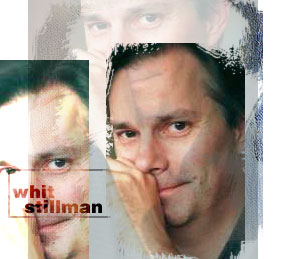
Whit Stillman is the director of the films "Metropolitan," "Barcelona" and "The Last Days of Disco." His novel "The Last Days of Disco, With Cocktails at Petrossian Afterwards" was recently published. More Whit Stillman.
Can you identify?
Science shows that the only way around some readers' prejudices is to trick them
(Credit: Shutterstock/Salon) The news of recent research documenting how readers identify with the main characters in stories has mostly been taken as confirmation of the value of literary role models. Lisa Libby, an assistant professor at Ohio State University and co-author of a study published in the Journal of Personality and Social Psychology, explained that subjects who read a short story in which the protagonist overcomes obstacles in order to vote were more likely to vote themselves several days later.
The suggestibility of readers isn’t news. Johann Wolfgang von Goethe’s novel of a sensitive young man destroyed by unrequited love, “The Sorrows of Young Werther,” inspired a rash of suicides by would-be Werthers in the late 1700s. Jack Kerouac has launched a thousand road trips. Still, this is part of science’s job: Running empirical tests on common knowledge — if for no other reason than because common knowledge (and common sense) is often wrong.
Continue Reading Close
Laura Miller is a senior writer for Salon. She is the author of "The Magician's Book: A Skeptic's Adventures in Narnia" and has a Web site, magiciansbook.com. More Laura Miller.
Reading, revolutionized
A poet/book artist and a programmer team up to create a book that unites the traditional and the electronic
(Credit: via Between Page and Screen)
“Between Page and Screen,” a groundbreaking collaboration between poet and book artist Amaranth Borsuk and programmer Brad Bouse, is truly a first: a book that only can be read when simultaneously using a codex book and a computer’s webcam. When placed in front of a webcam, the black shapes printed on the pages, sans words, trigger animated text on the screen, revealing a correspondence between characters P and S.
Stories don’t need morals or messages
A "stupid" test shows that the Puritan ethic lives on. Why do we insist on learning lessons from the books we read?
(Credit: iStockphoto/Yayayoyo via Shutterstock) What is the purpose of reading stories, especially made-up stories? That’s the question lurking behind a recent posting to the New York Times’ education blog, SchoolBook. Ann Stone and Jeff Nichols, the parents of twins, wrote about taking their kids’ third-grade English Language Arts test with some friends as a party game on New Year’s Eve. The group read an inane little story about tiger cubs learning to tear bark off logs, but, to their surprise, couldn’t agree on a single answer to the multiple choice question that followed: “What is this story mostly about?”
Continue Reading Close
Laura Miller is a senior writer for Salon. She is the author of "The Magician's Book: A Skeptic's Adventures in Narnia" and has a Web site, magiciansbook.com. More Laura Miller.
Reader responses: Books you want banned
On Wednesday, we asked which books you think kids should never have to read in school. Here's what you said
Earlier this week, Laura Miller and other Salon writers weighed in on books they’d like to see banned from school reading lists — from “Lord of the Flies” (“Is it pure sadism [that makes teachers assign that book]?” asked Andrew O’Hehir) to “Ivanhoe,” which went a fair way toward dulling Life editor Sarah Hepola’s enthusiasm for high school English.
Continue Reading CloseEmma Mustich is a Salon contributor. Follow her on Twitter: @emustich. More Emma Mustich.
What did you really read this summer?
As August ends, Arthur Phillips, Laura Hillenbrand, Lev Grossman and others reveal their reading records to Salon
For readers, summer often starts with grand ambition. This will be the year we really tackle Roberto Bolaño or David Foster Wallace; it will be the summer of nothing but lemonade and Alice Munro. Or perhaps we’ll educate ourselves by delving deep into accounts of the financial crisis or the war on terror. Then the days turn lazy and even the most sincere intentions wilt in the heat.
With September looming, we thought it would be a good time to check in with some of our favorite authors — and some of the writers you’re likely to be reading this fall — to see what they really read this summer. Click through the following slide show to see what they had to say.
Emma Mustich is a Salon contributor. Follow her on Twitter: @emustich. More Emma Mustich.
Page 1 of 25 in Readers and Reading


