
Directors

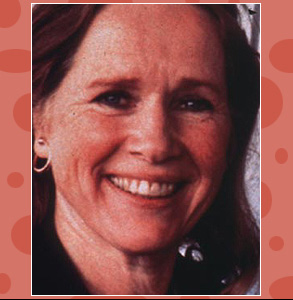
Liv Ullmann

The renowned actress and director of "Faithless" talks about quick flings in Paris, her pal Ingmar Bergman and how scared we all are.

  • more
    • All Share Services

Topics: , ,

Liv Ullmann

Adultery is a dead subject. From Hester Prynne to Monica Lewinsky, there’s very little we seem to want to say about it anymore. Thus, it makes perfect sense that someone like Liv Ullmann would take on the scarlet “A” in her latest film, “Faithless.” Ullmann is not jaded, nor does she offer easy answers; on the subject of morality, she’s more interested in what the audience might have to say. In the hands of many other contemporary directors, a film about adultery has the tendency to be pedantic and overly moralistic, featuring, say, Harrison Ford. Ullmann knows better. She ought to — her many years as one of Ingmar Bergman’s lead actors have left their mark, and her directing style reflects his light touch.

“Faithless” was written by Bergman and is based on actual events from his life. It tells the story of Maryanne, who engineers an adulterous affair with her husband’s best friend. What starts out as a simple plan ends in tragedy. But the film is full of ambiguity, and offers no swelling strings to guide the viewer toward the proper conclusion. There are fantastical Bergman-esque elements, too: In the opening frames, an elderly writer named Bergman conjures up the character Maryanne from his memory, and Maryanne begins to recount her painful tale. Or perhaps she never existed, and the whole event is a fiction.

Though “Faithless” marks Ullmann’s fifth outing as a director, she is best known for her work as an actor, appearing in some 40 films, nine of which were directed by Bergman. She has also written two books and has acted on stages all over the world. These days, she has all but retired from acting and dedicates most of her time to directing. She’s uncertain about what’s next for her, and, true to form, she says she’s more interested in letting the answer come to her.

This film is based on painful events from Ingmar Bergman’s life. How did he approach you to direct it with that in mind?

I think he felt it was so personal that he couldn’t do it himself. Because he’s a great artist, most of what he writes is personal, but it’s very seldom you can see [a character representing] Bergman directly in a movie. This time, though, he’s even called the main character Bergman. He said, “I couldn’t think of another name.”

And I think that’s why he wanted someone else to do it, but someone that he really trusted — someone that really could see things he wasn’t sure he wanted to show. He wrote “Faithless” more or less as a monologue. He didn’t want to make a shooting script or anything. He wanted a woman’s vision to be part of it, and a woman’s images, and a woman’s experience. And that’s why he asked me to do it.

Did your relationship with Bergman change between your work with him as an actress and your work with him now as a director?

In some ways, yes, but I’d already directed three films when he asked me to do the first one for him. I just took it that what I had done was something he really liked and really trusted, and that he saw me as a person who knew what was lying behind his words.

It was good, because I had stopped acting for him many years ago. “Autumn Sonata” was the last film we did together, in 1979. I never thought we’d work together again, and suddenly this came, and it’s marvelous. I think few people experience that. You have a love relationship in one field of the arts, and then suddenly you meet many years after and you have another love relationship. And with love, I mean artistic love.

I want to ask you about something you said while making this film. You said, “Unfaithfulness as described in ‘Faithless’ is not a conscious unfaithfulness or an act of will.” I’m curious to know what you meant by that. I would assume you didn’t mean that those who commit adultery are without responsibility.

Oh, they’re absolutely not without responsibility. But I think so many of us think, like in the film, “Oh, I’ll go to Paris and just have an affair in secret, have some fun, and then I’ll be more energized, make a better married life afterwards, and we’ll all be happy.” But those things never happen. The lack of will is that you dream about it, that you make fantasies about it. It’s not that you say, “No, I’m going to Paris to be unfaithful to my man, and that is what I’m going to do.” It is the childish dream you have that you can make everything better by doing something you probably shouldn’t have done in the first place.

Bergman has said that he feels the character of Maryanne is the victim in this film. Do you agree?

No. She set it up. She made it all happen to start with, in a way. There again, I disagree with the woman who plays the lead, Lena Endre. We had been sitting together with a journalist, and she defended her part so much. She understands why it happened. I don’t, in front of her, dare to accuse her too much. But we see it differently. And that’s because she has to defend something. It’s the same with me. If I go out and make a wrong choice, if somebody confronts me with it, it’s tough for me not to defend why I did this, because this is what I felt.

That’s one of the things that make this film so fascinating. You, the writer and the lead actress can all have conflicting ideas about the film is and what it’s supposed to say.

Absolutely. And I’ve met so many people in the audience who have very, very different views. But that’s what a good film is, you know. It’s only true in the way one unique audience member watches it. Everybody sits in a movie theater, and they are unique. And you can go out after, and you can discuss [the movie]. You can say, what does it mean to be unfaithful? What is “faithless”? Does it have to do with human beings, or does it mean that you don’t believe in the values of the world? Do you think that there’s no God that looks upon you? These are interesting things, and you can see it from so many views. So I have mine. But I don’t even want to discuss it anymore because I’m also in this film, just as you are when you watch it.

You’ve done so much with your life creatively. You’ve written, acted and now directed. Is there anything you’d like to do that you haven’t tried yet?

I want to listen, to have time to listen. To have absolute blank time, until it’s not blank anymore. And I don’t really know what I mean by that. I really don’t know what I want to do. The film scripts I have at home are not saying, “Read me, read me.” I want to sit and listen.

I think, more and more, we have to look at the world this way, because the world is such an agonizing place to be right now in so many ways. There’s so much good we could find, and I think maybe we need to sit and listen a little to see what we want to put down on paper, whom we want as our politicians, what we want to say on the radio, TV and a Web site. We don’t listen enough. We just try to press opinions on people.

What you’re saying reminds me of the character you played in “Mindwalk.” You played a physicist who, at one point, advises the character played by Sam Waterston, a politician who has just lost a bid for the presidency, not to see just parts of problems, but to see everything as a whole. How close was that character to you?

Oh, it was very close to me. Of course, I’m not a scientist, so I wouldn’t know all the scientific stuff that I was talking about, but I had a great physicist who taught me, Frijof Capra. But all the rest, those were my words. Sam Waterston, he wrote most of his words, and John Heard wrote most of his words as a poet. We sat in my flat in New York for three weeks and wrote together, and discussed. It was fantastic. We made the movie in a very short time, and I wasn’t sure then that I really believed in it, but I have heard much later that this is a real cult movie for a lot of people. It’s three people that discuss what it means to be alive. And that’s good.

We don’t take time to discuss things much as a culture, do we?

No. And it’s good to take time to have real conversation. We miss it. We need it. And soon, we won’t even know that we miss it. We will have forgotten that we used to have something called conversation.

Today’s media seem to be moving away from that.

In a very dangerous fashion. And it goes quickly. It goes so quickly that, the truth is, we might forget. When our old people die, there may be no remembrance anymore of what is a conversation between two people, and what it means to listen in a conversation and want to be a part of it.

Why do you suppose conversation suffers?

We’re so scared. We’re so lonely. We feel so on the outside, so it’s easier to sit in front of something and just let that thing say things to you. And the quicker the better, so it won’t be found out that you need somebody watching you, listening to you, liking what you say and what you are.

Continue Reading Close

Stephan Cox is a writer in New York.

Five pop culture items we missed

Today's catch: Gwyneth Paltrow is a 9/11 hero, Gerard Depardieu pees on people, and "Lone Ranger" nixes werewolves

  • more
    • All Share Services

Topics: , , , , , ,

Five pop culture items we missed"What do you mean we-rewolves, kemosabe?"

1. Cause of the day: Kate Winslet founds “British Anti-Cosmetic Surgery League” (for very famous people) along with Emma Thompson and Rachel Weisz. Maybe they can be like sister suffragettes and battle the Barbie Mom!

2. Celebrity story involving airlines and urine of the day: When Gerard Depardieu wasn’t allowed to use the toilet during takeoff, he peed all over fellow passengers on an Air France flight. Says Air France spokesperson: “I confirm the fact that he [Depardieu] did indeed urinate in the plane.” That is all.

3. “Gwyneth Paltrow saved my life on 9/11″ story of the day: Wait, really? I could almost forgive Paltrow for her multitude of sins if she acted heroically on Sept. 11. So let’s check it out:

“Clarke, then a 24-year-old account manager at Baseline Financial Services, was on her way to work shortly before 9 a.m. and about to jaywalk across the street to catch the 1/9 train in Tribeca when the Oscar winner abruptly cut her off in her silver Mercedes.”

Oh wait, so Paltrow almost ran over a woman, inadvertently making her late for work at the World Trade Center? Man, and here the firefighters got to take all the credit. 

4. Narrowly averted train wreck of the day: Disney has split with Jerry Bruckheimer on “The Lone Ranger” movie, apparently because the director’s insistence on adding werewolves and “Indian spirits like Obi-Wan Kenobi” to the plot was getting too expensive.

5. Must read of the day: Roger Ebert’s new memoir, of which he’s posted the first several pages on his blog. It begins, “I was born inside the movie of my life,” which might be the best opening line since that Dickens book people are always quoting when they want to reference a good opening line.

Continue Reading Close

Drew Grant is a staff writer for Salon. Follow her on Twitter at @videodrew.

Michael Bay life lessons: Stress management

What the films of the "Transformers" auteur can teach you about dealing with pressure and everyday hassles

  • more
    • All Share Services

Topics: , , , ,

Michael Bay life lessons: Stress managementWhat you can learn from "Transformers": It could always be worse.

There may be some dispute over the quality of Michael Bay’s directorial skills, but no one can deny that the man has a certain panache. With films about killer robots, killer comets and Peal Harbor, Bay’s oeuvre may be full of violence, but they’re also full of learning moments for the neurotically inclined.

Better than Tony Robbins or a self-help book, Michael Bay’s movies are an advanced class on dealing with life when it hands you lemons. Lemons that are actually grenades and you have two minutes to deactivate before the whole country goes ka-BLAM!

Welcome to Michael Bay’s stress management guide. Now take a deep breath, and go to your calm place…

Lesson 1: Keep your mantras simple

Everybody’s had those days when life seems determined to weigh you down. While you might be inclined to give up and throw a pity party complete with a “Teen Moms” marathon and a bucket of ice cream, it’s good to remember those wise words of Yoda: “Do or do not. There is no try.” Though if you don’t like taking advice from a short green guy, how about Sean Connery, who paraphrases the famous “Star Wars” line to a whiny Nicholas Cage in “The Rock.”

For ladies, just substitute “prom queen” with “hottest guy in the theater department.”

Lesson 2: Keep things in perspective

Lost your job? Got dumped by your significant other? Maxed out your credit cards? I’m totally with you: Those things can be major stressors. But remember, it’s not the end of the world. Even in Michael Bay movies, where the price of failing is usually an apocalyptic scenario, characters are able to keep things light with a few quippy one-liners. And if the situation does require a bit of gravitas, you can always hang up the phone, turn to your partner, and express how real the shit just got.

 See, don’t you feel better?

Lesson 3: Make sure you have your facts straight

Sometimes the most stressful part of a situation is not being exactly clear about what’s going on. Maybe those emails from your boss are confusing, or it turns out you are a human clone, created to have its organs harvested for rich people. Either way, the scariest part is not knowing! So make sure that you find an expert (usually Steve Buscemi) that can talk you through the stuff going over your head.

Lesson 4: Never let them see you sweat

Sure, on the inside you might be feeling like a pile of spineless goo, but a lot of confrontational situations can be diffused as long as you act with confidence, maturity and the knowledge that your opponent is sitting on top of a giant rocket.

Let’s see how well Gary from marketing can negotiate now!

Lesson 5: Stay positive!

If you take away one thing from Michael Bay films (besides that even a dweeb like Shia LaBeouf can land Megan Fox if he plays his cards right and there are machines taking over the world), it’s that doing the hard thing, while not easy, will always rewarded with the respect of that guy from “The Green Mile” (either David Morse or Michael Clarke Duncan):

Continue Reading Close

Drew Grant is a staff writer for Salon. Follow her on Twitter at @videodrew.

Spike Lee to direct “Oldboy” remake?

Rumors of adapting the cult manga/revenge film for American audiences still include Will Smith

  • more
    • All Share Services

Topics: , , ,

Spike Lee to direct Choi Min-sik in "Oldboy."

Warning: This article contains a major plot spoiler for the film “Oldboy.”

Since Park Chan-wook’s South Korean revenge flick “Oldboy” won the Grand Prix at Cannes in 2004, producers have been trying to find a way to bastardize the project into a more American-friendly version. Steven Spielberg and Will Smith have both been attached to the title since 2008 (after director Justin Lin and Nic Cage dropped out of the running), though rumors have been swirling that the project has been dead in the water for at least a year.

There are basically two camps of thought on an “Oldboy” remake: the people who think that adapting the story of Oh Dae-Su — a man locked in a hotel room for 15 years and then mysteriously freed in order to find his captors — from either its original Japanese manga or its cinematic counterpart is a terrible idea … and those who aren’t familiar with the story.

Because the truth is, nobody familiar with the themes and imagery in “Oldboy” would ever consider Spielberg or Smith a good fit for such a dark, violent and challenging film. Though the source material has some comedic moments, major plot developments revolve around (SPOILER ALERT) at least two counts of incest. There are also gory scenes in the film that could rival anything Eli Roth or those “Saw” guys could put out, including a climatic moment where a character cuts out his own tongue.

So, no, “Oldboy” just doesn’t scream “Spielberg” to me … or Smith, for that matter. Tarantino? Maybe. But not the guy who directed “E.T.” or the Fresh Prince. Considering the queasy live sushi scene below is one of the “lighter” moments in the movie, could you really see Wills pulling it off?

As of yesterday, however, Spike Lee’s name has been floating around as a new director for the film. (He is apparently “in talks” with Mandate.) Even though it’s only a rumor, it’s possibly a game-changing one: Lee’s style is far more gritty and violent than Spielberg’s, and if Smith is still attached to the project, we’ll be far more likely to see an “I am Legend” performance than a “The Pursuit of Happyness” one with Spike at the helm.

If this movie does happen, the most we can hope for is that it doesn’t try to replicate the brilliant weirdness of Park Chan-wook’s adaptation. Instead, it could start from scratch with the manga, with Lee creating his own stylized world for Oh Dae-Su to navigate. I don’t have much faith in an American “Oldboy,” but at least now there is a little more to hope for.

Continue Reading Close

Drew Grant is a staff writer for Salon. Follow her on Twitter at @videodrew.

Michael Bay plagiarizes Michael Bay for “Transformers 3″

"Dark of the Moon's" dark secret: Shots from "The Island" appear in summer blockbuster

  • more
    • All Share Services

Topics: , , , ,

Michael Bay plagiarizes Michael Bay for Look familiar?

Most famous directors have a signature style that lets you know you are watching one of their films: David Lynch will give you red curtains and flickering matches, Scorsese will have “Gimmie Shelter” slipped somewhere in between the violent acts of mob crime, and Steven Spielberg … well, Steven Spielberg has a lot of recurring motifs. But at what point does a cinematic thumbprint turn into lazy self-plagiarism?

The answer to this theoretical film query has been answered by none other than Michael Bay, whose auteur work can be boiled down to “big things blowing up or hitting other big things.” But even with that not-too-original concept, Bay has gotten sloppy: allegedly taking direct shots from his 2005 flop “The Island” and putting them in “Transformers 3: Dark of the Moon.”

Last week, a viral-video pirate named Jermain Odreman spent a considerable amount of time watching Bay’s movies in slow-motion in order to catch almost identical sequences from both films. The footage is unquestionably similar, down to the type of car that flips over, the angle of the smoke from the explosion, and the damage done by flying shrapnel.

Considering the hundreds of millions of dollars Bay had to play with for his third “Transformers” movie, it’s an egregious insult that he’d recycle old footage. Sure, we may pack the theaters of his films because we want to mindlessly watch giant pieces of machinery go up in a massive fireballs, but the very least (seriously, the very least) that Bay could do is show us new machinery and new fireballs. Otherwise, what are we paying him for … his thought-provoking dialogue or fully developed characters?

Continue Reading Close

Drew Grant is a staff writer for Salon. Follow her on Twitter at @videodrew.

Jackson Pollock reimagined with the trippy “Dripped”

An animated short exposes one of the 20th century's greatest artists as a cat burglar and art-eater

  • more
    • All Share Services

Topics: , , , ,

 Ed Harris did a great job playing the alcoholic, abstract expressionist Jackson Pollock in the 2000 film about the artist’s life and work. (Fun fact: Remember how the actor directed that film as well? Ed Harris is the man.) The struggle between his vulnerable neurosis and volatile personality — especially in the context of his relationship with his wife, Lee Krasner, over the years — was portrayed with less restraint than we’ve come to expect from stone-faced Harris, and overall made for a great film about a difficult subject.

That being said: At no point in “Pollock” did the artist grow wings after eating famous Renaissance paintings he stole from a museum before regurgitating his own still lifes into speckled visual jazz riffs. Léo Verrier’s animated eight-minute short “Dripped” is a whimsical interpretation of Jackson’s love of all art, and his eventual realization that he doesn’t have to “bite” off other talent in order to create his own masterpieces.

OK, so it’s not quite a literal biography, but it’s stylistically entrancing nonetheless; like something from an early Chuck Jones cartoon on acid.


Dripped from ChezEddy on Vimeo.

Continue Reading Close

Drew Grant is a staff writer for Salon. Follow her on Twitter at @videodrew.

Page 1 of 20 in Directors