
Sex
Ripping yarns
If you are intrigued by the Jack the Ripper tale, go ahead and see the film "From Hell." But the book "The Women of Whitechapel" is better.
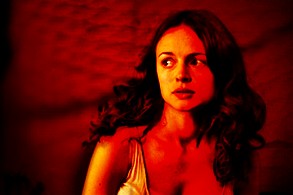
There’s not a lot to be said for the movie “From Hell,” except for the sly use of Prague to stand in for London in 1888, and the occasional image of the washed-out face of Heather Graham, all thin milk, gullible blue eyes and a corona of marvelously washed red hair.
On the one hand, she is meant to be a Whitechapel whore scrounging for pennies in the filth, yet every day, before she begins her perilous round of the streets, she seems to have had the benefits of Hair and Makeup. She looks a treat, and quite implausibly so. That unflawed beauty would be allowable if she sang, or if she moved and stirred as if driven by some dream of spirit or elemental sexuality in the movie — if, in other words, “From Hell” had any notion that it is trying to keep company with Pabst’s film “Pandora’s Box,” with Berg’s opera “Lulu” or even with Paul West’s novel “The Women of Whitechapel.”
On the one hand, this is Hollywood saying, “Let’s do Jack the Ripper again. Let’s have Johnny Depp as the opium-addicted police inspector on the Ripper case. And then let it rip — the women of the streets, the flash of surgical instruments, the buckets of blood with the sexual organs laid out for inspection. The old in-out, in other words.”
The script of the film is credited to Terry Hayes and Rafael Yglesias, and it is said to be based on the graphic novel by Alan Moore and Eddie Campbell. Well, good luck to one and all, I say, and it’s not my business to wonder about where it all came from. After all, there really was a phenomenon of rumor called Jack the Ripper created by a popular press feeling its new strength, and inflamed by the new forms of illustration possible in a newspaper.
Jack the Ripper is public domain by now, and there are shelves of articles, books, films and television programs that have treated the subject. But Paul West’s 1991 novel was a turning point in the legend, and if anyone has been faintly intrigued by the very complex plot barely made clear in “From Hell,” then I urge them to seek out the book.
But go carefully, because the book will really frighten you, and move you, and leave you forever fixed on this small incident of crime or outrage that says so much about the explosion of sexual liberty that was not so far ahead.
It is the notion of West’s book (though he never claimed it as original) that the Ripper was the name given to a force of revenge or rebuke that set out, systematically, to eliminate a small circle of East End prostitutes. Why did they have to die? Because they were all party to a weird dark secret — how a prince of the royal family (hardly stable, but we know that family’s history better now) had taken up with one of the whores, in something like marriage, and had had a child by her. And that child, in the nature of such things, stood high in the line of succession to the throne occupied by Queen Victoria. And so, with due conspiracy, certain forces of authority stooped to murder, and dressed it up as ritual killing to divert attention.
Paul West is not one of our best-known writers. He is a loner, a maverick figure, rather old-fashioned in that he favors a lush, rhapsodic writing style. He takes a special delight in novels, works of invention, that take off from known historical circumstances, and he has a raw instinct for things that are vital to this great legend — sexuality, class and the smothering of freedom.
It was West’s genius to tell the story through the eyes and thoughts of a character from history, the painter Walter Sickert — a very great painter, but maybe a very dark soul — who might have known all the people involved, and who was one character who moved from the palace to the slums with ease. As a painter, he is a man consumed by thoughts of beauty and passion, just as he paints shadow bursting with the threat of violence. Once you have read “The Women of Whitechapel” — if you are interested enough — you would do well to look at Sickert’s paintings. He was often inspired by the newspaper reports of murder.
Put West and Sickert together (which is all West did, of course), and you have a tale about a privileged society prepared to commit murder to protect its own decent reputation. What made West’s book so touching was the way he depicted an innocent yet vivid sexual urging as the essential, revolutionary force of the time. What is so depressing and demeaning about “From Hell” is its willingness to treat sexuality as exactly the tabloid swill that titillated and terrified readers in 1888. The self-congratulatory mood of exploitation has wiped away the chance of revelatory fable that West first opened up.
David Thomson is the author of "A Biographical Dictionary of Film" (new edition just published), "Rosebud: The Story of Orson Welles" and "In Nevada." More David Thomson.
Massage therapists rubbed wrong by sex talk
A Jennifer Love Hewitt show and the Travolta allegations have masseuses tired of being confused for sex workers
(Credit: iStockphoto/sybanto) Joe, a licensed massage therapist, knows what it’s like having a famous client who expects something extra. He had an Academy Award-winning actor begin gyrating on his massage table before raising his hips in the air to show off his erection. “He was hoping that I would play with him in some shape or form,” he says.
Needless to say, Joe isn’t surprised by allegations by two masseurs that John Travolta got handsy during massages. (Travolta’s attorney has denied all the allegations, and called them “ridiculous.”) “It happens all the time,” he says, and not just with celebrity clients. He frequently encounters men who try to fondle him, usually while he’s working on their glutes or lower back and their hand happens to be level with his crotch. “They think they’re so original, but they’re all so much the same,” Joe says, his voice rising. “They all use the same tactics, the same body movements, the same gyrations and grinding my table, the [heavy] breathing.”
Continue Reading Close
Tracy Clark-Flory is a staff writer at Salon. Follow @tracyclarkflory on Twitter. More Tracy Clark-Flory.
A night at the vibrator museum
Early vibrators were hand-cranked, two-person jobs -- and prescribed by doctors. How far we've come since then
(Credit: Antique Vibrator Museum) I can now say that I’ve used a turn-of-the-century vibrator — on my hand, but still.
The silver, hand-cranked contraption is usually kept behind glass at Good Vibrations’ Antique Vibrator Museum in San Francisco — but staff sexologist Carol Queen made a rare exception. “This is very special,” she whispered, unlocking the case and carefully pulling out Dr. Johansen’s Auto Vibrator, a relic from 1904. The “auto” part is not so much: It was a two-person job, with her having to crank the device’s handle to get it thrumming. Pressing my finger tips to its inch-wide circular platform of pleasure, I was pleasantly surprised by its power.
Continue Reading Close
Tracy Clark-Flory is a staff writer at Salon. Follow @tracyclarkflory on Twitter. More Tracy Clark-Flory.
Maggie Gyllenhaal on sexual liberation
The beloved indie star tells Salon about her "vibrator movie" and why she loves playing transgressive women
Maggie Gyllenhaal (Credit: Reuters/Mark Blinch) When I met Maggie Gyllenhaal about six weeks ago, she was enormously and gloriously pregnant, stretching out on a sofa with her shoes off and feet up in a Manhattan office building. (Since that time, Gyllenhaal and husband Peter Sarsgaard have welcomed their second daughter, Gloria Ray, to the world.) We were there to talk about “Hysteria,” the charming, lightweight feminist farce from director Tanya Wexler that explores a key event in the history of female sexuality: the invention of the vibrator by Mortimer Granville, a Victorian doctor who was seeking to cure the mysterious “female malady” that lends the movie its title.
Continue Reading CloseMother-daughter sexperts
Susie Bright and her daughter, Aretha, make parental talks about sex look easy -- and fun
Most parents loathe talking to their kids about the birds and the bees, let alone pubic hair grooming, faked orgasms and “water sports” — but most parents are not legendary “sexpert” Susie Bright.
Better than talking about these things, she penned an advice column in 2009 with her daughter, Aretha, then 19, for the ladyblog Jezebel. Their answers to questions about everything from porn to Paxil were unflinching but playful, and at times controversial. Now the pair have collected those columns into a new e-book, “Mother/Daughter Sex Advice.” Together, they read as an irreverent version of “Our Bodies, Ourselves” for the Internet age. The mother-daughter team also reflect on what the experience of writing the column was like, and it turns out it wasn’t as weird as many would think: For the most part, it was just a continuation of conversations they had been having throughout Aretha’s life.
Continue Reading Close
Tracy Clark-Flory is a staff writer at Salon. Follow @tracyclarkflory on Twitter. More Tracy Clark-Flory.
On the rack: A cultural history of breasts
Did breasts evolve for lactation or to enhance sex appeal? A new book explores why they matter
(Credit: iStockphoto/NadyaPhoto) It’s hard to be boobs. Sure, breasts are cherished as givers of milk and the pinnacle of sex appeal, but the modern world hasn’t been good to mammaries.
As Florence Williams writes in “Breasts: A Natural and Unnatural History,” they’re the most tumor-prone organ in the human body. They “soak up pollution like a pair of soft sponges,” and transmit environmental toxins to babies through breast milk. “Breasts are bellwethers for the changing health of people,” she says. While we’ve “genetically modified our crops to be able to protect them from the ill effects of pesticides,” Williams writes, “we haven’t yet figured out how to modify our breasts.” Aside from using saline and silicone, of course.
Continue Reading Close
Tracy Clark-Flory is a staff writer at Salon. Follow @tracyclarkflory on Twitter. More Tracy Clark-Flory.
Page 1 of 403 in Sex