
Native Americans

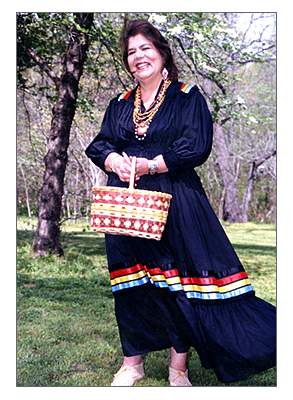
Wilma Mankiller

The first female chief of the Cherokee Nation, she took tragedy and illness and made strength. And don't even ask where she got her name.

  • more
    • All Share Services

Wilma Mankiller

San Francisco transformed many people living there during the 1960s. Its shabby, lunch-pail-toting neighborhoods became crucibles for a society recasting its values. The fire eventually caught a shy housewife and mother in her 20s named Mrs. Hugo Olaya and alchemized her into Wilma Pearl Mankiller, a symbol of both feminism and Native American self-determination.

In 1985 Mankiller, now 57, became the first female chief of the Cherokee Nation, the 220,000-member Native American tribe based in Tahlequah, Okla., to which she belongs. She did it not only by overcoming the usual barriers set against Native Americans, but also by vaulting the chauvinistic hurdles imposed by her fellow Cherokees, who had never been led by a woman.

Once chief, Mankiller took the traditional “women’s issues” of education and health care and made them tribal priorities. She raised $20 million to build a much-needed infrastructure for schools and other projects, including an $8 million job-training center. The largest Cherokee health clinic was started under her tenure in Stilwell, Okla., and is now named in her honor. Mankiller also sought to reunite the Eastern Cherokee, a group based in North Carolina, with the larger Western division.

She ruled with grace and humor — she often teased patronizing Anglos by telling them her surname was due to her reputation; in fact, “Mankiller” is a Cherokee military term for a village protector — and with organizational smarts learned in the blue-collar neighborhoods of clapboard and “ethnic politics” that circled San Francisco Bay.

Her journey — from complacency to activism to political power — followed a familiar boomer flight path, but hers was a working woman’s ascendancy. It was born in the rural grit of Adair County, Okla., and the tough industrial neighborhood of San Francisco’s Hunters Point. Elite, tree-shaded suburbs like Pasadena or Grosse Pointe that shaped so many ’60s radicals couldn’t have been more remote to Mankiller.

Mankiller grew up on her father Charley’s ancestral Oklahoma lands. “Dirt poor” was how she described her early life. The Mankillers frequently ate suppers of squirrel and other game. The house had no electricity. Her parents used coal oil for illumination.

In 1956 Charley Mankiller, eager to provide a better life for his growing family, moved them from Oklahoma to California as part of a Bureau of Indian Affairs (BIA) program, initiated by the same bureaucrats who had “relocated” Japanese-Americans during World War II. The program, a misguided experiment in social engineering, transplanted rural Native Americans to jobs in industrial cities, thus serving to weaken reservation ties and diffuse the little political clout the tribes held. It was another insult in a history of them stretching back two centuries.

In 1838 the Cherokee Nation was ripped from its ancestral homelands in the Carolinas, Tennessee and Georgia by U.S. Army troops acting under orders from the federal government. The forced march to the Oklahoma reservations, the famous “Trail of Tears,” killed thousands of men, women and children. Buffeted by white assaults — both physical and legal — the Cherokees would spend more than 100 years as wards of the state. It wasn’t until 1970 that Washington allowed the tribe to elect its leaders directly.

Wilma was 11 when the Mankillers arrived in San Francisco. Charley found work as a rope maker and the family settled down. Wilma had a difficult transition. She and her siblings were the proverbial hicks in the big city. A kindly Mexican family showed them how to work a telephone and taught Wilma to roller skate. Charley Mankiller had instilled in his children a pride in their heritage, and San Francisco’s Indian Center, located in the Mission District, fostered it. The center became Wilma’s after-school refuge. The city’s diversity exposed her to other things. In high school, African-American girlfriends influenced Mankiller’s taste in popular culture. While white girls swooned over Fabian and Elvis, Mankiller absorbed Etta James and B.B. King. Life in a poor black neighborhood, Mankiller told a Sweet Briar College audience in 1993, taught her other valuable lessons.

“What I learned from my experience in living in a community of almost all African-American people,” she said, “is that poor people have a much, much greater capacity for solving their own problems than most people give them credit for.”

Mankiller exhibited no appetite for intellectual ambition as a teenager. In her 1993 autobiography, “Mankiller: A Chief and Her People,” co-written with Michael Wallis, she recalled hating the classroom. When she graduated from high school in June 1963, she expected that to be the end of formal schooling.

“There were never plans for me to go to college,” she said. “That thought never even entered my head.”

Instead, a tedious pink-collar job followed graduation, as did a fast courtship and marriage to a handsome Ecuadorean college student, Hugo Olaya, with whom Mankiller had two children. Olaya’s family was middle-class; his prospects were good. At 17 the pretty girl, whose dark, flashing eyes gave her a resemblance to actress Natalie Wood, settled down to live the life of a California hausfrau — replete with psychedelic pantsuits, baby strollers and European vacations.

The social protests of the ’60s didn’t touch Mankiller directly until the decade’s last days. On Nov. 9, 1969, 19 Native Americans made their way out to Alcatraz island, the abandoned federal prison in the middle of San Francisco Bay. The hunk of sandstone, in full view of San Francisco’s corporate skyline, was supposed to be handed over to Texas oil tycoon Lamar Hunt and turned into a futuristic shopping mall and revolving restaurant. Instead, the 19 Native Americans claimed the island “in the name of Indians of All Tribes,” transforming it into a symbol of Native American liberation.

Led by Mohawk tribesman Richard Oakes and Adam Nordwell, a Minnesota Chippewa, the protesters carried what they considered a fair price for the island: $24 worth of glass beads and red cloth. The beads and cloth were comparable to the ones the Europeans had used to buy Manhattan, but the federal government declined their offer. Coast Guard patrols escorted the protesters back to the mainland.

On Nov. 20 the protesters, now numbering 89, returned for another occupation of the island. This time they stayed 19 months. The rebellion soon bore all the trappings of a media circus. TV news crews hired speedboats to get close to the action, while tourists snapped photos from tour liners. Politicians dropped by. Jane Fonda and Anthony Quinn vowed solidarity. Candice Bergen showed up with a sleeping bag and crashed on the floor.

Mankiller didn’t come to Alcatraz in those first two waves, and her siblings Richard, James and Vanessa got there ahead of her. She had stayed in the background, but when she finally arrived, Alcatraz became a pivotal point in her life. While she had been conscious of Native American issues before that time, these protests “flashed like bright comets.”

“Every day that passed seemed to give me more self-respect and sense of pride,” she wrote.

Pop culture discovered Native American issues around then, too, and glommed onto Red Pride. Dustin Hoffman played the Cheyenne-raised hero in Arthur Penn’s film “Little Big Man,” released in 1970. Soon after, Cherokee injustices made the Top 40 with the Paul Revere and the Raiders’ hit “Indian Reservation.” Meanwhile, Mankiller found herself spending time at the Indian Center helping with fundraising and organizational efforts. She became acting director of East Oakland’s Native American Youth Center.

Soon Mankiller’s expanding idea of herself (she was now taking college classes in social work) clashed with the more traditional family her husband envisioned. He forbade her to buy a car; she got a little red Mazda with a stick shift and drove to tribal meetings all over the West Coast. Mankiller’s favorite song now, and the one she liked to dance to with her daughters, was Aretha Franklin’s “Respect.”

She and Olaya divorced in 1974. Mankiller found a job as an Oakland social worker. When she decided to return to Oklahoma with her daughters, she left California in a U-Haul with $20 in her pocket.

“I came home in 1976,” she says. “I had no job, very little money, no car, had no idea what I was going to do, but knew it was time to go home.”

Mankiller soon found a position as a community coordinator in the Cherokee tribal headquarters. The tribe was beginning to operate with less dependence on the BIA. Reforming the BIA, observed one Creek chief, was like rotating four bald tires on a car: Nothing changed. There were other ways to wrest money from the government. Mankiller, now finishing her degree at the University of Arkansas, became adept in the art of organizing as well as grant and proposal writing. She was proving to be a formidable leader.

In 1979 a head-on car crash seriously injured Mankiller and killed the other driver. By awful coincidence that driver was Sherry Morris, one of Mankiller’s best friends. Mankiller spent the next year in rehab wracked with physical pain and guilt. Then, in November 1980, she was diagnosed with the neuromuscular disease myasthenia gravis. An operation to remove her thymus cured her of the illness and she returned to her job in January 1981 to supervise the rejuvenation of the Cherokee town of Bell, Okla. The job involved urban planning and constructing a 16-mile water pipeline, and Mankiller excelled at it. She also met her second husband, Charlie Soap. They married in 1986.

Just three years before, ruling Cherokee Chief Ross Swimmer had asked Mankiller to run as his deputy in the next tribal election. After much debate she accepted and was promptly criticized — not for her liberal Democratic politics but for her gender. Mankiller described herself as “stunned” by the hostility. Charley Mankiller’s daughter toughened her hide.

“I expected my politics to be the issue,” she said later. “They weren’t. The issue was my being a woman, and I wouldn’t have it. I simply told myself that it was a foolish issue, and I wouldn’t argue with a fool.”

Swimmer and Mankiller won the election. Ironically, it was Ronald Reagan, whose policies Mankiller opposed, who gave her the opportunity to become Cherokee chief when he appointed Swimmer head of the BIA in September 1985. Succeeding him, Mankiller served as chief for the next 10 years — winning her second term with 82 percent of the vote.

As chief, Mankiller oversaw a historic self-determination agreement, making the Cherokee Nation one of six tribes to assume responsibility for BIA funds formerly spent by the bureau. She oversaw an annual budget of more than $75 million and more than 1,200 employees. Much of her focus was on developing adequate health care for her tribe. Ms. Magazine named her 1987′s “Woman of the Year.” She was becoming a national figure, hobnobbing with Bill Clinton and other leaders.

“People are always enormously disappointed when they meet me,” she said, “because I’m not handing out crystals or am not laden with Native American jewelry.”

In 1995 Mankiller was diagnosed with lymphoma — it’s now in remission — and did not seek another term. Joe Byrd was elected chief. His administration soon derailed over bitter tribal constitutional controversies. In 1999 Chad Smith, a legal scholar Mankiller endorsed, became chief and the political infighting abated.

Mankiller has remained in the public eye. In 1995 she received a Chubb Fellowship from Yale University, and in 1998 President Clinton presented her with the Presidential Medal of Freedom.

Illness continues to plague her. In 1990 and 1998 Mankiller underwent two kidney transplants, and in 1999 she was diagnosed with breast cancer. But she still lectures and stays active in the issues that have shaped so much of her life.

“If we’re ever going to collectively begin to grapple with the problems that we have collectively,” Mankiller has said, “we’re going to have to move back the veil and deal with each other on a more human level.”

With the courage to sweep old restrictions aside, Mankiller continues to be a warrior not just for the Cherokee but for humanity itself.

Andrew Nelson is a writer in San Francisco.

No Plan B for Native American women

Despite being at exceptionally high risk for sexual assault, many have little access to emergency contraception

  • more
    • All Share Services

No Plan B for Native American women

Many women in America’s most vulnerable communities are already forced to live out Rick Santorum’s contraception-less nightmare. Heather Michon explains:

After weeks of debate over personhood, Planned Parenthood funding, transvaginal ultrasounds, fetal pain, Fluke-fest, aspirin-between-the-knees, and the little matter of 130,000 economically disadvantaged Texas women losing access to basic health care starting today, discussions about the accessibility of Plan B seem so… December 2011. Ancient history.

But for one group of women, access to emergency contraception is an urgent and tragically unmet need: the hundreds of thousands of Native American women who live on reservation lands. Their struggle for a better standard of care is the subject of a recent roundtable discussion by the Native American Women’s Health Education Resource Center (NAWHERC).

The statistics are stark. More than 1 in 3 Native American women will be sexually assaulted their lifetimes, a rate much higher than the general population. In one study, a stunning 92 percent of young women reported they had been forced to have sex against their will on a date.

Read more on her Open Salon blog.

Shocker: Obama to give America back to Indians

A secret U.N. plot revealed: First, they'll take Manhattan

  • more
    • All Share Services

Shocker: Obama to give America back to IndiansPresidential Medal of Freedom recipient Joseph Medicine Crow shows a drum to President Barack Obama and First Lady Michelle Obama during a reception for recipients and their families in the Blue Room of the White House, August 12, 2009. (Official White House photo by Pete Souza) This official White House photograph is being made available only for publication by news organizations and/or for personal use printing by the subject(s) of the photograph. The photograph may not be manipulated in any way and may not be used in commercial or political materials, advertisements, emails, products, promotions that in any way suggests approval or endorsement of the President, the First Family, or the White House.(Credit: The White House)

Congratulations, 2010, for fitting in one more completely insane made-up right-wing scandal: Barack Obama is going to give Manhattan back to the Indians! Also the U.N. will help, because grrrr, the U.N.!

Earlier this month, Obama said the U.S. would support the U.N.’s “Declaration on the Rights of Indigenous People,” a non-legally binding promise to finally treat indigenous peoples with some small amount of decency after hundreds of years of the government murdering them and expelling them from their homes and forcibly relocating them to barren desert ghettos and now just letting them live in conditions of appalling, abject poverty. Bush refused to sign on to this, because, I dunno, it was from the U.N., and it might lead to frivolous lawsuits, or something? It’s a non-binding Declaration that basically says “we will be nice to indigenous people,” there’s no good reason not to support it.

But because hysterical right-wingers are hysterical right-wingers, they are seizing on this document as yet more proof that Obama wants to forcibly redistribute all the wealth, from productive hard-working Real Americans to swarthy welfare leeches. Take it away, World Net Daily!

President Obama is voicing support for a U.N. resolution that could accomplish something as radical as relinquishing some U.S. sovereignty and opening a path for the return of ancient tribal lands to American Indians, including even parts of Manhattan.

The issue is causing alarm among legal experts.

Oh, I bet it is. WND-founder Joseph Farah has a little column where he repeats this insane story, but then he quotes some egg-head professor who says that all the tribes want is some “open lands/spaces for repurchase,” which doesn’t really sound like “giving back” Manhattan to the Native Americans.

I say if you’re gonna do it, do it right and actually give New York back to the Delaware Indians! I’d rather be ruled by them than by Bloomberg and Albany.

(Also why don’t Scalia-style Constitutional originalists ever insist that America honor its various broken treaties with all the Indians whose lands we stole as we systematically removed and massacred them? I know that would entail giving them back the entirety of Oklahoma, among lots of other amusing things, but the supremacy of treaties is in the damn Constitution! Although I guess Article Six, with its federal supremacy clause and its no religious test talk, has always been the article that right-wingers are not particularly enthusiastic about.)

Correction: This article originally stated that WND founder Joseph Farah repeated the phrase “Carter era” in his incredibly silly column. That is incorrect. It was the incredibly silly “news story” on his incredibly silly website that repeated that phrase, even though the story has nothing at all to do with Jimmy Carter. I apologize for the error.

Continue Reading Close
Alex Pareene

Alex Pareene writes about politics for Salon and is the author of "The Rude Guide to Mitt." Email him at apareene@salon.com and follow him on Twitter @pareene

Custer’s “Last Flag” sells for $2.2 million

A private collector takes home the only banner not captured or lost during the Battle of Little Big Horn

  • more
    • All Share Services

The only U.S. flag not captured or lost during George Armstrong Custer’s Last Stand at the Battle of Little Bighorn in southeastern Montana sold at auction Friday for $2.2 million.

The buyer was identified by the auction house Sotheby’s in New York as an American private collector. Frayed, torn, and with possible bloodstains, the flag had been valued before its sale at up to $5 million.

Since 1895, the 7th U.S. Cavalry flag — known as a “guidon” for its swallow-tailed shape — had been the property of the Detroit Institute of Arts, which paid just $54 for it.

Custer and more than 200 troopers were massacred by Lakota Sioux and Northern Cheyenne warriors in the infamous 1876 battle. Of the five guidons carried by Custer’s battalion only one was immediately recovered, from beneath the body of a fallen trooper.

And while Custer’s reputation has risen and fallen over the years — once considered a hero, he’s regarded by some contemporary scholars as an inept leader and savage American Indian killer — the guidon has emerged as the stuff of legend.

“It’s more than just a museum object or textile. It’s a piece of Americana,” said John Doerner, Chief Historian at the Little Bighorn Battlefield National Monument in southeastern Montana.

The other flags were believed captured by the victorious Indians.

The recovered flag later became known as the Culbertson Guidon, after the member of the burial party who recovered it, Sgt. Ferdinand Culbertson. Made of silk, it measures 33 inches by 27 inches, and features 34 gold stars.

For most of the last century the flag was hidden from public view, kept in storage first at the museum and later, after a period on display in Montana, in a National Park Service facility in Harper’s Ferry, Md., according to Detroit Institute of Arts director Graham Beal.

Dating to an era when the museum took in a variety of natural history and historical items, the guidon was sold because it did not fit with the museum’s focus on art, Beal said.

“The irony is you get all these people phoning the museum upset we’re selling the flag, and no one knew we owned it,” he said.

A second 7th Cavalry guidon was recovered in September 1876, at the Battle of Slim Buttes near present-day Reva, S.D.

Now in possession of the Little Bighorn Battlefield National Monument, that flag was poorly cared for and is now in horrible condition — “almost dust,” according to the monument’s chief of interpretation, Ken Woody.

As for Culbertson’s Guidon — or Custer’s Last Flag, as Sotheby’s has billed it — Woody pointed out that without the Custer mystique, it would be just another piece of old cloth.

“Some people like memorabilia and Americana, and they all want to own a little piece of it,” Woody said.

Sealed in a custom-made plexiglass case by the Detroit museum since its return from the Park Service in 1982, the flag has several holes and the red of some its stripes has run into the white stripes. Its once-sharp swallow tail tips are now tattered and torn.

Culbertson’s Guidon also is missing a star and a section of striping about 9 inches wide and 6 inches high — apparently cut away as a souvenir before its acquisition by the museum. Yet on the auction block, even what’s missing is worth a story.

“I’m sure Culbertson let other men take small snippets for themselves,” Sotheby’s vice chairman David Redden said.

Continue Reading Close

Obama set to hold second Native American conference

The president will host leaders from the nation's 565 federally recognized tribes at the White House Dec. 16

  • more
    • All Share Services

President Barack Obama will play host to Native American leaders at a White House conference on Dec. 16.

The president has invited the leaders of each of the 565 federally recognized tribes to the event, the White House announced Monday. It would be Obama’s second conference with American Indians. Obama first met with tribal leaders last November.

The president says he wants tribal leaders to be able to interact with him and with top administration officials.

Last year’s event drew leaders from 386 tribal nations and was the first meeting of its kind in 15 years.

U.S. offers $680 million to Indian farmers

After months of negotiation, the government settles with Native American ranchers who say they were denied loans

  • more
    • All Share Services

The government is offering American Indian farmers who say they were denied farm loans a $680 million settlement.

The two sides agreed on the deal after more than 10 months of negotiations. The government and the Indian plaintiffs met in federal court Tuesday to present the settlement to U.S. District Judge Emmet Sullivan.

The agreement also includes $80 million in farm debt forgiveness for the Indian plaintiffs and a series of initiatives to try and alleviate racism against American Indians and other minorities in rural farm loan offices. Individuals who can prove discrimination could receive up to $250,000.

A hearing on preliminary approval of the deal is set for Oct. 29. Sullivan indicated he was pleased with the agreement, calling it historic and coming down off his bench to shake hands with lawyers from both sides.

Assistant Attorney General Tony West and Joseph Sellers, lead attorney for the plaintiffs, both said they were encouraged by the judge’s positive reaction.

“Based on the court’s comments, we’re optimistic,” West said after the hearing adjourned.

The lawsuit filed in 1999 contends Indian farmers and ranchers lost hundreds of millions of dollars over several decades because they were denied USDA loans that instead went to their white neighbors. The government settled a similar lawsuit filed by black farmers more than a decade ago.

Unlike a second round of the black farmers suit that is now pending in Congress, the American Indian money would not need legislative action to be awarded.

The Obama administration has said settling the American Indian case is a priority. Hispanics and women farmers also have pending cases.

“Today’s settlement can never undo wrongs that Native Americans may have experienced in past decades, but combined with the actions we at USDA are taking to address such wrongs, the settlement will provide some measure of relief to those who have been discriminated against,” Agriculture Secretary Tom Vilsack said in a statement.

Claryca Mandan of North Dakota’s Three Affiliated Tribes, a plaintiff in the case, stopped ranching after she and her husband were denied loans in the early 1980s. She said she was pleased with the settlement.

“This is a culmination of 30 years of struggle,” she said.

Continue Reading Close

Page 1 of 5 in Native Americans