
Sex
Sassy Maggie
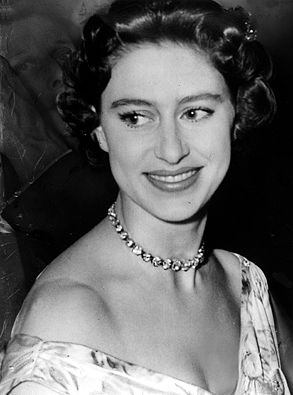
Princess Margaret was the only royal of her day with any sex appeal at all.
The Princess Margaret who died in Britain a couple of weeks ago was a liability and a problem. Her nearest and dearest came close to admitting their relief at her departure — for she had been affected for several years by debilitating strokes; for far longer than that by her reliance on liquor; and for most of her adult life by an inescapable sense of tragedy.
Still and all, in her own odd moment — in the 1950s, and especially in the years after her sister, Elizabeth, became queen — Margaret was the sexy member of the royal family. Indeed, granted that the notion (or accusation) of being “sexy” was a postwar phenomenon, it may be that she was the first member of her House of Windsor ever given that label. And maybe the only one. This may be a modest attribute, but there’s no reason to forget it or her brief season of forlorn prettiness.
She was 21 when her father, George VI, died, and her sister became queen. She was already a little too far down the line of succession to have any prospect of the throne — she was aunt to Prince Charles and Princess Anne, and they had precedence. For the rest of time, she would only slip further down the line, and grow older. But no one really found glamour or charisma in her sister, the queen. Elizabeth was so fixed in duty from such an early age — and she is there still, stubbornly refusing to acknowledge all the ways in which British royalty has lost power, prestige and magic, despite her own steadfast example.
Margaret was prettier (never quite beautiful), but with small hints of waywardness or will that attracted what was still a very prim British press. I can recall an occasion when Princess Margaret reviewed some regiment on a breezy London day, when the wind blew up her A-line dress. There was a glimpse of petticoat, perhaps even an inch or two of thigh. This was at a time when movie magazines regularly offered people like Joan Collins in cursory bathing suits — though it was long before any British newspapers had gone over to the nude pictures they now throw in the public face.
There was a thrill over Margaret’s flesh, and it was a sign of her hopeless plight that all she had to do was review regiments, open schools or visit the colonies and wait for some naughty breeze to catch her unawares. Official commentary added that it was a sign of her “flightiness,” her sexiness even, that she had not carefully added weights to the hems of her frocks so that no wind had a chance of provoking the unruly lusts of her subjects.
This was prelude to Peter Townsend. He was — if you like — perfect Dirk Bogarde casting, an equerry to her father, a former, decorated pilot in the Royal Air Force, but a man who had been married once before and divorced. He was deemed unsuitable, just because the royal family were supposed to ignore divorce. Her own uncle, Edward VIII, David to the family, the Duke of Windsor to the rest of us, was the great warning example to the family for the way he had given up crown and duty to marry the American divorcée Mrs. Wallis Simpson.
That Edward VIII had abdicated. The story is still that he had acted for love (no matter that recent books have alleged that Mrs. Simpson actually had male sex organs, and that she humiliated her duke by a love affair with a notorious homosexual). In truth, I think Edward stepped aside as much because he thought being royal was ridiculous, antiquated and impossible.
In a kinder world, more sympathetic to the impossibility of being royal, Margaret and Townsend would have been permitted. But, on advice, Queen Elizabeth forbade the union. So Margaret was thwarted — and so, it is said, she gave up the ghost of happiness. Her life went on. She married a society photographer; she had two children; she divorced and had “unseemly” affairs.
Meanwhile, apparently, her sister loathed the burden of having had to say no, resented the loss of her young sister’s natural affection and could never be as stern about “proper” royal marriage thereafter. Thus, it is claimed, her own children had one bad marriage after another.
What it all shows, of course, is that members of the British royal family are public figures — regularly depicted in the press and on television — who do not really have the right to be sexy, or even sexual. There is no better reason for doing away with them. No self-regarding democracy or defender of human rights can tolerate any of its citizens trapped in such slavery.
David Thomson is the author of "A Biographical Dictionary of Film" (new edition just published), "Rosebud: The Story of Orson Welles" and "In Nevada." More David Thomson.
Massage therapists rubbed wrong by sex talk
A Jennifer Love Hewitt show and the Travolta allegations have masseuses tired of being confused for sex workers
(Credit: iStockphoto/sybanto) Joe, a licensed massage therapist, knows what it’s like having a famous client who expects something extra. He had an Academy Award-winning actor begin gyrating on his massage table before raising his hips in the air to show off his erection. “He was hoping that I would play with him in some shape or form,” he says.
Needless to say, Joe isn’t surprised by allegations by two masseurs that John Travolta got handsy during massages. (Travolta’s attorney has denied all the allegations, and called them “ridiculous.”) “It happens all the time,” he says, and not just with celebrity clients. He frequently encounters men who try to fondle him, usually while he’s working on their glutes or lower back and their hand happens to be level with his crotch. “They think they’re so original, but they’re all so much the same,” Joe says, his voice rising. “They all use the same tactics, the same body movements, the same gyrations and grinding my table, the [heavy] breathing.”
Continue Reading Close
Tracy Clark-Flory is a staff writer at Salon. Follow @tracyclarkflory on Twitter. More Tracy Clark-Flory.
A night at the vibrator museum
Early vibrators were hand-cranked, two-person jobs -- and prescribed by doctors. How far we've come since then
(Credit: Antique Vibrator Museum) I can now say that I’ve used a turn-of-the-century vibrator — on my hand, but still.
The silver, hand-cranked contraption is usually kept behind glass at Good Vibrations’ Antique Vibrator Museum in San Francisco — but staff sexologist Carol Queen made a rare exception. “This is very special,” she whispered, unlocking the case and carefully pulling out Dr. Johansen’s Auto Vibrator, a relic from 1904. The “auto” part is not so much: It was a two-person job, with her having to crank the device’s handle to get it thrumming. Pressing my finger tips to its inch-wide circular platform of pleasure, I was pleasantly surprised by its power.
Continue Reading Close
Tracy Clark-Flory is a staff writer at Salon. Follow @tracyclarkflory on Twitter. More Tracy Clark-Flory.
Maggie Gyllenhaal on sexual liberation
The beloved indie star tells Salon about her "vibrator movie" and why she loves playing transgressive women
Maggie Gyllenhaal (Credit: Reuters/Mark Blinch) When I met Maggie Gyllenhaal about six weeks ago, she was enormously and gloriously pregnant, stretching out on a sofa with her shoes off and feet up in a Manhattan office building. (Since that time, Gyllenhaal and husband Peter Sarsgaard have welcomed their second daughter, Gloria Ray, to the world.) We were there to talk about “Hysteria,” the charming, lightweight feminist farce from director Tanya Wexler that explores a key event in the history of female sexuality: the invention of the vibrator by Mortimer Granville, a Victorian doctor who was seeking to cure the mysterious “female malady” that lends the movie its title.
Continue Reading CloseMother-daughter sexperts
Susie Bright and her daughter, Aretha, make parental talks about sex look easy -- and fun
Most parents loathe talking to their kids about the birds and the bees, let alone pubic hair grooming, faked orgasms and “water sports” — but most parents are not legendary “sexpert” Susie Bright.
Better than talking about these things, she penned an advice column in 2009 with her daughter, Aretha, then 19, for the ladyblog Jezebel. Their answers to questions about everything from porn to Paxil were unflinching but playful, and at times controversial. Now the pair have collected those columns into a new e-book, “Mother/Daughter Sex Advice.” Together, they read as an irreverent version of “Our Bodies, Ourselves” for the Internet age. The mother-daughter team also reflect on what the experience of writing the column was like, and it turns out it wasn’t as weird as many would think: For the most part, it was just a continuation of conversations they had been having throughout Aretha’s life.
Continue Reading Close
Tracy Clark-Flory is a staff writer at Salon. Follow @tracyclarkflory on Twitter. More Tracy Clark-Flory.
On the rack: A cultural history of breasts
Did breasts evolve for lactation or to enhance sex appeal? A new book explores why they matter
(Credit: iStockphoto/NadyaPhoto) It’s hard to be boobs. Sure, breasts are cherished as givers of milk and the pinnacle of sex appeal, but the modern world hasn’t been good to mammaries.
As Florence Williams writes in “Breasts: A Natural and Unnatural History,” they’re the most tumor-prone organ in the human body. They “soak up pollution like a pair of soft sponges,” and transmit environmental toxins to babies through breast milk. “Breasts are bellwethers for the changing health of people,” she says. While we’ve “genetically modified our crops to be able to protect them from the ill effects of pesticides,” Williams writes, “we haven’t yet figured out how to modify our breasts.” Aside from using saline and silicone, of course.
Continue Reading Close
Tracy Clark-Flory is a staff writer at Salon. Follow @tracyclarkflory on Twitter. More Tracy Clark-Flory.
Page 1 of 403 in Sex