Middle East

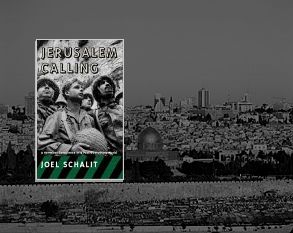
“Jerusalem Calling” by Joel Schalit

A disillusioned young Israeli living in the U.S. warns the American left that it's too reluctant to criticize religious fundamentalists -- including George Bush.

“Yes, I care about religion,” writes Joel Schalit. “But so should you, no matter how different your life may be from my own. If you’re an American, the reasons for caring [about religion] are deeply powerful.”

Schalit is admittedly obsessed with religion, and the publication of his first book, “Jerusalem Calling,” a collection of four essays, comes at a time when many Americans have a newfound preoccupation with religion as well. Six months after Sept. 11, they might even sympathize with Schalit’s bleak view: that “religion is all about death.”

But Schalit is not talking about Islamic fundamentalism. His book focuses on the two kinds of fundamentalism that he knows personally — Christian and Jewish. Schalit confronts the intersection of religion and politics as an Israeli now living in America, a Marxist academic, a punk rocker and a wandering Jew who regularly listens to Christian talk radio. The book sometimes veers into moralizing and exhausting self-scrutiny, but in two essays, “America the Enchanted” and “My Own Private Israel,” Schalit’s genuine, urgent concern knocks down doors, and for that reason, “Jerusalem Calling” is worth sifting through.

Schalit attributes his morbid feelings about religion to his Jewish and Israeli identity: “I was raised to believe that dodging death was an essential part of my ethnic identity; everything we did was in some way related to self-preservation.” After Schalit arrived in Portland, Ore., to attend an Episcopalian boarding school in the 1980s, Father Thomas Goman, a minister and math teacher who was once Schalit’s mentor, led a group of students on a hike up Mount Hood and into a forecasted snowstorm. A heartbroken Schalit saw Goman’s dangerous climbs as “something like a perverted act of penitence to prove his own faith.” The result was the death of Goman and his students.

The charismatic Father Goman had been a member of Students for a Democratic Society in college; for Schalit he initially represented an ideal combination of progressive politics and faith. Eventually, however, Goman pushed his faith on Schalit, going so far as to insist that Schalit’s problems passing geometry arose from an inability to embrace Christianity: “Math is the expression of God’s mind in the world. By now, I was hoping you would have figured this out and learned why you should come to Jesus Christ.”

Ultimately, the catastrophic results of Goman’s all-encompassing faith made Schalit deeply skeptical of even the sunnier facades of Christianity. He’s warier still of its more extreme manifestations. In fact, Schalit argues that even seemingly law-abiding Christian fundamentalists share a basic narrative with right-wing militia members: “Marginal communities have in common with the evangelical mainstream … a radical apocalyptic worldview and a commitment to building a covenant community.” He believes the media is to blame for carelessly portraying militia members as ignorant and fundamentalists as nuts.

But it’s not just the media who are to blame. According to Schalit, the American left, both scornful of the religious right and overly deferential to it, simply doesn’t take this community seriously. When President Bush repeatedly invokes the word “evil,” with obvious religious connotations, too many Americans, especially journalists and liberals afraid of insulting someone else’s faith, don’t bat an eye. As a result, the left fails both to understand the doctrine of the religious right, and to challenge it. To fully understand the religious right’s worldview, Schalit suggests, might mean taking a hard look at the Bible. But rather than offering the left or the Democratic Party a method of counterattack, “America the Enchanted” is more of a wake-up call.

As Schalit points out, when the Rev. Jerry Falwell blames the American Civil Liberties Union for the World Trade Center attacks, the reverend has more people clinging to his words than we’d like to think. His fascination with Christian talk radio may have made him a little paranoid, but it also puts him in touch with this subculture. And what Schalit says he’s hearing is Christian fundamentalists’ self-perceived economic and cultural disenfranchisement: “These anxieties promote not rational decision-making, but a desire to punish those who are deemed responsible for destabilizing the social order” — in other words, the left and the Democratic Party that represents them.

Schalit sees George Bush and the Republican Party as resembling Israel’s Ariel Sharon and the Likud Party: Both leaders are tapping into religious communities whose members feel vulnerable in a modernizing world and resist progressive politics. Some Israelis, like the Hasidic community, would be happier with what Schalit calls a “Jewish Iran,” a theocracy not too different from that envisioned by the American religious right. (Whether Schalit’s formative experiences in Israel, where religious fundamentalism has had and continues to have such a momentous impact on politics, has made him unduly paranoid about American fundamentalism, or simply better aware of it, is an intriguing question.)

Of Israel, Schalit believes “our religion is the state, even while we have done everything in our power to prevent the state from being reduced to a religion.” Yet something more powerful emerges in the essay “My Own Private Israel.” While it’s obvious that Schalit is enraged by Israeli politics and Israel’s treatment of the Palestinians, he also addresses the complex emotional conflict that Israelis are facing — an identity crisis resulting from the clash between the national imperative of self-preservation and the goal of democracy.

As a young boy, Schalit became obsessed with military apparatus and weaponry, to the point where his father would trot him around at parties to show off his precocious expertise. But with Israel’s 1982 invasion of Lebanon, Schalit became disillusioned with his homeland. He left Israel and even deliberately forgot Hebrew, no small transgression for a descendent of a family that arrived in what is now Israel in 1882, at the very beginning of the modern Jewish immigration to historic Palestine. Even so, Schalit’s admiration for and romanticism about Israel is undeniably present in this essay. He may reject his old penchant for tanks, but his enthusiasm for Israeli fortitude remains: “The helicopters flying overhead all day, the soldiers on the streets, and the sonic booms of fighter-bombers that shook our house every morning were signifiers of strength I found too compelling to ignore.”

Schalit wonders how progressive-minded Israeli Jews can reconcile an identity that is largely based on self-defense, high-tech weapons and strength with their criticism of how Israel uses that power. Schalit admits that during the war in Lebanon (which was waged by the right-wing Likud Party’s Ariel Sharon and Menachem Begin), “I became convinced that there were no more just wars to be fought on behalf of the Jewish state.” Only in times of peace could Schalit have faith that Israel might become the place of his dreams. But in giving up his language — also a symbolically vital component of the establishment of a Jewish state — he realizes that he’s turned his back on both his family and the founding values of Israel that he still admires.

In the end, Schalit returns to Israel amid the recent violence that has ravaged the region. Sitting at a relative’s bat mitzvah while around him Hasidic cousins mingle with secular ones, Schalit feels anguish at the loss of his once-fluent Hebrew. Does he even have a right to be there with his family, he worries, when he’s rejected the language that unifies them as Israelis? Or is he somehow expressing the failure of Israel’s ideals? By sharing a few words of Hebrew with an Hasidic cousin and later listening to a Palestinian radio broadcast, Schalit can, at least temporarily, reconcile his inner conflict. At the very least, he realizes, they all — secular Jews and Palestinians and religious Jews — share the language of struggle. It is a difficult language, one that needs reinterpreting with each wave of violence and moment of peace, but it should not be forgotten.

Suzy Hansen, a former editor at Salon, is an editor at the New York Observer.

When dictators tweet

Arab despots are starting to use Facebook and Twitter to strike back against democracy activists

Bahrain's King Hamad bin Isa al-Khalifa waves as he leaves 10 Downing Street in London, December 12, 2011 (Credit: Reuters/Finbarr O'Reilly)
This article originally appeared on GlobalPost.

DOHA, Qatar — Twitter and Facebook have been widely credited with enabling citizens to upend dictatorial regimes.

Global Post

But while oppressive governments were initially caught off guard by the new media tools, those still in power appear finally to be catching on. In some cases they are happily embracing social networking to play Big Brother in a way never before possible.

Many governments struggling with dissent appear to be using a double-barreled strategy to fight back against the so-called Facebook revolutions: classic repression and by promoting their own views using the very same platforms.

“The thought police already have a presence online in these countries,” said Mohamed Abdel Dayem, the Middle East and North Africa program coordinator for the Committee to Protect Journalists. “And they have a very heavy presence on Twitter, Facebook and other social media networks. They go out there and intimidate people. And they accuse people of being heathens. And call for their heads.”

Jeffrey Ghannam, a media lawyer and analyst in Washington, thinks the propaganda strategy will win out over subjugation.

“It’s my sense that Arab governments will focus less on control, filtering and blocking — though those efforts will not completely disappear — and begin to assert their own views in the Arab cyberspace,” he said.

“Consider the cases of so-called Bahraini twitter trolls and the Syrian cyber attacks that go after critics of these respective Arab regimes. The official Arab government view is increasingly in the mix,” he said. “Another example is the way the SCAF (Egypt’s Supreme Council of Armed Forces) uses Facebook and Twitter. It may not be beautifully done, and it does draw tens of thousands of critical remarks online that are viewable, but the SCAF is contributing its views. These are all significant developments and point to increasing government engagement in the Arab cyberspace.”

Some of the official efforts smack of classic public relations techniques.

In Bahrain, the government launched an online campaign called “We Are All Hamad,” asking supporters to post pictures of Hamad bin Isa Al Khalifa, Bahrain’s ruler, on their Facebook and Twitter pages.

In Tunisia, government officials, including President Moncef Marzouki (@Moncef_Marzouki) have joined Twitter. The royal family in Jordan, as well as the mayor of Amman, Jordan’s capital, also use Facebook and Twitter to speak directly to constituents.

These regimes, however, have a long history of using heavy-handed tactics and are apparently not about to give up on old habits. Many, in fact, have learned that social media can help identify potential targets of their crackdown.

This nascent trend, however, has not led authorities in these countries and elsewhere to give up old habits. Many have continued to opt for the more traditional and heavy-handed response.

Last month, for instance, Moroccan authorities arrested 18-year-old college student Walid Bahomane on charges of “defaming Morocco’s sacred values” by posting unflattering pictures and videos on Facebook that poked fun at King Mohammed VI. Authorities also convicted another student, Abdelsamad Haydour, 24, earlier in the month for criticizing the ruler in a video posted on YouTube.

These developments have taken place in a country largely praised for its response to citizen discontent over the past year. In November, Morocco held peaceful parliamentary elections as part of a governmental reform process initiated by the king that also included a new constitution.

In Saudi Arabia, 23-year-old journalist Hamza Kashgari faces charges of blasphemy, an offence that carries the death sentence, for tweeting an imaginary conversation he was having with the Prophet Muhammad. The uproar over Kashgari’s comments prompted the Grand Mufti of Saudi Arabia, Abdul-Azeez ibn Abdullaah Aal ash-Shaikh, to issue a fatwa against Twitter, which he told “real Muslims” to avoid as a “platform for trading accusations and for promoting lies,” according to an article in The National.

And in Jordan, a masked assailant on Feb. 20 stabbed university student Enass Musallam after he published a blog post that criticized a member of the Jordanian royal family.

Authorities in the region are now also turning to old laws — such as emergency laws, anti-terrorism laws and press laws — to justify the arrest, fines and incarceration of individuals for online expression.

“When the internet and social media blogs were just starting to become popular, press laws were only applied to the mainstream media. But that’s no longer the case as these media platforms continue to converge,” said Courtney Radsch, program manager for the Global Freedom of Expression Campaign at Freedom House in New York.

Earlier this month, for instance, authorities in the United Arab Emirates arrested pro-democracy activist Saleh al-Dhufairi for tweets criticizing the UAE’s decision to deport Syrian expatriates who demonstrated outside their consulate in Dubai without a permit.

“Saleh al-Dhufairi has been arrested on accusation of spreading ideas by speech, writing and any other means that provoke strife, hurt national unity, and social peace,” a spokesman for Dubai police said in a statement.

Al-Dhufairi’s arrest is a scare tactic by a government that is itself scared of any significant dissent, CPJ’s Abdel Dayem.

“Events are occurring that are of monumental political weight and have very far reaching implications. So what happens in Tunisia matters in the Gulf and what happens in Syria matters in the Gulf,” Abdel Dayem said. “These are obviously separate political entities and separate states but there is a Pan-Arab media consumed across borders, so journalists, bloggers, regular citizens and everyone else is exploring these new found venues for expression.”

“They are testing government tolerance for criticism, not just in Libya, Egypt and Yemen where there was an actual change in the political arrangement, but also in countries where there hasn’t been change.”

And these governments in turn are testing their responses, said popular UAE commentator Sultan Al Qassemi, who has more than 100,000 followers on Twitter.

“What we are seeing today is part of the teething process of accepting social media as an avenue of communication and criticism of society and government in the Gulf,” Qassemi said. “As the adoption of social media tools grows in the Gulf there will naturally be a larger output of opinions, some less agreeable to the authorities than others.”

Citizen journalists, bloggers and average citizens who run afoul of the law for expressing their opinions online must also contend with inadequate legal representation.

“This is a new realm for many lawyers in these countries. It requires training and requires a level of experience with the technology and that’s lacking in many countries if not all,” Radsch said. “Certainly, in the U.S. where you’ve had a longer history with internet-based content you have some more sophistication there.

But in many of these countries, blogging really just got going in 2004 and 2005.”

“With the advent of TV, you saw fewer cases against broadcasters at the beginning because it was still new and they were figuring things out, but you’re going to continue to see this battle between governments and citizens play out,” she said.

This time, however, the very nature of the internet and social networking might be enough to break the cycle.

“One thing is different,” Radsch said. “There are a lot more stakeholders and users of social media. The mainstream media is owned by a few and provides jobs for a few more but the vested interest across the broad swath of the public using social media could mean far more stakeholders could fight for the right to keep this space open.”

Continue Reading Close

The growing U.S.-Israel divide over Iran

A flurry of meetings between the two countries reveal disagreements about when and whether to resort to force

Israeli Prime Minister Benjamin Netanyahu and President Barack Obama
This article originally appeared on GlobalPost.

JERUSALEM — On Monday, both Israeli President Shimon Peres and Defense Minister Ehud Barak head to Washington for separate but urgent meetings, a day after Iran beat Israel at an indisputably benign competition, the Oscars in which the Iranian film, “A Separation,” beat Israel’s “Footnote” for best Foreign Film.

Global PostThe matter was at the root of wry commentary accompanying a flurry of visits not seen in years.

In the past few weeks, U.S. Defense Secretary Leon Panetta, Chairman of the Joint Chiefs of Staff General Martin Dempsey and National Security Advisor Tom Donilon have all held high level meetings in Jerusalem. Barak is scheduled to meet with Panetta and with Vice President Joe Biden. Peres will meet with President Barack Obama, as will Israeli Prime Minister Benjamin Netanyahu, who will fly to Washington for a much anticipated meeting on March 5.

The subject at hand is nuclear Iran — not the movie version, and not even the proxy war version, which has seen the assassination of Iranian nuclear scientists, the attempted assassinations of Israeli diplomats, and genial computer viruses attack Iranian nuclear installations, making centrifuges spiral out of control, as in Hollywood’s imagination.

On the eve of the Israelis’ Washington visits, there is a divergence of opinion between the United States and Israel regarding the utility of the recently hardened sanctions on Iran, and a growing apprehension on both sides about what the other may be prepared to accept from the Islamic Republic’s leadership.

Eytan Gilboa, an expert on U.S.-Israel bilateral relations who holds posts at Bar Ilan University and at the University of Southern California, said the situation is stark and in some ways unprecedented.

“The Obama administration has little trust in Netanyahu and vice versa. The new sanctions that have been imposed have produced economic hardship in Tehran, but this does not mean they are working. To work, they have to change the Iranian government’s policy toward nuclear development, and this has not yet happened.”

“The UN Atomic Energy Agency (IAEA) has just announced that Iran has substantially increased enrichment, which seems to contradict American statements that have appeared in all the media suggesting that Iran has not yet made the decision whether to develop nuclear weapons.”

Two points of dispute stand out in creating what Sen. John McCain, also on a visit to Israel last week, called the “daylight” between the two countries regarding Iran’s nuclear plan.

The first is the question of what constitutes unacceptable progress toward the manufacture of an armed nuclear device, or, in Barak’s words, Iran’s entry into a “zone of immunity.” The other is the extent of uranium enrichment at a nuclear site near the holy city of Qum, which was highlighted by the IAEA report.

The United States and Israel agree that the secret underground structure is better protected from a possible military strike than other known Iranian facilities. But from that point of agreement, different conclusions are drawn.

Israeli analysts believe Iran is moving fast toward a nuclear military option, and taking advantage of the pressure of sanctions and the time granted by European offers to negotiate in order to assemble all the parts necessary to build a bomb. The United States, which is in the midst of an election year, meanwhile, thinks sanctions may yet bring Iran — “if it is behaving as a rational actor,” in Gilboa’s words — to negotiate.

“The process is preparing everything for the building of bombs, with the aim of creating all the parts and then needing only a very short period of time to assemble a weapon. So it is just playing with words if we say that we don’t know whether they have made a decision. If you produce all the parts, it is obvious that means you intend to produce a bomb,” Gilboa said.

“I think that what Obama wants from Netanyahu next week is a commitment not to strike Iran at least until the American election, to give heavier sanctions a chance and not to surprise the United States.”

Gilboa does not believe Israel would attack Iranian nuclear installations without notifying the Americans beforehand.

Still, he points out, “The current situation is unprecedented. The U.S. has never before asked Israel to refrain from military action, and Israel has never before asked the U.S. for permission. This is all new ground.”

The 1981 Israel Air Force attack on Osirak, Saddam Hussein’s French-built nuclear reactor is now ancient history. In that campaign however, only eight jets were involved.

The New York Times estimated that at least 100 Israeli fighter planes would be needed today for a crippling attack on Iran. At the time of the Osirak strike, the United States angrily condemned Israel. But in 2005, former President Bill Clinton said, “Everybody talks about what the Israelis did at Osirak in 1981, which I think, in retrospect, was a really good thing.”

The current disagreement between Israel and the United States seem not to be on the substance of Iran’s nuclear program, or even on the possibility of a necessary, last-resort, military strike, but on the timetable and method of response to the threat.

Many Israeli analysts believe the Obama administration and Europe are not convinced that the full effect of sanctions has yet been felt. Israelis are concerned that by the time they are felt, possibly by next summer, when Europe’s oil embargo on Iran is scheduled to go into effect, it might be too late.

“What Obama would like is to put the crippling sanctions to the test. He thinks that the sanctions being used this time, alongside the oil embargo, will actually have an impact,” said Tel Aviv University professor Uzi Rabi, the director of the Moshe Dayan Center for Middle Eastern and African Studies.

“He is in effect saying to Israel, don’t surprise us. We want to be updated from A to Z. The second thing, I think Israel is being asked is to play down the shadow war and really just let sanctions work. If the sanctions are going to be fully implemented it could inflict a lethal blow on the Iranian regime, and since what we are talking about is the survival of the regime itself, this could be very effective.”

As to Israel, Rabi says, “It would like to make sure everybody knows that from its point of view, a nuclear Iran is unbearable. This combination of ayatollahs and power is something that poses an existential threat to Israel, and it is something Israel is really afraid of. What Israel thinks is the right thing to do is to make sure the military option is not only on the table, but actually feasible.”

Not many in Israel think that Iran, even with a nuclear weapon in hand, would attack Tel Aviv.

“Based on rational thinking, which is not one of the strongest characteristics of the Middle East, if Iran acquires nuclear weapons, it would be tantamount to suicide were they to use them. Iran would be wiped out by Israel’s second strike capability and by American nukes,” Gilboa said.

“I think they want them in order to acquire hegemony in the Middle East. By becoming a nuclear power they can threaten anybody. The power of threat is much more than the power of destruction.”

Gilboa predicts that next week Netanyahu will ask Obama how he plans to ensure Iran’s non-nuclear status in the event sanctions fail to cripple the nuclear program, and that Obama “will evade the answers.”

Rabi says “Israel is afraid to be left alone. I don’t think Iran would attack Israel. But their actions provide a source of inspiration for lunatic radical movements like Hamas and Hezbollah, and the fact that they are attacking Israelis in Baku, Delhi and Tbilisi, though ineffective for now, show that this is a state that could act in accordance with the modus operandi of a terrorist group. This has very negative implications for the stability of the Middle East.”

Not all Israeli experts see in the commotion of transatlantic visits and consultations evidence of tension between the United States and Israel. Shlomo Shpiro, vice chair of the Department of Politics at Bar Ilan University, believes those claims to be overstated.

“I think there anxiety among some in the U.S. administration who fear that a powerful Israeli military action against Iran could have an impact on the election in November. I don’t think there is tension. A whole range of senior American officials have been visiting Israel almost on a weekly basis.”

“I think the threat assessment is very similar in Washington and in Jerusalem,” he adds. “I think Obama is very concerned about the possibility of Iran getting nuclear weapons. Both are very worried, and both countries agree the process is moving quickly. The disagreement is only about how to prevent or delay it.”

Any Israeli military option, Shpiro says, would be a “last resort.”

“But if it comes to a last resort, I think Israel’s leadership will not hesitate. It all depends on the progress of Iran’s nuclear program and on information that the U.S. and Israel obtain about that program.”

For now, the war of nerves will play on, with Israel pressuring the U.S. and Europe to fully implement severe sanctions as soon as possible, and demanding assurances, perhaps impossible to give, about what the West will do if sanctions do not deter Iran.

The psychological warfare, many say, may lead Iran to believe it can “safely assume it can continue with its plan to build nuclear weapons without much interference,” Gilboa said. “There is a possibility the Iranians are laughing at everybody. For example, why announce sanctions and then say you’ll impose them only in six months?”

“The Iranians are the only ones producing consistent statements, and this is our problem. Too many of the statements coming from the West are confusing and could be interpreted in any number of ways.”

Continue Reading Close

Hezbollah fights for relevance

The Shiite militia defends Iran's mullahs at the expense of the Arab Spring. Its best hope may be war with Israel

Hassan Nasrallah (Credit: AP/Mahmoud Tawil)

Since the heady first days of the Arab Spring, it has become increasingly obvious that things are not quite as they seem.  Many of the idealistic, youth driven uprisings have been manipulated by great powers to serve a much bigger regional game.

The age old rivalry between Russia and the West is being played out in the Middle-East, pitting the largely Sunni Muslim Arab states against Russia’s ally  in the region- Iran. An important player bridging the gap between Shi’ite Iran and the Arab Sunnis is Lebanon’s Shi’ite resistance movement known as Hezbollah (Party of God.)

Hezbollah has enjoyed enormous popularity across the entire region, perceived by many as the champions of the Arab world, successfully standing up to the bully in the playground, Israel. There was a time when the portrait of Hassan Nasrallah hung on the walls of homes and cafes from Baghdad to Casablanca. Yet, following a relatively cool reception of Nasrallah’s speech on the 16th of February , one got the distinct impression that the Lebanese resistance leader may not enjoy the same popularity he once did with the Arab masses.

A simple explanation might be Hezbollah’s unequivocal support for Bashar el-Assad’s regime in Syria.  In a speech broadcast by al-Manar on May 25th 2011, Nasrallah declared his group’s strong support for the Assad regime. He hailed Syria for its support of the Resistance movement in Lebanon and Palestine. Many have been unable to comprehend why the former champions of the resistance would side with the regime against the people, especially considering Hezbollah’s unreserved support for the uprisings in Egypt, Tunisia and Bahrain. This has eroded the party’s popularity not only among Sunnis in Syria, who dominate the opposition, but also in the Arab world at large as regional tensions intensify between Shi’ite Iran and the predominantly Sunni Arab states.

Ironically, the very cause which won Hezbollah respect from thousands across the region, also, lost them the support of their own people. Throughout the 1990s, the Lebanese, regardless of sect, were united by Hezbollah’s resistance to the Israeli occupation of South Lebanon and again in 2006 when Israel threatened reinvasion. However, critics point to Hezbollah’s reluctance to disarm as the main source of national instability. Lebanese political leader Samir Geagea asserting that “The ones who are involving Lebanon [in crises] are those wielding power outside the Lebanese state” and demanding that Hezbollah put down its arms and integrate itself with the official Lebanese army and government.

In a similar vein, Hezbollah has alienated many followers by becoming embroiled in a petty tit-for-tat exchange with the March 14 coalition over the Special Tribunal for Lebanon, investigating the 2005 assassination of former Prime Minister Rafiq el-Hariri.  Many, regardless of their politics, had respected Nasrallah for his commitment to his cause and ability to avoid entanglement in party politics.

Though not Hezbollah’s fault, as such, the persisting devastation of the socio-economic condition and infrastructure of southern Lebanon has also served as a harsh reminder, to the organisation’s critics, of the consequences of war with Israel

In the Asia Times, Sami Moubayed, points out Hassan Nasrallah’s total withdrawal from public life in Lebanon in recent years; choosing to address his supporters on live television rather than the massive public rallies for which he has been famed. His disappearance has been due to security fears. However, this has made it difficult for followers to connect with him. It is, also, now harder to draw in new supporters from across the Arab and Islamic worlds.

Despite their somewhat dented popularity, Hezbollah is still massively important on a strategic level, with regard to predicting the outcome of unrest in Syria.

In a speech broadcast by al-Manar on the 25th August 2011, Nasrallah named Syria as a very important ally in the region “The Syrian support has been crucial. A great part of the Iranian support comes through Syria. If it had not been for the will of Syria, even the Iranian support would have been blocked”.  So, it is reasonable to assume that the fall of the Assad regime would serve a tremendous blow to Hezbollah, but also, act as catalyst to a power struggle within the country. A regime in Syria based on the Sunni Muslim majority would most likely be more friendly to Hezbollah’s local rivals in the March 14 coalition. Such a regime would also have good relations with regional powers that have severe disagreements with the Hezbollah movement over sectarian and political issues.

Prof. Joseph Bahout at Sciences Po in Paris notes that, in such a situation, Hezbollah would be faced with two alternatives, if faced with waning support from Syria “will Hizballah gradually become more flexible in terms of Lebanonization and civilianization? Or, on the contrary, will it increasingly pursue a radical position and bitterly defend its share of the Lebanese system while echoing Tehran’s dictum that Assad’s rule in Syria is a red line?” Judging by Hezbollah’s stern rhetoric over the past few months, the leadership has already decided on the latter and will continue to stand by the Assad regime.

Perhaps, most dangerously, Hezbollah also play an extremely important strategic role in what has been suggested as an imminent conflict between Israel and Iran. Would Israel be capable of conducting an aerial battle with Iran at the same time as defending itself against Hezbollah, closer to home?

Ha’aretz commentator Yoel Marcus thinks not, saying that a strike on Iran would be out of Israel’s league and points to cautions issued by former Mossad chief Meir Dagan against attacking Iran, amidst concerns that such a move would drag Israel into a regional war, which would involve Hezbollah, Hamas and possibly Syria.

Tensions have been escalating between Israel and Iran for some time, recently, heightened following attacks on Israeli embassies in India, Thailand and Georgia. An official for the Israeli counter terrorism bureau, quoted in Ha’aretz warned Israelis of further attacks and noted that Nasrallah’s threats of revenge for the 2008 assassination of Hezbollah commander Imad Mughaniyeh were being taken into account.  Nasrallah categorically denied any involvement in the explosions in his speech on February 16th.

But what would such a conflict mean for the Arab world at large? It seems unlikely that Egyptians, Jordanians or, the Palestinians, all not so embroiled in the sectarian debate, would support Israel in any conflict against Muslims whether they be in Lebanon or, in Iran. However, countries in the GCC (Gulf Cooperation Council) might have more to gain from a weakened Iran.

The GCC have been concerned about Iran’s capabilities, behavior and intentions for a long time, but it takes on an additional importance in light of the Arab Spring. This has certainly been the case in Egypt and Bahrain, in the Eastern Province of Saudi Arabia, possibly in Yemen, and now in Syria.

GCC countries have repeatedly accused Tehran of attempting to destabilise their internal security, and attempting to instigate sectarian strife. Iran has rejected these accusations, and pointed to the GCC’s appalling treatment of Shi’ite citizens. Particularly, concerning the brutal suppression of the largely Shi’ite uprising in Bahrain against the Sunni al-Khalifa monarchy, a struggle which was obviously covered up by Gulf sponsored media such as al-Jazeera and al-Arabiya.

Tensions have also been rising over Iran’s ability to developing nuclear weapons, something that is already of great concern to the GCC. Without a nuclear advantage, the Gulf far outguns Iran in terms of military capability, although, Iran is not reluctant to use its geopolitical position and has threatened to close off the Strait of Hormuz, through which about 20% of the world’s oil passes, if pressured.

When placed in the context of a larger regional conflict between Israel and Iran, Hezbollah plays an absolutely crucial part as an ally of Iran, especially in the absence of Syria. Yet, when the financial might of the GCC is also turned against Iran, Hezbollah, which is ultimately a financially dependent arm of Iran, becomes inconsequential.

It is possible that Hezbollah may look to find solutions to its waning popularity, and a possible run in with the GCC, by pre-emptively launching a strike against Israel. In his speech on Feburary 16th, Nasrallah ambiguously claimed that “We have arms and they are increasing [in number]. We have well-known weapons and there are others which are hidden and unknown. We are hiding them because we need to protect our country and prepare surprises for the Israelis.” Whilst this may be an empty threat, a Hezbollah spokesman has said that the organisation would be willing to go to war with Israel, should Syria be attacked. It seems likely that the same logic would apply if an attack were to be staged against Iran.

Prof. Juan Cole has said that, in the case of a conflict with Iran, Hezbollah would almost certainly launch a rocket attack, which would threaten up to a quarter of the Israeli population. The casualties might be even worse if Hezbollah is able to target toxic gas storage in Haifa or nuclear reactors in Dimona and Nahal Sorek. Already Israel has been taking steps to shut down these facilities, in the event of an attack.

This seems to be a departure from Nasrallah’s statement in 2006, shortly after the 34 day war between Hezbollah and Israel, when he told Lebanon’s NTV that had he would not have ordered the capture of two Israeli soldiers, had he known that this would lead to such devastation. However, six years on, the situation between Iran and Israel has escalated, and for Hezbollah this has become a battle for existence. In an earlier speech, February 7th, Nasrallah admitted that the organisation has been completely dependent on Iran for “moral, political and financial support” since 1982.

Hezbollah has found itself in the unenviable position of choosing between its Iranian financial backer and its Arab popular support base. Ironically, Hezbollah’s only hope may be an Israelis attack on Iran, thus gaining it some support, once more, as the champion of resistance against the Zionist aggressor. But should the pressure on Iran be laid on by the Gulf states, Hezbollah will be left with no alternative but to cut its ties with Iran or, face complete irrelevance within the Arab world.


Continue Reading Close

Why Obama won’t intervene in Syria

Despite some superficial similarities, it's not another Libya

Syrian rebels (Credit: AP)

Syria looks like Libya all over again. A brutal dictator uses his military to repress his country’s protests. A civil war erupts. And, oh yes, a split opens among American liberals over what to do about it.

With a few notable exceptions, the conservative movement has been of one mind on foreign policy issues since 9/11. All right-wingers supported the Afghanistan war, and virtually all supported Iraq, as well. Every conservative believes President Obama has been a craven appeaser of America’s enemies, and now all believe that pressure should increase against Iran, even if that means another war in the Middle East.

Liberals have shown no such unanimity. They were divided not only on Iraq but also on President Bush’s 2006 surge, Obama’s Afghanistan escalation, and the intervention in Libya. Views fall roughly along two lines. Dominating the party since Bill Clinton’s ascension are liberal hawks who believe it is in America’s interest to use military power abroad to promote human rights and expand democracy. More popular among the rank-and-file of the Democratic Party are attitudes skeptical of the use of force in major wars. (The only exception to this split is over the use of drones, which nearly all Democrats support).

Though Barack Obama opposed the Iraq War when he was a state legislator, as president he is closer to the liberal hawks camp. The best account we have of the decision-making on Libya, from Michael Hastings in Rolling Stone, has the president explicitly declaring that America needs to have an expanded conception of its role in the world. Just looking after its own affairs, attending to its national interests, is “not how America leads,” Obama said. The rationale Obama employed in a speech delivered at the National Defense University in March of 2011 was the closest he has come to defining an Obama doctrine.

On the surface, the criteria that Obama outlined in his Libya speech are present in Syria: impending and ongoing massacres; a multilateral coalition led by America’s traditional allies; and an opportunity to side with the people in a crucial state in the Arab spring. For this reason, many liberal writers have called on the U.S. to intervene. Paul Berman has signed onto a conservative-led letter to the president asking him to intervene in Syria. The New Republic has an entire symposium with intellectuals (mostly) asking Obama to side militarily with the Syrian resistance. “Lead again from behind!” Leon Wieseltier exhorts. Especially powerful is a heartfelt plea for American help from a Syrian activist in Washington:

If the United States does successfully build a partnership with Syria’s democratic opposition right now, at its time of greatest need, it will have earned a steadfast regional ally for the long-term. Indeed, Syria’s political future, and its future alliances, are currently up for grabs. In that way, there are important strategic, as well as humanitarian, issues at stake.

Pressure is building in Congress. Republican Sens. John McCain and Lindsey Graham, who both serve on the Armed Services Committee, have argued for arming the Syrian rebels. Obama’s former State Department policy planning head Anne-Marie Slaughter was among the first to call for intervention. In late January, Director of National Intelligence James Clapper said it’s only “a question of time” before President Bashar al Assad falls. In December, the State Department pointman said Syria’s leader was a “dead man walking.” More recently, White House press secretary said on Tuesday that “additional measures” such as rebel-arming may need to be taken if the international community keeps dithering.

There are two significant reasons the administration has not pushed for military intervention, however. First, the international consensus that existed on Libya is not present in Syria. Russia and China vetoed a Western- and Arab-sponsored U.N. Security Council resolution condemning the Syrian government. Imagining that they would agree to a military intervention is simply fanciful.

What hasn’t been much discussed is why China and Russia vetoed the resolution. And here we circle back to Libya. The resolution authorizing military action in Libya was limited to protecting civilians in Benghazi and other areas. NATO and its allies quickly went beyond the scope of this mandate, using airpower to assist the rebels in defeating Col. Gadhafi and his forces. Such actions may have been morally justified, but they didn’t go unnoticed by the Chinese and Russians, who are extremely sensitive to infringements on state sovereignty (lest they be targeted one day). Tellingly, foes of the proposed Syria resolution explained their decision in terms of national sovereignty. Russia’s foreign minister said that “the Security Council by definition does not engage in domestic affairs of member states.” Russia’s U.N. envoy faulted the resolution for aiming at “regime change,” even though the wording of the text notably did not call for it and the Arab states explicitly rejected Western military intervention.

The second reason Libya isn’t acting as a template for Syria is one of logistics. As Middle East expert Marc Lynch has explained, “Military intervention in Syria has little prospect of success, a high risk of disastrous failure, and a near-certainty of escalation which should make the experience of Iraq weigh extremely heavily on anyone contemplating such an intervention.” The Syrian opposition, impressive and courageous as they have been, is divided, weak and controls no territory. Air power of the sort the West can provide would not be effective in preventing civilian deaths, and the fighting is taking place in densely populated cities. For these reasons and more, a Libya-style no-fly zone simply won’t fly.

Eventually, the Syrian government’s efforts to suppress the rebellion may be so bloody that the Obama administration feels compelled to intervene. But so far, the conditions that were present in Libya are not present in Syria. It may be a double standard, and one that liberal hawks are not comfortable with, but it is one with good reason.

Continue Reading Close

Jordan Michael Smith writes about U.S. foreign policy for Salon. He has written for the New York Times, Boston Globe and Washington Post.

When I was captured by Gadhafi’s forces

After the Libyan rebels we were embedded with came under fire, we became hostages of the regime VIDEO

Libyan rebels head towards the front line outside the eastern town of Brega, Libya Friday, April 1, 2011 (Credit: AP)
GlobalPost correspondent James Foley spent 44 days in captivity inside Moammar Gadhafi's Libya. This first chapter of his story originally appeared on GlobalPost. For the full series, click here.

There is a single main highway along which lies every major city between the rebel stronghold of Benghazi in the east and the capital Tripoli in the west. It snakes along the coast and passes through Ajdabiya, Brega, Sirte and Misrata, cities made world famous by months of back and forth, and deadly, conflict.

Global Post
The four of us were riding in the back of a blazing red minibus at the beginning of April, approaching the strategic oil town of Brega, where the worst fighting of the conflict had been taking place. Our driver was a teenage boy, like his friend in the passenger’s seat. The so-called front in this war was always changing. But we had already passed the last rebel checkpoint and we knew whatever front existed was beginning to reveal itself.

Our goal was to learn, and then report, who was in control of Brega.

We were getting nervous. We knew the boys driving were scouting the road ahead, and maybe on their own initiative. Anton, the most experienced journalist in the group, mumbled something about it being risky. We could feel our guts begin to tighten. Manu and I looked at each other. But said nothing.

Two armed trucks raced toward us from behind, filling up our back window before soaring past. This was how the rebel convoys seemed to form, like schools of fish that hunted together, but have no clear leader or command structure.

Over a small hill we saw some men, boys really, standing around a sedan. We leaped out to do some interviews. Clare asked how far away Gadhafi’s forces were. The boy said 300 meters. 300 meters? I looked at Clare. It seemed impossible. But as a precaution, we hustled off to the side of the road. A static mortar or a rocket position could have easily dialed in on us from that distance. The small convoy rolled ahead, leaving us behind in what we thought was relative safety.

We watched the rebels push forward. They weren’t 200 meters away, at the rise of the next hill, when they sped back around. We watched for a second as they beared back down on us, followed by a barrage of machine gun fire. The loudest I had ever heard. Our small group of journalists — Anton, Clare, my fellow American, and Manu, a Spanish photographer — took off running.

“We need to get to the vehicles,” Anton shouted. But the rebel trucks were retreating too fast and the ones in pursuit were firing wildly. There were two Gadhafi military pickups — tan with large machine guns mounted on the back. The trucks were overflowing with armed men.

With all the bullets flying, we pressed ourselves as close to the ground as possible. The rebels faded into the distance and the Gadhafi trucks slowed to a stop. The shooting continued. The roar of bullets overhead sounded like machines eating up metal. AK-47 rounds ripped past us from less than 50 meters.

Libya: Tripoli scenes from the uprising:

I crawled back toward Clare and Manu, who were under several small trees. The shooting intensified. We tried to speak, to yell for each other. But the bullets tearing overhead deafened everything. In a corner of my mind I hoped that we were in a cross fire, that behind us the rebels were shooting back. I crawled forward toward a larger sand dune with my camera rolling. Anton crouched in front of me. The bullets streamed directly over my helmet and shoulders. This was no crossfire. They were shooting at us, and they were shooting to kill.

“Help, help,” I heard Anton cry. His voice was weak. My mind tried to convince me of something I knew was not true. Maybe he had just fallen and twisted something. Another barrage of bullets passed over me. “Anton, are you OK?” I shouted between bursts of fire.

“No,” he said, in a much weaker voice.

****

I’ve heard journalists say that Libya was the perfect war. A reporter could get to the front line, close enough to hear the shells coming in, and back to a comfortable hotel in Benghazi, with a solid Internet connection, by evening.

But in reality, this war was anything but perfect — something I’d soon come to learn. It was a war led by confusion, abductions and an oppressive sense of the unknown. This latest spasm of the Arab Spring had none of the idealism of Tunis or Cairo. For me, it began with a rifle butt to he head, which bled into weeks of uncertainty, crushing captivity and ended, however improbably, in a four-star hotel in the besieged Libyan capital.

Along the way, between blindfolds and quiet conversations with fellow captives deep inside the country’s brutal prison system, I witnessed the last gasps of the Gadhafi regime — a corrupt and corrupted system that for more than 40 years ruled this tribal, oil-rich land.

I had done several tours as an embedded reporter with U.S. troops in Iraq and Afghanistan. So, for me, the frontlines felt natural. And I believed it was my job. But the freedom with which you could maneuver was deceptive. There was no highly-trained U.S. platoon to escort you. And the rebels were said to be some of the worst trained soldiers in the world. Most had never held a gun before the end of February, when they stormed Benghazi’s “katiba” and took them by force.

I tried to hold farther back after a few close calls — a near miss by a Girad rocket, for instance, or a tank shell ripping over the heads of Manu and I outside Ajadibya. Our ears popped. But the front kept calling.

As is common among freelancers, Clare Gillis, a 34-year-old from Connecticut, Manu Brabo, a 29-year-old from Gijon, Spain, and myself had been sharing rides and interviews together for several weeks. Anton Hammerl, a South African photographer who covered much of Africa — from the townships during Apartheid to child soldiers in the Congo — came late to our little group.

With all the rebel offensives and retreats along the coastal highway, we felt we had to get to the front every few days or risk completely losing track of the story. So on April 5, we headed out.

Our plan was to try to get a sense of who was really controlling Brega, a strategic oil town that had been the scene of some of the most deadly fighting since the uprising began several months earlier. A rebel general told us that if the rebels took Brega, they would hold it without advancing right away, thus learning from earlier mistakes where they stretched themselves too thin and were forced into whole scale retreats.

But Brega was dangerous. Manu and I had been caught in heavy shelling outside the town days before. I had seen two shells bounce off the ground a hundred meters away. A rebel was killed by shrapnel to the head in the truck Manu and I had leaped into for escape. We went with them to the hospital, hugged the bawling comrades afterwards and shot some eerie photos of them washing blood off their grenades.

Still, Brega was where the front was, so we woke up early to beat the crush of reporters. The four of us went in a Mercedes van piloted by a teen. We stopped at the only manned checkpoint some 20 kilometers outside town, where a crowd of the usual disheveled men, many of them teens, milled about waiting for the real fighters to assemble. We got out into the early sunshine and told our driver he could leave us there. It was just after 10 a.m.

We waited. Usually, with shouts of “Allah Akbar,” a convoy would push ahead, and we’d jump into one of the rebel vehicles heading to the front.

The red minibus started moving and we hustled on. It drove ahead with us as its only passengers, the young driver and his friend in front looked nervously from side to side. We stopped after a kilometer to inspect two smoldering pickup trucks, blackened crisps in the road. It appeared to have been a rebel ambush.

“Hit by a Sam 7,” Anton said pointing out the expended launcher and wire guidance system leading to the cindered vehicles. I took note of his wealth of knowledge. He’d been forced to join the South African infantry as a young man and hadn’t relished it.

****

The firing continued all around us. The men had gotten out of their vehicles and were now approaching. “Anton!” I shouted again. He was silent. The terrifying reality grabbed hold of me. The soldiers firing probably didn’t know that we were reporters. Rebels didn’t dress in regular uniforms and many were often not even armed. I had to surrender or we’d all be gunned down.

I leaped up from where my head had been buried in the sand to face the group of wild men shooting uncontrollably — it seemed our only hope. I held up my hands and yelled, “Sahafa! Sahafa!” It was one of the few Arabic words I knew. It means “journalist.” I walked slowly toward them.

There were three or four skinny, Arab-looking soldiers carrying AK-47s and a larger, darker one to the right. My eyes drifted toward Anton as I stumbled past the dune ahead of me. He was lying face down in the sand, his body askew, cameras still strapped around his shoulders, his legs splayed out.

As soon as I reached the soldiers, the dark one slammed me across the chin with the butt end of his AK-47. I dropped my camera. He smashed his rifle down on my head. My helmet and Oakley sunglasses were thrown off and he punched me in the eye. Another one crushed my head several more times with an AK-47. All my instincts for self-preservation gathered within me. I went completely limp and complacent. The adrenaline was coursing so heavily through my body. I felt no pain.

I was thrown into the back of one of the pickup trucks. An Army boot pushed my face onto the floor. I glanced back and saw Manu and Clare being pulled off the ground.

A crazed looking soldier looked down and jeered at me in English, “You go on patrol! You go on patrol!” as if he knew exactly what we’d been trying to do. A cell phone was pushed close to my face. A picture was snapped. “Gadhafi Meia Meia,” a younger one said, thumping his chest, “Gadhafi 100 percent.” These words terrified me. After weeks of being with rebels who said things like, “Fuck Gadhafi,” with regular consistency, we had now found ourselves with the other side, the ones who had pledged their dying allegiance to the country’s dictatorial leader of more than four decades.

Clare and Manu were also forced down into the bed of the truck. Manu was face down and Clare, pushed against his side, was facing me. I looked at her for the first time. She had a purpled eye. She saw blood running from my scalp.

“Jim, are you OK?” she said, pleadingly. I nodded, and took stock of the blood pooling in the back of the truck. With a boot again on my face, my hands were bound behind me with a plastic cord. We sped away from the scene.

You can read Part 2 of James Foley’s story here.

Continue Reading Close

Page 1 of 427 in Middle East