
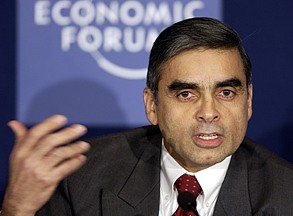

If the title of Kishore Mahbubani’s collection of essays seems provocative, a quick look through the book will convince you that the author takes the question “Can Asians think?” very seriously. In his introduction, Mahbubani, the Singaporean ambassador to the United Nations, writes, “Can Asians think? Judging from the record of Asian societies over the past few centuries, the answer should be no — or, at best, not very well.”
According to Mahbubani, some experts believe that the size of the economies of Asia will surpass that of the West by 2050. By then, Mahbubani maintains, Asian societies will be 90 percent of the world’s population and Europeans and North Americans will make up only 10 percent. How will the East manage this change? And, perhaps more important, how will the West react to it? Although Mahbubani is concerned about the flexibility and capabilities of the Asian mind, his essays strongly suggest that Westerners must also transform their ways of thinking. For example, he maintains that Western-initiated human rights campaigns amount to putting the cart of civil liberties before the horse of civic order and economic development. (Freedom House, a New York-based human rights advocacy group, criticized Singapore’s government in a 2001 report for excessive government control and ownership of the nation’s broadcast networks, for censoring film, music and television and for monitoring citizens’ Internet usage. In its 2000 report, Freedom House listed Singapore in the lowest “Not Free” press freedom category.)
A native of Singapore, Mahbubani has lived in New York for three years. He feels that he’s strangely part of two distinct mental universes. If anything, the events surrounding Sept. 11 have only just now informed the West of the existence of a uniquely Asian mental universe, one that Mahbubani feels is poised for its own renaissance. “Can Asians think?” is an urgent, sometimes ominous book, but it’s also optimistic. Mahbubani hopes for a “fusion of civilizations,” if only both sides take a long, hard look at the last millennium and the years to come.
Mahbubani spoke to Salon from his office in New York about how the East really feels about the West, why he’s critical of Western human rights campaigns and why he believes that the Western mind is troubled.
You mention in the book that some people were offended by the title. Who was offended and why? What do you mean by “Can Asians think?”
We live in a politically correct age. The idea that you can actually ask whether or not ethnic groups can think upsets people. I have friends who travel on planes with the book and the guy or lady next to them will say, “How can you read a book like that?” I keep emphasizing that this is not a frivolous question. What happened was that the International Conference on Thinking had its biannual meeting in Singapore some years ago and they wanted a Singaporean thinker to give one of the keynote addresses. That’s when I thought of the question.
The reason why is actually quite simple: In the year 1000 the most successful, the most flourishing and the most dynamic societies in the world were Asian. Europe was still struggling out of the Middle Ages and North America hadn’t been discovered. One thousand years later you get the exact reverse of that: the most dynamic and flourishing societies are in North America, Europe is one tier below and Asia is far behind. And my question is why? How did societies that were once at the leading edge of global civilization lose an entire millennium?
Is it that they fell behind or is it that there were certain things about Western societies that were so advanced and progressive?
It’s a combination. There was a magical leap in the Western mind.
What do you mean?
There was the Reformation, the Renaissance, the scientific revolution — wave after wave of advancements. I’m curiously a child of both the East and the West and the only advantage this provides is that I can actually enter the mental universes of Asia and of the West. By being able to do so, I can see that there are two different mental universes. They haven’t become fused into one mental universe. To me, it’s quite puzzling that so many Asians can’t realize that they have to ask very hard questions about themselves if they want to succeed and not waste another millennium.
What sort of questions do you think they should be asking?
The most fundamental question is: Why are their societies so backward? Why is it that, even at the end of the 20th century, only one Asian society has fully modernized — Japan? Three or four others are almost there, but not fully. It has to do with the forms of political, social and economic organizations that they have. But I try to go beyond the usual answer that what you need is capitalism and democracy. I suggest that the most fundamental reason why Western society has succeeded is because of the principle of meritocracy. When I was at Harvard in 1992, I was amazed at how ruthless Harvard was when it came to selecting professors. They want to find out who’s the best in the field. You can come from Columbia, Yale, Stanford, Oxford, but only if you’re truly the best will you be selected. They don’t care what nationality or what race you are. That’s what makes Harvard such a great university. In the same way, Asian societies could pick the best man for the job, rather than someone related to you, which unfortunately is what happens.
That, of course, happens in the West, too, but I see the overall distinction. While I was reading your book, I kept thinking that “Asian” was such a broad term. How do you distinguish between East Asian societies and Muslim societies?
It is true that Asia is very diverse. But it is not a purely geographic concept, and I often use my own personal example to show what I mean. I’m ethnically a Sindi — Sind is now part of Pakistan. My family is Hindu but the script that I learned to write as a child is Arabic. You talk about Hindu-Muslim clashes, and here you have a Hindu like me, whose mother had to flee because of the [India-Pakistan] partition, but who learned the Arabic script as a child. This is how civilizations cross into each other. Even though Singapore, where I live, is surrounded by Islamic societies, the underlying cultural bedrock is Hindu.
If you travel Northeast to China and Japan, one of their most important cultural strains is the Buddhist strain which originated in India and which Indians empathize with. The movement of influence across the continent of Asia has been there for thousands of years. And even though there are some divides, they’re not as fundamental as they appear to be.
Then again, yes, the challenges facing East Asian societies are different from those facing Islamic societies.
How much do you think religion has to do with holding these societies back?
I would say that one of the great leaps forward that the West made was to achieve secular societies. Decisions about where the society should go were taken out of the hands of the religious establishment and given to the elected establishment. That’s a big leap that I hope all societies will follow.
You write that one of the major differences between Western societies and Asian societies is that within the West, there is zero prospect of war breaking out among the nations. Why is it not the same for Asian societies like India and Pakistan or North and South Korea?
What the West has been able to do is one of the most remarkable achievements in human history, one that we take for granted. This is not a cynical answer, but [these Asian countries] haven’t fought the great wars yet. Europe had to go through centuries of warfare and the pain of World War I where hundreds of thousands of brilliant young minds were wasted in the trenches. You had to go through that searing experience to realize the futility of war. Tragically, many Asian societies haven’t gone through that yet. And I hope that they don’t have to go through that.
But the good news is another remarkable achievement that few people comment on: The guns have been silent in East Asia for quite a while. That again is no small achievement. This is a result of what I call the tidal wave of common sense that has swept through the region. And it helps that the biggest, most powerful country in the region has decided that the only way to succeed is through economic development and not through acquiring a huge military industrial complex. The fundamental mistake that the Soviet Union made was that they thought a military industrial complex was the road to success. The Chinese have taken the opposite road.
What about human rights in China? You have some controversial things to say about Western human rights campaigns.
That’s why the book doesn’t get reviewed.
Most Westerners feel that human rights is an issue that can’t just be ignored.
Human rights is another wonderful human achievement. I don’t want to be tortured. I don’t want to have my nails pulled out. I don’t want to be locked up in jail without anyone knowing where I am. I’m a human being. But I’m saying that the societies that have achieved a very high level of human rights did so at the end of a process. You have to go through economic development and the development of the middle class and certain institutions first. It can’t be done overnight. If you look at the Balkans or parts of Africa, where democracy was parachuted into society without preparation, you can get disastrous results. Democracy can awaken nationalistic demons. One reason why Milosevic came into power is because he rode the Serbian nationalist tiger. He unleashed it. There are no checks and balances in many of these societies to contain these things. It’s not easy.
So you don’t feel it’s the West’s responsibility to demand that developing nations uphold high standards of human rights?
It is not the responsibility, but it is in the long-term interest of the West to take a long view. Just as [the Western nations] have taken centuries to get to where they are — for example, for women and blacks to get the vote. It wasn’t done overnight. The critical question to ask is whether or not the societies are marching in the right or wrong direction.
And how do you feel about China?
China has done an incredible amount in terms of improving the real lives of people, more so than any society in the history of man. That is the biggest thing that people want in the first phase of development. They need to have food, shelter and schooling. The transformation in the quality of life of the Chinese has been quite remarkable. Chinese society is opening and changing. Chinese will soon overtake English as the main language of the Internet. That’s coming. If you have millions of Chinese minds roving on the Internet, you no longer have a closed society.
What specifically about human rights campaigns do you have a problem with?
When human rights campaigns are pushed by human rights organizations, they do so objectively and on the basis of the merits of the case. But when human rights campaigns are pushed by national governments, they do so for national interest. This leads to double standards. One of the things I point out is that the West will contest the reversal of democracy in Myanmar, Peru and Nigeria but not in Algeria. These double standards hurt. Take Bosnia. I cannot imagine that if you had Muslim artillery shells falling on Christian populations in Europe that Europe would have been so passive in the 1990s. Which, of course, is an explosive thing to say.
The big change in the last 10 years is that as a result of modern technology, people in living rooms all over the world can see the same event. And I happened to be in Singapore, listening to BBC, just before Srebrenica was about to fall. I told my wife, “How can they allow these people to be massacred when the whole world is watching?”
There were a lot of complicated reasons why the U.S. in particular didn’t want to get involved, but obviously there seems to be a general consensus that it was a terrible and obviously tragic mistake.
If we say that we have advanced human civilization to the stage where we can no longer accept any form of genocide, then it is the responsibility of the most powerful country in the world to put in place the international institutions to ensure that this will never happen again. This is the role of the U.N. Security Council. The Security Council should apologize for the fact that it failed to intervene when it has an institutional responsibility to do so.
Do you really think that if the sides were reversed — and a Muslim leader was acting out Milosevic’s role — that the response would have been different?
I don’t know. Responses are always contextual and situational, but in the Islamic world there is certainly a perception that when it comes to the loss of Islamic lives, the world doesn’t care as much as it should. That’s a very unfortunate perception, and it’s important to remove that perception. Although, as you know, to balance that, many of my American friends say that it was the Americans who rescued the Kuwaitis and, eventually, the Bosnians. Nothing is simple.
But it’s interesting that the perception is there. You made a statement after the 1993 World Trade Center bombing that “Americans have begun to absorb the European paranoia about Islam, perceived as a force of darkness hovering over a virtuous Christian civilization.” Have any of your ideas on that issue changed since Sept. 11?
After Sept. 11, I feel that the need for developing cross-cultural understanding has never been greater. There is more than one mental universe out there; it’s not just the Western universe. There are many other mental universes out there, and you must reach out and try to understand how they look at the world. That’s the only way you can build bridges between minds.
What was the Asian reaction to Sept. 11?
Apart from Osama bin Laden and al-Qaida, all the societies in Asia condemned it as ferociously as the United States did for the simple reason that none of us want to be victims of terrorists. Any time innocent lives are lost, there’s a natural human reaction to that. But at the same time, I think the feeling is that we have to try to figure out the long-term cause of Sept. 11 and what we need to do to prevent this from happening again.
The best source for long-term stability in the world is to provide universal education. Hopefully you convince people that it is not the right thing to do to hijack planes and fly them into buildings.
How do you feel about the war on terrorism, especially now that we have troops training in the Philippines?
Frankly, it’s admirable the way the United States has taken on this global leadership role. It’s a tough job, and nobody can do it as well as the United States can. And they’ve done it relatively sensitively.
You write that the West had turned its back on the Third World. Do you think the current war on terrorism will reinvigorate its involvement or just be a military campaign?
It’s too early to tell. At least among those who watch and observe global trends, there’s a growing awareness that the most basic lesson of Sept. 11 is that we’re all in the same boat. If you’re 6 billion passengers in the same boat, then it doesn’t seem tenable to have 1 billion traveling in first class cabins, in tremendous comfort and affluence, and at least 2 billion living below decks in horrible conditions receiving daily television messages from the first class cabins that say, “I lead a good life, you lead a terrible life.” You can’t expect that boat to be at peace. I have noticed, at least in terms of dealing with international diplomats and international organization people, that there’s a growing awareness that global poverty has to be addressed more seriously. I hope that’s one of the positive outcomes of Sept. 11.
It’s interesting that you say that the rest of the world fears the West in the same way the West fears the rest of the world. How does the rest of the world fear the West?
The most powerful societies are still in the West. You’d be amazed at the damage that simple decisions in the West can make. For example, if you look at trade, a new regulation of bananas can kill an entire industry. A new regulation of apparel can deprive thousands of their jobs. One of the most remarkable stories is about how a Belgian NGO went to Bangladesh and found a factory that was employing child labor. They caught them red-handed and said, “You see? Aha. We were right.” Two years later, the NGO went back and guess what? Many of the young female child workers went into prostitution. That’s one reason why I quote Max Weber in my book: “It is not true that good can only follow from good and evil only from evil, but that often the opposite is true.”
You talk about how the Western mind is limited and how it’s so hard for Western intellectuals to be aware of how they are limited, because part of being liberal-minded is thinking you consider all points of view. How is the Western mind limited?
When you live in New York, as I have for three years, it’s very easy to become smug and complacent. For example, you pick up the New York Times and you say, “I’m reading the best newspaper in the world. I know exactly what’s going on in the world. If anything important is happening in the world, the New York Times will tell it to me just right.” It’s very easy to believe that. But consider the possibility that even the mighty New York Times might get it wrong.
We do … And you’re also implying that Western minds can’t conceive of any other type of society than their own, and that we want exact replicas of American-style government and free markets everywhere?
Democracy is the only long-term destination. But you can’t have these systems adapted to different societies and not function differently. At the end of the Cold War there was this famous essay by Francis Fukuyama called “The End of History.” The general assumption was that we had reached the peak of history and that everybody else should copy us and become like us. What you’re seeing now — the big lesson — is that it’s not the end of history but the return of history.
You respond to Samuel Huntington’s famous essay on the clash of civilizations as well. Will the return of history bring this clash? Has it already done so? Or will the result be a fusion of civilizations as you hope?
I can see the fusion happening. If you travel from Singapore, Sydney, San Francisco or Vancouver, you don’t feel like you’re leaving one cultural universe and entering another. There’s an ease and comfort with which Asians and non-Asians interact with each other. If you go to the campuses, for example, it’s remarkable, there is a meeting of minds.
One point I do make, which is of course controversial, is that the flow of ideas has been a one-way street. But I see a two-way street coming. There’s so much in the history and culture of China and India which hasn’t been rediscovered yet. Europe went through its Renaissance a few centuries ago. There has to be, has to be, a huge Asian Renaissance coming in the next few decades. It has to come. When Asians reach a certain level of affluence, they’ll do exactly what the Rockefellers and others did: go back and rediscover their past.
But you do see this two-way street emerging?
It has to do with larger forces. There are 400,000 to 500,000 Asian students in the U.S. These people, often at the top of their classes at Harvard and Stanford, return to their countries and run organizations. When they go back, they’re not going to be passive and take all the wisdom that’s been given to them and say that’s the gospel truth. Maybe they’ll have a different point of view. That’s why it will happen. It’s the unleashing of the creativity of hundreds of thousands of Asians that will change the dynamic.
Do most of them return?
Even those who stay here 10 to 15 years do go back. There are so many opportunities there. They can build a new society.
Do you think the West is afraid of this two-way street?
I hope not. The Western mind is a troubled mind. On the one hand, you have reached a level of comfort and affluence that has never before been seen in the history of man, but yet also there must be an awareness that other societies are rising and becoming successful. One of the most insightful comments that Samuel Huntington makes in “The Clash of Civilizations” is when he says that the West dominates the world. It’s quite remarkable, an honest statement: “In the politics of civilizations, the peoples and governments of non-Western civilization no longer remain the objects of history as targets of Western colonization but join the West as movers and shapers of history.”
I agree with that comment, and I also agree with his second comment: “The West in effect is using international institutions, military power and economic resources to run the world in ways that will maintain Western predominance, protect Western interests and promote Western political and economic values.” This combination is a recipe for disaster.
These are very strong statements. That’s why you need to have a change, a gradual evolutionary change.
In other places in the book, it also seems as though you’re saying that Western societies are disintegrating somewhat.
When I wrote some of these essays, in the early ’90s, it was during a period when the West was saying, “We are perfect. Be like us.” I had a much sharper tone than I would today. The only point I was trying to make is, “We are imperfect and so are you.”
Do Asians think that Western societies have a lot of problems?
Yes. The concept of obligation to family is very different. I’m not saying one is right and one is wrong. American families are so strong. But if you look at the number of children born out of wedlock … that’s the sort of thing that Asian societies don’t want to see happen.
A lot of people in the West think that the rest of the world hates us and our way of life. But in your book you say very strongly that that’s not true.
No, in fact what puzzles people is how much praise I give the United States. The United States is by far the most admired society on this planet, bar none. There’s no question about that.
And most people feel that way?
Yes, but the other thing that I tell my Western friends is this: Consider the possibility that non-Western minds can handle complexity, that they can actually see your tremendous strengths and also see your weaknesses. It’s not a black and white view. The United States, as I keep saying with total conviction, has been the greatest power ever seen in the history of man, and the most benign great power ever seen in the history of man. I once made the mistake of naming countries and saying, “Can you imagine if this country had achieved as much power as the United States?” And of course the ambassador heard about it and gave me a real shoving. But the United States acts as a beacon for much of the world and what many people want to achieve.
Still, the United States is perceived as arrogant, bullying and all that.
Of course, it’s not perfect. One of my strongest arguments is that it is in the interest of the United States to use its current position of dominance: “Sheer power and two huge oceans make Americans unaware of how the world is changing. The great paradox here is that the world’s most open society is among the worst informed on the inevitable impact of global changes. A tidal wave of change is already on its way to American shores.” That was written years ago. So it’s in American interests to develop global institutions that will manage both American interests and the rest of the interests of the world.
Do you want to see America intervene in conflicts in Asia?
Given its global interests, the United States already is involved. The question is how you manage the involvement. By the way, United States policy in East Asia has been remarkably successful. One of the paradoxes I cite is the best way to manage change is to preserve the status quo. It surprises everybody to hear me say that the most important thing we need to do in East Asia is preserve the U.S. presence. It is extremely stabilizing.
Your other very controversial point is about the free press. I assume that you’re not saying that you don’t believe in a free press.
No, I do.
You’re saying it’s not one of those quick fixes for a fledgling democracy.
Not only that. I believe that in the Middle Ages you had sacred cows — you couldn’t say anything nasty about the pope. Unfortunately, the free press has become the popes of the world today. They’re above criticism. You can’t criticize them. You can’t suggest that the Washington Post or the New York Times makes mistakes.
Western journalists behave a certain way when they arrive in the Third World. They come there thinking that they’re poor, underpaid journalists, but they ride on the back of Western power. And they demand to see the prime minister right away.
And non-Western journalists don’t behave the same way?
If someone comes to Washington, D.C., and says, “I represent the Times of India and I demand to see the president,” can you imagine what would happen to him? It’s not a level playing field. If you want to talk about a free press, create a level playing field.
That might say something about the strength of the free press in our country. These reporters feel that they have a great responsibility to their country and to the world.
Of course, the free press is one of the reasons why liberal democratic societies are doing very well, and indeed they are an essential component of the success of Western society. Let me emphasize that. If you try to control information, then you’re finished. All I’m saying is that these guys are not popes or priests and they’re human beings like all of us, and should be expected to be treated like that.
But I do realize that I got in lots of trouble with those comments.
