
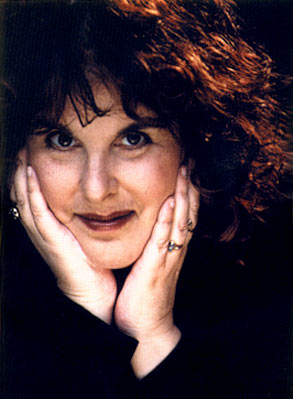

My friend the humorist Cynthia Heimel has written for the Village Voice, Playboy, Vogue, Bust and countless other publications. Her columns have been collected in the books “But Enough About You”; “If You Can’t Live Without Me, Why Aren’t You Dead Yet?”; “Get Your Tongue Out of My Mouth, I’m Kissing You Goodbye”; “When Your Phone Doesn’t Ring, It’ll Be Me”; and “If You Leave Me, Can I Come Too?” She also wrote the hit play “A Girl’s Guide to Chaos.” In 1983 she published the bestselling “Sex Tips for Girls,” which has never gone out of print and has been widely imitated. Her latest book (fabulous and poignant, she points out) is “Advanced Sex Tips for Girls: This Time It’s Personal.”
In an interview conducted in the comfort of her home, she explains the harrowing consequences of having written “Sex Tips for Girls” and comes to a dreadful realization about the sequel.
How did you come to write the first “Sex Tips” book, “Sex Tips for Girls,” and what’s different about “Advanced Sex Tips for Girls”?
The first one is kind of a how-to manual and the second one is kind of a why manual. Once you tell people how to give blow jobs, there’s not much else to say. The first book was kind of “Don’t be nervous, here’s how to give a blow job.”
I guess that information is easier to find these days.
At that time all the information was so serious and so slimy in a way, and talking about “your pleasure” in a way that was sort of jokey and horrible. When I wrote the first “Sex Tips” the emotions were very antediluvian in the sex manuals, so I was writing a humor book with sex as my topic; I was not writing a manual. There was real stuff in there because the humor I write is real, it’s not fantasy. It wasn’t hard in those days to find the information, but it was presented in a sort of unsavory manner. There was the assumption you were talking about a married couple.
A clinical approach?
Yes, which just bummed me out and made me hate the idea of sex — it’s like watching pornography and you suddenly don’t ever want to have sex again. And I would read these clinical things and I would think, OK, I’m never having sex again, this is gross.
So there’s all this stuff [in magazines] about how you go on a date. How do you act? What do you say? Do I smell bad? How do I sit? But I say, you’re all insecure so why not grab his penis? Just jokes!
So how did you avoid the clinical and slimy in writing about blow jobs?
I was thinking, OK, I have to write cleanly, and so I made it all jaunty and cheerful and made sure not to be slimy or weird and not salacious — it was sort of like nursery school writing.
And yet —
It was about blow jobs. And I’ll never live it down.
What was the impact for you of having written it?
Not the one I wanted. I just kept being talked about as if I was an expert on sex. I just thought I was doing a P.G. Wodehouse/Dorothy Parker kind of thing. Douglas Adams [“Hitchhiker’s Guide to the Galaxy”] said I was like P.G. Wodehouse if he wrote about sex, which is a very flattering thing. And I expected everybody to treat me as a New Yorker humor-writer-in-the-’30s kind of person. After a while I was talked about that way — in New York City. They called me a Dorothy Parker three times in the New York Times one week.
I had a play that did really well [“A Girl’s Guide to Chaos”], and it talked about how to get your man to give you oral sex and that’s where the thing about getting into bed upside down came from. People in New York understood that it was a joke. People that haven’t seen the play assume it’s about sex.
I did this chat room on Oxygen and it was stupid the way chat rooms are. But what was the most weird to me was that people were asking me about real serious problems, like long-distance relationships when the guy is cheating, or he wants to have sex and I’m not ready, I’m only in eighth grade. People are dying for information about sex and so they came to me in this situation with all these serious problems.
So you tried to answer them?
Yes! I mean, I don’t know, if you think he’s cheating on you, he probably is cheating on you. (And no one should have sex if they’re not ready.) Dr. Ruth — remember her? Well, I’m not like her. I feel guilty and weird about sex. I’m not some kind of fabulous clinician.
Do you know what I hate?
What?
I really, really hate being called a “sexpert.” I think of myself as a humorist. I’m not a sexpert. Am I, dalling?
(Male voice, offstage): What?
Dalling, I’m not a sexpert, am I?
(Male voice): Oh yeah, you are.
Shut up!
I’m always asked to be on TV shows because I’m a sexpert. They called me a sexpert in San Francisco magazine. But maybe that was just in the table of contents.
(Male voice): I hate a table of contents that panders.
Do the basic sex tips still apply?
Yes, they still apply, except the one thing I would definitely change is birth control. I would be all about condoms. “Sex Tips for Girls” was written right before the AIDS epidemic. It came out in ’83 and I wrote it in ’81, ’82. Can you imagine there was a time before the AIDS epidemic? It seems hard to believe now. I blame Ronald Reagan.
For AIDS?
Yes.
How?
He was president. It was his fault.
So what’s the connection between the first “Sex Tips” book and the second?
It’s the same person many years later. There’s a lot about dating, which takes off where the other book leaves off. A lot about clothes. A lot about dogs and my insane dog lust.
In the first book you say to give fear exceedingly short shrift.
Yeah, I’ve been buffeted around a little. That was written before AIDS so it was a completely different world, where sex couldn’t make you die. You could say things like “Give fear exceedingly short shrift.” We know a little more about stalking and about abusive relationships. The first one is very innocent and the second one — well, I’ve been through an abusive marriage. For example, I started noticing that movies all have stalkers in them, glorifying the stalking technique as a mode of romance. Stalking and putting you down: These are all abusive things. Keeping you away from your friends — it’s like, “Just be with me.”
What movies?
“Say Anything,” which we love, “When Harry Met Sally.” He calls her and calls her and calls her — and she loves him really. “The Graduate.” “Hope Floats.” “There’s Something About Mary” — but that was the joke of it.
I’ve also noticed if you want to have sex with someone you wink at them.
Since 1983 that’s all you’ve learned about sex?
That’s my joke tip! Grab the penis, it breaks the ice, it’s kind of a fun friendly thing to do! Or if you’re gay and you’re a woman, grab her vagina!
Now, I got beyond the sexpert thing by doing [books without sex in the titles], so now, idiot that I am, I did another book with “Sex Tips” in the title, so now they’re calling me a sexpert again. I had kind of a nice time being a sexpert on “Sally Jessy Raphael,” believe it or not. They wanted me to be outrageous and wild and all that, and what they meant was funny. I wrote 10 tips for them and only five got on the air — because they weren’t as dirty as the other five:
10) Fondling a man’s privates is not like testing peaches in the supermarket.
9) Oral sex is a great way to tone up your cheekbones.
8) If you suck on his fingers, you’d better not be kidding.
7) No whips and handcuffs before the third date.
6) Baby talk is not an aphrodisiac.
5) Never, ever go to bed with a man on the first date. Not ever. Unless you really want to.
4) No matter what he says, deep throating does not exist.
3) A man who can’t kiss can’t fuck.
2) Never ask if it’s in yet.
1) Get into bed upside down.
“There is no such thing as deep throating,” also, “Never ask if it’s in yet,” those are two that didn’t get on the air.
Still, it’s all started over again. I just forgot about this aspect and I’m very annoyed. People have very complicated feelings about sex, and a lot of them are full of shame and denigration and so if they feel that way about sex they feel that way about me. I was on this TV show once and this guy kept calling me “the sex lady” and it wasn’t a joke. If you become identified with sex, people think you’re about sex. They thought I was the Fucking Happy Fucking Hooker.
Did people think, She wrote “Sex Tips for Girls” — she might be willing to have sex with me?
No, they thought, She writes about sex so I’m afraid to have sex with her. I’ve had people actually say when we were making out, “You wrote ‘Sex Tips for Girls’! I can’t do this!”
Did you get them over that?
Not always.
I have a very funny Xaviera Hollander story [the author of “The Happy Hooker”]. I was at a girls’ night out in England, and most of the people were my friends and they brought along this tiny woman who looked like a hippie, and they said this is Nicole Hollander and about halfway through the evening it suddenly occurred to me! I leapt across the table saying, “I love you, I love you, I’m so sorry I was rude to you! I thought you were the Happy Hooker!”
You were rude to her?
I was very cold. She noticed it, too, and she thought, What was that all about?
So this is all about “Don’t Call Me a Fucking Sexpert”?
But still I’m talking to you about sex, so it’s going to happen again. This article is going to perpetuate it. See what I’ve done for my craft? I’ve ruined my life.
