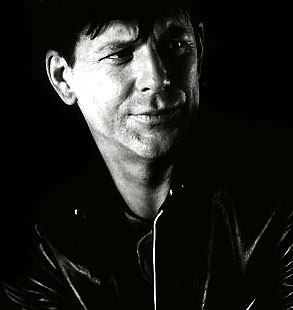

Philip Andre Rourke Jr. was born Sept. 16, 1950, although some reports claim it was 1953 or 1956. He was a tough kid from Schenectady, N.Y.: a boxer who studied acting at the Lee Strasberg school, then went back to boxing, and is presently trying to get back into acting. At his peak, women loved him because he was better than anybody else at smirking in a way that looked like his hard-on gave him terrible emotional pain. Rourke’s career is notable for the heady price he paid for his eccentricities, the most expensive of which being that his credibility as an actor was labeled with a scarlet question mark. But this, by and large, is a bad rap.
Good dramatic actors, who need to access a vast color wheel of emotion, are often intolerably volatile, hypersensitive nut jobs in real life. To inhabit characters of dubious artistic value, it is also helpful if they aren’t terribly smart. Rourke appears to have both of those qualities; it’s an equation that spells temporary magic on-screen and usually results in terrible suffering off-screen.
The same explosive emotionality that attracts Hollywood executives at the beginning of an actor’s career is the seed of the actor’s own demise when he is inevitably labeled “difficult” by the corporate drones who run the movie business. Personal histrionics, a “difficult” reputation and a bad habit of ridiculously sleazy script choices have overwhelmed Rourke’s public image to the point that nobody thinks of him as a serious actor with a wide dramatic range. Although many of his 43 movies are disposable, a look at the defining films of his career with an objective X-ray eye reveals that his acting is a lot better than he got credit for.
Rourke broke through in 1981, Brad-Pitt-in-”Thelma and Louise”-esquely, as an arsonist in the sweaty erotic thriller “Body Heat.” His tough-guy posturing and glowering, pretty-boy menace made the Hollywood Beast think he might come in handy for a while.
Rourke hit his early Rourke-ish stride in 1982′s “Diner” as Boogie, the inveterate gambler-cum-playboy hairdresser. He doesn’t fit in with the overall flavor of the film; all the other actors are on a chatty 78 rpm and Rourke is on a self-consciously heavy 33. He seems to need to be too cool for the movie. As a result, he looks isolated, coming off like the one actor who didn’t dine with the other actors and demanded to eat in his own trailer. But he does have a certain gravity.
His pouty lower lip is used to great effect. There is an almost androgynous appeal to him here; he wears more eyeliner than Ellen Barkin. Female audiences went ape for him as a slimy, effeminate cockmaster, and so did the National Society of Film Critics, who gave him a trophy for the role.
When my friend and I were teens in 1983, we saw “Rumble Fish.” We had never seen a male movie star the compellingly enigmatic sexual equivalent of Mickey Rourke as “the Motorcycle Boy.” We were angsty and thought we were sophisticated. The commercial constructs of teen lust didn’t work on us; we were immune to Matt Dillon. But Mickey Rourke pressed all the right teen-heartache buttons — not the actor so much as the role: a soft-spoken, self-loathing peer leader, poetically depressed, colorblind, half deaf; a torturously sober and intellectual hipster doomed to an ignominious small-town fate. Francis Ford Coppola was in his S.E. Hinton phase and nicely inspired; “Rumble Fish” is an art film for teenagers, and it works.
Time-lapse photography skitters black-and-white clouds fast across the sky to vamping snare drums, to suggest the overabundance of time in youth quickly becoming the lack of time in old age. The sad smile on Rourke’s elfin, acne-scarred face reveals that the Motorcycle Boy, with his greasy hair and unfiltered cigarette, intimately knew the secrets of Man’s Frailty, and it confined him to the hell of infinite pity. “That’s a deep motherfucker, man,” says the old black guy in the pool hall (as we angry beatnik girls liquefied in the audience). “He’s like … royalty in exile.”
The role, now, is exemplary of the best use of the damaged charm of Mickey Rourke: existential Fonzie. Sensitive, empathetic and sorrowful, with a junkie’s whisper-soft voice during even the worst emotional violence.
Rourke’s next big role, in “The Pope of Greenwich Village” (1984), is more of his tough-cookie, sexy criminal shtick. The oily pompadour that is his hair in virtually every movie reaches its most outrageous elevation here.
Daryl Hannah is his dimwit aerobic instructor girlfriend, whose role primarily consists of pulling her pants on and off. This film marks the beginning of a standard Rourke movie theme: a basic dislike for women, or at least the stupid female roles that always seem to disgrace his scripts. He has all the power: Daryl slaps him, he smiles that fuck-you smile, flips up the collar of his leather blazer, and walks away. She bleats “Charlie!” in her midriff leotard, he keeps walking. It seems this role inspired Hollywood to cast Rourke whenever they needed a guy to casually and cruelly dominate whimpering, undressed females.
If any one sin could be said to be responsible for the downfall of Mickey Rourke, that sin would probably be Vanity. While managing, to his credit, not to fall into the single-character, one-dimensional tough-guy glue trap that macho actors like De Niro or Nicholson sank into, Rourke suffered from a different kind of hubris: Though essentially an emotionally fearless actor with a commendable flair for vulnerability, naked despair and believable accents, he continually chose characters who were either fucking or fighting.
Rourke’s credibility was most harmed, it seems, by his slide into mainstream softcore.
“9-1/2 Weeks” (1986), Rourke’s recognized star turn, features him as John, a smirking Wall Street sadist. He feeds Kim Basinger like a baby, he buys her toys and balloons and does cruel and nasty sex to her. The movie is grotesque; Basinger’s character is shriekingly infantile, down to pigeon toes and white ankle socks, and absurdly obedient; Rourke is just creepy, and the role seems to tap into a dangerous reservoir of abject misanthropy and scumminess in the actor. It’s not all his fault; Basinger comes off so shrill, moronic and embarrassing that at a certain point you are rooting for Mickey to hit her with a belt (Basinger is said to have referred to her costar, for unspecified reasons, as “the human ashtray”).
Rourke comes off as ugly and jaded in “9-1/2 Weeks” in a way that suggests a deeper level of psychic disease than his character alone is responsible for. Perhaps he resented being the vehicle that brought S/M home to the office girls of America. Who could blame him?
Nineteen eighty-seven was, for cabalistic Hollywood reasons, the Year of the Rourke, with three of his better movies coming out one atop the other.
“Angel Heart” offered Rourke a meaty role and a healthy return to being actorly — but his respectable performance was buried beneath the public’s tittering shock at his willingness to enact “controversial,” “X-rated” pumping-buttock sex shots with a thrashing Lisa Bonet.
Rourke pulls off an entirely believable Brooklyn accent and has a very legitimate moment of bottomless despair as the Faustian plot is revealed. “Angel Heart” is a good example of Rourke’s ability to pull off emotionally gymnastic roles; he never shrank from painful and weepy territory that fellow tough-but-pretty actors, like Steve McQueen, deliberately avoided. Sensationalism and soft porn robbed him, here, of what might have been real kudos for his skill.
Rourke is most universally beloved for his portrayal of Charles Bukowski’s alter ego Henry Chinaski in “Barfly.” While a bit over the top, the role is funky, ugly and lovable in a way his other characters were not. Audiences must have breathed a collective sigh of relief to see Rourke in a role that wasn’t consumed by self-loathing.
“Barfly” contains the closest Rourke comes, in his entire career, to a moment of unqualified happiness, during the oft-quoted victory toast: “To my friends!” Bukowski wrote about Rourke, giving him the name Jack Bledsoe in his roman á clef “Hollywood,” a book about the making of “Barfly.” Bukowski liked Rourke and was fairly dazzled by him. There is a good scene in which Bledsoe (Rourke) has brought his obnoxiously fabulous Hollywood Harley-Davidson crew to the set, and is introducing them to Bukowski:
“His buddies leaned against the bar, backs to the bar, facing the crowd. They each held a beer bottle, except for Jack who had a 7-Up. They were dressed in leather jackets, scarves, leather pants, boots … Jack introduced us to each of his buddies.
“This is Blackjack Harry …”
“Hi, man …”
“This is The Scourge …”
“Hello there …”
“This is the Nightworm …”
“Hey, hey!”
“This is Dogcatcher …”
“Too much!”
“This is 3-Ball Eddie …”
“God damn ..”
“This is FastFart …”
“Pleased to meet ya …”
“And Pussykiller …”
“Yeah …”
And that was it. They all seemed to be fine fellows but they looked a little on-stage …
Starring in “Prayer for the Dying” (1987) gave Rourke a lifelong affection for the Irish Republican Army — he bears a tattoo of the paramilitary organization’s emblem.
“Homeboy” (1988), which Rourke helped write, lands the actor close to himself; he plays dumb-ass, luckless boxer Johnny Walker, a punchy, feral, kicked junkyard dog. One gets the feeling that this is a character Rourke really identifies with: turbulent, violent and rebellious in an ill-advised, quixotic way. He utilizes a “Caddyshack”-style Bill Murray dislocated jaw and a totally acceptable Southern accent. The scene with the most unctuous music involves Johnny having an argument and jumping out of a car on a bridge. He tries to beat up the car; he rails, he threatens traffic, and ends up walking home drunk through driving rain in the middle of a busy road. One feels these raging moments of worthless self-sabotage are familiar Rourke territory. His costar, flat-faced Deborah Feuer, became his wife for a little while — their chemistry seems lopsided and doomed, even on-screen.
“Johnny Handsome” (1989), while a dumb movie, probably features Rourke’s most moving performance. During a scene when the doctors take his bandages off, the man who was formerly a hydrocephalic monster with massive cranio-facial deformities is suddenly revealed in a post-surgery miracle as having Mickey Rourke’s face. He cries with joy and gratitude. It is particularly moving when you consider that in Rourke’s real life, shortly thereafter, he started out as a man with a beautiful face and ended up undergoing numerous surgeries and voluntary beatings to become unusually scary-looking. One imagines what he felt like when his real bandages came off, after having lived this moment on film.
“Francesco” (1989), wherein Rourke is cast in the unlikely role of St. Francis of Assisi, is notable only for a scene where the saint is rolling around naked in snow and his tattoo is visible.
“Wild Orchid” (1990) is a miserably stupid and sleazy wank film with the dubious distinction of being the place where the lives of Rourke and model Carré Otis collided head-on, as if in a big motorcycle accident.
Here, Rourke’s outside began to match his tumultuous inside.
His face-lift looks too fresh — he’s having trouble moving his mouth, and his forehead, so expressive in “Diner” and “Rumble Fish,” is way too smooth, motionless and shiny, like a balloon dipped in Clinique bronzer. He can’t smirk anymore. His eyes seem pinched; his crow’s feet are disturbingly gone. His eyebrows are too light, and they don’t move. Eye jobs, for the first year at least, make the recipient’s eyes appear smaller; they lose any roundness below during the surgical elimination of under-eye bags. Rourke’s black eyes lost their ability to transmit emotion.
The movie is wretched in that it isn’t even viable as smut; there’s way too much abysmally stupid dialogue and plot. It boasts perhaps the worst script ever, not helped by the fact that Otis delivers lines the way a one-armed UPS guy delivers aquarium tanks. The entire movie is one long wait for the smutty finish.
There are a whole lot of panting Foley effects, particularly during the “controversial” final scene wherein Rourke’s box-browned abdominal muscles gnash and dilate while grinding into Otis’ pornographically rectangular strip of pubic hair.
The legend that was “leaked” from the “set” was that the two “actors” couldn’t “control themselves” during this big sex scene, and despite the presence of the entire camera crew had “actual penetration.” Yeah, right.
What did happen was that Rourke and Otis ended up together, sharing, by all reports, a bloody kind of soul connection. “We were both really wounded kids,” a now sober and “deliberately celibate” Otis recently explained to Christopher Goodwin of the London Times.
This is the period of time when Rourke stopped having anything effeminate about him at all. One wonders whether the inevitable rumors that he was gay triggered some kind of barbaric, street-kid homophobia that made him kill off the sexily feminine, feline aspects of his persona.
Otis was a Calvin Klein model around this time, when the designer was going through his “biker” phase. Arguably this was inspired by the heavy Harley-Davidson-fetishizing scene that was happening in Hollywood at the time, spearheaded by Rourke and Otis. I was unable to find any information on Rourke’s artistic-photography hobby, which flourished during this period and primarily featured nude black-and-white shots of Otis covered in motor oil.
In 1991, in addition to making the appalling (and double-appallingly popular) “Harley Davidson & the Marlboro Man,” the film where Rourke’s abysmal tough-guy hubris came to roost and killed his artistic credibility, Rourke quit acting, which he derided for being “a womanly profession,” and started boxing professionally again. Whatever his loutish comments, a closer investigation suggests that he was deeply hurt by the fact that Hollywood was not a meritocracy, and that the system, media and machine alike, never recognized that he really was a good actor.
Though he won several fights, he suffered a broken cheekbone, two broken ribs, a broken toe, four broken knuckles, a split tongue and a mashed nose. By the time he stopped boxing in 1995, he was broke and his Beverly Hills home had been repossessed. He had to go back to the movies.
Rourke and Otis were deeply in love, but really, really bad for each other. They married in 1992 and divorced in 1994, but reconciled shortly thereafter. He stalked her. There was a well-publicized incident of Otis being beaten black and blue that resulted in Rourke’s arrest in 1994; previous to that there was an “accidental shooting” wherein Otis took a bullet while hanging around a film set with Rourke in Arizona. Otis now claims she was strung out on heroin a good deal of that time in response to Mickey’s numerous infidelities. She is now a sober, rehabilitated Buddhist and in-demand plus-size model. Rourke has spent a good deal of time over the years groveling to get her back.
I used to see them at Gold’s Gym in Hollywood a few times a week in 1995; it was the general consensus that they looked like they’d been living on nothing but Ho-Hos and bourbon for the previous 18 months, and in Mickey’s case, steroids. Rourke once became enraged at “China Beach” star Jeff Kober for speaking to Otis and gave him a black eye in front of the gym.
In 1997, Rourke was reduced to making “Another 9-1/2 Weeks,” aka “Love in Paris,” wherein sadistic John is still looking for kicks but discovers that rubbing blondes’ nipples with a straight razor just doesn’t do it for him anymore.
Rourke’s face is ruined. His upper lip is freakishly swollen, his nose puffy and flat, and one cheekbone protrudes like a purple walnut, presumably from a combination of boxing and ill-advised surgeries. Like a bad portrait tattoo of himself, Rourke is only recognizable when you squint. His voice has a strangely alcoholic gasping lilt, like Jan-Michael Vincent’s or Harry Dean Stanton’s. The producers would have been wise to replace Rourke: He has no chi left. Angie Everhart drags him around the screen like an arthritic dog. This worthless if artily shot film is a horrifying document of how much Rourke’s inner demons had defaced him. The French, apparently, had no problem with this devolved version of Rourke and loved him more than ever.
I saw him once in 1997, in the Harry Cipriani restaurant at the Sherry Netherland in New York. He looked like his head had been sculpted out of wet cat food. He was huge and red, his face looked minced and swollen; his hair had been aggressively re-blonded, and he resembled no one so much as the apocalyptic cartoon character RanXerox. He was almost wholly unrecognizable.
One wonders if Rourke might have been happier if he could have stomached more bad, cartoonish, Hollywood Stallone roles like “Rambo,” or Russell Crowe roles that called for more acting, fewer fisticuffs and less sexual boasting. His magazine portraits now, puckering in thuggy gymwear and stocking cap, suggest that he has become in real life a character much less complex and interesting than most of those he played on-screen. He consciously and aggressively gives off the impression that he is a dumb-ass tough guy; this seems to underline that he is insecure and haplessly needy. The tougher a guy looks and acts, as a general rule, the more frightened he is by life’s searing personal confrontations.
The gym muscles, cosmetic surgery and box-tanning that have become Rourke’s armor only suggest how thin his skin really is. This is a man crucified by an emotional volume knob that is always on 11, who, I reckon, has done more than his share of crying. Ultimately, all the available information on Rourke paints a sad picture of an incurable pussy hound who stuck his pretty face in front of fists and butchers until it wasn’t pretty anymore, who fucked up the biggest love of his life by having no self-control, and screwed up his career by being unable to exact a mature compromise with the contemptible Hollywood status quo.
But for an actor superficially labeled as an idiotic bad boy, he didn’t spare himself by coasting on a ridiculous image. His heart was full of bloody holes that he generously shared with audiences, much the way a cat brings headless chipmunks to the door as an act of love. He worked hard and turned out some pearls that the swine never picked up on.
I read one report about Rourke staggering down the street in Los Angeles with several Chihuahuas, talking to himself. He got kicked out of a coffee shop for bringing his little dogs in, and without argument went staggering off, mumbling, unable to ungrip his little dog friends long enough to buy coffee. Men with torrential feelings invariably become lonely monsters. One can only hope that now that nobody wants to see Mickey Rourke’s vigorously clenching white ass in flagrante anymore, Hollywood can begin to appreciate and nurture his genuinely interesting and flexible talent for a certain flavor of desperate truth.
(For more information on Mickey Rourke, I recommend the excellent article “Call of the Mild,” by Jessica Berens, available on the Simply Mickey Rourke Web site.)
Last week, in Miami, I stayed at a self-described “gay hotel,” mostly for the kicky interior: Every room featured, over the bed, an enormous photo portrait of Elizabeth Taylor as Cleopatra. She was, after all, the ultimate queen.
A friend of mine in his 60s once told me the story of accidentally running into Elizabeth Taylor with her entourage in an alley in New York. He was a successful model and Princeton architect — no stranger among beautiful people. But the sight of Elizabeth, even in the mid-’70s (when the wattage of her once perfect beauty was already slightly dimmed), was, the way he described it, something like being shot with a gun in the chest by Beauty itself. It wasn’t just her fearful symmetry, or her big-bang eyes, but the power of her being, the animation of her character. For him it was life-altering — in a lifetime of looking at art, that split-second encounter in a New York alley was still the encounter with beauty that left him most dumbstruck, some 30 years later. What he felt for Elizabeth Taylor instantly was something akin to the seismic power of pure love.
Like uranium, Elizabeth Taylor was an unstable element that could be variously refined unto many enormous potentialities. She was a weapon of mass obsession that could be deployed as a means of focusing tsunamis of international money. She was a love bomb — and, like any bomb, the very fact of her existence was a phenomenon that demanded a certain severe, almost Calvinist moral scrutiny. Such power, after all, is terrifying — and the tabloids never seemed quite so grateful as when the person hardest hit by Elizabeth Taylor’s own radioactive fallout was Taylor herself.
Elizabeth Taylor wasn’t a celebrity so much as a part of cultural consciousness with as much resonance as an established religion or a letter of the alphabet — an impossible equation that really irritated the scientific mind in people, since she was always considerably more than the sum of her parts. Her majesty both inflamed and infuriated men (for whom she had a crippling weakness and compulsion to collect).
Richard Burton kept his twice-wed wife in line by undermining her. The New York Times obituary this morning had this ghastly quote:
The notion of (Richard Burton’s) wife as “the most beautiful woman in the world is absolute nonsense,” he said. “She has wonderful eyes,” he added, “but she has a double chin and an overdeveloped chest, and she’s rather short in the leg.”
This, I think, was how Burton kept his own ballast: by breaking Elizabeth down into criticizable parts — bruised fender, bad hubcaps — he could teasingly deny her the satisfaction of his comment on her as a total driving experience. He couldn’t acknowledge all the power she had under the hood. It probably would have pleased her too much, and upset their ongoing libidinous struggle to passionately conquer each other.
Elizabeth Taylor’s collaboration with life compelled her to suffer: as if to atone for her wealth, and smite her own perfect appearance. But these catastrophes created, ultimately, a common experience and parity with her audience. Of all people, Elizabeth Taylor is not a star that should have had the Common Touch, but she did. She was, in a sense, her own portrait of Dorian Gray — a walking, talking Faustian contract replete with whiplash plot points and reversals of fortune that might have killed someone not so well grounded in their own humanity (like her dear young friend Michael Jackson).
The friendship she shared with Jackson, which seemed so utterly bizarre in the 1980s, seems less so now: They were both declawed jaguars kept as ornaments dead center in the dictatorship of fame. Their lives had been deprived of any semblance of normalcy — but the suffering of human life is unavoidable, even for stars of such magnitude. There is no cure for life, and this is where they must have been a comfort to each other. Michael did not have Elizabeth’s fortitude of ego or breadth of character; he was, in the end, tragically incapable of being a mere human being — but humanity was Elizabeth Taylor’s fallback position, and her saving grace.
She was the only conceivable human embodiment of Cleopatra, and, offscreen, a sick, lonely, grieving person of weak constitution, prone to grave illnesses and emotional disasters. She was the impossible luxury of White Diamonds (one of her many fragrances) — and she used this wild surplus of personal glamour to champion AIDS back in the earliest days, when it was still perceived as the most frightening stigma on earth — the bubonic plague of sexual deviants — when no other persons of rank and profile had the balls to publicly acknowledge it, let alone lend their full weight to raising money for medical research.
When Elizabeth Taylor’s full power was unleashed on-screen, her portrayals were more than the sum of acting: She was capable of engraving herself in certain emotional states on your consciousness forever, to the point of symbolizing them.
Her chemistry with Montgomery Clift was so palpable in “A Place in the Sun,” you can practically taste both the honey and the razor blade of blinding new love on your own tongue.
The itchy quality that Elizabeth brought to the role of Maggie the Cat in “Cat on a Hot Tin Roof” traversed the screen and became the shorthand for that eternally wretched feminine state of gnawing, incurable desire — that devouring inner combustion that comes of wanting more from your experience of love than your love object is capable of delivering.
Her very first breakthrough role, in “National Velvet,” crystallized the sincere innocence and honesty of a teenage girl in love with her horse, riding to the very limits of her strength right into the fiery mess of life, with all its fear and pain and hope — sweetly, bravely, with inspiring optimism. Elizabeth Taylor seemed to preserve this courageous innocence in herself offscreen, through whatever life handed her: hails of rose petals and diseases and pills and divorces and savage indignities like John Belushi. Her acting worked so well because she was truthful with herself, and with us — a real, honest citizen who cheerfully bore the punishments of her life while showing no bitterness and protecting no vanity.
Various mystical cosmologies speak of the spiritual goal of dissolving into union with the rest of everything — a process that is usually achieved through the dismantling and gradual erosion of the ego, unto enlightenment (or its cultural equivalent).
Even at the center of attention in Hollywood, Elizabeth Taylor was never too precious to protect herself from ego plunder. She engaged with life on its own terms, even as it periodically killed her hopes and her looks and her love life and her health and her reputation. Ultimately, she was unperturbed, and unshakably generous in her good humor, particularly when the jokes were at her expense. She bravely put her best chin forward and gave life the simple love of an honest, human, achingly beautiful young girl.
Elizabeth Taylor was an impossible vision driving by in a dreamy convertible that every girl wants to be and every boy wants to marry. She leaves in her wake a dazzling aura, a lingering whiff of perfume, a red-hot sexual need and an enduring, indestructible ability to inspire love.
Continue Reading
Close
“I’m tired of pretending I’m not special anymore.” – Charlie Sheen
It has been a red-letter week for the grand-mal celebrity meltdown.
Charlie Sheen has proven himself to be the poet laureate of all once and future megalomaniac sex-addicted crackheads, and John Galliano’s once brilliant design mind unraveled like a cheap acrylic Christmas sweater in a Marais bar, where he dressed down French patrons in a torrent of Nazi jackbooted verbal abuse, prompting excommunication from the worlds of both Natalie Portman and the house of Dior.
Several weeks ago, before any of this went down, I saw John Galliano’s recent designs in Manhattan’s newly re-opened Dior store. I believe I saw foreshadowings of his meltdown in those designs. I trashed the new Dior collection. I have been a longtime Galliano fan, but I felt his new designs were cynical, weak and irresponsibly barbarous.
Because I have spent several years translating fashion statements into English, I could literally read from the clothes that John Galliano was in a deeply miserable place — the clothes themselves seemed to be screaming in agony.
Fashion is a language of references.
Galliano had always been the master of the Marie Antoinette-cum-Scarlett O’Hara-cum-imperial concubine look. But something about the new too-lavish details and hyper-expense suggested to me all the semiotic indicators of megalomaniacal dictator chic: a whorish criminal rococo for those who wanted to flaunt it.
I recognized Dior’s new look as emanating from a certain dirty flavor of kleptocracy: I felt it was a look for Russia — the sexy new Wild Wild East for entrepreneurial land sharks and hookers, made deliberately to “adorn mistresses and new trophy wives in the sartorial equivalent of hula skirts made from 500-euro notes.”
“Not to put a peasant in the punch bowl,” I wrote, “but Dior would make an ideal costume department for the Vlad Putin Hollywood vehicle, ‘Kremlin, Inc.: Too Fast, Too Furious.’ Moscow, after all, does not believe in understated elegance.”
The idea that celebrity is toxic is one of the arguments I make in my first book, “A Massive Swelling: Celebrity Re-Examined as a Grotesque, Crippling Disease.” I had a hunch that the hot psychological mess that was befouling the gowns and tuxedos of so many celebrities had a direct political analog/corollary, but I hadn’t read enough things, and it was all too murky for me to really substantiate.
Now, I think it’s all falling a little more clearly into place. (Bear with me, the dots do connect.)
A recent article in the Atlantic spoke about the new global plutocracy — a loose-knit international coalition of first- or second-generation multibillionaires who hang around the World Economic Forums in Davos, Switzerland, and Bilderberger meet-ups and tend to view themselves as a separate community of interests informed by an interest in protecting their lifestyles of outrageous fortune.
They are a class unto themselves, in other words.
Top designers — members of Galliano’s own elite social class — became his apologists: Donatella Versace commented that there is no justification for the insults but that she doubted Galliano had “meant to be racist.” Giorgio Armani attributed Galliano’s meltdown to a “moment of weakness,” and told fashion reporters, “You can’t expect exemplary behavior from an eccentric man like him.”
Certain “exceptional” people — either by name or industry — happen to have some power and/or agency over large, swirling shit-storms of money. If these people have weak, fractured, underdeveloped egos, they tend, after a while, to go Boom. And the translation of these meltdowns, I believe, no matter what is said about Hitler, really boils down to two words: Stop me.
People like Galliano know they’re not OK — they want someone to stop them, and nobody does. Since they make so much money, they are allowed to flail around nurturing their darkest impulses and perversions. Untethered rich people act out the unrestrained id of toddlers and madmen — they shit everywhere, literally or figuratively — and their class-peers excuse this batshit crazy behavior as being mere “eccentricity” or “creativity.”
An emotionally fractured superstar can foam around with rabies and bite people for years. Galliano’s absurdly over-the-top anti-Semitic tirade — and Mel Gibson’s, for that matter — has to be seen for what it is: a social form of Suicide by Cop.
At some point, the successful human commodity literally has to sabotage him/herself and stop being a functional commodity in order to save his/her own life, because the circles he/she inhabits will merely milk the cash cow, enable the ongoing self-destruction, protect it by hiding it, and “yes-man” a moneymaking one-person industry — literally — to death.
Donald Trump commented that CBS will rehire Charlie Sheen because he gets ratings, and ratings are the only thing that matters. Mel Gibson got away with slurring Holocaust denials in Hollywood — the Israel of the Americas — because he was still raking in cash in the movie theaters. John Lesher, a prominent agent, told the New York Times: “People here will work with the Antichrist if it puts butts on seats.”
Power is a phenomenon that contains a personal component — big power tends to emanate in the character of the person who wields it. The personality of a particularly pungent boss can be felt throughout an entire company — the new Dior collection contained the character of Galliano, because he was the mind responsible for it. This is politically apparent as well.
The Bush administration took an imperialist stance, rooted in delusions of American exceptionalism — i.e., America decided to view itself as Charlie Sheen. Because of America’s tiger blood and Adonis DNA, the U.S. was too special to be understood by any normal country, so we decided to do strafing runs in our underwear before we had our first cup of coffee. Karl Rove’s secretive, post-reality, ideological hubris resulted in a credibility gap that the American political system has yet to recover from. Dick Cheney’s personal cornered-rat paranoia resulted in policies that ushered in a preemptive war on a sovereign nation — and ever since, we are a nation that debates the merits of torture and lives in fear. Neoconservative fiscal policies ushered in the fastest, most balls-to-the-wall economic calamities that have ever happened in America. And American life, as a result, took on the morose character of the Bush administration: We became isolated, paranoid and morally bankrupt and ultimately broke — a dry-drunk nation, in other words, that had totaled its car and lost all daddy’s money.
The cultural superstructure tends to mirror what’s going on with the prevailing power structure. Celebrity artists are emotionally labile, oversensitive people whose inner hard drives are often incapable of processing all of the weird input they get. Like canaries in coal mines, celebrities are early warning systems — they are social malaise barometers: They tend to act out the psychological impulses motivating the prevailing sociopolitico-economic power structures around them.
Exploding stars seem to have the same illness shared by oligarchs, plutocrats, dictators, tyrants and serial killers. For the sake of discussion, let’s call it Extreme Morbid Elitist Narcissism (X-MEN). It turns people into Superheroes that need to fight their biggest and only deserving enemy: themselves.
There is no comfort in perceiving yourself as being so exceptional as to be utterly divorced from the family of man. The inner poverty of having no common language of human experience — nobody bigger than you, in your own mind, no equal or superior on earth or in heaven — is deadly. To think of yourself as glaringly exceptional — whether you are a designer or an actor or a country — is to invite the most grievous form of hellish isolation. The super-elite person/class/nation who hates him/her/itself must punish and humiliate itself in the absence of a thunderbolt-hurling Zeus that will do it.
Even in the midst of an alcoholic blackout, anyone who grew up in this world in the last 50 years and ever owned a belt knows that shouting “I love Hitler” in an open space isn’t going to go over well. But tyranny doesn’t always manifest in racial cleansing, cannibalism, zipping your enemies into leather duvet covers with raccoons, or MC Hammer sunglasses. Tyranny is, at its root, the same disease that informs the self-defacement of plastic surgery addicts and/or the personal dictatorship of anorexia.
The Tibetan Buddhists view grandiose self-regard as not just a poor way to live and horribly embarrassing, but as a klesha: literally, a poison.
Richness and specialness is an expansive personal hell — but ironically, people like John Galliano, Charlie Sheen and Moammar Gadhafi are even more terrified of escaping their hell than they are of living in it. To recover from their terrible specialness would mean they would be forced to recognize themselves as being potentially unspecial. Associating with the Great Unwashed and suffering unbearable indignities like flying coach again is something that people (or nations, or class structures) with “Adonis blood,” or “tiger DNA,” or the mandate of heaven, and/or several bazillion dollars regard as a fate worse than going down in a hail of bullets or going to jail (which at least means they are still exceptional: This makes them legendary outlaws, which in this demented mind-set is still way better than admitting you have real problems.)
In the lack of a dialogue about political economy and its effects on individual psyches, capitalist nations instead indulge the delusion that these things are unrelated. We are tacitly encouraged, as a society, not to see corruption as the product of elitism and power — not class-related, in other words — but accidental every time, a result of the personal weakness of the powerful individual, who we are encouraged to view as an aberration — mentally ill, an addict — an exception to the rule, rather than the norm.
The super-rich are so over-engorged, so coddled, so disgusted with themselves, they are turning into demons, because they have lost all touch with reality and all faith in the boundaries of a sane world. And when tyrants and stars, nation-states and classes believe they are Nietzschean übermenschen, beyond good and evil, there is, quite frequently, a body count.
John Galliano, people close to him have commented, is dying. He is murdering himself before our very eyes.
There are some people who think that Charlie Sheen might have had something to do with the death of porn star Chloe Jones, including his ex-wife, Denise Richards. Anna Nicole Smith, Heath Ledger, Brittany Murphy … Idi Amin, Stalin, Hitler, John Galliano. No matter how you slice it, we are all watching this genocide on TV, and not stopping it.
Continue Reading
Close
Sarah Palin may be a lady, but she ain’t no woman.
I confess, it was pretty riveting when John McCain trotted out Sarah Palin for the first time. Like many people, I thought, “Damn, a hyperconservative, fuckable, Type A, antiabortion, Christian Stepford wife in a ‘sexy librarian’ costume — as a vice president? That’s a brilliant stroke of horrifyingly cynical pandering to the Christian right. Karl Rove must be behind it.”
Palin may have been a boost of political Viagra for the limp, bloodless GOP (and according to an ABC/Washington Post poll she has created a boost in McCain’s standing among white women to a 53 over Obama’s 41). But ideologically, she is their hardcore pornographic centerfold spread, revealing the ugliest underside of Republican ambitions — their insanely zealous and cynical drive to win power by any means necessary, even at the cost of actual leadership.
Sarah Palin is a bit comical, like one of those cutthroat Texas cheerleader stage moms. What her Down syndrome baby and pregnant teenage daughter unequivocally prove, however, is that her most beloved child is the antiabortion platform that ensures her own political ambitions with the conservative right. The throat she’s so hot to cut is that of all American women.
I don’t want Sarah Palin being the representative leader and custodian of my rights, my Constitution and my country any more than I want polygamist compound leader Warren Jeffs baby-sitting for my preteen goddaughters.
As a woman who does not believe what Palin believes, the thought of such an opportunistic anti-female in the White House — in the Cheney chair, no less — is akin to ideological brain rape. What this Republican blowup doll does with her own insides in accord with her own faith is her business. But, like the worst and most terrifying of religious extremists, she seems very comfortable with the idea of imposing her own views on everyone else.
I did not think that women being downgraded to second-class, three-holed chattel would be a pressing concern in my lifetime. I thought it was like polio, or witch burning — an inhumane error that had already been corrected. But after eight years of Republican hegemony, and now the potential ascendance of this sheep in ewe’s clothing, I am so mortally offended I feel like it is really time for women to be angry, hardcore and disgusted again. Not just with old white Christian patriarchs and their hopelessly calcified, religiously condoned misogyny, but also with the self-abnegating, submissive female Uncle Tommies whose ambitions and eagerness to please the powerful males of their tribe are so desperate that they would sell out their sovereignty over their own bodies. And yours too.
Republicans have — in a P.T. Barnum, sucker-born-every-minute kind of way — successfully framed themselves as the custodians of Christian ethics and conservative family values. This stance successfully masks their wholesale class war against the majority of their supporters, who continue to vote blatantly against their own economic interests in thrall to this deliberate emotional manipulation. It was the media critic Douglas Rushkoff who pointed out, several years ago, that Republican politicians were employing marketing techniques perfected by Clotaire Rapaille. Rapaille, broadly paraphrased, introduced a theory that approximately 80 percent of all decision making is done at the level of the limbic system — our lowest, most colorless, reptilian emotional level. Republican strategies are consistent with a belief that the voting process, for most people, is full of feelings — but devoid of reason.
Sarah Palin, in this light, makes so little sense that she makes perfect sense. She speciously represents a new power paradigm of the Nice Mommy: the opposite of Hillary (the Mean Mommy), the opposite of Oprah (black, and therefore foreign), the opposite of Martha Stewart (another Mean Mommy). In her support for women on women’s issues, she has done everything but volunteer for her own circumcision. She tacitly promises a roll backward into old-fashioned sexual roles — like Old Testament-style old. Her morality is fixed, predictable and inflexible. There are those who will find comfort in the fact that they will know exactly what can be expected from Palin: Free will subordinated to obedience of an airtight, evangelical interpretation of the demands of God, country and Republican men.
The choice of Palin represents what the Christian right is really saying to the women of America. The subtext: It’s a Faustian bargain, girls. To elevate your sex to power and respectability, you must first give us the keys to your chastity belt.
It is unsurprising that the morally compromised fraternity of corruption-infested Republican robber barons and war profiteers came up with this stunt, but we must regard it in the same light as the rest of their treasonous, criminal behavior. We must regard Sarah Palin as the Carmella Soprano of the GOP — an enabling wife of organized crime, who sees, hears and speaks no evil of the boys in her old-boy network for whom she does this ideological lap dance.
It is a kind of eerie coincidence that Sarah Palin is being sprung on the public at the same time as the bimbo/frat-boy titty comedy “House Bunny,” which features a poster of a beautiful young lady with Playmate-style bunny ears, big, stupid eyes and her mouth hanging open like someone just punched her.
Sarah Palin is the White House bunny — the most nauseating novelty confection of the evangelical mind-set since Southern “chastity balls,” wherein teen girls pledge abstinence from premarital sex by ceremonially faux-marrying their own fathers.
Sarah Palin is the sexual front of the culture war and the embodiment of the bold social engineering stance of the new authoritarianism that Republicans have been employing ever since they stole the election in 2000. As a result of conservative Republican policies, America has proved itself to be too rife with fraud, bureaucratic constipation, self-inflicted economic calamity, cronyism and incompetence to effect any positive movement anywhere at all, even at home.
But, the Republicans seem to be saying, at least we can offer you the hope of putting women back in their place.
Bristol Palin will no doubt be a fine example as a first teen, particularly now that her mother is inflicting an old-fashioned shotgun wedding on the hapless, horny, condomless youth who impregnated her.
The Republicans are, in effect, saying: We’re not going to win this race on the basis of being the better candidates. Barack Obama is going to make you think. You don’t like thinking. Here’s an It Girl vice president who is easy on the eyes, you stodgy old white baby boomer. She’s like a grown-up version of Mary Ann from “Gilligan’s Island.” She embodies the raw conviction that everything the Republicans have ever done has been right. She’ll make you feel better about yourself for voting for Bush. Twice.
Relax: The war is God’s plan. (Or whatever.) Women, even if they are vice president, can always look pretty, worship their husbands in the fear of God and never, ever resist invasions from unwanted sperm.
Sarah Palin and her virtual burqa have me and my friends retching into our handbags. She’s such a power-mad, backwater beauty-pageant casualty, it’s easy to write her off and make fun of her. But in reality I feel as horrified as a ghetto Jew watching the rise of National Socialism.
She is dangerous. She is not just pro-life, she’s anti-life. She is the suppression of human feeling and instinct. She is a slave to the compromises dictated by her own desire for power and control. Sarah Palin is untethered from her own needs and those of her family, which is in crisis, with a pregnant daughter, a son on the way to Iraq and a special-needs infant.
She should, however, be a galvanizing point for women everywhere. Not to support her candidacy but to rebel against the Republican Party and take back the respect and equality so hard-earned by the women’s liberation movement in the 1970s.
We’ve been shanghaied. This is sick. We need to slap the face of our bad frat-boy date and walk home from this drive-in movie. Sarah Palin may put out to be popular, but the rest of America’s women don’t need to do the same.
If not, what the hell? John McCain should go the whole Hugh Hefner route and have eight V.P.s that all look exactly like Sarah Palin.
It’s McCain’s world, girls: You’d just live in it.
Continue Reading
Close
Saturday, June 28, was a swampy 92 degrees in Washington; the sidewalks on Pennsylvania Avenue were frying. Flamboyant activist group Code Pink was scheduled to kick off a tent-city vigil for peace and democracy in Lafayette Park, across the street from the White House. “Let’s bring this world-changing form of protest back to our nation’s Capitol!” shouted the Code Pink Web Site.
Code Pink welcomes anybody “willing to be outrageous for peace.” But despite its emphasis on “joy and humor,” its ruckus-raising techniques often cause me and my liberal community, who tend to agree with its politics, to regard them with distaste and embarrassment. Why did these shrieking middle-aged women in pink novelty hats believe this manner of protest was going to be effective in Congress, let alone in an almost completely co-opted media climate that seems hellbent on ignoring them?
In Lafayette Park, across the street the White House was there, mute and elegant in the shade behind its black iron gate on its dark, immaculate lawn. But it was already 3 p.m. and Code Pink was not here, nor were there tents. There were a few hardcore peaceniks straggling about; several people in wheelchairs with hand-scrawled signs; a guy wandering around wearing an OPEC sheik costume.
A hunger striker — a small, intense man with Rasputin-blue eyes who calls himself “Start Loving” — sat cross-legged in view of the White House with a handmade sign: Wage Love Vigil Day # 132. Start Loving, who has the words “wage love” tattooed across his nose in blue letters, wore a pink scarf to show solidarity with Code Pink. He was concerned about their absence: “They’re the only group that I know that is worth a damn in this,” said Start Loving. “Everyone else you can ignore. One [Code Pink member] told me the other day that she was getting discouraged. I immediately started to cry because if those guys give up, we have no hope. They’re the only game in town.”
“Code Pink does a hell of a lot. Code Pink has the power,” agreed Christine DeFontenay, a beatific looking older lady. “The people who protest torture and abuses of the Constitution are us old guys! I’ve been keeping a vigil across from Cheney’s [residence] every Wednesday now for eight months, every week. Other people are joining me, I am getting lots less abuse. I’m gonna save Cheney’s soul. On the weekends, he’s changed the route he takes home so he doesn’t have to see my signs — ‘America’s Shame’ and ‘Torture Is Terrorism.’”
Changing Cheney’s route, if not his mind, I agreed, was something. “It is!” said DeFontenay. “Every little bit helps.”
I watched the Torture Abolition and Survivor’s Support Coalition, a small group of torture survivors from Central America, Africa and the Middle East, launch their “Peace Train” — a row of cardboard boxes covered with tempera paint redolent of grade-school murals; images of brown people hugging, interracial hands shaking over wobbly lettering: It’s OK for Both of Us to Win.
On a bandstand, a middle-aged woman exhorted onlookers to “hop on board” the Peace Train. “It’s not OK to fight and do torture and violence. The peace train does not run on hate!” A group of earnest middle-aged people picked up the “Peace Train” and began dutifully trotting it around the bandstand to the Cat Stevens song. “The rainbow of love is our caboose! Now we’re going chugga-chugga-chug.”
I thought: I love peace, but why would any adult human who ever owned a nice belt want to be seen with this eyesore? Why does the peace movement have to dress and act like an irritating children’s birthday party? More to the point, how was this peace demonstration supposed to convert the hearts and minds of the executive powers across the street, when the main event — the tent city, and Code Pink, its most vital supporters — didn’t even bother to show up?
Two days later, I dropped by the Code Pink house in Washington. In the spirit of Princess Diana (who often wore dresses evocative of the flag of the countries she visited), I threw on a pink silk Lily Pulitzer thing from my Republican Slut collection to put the women at ease, hoping it wouldn’t come off like a Trojan Dress.
Located in a brick row house on Capitol Hill, the Code Pink house is its rallying point for Washington actions. It serves as a base for activists from Code Pink’s 250 local chapters around the globe. Inside, the atmosphere resembled a grubby, renegade sorority installation at FAO Schwartz — the underground headquarters of Barbie’s rebellion. The basement is where pink happens: stacked to the low ceiling beams with crates of pink garments, tubes of glitter, glue, colored pens, cardboard signs, oversize papier-mâché heads of Bush, Condoleezza and a sneering Cheney. Upstairs, coltish young interns in shorts and tie-dye T-shirts sat around on pink couches, typing furiously on laptops. A lone young man was stuffing manicotti in the kitchen.
In the parlor, Code Pink executive committee member Gael Murphy sat cross-legged on one of the couches. Murphy, who also works with United for Peace and Justice, was a warmly robust, welcoming and intelligent presence with a firm handshake. She quickly dismissed Code Pink’s absence from Lafayette Park. “That wasn’t our protest,” she said. “We were just going to come out and support it, but the main organizers decided not to go through with it.”
Murphy seemed tough enough to address my skepticism about Code Pink head-on, so I was obvious about it. Do the group’s self-admittedly obnoxious tactics, like those employed by other militant ideologues like PETA and ACT UP, actually win over as many converts to their cause as they alienate people who are their natural allies? Given a mainstream media climate that almost entirely ignores peace demonstrations, are such demonstrations actually demonstrating anything, if nobody is watching?
Murphy didn’t flinch. She launched into an articulate, sound and uninterruptible tirade on the issues consuming Code Pink. True: While Code Pink Members are regularly getting arrested, they — and the larger peace movement as a whole — still can’t get arrested, so to speak, when it comes to getting commensurate media coverage for the antiwar movement.
She was particularly urgent on the subject of the Democrat-controlled Congress, which had just ushered in another $165 billion in funding for the wars in Iraq and Afghanistan. I got the impression that as a member of the press just sitting there, listening, I was giving Ms. Murphy an almost medical form of relief for her inflamed buildup of talking points, prepared for a distant and disinterested media that doesn’t generally ask for them.
“We’ve arrived at a point where it obviously didn’t work,” she said of Code Pink’s disruptions in Congress. “We didn’t stop the Iraq war funding; we haven’t gotten the Democrats to change policy. We’re feeling our tiaras have lost their glow, and that our predictable attention-getting and disruption has run its course.”
Murphy cataloged the “legitimate” work the group does behind the scenes (which, I had to admit, I had failed to recognize in my blindness from the glare of their prom dresses). Code Pink, Murphy insisted, worked with Congress to help Iraqi women visit the U.S. to participate in Code Pink’s 2006 Iraqi Women’s Delegation war protests. They organized lobby days, wrote “Pink Papers” on the condition of women under occupation and U.S. military reparations for Iraqis, and gathered information for groups involved in the larger peace movement. Murphy told me that Code Pink opened an occupation watch center in Baghdad (as part of United for Peace and Justice — a group whose accomplishments Code Pink seems to feel comfortable occasionally taking credit for without direct acknowledgment).
“Our visibility, our pink, our street theater, is to get [the message] into the media that there is opposition, that there is an antiwar movement,” said Murphy, sounding a little desperate. The problem — the same as that of the military — seems mainly to be one of recruitment: Even groups like MoveOn.org have enormous trouble getting people out to protest. “There’s a huge gap between being against the war and doing something about it as a citizen,” Murphy added.
The strategy of loud pinkness, useful in terms of visibility, must evolve, said Murphy. “Yes, it’s good to be on Jon Stewart or ‘Saturday Night Live.’ But we’re being trivialized. That isn’t all of what the antiwar movement is, or all of what we are. If it’s not working anymore, if it’s served its purpose, we need to nimbly and quickly move on to something that is effective.” Murphy described a new Code Pink effort to educate city mayors on how the war was draining local coffers.
Medea Benjamin strode into the house, creating a flurry of excitement. A co-founder of Code Pink, Benjamin is a small, wry and wiry woman who looks more like a member of Congress than someone who shouts at them in the halls. She speaks five languages and has two postgraduate degrees (one master’s in public health from Columbia University; another in economics from the New School of Social Research).
“I’m a very serious person!” she insisted. “I used to work for the United Nations. I have lived and worked in refugee camps around the world. Did I ever think that at 56 years old I’d be wearing tiaras and going to Congress and holding up signs?”
I asked about the difficulty of “waging peace” — how, after all, is one proactively peaceful? She gave me an ironic smile; her eyes — naturally sad, downturned at the outside corners — flashed a bit flinty.
“One goes to Congress every day and one takes one’s head and hits it against the wall,” she said. “You know that saying, ‘The definition of insanity is doing the same thing over and over again and expecting different results’? Because we believe in democracy, we think if we do the same thing over and over — demand that our elected representatives actually represent us — they will. But it’s hard to be peacemakers when we’re almost treated like terrorists. We keep getting arrested, thrown in jail, threatened. And we’re treated like that by Democrats.”
Like Murphy, Benjamin was an unceasing font of well-articulated and atrocious facts, relayed in an almost breathless run-on monologue. “The Democrats — who are supposed to be our friends! — are as bad as the Republicans. That latest $165 billion for war is just astounding. Not a peep from the public; the media almost buried the story. We were in Congress that day in the tunnels, going after every congressperson we could find, saying, ‘Don’t do it!’ Ready to throw bloody money onto the floor of the gallery when they voted. Not covered by the media at all. We were thinking, ‘Well, I hope history at least records that there were some people there who tried.’”
Lack of media coverage and its result — an inability to get exhausted working people off the couch to fight an invisible battle — has endlessly frustrated and discouraged Code Pink. “We have had eight demonstrations of over 100,000 people — some much larger — that got virtually no attention, no response from the White House,” Benjamin said. “C-SPAN is the only mainstream media that isn’t censored. We get cut out of everything else.”
Benjamin has been vocal on the subject of Iraqi refugees; she has been to Syria and Jordan to meet with them. “The U.S. is doing nothing to help these millions of people whose lives we destroyed,” she said. Despite trying, Code Pink has failed to draw mainstream attention to the refugees’ plight. “We called a very serious press conference [with an Iraqi] refugee whose husband had been killed because he worked for the U.S. government — we had one Japanese reporter that showed up, that was it,” Benjamin said. “That same day, a group in Berkeley was doing a witch’s exorcism of the Marine recruiting station. The media was all over that. That’s the climate that we live in.”
This was a bit hard to digest in light of the recent arrest of a Code Pink member at the same Marine recruiting station in Berkeley, who happened to be topless — but I understood her frustration. Code Pink finds that it can’t be taken seriously when it wants to be taken seriously, even though its legitimate work is substantial and deserves to be taken seriously. Such is the sharp double-edge of the glitter tiara.
Benjamin reserved her most evident bitterness for progressive Democrats. “Have you seen them join us in a sit-in at the White House? No. They did civil disobedience around apartheid in South Africa — they did civil disobedience for Darfur. Sixteen of them got arrested; we went to them, and we said, ‘Fabulous. Now can we do that around Iraq? Join us, do a dignified sit-in in front of the White House.’ They hemmed and hawed. We couldn’t even get Barbara Lee to do it.”
I found it easy to admire Benjamin’s quixotic pluck and grasp of the issues. Although I didn’t say it, it occurred to me that apartheid and Darfur were issues that were comfortable to Congress — and to mainstream media — because of their high-level celebrity endorsements: Darfur had Bono, apartheid had Springsteen, AIDS had Elizabeth Taylor. It was mainstream media stars — and the mainstream media that built them — that ultimately allowed these issues to get enough momentum for serious support.
Again, though, Code Pink seems at least partly to blame for its own lack of political support. Benjamin seems to expect congress members to attend Code Pink proceedings, and bring their limelight with them, because she’s morally right. But her demands begged the question — in terms of security, let alone political image — why would Nancy Pelosi support a movement that has been parked outside of her house, denouncing her publicly for two years? Why should the Democrats, for whom Benjamin reserves such special loathing, come over to her side of the iron tutu and do her the favor of legitimizing Code Pink?
Benjamin, slumping in her patio chair, shot me a weary expression. “Look, the most heinous thing that George Bush has done is the war in Iraq. The Democrats have not only given George Bush what he asked for, they gave him more than he asked for because they didn’t want to deal with the war issue in October, right before an election. Here we are, on the eve of an election for president, with Bush using diplomacy to cut a deal with North Korea and the Democrats pushing a war policy with Iran.”
What was her pet theory about this? “All [the Democrats] care about is power,” she said. “They want the war to be George Bush’s problem, not theirs. They could be doing so much more to get other Democrats to vote against the war, and to build this movement with us, to gather a million people out on the street. The people have been so snookered by Democrats and Republicans — so blind to the fact that neither party is working in the interest of the general public — that it’s been virtually impossible to build a strong movement.”
Benjamin and Murphy admitted that Code Pink’s approach needed revamping, but both seem addicted to the theatrics. Both were more than hot to discuss their upcoming action — a “blockade” of Rep. Gary Ackerman’s office to protest his resolution calling for a blockade of Iran. “We’ve seen this before,” Benjamin said. “Sanctions resulted in 500,000 Iraqi children being killed! What are we gonna do? Sit by and say, ‘Oh, let’s write another paper about this? Let’s take three months out and write a book?’ We have to speak out immediately.” Benjamin paused. “Gary Ackerman is the only member of Congress who is also a friend of my family,” she said with a grin.
Benjamin and Murphy seemed to share a compulsive germ: this rowdy game of dress-up and protest, an obsession as chronic and irresistible as canvas to painters, or beaches to surfers. Devotees and enthusiasts don’t measure success the same way as non-fanatics; as my mother, the incredibly broke jazz pianist once said, “You’re a successful artist if you get to keep doing it.”
I confessed to both women that I never would have known about Code Pink if they didn’t disrupt congressional proceedings in pink tiaras. “That’s right,” said Benjamin. “Without the tiaras, you wouldn’t be here. You know: ‘If it bleeds it leads.’ Code Pink is a manifestation of crisis, of a lack of democratic vehicles through which we can express ourselves. We’re a manifestation of a broken system. You might not like the way we manifest it, but we’d like people to reflect on how broken the system is.”
I was beginning to feel a bit like a big-mouth bass: Lured by a bright pink artificial fly, doing the hula on the surface. It struck me how necessary pink tiaras were in the informational black hole that enables the inscrutable machinations of Washington to move forward without public scrutiny. A successful movement depends on a media that will grant it public legitimacy. Without it, the peace movement is left to masochistic zealots like Benjamin and Murphy: They crash Congress every day and destroy their own dignity for just the tiniest effect — a nearly inaudible yelp from the dust speck of peaceful Whoville.
I came away from the Code Pink house believing that guerrilla theater is more critical than ever. For activists, Benjamin and Murphy represent the thin pink line separating the American peace movement from muteness, invisibility and depression unto disbandment. “We are committed to being a direct action movement,” said Benjamin. “We shed light through theater, through disruptions. We’re going to keep doing that as long as it serves.”
Code Pink may have lost a little heart, temporarily, but the ladies haven’t lost their way, or their flair: I was touched that Benjamin went out of her way to compliment my fishnet stockings.
Continue Reading
Close
The writers’ strike was resolved, but not soon enough, apparently. The wounds were deep. Much blood was lost. Oscar was deprived of oxygen, and sustained a great deal of brain damage.
It must have been grim at that academy meeting, just a few weeks ago. No writers, just a bunch of liminal Hollywood power brokers in $6,000 Brioni suits sitting glumly around a large obsidian table in one of the Carrara-marble, earthquake-proof bunker-vaults deep in the ground under CAA, too depressed even to eat their grilled seafood salads.
“Editors,” someone finally said, the idea light bulb suddenly reflecting off his hairless scalp.
“Huh?”
“Fuck the writers. They’ll all eventually eat each other like the Donner party. We have editors. This Oscars? We break new territory.”
Eyes peer up hopefully through $3,000 Japanese glasses frames made of hammered titanium and hand-carved wood.
“This year? All new: all old. We just montage the living shit out of it. Wall-to-wall montages of Oscar footage recycled from the last 80 years.”
“Great.”
“Thank God.”
“Let’s go home.”
Five minutes later, a symphony of bloot-bloots and black Mercedes doors automatically popping open, then the roar of fresh German engines as the identical cars began their climate-controlled trips through the poisoned brown air, back to their home garages in Glendale and Brentwood.
The montages, it must be said, were so numerous and so mind-blowingly stupid as to border on sadism.
Jon Stewart, who hosted, presented it as a joke, but they actually did show a montage completely devoted to the uses of binoculars and periscopes in movies over the years.
The unlovable animated Seinfeld Bee character from the vastly disappointing “Bee Movie” introduced some technical award with — no joke — a bee montage.
There was a montage devoted to production design. A montage devoted to How the Oscar Ballots Get Cast.
For nearly every major award, there was a montage of all 79 other winners from the past.
In short: This year, Oscar honored the heart-touching magic of the film industry’s celebration of life by sucking every possible ounce of spontaneous life, marrow and energy out of the event by waterboarding it to the point of gag-reflex failure with canned montages.
Hollywood executives were firmly convinced for the past several months that writers were worthless. So, all in all, the evening was sort of like “Romeo and Juliet,” but without a script: a frictionless battle between the Montage-Yous and the Crapulets. They both lost. Actually, we all did.
Even though the event was way more lame than lamé, it feels wrong even taking potshots at the Oscars now. It’s like picking on Britney Spears, at this point — it’s so easy, it’s not even sporting. Oscar is elderly, and in dire need of hipness-replacement surgery. In his dotage he is tiresome, dull and earnest, and employs a lot of doddering repetition about how movies “touch the soul” and “inspire others to dream.”
Even Jack Nicholson, perhaps because of his symbiotic link to Oscar, looked frail when talking about the “common link that touches the (heh heh heh) ‘humanity’ in all of us.” You know when Jack is having a hard time looking convincingly inhumane at the Oscars that some power grid in hell is in the grips of a rolling blackout.
Hollywood is always a lopsided reflection of the political situation we’re in.
In this sense, performing artists, classically a fairly high-strung, hypersensitive lot, have always been pretty effective canaries in the cultural coal mine. What they’ve been telling us, lately, is that we have a very, very sick culture on our hands.
It was a terrible, tooth-gnashing year of hideous self-reflection, for America: the ugly flipside of cultural narcissism. Our country, on the back end of a rapacious tear of sophomoric jerkbag behavior, is moving into the slightly more mature adolescent phase of starting to hate its own smell.
I am the greatest country in the world / I am the piece of shit at the center of the universe.
After shaving its head and driving drunk around the globe with no panties, calling itself the Antichrist, and finally abandoning its children, totaling its SUV and getting its ass kicked in the parking lot of the Persian Gulf, America is realizing that it is internationally loathed, broke, soulless, tasteless, fat, drunk, malicious, greedy and stupid, and has been generally behaving like a lousy excuse for a world superpower for long enough to lose all its friends and position.
So, since America hates itself this year, Oscar gave the biggest trophies to foreigners:
Best supporting actress: Tilda Swinton — British.
Best supporting actor: Javier Bardem — Spanish.
Best actress: Marion Cotillard — French.
Best actor: Daniel Day-Lewis — British.
Conspicuously missing from this Oscars was any loose talk of politics or the war, until the designated time block for dissent during the presentation of the documentary film awards. This was especially weird: Why, if they didn’t want to acknowledge the outside world, did they get a truth teller like Jon Stewart to host the thing?
But it isn’t totally shocking when you consider that ABC, which owned the Oscars this year, is owned by Disney. The whole night seemed conspicuously laundered through Robert Iger’s Great Disney Sanitizer — as if the academy came down with heavy threats and successfully imposed a gag order on the evening (a moratorium on natural speech so suppressive and creepy that I took to calling it the “Iger Sanction”).
This Oscars was noteworthy, though, if only because it featured the worst musical interludes since the Great Debbie Allen Interpretive Dance Meltdown of 1999.
The Disney movie “Enchanted” somehow had three completely unsingable, perversely idiotic, overproduced, melody-free songs nominated.
Amy Adams sang the first of these: a frantically upbeat anthem about being vermin and doing menial labor — kind of a “Whistle While You Work” number that had suspiciously happy housewife/sweatshop/totalitarian overtones.
Kristin Chenoweth sang the second “Enchanted” mess: a musically schizophrenic orchestral pseudo-calypso duet with a Rastafarian who was virtually invisible onstage because nobody bothered to light him. This big song ‘n’ dance number was somehow supposed to convey the “cultural diversity of New York’s Central Park” via a kick line of white senior citizens, brides and grooms, a gymnastic troupe of dancing boys in hard hats and Con Edison drag, a flock of tuba players and, most offensively, a mariachi band wearing sombreros … the likes of which I have never, ever, ever seen in Central Park. In short, it was the kind of illegal gathering that, in the Rudy Giuliani era, would have gotten you shot.
The third “Enchanted” number had waltzing couples dressed like Cinderella and Prince Charming, which could only have been choreographed by John Ashcroft or a 6-year-old girl.
To karmically rebalance these mortal offenses, Bob Fosse must rise and vengefully return from his grave to fan-kick down the door of Robert Iger’s summer home and terrorize him with zombie jazz hands.
In the nominated movies, it was a big year for painfully long shots of people having private moments, and great swirls of emotion moving just enough under the eyeballs to be perceptible — a forced march straight into the head and soul of the actor.
In a year where most of the actresses were shielded from their own regrettable taste by professional stylists like Rachel Zoe, best supporting actress winner Tilda Swinton, at least, was bravely and refreshingly fashion-forward enough to look bonkers. She wore no makeup and what looked like a velvet Isamu Noguchi coffee table, and spoke in insouciant, artistic free verse about Oscar’s naked buttocks in the great weirdo-artiste tradition of Dustin Hoffman.
That was pretty much it for iconoclasm during the evening. They really should learn to invite Björk every year.
The best moments were the unplanned injections of humanity: the ruinously beautiful Marion Cotillard’s sincere, if stumbling, acceptance speech; Jon Stewart arranging for Marketa Irglova — the woman from “Once” who, with Glen Hansard, sang “Falling Slowly,” a baldly nice and stirringly emotional ballad — to come back and give her acceptance speech after she’d been rushed off the stage.
The issue of Iraq was finally allowed to chug out all at once: A handful of grunts in Iraq presented the award for best documentary short subject via satellite. Hollywood deity Tom Hanks was ceremonially trotted out to lend gravity to the award for best documentary feature, a category that pitted three films about the Iraq war against Michael Moore’s “Sicko.”
The winner, Alex Gibney, the filmmaker responsible for “Taxi to the Dark Side,” urged the audience to “hope we can turn this country away from the dark side.”
Helen Mirren introduced the award for best actor with the following:
“Ambition. Amorality. Greed. Deviousness. Misery. Venality. Remorse … All facets of the rainbow of human behavior.”
And Daniel Day-Lewis won for his savage role in “There Will Be Blood.”
Day-Lewis is a wonderfully fluid actor, but frankly, that role, while a perfectly credible Wild West, crotchety old brown-toothed prospector ultimately devoured by his own rottenness, wasn’t the most mind-blowing performance of the year. The movie was, however, based on the Upton Sinclair story “Oil,” and the role was an excellent allegory for a nation that gets ruthlessly strung out on greed for the black crude, loses its soul, abandons its children and brings about its own demise through unchecked hostility.
I know I am not alone in my contention that Viggo Mortensen deserved a special Oscar for his full-frontal nude fight scene in “Eastern Promises.”
Tommy Lee Jones was recognized with a nomination for “In the Valley of Elah,” an important bummer of an Iraq movie that certainly won’t make anyone feel good (but makes you a better human being if you see it).
Tommy Lee Jones was really superb in that role: His wonderful face has always been almost but not quite handsome, in a messed-up way — in this film, he looks almost like an early proto-human skull that was reassembled from bashed fragments and covered with grayish-pink modeling putty. Some unfortunate truck stop on the evolutionary highway. A great craggy simian brow and trout mouth. But his black eyes were crammed to the support beams with an incredibly complex emotional reality — a skillfully compartmentalized man in a state of controlled crisis. Really amazing.
And Clooney — sigh. He deserved the trophy as well, but Hollywood knows he’s a lifer and he’ll be around for a while. There’s time for Clooney later.
Joel and Ethan Coen, of course, were the night’s big winners, taking home the awards for best adapted screenplay, best directing and best picture for “No Country for Old Men.”
While I like the Coens, it is important to bear in mind that in their lifetimes, Ingmar Bergman, Akira Kurosawa, Federico Fellini and Alfred Hitchcock never received Oscars for best director. Kevin Costner did, though.
Not that anyone asked me, but “Michael Clayton” was, in my opinion, the best film of the year. There was a lot more to it than its just being Clooney’s “Erin Brockovich.”
Screw imperial corporate greed-bag awfulness, and that goes for Hollywood too, George Clooney, via Michael Clayton, said under his breath, loud enough to hear. Glitz is meaningless. Greed is deadly. Vanity is overrated. But you can humbly, slowly accrue some virtue, some small but real heroism, by navigating the sometimes-invisible line between doing your job well and doing the right thing.
Despite having one of the best social diatribe screenplays since “Network,” what was interesting about “Michael Clayton” was the way it dialed your focus way down to the quiet private battles of the imperfect everyperson — the unwitnessed, unrewarded slog of trying to amass good decisions and do some small immediate good day to day — and failing sometimes, despite fighting the good fight, and winning sometimes in a way that goes largely unrecognized.
Like good photography, “Michael Clayton” elevates the normal into the sublime by seeing its own world with such razor clarity that it expands the viewer’s perceptions by reframing them with a bigger, more generous awareness.
Nan Goldin, for example, looked at her ragged life and saw art springing all around her, even in the mirror at her own punched-out face. Real life, for all its broken noses, cigarette butts and bad decisions, is more beautiful than the L’Oréal illusion, or six hours in the grip of Rachel Zoe — provided you can muster enough emotional intelligence to feel your way out of a paper bag, and you’re not so desperately afraid of offending people or not looking pretty that you can’t move your face or be funny anymore.
Compassion. It’s the new Scientology. A new theology for the rich and famous. Ruthless greed and inhumanity, Hollywood seems to have recently realized, are as suicidal as an OxyContin habit: It can really only take a career, or an art form, or a nation, so far.
Well, in terms of national consciousness, maybe it’s a start.
* * * * *
For more Salon coverage of the Oscars, click here.
Continue Reading
Close