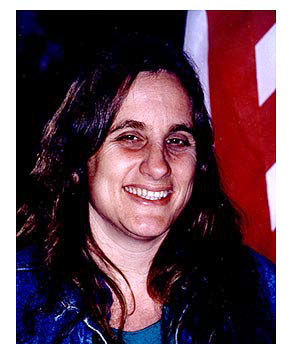

FBI

The mysterious bombing of an environmental activist

Though she vehemently denied it in public, the late Earth First leader Judi Bari told me and others in private that she suspected her ex-husband was behind the notorious 1990 car bombing that is finally being examined by a federal jury.

  • more
    • All Share Services

Topics:

The mysterious bombing of an environmental activist

When I first met Judi Bari, she was lying in a hospital bed in Oakland, Calif., recovering from a bomb blast that ripped through her lower body and nearly killed her. As we spoke, she occasionally grimaced with pain, but she remained defiant in her purple Earth First T-shirt with a clenched-fist logo. She was incensed that the FBI and the Oakland police had arrested her and her colleague, Darryl Cherney, and accused them of knowingly transporting the pipe bomb that exploded in her car on May 24, 1990.

Now, a dozen years later, a federal court in Oakland is at last considering Bari and Cherney’s lawsuit against the FBI and the police for false arrest and defamation. A verdict in the case, which went to the jury on Friday, is expected at any moment. Tragically, Bari herself is not around to see the trial’s outcome. She died of cancer in 1997.

I wrote an article about the Bari case for Mother Jones magazine in 1990 and produced the documentary “Who Bombed Judi Bari?” in 1991 for San Francisco public television station KQED. Back in 1990, before the bombing, tension was mounting over Bari’s plans to lead what she called “Redwood Summer,” a series of protests against the timber companies that were clear-cutting some of the last remaining redwoods along the coast of northern California. Loggers and environmentalists were squaring off, and Bari received several death threats before her car was bombed. My documentary concluded that the FBI and Oakland police had mishandled the Bari case, ignoring evidence that absolved her and Cherney, and neglecting to pursue evidence that pointed to other suspects.

The Alameda County district attorney eventually chose not to prosecute Bari and Cherney, citing a lack of evidence. Now a jury is finally deciding if the FBI and Oakland police made a rush to judgment against two people they claimed were eco-terrorists.

But the Oakland trial focused on whether the FBI and the police botched the case, not on uncovering who bombed Bari’s car. To this day, I’m haunted by that question: If it wasn’t Bari’s bomb, whose was it? Who tried to kill her? The mystery remains unsolved.

Most of Bari’s supporters took for granted it was a political crime. From her hospital bed, Bari told me, “I should have seen this coming.” In all her public statements, Bari portrayed herself as the victim of an attempted assassination by her political enemies: the timber companies, right-wing crazies, possibly even the FBI.

But she told me something very different in private.

Bari took me aside one day back in February 1991, just outside her cabin in the foothills of Northern California, and told me in confidence that she feared her ex-husband, Mike Sweeney, might be the bomber. I can still recall the sick feeling in my stomach as she confessed her private suspicion.

Eventually Bari would publicly deny there was any chance Sweeney could have bombed her car. Sweeney denied it, too. No one ever got to the bottom of the murky drama: Bari changed her story with me, and refused to cooperate with the police and the FBI on their investigation — which was understandable when she was a suspect, less so after the charges were dropped against her.

But more than a decade later, I’m still troubled by unanswered questions in the Bari case, and I can’t help wondering whether the complicated allegiances, confused motives and conflicted feelings of Judi Bari herself — activist, mother, ex-wife, environmental hero — played a role in the bungled investigation into the crime against her.

By the time Bari told me her suspicions about Mike Sweeney, I had spent months getting to know her. I had worked closely with her as I wrote my magazine article and researched my KQED documentary. I liked her. She reminded me a bit of Bernadette Devlin, the civil rights leader in Northern Ireland. They both were short, brown-haired, fervent, outspoken.

But Bari, then 41, was not a saint. She could be vulgar, abrasive, even cruel to her minions. She was jealous of her sister, New York Times science writer Gina Kolata. She spoke idealistically of uniting timber workers and environmentalists, but more than anything she seemed to relish a good fight.

Still, I grew to trust what she told me, which is why I was stunned when she suddenly shared her dark story about Sweeney. We were walking slowly along an isolated country road — she limped badly due to her injuries from the explosion — when she said there was something I needed to know. To my astonishment, Bari alleged that Sweeney had physically abused and even raped her, on several occasions, during and after their seven-year marriage. She said he had a violent temper and she was afraid of him. I was shocked, because she had never even hinted at this in our many previous discussions. (Sweeney would eventually deny all of the allegations against him.)

Moreover, Bari declared that Sweeney had firebombed an old Navy airfield in Santa Rosa, Calif. Bari told me she discovered Sweeney assembling an elaborate coil of wires and fuses in their house near the airfield and asked what he was doing. When he informed her that he intended to burn down the hangars, she said she asked him to stop, but he refused.

I asked Bari why she had not gone to the police. Because, she said, she was pregnant with their first child and feared what Sweeney might do to her. She gave birth to their daughter Lisa in January 1981, just two months after the arson.

Despite what Bari told me about her ex-husband, she also let me know that she wanted desperately to believe that he had not gone so far as to try to kill her. It was almost too painful for her to consider, she said. Nevertheless, she felt compelled to unburden herself.

She even suggested a motive for why Sweeney might have wanted to get rid of her. Bari described Sweeney as an embittered ex-radical, who had decided to start a recycling business and resented Bari’s public leadership of a rowdy, provocative group like Earth First. In the months before the bomb wrecked her car and shattered her pelvis, Bari and Sweeney were feuding over money and ownership of a house they were building, as well as arguing over custody of their two girls.

But when my colleague David Helvarg and I began, at last, to investigate Sweeney, Bari did a curious and disturbing thing. She told us to stop. When I reminded Bari that she had encouraged us to pursue the leads in our investigation no matter where they led, and that she was the one who called our attention to Sweeney, she blurted out, “I’d like to know who did it, except if it’s Mike Sweeney.”

For personal and political reasons, Bari preferred to believe that she had been the victim of an attack by the timber industry, or some other political enemy, even the FBI. After all, that was her public persona — the martyr of a radical environmental movement.

But deep down she could not escape the idea that the person who bombed her might have been Sweeney, a man with a violent past. Bari never admitted this fear in public. It’s a secret she only told a handful of close friends.

After the broadcast of “Who Bombed Judi Bari?” in 1991, Bari denounced me for mentioning Sweeney as one among several possible suspects in the case — though I did not reveal that she herself suspected him — and asserted his innocence. It was galling, of course, because I knew she had provided the information that led me to investigate Sweeney in the first place. Her attack on my documentary perplexed many people, since the report was widely reviewed and interpreted as a pro-Bari piece, a rarity then in the mainstream media. The overwhelming response of hundreds of callers to KQED was that “Who Bombed Judi Bari?” dismantled the FBI and Oakland police case against her.

We explained how on the day of the bombing, Bari’s white Subaru had exploded as she made an abrupt swerve, triggering a simple motion control device that detonated the pipe bomb, which was coated with nails. The FBI and police insisted it was Bari’s bomb because, they alleged, it was in the back seat of her car, where she could have easily seen it, and because the nails on the bomb matched nails found elsewhere in the vehicle and at her home.

But David Helvarg and I showed that the bomb was actually hidden directly under the driver’s seat, which one could determine from her injuries as well as the gaping hole in the floorboard under the driver’s seat. I also showed that the nails could not be matched with any degree of accuracy.

I raised the obvious question: Why would Bari transport a bomb wrapped with nails — an anti-personnel device designed to maim or kill — that she knew was located just beneath her and would go off, after a timer ran out, when triggered by the motion of the car? It just didn’t make any sense. In the current trial, it is revealing that the FBI and the Oakland police are now blaming each other for who got it wrong first about the location of the bomb and the nails that supposedly matched.

The FBI insisted it had no bias against Earth First, but Helvarg and I discovered from Freedom of Information Act documents that the FBI had been tracking Earth First for years and regarded it as a dangerous group because the radical environmentalists advocated “monkey wrenching” — the destruction of logging and mining equipment. An FBI undercover agent had arrested Earth First founder Dave Foreman for conspiracy to knock down power lines in Arizona. But in their haste to portray Bari and Cherney as eco-terrorists, the FBI and Oakland police were ignoring the fact that the two had publicly renounced such Earth First tactics as “tree spiking” and were launching a high-profile campaign of nonviolent protest. Detonating nail-encrusted pipe bombs was not part of Bari’s political agenda.

Helvarg and I also conducted a thorough probe of other suspects in the car bombing. Timber companies and loggers despised Bari. We turned up a retired logger who told us he and others had been offered guns and money by an independent contractor to commit vigilante violence against any Earth Firsters caught sabotaging logging equipment. We discovered a letter sent to the Ukiah police, offering to inform on Bari and providing an incriminating photo of her posing with an automatic rifle — neglecting to mention that Bari intended the photo as a joke. The letter appeared to have been sent by an insider, someone close to her.

We also questioned a former professional football player who had become a hellfire and brimstone fundamentalist and loathed Bari for mocking and disrupting his anti-abortion rally. We even pursued several suspicious and volatile characters on the fringe of Earth First. But until Bari spoke to me about Sweeney, we had not investigated her former husband.

We began to. We discovered there had indeed been an unsolved blaze at the Santa Rosa Air Center on the night of Oct. 30, 1980. The arson fire engulfed an enormous wooden hangar, burned several small planes and forced a flight instructor sleeping at the site to flee for his life. Investigators found a tangle of hundreds of feet of wiring, electric fuses, a Kmart timer and gasoline-soaked rags used to ignite the blaze.

“It was almost murder because this was arson,” the manager of the private airfield, Bob Williams, told me. “Our flight instructor woke up with his camper in flames and just barely got out with his life.”

Williams suspected that Sweeney and Bari were behind the arson because afterward they led a public campaign to prevent an expansion of the airport. Bari acknowledged participating in Sweeney’s crusade against the airfield — though she told me she didn’t really think it was a significant issue; her husband just couldn’t stand all those little planes flying over their house. But she swore she had no part in the arson and thought it was stupid.

I tried repeatedly to speak with Sweeney himself. Alone among all the suspects and sources we contacted in researching the documentary, Sweeney categorically refused to talk with us. When I first phoned him, he slammed down the receiver. Later, he threatened to sue to prevent me from mentioning him in the documentary, but he never followed through.

At the last minute he sent me a letter in which he denied having anything to do with the Santa Rosa airfield fire or the bomb that crippled his former wife. I included his denials in my documentary. “I would never have wanted anything to happen to Judi that would have put the whole responsibility for raising our daughters on me alone,” Sweeney wrote.

When the documentary aired in Southern California, the Los Angeles Times said, “‘Who Bombed Judi Bari?’ does what many have accused Oakland police, the FBI and other police officials of not doing: thoroughly investigating the available evidence. Indeed, Talbot’s report loudly suggests that the initial arrest of Bari and Cherney after the bombing … was a rush to judgment that culminated the FBI’s tracking of the radical environmentalists.”

But Bari attacked the film in a broadside she wrote for a local alternative paper, the S.F. Weekly. (It now appears on her Web site.) “Talbot does a good job establishing my and Darryl Cherney’s innocence, and I guess we should thank him for that,” Bari conceded in the piece. But she went on to lambaste me for daring to mention Mike Sweeney — something that clearly touched a nerve with her.

“The most outrageous of his charges is that my ex-husband, Mike Sweeney, may be the bomber,” she wrote. “Talbot has only the most wildly circumstantial evidence to make him think Mike Sweeney could possibly be capable of making a bomb. He has no evidence that Mike is crazy enough to try and kill the mother of his children. My ex-husband and I have a cooperative relationship in our divorce, and he has no motive at all to bomb me. Mike was taking care of our children at his girlfriend’s house when the bomb was planted, and she can verify that Mike did not leave her house at any time when he would have had an opportunity to place the bomb. And I know my ex-husband didn’t do it, because he couldn’t look me in the eye if he had.”

My associates at KQED asked me why I didn’t defend myself by simply revealing what she had told me. But I could not do so without identifying her as my source, and I refused to do that. Bari had me at a disadvantage. She knew I would not betray her confidence as long as she lived.

But I had decided to include Sweeney in the documentary only after I discovered that Bari had told others about her allegations. She told two Mendocino County researchers who were working with her, Russell Bartlett and his wife, Sylvia Yoneda, that Sweeney had set fire to the Santa Rosa airfield. They have since confirmed this publicly.

Members of Bari’s original legal team and some of her closest friends and political allies also came to me, in confidence, and said that Bari had shared her fears about Sweeney with them. She told these friends and sympathizers that Sweeney was “bitter” and “ready to explode.” They told me in private that I would be negligent if I did not investigate Sweeney as a possible suspect in the bombing.

One of the women in Bari’s inner circle — whose identity I promised to conceal — told me that she was deeply suspicious of Sweeney, who she knew well. But she said she would not say this publicly because “Judi can’t handle this now, I have to be there for her.” But she went on to describe Sweeney as a “Dr. Jekyll and Mr. Hyde” who was “openly hostile” to Bari until the bombing, and then afterward came on like “a knight in shining armor.” She told me, “I think he’s scared shitless that his cover is going to get blown.”

“Judi is afraid of him,” one member of Bari’s legal team told me about Sweeney, adding, “I’m afraid of him.”

Others approached me to say that Bari had also told them about Sweeney’s brutality toward her. When David Helvarg asked her about those stories, she provided specific details. In a phone call on April 19, 1991, Bari told Helvarg that once when Bari criticized his relationship with his first wife, Sweeney took her by the throat and slammed her against the wall. Around the time of their divorce, Bari claimed, Sweeney raped her, and she did not resist because their daughters were sleeping nearby.

Sweeney came from a prosperous family in Santa Barbara, Calif. His father was an oil executive and a former Nixon administration appointee. At Stanford in the late 1960s, Sweeney was editor of the Stanford Daily and became involved with an ultraleft, pseudo-Maoist group called Venceremos. After graduating he tried radical union organizing, which is how he met Bari. Later he became a self-employed air conditioning contractor.

Today, Sweeney lives in Ukiah, Calif., where he runs a recycling operation, the Mendocino Solid Waste Management Authority. When KQED asked me recently to appear on a weekly news show to talk about the Bari trial, I spoke for the first time on television about what Bari had confided to me about Sweeney — the abuse, the rape, the firebombing of the airfield.

Sweeney sent an e-mail to the station — not to me — pointing out the article Bari had written in 1991, “Who Bought Steve Talbot?” (published as a chapter in her book, “Timber Wars,” as well as on her Web site), contradicting in public what she told me and others in private about her ex-husband.

Sweeney also e-mailed my brother, Salon editor David Talbot, when he learned I was preparing this piece. He pointed him to the article Bari wrote against me, and added: “Judi and her supporters struggled against all odds for 12 years to get the FBI into court to answer for its treatment of her, Darryl Cherney, and Earth First. It’s practically a miracle that the jury was ever seated, and five days after the trial starts, Steve Talbot gets on TV with an item titled ‘Casting doubt on Earth First! allegations.’ [Is this] Steve’s way of having the last laugh now that Judi can’t talk back?”

I phoned and e-mailed Sweeney, but he did not respond. I did, however, go back and reread Bari’s article as it appeared in the S.F. Weekly on June 6, 1991. Despite Sweeney’s characterization of the piece, I noticed that Bari very carefully avoided an outright denial that Sweeney burned the airfield — she called the charge “totally extraneous” but did not deny that Sweeney set the blaze. On her relationship with Sweeney, she wrote, “My ex-husband and I have a cooperative relationship in our divorce,” which was true in that they mostly cooperated in sharing responsibility for care of their children. But Bari told too many people about her serious problems with Sweeney to make that statement fully convincing.

Bari concluded the article by commenting, “I don’t think Talbot would ever presume to go to Brazil and investigate [slain Amazon forest defender] Chico Mendes’ ex-wife as a suspect in his assassination. But men seem to have a hard time taking a woman seriously enough to consider her a political target instead of a personal/sexual target.”

Yet Judi Bari is the one who told me that she feared her ex-husband might have tried to kill her. She is the one who told me he attacked and raped her. If it wasn’t true, why did she tell me? Why did she tell David Helvarg? Why did she tell some of the women who were closest to her? I had never until that moment considered Sweeney a suspect. I was limiting my investigation to the timber companies and anti-abortion fanatics and possible informants.

I kept Bari’s story a secret until after she died for one simple reason: journalistic ethics. She was my source. She revealed her story to me in confidence. I promised to listen but not to tell. It was frustrating to withhold that information from my viewers, but I am a journalist and I play by the rules of journalism, and one of those cardinal rules is: Don’t betray a source.

So, why after all these years am I revealing what Judi Bari told me about her former husband? First, Bari is dead. I protected her as my source as long as she lived. But the statute of limitations has run out. My agreement to keep her comments confidential is no longer binding.

Second, the trial in Oakland has revived interest in the case and raises the hope, however distant, that someone may actually try to get to the bottom of it. I feel an obligation to release information Bari possessed and shared with me, which might help any investigators genuinely interested in determining who tried to kill her. I can’t help wonder if her failure to share everything she knew with investigators contributed to their inability, or unwillingness, to solve the case.

A dozen years later, I wonder whether Bari ever regretted not talking to the FBI and Oakland police about what else she knew. At first, of course, she and her legal team had good reason to refuse to cooperate, since Bari was being accused, ludicrously, of bombing herself. But once the D.A. dropped the case against her and Cherney, Bari’s remaining silent only gave the FBI and police an excuse not to conduct a real investigation of who bombed her.

In fact, I talked to the FBI about the role Bari’s own evasions played in their dead-end investigation. As I was wrapping up the documentary, agent Edward Appel agreed to talk about the case on camera. He would not talk about specific suspects, but when I asked him about Sweeney, he hinted broadly that the bureau knew Bari’s ex-husband was a possible culprit. “Do you know that in this state that homicides are most often committed by relatives or friends of the victim?” Appel asked me. I replied that I knew that, and the FBI agent said, “Well, that’s something that the Oakland [police department] knows, too, and it’s something we’re very familiar with.” But he added that it was difficult to pursue suspects in such cases when the evidence is “slim” and the victim won’t cooperate. “Quite frankly, you can be stymied because people are not cooperative with you,” he told me.

One reason Bari kept silent, I think, is that she wanted to be seen above all as a kind of environmental movement hero — as a victim of corporate violence and political repression — even if that meant never answering the question of who really tried to kill her. She wanted to be a political martyr, not just another domestic violence victim.

To this day, I do not know if Sweeney placed the bomb in Bari’s car. Bari’s word isn’t proof in itself — she was in physical pain and under enormous stress after the bombing; and it’s possible that influenced her judgment about her ex-husband. And since she changed her story with me more than once, it’s hard to know for sure when to believe her: when she said she thought Sweeney was the bomber, or when she said she didn’t. For their daughters’ sake, I hope he wasn’t. For the truth’s sake, I hope that anybody who has withheld information in the case will finally talk to authorities, so the question “Who Bombed Judi Bari?” will finally have an answer, 12 long years after the crime.

Continue Reading Close

Stephen Talbot's summer movie picks are "Smoke Signals" and "Bulworth."

Who gets to be an FBI threat?

A recent Rolling Stone article raises troubling questions about FBI entrapment schemes and their targets

  • more
    • All Share Services

Topics: , ,

Who gets to be an FBI threat?The five men arrested on April 30 for plotting to blow up a bridge near Cleveland, Ohio. (Credit: AP/FBI)

Writing in Rolling Stone this week, Rick Perlstein looks at how the FBI regularly entraps and creates “terrorists” out of anarchists and activists, while comparatively ignoring violent white supremacist groups.

Using some recent examples, Perlstein paints a startling picture. He notes the arrest this month of a small group of self-identified anarchists, participating in Occupy Cleveland, who — strung along in an FBI sting — planned to blow up a large Ohio bridge. The target was suggested and (fake) C-4 explosives were provided by an FBI infiltrator. As Perlstein put it, the episode was one among numerous law enforcement schemes since 2001 in which “the alleged terrorist masterminds end up seeming, when the full story comes out, unable to terrorize their way out of a paper bag without law enforcement tutelage.”

Perlstein contrasts the Ohio arrestees with another recently arrested group: The American Front, a “known terrorist group” of Florida-based white supremacists who — without FBI encouragement — “took a break from training with machine guns for a race war in order to fashion weapons out of fake ‘Occupy’ signs which they planned to use to assault May Day protesters in Melbourne, Florida.” While anarchists, animal rights activists and Muslims pass muster as federal targets, organized hate groups do not.

The distinction between entrapment (which is illegal) and a sting (which is legal) now appears to be a much eroded line in the sand. As Perlstein’s piece points out, it is up to a jury once arrests have been made whether law enforcement set up a trap or a sting. In previous decades, defendants have been acquitted in cases of entrapment; but not in recent years:

Not a single “terrorism” indictment has been thrown out for entrapment since 9/11 – not the Liberty City goofballs supposedly planning to blow up the Sears Tower who had no weapons and refused them when offered; not the Newburgh, New York outfit whose numbers included a schizophrenic who saved his own urine in bottles. (Even the judge who sentenced them said “the government made them terrorists.”)

One of the most famous recent cases of FBI infiltration — which is not mentioned in the Rolling Stone article — hangs over anarchist networks worldwide. Brandon Darby, the once trusted activist and organizer-turned-FBI-informant and now writer for Andrew Breitbart’s Big Government, is the dirtiest name to utter in anarchist circles. Darby infiltrated groups organizing protests around the 2008 Republican National Convention in St. Paul, Minn. Darby fed the FBI information, which helped them seize riot shields made by a group from Texas. Enraged by the seizure (but still viewing Darby as a comrade) two young men from Austin, David McKay and Bradley Crowder, bought the materials for and constructed Molotov cocktails with the thought of using them against state vehicles. The two, however, decided overnight that this was a bad idea — and left the devices at home, with no intention of using them.

Darby passed information about the Molotov cocktail plans on to the FBI, and McKay and Crowder were arrested and charged with domestic terrorism. While Crowder accepted a plea deal without trial for a two-year prison sentence for making the devices, McKay went to trial, arguing Darby entrapped him. The trial ended with a hung jury. Before the retrial, however, McKay retracted claims of entrapment and agreed to accept a plea deal (and serve a four-year prison sentence, for making the Molotovs and perjury).

Perlstein notes that “the State is singling out ideological enemies” – and if federal sting targets are much to go by, the State’s position is clear: anti-capitalists, environmentalists and Muslims are threats; racists are not. We can respond by decrying FBI activity, and by arguing that their targets are not real threats. Or, we can take patterns of FBI activity more seriously and ask why anti-capitalists are more threatening than white supremacists. This line of questioning can likely be reduced to two questions, chanted again and again up and down the country when protest front lines are faced with lines of police: “Who do you protect? Who do you serve?”

Continue Reading Close

Natasha Lennard covers the Occupy movement for Salon. A British-born, Brooklyn-based journalist, she has been covering Occupy Wall Street since before the first sleeping bag was unrolled in Zuccotti Park. One of the first journalists arrested at an Occupy action, she has managed to enrage Andrew Breitbart, Rush Limbaugh and Glenn Beck. You can follow her on Twitter (@natashalennard), and email her any Occupy updates/videos/ideas to natasha.lennard@gmail.com

FBI heroically locks up ridiculous anarchists on May Day

Feds stop inept radicals from carrying out a plot feds helped them conceive and carry out

  • more
    • All Share Services

Topics: , , ,

FBI heroically locks up ridiculous anarchists on May DayU.S. Attorney Steven Dettelbach, left, and FBI special agent in charge Stephen Anthony walk past a map showing the location of a bridge on Ohio Rt. 82. Five men, pictured on the wall behind the map, have been arrested for conspiring to blow up the bridge. (Credit: AP/Mark Duncan)

Happy May Day, fellow travelers! If you’re not currently disrupting capitalism and/or having your wrists zip-tied for exercising your right to freely assemble, you probably read about the Federal Bureau of Investigation’s latest, not-at-all suspiciously timed terror sting. The Bureau, in an inspired bit of early-20th century nostalgia, has railroaded a bunch of dangerous anarchists. (Or “dangerous” “anarchists.”) America will not waver in the face of the Galleanist threat!

Five young men from Cleveland are now in jail, accused of plotting to “blow up a bridge in the Cleveland area,” according to the FBI’s triumphant press release/criminal complaint. As is always the case with FBI terror stings, the “sting” part involved the bureau’s informant/agent provocateur mostly inventing the plot the accused have now been arrested for. In this case, the five planned to detonate smoke bombs as a distraction as they “topple[d] financial institution signs atop high rise buildings in downtown Cleveland.” But the informant (as usual, a sketchy unnamed character with a checkered past) strongly pushed the group to seriously consider different, more extreme plots. At the end, some or all of them were going to plant C-4 on the Route 82 Brecksville-Northfield High Level Bridge over the Cuyahoga Valley National Park.

So what was initially a political action aimed at financial institutions somehow morphed into a supposed attempt to destroy or damage a piece of publicly owned infrastructure in a national park. Anarchists sure do hate bridges, and parks, I guess. (No parliament of men has the authority to designate which spaces are “national parks”! The whole world is the worker’s national park!)

The FBI’s affadavit suggests that there was never actually a serious “plot.” The gang tossed around the idea of “taking out” a bridge in order to stop people from getting to work, but they also thought maybe they could use their (pretend) C4 on a Klan rally, or a neo-Nazi organization, or an oil well, or the Federal Reserve Bank. They eventually decided to maybe sink a ship. All of their many plans were super serious and well-thought out. (“To prevent capture, he suggested getting tacks that they could throw out of the back of a car if they get in a chase.”) Eventually they settled on the bridge thing, sort of, and bought fake IEDs from the guy they already suspected was a cop.

In other words, these are a bunch of dumbasses even by the standards of amateur “black bloc” dumbasses. Do you know how I know these morons weren’t serious? They planned to download the Anarchist Cookbook and follow its notoriously awful instructions. Every experienced anarchist knows that the Feds have a mole in your group house, but these guys were mainly concerned with having someone’s “hacker friend” explain to them how bitcoins work. Without the FBI’s intervention the most damage these idiots would’ve ever caused is a broken Starbucks window. So thank god they’re off the streets, and congrats to the FBI for getting this tale of dangerous, bomb-planting anarchists onto the news broadcasts on the day of Occupy’s big May Day action.

(At least the Feds are branching out from only targeting Muslims in these ridiculous “stings.” Some day all Americans, regardless of creed or color, will have their circle of friends secretly infiltrated by a paid informant.)

Continue Reading Close
Alex Pareene

Alex Pareene writes about politics for Salon and is the author of "The Rude Guide to Mitt." Email him at apareene@salon.com and follow him on Twitter @pareene

U.S. intelligence unmasked

The author of a new FBI book talks about what being a spy is really like and ways to balance liberty and security

  • more
    • All Share Services

Topics: , , ,

U.S. intelligence unmasked
This interview first appeared in The Browser, as part of the FiveBooks series. Previous contributors include Paul Krugman, Woody Allen and Ian McEwan. For a daily selection of new article suggestions and FiveBooks interviews, check out The Browser or follow @TheBrowser on Twitter

The job of the intelligence services is to understand others and help leaders act more wisely, says Tim Weiner, the author of a new history of the FBI. There’s also, he tells us, a balance to be struck between liberty and security.

The BrowserYou have spent decades studying the inner workings of America’s intelligence system, and the past few years looking at newly released files from the FBI. What will we learn by reading your new history of the FBI, “Enemies”?

You will learn that the Bureau has served first and foremost as a secret intelligence service reporting to the president of the United States. In its first incarnation under J. Edgar Hoover, who ruled the Bureau for 48 years, the FBI was the president’s secret intelligence service. Today, 40 years after Hoover’s death, we still live in the shadow of his legacy. How do you run a secret intelligence agency in an open and democratic society? How do you balance national security and civil liberty? How can we be both safe and free? These are questions that Hoover struggled with, and that we struggle with still.

Your prize-winning book about the CIA, “Legacy of Ashes,” was called “a credible and damning indictment of U.S. intelligence policy” by Publishers Weekly. What are the counts in your indictment, if you agree with that assessment?

I certainly agree that “Legacy of Ashes” is credible, because every assertion is documented. There are about 200 pages of endnotes, and about 80 pages of endnotes in “Enemies.” When I say something, I back it up. But “Legacy of Ashes” is not an indictment of the CIA. The CIA and FBI are reflections of who we are as Americans. We are the most powerful nation on earth. We project our power across the globe, and in order to do that we need good intelligence. When intelligence fails, war happens and people die. When intelligence succeeds, war can be prevented and lives can be saved.

America is not very good at gathering intelligence, but we’re getting better. It’s understandable, because Americans have only been at it in a serious and concerted way since World War II. The British have been at it since Queen Elizabeth I, over five centuries. The Russians have been at it since Peter the Great. And the Chinese have been at it ever since Sun Tzu wrote “The Art of War,” so 26 centuries.

I want my books to serve not as an indictment but as a warning. If the U.S. doesn’t strike the balance correctly between security and countervailing concerns, we may lose our rights and our liberties, and we may not survive as a free republic. We have made many mistakes, the consequences of which can be measured in blood and treasure, but we are improving – particularly over the last three years.

Let’s turn to the books you’ve chosen, beginning with Sun Tzu. Tell us about “The Art of War,” and what an ancient Chinese military treatise has to do with contemporary U.S. intelligence.

Sun Tzu, a Chinese general 26 centuries ago, tells us: “If you know your enemies and know yourself, you can win a hundred battles without a single loss.” That is the mission of intelligence. We can build all the billion dollar spy satellites we want – and we do – but to know your enemy is to talk to him in his own language. That is the job of spies, and that is what “The Art of War” teaches.

Chapter seven focuses on the dangers of direct conflict. How do U.S. intelligence agencies, as Sun Tzu says, “subdue the enemy without fighting”?

Through intelligence. Intelligence is the art of war without weapons.

How about black ops?

Well, you need to define what that is. Is it disinformation, lying, cheating or stealing? Black ops can mean all of those things. It can mean propaganda. It can mean putting a spy in the enemy’s camp. It can mean putting a bomb under the hood of the car of an Iranian nuclear scientist. The phrase “black operations” encompasses a multitude of sins.

All of them committed by U.S. intelligence?

The last one I listed was the work of the Israelis.

Let’s turn to a 1964 book that brought to light the role that intelligence services played in U.S. foreign policy.

“The Invisible Government” was the first reported book that actually described what the CIA did. It was written almost 50 years ago, and was a landmark. It explained that the CIA was not James Bond, which was just then becoming popular – that intelligence was not a matter of flying into a foreign capital in a trench coat, overthrowing a government, having a martini, making love and then catching the next plane. It showed that intelligence was a difficult, dirty, dangerous and at times tedious business which was about information, and how information meant power.

So it’s a very good book that is still vital today. And David Wise is still writing great books about intelligence.

In the introduction, the author defines the invisible government as the “interlocking, hidden machinery that carries out the policies of the United States… a loose, amorphous grouping of individuals and agencies drawn from many parts of the visible government”, with the CIA “at its heart”. Is that 50-year-old description of America’s intelligence apparatus still accurate? How did 9/11 change the structure of U.S. intelligence?

Things got much more complex. There are now 17 different American intelligence services, with a bureaucracy of interlocking directorates above them overseen by the Director of National Intelligence. All of them are required to report to the secretary of defense, who in turn reports to the president. In the last three years things have gotten better, largely due to the author of our next book.

That author is former CIA director and U.S. secretary of defense, Robert Michael Gates.

Robert Gates was the head of the CIA under the first President Bush. Under the second President Bush, at the end of 2006, he succeeded the irascible Donald Rumsfeld as secretary of defense. He stayed on under Obama until just a few months ago.

Gates, as you can see in “From the Shadows,” really understands how intelligence can serve and do disservice to the president of the United States. He probably had more experience in intelligence than anyone who has ever been secretary of defense. The secretary of defense basically runs the show when it comes to intelligence. We spend somewhere just south of $100 billion a year – the precise amount is classified – on intelligence, and the secretary of defense controls 85 to 90 percent of that.

Tell us more about this book.

Bob Gates basically got off the bus from Wichita, Kan. in 1966 and went to work for the U.S. government. He went from the air force to the CIA. After learning Russian, he became an expert – as we defined it – on Russia during the Cold War. He himself never went to Russia until the Cold War was ending, even though he was considered to be among the leading experts on the USSR. He got off the plane and Gorbachev said to him: “How does it look from the ground?” Because the U.S. had been staring down at the Soviet Union from spy satellites and planes, but we didn’t understand what was going on on the ground. We could count the missiles, but we didn’t see the potatoes rotting in the field because there wasn’t enough fuel to take them to market.

Gates learned through bitter experience, over the course of half a century, how intelligence works. It’s an amazing book. And as secretary of defense he used that knowledge to improve our intelligence services.

What precisely is the relationship between the Department of Defense and the U.S. intelligence apparatus?

Ultimately, intelligence should serve the national security of the United States. When you get up in the morning and open the paper or turn on your computer, you want to know: Is the world safe? Is my country safe? Is my city safe? Is my family safe? That is what the president wants to know too, and that is the job of intelligence.

Can any flow chart explain the relationship between the 17 agencies that are part of the U.S. intelligence service and Department of Defense?

In theory, it’s a bunch of boxes that connect and send intelligence up through the director of national intelligence and the secretary of defense to the president. In the past, it has worked more like 17 different musicians with 17 different scores playing a cacophonous tune with the conductor flailing his arms madly. But we’re getting better at it.

Next you cite one of Barbara Tuchman’s lesser-known works of history, “The March of Folly.” Tell us about it.

In short, this is one of the greatest books ever written. Why did the Trojans take in the wooden horse? Why was America in Vietnam? Barbara Tuchman explores those questions, and the answer is folly – leaders acting against the interests of their constituents.

Folly explains so much of the history of world events. People believe that the world is run by conspiracies because that is what they read in novels and see on cheap TV series. But the course of world events is determined less by conspiracies than it is by stupidity. Why did the British lose the United States? How did the Renaissance popes bring on the Protestant reformation? Folly. Lack of intelligence.

Please connect the dots to our topic of intelligence.

Consider the three meanings of the word intelligence. It is the power of your mind; it is secret information; and it is secret action taken in the name of a nation. If we had more intelligence we would know our enemies, have fewer wars and there would be less folly throughout history.

If the Trojans knew the Greeks were in the horse, they wouldn’t have opened the gates.

Exactly. Why did they let the horse in? Folly.

“The March of Folly” is used to teach blind spot analysis in business schools, a method for uncovering faulty or obsolete assumptions. How do intelligence agencies perform blind spot analysis to prevent the sort of folly that Tuchman described?

“The March of Folly” explains how not to make decisions. Leaders must learn to act only out of enlightened self-interest. To use power wisely, they must make intelligent use of information. If they blunder on based on faulty assumptions, then the Greeks end up inside of Troy and Americans wind up mired in Vietnam for a decade.

Let’s end with George Orwell’s “1984.” Most of us know it, but please explain why you chose it.

None of us love Big Brother, but we all know he is part of the family. Big Brother is like the uncle we don’t like who has to be invited for Christmas. The question is: How do we live with Big Brother without him ruining our lives?

“1984″ described, in 1948, what the modern surveillance state was going to look like. At the time, J. Edgar Hoover was creating that surveillance state. He is the man who invented the fingerprint file. Every camera that stares down on us in Washington, New York and London, and every bit of biometric data collected on us, is a tribute to Hoover. The greatness of Orwell’s book is that he saw it coming and described it in terms we could understand. What Orwell foretold in “1984″ was already happening as the book was being published. And that is what my history of the FBI, “Enemies,” is about.

But you suggest that America’s Big Brother is a bit of a bumbling uncle.

Like I say, we’re relatively new at this. We’ve only been at this in a serious way since World War II. The lessons of Sun Tzu are 26 centuries old and we’re only just internalising them. So give us a chance.

Also, to know your enemy you must talk to him in his own language. Nowadays that might be Arabic or Pashto or Chinese or Urdu. We don’t speak those languages very well. We want everyone to speak English. We want everyone to look like us, think like us and be like us. That isn’t a very good cultural climate for producing successful intelligence, nor for the enduring projection of power.

During a visit to the FBI, as you point out, President Obama proclaimed “we must always reject as false the choice between our security and our ideals.” But you suggest that liberty and security are opposing forces. How has the pendulum swung between liberty and security? And which way is it swinging now?

In the introduction to “Enemies” I point out that Alexander Hamilton, writing in 1787, said almost exactly the same thing. We have to have liberty and security. They are opposing forces and there is a constant tug of war between them. We strive to strike the right balance.

I would argue that over the last three years we’ve been getting it less wrong than we once did. Have we been attacked in a serious way? No. Have we created any new secret prisons? No. It was the FBI who reported the abuses in Abu Ghraib. It was the FBI director, Robert Mueller, who stared down George W Bush and told him to scale back electronic eavesdropping. Robert Mueller is an ex-Marine and also a great respecter of civil liberties. He has said that he is not going to go down in history as the guy who won the war on terror but took away our civil liberties – because that would be a pyrrhic victory.

When the FBI makes mistakes under Mueller, it admits and corrects them. He and the people he reports to must strike the balance between liberty and security every day. Lately, we’re doing a pretty good job. There will always be mistakes. Getting the balance precisely right is extremely difficult and, like democracy itself, is a work in progress.

Continue Reading Close

The love J. Edgar Hoover does not deserve

Clint Eastwood's kindly biopic of the FBI director skims over the vicious racist

  • more
    • All Share Services

Topics: , ,

The love J. Edgar Hoover does not deserveLeonardo DiCaprio in "J. Edgar"

Historic verisimilitude has never been Hollywood’s top priority, and its latest blockbuster, “J. Edgar,” is no exception.

Director Clint Eastwood, who often played the part of a lawman on the big screen, is now serving up what amounts to a brief for the defense of the FBI’s legendary director, J. Edgar Hoover (played by Leonardo DiCaprio).  In the process, Eastwood distorts the historical record, omitting  facts about Hoover’s ruthless abuse of power, and even sanitizing the infamous cross-dressing rumors involving America’s top cop.

The film deservedly gives Hoover credit for establishing the first federal police force that used modern forensics to nab bad guys, especially Prohibition-era gangsters whose grisly kidnappings and murders had captivated the public’s appetite for the lurid underworld of criminals and their molls. Eastwood also provides a plausible rationale for Hoover’s lifelong paranoia about Communism:  Soon after World War I ended, the Washington home of Hoover’s boss, Attorney General A. Mitchell Palmer, was bombed by an anarchist.

Fair enough.

But the biopic inaccurately portrays Hoover as a critic of Sen. Joe McCarthy. In fact, the FBI director was a crucial ally of the Red-baiting demagogue.  Indeed, at Hoover’s personal direction, agents spent hundreds of hours perusing FBI files to supply McCarthy with evidence of Communist subversion.   Hoover also coached McCarthy about how to insulate himself from criticism by labeling targets as “loyalty risks” instead of “card-carrying Communists,” which was harder to prove.  A Hoover deputy even instructed McCarthy on manipulating press coverage by releasing his attacks just before news deadlines so that reporters wouldn’t have time to interview the other side.

Nor does the film discuss Hoover’s order to “neutralize” Eastwood’s one-time costar, actress Jean Seberg, by falsely telling journalists that she was pregnant thanks to a leader of the Black Panthers.  Seberg later committed suicide; her family blamed the FBI smear.

The biopic does portray Hoover’s obsession with Martin Luther King Jr., ostensibly because of his ties to Soviet agents, which led to FBI bugs that captured the civil rights leader’s marital infidelity.  But here, too, “J. Edgar” underplays Hoover’s nefariousness.   In fact, the FBI planted listening devices in King’s home, office and hotel rooms, recording more than a dozen large tape reels whose contents Hoover provided to numerous parties: the president and vice president, the attorney general, the secretary of state, the secretary of defense, the CIA, the military, the United Nations, members of Congress, and the press.

What vital intelligence did Hoover disseminate?  That King, according to Hoover, was a “tom cat” with “obsessive degenerate sexual urges.”  The FBI claimed to have recorded King in flagrante during group sex parties in which, according to FBI transcripts, he boasted of his prowess (“I am the best pussy-eater in the world”) and invoked Jesus while in the throes of passion: “I’m fucking for God!”

Ultimately, FBI accounts of King’s sexual antics turned out to be embellished.  Although King committed adultery, a Hoover deputy involved in the smear campaign later admitted that the African-American voices captured on FBI bugs may actually have been those  of King’s associates;  to the white agents who made up Hoover’s force, all black voices evidently sounded the same.  Still, that didn’t stop Hoover’s minions from compiling yet another field report that spread the preposterous story that King, after accepting the Nobel Peace Prize, got drunk and chased prostitutes down the hallway of his Oslo hotel — while stark naked.

Hoover stubbornly believed his incendiary leaks would “destroy the burrhead.”  But they didn’t.  Despite Hoover’s best efforts to spread the dirty details, no member of the press reported on them; in the mid-1960s, such gossip-mongering was anathema to the mainstream media.  Still, no journalists had the courage to reveal the FBI’s witch hunt against King, either; news executives feared crossing Hoover no less than the politicians who were routinely blackmailed by him.  (According to author Curt Gentry, Hoover blocked a critical magazine article by circulating photos of the publisher’s wife performing fellatio on her black chauffeur.)

Even King’s assassination didn’t stop the FBI’s vilification.  Indeed, the worldwide grief over his murder made Hoover more determined than ever to resurrect the salacious stories about the martyr’s sex life.  This time, the FBI found a willing outlet: columnists Drew Pearson and Jack Anderson, who quoted from Hoover’s classified files about King’s “illicit love affair with the wife of a prominent Negro dentist.”  (Anderson later decided that Hoover had used him to implicate King in “a posthumous scandal, to turn even his death into a sordid affair.”  Three years later, Anderson paid him back by becoming the first prominent mainstream journalist to turn on Hoover — rifling through his trash, exposing his financial corruption and blackmailing techniques, even hinting that he was gay.)

And what about such gossip, including that Hoover had a secret double-life as a drag queen?  In Eastwood’s movie, the rumor is transformed from the erotic to the morose: Minutes after the death of Hoover’s mother, he grieves near her body, weeping mournfully as he dons her necklace and a favorite dress.  The lawman is not a sexual pervert, you see, just a faithful and bereaved son.

In truth, the outlandish cross-dressing story was circulated more than three decades after it allegedly occurred, when a witness of dubious credibility told writer Anthony Summers that she saw Hoover at a New York orgy, engaging in sex with young boys while reading a Bible. He was supposedly dressed in a red skirt, lace stockings, high heels and curly wig, a black feather boa around his neck and makeup with false eyelashes on his face.

Perhaps the posthumous vilification of Hoover as a depraved sexual hypocrite is only poetic justice; after all, during his lifetime, he was Washington’s consummate master of sexual slander and political blackmail.  But instead of ignoring the baseless transvestite story, “J. Edgar” attempts to sanitize it and rehabilitate Hoover’s image.

Even Eastwood’s depiction of the FBI director’s relationship with his longtime deputy and confidant — and reputed lover — gives Hoover the heterosexual benefit of the doubt.  Although Clyde Tolson (Armie Hammer) is portrayed as Hoover’s loyally swishy sidekick, Hoover returns the adoration with only a manly love, rebuffing Tolson’s overture to turn the relationship physical.  However tormented, Hoover remains in the end closeted even from himself.

To be sure, cinematic license is to be expected in such movies; feature films are not nonfiction biographies.  But given the known facts of Hoover’s life, Eastwood has painted his subject in the best light possible—better than he deserves and infinitely kinder than Hoover ever treated his many enemies, who included some of the most heroic figures of that tumultuous era.

Somewhere, J. Edgar Hoover is smiling: Clint Eastwood has made his day.

Continue Reading Close

Mark Feldstein, Richard Eaton Professor of Journalism at the University of Maryland, is the author of Poisoning the Press: Richard Nixon, Jack Anderson, and the Rise of Washington’s Scandal Culture, just released in paperback.

“J. Edgar”: Clint Eastwood’s lame and insulting Hoover biopic

Leonardo DiCaprio mumbles through this tepid, soft-focus saga of America's closeted secret policeman

  • more
    • All Share Services

Topics: , , ,

Leonardo DiCaprio as J. Edgar Hoover in "J. Edgar"

We gather today to pay tribute to two genuine American icons, but without saying anything nice about either of them. Clint Eastwood has made a movie — or at least I think that’s what it is; the lighting is often so dim it’s difficult to make out — about longtime FBI director J. Edgar Hoover, who acted as the wacko third rail of American law enforcement for almost half a century. “J. Edgar” is one of those prestige Hollywood pictures that sounds, at first, as if it might be a good idea: a name director, a supposedly big star playing a major historical figure, and a script by young screenwriter Dustin Lance Black, who since “Milk” has become the go-to scribe for what is no doubt described in story meetings as “gay material.” But instead of a good idea, “J. Edgar” turns out to be one of the worst ideas anybody’s ever had, a mendacious, muddled, sub-mediocre mess that turns some of the most explosive episodes of the 20th century into bad domestic melodrama and refuses to take any clear position on one of American history’s most controversial figures.

I’ll get to the historical and political insults of “J. Edgar” shortly, and they are legion. But most of all it’s a boring and silly movie, which features Leonardo DiCaprio bumbling around his dreary, post-Victorian suite of offices, looking worried under a mountain of latex and makeup (when he plays the 1970s-era Hoover) and talking in one of those unplaceable, old-timey Northeast Corridor accents. (Admittedly, Hoover in life had a strange voice; he lived from birth to death in Washington, D.C., but spoke in an affected manner that sounded nothing like today’s mid-Atlantic accent.) It’s like a combination of acting-school exercises and the History Channel, with all the production values and dramatic intensity that suggests. Hoover’s longtime deputy director and presumed lover, Clyde Tolson, is played by Armie Hammer as — how do I put this delicately? — an absolute flaming queen, who uses the term “fashion-forward” during a department-store shopping expedition set in about 1930. For just a minute there, it looks as if “J. Edgar” is about to become “Queer Eye for the FBI,” and I’m profoundly sorry it doesn’t.

Actually, if there’s one area where Black’s lumpy screenplay, with its awkward chronological backing-and forthing, deserves some credit, it’s in the highly plausible account of Hoover’s relationship with Tolson. From early on in Hoover’s FBI career it was widely assumed that he was gay, but the evidence was always circumstantial and the handful of people who knew him personally always denied it. (The allegations that he was a cross-dresser came from only one source, and don’t match anything else we know about this intensely cautious and private individual. Most historians view them as urban myth.) I think the fairest thing to say is that it seems likely Hoover was primarily homosexual, despite his purported romance with actress Dorothy Lamour, but not at all clear whether he acted on those impulses. Black imagines Hoover and Tolson cohabiting as “confirmed bachelors,” in a state of permanently unresolved erotic tension, which would go a long way toward explaining the secret policeman’s massively screwed-up psychology.

But when we get back to the question of how Hoover’s psychology affected his exercise of power, “J. Edgar” goes from being just a minor melodrama about a conflicted and closeted gay man to being simultaneously stupid, offensive and random. Historical characters appear and disappear in shticky little pieces — Jessica Hecht as Emma Goldman, Josh Lucas as Charles Lindbergh, Jeffrey Donovan doing the world’s worst “pahk the cah in Hahvehd Yahd” accent as Robert F. Kennedy, Christopher Shyer as Richard Nixon — without ever seeming to justify their presence on the stage. You get the feeling they’ve all got a problem with Hoover, but you’re never sure why. Maybe they just found him a weird and distasteful little man, which is certainly how he comes across. On the other hand, it might be helpful if this movie made the point that Hoover was as close as we’ve ever come (so far) to having an unelected dictator, and that the only real reason he didn’t become a Stalin-level tyrant was the constraint of a democratic political system he could not entirely subvert, much as he tried.

Eastwood and Black certainly bring up many of the things that made Hoover so noxious, beginning with the Palmer raids of 1919-20, which resulted in the arrests of thousands of communists and anarchists who had committed no crime. At the tender age of 24, Hoover was appointed to head a special Red-hunting branch of what was then called the Bureau of Investigations, which launched his long career as a self-appointed guardian of American political rectitude, devoted to stamping out dissident opinion wherever it cropped up, and whether or not constitutional rights got trampled in the process. “J. Edgar” makes clear that Hoover conducted secret surveillance on suspected Commies in Franklin D. Roosevelt’s New Deal administration, including first lady Eleanor Roosevelt (who purportedly had a lesbian affair with a reporter); perjured himself before Congress; conducted an especially vile counterintelligence program aimed at undermining the Rev. Martin Luther King Jr. and other civil-rights leaders; and generally turned a blind eye to organized crime in his relentless persecution of left-wingers.

But you get almost no sense of the extent or intensity with which Hoover mobilized the federal government’s police force to crack down on unconventional political opinion. The second Red Scare of the Joe McCarthy 1950s is never mentioned, nor is the word COINTELPRO, and Hoover’s vicious racism is largely ignored. (Intriguingly, the rumors that Hoover was gay were echoed, during his lifetime, by speculation that he might be partly black.) Furthermore, all this stuff is presented as quirky side info in a story about a weird dude who lived with his mom (Judi Dench, giving the only tolerable performance in the whole film) and had a lifelong boyfriend he maybe never slept with. Oh, and he was way ahead of his time when it came to fingerprinting. Did I mention that? Everybody pooh-poohed his interest in bringing forensic science to law enforcement, and now look! Yes, Hoover was a liar, a cheat, a hypocrite, quite likely a paranoid sociopath and incipient fascist, a terrifying incarnation of many of the worst currents of American political opinion in one individual. OK, yeah, that’s all true — but his real legacy is found in “CSI: Miami.”

Just in case you think I have some kind of personal bias when it comes to J. Edgar Hoover, well, I plead 100 percent guilty. He ruined the lives of countless innocent people and was instrumental in spreading the idea that the Constitution doesn’t apply to people who say bad things about the government. He pretty much built the slippery slide that led to the national-security state of the last decade, when civil liberties have been eviscerated and privacy is a sham. (I will further add that he personally supervised the surveillance and harassment of my mother, her then-husband and many of their colleagues in the 1940s labor movement, and I’ve seen the files to prove it.) If there’s a darker figure in American history since the Civil War, I’m really not sure who it is. Nixon? George W. Bush? Not even close. Dick Cheney? Only in his undead dreams. I only wish I believed in hell so I could believe that it wasn’t hot enough for John Edgar Hoover.

But in all honesty, I’d much rather see a vigorous, propagandistic, right-wing defense of Hoover as a bastion of true Americanism than this tepid, long-winded and phony-looking exercise, which sort of implies that, on the one hand, he wasn’t a very nice man but, on the other, he was an actual human being who suffered pain. But honestly, what can we expect from Clint Eastwood at this point? This movie says a great deal more about him, I’m afraid, than it does about J. Edgar Hoover. And what it says is that one of the greatest American screen actors of the 20th century has squandered much of that legacy in the 21st by becoming a director of indifferent Oscar-bait movies that look handsome on the surface but have nothing to say, and that nobody ever wants to watch twice. Even by the dismal recent standards of “Hereafter” and “Invictus” and “Changeling” this movie is a disappointment, because watching it once is bad enough, and because it may leave younger viewers with the impression that J. Edgar Hoover was mostly important to history because he wasn’t gay enough to have decent fashion sense.

Continue Reading Close

Page 1 of 25 in FBI