
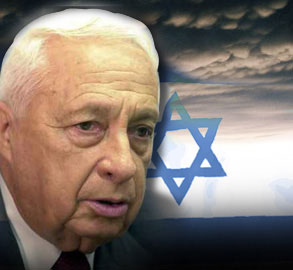

After almost two years of violent conflict, Israelis have learned to respond quickly to changes in their security situation. The drop in Palestinian suicide attacks, ever since Israeli forces reoccupied the main West Bank cities, is reflected in the streets of Tel Aviv, where people once again are filling the cafes, restaurants and beaches. While the Palestinian residents of Nablus and Ramallah are under curfew, Israelis are enjoying the summer. Such is the zero-sum-game reality of the Middle East.
For Prime Minister Ariel Sharon, these quiet weeks are the best of times since he took office 16 months ago. Both his domestic and international standings have never been better. He dominates all rivals in the public opinion polls, with approval ratings of over 60 per cent. His “national unity” coalition remains stable, despite inherent tensions between right and left. The next elections will not take place before May or June next year, and the two major political parties, Sharon’s Likud and Labor, are moving slowly in their candidate selection process.
Diplomatically, Sharon enjoys as good an understanding as ever with his main backer, President George Bush — a rapport clearly evidenced in Bush’s June 24 speech outlining his new Middle East policy. As many Israeli commentators noted, Bush’s speech could have been written by Sharon. After months of equivocating, the White House decided to fully accept Sharon’s position that peace negotiations cannot take place until the Palestinian Authority is thoroughly reformed and its leadership (in particular Yasser Arafat) changed. The Bush administration has given tacit support for Operation Determined Path, Israel’s current offensive in the West Bank. In the past, Washington has been quick to call for a halt to Israeli incursions into Palestinian autonomous territories — although in April, Sharon ignored Bush’s demand that Israel pull out of the West Bank cities, and suffered no consequences. Emboldened by Bush’s speech, Sharon sent Israeli forces deeper into the occupied territories than ever before, and vowed to keep them in the West Bank cities “for a very long time.” As expected, the United States kept quiet. (The only criticism the U.S. offered was over Israel’s closure of Palestinian moderate Sari Nusseibeh’s Jerusalem office — an event treated more seriously by the U.S. press than by their Israeli counterparts, who paid little heed to it.)
Even Europe, far more critical of Israel than the United States, has not spoken out strongly against the offensive. In a stroke of luck for Sharon, Denmark took the rotating presidency of the E.U. last week. The current right-wing government in Copenhagen is less concerned about the Middle East than many other European states, and wants closer ties with the Bush administration.
The unspoken deal between Sharon and Bush is simple. Israel is to keep the conflict with the Palestinians as quiet as possible, thus muting a potentially sticky issue and shoring up American Jewish support for the GOP in the November midterm elections, and later for a possible (or, perhaps, inevitable) attack on Iraq. In return, Sharon will be exempt from a new peace process, which would almost certainly break his coalition apart and threaten his bid for reelection next year.
So far, both leaders have kept their part in the deal, at the expense of two losers — Palestinian leader Yasser Arafat, who is now fighting for his political survival, and U.S. Secretary of State Colin Powell, whose ideas for Mideast diplomacy were poured down the drain.
Sharon’s aides told me not to expect any “meaningful political process” before mid- or late 2003. “Conditions are not ripe right now,” said one senior aide. “There is no credible Palestinian partner, and moreover, there is no serious pressure to negotiate, either from Washington or the Israeli public.”
Sharon, however, does not want to sit tight and do nothing. On the contrary, he is full of energy and initiative. “We must not rest on our laurels,” he repeatedly warned his staff after the Bush speech. In private conversations, the prime minister asserted that he has decided to make a genuine effort to move toward a political settlement, and expressed fear that the Arabs might miss the opportunity. Sharon has long argued that because of his credentials as a military leader and champion of settlements, he is the only Israeli leader who can convince the public to make the necessary concessions for peace.
Sharon does have things to worry about despite his recent military and diplomatic victories. The Israeli government is facing double trouble. Its first worry is the failing economy. The treasury predicts that unemployment next year will hit 14 percent, significantly up from the current rate of 10.6 percent, and that there will be a further decline of the per-capita GNP. In 2000, before the Al-Aqsa intifada, Israel enjoyed a semi-European-level economy, with $18,000 per capita GNP. The predicted level for 2003 is only $14,000 (the decline is partly in real terms, and partly due to currency devaluation). Ministers are debating further budget cuts, but without a profound change in the security situation, these would be insufficient for a true recovery.
At the same time, the timeout in Palestinian suicide attacks is seen as a temporary respite, not a sign of a final Israeli victory in the war. The military has told Sharon that it won’t be able to hold 800,000 Palestinians under curfew indefinitely, but added that leaving their cities could open the door for another wave of terrorism. The general staff is calling Sharon to come out with some diplomatic initiative, and the prime minister is speaking along the same lines.
What options are available? Israel’s main concern is preventing a humanitarian disaster in the Palestinian areas, which would have dire implications both in public relations and eventually also politically. The Israelis want to have their cake and eat it too: They want to maintain control over security in the West Bank, while allowing the Palestinians to manage their civilian institutions with international help. Sharon, Defense Minister Binyamin Ben-Eliezer and other leaders have pledged not to impose a full military occupation or to recreate Israeli civilian administration in the recently reoccupied territories. The military was given instructions to help international aid organizations to bring food and medical supplies into the besieged cities.
Moreover, Israel recently promised the U.S. not to withhold payments to the United Nations Relief and Works Agency for Palestine Refugees in the Near East (UNRWA), the U.N. agency that manages the Palestinian refugee camps. Israelis do not particularly like this organization. They blame it for perpetuating the status of the refugees for decades and, more recently, for turning a blind eye to the fact that the camps were terror-producing facilities. Now, however, Israel needs UNRWA to take care of running the schools, nurseries and other human services in the camps, which look like small, impoverished cities.
Last week, Sharon quietly sent a personal emissary to Washington to meet National Security Advisor Condoleezza Rice. The messenger, Gen. Moshe Kaplinsky, Sharon’s secretary for military affairs, reported back that the White House is not interested in an Israeli-Palestinian political process at this moment, but is concerned about easing the suffering of the population in the West Bank and Gaza.
Additional pressure came from Shimon Peres, the doveish foreign minister. The Bush speech dealt Peres a major blow. Peres had hoped that the president would outline a new road map for peace negotiations, opening with a regional peace conference, which would give Peres a central role. But Bush refrained and embraced Sharon’s hard-line policy. The foreign minister contemplated resigning, and on Saturday, June 29, drafted a farewell letter to Sharon. But the prime minister needs Peres, with his personal clout and peacenik credentials, to hold the Labor Party in his fragile coalition. He sensed trouble, and decided to pay more attention to Peres.
The ploy worked, as it always has. As he has many times before in his long political career, the embittered foreign minister changed his course. Instead of calling the Bush plan a “fatal mistake” as he did initially, he now claimed that the Bush plan is the only game in town — and tried to take credit for it. Everybody, Peres told me, is united behind “my idea, which Bush altered slightly” of a provisional Palestinian state: the “quartet” of the international community (the U.S., the U.N., Europe and Russia); the “trio” of moderate Arab states (Saudi Arabia, Egypt and Jordan); the “duo” of major political parties in Israel; and the prime minister.
Peres got back to work. He asked Sharon to meet Palestinian executives and to release Palestinian tax funds, collected by Israel under the Oslo agreements and frozen since the intifada erupted. These assets could fund Palestinian economic reforms, argued Peres, if used properly under international supervision. The Americans echoed the same line. Ambassador Daniel Kurtzer proposed that Israel would release 10 percent of the frozen assets, around $60 million, to the new Palestinian treasury minister, Salem Fayed, giving him some leverage for reform.
Sharon took his time. He waited 10 days before endorsing “the principles of the Bush speech” on July 4, explaining that he wanted to give the Arab states enough time to accept the plan without being seen as Israel’s patsies. More reasonably, he needed political quiet. After all, Bush had called explicitly for a Palestinian state and for agreement on permanent-status issues within three years — two ideas that are unacceptable to the Israeli right wing. Sharon accepted the Bush blueprint, having explained that the speech was based on his own ideas, as negotiated in secret with Washington.
The next step was allowing Peres to meet Palestinian officials, on two conditions: that he would not talk to the pariah Arafat, and that he would limit his talking points to current economic, civilian and security issues, avoiding political issues. Sharon encouraged Peres to meet the newly appointed treasury and interior ministers in Arafat’s Cabinet, seeing them as “new leaders” untainted by terror and corruption. Peres duly met with Fayed on Monday, and the next day with Gen. Abd al-Razek Yihia, the interior minister, who is also responsible for the security services. Yihia, who came back from a quiet retirement, was joined by a symbol of the old guard, chief negotiator Saeb Erekat, who is well known worldwide as the main Palestinian speaker on CNN.
True to his optimistic form, Peres came out of his meetings encouraged. He was truly impressed by Gen. Yihia’s determination to reform the Palestinian security forces and fight the Islamic terror groups. For his part, Peres promised his interlocutors that Israel would help the Palestinian economy, but made no commitments for withdrawal. Both sides agreed to meet again, before Peres flew to meet the Danish leaders on Wednesday.
On Tuesday, Sharon convened his foreign, defense and treasury ministers to discuss how to handle the Palestinian situation. Economic recovery was given first priority, and Sharon agreed for the first time to release the frozen Palestinian funds, but only gradually, and only provided that the money could not fund terror activities. A special committee, headed by Peres, was appointed to deal with the Palestinian economy. To make sure that the foreign minister would not move too quickly, Sharon appointed a trusted right-winger, parliamentary affairs minister Danny Naveh, as his representative. Naveh agreed to give the Palestinians their money, but only after deducting their debts to Israeli vendors (like the electricity and water utilities).
Defense Minister Ben-Eliezer proposed to renew security cooperation with the Palestinians in “quiet” areas. “We will redeploy, and even withdraw from quiet places,” Ben-Eliezer told me. He asserted that the military presence in the West Bank cities had been essential for preventing terror attacks, and the forces had had great operational success, but added that the Israelis “could not hold these places for a long time. There is a large population that needs to work and move around.” Sharon authorized the defense minister to send his local commanders to meet their Palestinian counterparts, as a move towards better security.
As important as such steps might be, they are insufficient to create long-term stability without movement on the political front. Sharon pledged to come up with a peace plan, but no one expected him to advance significant new initiatives beyond his familiar calls for long-term interim negotiations. Some elements in the military proposed a “territory for time” deal, under which Israel would withdraw from areas in the West Bank and Gaza and evacuate some isolated settlements. The withdrawal would enable an interim Palestinian state to be created on 49 percent of the West Bank, compared to the current 42 percent under different levels of Palestinian control. In return, Israel would ask to postpone the final-status deal for a decade or so. This plan would appeal to Sharon’s preference for a long-term interim deal, but since giving the Palestinians 49 percent would require the closure of settlements, it would also force him to deal with settlement evacuation, the hottest political potato in Israel. For that reason, Peres and Ben-Eliezer are not enthusiastic about it. Peres wants to nail Sharon to the Bush plan, and move swiftly to declare a Palestinian state on the current 42 percent within a year. He fears that any talk about settlement evacuation, given the precarious political situation in Israel, might simply kill the deal.
The other problem is the usual one: What to do with Arafat? Israeli intelligence assessments depict him as a “dead man walking”; the military predicts his ouster within six months. The new chief of staff, Gen. Moshe Ya’alon, who took office on Tuesday, argues that Israel should “ignore” Arafat. His predecessor, Gen. Shaul Mofaz, demanded Arafat’s expulsion, but Ya’alon believes it would be counterproductive. Ben-Eliezer shares this point of view.
Peres, however, believes that the government’s policy of “ignoring” Arafat is wishful thinking. He accepted Sharon’s dictum that after the Bush speech, which pushed Arafat to the brink, Israel could not and should not give him legitimacy. But privately, Peres asserts that Arafat still holds the power in the Palestinian camp, and all the talk about replacing him is merely strengthening his position. The new Palestinian ministers met Peres under Arafat’s approval and guidance, and don’t represent any “new leadership.” Therefore, in Peres’ view, Sharon is playing a make-believe game, by both dealing with Arafat and denying it. Ben-Eliezer argues that Peres is wrong and that his efforts to save Arafat are useless. “There are new leaders around Arafat, who might come forward if we set them free from his shackles,” the defense minister told me.
The domestic debate will go on next week, as the government tries to shape a coherent policy. Monday and Tuesday, representatives of the international community and moderate Arab states will meet in New York, led by Powell, to discuss the way forward in the Middle East. A preparatory meeting at a working-group level, held last week in London, ended in disagreement between the Americans and the rest over Arafat’s status. This time around, the delegates will try to agree on some type of Palestinian reform plan. If it doesn’t bring peace to the troubled region, it will at least give them something to do.
