Sex

The “Sex Woman”

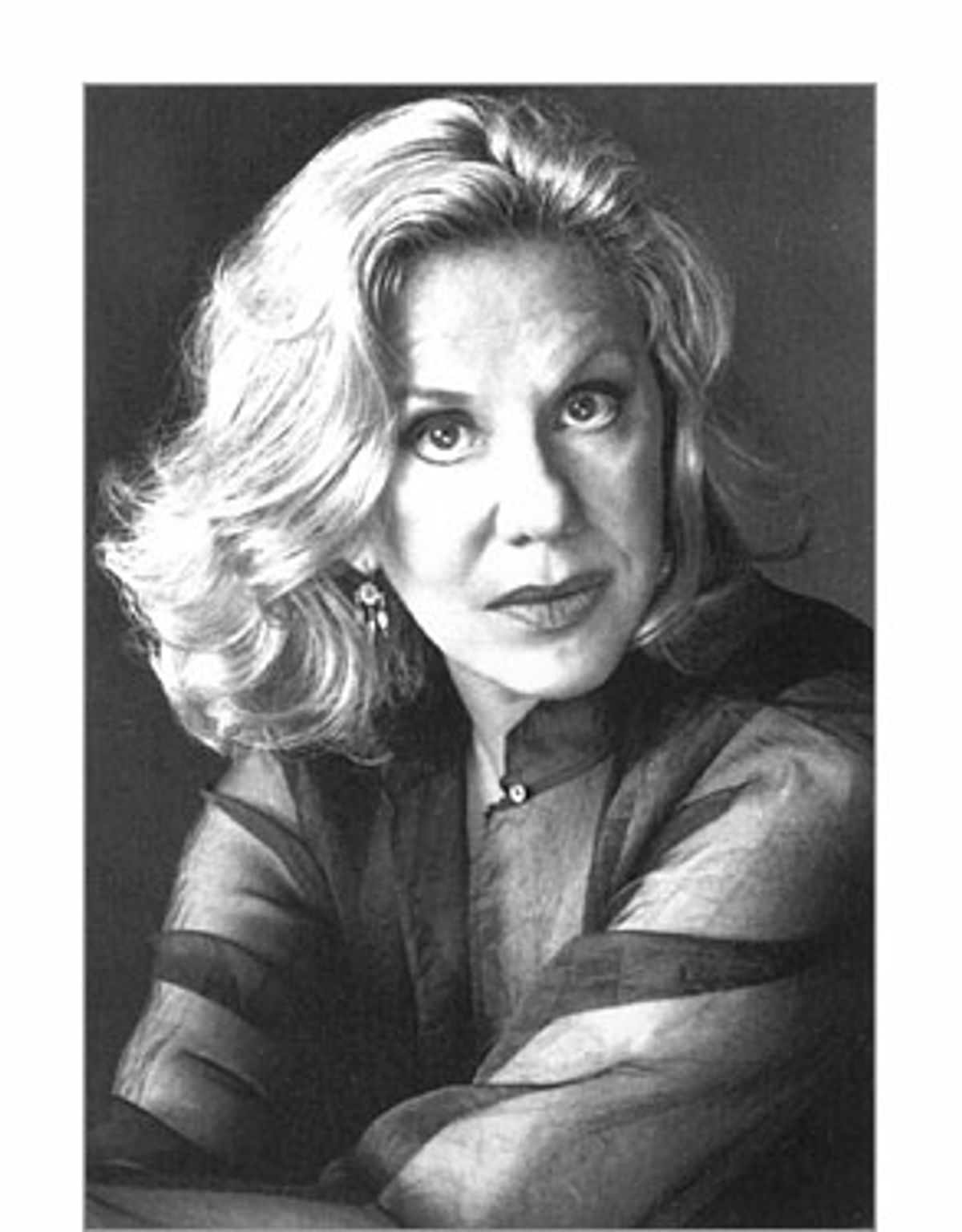
Erica Jong talks about being married to a schizophrenic, the invention of naked women, Henry Miller's erotic fantasies, what's wrong with Bush and -- of course -- the zipless you-know-what.

  • more
    • All Share Services

The

My meeting with Erica Jong was over and I was still out of breath. The elevator slowly slid down the belly of Jong’s ritzy Upper East Side highrise while a short guy in a tired uniform worked the Up and Down buttons. I tried making small talk, but he didn’t answer me. I wanted to ask if he’d ever had one of those legendary “zipless fucks.” That was the term Jong coined 30 years ago when her first novel, “Fear of Flying,” was published. Jong was 31 years old. By the time it came out in paperback, every heterosexual woman who was single had read it.

Eighty-three-year-old Henry Miller read “Fear of Flying” as well. He believed a woman had finally written the female equivalent of “Tropic of Cancer.” A number of men younger than Miller also read Jong’s novel, many figuring that it would provide a crackerjack method of getting laid. Apparently chicks wanted a “zipless fuck” — or as Jong explained: “Zipless because when you came together zippers fell away like rose petals, underwear blew off in one breath like dandelion fluff. For the true ultimate zipless A-1 fuck, it was necessary that you never got to know the man very well.”

I heard that back in those days, certain louts would loiter on the corner purring at secretaries as they headed to lunch, “Hey, baby wanna go get a zipless fuck!” The late poet Anne Sexton (Jong’s friend) suggested the classic retort should be, “Zip up your fuck, bub, until I ask for it.” Soon the term took on its own life. When I first heard the phrase in the late 1970s, I assumed it meant you should take your time, not just “zip” in and out like a rabbit. Many years later, when I found out I would finally get a moment alone with Jong, I figured it would be a struggle not to shout out, “Zipless fuck! Zipless fuck!” as if I had Tourette syndrome. Thankfully, I held my tongue with Jong. Even when her daughter Molly joined us and shouted, “Let’s give him a present!” I held my tongue.

The first question was hers:

Jong: Is this interview for the Sex department or the fiction department?

Salon: Sex.

Jong: All right. I read Salon. It’s one of my bookmarked sites.

How long had you worked on “Fear of Flying”?

I worked on it throughout my 20s. Like a lot of first novels, it transmogrified in different ways. For a while it had the POV of a madman. I started an autobiographical novel from the point of view of a madman, probably because I didn’t think a woman’s point of view would be literature. That’s the generation that I am. We went to Barnard, and we studied Ezra Pound and Ted Roethke and T.S. Eliot. We didn’t read women writers.

Not to go into this if it is too painful, but the “madman” stuff was based on your first marriage?

When I was 22 I went through what we call an “experience.” I was married to a schizophrenic and I didn’t know it. My husband really tried to walk on the water in Central Park. He was hospitalized. It was before the great antipsychotic drugs that they have now. They gave him thousands of milligrams of Thorazine and he became zombified. Before he was hospitalized he very nearly killed me. When I think about what I went through at 22, and I have a daughter who is 24, I can’t believe I got through it. I do think a lot of my life after that was a reaction. I think one of the reasons I married a psychiatrist [her second husband, Allan Jong] was I thought that would protect me against mental illness.

At least this happened in the Upper West Side of New York where they had a vocabulary for madness. If it had happened in suburbia, no one would know what to do.

There was a vocabulary. Both of my parents were very intellectual and bohemian, and they both were in therapy, or analysis. They were very left-wing. There wasn’t a shame to go to an analyst. It was quite the vocabulary of the area I lived in. But I didn’t know anyone who graduated from Barnard in 1963 who had a first husband who tried to walk on the water in Central Park, and tried to fly out the window with her. That was a pretty traumatic experience for a young woman to have. It’s funny I haven’t even assessed it until quite recently. I think I was always attracted to people with wild imaginations. He had this wild imagination. He was also very brilliant. He was brilliant brilliant. His brilliance was a turn-on for me. He was my first boyfriend. My first lover. My soul mate. So when he flipped out it was devastating.

Where is he now?

I really don’t know. I believe he’s in California. He hasn’t contacted me in 25 years.

Just in terms of literature, it’s women who go mad, who walk naked into the water and drown.

You mean Kate Chopin. “The Awakening.” “Tender is the Night.”

The romance is of women who go crazy …

You’re right in literary tradition, but statistics say schizophrenia is much more likely to happen to a man between his 20s and 30s. [Pause.] I got out of Barnard in ’63 and all the writers I admired were men and they wrote about men. So I was dithering with that novel [she first named it "The Man Who Murdered Poets"] for a long, long time while I was writing poetry, and trying to find the voice for the book. I’m sure I worked on it for 10 years at least. Then my first book of poems, “Fruits and Vegetables,” got published by Holt Rhinehart and Winston. My editor there was Aaron Asher. He was Saul Bellow’s editor, and Philip Roth’s editor, and was the real literary clever man.

They don’t have guys like him at publishing houses anymore, they’re all number crunchers. [When] Asher agreed to publish my second book of poems — which even then was unheard of — he said, “Where is the novel that I’m waiting for?”

I said, “Well, I’m working on a novel, but I’m not sure the voice is right, blah blah blah.”

“Well, let me see it.”

If I had not been so naive I would have realized a man who published two books of poetry was a very patient man. I brought in “The Man Who Murdered Poets.” He was sort of the madman from “Fear of Flying,” but he was married. It was not a realistic book. There was a lot of magic realism material. Aaron read it and said, “This is publishable, this is pretty good, but I’m not going to publish it, and some day you’ll thank me.” He said, “This is not your voice. Why don’t you write the novel in the voice of those poems, which are totally fresh. Totally from a woman’s point of view. Why are you dithering –” (he didn’t say dithering) “– What are you fooling with this for? You could take it down the street and Morrow would publish it. But I won’t. And someday you’ll thank me.”

It was one of those moments — sometimes you get a punch in the gut when somebody says something and you just say, “Wooooooh. Thank God I don’t have to play with this anymore. This thing is not going anywhere.” Sometimes someone can do you a big favor that way. I went home and I started the novel in the voice of Isadora — not at a convention of psychoanalysts, that came later — I started it with Isadora at 16, an adolescent girl growing up in the ’50s.

Just to tell you: There is a convention being held down your hallway.

A convention?

Someone is having some sort of get together.

In my building? My neighbor on the other side is a jazz promoter who founded the Newport Jazz Festival. If there are a lot of hip looking black guys …

I thought maybe it was a festival of psychiatrists.

No, no, no. Anyway, around 1970 or 1971, I went to a convention of psychoanalysts. I was meant to cover it for a new magazine that folded. A magazine called Audience. I thought, “Oh my God this is the beginning of the book.” Once I got the beginning, then I was off and running. That’s been my experience with every book since. They come in little pieces. For each one I keep a notebook. I try to track how it comes. There is a moment when the shape of the book becomes clear. With “Sappho’s Leap” [her new book], it was the same process. I fell in love with [Sappho's poetry] fragments in school. I then read them again when I was a mid-career writer, and thought, “This is amazing. This is the work of a woman from twenty-six hundred years ago. It’s so modern. I began reading everything I could about ancient Greece, and about Sappho, and reading every translation I could find. I started to study Greek civilization. I found a scholar to coach me in Archaic Greek.

But I always knew that the book would start with Sappho on the cliff. Maybe she’d jump and maybe she wouldn’t. I thought it was a wild slander that she jumped. I was sure that was something that had been made up by later Roman male poets and playwrights to mock her. She was too wise. She wouldn’t have committed suicide by leaping off the cliff. She had an affair with this young man, this great philosopher and bisexual — she wouldn’t have jumped off the cliff. He probably would have jumped off the cliff. She was too wise. She wouldn’t have ended her life and career for a mere man. Anyway, she was bisexual so it didn’t make any sense.

But I knew where the beginning of the book was. It’s like Doctorow said, “You can only see as much as your headlight illuminates, but that’s enough when you’re writing a novel.”

Since this is a Sex interview, do you know that naked women were invented in fourth century Greece when a sculptor named Praxiteles created the first sculpture of a naked woman, this renowned courtesan name Phryne?

[Jong corrects my Greek pronunciation]

There had been naked men sculpted before Phryne, but no one had done a naked woman. Every guy in Greece went nuts. They put the sculpture in a special alcove with a door that you could open and stare at her rump.

[Jong laughs.]

Men started throwing themselves at her and mounting the statue. The statue was of Aphrodite, and Phryne was put on trial for being sacrilegious. She was losing the trial, and her lawyer just ripped her gown off and said, “How can a woman this beautiful be sacrilegious?”

A nude body is not a lewd body. That is a great story that sounds apocryphal. It’s a great example of nudity vs. lewdity and which is which.

But the ancient Greeks really invented Western sexuality.

I think they did. And that’s one of the things that interested me about Sappho. They would not have understood the term “gay.” They wouldn’t have understood a distinct lifestyle based on where your genitals went. They would have thought that was insane. Basically, someone like Sappho had a dynastic marriage. She was an aristocratic girl. Girls of her class were married at 13 or 14. They had legitimate babies with their spouses. They had pleasure with other women. Other men. They believed pleasure was a good thing. We grew up under a Judeo-Christian cloud believing that pleasure was not a good thing. The ancient Greeks really believed in pleasure. They believed Aphrodite was a goddess who believed in pleasure and those who worshiped her believed in pleasure as well.

Men when they were warriors, when they were teachers although they were married dynastically, they had tender relationships with other men. Bisexuality is entirely unremarkable — as I believe it should be. But that’s another topic. I think our culture is insane and atypical of human culture in regard to homosexuality. I think the way we scapegoat homosexual people in this culture is a species of madness. The fact that they can’t inherit property. The fact that they can’t marry in many states. For years and years men had to adopt their younger lovers in order to leave them any property — it seems to me insane. I’m a great advocate for civil rights for gay people. I also believe that the natural state of people is to love pleasure. And wherever it is found. We’ve just been brainwashed in the other direction.

Back to “Fear of Flying,” did you find yourself an instant celebrity?

It was a slow burn.

Did you find yourself a spokesperson for Eros?

Yes. When it came out in hardcover the publishers thought of it as a literary first novel because I was a poet. The hardcover gradually grew by word of mouth, but it wasn’t published in a huge edition. It was only when it was out in paperback, in 1974, for the first time there was a woman editor who felt the book was the story of her life. Her name was Elaine Koster. There was a woman in a position of power in publishing who said, “I love this book. We’ll promote this book.” Before this, women weren’t in that position so it wouldn’t have been possible. She really got behind it. They published it with a big, big bang. I went from being somebody who couldn’t get booked on the “Tonight Show” because “Johnny wasn’t interested in human relationships” (as this guy told me) to somebody who was besieged. I had to unlist my phone number.

“Fear of Flying” has been a very enduring book — when the paperback came out it sold 3 million copies in three months. A lot of the books sold for the wrong reason. A lot of people just opened the book and saw “zipless fuck” and bought it. I believe some of my readers had never read a novel before, and haven’t since. Not that I don’t have wonderful readers, I do, but some of the people who bought “that book” as they called it … Very often men will say to me, “Whenever I saw that book on a woman’s night table I knew I was gonna get lucky.” And women say, “I remember where I was when I read that book. I was in Greece. I just met this man and his eyes were brown. They were like olive oil. And I had one book in my knapsack — because I was in the middle of ‘that book,’ I had a wonderful weekend. Thank you!” The book has entered people’s lives.

Do you remember when “Our Bodies Ourselves” came out?

I think it was ’73, ’74.

I’ve always held your book and that one as responsible for my “vast” sexual history that started in 1976 when I was in high school.

Seventy six? You were in high school? And you graduated from college in ’80?

Yeah. [Pause.] Except I didn’t go to college. In the days of my youth, female sexuality was where it was at. The modern idea of a guy just sitting there getting a Monica Lewinsky was completely unheard of. Blow jobs were seen as sexist. The whole point of sex was a women’s sexuality.

Your mother had books in the house or you bought them yourself?

Books?

Like “Our Bodies Ourselves” or “Fear of Flying.”

No, no, no.

So where did you learn about this?

Let me get specific. The second girl I slept with — we were messing around on the floor of her parent’s house for the third night in a row, and she just stood up. She was really irritated. She explained that I was doing everything wrong. She explained female orgasm to me.

[Laughs] How old were you?

Eighteen.

And how old was she?

Eighteen. Anyway, when you first get the “birds and the bees” talk, no one tells you about female orgasm.

And what did she say?

Basic hand maneuver information. So I was educated by a contemporary. Thereafter, the majority of the sex I experienced as a single man was centered around “Isadora Wing’s” pleasure. So many years later, America seems to have switched back to King Penis.

There is a lot of retro sexuality going on. Kids are having a lot more sex, but most of it is servicing the man. The 14-year-olds and the 15-year-olds who are giving oral sex (but don’t consider it sex) have figured out a way to get power from men, but they are not getting orgasms or enjoying it. It’s just a power maneuver.

As a mother, did you have to go through that with your daughter?

Did my daughter go through that? You can ask her. She’s coming here at 4 o’clock. I was thinking more of girls who are teenagers now. Molly is 24. I hear from young women Molly’s age and younger, that the double standard is alive and well. I spoke at Barnard a couple of weeks ago at a course where they were teaching “Fear of Flying” and “Madame Bovary” and “Anna Karenina” in a course called “Sexuality and Storytelling.” I asked the students what did they see in “Fear of Flying” that they identified with, and they said, “Double standard is alive and well.” A girl who is open about her sexuality is considered a “slut.” I said, “But you can watch “Sex and the City” on TV. And every magazine in the newsstand says, “A hundred ways to drive him wild in bed.” Aren’t things more open?” They said, “No. That’s just pop culture.” In reality, pop culture may seem to be more open, but in reality a girl who is open about her sexuality is seen as a slut. That’s what the Barnard girls told me a few weeks ago.

So there was a golden age of sex in the late ’70s and early ’80s —

Yes. And it is over. It is over. I guess that Bush is the capper of the decline of the golden age. He’s going to take back Roe v. Wade. Daycare. Reproductive choice. The right wing has redefined reproductive choice. They’ve captured the language. They say that they’re “pro-life” and many young people think that they are pro-life too. They [the right wing] won the linguistic debate. And when you win the linguistic debate, you’ve won the debate. Period. There are a lot of young women whose mothers marched against abortion being illegal who now say abortion is murder.

When “Fear of Flying” came out I know you got some flak from feminists —

I got flak from everybody. The male chauvinists called me a “Mammoth pudenda.” Paul Theroux reviewing the book in the New Statesman said “Isadora Wing is nothing but a mammoth pudenda roomy as the Carlsbad Caverns.” You never forget a review like that. Merv Griffin said, “You just want to piss standing up.” Oh, he didn’t say “piss.” “You just want to use the lavatory standing up.” The feminists said that Isadora was not a feminist because “she wore lipstick and liked men and wore high heels and she liked frilly underwear.” So I got it from both sides. I was absolutely attacked by male chauvinists and feminists both.

So what was your average day like back in the 1970s? You were a pop icon.

Yeah. But you don’t wake up in the morning and say, “I am a pop icon.” I can’t say I had an average day. At that time I was married to a psychoanalyst, Allan Jong. I was teaching part-time. I was thinking, “Gee, I should finish my Ph.D.” so I would have something to fall back on. I was sure whatever was happening would not last. And I would go back to writing slim books of verse. I was corresponding with Henry Miller. That was amazing. I was living on the Upper West Side in the neighborhood I had grown up in. People would call out of the blue. Men would get out of jail and camp out in front of my door. But I didn’t know what was happening. It’s so weird to become a public figure that at first you don’t believe it, you know what I mean? You think someone should have a rule book, you know, “take your name out of the phone book. Don’t tell people where you live.” There should be a rule book, but there isn’t. So there you are, you’re a Ph.D. candidate at Columbia, you’ve published a couple of books, you’re married to a shrink, you’re debating about finishing your Ph.D. and suddenly people are camping out at your front door. It’s very discombobulating.

You have a bleacher seat in the evolution of celebrity from then to what it is now.

In a way. I never believed it was real, you see. And what I wanted to do with my life was so far from that. I wanted to be Colette. I wanted to be eventually 80 years old and have a shelf of books with my name on them. I had this European ideal of a writer producing book after book. [Pause.] I still do in a way. The whole fame thing was really weird to me. Gradually you get used to it. You take your name out of the phone book. You become a little more guarded (I’m not a very guarded person anyway). You try to preserve yourself a little bit from the crazies out there. There are crazies out there. Stalkers. That’s for sure. Then there were women who would write to me and say, “My husband beats me. I’m so miserable. I read ‘Fear of Flying,’ can I come live with you — me and my four kids.” And then there were men who would send naked pictures of themselves, and say, “I’m exceptionally well-endowed and I can see from your writing you are a ‘size queen’ so let’s go at it baby.” This was terrifying.

Oh, I was planning to leave you my photograph, too.

Naked?

Of course. I’ve read that journalists would feel at liberty to come on to you.

Yeah, but subtly. There was a guy who wrote obits for the New York Times in those days — who is now dead so I can talk about him — who would take you out to lunch and tell you he was preparing your obit, and that you would get a better obit if you came across.

And now you’re alive and that sucker is dead.

It was weird. The funny thing is if I had known that I was having “a pivotal experience of my generation,” I would have made better make notes of what was going on.

[Singing] “You don’t read many female writers, do you/No you’re wrong/Who’ve you read lately?/Erica Jong.”

Dylan.

What did you think when you heard that Dylan song? Did anyone prepare you?

I started getting e-mail. “What do you think, that you’re in Bob Dylan’s song?” I said, “I’m honored. I’m thrilled.” He’s a great artist. I’m happy to be mentioned.

Did you ever meet him?

No. I would be happy to meet him and say, “Hi.”

Your prejudice is for Jungian therapy, isn’t it?

I’ve been analyzed by so many kinds of people that I don’t know. I think Jungian is interesting, especially if you’re a poet. But I think the analysts who have changed my life have been very eclectic.

Do you still serve time?

I still go. But it’s not analysis.

What is it?

She’s a Freudian. But I don’t do psychoanalysis. I go to her in intermediate waves, and work on things like writer’s block and other things. I’m not “in” analysis. I was in analysis when I was in my 20s.

I think everyone should be in analysis when they’re in their 20s.

My analyst changed my life. When I lived in Germany, I lucked into the only English-speaking analyst in Heidelberg, Germany. He was Alexander Mitscherlich. He was fiercely anti-Nazi. He was the first person that took me seriously as a writer. He helped me break through a lot of barriers in my work. He changed my life.

What year was that?

’69?

In terms of your oh-ver.

My what?

Your oh-ver.

oh-ver?

I can’t speak French … your body of work …

Oh, oeuvre.

Oeuvre

Oeuvre [Laughs.]

To be frank, I’ve always pegged you as “The Sex Woman” even though you’ve written about many things. I have the same idea toward Henry Miller. I never identified with him. I was the wrong age for that. He’s been pegged as “The Sex Guy.” Do you feel obligated to write about sex?

No. But if there is any sex in my books, that’s all anyone sees. I used to joke, “I’ll stop writing about sex when people stop being interested in it.” People are interested in sex, just face it. But even in “Fear of Flying” there are so many other things in that book besides sex that no one focused on. Heidelberg, Germany, and discovering your sense of being Jewish — pretty interesting. People just open the book and see zipless fuck and go, “Oh my God!” That’s not about me and my writing, that’s about the culture we live in. As far as Henry is concerned, he wrote about a lot of things that weren’t sex. I always tell students to start with “The Colossus of Maroussi,” which is this incredibly spiritual book about a trip to Greece in 1940 between the two wars and then having a trip back in time to ancient Greece. There is no sex in “The Colossus of Maroussi,” and in some ways it’s Henry’s most beautiful book. But people only see “Tropic of Cancer.” That’s because our society is sex-obsessed, not because his work is preponderantly about that. It’s not. One of my favorite books of his is “The Books in my Life,” which is amazing. There is no sex in it at all.

You spent a lot of time with Miller near the end of his life, didn’t you?

I did. He wrote me a fan letter. He said, “You have written the female “Tropic of Cancer.” I of course ran out and bought everything of his that I hadn’t read to make [me] worthy of answering his letter. We corresponded for six months and then I went to visit him in his home in Pacific Palisades, California. This was in ’74 and ’75. He was quite old and infirm. He was in a wheelchair. He spent a lot of the day in bed. He’d be wheeled out at 5:30 at night and guests would gather around the table. He would just come alive, and talk about Paris in the ’30s. He knew everybody. He was enormously alive. The table would sometimes be filled with people in their 20s and 30s, and he would seem the youngest person there. He had this great vitality. We would ask him questions about his work. About Paris. Brooklyn where he was growing up. He would talk and talk and exhaust himself. And then be wheeled back into his room and collapse.

He used to say, “In my mind I have the most delicious erotic fantasies.” A different group of young people lived in the house and they would cook for him. I had many visits with him, and at some point in that process when he was telling me about his literary background, I said, “Henry, can I tape record these recollections, because I might someday want to write about you.” He said, “Oh, sure tape recording is fine, dontcha know. Just tell ‘em I’m not a pornographer. I’m always looking for the secret of life, dontcha know.” I began to tape record some of these interviews. Sometimes it was just a visit and I wouldn’t tape record. I spent a lot of time with him this way. A young writer asking an old writer about life. I had left Allan Jong and had fallen in love with [science fiction writer] Jonathan Fast. I moved to California and was living in a rented house in Malibu with Jonathan.

And Bob Dylan was just across the way.

I never met him! I was getting a divorce from Allan Jong. It was ’74, ’75, ’76. Henry died in ’78 or was it ’79. No, he died in the ’80s. The last two years of his life, I knew some of the kids who were looking after him, and they would talk to me. The last year was tough. He was not well. He had to be carried from place to place.

Did you ever meet Anais Nin?

Once at the 92nd Street Y.

Did you talk with her?

She said in her speech, “I read that a woman who wrote honestly about sex would never be taken seriously as a writer.” She said that in passing about why she had expurgated her journals when she first published them. I remember raising my hand and saying, “But Ms. Nin! We must change things.” [Laughs.]

Did she know who you were?

I think at that time I had just published one slim volume of verse.

What was the first sexy thing you wrote? Did it just come out naturally? Or did you think, “I’m pushing the envelope”?

What do you think is sexy thing in “Fear of Flying”?

Anything dealing with Isadora’s sexuality.

I remember when I was writing about Isadora sitting on the train and having fantasies, thinking, “There is no way this is going to be published. No one would publish these thoughts coming from a woman.” Five years earlier they wouldn’t have. It just happens the feminist movement made everyone curious about women’s sexuality. When I was in college Theodore Roethke was quoted as “Women poets always stomping a tiny foot against God.” Or “Don’t write with your ovaries on your sleeve.”

[The doorbell rings. Jong answers it. She introduces her daughter.] This is Molly Jong-Fast, young novelist [author of "Normal Girl"], bride to be.

[We spend five minutes gossiping about publishing.] Did you ever hear the rumor about [well-known figure]? It’s salacious.

Molly: I think I heard this rumor.

He would go to Bryant Park and some woman would give him a blow job.

Erica: In Bryant Park?

Molly: I heard stories like that. Usually a female assistant or female editor would do it. I heard he had a tendency for large-breasted Russian women, and if you notice there are many large-breasted Russian editors who work with him.

So I’m supposed to ask you, is the sexuality of your generation just about sexually servicing men?

Molly: I don’t know. Maybe.

Erica: Remember the “Oprah” show that we did? Where they said, “All teenage girls do is service men sexually and don’t have any pleasure themselves.”

Molly: Remember we had to take a train home?

Erica: Molly has a fear of flying.

Molly: A real crippling fear of flying. The last time I flew I tried being hypnotized …

Erica: When we were leaving Chicago —

Molly: This is why my mother is the greatest person alive. So we’re sitting at [unintelligible] eating ice cream and she says, “You have to get on the plane.” I said, “I can’t get on the plane.” And she says, “You have to.”

Erica: I said, “You have to overcome your fears.”

Molly: I said, “We can take the train. It will only take –” And then I lied. I said “eight hours.” It really took 23 hours. It turned out that the super first class room which is the handicapped room –”

Erica: I didn’t know any of this!

Molly: –is really big and it was available. We get on the train and there are all these Amish. I had never seen so many Amish in all my life.

A train full of Amish?

Molly: The only people who ride the train are people who are really poor — because the train is relatively cheap — and the Amish. [Pause.] And me.

Erica: I had to call my husband and cop to the fact that my daughter had tricked me into taking the train. He laughed …

Molly, when did you develop this “fear of flying”?

Molly: Remember. It was to Atlanta. That was when I knew, “We’re all gonna die.”

Erica: It was during this hurricane.

Molly: “We’re all gonna die.”

As an amateur psychologist —

[Erica & Molly laugh]

Your mother’s big novel is “Fear of Flying” and the title has somehow manifested into a literal fear of flying for her daughter.

Erica: I don’t think that has anything to do with it.

Molly: It’s really scary to get into those planes and they go all the way up …

I have a question to both of you as poets and women of the world. When I was 19 I was friends with [Poetess X]. She came to New York to give a reading. First, she took me out to dinner first with another couple. Then she showed up at the reading and I remember a line was “Oh how I hate my destiny.” Then we drove back to her hotel — her and I were in the back seat. We hadn’t touched each other or anything. So far, we were just friends. But the woman said goodbye to her friends in the front seat and just got out of the car. I just sat there and then said, “Goodbye” from the window. For more than 20 years I’ve wondered if I was suppose to get out of the car with her. Or was she so bummed out about “hating” her destiny that she forgot I existed?

Erica: Were you attracted to her?

Sure.

Molly: Should you have gotten out of the car though, that’s the big question.

Erica: How drunk were you?

Not at all.

Molly: [to her mother] How many times have you been asked a question like this?

Erica: Never before. Congratulations.

Molly: He’s asked an original question. I think he gets a present.

Erica: What would you like?

[Sweating, evades question.] Don’t you two get asked a lot of love-advice questions?

Erica: I do, but it’s always a disaster.

Molly: The last advice she gave was to two people who will remain unnamed who were engaged in a menage à trois, and Mom said it was a great idea and they should keep going, but they ended up getting a divorce. Thank you very much and goodnight.

Erica: They asked me if it was OK that they had drawn another woman into their relationship and were they going to live all together in harmony.

Molly: They were like the dumbest people I had ever known.

Erica: I said, “There is no such thing as normal. If you dig it, do it. Have fun.”

I had a girlfriend who suggested we get together with another girl. We went to this club in Boston to meet her, but she never showed. Later, I realized the tryst had been called off because I was too enthusiastic about the prospect.

Erica: There is no right way to behave in a situation like that. If you’re not enthusiastic, it’s not good. If you’re too enthusiastic, it’s not good.

What’s your experience?

Erica: I’m not going to talk about it in front of my daughter. She’s of the generation that doesn’t approve of that.

[Molly leaves the room.]

So did you have that experience?

So far in the past that I barely remember. The sad truth is — the sad, sad truth is — I have experimented with a lot of things, but I am a really monogamous and moral person. Most of my relationships have been serially monogamous which is not unusual. I’m very loyal. I really like intimacy with another person. I want to be really intimate with my husband and have a conversation that goes on all the time. I loathe to do things that would fracture that intimacy. Especially now in my fourth marriage when I’m with someone who is a soul mate and who I treasure, I don’t want it to create great gaps between us which might inevitably happen if we were both experimenting with different people. Also, I did that when I was younger so I don’t have a great need to. I certainly remember it. I remember the driving passion. [Pause.] I’m really a homebody is the terrible truth.

I’ve read that the big secret in many American marriages is that the couples stop having sex.

People lie about their sex life or their lack of sex life. I honestly think in marriage sex ebbs and flows. I think if it’s not active at all for years and years it can feel like separation to people. Yet there are many kinds of sex. I know a lot of people who are married and never have sex. But something always happens to break that up. Another thing, is a lot of people just don’t like sex. A lot of people don’t like intimacy. A lot of people are not capable of intimacy. They don’t want to cop to that. Or acknowledge it. I can’t talk about them, I really don’t know. I can only talk about myself because I know what I need.

Do you have a moral disgust of Bill Bennett, the moralist who looses millions to slot machines?

I hate moral zealots. I think they’re the most dangerous people. It doesn’t matter if they’re Bill Bennett or Osama Bin Laden or George Bush. It’s the same kind of person. It’s a person who says, “This is the way I see morality and religion and you’re going to see it the way I see it or you’re the devil.” I think those people are extremely dangerous and I’ve always hated Bill Bennett. I thought he was a fraud before I found out he was a gambler. That made me chortle.

Did he ever attack you by name?

I don’t know. Many other moralists have attacked me through the years. There is so much hypocrisy out there. The great hypocritical thing is Bill Clinton/Monica Lewinsky. We saw this in our lifetimes. All these creepy Republicans who were getting blow jobs all over the place from their assistants pillory Bill Clinton for doing the same things that they were doing. They couldn’t make Whitewater stick, so they went after his blow job.

The first Bush had a mistress.

That was well known. JFK had mistresses and interns. FDR had mistresses. Eleanor Roosevelt had lovers. This is not news. Not a hot flash. It is just a convenient way of destroying the credibility of the Democrats and bringing the Republicans into power.

So what are you writing next?

I’m writing a contemporary novel set in New York, it’s about being a woman of a certain age and having dying parents, I don’t know much more than that. I’ve been working on it for a while. I know what I’m going to do after that. I want to write a historical novel set in L.A. in the 1930s. I was just out there staying at the Chateau Marmont and I was visited by ghosts who gave me the plot of the novel.

Ghosts for real?

Yes.

They manifested?

They turned the lights on and off in my suite in the middle of the night. I don’t know whether it was John Belushi or Greta Garbo or Marlene Dietrich, but someone was there.

I find that my reading changes from decade to decade. I’ve always figured I’ll wait for my 50s to start reading Henry James.

I spent the last five years reading all the Greek poets [in preparation for "Sappho's Leap"]. Reading Homer over and over again. I’m just crazy about Greek lyric poetry.

I just interviewed an English poet, Christopher Logue, who is rewriting the Iliad.

There’s a “trend story” here. Did you see Mary Zimmerman’s “Metamorphoses” based on Ovid? There’s Stephen Pressman who’s writing novels based on classical themes. There’s this young woman who wrote a book about Ovid in exile. I think it’s called “The Love Artists.” I believe in times of world crisis people go back to the classics. Because they want to know what is enduring and what is enduring about politics. And the classics are calling us back right now. It’s not just my novel. I see it all around me. We really feel like we’re at the end of our days.

Can you see downtown from here?

Yes. I could see the smoke rising from 9/11.

Are we looking south?

No. North.

David Bowman is the author of the novel "Bunny Modern" and the nonfiction book "This Must Be the Place: The Adventures of the Talking Heads in the 20th Century."

Massage therapists rubbed wrong by sex talk

A Jennifer Love Hewitt show and the Travolta allegations have masseuses tired of being confused for sex workers

  • more
    • All Share Services

Massage therapists rubbed wrong by sex talk (Credit: iStockphoto/sybanto)

Joe, a licensed massage therapist, knows what it’s like having a famous client who expects something extra. He had an Academy Award-winning actor begin gyrating on his massage table before raising his hips in the air to show off his erection. “He was hoping that I would play with him in some shape or form,” he says.

Needless to say, Joe isn’t surprised by allegations by two masseurs that John Travolta got handsy during massages. (Travolta’s attorney has denied all the allegations, and called them “ridiculous.”) “It happens all the time,” he says, and not just with celebrity clients. He frequently encounters men who try to fondle him, usually while he’s working on their glutes or lower back and their hand happens to be level with his crotch. “They think they’re so original, but they’re all so much the same,” Joe says, his voice rising. “They all use the same tactics, the same body movements, the same gyrations and grinding my table, the [heavy] breathing.”

Usually it’s men, but he’s had a couple of women do it, too: One grabbed his crotch and then pulled his sweat pants down before he could stop her. Then there’s the woman who had an orgasm just from him massaging her thighs. “All of a sudden her knees locked and her legs became straight and I thought, ‘Oh no, maybe I hurt her, maybe she has boundary issues.’” Afterward, though, she made it clear what had happened — and that it was the best massage she’d ever had.

Even massage therapists who haven’t personally experienced sexual harassment or abuse on the job are fed up with the need to constantly reaffirm the fact that they are licensed medical professionals. Shows like Lifetime’s “The Client List,” which stars Jennifer Love Hewitt as a single mom trying to make ends meet by providing happy endings, certainly don’t help to diminish the nudge-wink side of massage, nor does the ubiquity of euphemistically driven ads for massage parlors. And, for the record, many object to the use of the terms “masseuse” and “masseur” because they leave too much room for misinterpretation.

Even still, some question the legitimacy, or at least earnestness, of the allegations against Travolta and suggest that it’s the massage therapist’s responsibility to avoid sketchy situations. Barbara Joel, a massage therapist and former president of the New York State Society of Medical Massage Therapists, tells me, “I disagree how he is being portrayed as the brute and the therapists as the innocent victims … I doubt that the therapists were unaware as to what they were walking into.” Joel says experienced massage therapists understand that “many male politicians, celebrities and men of power feel a sense of self-righteousness and that they are above the law.”

To others, that sounds too much like blaming the victim. Turning down clients — particularly high-powered clients that could make your career — is challenging. Joe was voted the best masseur in New York several years in a row, but when the economy tanked his business did too, and he moved to Kentucky for the affordable rent. Now he finds it hard to reject new clients during the initial screening process because he sorely needs the gigs. “It’s difficult when you’re a therapist trying to make money in this economy,” he says. Usually, he simply tries to dodge the wandering hands. “I move my legs away from the table and after a while they’ll mellow out,” he says. “If it starts to get really bad, I’ll grab their hand and press it firmly down onto the table and say, ‘C’mon now, I’m a licensed massage therapist, this is not about sex.’”

Like Joe, Cameron Richards, a massage therapist in New York, describes encountering inappropriateness from both genders. He recently had a male client ask to be undraped during the massage. “This was all red flags,” says Richards, who’s only been in the business for four years. “To make a long story short, he wanted me to fondle him.” Once, he had a female client try to urgently book a session within the hour and then she attempted to get him to massage her breasts. “She told me when she went on a cruise they massaged everything, which I knew was a lie,” he says. Richards also knows a massage therapist in Florida who is thinking about quitting the industry because “she is getting lots of phone calls from men looking for happy endings.”

In over a decade of massage therapy, the worst Eva Pendleton has ever encountered is a client grabbing her butt. “I just quickly stepped out of the way,” she says. But Pendleton had plenty of clients get “a little frisky or flirty” when she worked in a health spa. Now she specializes in geriatrics and end-of-life care, but still she’s encountered a hospice client who asked flirtatious questions like, “Who massages you?” He was also “really into having his abdomen rubbed, hinting about wanting me to work lower.” (That’s an example of the hospice saying, “You die as you lived.”)

Massage therapists often become accustomed to the hint of an erection under the sheet. “It’s tricky because the male body sometimes sends a signal just as part of the relaxation response,” says Pendleton, “not because they’re having a sexual reaction, so I learned to ignore erections and I usually gave the client the benefit of the doubt,” she says. “It’s rarely as obvious as perhaps some of Mr. Travolta’s massage therapists experienced.”

On the whole, the female massage therapists I spoke with reported less frequent in-person sexual harassment, maybe because they are more motivated to screen aggressively. Whenever she gets a call from a potential client, Denise mentions that she offers both massage and martial arts classes — which is not easily confused as a sexy euphemism. Most people who are looking for sex hang up after that, but the ones who stay on the line usually send up red flags by asking for “adult” or “full body” massage, or asking what she looks like or what she wears during the treatment. Recently, she had a man call to ask if he could “confess his bad behavior.” She suggested that he seek “psychological or spiritual counseling” and he hung up.

Elise Constantine has been working as a licensed massage therapist for 14 years and only once had a client cross the line: He kept asking to be naked during a Thai massage, which is usually done on a clothed body. “I was infuriated,” she says, “but did not engage in any further discussion beyond saying, ‘There is the exit. No payment is expected. Do not contact me again.’” Since then she’s developed strict policies to avoid inappropriate clients and dangerous situations. She only books new male clients when one of her colleagues will be in her office suite and never does outcalls for men unless they come with a direct, reliable referral. Constantine also makes a point of dressing “modestly” and not posting photos of herself on her professional website.

The erotic plagues the industry for some of the same reasons that massage is a good cover for sex work: the intimacy of nakedness and the sensuality of healing touch. We have a hard enough time separating nudity from sex, let alone naked touch. So it’s no surprise that there’s a genre of porn that eroticizes the tension between the legitimacy of massage therapy and the naughtiness of a paid-for hand-job. “Some people don’t get touched very often, they don’t have a love life, and to them it’s like, ‘Oh my god, this feels so good,’” says Joe. “It’s synonymous with sex or foreplay to them.” Of course, there’s a crucial difference between the occasional boner on the massage table and trespassing on another person’s body. One represents a natural physiological response, the other a raging dick.

Continue Reading Close
Tracy Clark-Flory

Tracy Clark-Flory is a staff writer at Salon. Follow @tracyclarkflory on Twitter.

A night at the vibrator museum

Early vibrators were hand-cranked, two-person jobs -- and prescribed by doctors. How far we've come since then

  • more
    • All Share Services

A night at the vibrator museum (Credit: Antique Vibrator Museum)

I can now say that I’ve used a turn-of-the-century vibrator — on my hand, but still.

The silver, hand-cranked contraption is usually kept behind glass at Good Vibrations’ Antique Vibrator Museum in San Francisco — but staff sexologist Carol Queen made a rare exception. “This is very special,” she whispered, unlocking the case and carefully pulling out Dr. Johansen’s Auto Vibrator, a relic from 1904. The “auto” part is not so much: It was a two-person job, with her having to crank the device’s handle to get it thrumming. Pressing my finger tips to its inch-wide circular platform of pleasure, I was pleasantly surprised by its power.

As I was by the two other vintage vibrators that I got to try out — the White Cross Electric Vibrator from 1917, which has a pronged aperture that makes it seem like the ancestor of Jimmyjane’s Form 2, and the Beautysafe Vibrator from the 1940s, which is reminiscent in look, feel and sound to a car waxer.

The U.S. release this week of “Hysteria,” a Maggie Gyllenhaal flick about a Victorian-era doctor who invents an electric massager and uses it to bring about “paroxysms” of relief in female patients with “hysteria,” seemed like a good excuse to get a private tour of the museum, which provided vibes that appear in the film, to learn about the history that’s left out of the movie’s fictionalized story line — and, of course, to try out antique pleasure devices while on the clock.

While the movie is set in the 19th century, doctors’ “manual manipulation” as a treatment for female hysteria goes back as far as the second century. “That took too long,” said Queen. “So doctors started training midwives to do it.” In Rachel P. Maines’ “The Technology of Orgasm: ‘Hysteria,’ the Vibrator, and Women’s Sexual Satisfaction,” she quotes a 1653 medical book that advises:

When these symptoms indicate, we think it necessary to ask a midwife to assist, so that she can massage the genitalia with one finger inside, using oil of lilies, musk root, crocus, or [something] similar. And in this way the afflicted woman can be aroused to the paroxysm.

Of course, this paroxysm was orgasm, but it was rarely acknowledged as such. Instead, it was said to be the exorcism of hysteria, a vague, catch-all diagnosis for female ailments thought to arise from a displaced uterus or, charmingly, a “wandering womb.” “Some of these women probably had PTSD, some of them were overworked, some of them had extreme stress in their lives, some of them almost certainly had sexual issues going on,” Queen explains. As Maines points out, “many of its classic symptoms are those of chronic arousal: Anxiety, sleeplessness, irritability, nervousness, erotic fantasy, sensations of heaviness in the abdomen, lower pelvic edema, and vaginal lubrication.” Married women were often given the prescription of sex with their husbands.

Eventually, doctors turned to technology to speed up the laborious treatment. “It started with hydraulic devices, water jets, but that really only worked well at spas,” said Queen. In 1869, an American physician patented the Manipulator, a padded table with a steam-powered vibrating mound that rested between the legs. A decade later, British physician Joseph Mortimer Granville – who’s at the center of “Hysteria,” albeit heavily fictionalized — patented a battery-operated vibrator for treatment of muscle pain. Interestingly, he was vehemently against the device being used for hysteria. He wrote, “I have avoided, and shall continue to avoid the treatment of women by percussion, simply because I do not wish to be hoodwinked, and help to mislead others, by the vagaries of the hysterical state.”

Ads selling vibrators as home appliances began to appear in women’s magazines, often showing “women in attractive nightclothes, using it on their chest,” Queen said. “You see facial massage shown from time to time.” These spots referred to them as “aids that every woman appreciates” and promised “all the pleasures of youth … will throb within you.” But when vibrators started showing up in stag films in the 1920s, the ads started to disappear, Queen says.

“Within the next 10 years or so, the doctors close up shop,” she said, perhaps in part because it became impossible to deny the sexual nature of these therapies. “In 1952, hysteria is taken out of medical books,” Queen explained. “The medical associations voted to say, ‘Nothing to see here, there’s really not a disease – no, no, no, we haven’t been treating this with clitoral and vulva massage.’”

Vibrators were still sold direct to consumers, but manufacturers made no mention of hysteria and instead “talked about body massage and vague promises of health, vigor and beauty.” The ’60s did away with the subtlety and euphemisms: Maines explains in her book, “When the vibrator reemerged during the 1960s, it was no longer a medical instrument; it had been democratized to consumers to such an extent that by the ’70s it was openly marketed as a sex aid.”

Asked whether doctors or patients saw the treatment as sexual, Queen said, “One of the schools of thought is, ‘How could they not?’ They’re touching the genitals, she starts to sweat and flail around and vocalize and her breathing changes and she gets a flush.” But others argue that “the definition of sex and sexual functioning for a woman was so associated with intercourse,” it was so male-centric, that this treatment, which was most often external, wasn’t seen as sexual. As Maines puts it, “Since no penetration was involved, believers in the hypothesis that only penetration was sexually gratifying to women could argue that nothing sexual could be occurring when their patients experienced the hysterical paroxysm during treatment.”

Paradoxically, Queen explains that hysteria was overtly linked to sex “in that they said women without husbands who were spinsters or widows or whose husbands had become incapacitated were more likely to suffer from it,” she said. “So there was a subtext of, ‘What this lady needs is a good fuck and, sadly, she can’t have one — but this is the next best thing.’” Maines attributes the demand for the treatment to two sources: “The proscription on female masturbation as unchaste and possibly unhealthful, and the failure of androcentrically defined sexuality to produce orgasm regularly in most women.”

We haven’t exactly escaped the expectation that women should be able to climax from penetration alone, but we’re slowly improving on that front — and the mainstreaming of vibrators has played a big part. That point was only driven home as I left the museum, which is located in the back of a Good Vibrations store, and walked past scores of sleek and sexy toys in every color of the rainbow, all unabashedly advertised as what they are: Tools for sexual pleasure.

Continue Reading Close
Tracy Clark-Flory

Tracy Clark-Flory is a staff writer at Salon. Follow @tracyclarkflory on Twitter.

Maggie Gyllenhaal on sexual liberation

The beloved indie star tells Salon about her "vibrator movie" and why she loves playing transgressive women

  • more
    • All Share Services

Maggie Gyllenhaal on sexual liberationMaggie Gyllenhaal (Credit: Reuters/Mark Blinch)

When I met Maggie Gyllenhaal about six weeks ago, she was enormously and gloriously pregnant, stretching out on a sofa with her shoes off and feet up in a Manhattan office building. (Since that time, Gyllenhaal and husband Peter Sarsgaard have welcomed their second daughter, Gloria Ray, to the world.) We were there to talk about “Hysteria,” the charming, lightweight feminist farce from director Tanya Wexler that explores a key event in the history of female sexuality: the invention of the vibrator by Mortimer Granville, a Victorian doctor who was seeking to cure the mysterious “female malady” that lends the movie its title.

While I wouldn’t assume there’s a vast amount of historical and social accuracy to “Hysteria,” it’s a lot of fun, and could definitely provide a viable moviegoing alternative for adult women eager to move on from “Iron Man” and “Captain America.” Gyllenhaal’s character, the crusading feminist and social worker Charlotte Dalrymple, who becomes the comic and romantic foil to Hugh Dancy’s stuffy, stammering Granville, might be described as a supporting character who takes over the movie. Charlotte effectively becomes the modern viewer’s window into the world of “Hysteria,” insisting as a matter of course that women indeed enjoy sexual pleasure (but are often plagued with partners who don’t know how to deliver it) and espousing then-outrageous views about women’s right to vote, go to college, work outside the home and so on.

Although still best known for her roles in independent films like the 2002 spanking-liberation manifesto “Secretary,” Spike Jonze’s “Adaptation” and the underappreciated “Sherrybaby” (not to mention her early role opposite real-life brother Jake Gyllenhaal in “Donnie Darko”), Gyllenhaal has also appeared in several major Hollywood productions, including “The Dark Knight,” “Crazy Heart” and the forthcoming “Won’t Back Down,” in which she stars with Viola Davis as parents trying to rescue a failing public school. Her prodigious on-screen charm is matched by a reputation as one of the most genuine and easygoing people in the movie business, and although I’d never met her before, this was one of the most relaxed interviews I’ve ever conducted.

We began our conversation, in fact, by talking about the Park Slope Food Coop, the legendary Brooklyn collective grocery store where we are both members. Unlike some celebrity members I could name, Gyllenhaal and Sarsgaard perform their assigned Coop work shifts personally. (She works in the basement, wearing a kerchief and packing nuts, teas, spices and cheeses, although like any other new mom she now has a one-year work exemption.) Is the Coop’s produce both better and cheaper than the pretty but nosebleed-expensive stuff for sale at Manhattan’s outdoor markets, we asked each other rhetorically? It is. Then we moved on to “Hysteria.”

So it seems like this must have been a fun character to play. You get to be the totally uninhibited character in a movie where everybody else has the 19th century hanging over them. You’re the liberated woman at a time when there almost weren’t any.

Right. Sometimes, a movie is set up where you’re meant to be winning, you know what I mean? I’ve certainly played a lot of characters who were really flawed and did horrible things, and where the challenge is to ask the audience if they can be compassionate enough to still have empathy for you. That’s really important to me, and I think that’s a really interesting thing to do with film — play a character who’s really flawed and ask the audience to practice being compassionate. Or who does things that are really outrageous that the audience might have judgments about, and make them question where their judgments come from.

This is completely different. This is like, you walk in and the movie doesn’t work if Charlotte isn’t winning. But the one thing I really did think — I mean, the script was so great, and so much of the tone of the movie was in place. I didn’t think it needed to be shifted almost at all. But one thing that I think comes from me is that I didn’t care at all about her being historically accurate. About her not having the 19th century over her, like you said. I think the movie is served better if she seems wild even now, if she seems so full of life that she could come from any time. Or any planet!

Because what she’s talking about in the movie — the actual politics — is very simple. The movie doesn’t have room for a complicated discussion of socialism. She says, “Socialism is a lot of people working together.” Well, you know, I mean — there’s a lot more to say about it! (Laughter.) Or, you know, women should have the right to vote, women should be able to go to college. We’re good with that here! So because her politics are so simple, and because the things that were so outrageous that she was saying do not sound outrageous now, she needs to be more outrageous in her spirit. So, yeah, it was fun to be able to just go, “You guys are constricted and constrained by all these things, and I just don’t feel them!”

I have to say the question of historical accuracy, or lack thereof, really never bothered me. It’s not that kind of movie.

Yeah. I think you’re on the wrong track if that’s what you’re worried about!

But one thing the writers really got right — or maybe this is your theatrical background and English-lit education at work — is that Charlotte feels like the heroine of a George Bernard Shaw play that Shaw never got around to writing.

Right! Right! She fits into a history of great wild women, you know? Even, like, ’40s women, screwball women, who you love even though they’re pissing you off. So, yeah, I agree with that. I liked that about it. I thought it would be fun!

You know, I probably can’t push this analysis of your career too far, but you do have a pattern of playing transgressive women, women who are defying social norms. Do you see it that way?

Well, I guess I think — and this might not be true either — but if you think about who might be interesting to watch, is it interesting to watch someone who’s absolutely following the norm and the pattern you’re used to watching? Sometimes people write those characters and they’re much more secondary characters meant to give you some exposition or whatever. Usually, the interesting character in a movie is either making a big change or transgressing somehow — making you think about how you live. So, yes, that is what appeals to me, but I also think it appeals to many people.

But no, I think maybe you’re right. When I think about Chekhov’s “Three Sisters,” for example — did you happen to see the production that we did last year?

No. I really, really wanted to. I love that play.

Well, so, of the three sisters, the transgressive one is Masha, and that’s who I played. But of course Olga is such an interesting character, and she’s not really transgressing at all. And in the movie I did after this, which is called “Won’t Back Down,” I’m also fighting against everything. It’s coming out in September, I think. I’m so pregnant! I’m all like, “It’s coming out sometime! I’ll talk to people about it!” Then there’s my character in “Crazy Heart” — she’s transgressive too, in a way. In her heart.

And of course everybody’s going to bring up “Secretary,” which, although it’s quite a different movie from “Hysteria,” is also about liberating female sexuality.

Well, yeah. That’s why people think about me that way. It’s always about what your first big movie is, that anybody knows about. And that movie is about transgression. I mean, that movie is overtly about what it means to transgress, and how it feels, and how you can live as a transgressor. But maybe it’s true: I am interested in people who are thinking — although the girl in “Crazy Heart” definitely isn’t thinking, or she wouldn’t do a lot of the things she does! I don’t know, you probably can’t tie them all together.

No, I wasn’t arguing that they all fit into that template. I’m always curious about the effect of having appeared in a really big movie. Do people see you on the street now and recognize you just because of “The Dark Knight”?

Some people do, yeah. It’s funny, because I’ve moved back and forth a lot. Even last year, I made “Hysteria” and then I made “Won’t Back Down,” which is a studio movie. There’s such a different feeling in terms of schedule, in terms of time, in terms of subject matter. I used to find it much easier to work on little movies: the pace and the way of working was just better for me. But I think I’m starting to change. I think I work the same way now on a smaller movie as I did on “Won’t Back Down.” It depends on the style of the movie. It’s harder when you’re in and out, like on “Dark Knight” or “World Trade Center.” I find that difficult. You’re not going to work and working for two months, going into the tunnel and just getting in your body who you are.

How has moving into your 30s changed your career? Don’t get me wrong, you’re still young! I was actually thinking it might have opened up some different possibilities.

Yeah, I actually feel like getting older has opened up a spectrum of roles to me. When I was younger, a lot of the roles that were coming to me were like, especially from a more Hollywood standpoint, the wacky girl. (Laughter.) Now I feel really drawn to playing grown-up women. I’m 34, and maybe it’s the way people age now or whatever, but I still feel like some roles I play are not grown-up women and some roles are. In “Won’t Back Down” she’s a child. In “Hysteria” she’s a woman, and in “Crazy Heart” she’s kind of half and half. You know, I have one foot in and one foot out. But thank God I’m done with, like, the wacky 25-year-old girl! That never worked that well for me. Plus, it’s so interesting to see a crop of really talented new actresses who are in a different generation.

Tell me who you especially like.

I love Rooney Mara. I was absolutely blown away by her performance in “Girl With the Dragon Tattoo.” Absolutely blown away. And to be honest, when you’re an actress, you go in and say, “All right — show me what you can do!” And every turn of that performance was excellent, and not just excellent in the way that some young actors are, where they’re just working on instinct and they have no craft. That was a crafted, excellent, beautiful performance. So to root for someone younger, that’s new for me. (Laughter.) You know, I’m sort of not in that young group anymore! I’m in another group now, but I like seeing talented young women come along. It’s exciting! What are they like? What I loved about Rooney Mara in that movie was that she wasn’t asking for anyone to love her. That’s hard to do!

“Hysteria” opens this week in New York and Los Angeles, with wider national release to follow.

Continue Reading Close

Mother-daughter sexperts

Susie Bright and her daughter, Aretha, make parental talks about sex look easy -- and fun

  • more
    • All Share Services

Mother-daughter sexperts

Most parents loathe talking to their kids about the birds and the bees, let alone pubic hair grooming, faked orgasms and “water sports” — but most parents are not legendary “sexpert” Susie Bright.

Better than talking about these things, she penned an advice column in 2009 with her daughter, Aretha, then 19, for the ladyblog Jezebel. Their answers to questions about everything from porn to Paxil were unflinching but playful, and at times controversial. Now the pair have collected those columns into a new e-book, “Mother/Daughter Sex Advice.” Together, they read as an irreverent version of “Our Bodies, Ourselves” for the Internet age. The mother-daughter team also reflect on what the experience of writing the column was like, and it turns out it wasn’t as weird as many would think: For the most part, it was just a continuation of conversations they had been having throughout Aretha’s life.

I spoke with them both by phone about sex-positive parenting, where they draw the “TMI” line with each other, and their tips for making “the sex talk” less awkward.

Aretha, this might be an annoying question, because I’m sure you’ve gotten it for most of your life, but: What’s it like having a “sexpert” for a mom?

Aretha: I’ve been getting this question since second grade. Kids brought it up in the line at the cafeteria. I remember being way more defensive about it then, because just saying the word “sex,” it was like a four-letter word.

But now? It’s the same answer I always give, which is that it was pretty cool. I was the envy of all of my friends throughout puberty and high school. It’s interesting because now that I’m college-aged, I can see differences in how kids were brought up and, you know, I can see how my upbringing has affected me.

Did you have friends in high school who desperately wanted to come over and ask your mom for advice?

Aretha: I started community college when I was 13, so I had college friends who were in their 20s and late teens, and they felt really comfortable talking to my mom. Sometimes I got really jealous because they’d want to have alone time with her to talk about their relationship problems. With my high school friends, they felt too shy and inhibited. It was more that they’d come to me with a crisis and then I’d bring it to my mom.

Were you ever uncomfortable talking to your mom about sex when you were younger?

Aretha: No. Never. From age zero to now, I don’t think it’s ever been uncomfortable.

Susie: There’s an important distinction between “Do you feel comfortable talking about your personal sex life with your parents?” and “Do you feel comfortable talking about other people’s sex lives and sex in general, sex in the news and ‘what if’ sex, where you say, ‘I have a friend …’” All of that we’re very comfortable with. I think anybody would be shy when you feel like you need a little distance between you and your parents.

Sometimes I talk to kids and they tell me, “I have the opposite problem. My parents confide to me as if I was their little friend.” For me, that isn’t a healthy, sex-positive parental frame any more than being uptight and refusing to let a single word be said about it. Somehow, it’s the opposite but the same thing. A good parent says, “You can talk to me about anything and it can be in general terms. If you’ve got a physical problem and you’re uncomfortable talking, can I help get you to a clinic or a doctor that you would feel comfortable talking to?” Don’t get all hurt that they don’t want to tell you, just help them find someone that they can talk to instead of getting all sulky about it and saying, “You have to tell me everything or else I won’t help you!”

Aretha: I think we’ve always been sensitive about talking about each other’s sex lives. Except for when it comes to things that happened earlier in her life. I remember being really curious about how my mom lost her virginity. I could hear that story a million times.

Susie: There’s so many different levels of what it’s like to have conversations about sex, and because so many families don’t discuss it at all, they think that once you open the door it’s somehow like there’s no privacy, there’s no boundaries, there’s no self-respecting way to talk about anything. But I knew that wasn’t the case, even from my own growing up. My mom told me about getting her period, which I thought was fascinating, because she told me about the nuns stuffing a rag down her pants and they wouldn’t tell her what was happening. Her moral was, “I’m telling you this because you’ll never have to go through that, because I’m going to tell you the scientific reason for menstruating.”

My dad was the same. He would say, “I was so shy, I never kissed anyone until I kissed your mom, and I was in college,” but there were other things he wouldn’t have expressed to me — and of course not. It just starts to feel creepy, and I guess not everyone’s creep line is in the same place.

It’s just knowing that you can hold your privacy and yet you can share things that are part of a valuable conversation. Part of what I liked so much about writing the Jezebel column, and writing this book, was that I could hear Aretha’s reactions to things and it made me realize how strongly she felt about certain topics. I wasn’t going to just say to her, “So, Aretha, what do you feel about oral sex personally?” No way, I would have been too embarrassed and she would have been like, “Are you out of your mind?” When I heard her sticking up for other girls getting satisfied in bed and not just lying there and crying afterward …

Aretha: Why would I want them to do that? That makes no sense!

Susie: Well, you say that, but I know plenty of women who would say, “What do you expect, you shouldn’t be so romantic or you should try harder.” There are some really negative, shaming answers. The fact that you were such a good advocate, it just made me so happy inside. It wasn’t like I had dragged you over to a desk every day and said, “Now, Aretha, how do you spell ‘orgasm’?”

Susie, what sort of parental anxieties did you have about sex?

Susie: Well, I still have them in the sense — this is more dating and relationships — when she meets someone new, I wonder if I’ll like her boyfriend. If I don’t think they did something right or they hurt her feelings, there’s part of me that wants to run over and slap them — even though I’m supposed to just listen and be cool because they’re probably going to make up in 10 minutes and then I’ll look ridiculous.

Aretha: From my side, I see my mom worrying, like, “I want Aretha to feel like she can ask for what she wants with anyone, because not everyone’s had the same upbringing she’s had, so they might not know that everything’s supposed to be egalitarian.”

Susie: Yeah, but you haven’t had any really terrible sweethearts. You’ve had pretty open-minded people in your life so far.

Aretha: Well, there might be ones that maybe you don’t know about …

Susie: OK, now it all comes out! [Laughs] When you first asked that question, Tracy, I wondered what you meant, if it was, “Were you worried that Aretha would get pregnant too young?”

Well, here’s another question: What do you think most parents are afraid of when it comes to sex and their kids — is it the fear of them getting pregnant, of them having sex too soon?

Susie: I think the fear of having sex too soon is this big, tender topic that covers a lot of things. On the surface, they would say, “An early pregnancy or some sort of STD could be tragic and wipe my kid’s life out.” But if you scratch at that a little bit, lots of times it’s because the parent identifies with the kids and is having memories about regrets, about things they did or didn’t do when they were teenagers. So their child’s coming of age is like their chance of doing it over again.

As much as it’s true that I could just jump in there and completely micromanage every detail for Aretha, it is so important not to do that, to be a good listener and let them know that you hear them, to respond if they want your help but to mostly just be really solid and say, “I’m there for you.” You have to take every lesson you ever learned from a good therapist and bring it to bear and give them the space to figure it out on their own — not to be neglectful but not to be a busybody either. It’s such a hard line to walk, I’m not trying to make it sound easy.

Why is it so hard for most parents and kids to talk about sex with each other? We make such a big deal about the Sex Talk, as though it’s one talk that happens, ever, between parents and their kids. Why is that?

Aretha: Where to even start?

Susie: There’s so many fingers you want to point. For me, it had a lot to do with being raised in a religion that was very condemning of sexuality outside of procreation and women’s subjugation.

That sure covers a lot territory. So how can you make talking about sex with your kids, or with your parents, less awkward?

Susie: I got some of my first lessons of how to handle this when I worked in a vibrator store and someone would say, “How do I raise this with my husband?” or “How do I raise this with my wife?” I got really good at answering this: First of all, if talking is the part that freaks you out, buy a book and leave it in the bathroom or on the coffee table.

Aretha: I think you have to be careful with that, though! So many people complain, “My parents left a book under my bed about our changing bodies and they never said word one, they just expected me to find the book and come to them with questions later.” And guess what, they never came to them with any questions because they figured, “My parents are too shy to talk to me about it so I shouldn’t talk to them.” Not to, like, totally slam your suggestion, mom.

Susie: But they did something! People are always asking me, “Are there any particular books I should have in my house for sex education?” and I say, “You know what? If you have books at all, that’s great.” Books! Newspapers! Talk about what you’re reading on the Web! Sex will inevitably come up if you’re talking about it like you’d talk about anything else — in politics, in science, in arts. It’s not a ghettoized topic.

Here’s another thing: I call it “the cool aunt theory.” You realize that you, the parent, are too upset and uptight about sex to say anything, but your sister or friend or ex or someone you know very well has a sense of humor and has a good head on their shoulders and you go to them and ask, “Could you do this?” Or here’s another thing, when your kid raises an uncomfortable question, to just say, “You know, that is a really good question and I’m not sure I know the answer.” You’ve given yourself some time, but you’ve been friendly about it and then you can decide if you bring in somebody in the family or you get a book or find a documentary on PBS. The point is you don’t just freeze like a deer in the headlights and go, “Ahh!”

You can use that for a million things. People act like this is the only difficult topic — try talking about death in the family or money issues. There are so many things where people feel tense and if you can find some calming, loving ways to handle touchy questions in one area, you can pretty much apply it to everything.

Aretha: And definitely you can never start too early. Kids are talking about sex in one way or another starting in kindergarten.

Generationally, how were your youthful sexual experiences different?

Aretha: My mom was in high school in the ’70s — you know, a lot of free love everywhere. Seriously, when I was in high school and I liked two boys at the same time, my mom would suggest that we have an open relationship, like it was the most normal thing in the world! And she was like, “Why are you so possessive of each other? You’re so young, you don’t know who you are yet, so just experiment! They can’t even say they’re straight yet.” I just remember feeling like, “She does not understand. It is so different now.”

There’s also way, way more virgins and people who are waiting to have any sexual experiences. In some ways, I think kids know more, but they also know less, practically speaking.

Susie: I knew I was being kind of snotty when I was saying, “Why not have an open relationship?” but I just had to make my little feminist point.

Aretha: Well, you said it a lot.

Susie: I have a lot of feminist points to make, I guess. You know, all these people that are trying to live out the romance bible are going to grow up and realize that life is more complicated, and why not be exposed to reality? People either are having open relationships or they’re cheating, and here are these people in ninth grade acting like they’ve got to take their vows and it’s just so silly!

I not only came of age in the ’70s, I was also in a major urban high school and I was in a feminist consciousness-raising group, I was involved in an underground commie anarchist newspaper. So it’s like, yes, I was in an extremely different scene, but the tenderness, the inexperience, the shyness and all the drama that happened every day, that was the same.

Did you notice any themes in the questions that you got for the column?

Aretha: Um, that they have horrible boyfriends and that they should dump them?

Susie: The funniest line was people would always say, “Our sex life is awesome, but …” and then they would tell me this problem that would negate it being “awesome.” This is from my crabby old feminist dyke warrior lady position, but I was constantly saying, “Why would you give a fuck what he thinks?” Or I’d think, “What you need is a nice, big lesbian experience.” I would think that the lesbian cure, if you were in a lesbian milieu, you wouldn’t be so second-guessing yourself and your femaleness all the time, but I realized that’s a generation gap too. I get some questions from young lesbians and some of them are just as fragile as any straight girl. I realized it’s more my feminist point of view rather than gay or straight.

What was your favorite question that you got for the column?

Aretha: This wasn’t my favorite question, it was what happened afterward: Someone sent us a picture of her hand and an engagement ring on it and I was like, “Yes! It worked out!” I liked the throw-up column, the girl who throws up every time her boyfriend comes in her mouth. I liked the boyfriend who asked how he could ask his girlfriend to shave her pubic hair, politely.

Susie: Aretha’s answer to that is, “There is no polite way!”

Aretha: I stand by that.

Susie: My favorite was we answered a question from a girl who was given a Paxil prescription after a five-minute intake and it had a terrible impact on her libido. We wrote her a super-sympathetic, supportive thing that basically said, “Go see someone who will pay attention to you.” We thought it was a great answer, but it got a lot of pushback from people who are using and approve of the SSRI’s in their life. The Paxil cheerleaders were enraged!

But the girl who wrote the question really, really liked our answer and felt encouraged. It felt good, it makes you feel great when you’re a total stranger and you’re able to make a positive difference in someone’s life or their health. That’s what I like about my job in general, and it was even more poignant to do it with Aretha. It was like suddenly having a million daughters instead of just one.

Continue Reading Close
Tracy Clark-Flory

Tracy Clark-Flory is a staff writer at Salon. Follow @tracyclarkflory on Twitter.

On the rack: A cultural history of breasts

Did breasts evolve for lactation or to enhance sex appeal? A new book explores why they matter

  • more
    • All Share Services

On the rack: A cultural history of breasts (Credit: iStockphoto/NadyaPhoto)

It’s hard to be boobs. Sure, breasts are cherished as givers of milk and the pinnacle of sex appeal, but the modern world hasn’t been good to mammaries.

As Florence Williams writes in “Breasts: A Natural and Unnatural History,” they’re the most tumor-prone organ in the human body. They “soak up pollution like a pair of soft sponges,” and transmit environmental toxins to babies through breast milk. “Breasts are bellwethers for the changing health of people,” she says. While we’ve “genetically modified our crops to be able to protect them from the ill effects of pesticides,” Williams writes, “we haven’t yet figured out how to modify our breasts.” Aside from using saline and silicone, of course.

Speaking of, breast implants are more popular than ever: It’s the most common form of plastic surgery, above even nose jobs and liposuction. Even cosmetic enhancement notwithstanding, breasts are bigger than ever, and girls are getting them at increasingly younger ages. These recent dramatic changes are the heft of Williams’ book, although she also covers evolutionary basics, like why we have them, what they’re made of and how they work. It’s an interesting and engaging read peppered with factoids the kid from “Jerry Maguire” would no doubt appreciate (e.g., “the average breast weighs just over a pound”). Occasionally, it veers into technical territory that will put some readers to sleep, but overall it’s a much-needed look at why breasts matter more than we realize, even in our boob-obsessed society.

I spoke with Williams by phone about the myth of the perfect pair, growing bra sizes and toxic breast milk.

One of the trickiest questions posed by the book is the simple one of why breasts exist. After all of your research, where do you stand on that question?

It’s a pretty contentious debate and surprisingly so. I think both sides have some biases and also some logic behind them, but where I see it coming down is between natural selection — like, “Are these breasts for women and their babies?” — or sexual selection, as in, “Are they signals for men?” Ultimately, I really fall down on “Let’s look at how breasts work and what they’re made out of.”

So, for me, it made sense that these are naturally selected organs, which is true for mammary glands in every other mammal that we know of. There are no other mammals in which breasts are sexually selected. It just makes sense that in our deep evolutionary past we really needed those extra few percentages of fat, and breasts gave us a place to put that, and really helped gestate and lactate the human infant, which has these unique fat requirements. The mammary gland in the breast in humans is filled with estrogen receptors and those actually make fat. There’s this relationship between fat and estrogen, and where there’s estrogen, that’s going to tell cells to start storing fat, and as there’s more fat, that’s going to help make more estrogen.

So it’s possible that breasts are the result of natural selection but they also play their part in sexual selection?

Yeah, absolutely. There’s no doubt at all that a lot of men are really, really attracted to breasts! But it could be that that attraction came later or was secondary, and it’s never really been satisfactorily proven that all men in all cultures across all times are obsessed with breasts.

It so totally goes against common wisdom, but it’s common wisdom that hasn’t been proven?

It hasn’t been proven. In fact we have such strong cultural biases about breasts that it’s easy to see how some of these anthropologists may just be projecting their own beliefs back into evolutionary times, and that’s just a classic no-no. We don’t really have fossil evidence of when breasts evolved because you can’t dig up a fossil of an early human and know what her cup size was.

So, there’s no “perfect” breast in terms of male sexual preference?

Well, certainly Hollywood and plastic surgeons would like us to believe that there’s a universally preferred large breast, but the evidence just doesn’t really bear that out. There are a lot of men out there who like small- or medium-size breasts, and there are some men out there who don’t seem particularly interested in breasts. In fact, breasts are so varied in humans that if there really was this evolutionary or even sexually selected preference for large breasts, you’d think we’d see a lot more of them. Women with small breasts are just as capable of nursing infants and that’s why those traits persisted.

Speaking of plastic surgeons: You actually had one evaluate your own breasts for the book. What was that like?

It was really bizarre and funny. I always thought my breasts were sort of perfectly fine. I kind of went in there thinking, “Oh, he’s gonna tell me that, ‘Congratulations, your breasts are fine,’ because he’s this great judge of breasts and presumably he’s seen all these incredible deformities.” I walk in there and take off my robe and he squeezes me and squishes me and pulls out a measuring tape and gives his final pronouncement, “Well, let me just say you would be a perfect candidate for augmentation.” I had to just crack up. So much of that industry is about the soft sell — they’re just so good at making women think that they’re not good enough the way they are.

When did breast implant mania really begin?

The first silicon breast implant was performed in 1962, so 50 years ago. It was up and running pretty quickly after that. It was particularly popular among women who made their living onstage — the go-go dancers and the burlesque dancers and the topless dancers and then Hollywood. Eventually it leaked into the broader culture, and certainly by the ’70s and ’80s women were going for this. Then there was the implant scare of the ’90s, in which a lot of women had problems with their implants, and the FDA actually banned them for 14 years. But now they’re back; they’ve never really been proven to be linked to disease or cancer. In fact, more women are getting implants now than ever before — over 300,000 a year.

And breasts are getting bigger in general, not simply because of plastic surgery. What’s going on there?

The main factor there is, of course, the American diet. Women’s bodies are getting bigger and their breasts are getting bigger along with it. Men are getting bigger, too! In fact, men are getting breasts more often and male breast reduction surgery is becoming more and more popular.

There also may be other factors at play that have to do with hormones in food and birth control pills and in hormone replacement therapy, and of course we have all these estrogenic chemicals in our environment. All of those things appear to be interacting with our breasts on some level.

Somewhat related, why are girls experiencing puberty and getting breasts earlier and earlier?

I would say similar reasons. We don’t know for sure, but it appears that diet is the major factor there. Girls are sort of undergoing what’s sometimes called over-nutrition. A third of kids now are overweight or obese. You’re also seeing skinny girls getting breasts earlier, so the obesity theory does not seem to fully explain the phenomenon. There are researchers out there that have tried to examine the role of chemicals and pharmaceuticals, but the jury is still out.

Turning to the function of breasts for feeding infants, one of the purposes of breasts that’s not actually up for debate: How and why did lactation evolve?

Lactation evolved 200 million years ago, even before there were mammals as such. It evolved in the precursor to mammals, probably not as a food but as an anti-infection substance. It helped fight pathogens and helped the immune system, and many of those qualities have been conserved. Breast milk today is not just filled with nutritional substances but it’s filled with these immune system-boosting substances that scientists are just beginning to understand. There are proteins and enzymes and complex sugars that are really quite amazing at inhibiting parasites and killing E.coli on contact. It also seems to be filled with bacteria too, and so it may be inoculating the infant’s immune system or educating it as to which bacteria are good and which are bad.

It’s an amazing, complex, highly evolved substance. It’s the only food on the planet that’s really meant to be eaten by humans.

It seems that nearly everything breast-related is controversial and lactation is no exception. What’s your position on the breast-is-best debate?

Really, throughout human history there have been women who just didn’t want to breast-feed, and I totally get it. Breast-feeding can be really hard. One of the earliest professions was not prostitution but actually being a wet nurse.

Certainly in Western societies it’s really safe to be raised on formula. Where you see the more dramatic benefits from breast milk are with preemies; they do much, much better. When you go to developing countries where the water isn’t safe, formula isn’t a great option, and you can really use these extra immune-boosting benefits because of these pathogen rich environments. It makes sense from a public health standpoint to really advocate breast milk in developing countries. In our country, what would be great is to really support women who want to breast-feed through better workplace policies.

We see negative entities in breast milk as well. The weight of the book is devoted to ways that our breasts are, as you write, “the catchment for our environmental trespasses.” Why are we seeing toxins show up in breasts and breast milk, of all places?

A lot of these substances, if they exist in the breast they also exist in the blood and in a lot of cells in our body. But many of them are attracted to fat and our breasts are among the fattiest organs we have next to our brains. So breasts are these soft sponges and they soak up a lot of things in our environment. They’re incredibly good at converting these substances into breast milk. It’s a little creepy.

What about the transmission to nursing babies?

It appears that the benefits of breast milk still by far outweigh the risks, and even though we have these unnatural substances in our breast milk it still exists for the most part in small quantities. Nonetheless, we don’t really understand what the health effects of this are. It seems wise to look harder at these chemicals. If they’re not proven safe, maybe we should try to use something else. It would be great to provide greater incentives for manufacturers to put safer chemicals on the marketplace.

I’m so curious what you think of sexualized attempts at raising awareness about breast cancer — ads like the “Save the Boobs” PSA, which pictured a pair of bouncing bikini-clad breasts, and the explosion of “I (heart) boobies” bracelets.

I guess the sexualization of breasts is a reality and we’re not going to change that any time soon. I did like that those ads tried to reach a younger audience, so there you have it. Breasts are filled with contradictions and conflicting messages, but the more we can understand their complexity and appreciate that complexity, the healthier we’ll be down the road.

Continue Reading Close
Tracy Clark-Flory

Tracy Clark-Flory is a staff writer at Salon. Follow @tracyclarkflory on Twitter.

Page 1 of 403 in Sex