
Neoconservatism

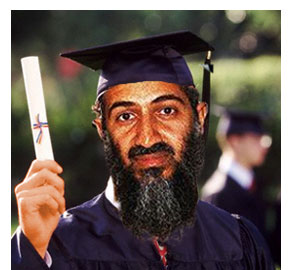
Osama University?

Neoconservative critics have long charged Middle Eastern studies departments with anti-American bias. Now they've enlisted Congress in their crusade.

On Oct. 21, the House of Representatives unanimously passed a bill that could require university international studies departments to show more support for American foreign policy or risk their federal funding. Its approval followed hearings this summer in which members of Congress listened to testimony about the pernicious influence of the late Edward Said in Middle Eastern studies departments, described as enclaves of debased anti-Americanism. Stanley Kurtz, a research fellow at the Hoover Institution, a right-wing think tank, testified, “Title VI-funded programs in Middle Eastern Studies (and other area studies) tend to purvey extreme and one-sided criticisms of American foreign policy.” Evidently, the House agreed and decided to intervene.

Emboldened by its dominance of Washington, the right is trying to enlist government on its side in the campus culture wars. “Since they are the mainstream in Washington think tanks and the right-wing corridors of Congress, they figure, ‘Let’s translate that political capital to education,’” says Rashid Khalidi, who was recently appointed to the Edward Said Chair of Arab studies at Columbia University.

It’s not surprising that they started with Middle Eastern studies. There’s a particular enmity between hard-line supporters of Israel — who, with the extraordinary ascension of neoconservatives in the Bush administration, now dominate the American right — and academics who specialize in studying the Arab and Muslim world. That enmity burst into open conflict after Sept. 11, when conservatives saw an opportunity to accuse Middle East academics not just of biased scholarship but of representing a kind of intellectual fifth column. Soon after the World Trade Center fell, the American Council of Trustees and Alumni, a Washington-based group co-founded by Lynne Cheney, wife of the vice president, and Sen. Joe Lieberman, D-Conn., published a report called “Defending Civilization: How Our Universities Are Failing America and What Can Be Done About It,” which listed examples of insufficiently patriotic behavior of the part of the professoriate and called universities the “weak link” in the war on terror.

At the same time, Martin Kramer, editor of the right-wing Middle East Quarterly, published a book called “Ivory Towers on Sand: The Failure of Middle Eastern Studies in America,” in which he argues that academia, in thrall to romantic third-worldism, has turned a blind eye to the region’s dangerous pathologies. Last year Daniel Pipes, a colleague of Kramer’s who has since been appointed by President Bush to sit on the U.S. Institute of Peace, launched Campus Watch, a Web site devoted to monitoring Middle Eastern studies departments for signs of anti-American bias. He published dossiers cataloguing the political sins of some of the most respected professors in the field, and invited students to submit reports on their instructors.

Until recently, though, this fight has been rhetorical, confined to Web sites, books, magazines and lectures. Now, with HR 3077, the International Studies in Higher Education Act, the House has taken sides. If it becomes law, it will create a board to monitor how federally funded international-studies centers impact national security. The board will evaluate whether supporters of American foreign policy are adequately represented in university programs. Conservatives, says Kramer, “need to be able to compete on a level playing field with others.”

Inherent in the act is the assumption that if most established experts believe American Middle East policy is bad, the flaw lies with the experts, not the policy. “There’s the threat that centers will be punished for not toeing the official line out of Washington, which is an unprecedented degree of federal intrusion into a university-based area studies program,” says Zachary Lockman, a New York University history professor and director of the school’s Hagop Kevorkian Center for Near Eastern Studies.

The International Studies in Higher Education Act would not grant the government the power to exclude voices from Middle Eastern studies departments, but it would give the government a role in defining which views need to be included in the academic mainstream. The seven-member board it creates would make recommendations to Congress about how the centers “might better reflect the national needs related to the homeland security,” and make sure that programs “reflect diverse perspectives and represent the full range of views on world regions, foreign languages, and international affairs.” Two members of the board would represent national security agencies, while others would be appointed by Congress and the administration.

The bill also mandates that centers allow government recruiters full access to students in the centers. In the past, professors have resisted cooperating with national security agencies, fearing that if the line between independent research and government intelligence was blurred, they and their students might be targeted as American agents while studying abroad.

And because the bill mandates that centers train students for government service, Kramer hopes students who plan to pursue fields useful to national defense will be given special consideration when fellowships are awarded. Right now, he says, “If you’re interested in gender in eighth century Cairo, you’re just as likely to receive a grant as if you’re interested in the discourse of Osama bin Laden. Studying gender in eighth century Cairo is perfectly valid, but I’m not sure it’s a taxpayer priority.”

Of course, right now all this is speculative — the bill remains just a bill. “This is a bill that’s passed the House,” says Terry Hartle, senior vice president of the American Council on Education, the country’s foremost higher education lobby. “There are several other steps in the process. Obviously a lot of people remain very concerned about the bill. People will continue to try and perfect it.”

The American Council on Education decided to support the bill, which also reauthorizes funding for area studies, after language was added to prohibit the board from reviewing syllabi or interfering with curricula. After all, says Hartle, there’s nothing inherently objectionable about having a panel oversee federal grant-making programs. “Stanley Kurtz is someone who is looking for a conspiracy behind every tree, but that doesn’t mean a properly constructed advisory committee has to be a threat,” he says.

But many Middle Eastern studies professors fear that the committee will consist of the very neoconservatives who pushed for its creation. After all, the Bush administration routinely raids right-wing, pro-Ariel Sharon think tanks to fill foreign policy positions. (In the latest example, David Wurmser, a key neoconservative scholar known for his close ties to the Israeli right, was appointed six weeks ago as a Middle East advisor to Dick Cheney’s national security team headed by Lewis “Scooter” Libby.) Juan Cole, a professor of Middle Eastern History at the University of Michigan, worries that the International Studies Act would give the field’s most vituperative critics a perch from which to judge their doctrinal opponents.

“One of the subtexts is they don’t like criticism of Ariel Sharon and want to shut it down,” says Cole, who formerly directed the school’s Center for Middle Eastern and North African Studies, which could have its funding threatened under the act. “I could imagine the board making it a criterion that the politics of a faculty are not balanced, so the university must balance things out by hiring pro-Likud scholars, or else funding could be withdrawn.”

The funding that’s at stake supports area study centers — interdisciplinary programs devoted to researching specific regions. It was appropriated under Title VI of the 1958 National Defense Education Act. Although the International Studies Act would affect centers concentrating on all parts of the globe, almost all of the debate about it, both inside and outside of Congress, has been about Middle Eastern studies.

There are 17 Middle Eastern studies centers in America, many of them at the nation’s best schools, including Harvard, Columbia, New York University and the University of Chicago. They receive Title VI grants to fund graduate student fellowships and to do community outreach and education — activities like training high school teachers about Middle Eastern issues and providing insight on the region to the media. No Title VI money is used for professor salaries.

The centers form the core of American higher education about the rest of the world. According to Kramer, “70 percent of Ph.D.’s in international studies did their work at these national resource centers, and government money has been vital to the production of Ph.D.’s in this field.”

But government money is being misspent, conservative critics say, because, having imbibed Said’s sinister post-colonial ideology, Middle Eastern studies departments have become apologists for the Arab world and have neglected the study of inconvenient subjects like the rise of fundamentalist Islam and terrorism. “Take a look at the program of the Middle Eastern Studies Association’s annual conference,” says Kramer. “There are hundreds of papers there, and none of them are on terrorism. That’s because from an ideological point of view, a lot of academics look at the study of terrorism as an overemphasis of an aspect of reality that they would just as soon go away.”

Many Middle East studies scholars, says Kramer, entered the field because “they were enamored of the subject, but that subject has an underside. A lot of academics who entered the field in certain generations did so with a third-worldist perspective. They’re sympathetic to revolution and believed the Middle East was on the brink of it. They became enthusiasts of various resistance movements, nationalist movements, even at one point Islamist movements.”

Other neocons decry the fact that the field has been overtaken by non-Westerners. David Horowitz, a right-wing pundit who has spent much of his career documenting and fighting what he claims is rampant leftist bias in academia, says that in 1979, 3 percent of Middle Eastern scholars were non-Western. “As a result of leftist control of hiring, now 50 percent come from Middle Eastern countries,” he says. One might not think it was surprising that a significant percentage of scholars working in a field with a specific regional, cultural and religious emphasis would be from that region, but Horowitz apparently regards many Middle Eastern scholars as mere mouthpieces for their countries’ terrorist ideologies. “These are fascist countries!” says Horowitz. “They’re Islamofascist countries, and they support terror.”

To restore balance to this degraded field, conservatives propose a kind of ideological affirmative action. They want to see a revolution in the ethos of contemporary universities, in which scholars will devote themselves to pulling their weight in the war on terror. That means schools must be compelled to seek out faculty devoted to furthering American interests. If this sounds oddly like a flag-waving version of the extreme academic left’s strident calls for “engagement,” that doesn’t trouble the conservatives.

As Kramer wrote in “Ivory Towers on Sand,” “Middle Eastern studies must regain their relevance, or risk becoming ‘Exhibit A’ in any future case against public support for area studies. They can best achieve this by rediscovering and articulating that which is uniquely American in the American approach to the Middle East. The idea that the United States plays an essentially beneficent role in the world is at the very core of this approach.”

To those who object, Kramer writes on his blog, Sandstorm, “Get off the federal dole. Float undisturbed in your post-orientalist bubble while more practical people use the resources to build credible alternatives.”

But Cole says the neocon vision of Middle Eastern studies as post-orientalist bubble is a deranged fantasy. (The expression “orientalist” refers to Edward Said’s seminal work, “Orientalism,” which argued that racist blinders led the West to see people of color as “exotic” Others.) “These arguments that Kurtz, Kramer and others make are only plausible if you don’t actually refer to reality,” he says. As an example, he reels off the backgrounds of political scientists at centers receiving Title VI grants. “The political scientist at the UCLA Middle Eastern center is Leonard Binder, one of the greats of the field, who fought on Israel’s side in the 1948 war. At the University of Washington in Seattle, the political scientists of the Middle East are Ellis Goldberg, who does rational choice and political economy, and Joel Migdal,” a Harvard Ph.D. whose latest book is “Through the Lens of Israel: Explorations in State and Society.”

“At the University of Michigan,” Cole continues, “our political scientist is Mark Tessler, who does survey and opinion research. He has a Ph.D. from Hebrew University. There’s Gary Sick at Columbia, who served on Jimmy Carter’s National Security Council. We could go on.”

The real radicals, many professors say, are Kurtz and company — and they’re lightweight radicals at that. Kurtz, Pipes and Kramer all have Ph.D.’s, but have not established themselves in American academia, finding a home in the world of partisan think tanks instead. Khalidi believes they’re trying to punish the academic mainstream for rejecting them.

“It’s amusing that people who are by and large failed academics, people who just didn’t make it through the standard approach, should argue that it’s because of radical bias,” says Khalidi. “Theirs are the sourest of sour grapes.”

If they wanted to, Khalidi argues, conservatives could do what others do who want more attention paid to a neglected field. “They could raise money for a chair in terrorist studies,” he says. “The problem is they want respectability. They want to displace virtually everybody who teaches the Middle East in this country from the center and say the center is between us and them. They want the academic respectability that comes with having federal funding. They want to move from the extreme fringe.”

In the end, the debate about what constitutes the mainstream, about the role of ideology in evaluating scholarship, can go on ad infinitum, with evidence on both sides. For all their hysterical nationalism, Kramer and his cohorts obviously aren’t wrong that Middle East departments, and the humanities in general, tend to be liberal, or that shrill radicalism abounds on college campuses. Horowitz is just one of a group of conservatives who have made their names documenting leftist excess at American universities, and they rarely have to look far for egregious examples. In one infamous case last year, a U.C. Berkeley course on “The Politics and Poetics of Palestinian Resistance” warned, “Conservative thinkers are encouraged to seek other sections.” The graduate student instructor was forced to remove the notice after a national outcry.

“Clearly, Martin Kramer and his colleagues see themselves as an embattled minority who have been unfairly excluded from academia by what they see as the liberals and leftists who run Middle Eastern studies in the United States, so they want the federal government to come in and somehow make sure people like them get hired or their views get more attention,” says Lockman.

Yet the question, finally, isn’t whether conservatives really are an embattled minority in the university. It’s whether the federal government should supersede experts in deciding which scholarly views deserve to be promoted, and which can be overlooked.

Ironically, given the epic scope of the debate, the actual amount of federal funding at stake is quite small by the standards of large universities. Most centers only receive a few hundred thousand dollars annually from the government. But experts say the programs are often dependent on it. Khalidi presided over five such programs when he was director of the Center for International Studies at the University of Chicago prior to moving to Columbia. Title VI grants, he says, are “peanuts in university and federal terms, but in terms of these fields, they’re really important.” Around 30 percent of his graduate students learned foreign languages on area study grants, he says.

Because federal funding is so crucial to these centers’ survival, Khalidi says, the threat that HR 3077 poses to Middle Eastern studies in America is “deadly serious.” The bill, he says, would do one of two things. Either it would “impose the teaching of one twisted version of Middle East reality, what I call terrorology, impose it at the taxpayers’ expense as one central element in the way the subject is taught. Or, by subjecting self-respecting universities to conditions they will not under any circumstances accept, it would curtail the teaching of the Middle East.”

Cole says scholars will have a hard time convincing their bosses to give up funding. “It may be that some centers would forgo it if the interference looks like it’s too heavy-handed,” he says. “But it’s really hard to go to a dean and ask to throw away $200,000 a year if the criteria that has to be met could be met in some way that isn’t completely odious to the university. There would be pressure to meet it.”

Michigan Republican Pete Hoekstra, chairman of the House Subcommittee on Select Education and author of the bill, insists that’s not what lawmakers intend. The advisory committee, he says, will be there “to help schools to learn from each other, to gather information and help schools learn what other schools are doing so they can really improve their own international programs.”

Hoekstra agrees with some of Kurtz’s criticism of Middle Eastern studies, but says that has nothing to do with his legislation. “I do think that there may be some validity in some of his comments,” he says. “I don’t believe these studies should be used to promote an ideological point of view. I’m about getting students educated in international affairs, not having students get into a classroom and have them be indoctrinated into a political philosophy. But did we put anything into the bill that puts in some kind of screening process? For those who believe it’s there, ask them to point out where it is.”

Other congressmen, though, have been less cagey about the bill’s likely effect. Welcoming its passage, Rep. Howard Berman, D-Calif., said, “I am encouraged that the creation of this Advisory Board will help redress a problem which is a great concern of mine, namely, the lack of balance, and indeed the anti-American bias that pervades Title VI-funded Middle East studies programs in particular … surely it is troubling when evidence suggests that many of the Middle East regional studies grantees are committed to a narrow point of view at odds with our national interest, a point of view that questions the validity of advancing American ideals of democracy and the rule of law around the world, and in the Middle East in particular.”

The International Studies in Higher Education Act is a singular victory for Martin Kramer, who proposed similar legislation in “Ivory Towers on Sand.” An American-born Israeli citizen with a Ph.D. in Near Eastern studies from Princeton, he served as the director of the Moshe Dayan Center for Middle Eastern and African Studies at Tel Aviv University. Returning to the States, he joined the same network of conservative think tanks that nurtured defense intellectuals like Richard Perle and Paul Wolfowitz. The journal he edits, Middle East Quarterly, is published by the Middle East Forum, whose director is Daniel Pipes, the man behind Campus Watch. His book was published by the Washington Institute for Near East Policy, a staunchly pro-Israel think tank whose board of advisors includes Perle and former CIA Director James Woolsey. Wolfowitz resigned from the board when he joined the administration.

Kramer’s entire book can be read as an argument for legislation like the International Studies Act. Most of “Ivory Towers on Sand” is a discussion of what Kramer sees as the ideological corruption within Middle Eastern studies, but he also details the minutia of government funding, outlining Title VI’s history in order to examine how it can be reformed.

As Kramer reports, Title VI was, from its inception in 1958, “administered as a no-strings-attached benefit.” Back then, though, the leaders of the field were people “of a patriotic disposition, who could be counted upon to help out,” Kramer writes. This, he makes clear, is no longer the case. Thus the time has come to attach strings.

“It is important for Congress to take a deeper interest in Title VI, and Middle Eastern studies are as good a place as any to begin asking questions,” he wrote in “Ivory Towers on Sand.” “A relevant congressional subcommittee might hold a hearing on the contribution of Middle Eastern studies to American public policy.”

In June, the Congressional Subcommittee on Select Education did just that, convening hearings on “International Programs in Higher Education and Questions of Bias.” At the end of his opening statement, Rep. Phil Gingrey, R-Ga., said, “I am interested in opening the discussion and debate to learn more about the merits of and concern for federal support given to some of the international education programs that have been questioned in regard to their teachings, which have been associated with efforts to potentially undermine American foreign policy.”

Kurtz, testifying before the subcommittee, nodded to Kramer, calling his book “the most comprehensive and authoritative account of the extremist bias against American foreign policy that pervades contemporary Middle East studies.” Much of the blame for this bias, he said, is a result of the malign influence of Edward Said and post-colonial theory, which he called the “ruling intellectual paradigm in academic area studies.”

He proceeded to list some of Said’s more inflammatory statements, including his 1999 call for Bill Clinton, Madeleine Albright and Wesley Clark to be tried for war crimes along with Slobodan Milosevic. Said, Kurtz continued, “has even treated the very idea of American democracy as a farce. He has belittled the reverence in which Americans hold the Constitution, which Said dismisses with the comment that it was written by ‘wealthy, white, slaveholding Anglophilic men.’”

There might have been an eerie déjà vu in seeing a congressional committee examine the work of a renowned scholar for treasonous intent, but Kurtz told the panel he was not proposing to blacklist Said. “My concern is that Title VI-funded centers too seldom balance readings from Edward Said and his like-minded colleagues with readings from authors who support American foreign policy,” he said. This was more generous than Kurtz’s comrades have been toward their enemies’ work. Last year, Pipes told Salon, “I want Noam Chomsky to be taught at universities about as much as I want Hitler’s writing or Stalin’s writing. These are wild and extremist ideas that I believe have no place in a university.”

At the end of his testimony, Kurtz made several policy recommendations, including the creation of a board to manage Title VI. Asked about the role of the board in an e-mail interview, Kurtz wrote, “The board should look to encourage intellectual diversity, and it should also encourage programs that successfully bring students into positions of responsibility in the areas of international affairs, international business, foreign language expertise, and national security.”

According to Kurtz, the legislation is in the spirit of the best liberal tradition. “I hope that HR 3077 will encourage vigorous debate within the academy on the state of the world generally, and on American foreign policy in particular,” he writes. “I’d like to see the sort of debate that now goes on between the academy and its outside critics take place within the academy itself. That doesn’t mean excluding critics of American foreign policy from the academy. It means bringing supporters back in.”

For professors of Middle Eastern studies, though, it’s outrageous, and dangerous, that the government is meddling with academic freedom. And it’s especially galling that those who are calling for government intervention are the very neocons whose fear-mongering claims about Iraq have been shown to be false. “The thing that burns me, these are the guys who told us that Saddam had an active nuclear weapons program and would have a nuke within three years,” says Cole. “And they’re coming back and telling us that our scholarship is shoddy and we need to be overseen by them?”

To Khalidi, the neoconservative attack on Middle Eastern studies recalls the assault launched earlier this year on American intelligence agencies that failed to confirm right-wing assumptions about Iraq. Once again, conservatives are questioning the competency of those who don’t agree with them about the Middle East, insisting their views would triumph if only they weren’t suppressed by a mandarin establishment in need of immediate reform. And just as Pentagon hawks set up their own intelligence office when the CIA didn’t tell them what they wanted to hear about Saddam’s weapons of mass destruction, now the neocons are trying to do the same thing in academia.

“Neoconservatives want to substitute zealotry and true belief for real expertise,” Khalidi says. “They’re not just after us in the Middle East field. They’re not just after academics. You see this inside the military, inside the intelligence community. You see this in the way the State Department has been treated. Anybody who knows anything about anything is suspect. Unless you have the right views you are not allowed to speak, and if you do, you do so at your peril.”

Michelle Goldberg is a frequent contributor to Salon and the author of "Kingdom Coming: The Rise of Christian Nationalism" (WW Norton).

“Arrows of the Night”: The man behind the Iraq War

The story of how Ahmad Chalabi bamboozled the U.S. into Iraq is like a great spy novel. Too bad the blood is real

Ahmad Chalabi (Credit: Reuters/Petr Josek Snr)

In the saga of Ahmad Chalabi, fact and fiction mingle promiscuously until they become a disorienting blur. Just how responsible was the exquisitely tailored Iraqi exile and one-time darling of Washington neocons for coaxing the U.S. into the Iraq War? What exactly is the nature of his relationship with Iran? How much of the millions of dollars in funding that American intelligence agencies gave him over the past several decades was ever used for its intended purposes?

Back up for a long shot, however, and a different fact vs. fiction dilemma comes into focus: Is Chalabi, that consummate politician and schemer, a scoundrel or a hero? That’s a question that Richard Bonin’s new book, “Arrows of the Night: Ahmad Chalabi’s Long Journey to Triumph in Iraq,” probes with wincing persistence.

Bonin, a producer for “60 Minutes,” knows what it is to be Chalabi-ed. During the build-up to the Iraq War, he and Lesley Stahl did a report featuring an interview with an Iraqi defector who claimed to have personally purchased refrigerated trucks to serve as Saddam Hussein’s mobile biological weapons labs. Bonin checked those claims with “a senior UN official who had detailed knowledge of Saddam’s WMD program,” and was told they were “credible.” The defector turned out to be fabricating. The person who delivered up this man and other bogus informants to American officials and journalists was Ahmad Chalabi.

This isn’t the first book about Chalabi (Aram Roston’s well-received “The Man Who Pushed America to War” came out in 2008), and you can see why; he is a terrific character, worthy of John Le Carre or Graham Greene. To read “Arrows of the Night” — an account, studded with juicy quotes, that perfectly balances information and narrative, supplying just enough background to make each participant’s motives clear without lapsing into wonkiness — is to feel strangely torn. It’s appalling to contemplate the real-world consequences, for both Americans and Iraqis, of Chalabi’s quest to replace Saddam as the leader of Iraq, but it’s also difficult to escape the gravitational pull of his story.

Chalabi is, in many respects, exactly the sort of guy people root for in books and hokey Hollywood movies: an underdog seeking to free his beloved homeland from a tyrant, as wily as Odysseus, as resourceful as Tom Sawyer, as determined as the Count of Monte Cristo. He did it for his father, a proud man brought low and cast into exile by the Baath Party coup of 1968 and he did it for his people, who were truly suffering. He followed his dream! He never gave up! The magnetic qualities of Chalabi and his story make for an account of the Iraq War that reads like a spy novel. If only the blood weren’t real.

Living in opulence before the coup (Ahmad’s father once gave him a swimming pool as a birthday present), Chalabi’s family nevertheless identified with Iraq’s downtrodden Shia majority; Ahmad’s quest for personal power was always wrapped in a notion of retributive justice for his co-religionists. Highly intelligent and cultured, and possessed of legendary charm, Chalabi employed a strategy for achieving his goals that had benefited his clan for generations. This involved, as Bonin puts it, “identifying centers of power and then ingratiating himself with them or insinuating himself into their good graces.”

He did it at boarding school in England. He did it as a young man in Jordan, running the Petra Bank and extending handsome loans to members of the royal family. He did it with the CIA, persuading the agency to back the Iraqi National Congress (a self-styled “government in exile”) in setting up an outpost in Northern Iraq. He did it in Washington, D.C., securing powerful protectors among the neoconservative players of the George W. Bush administration and feeding information to national journalists. And he did it in Tehran, winning over an influential ayatollah by imploring, “Your eminence, what I want is that you join us in fighting Saddam with the arrows of the night” — a reference to the Shia notion of the specially blessed piety of the oppressed.

With the (possible) exception of the boarding school, all of these associations ended in disgrace, betrayal and recrimination. The overextended Petra Bank went belly up and Chalabi had to flee across the border in the trunk of a friend’s car. (He was convicted in absentia of fraud and other crimes.) His overly ambitious military shenanigans in Northern Iraq almost pushed the U.S. into a regional war and earned him the undying enmity of the CIA and the State Department. True, his ingenious ability to play on the intellectual hubris and imperial ambitions of the neocons did succeed in ousting Saddam Hussein from power, but when Chalabi arrived in Baghdad, expecting to reap a position as Iraq’s leader, his lack of any popular following made that impossible. Even Iran ultimately decided he was too secular for their plans.

Still, “never has anyone parlayed such a weak hand into such a momentous outcome as he,” Bonin writes, and it’s fascinating to see how Chalabi did it. He understood American politics better than most Americans, succeeding at getting what he wanted even when huge swaths of the policy establishment regarded him as a rank con man. When it was discovered that he’d leaked crucial information to the Iranians in postwar Iraq, and George W. Bush demanded that he be cut loose, Chalabi’s supporters in the Pentagon (Paul Wolfowitz was especially zealous) even tried to stonewall their own boss. “Backing Chalabi was even more important to them than following the direct orders of the president of the United States,” marvels one CIA staffer.

But if Chalabi is devious, Bonin does not hesitate to point out that he was far from alone in that. Chalabi granted Bonin over 60 hours of interviews, and while it’s hard to imagine he’ll be pleased by the results, “Arrows of the Night” does show how things looked from the Iraqi exile’s perspective. Almost everyone Chalabi double-crossed — from the CIA to the Bush administration — was also planning to use and discard him. “He did not view his cause as subordinate to that of the United States,” Bonin explains when recounting one early scheme, “and he certainly didn’t consider himself a CIA asset. To the contrary, ‘I saw them as an asset that I could use to promote my program.’” And as far as he was concerned, his motives with regard to Iraq were far more admirable than those of the Americans.

Unfortunately for Chalabi, the one entity he never succeeded in winning over was the Iraqi people. He “may have done more than any other Iraqi to rid the country of Saddam Hussein,” Bonin writes, but he failed every electoral test thereafter. In 2004, a poll found him to be Iraq’s “least-trusted public figure.” Whatever his skills in mesmerizing the rich, powerful and influential, Chalabi lacks the common touch.

It’s not hard to see why. This is a man who counts among the great traumas of his childhood the sight of his father making rice. The horror! Today, living in a walled compound in an affluent Baghdad neighborhood, Chalabi retains servants to hold his cellphone and eyeglasses when he’s not using them, and enjoys the energy supplied by “three massive generators” while the city’s other residents have only a few hours of electricity and running water per day. (Bonin describes this setup as “Chalabi in full pasha mode.”)

So much for the scrappy underdog. Perhaps history, as Bonin remarks, has finally passed Chalabi by, leaving him to savor a “victory” for the Iraqi people that leaves him permanently sidelined. Then again, there’s that unnamed CIA official, quoted by Bonin, who warns, “Until you put a bullet through the man’s heart, don’t count Ahmad Chalabi out. He will always come back.”

Continue Reading Close
Laura Miller

Laura Miller is a senior writer for Salon. She is the author of "The Magician's Book: A Skeptic's Adventures in Narnia" and has a Web site, magiciansbook.com.

Jennifer Rubin’s boss sees no problem with anti-Arab bigotry

Washington Post blogger endorses the ravings of an extremist neocon, gets compliments from her boss

And she doesn't even know how to link properly, either (Credit: Twitter)

Jennifer Rubin, the Washington Post’s official correspondent for passing along and endorsing the Romney campaign’s anonymous criticisms of Rick Perry, recently “retweeted” a link to this blog post by Rachel Abrams, in which Adams responds to the release of Gilad Shalit by calling on Israel to commit mass murder against Palestinians in revenge. Rubin kind of got in a bit of trouble for this, except not really.

The grandiloquent post in question requests either (it’s not entirely clear) that Israelis feed Shalit’s captors to sharks or that they feed his captors along with women and “their offspring” to sharks. (I imagine Abrams considers nearly every Palestinian in Gaza to be complicit in Shalit’s imprisonment, so this distinction may not amount to much.) Either way, the post makes liberal usage of unambiguous anti-Arab slurs (“devils’ spawn,” “savages,” “animals”) and, well, it’s a call for mass slaughter.

After various people, including Max Blumenthal, said it was perhaps inappropriate for a Washington Post blogger to endorse this sort of talk, Post ombudsman Patrick Pexton took the case. Pexton concluded that the retweet was in poor taste, but for him it was more of an issue of inappropriate Twitter usage than it was of Rubin being essentially an awful person who agrees with a virulent anti-Arab bigot.

To demonstrate that she essentially agrees with Abrams’ perspective, Rubin then tweeted a link to another Abrams post, calling it “chilling, sobering, eloquent.” This post puts the word “Palestinians” in scare quotes and places Mahmoud Abbas in a list of “blood-worshippers.”

Who is Rachel Abrams, besides a woman who writes like a teenager imitating Marty Peretz? She’s another talentless hack born into neocon royalty. Abrams is the daughter of Midge Decter, and apparently inherited her mother’s obsessive homophobia. Her stepfather is neoconservative founding father Norman Podhoretz, and she is married to Bush administration Middle East honcho Elliot Abrams. An intense hatred of Arabs is basically the one theme of her writings, repeated endlessly, in an infinite number of variations.

Here, for example, she tells the inspiring tale of literally screaming “Fuck you, Arabs” while driving past the Israeli West Bank barrier wall. This isn’t someone making any sort of controversial political argument. This is just someone who hates, intensely, a specific ethnic group.

So, with the ombudsman having weighed in more or less on the side of it being a bad idea for Jennifer Rubin to endorse this woman, we come to editorial page editor Fred Hiatt, who had this to say:

As a general matter I think it isn’t wise for me to comment on the work of the ombudsman, who is entitled to his views, and over whom I do not have editorial control.

However, I will say this: I think Jennifer is an excellent journalist and a relentless reporter. I think because she has strong views, and because she is as willing to take on her home team, as it were, as the visitors, she comes under more scrutiny than many and is often the target of unjustified criticism. I think she brings enormous value to the Post.

Yeah, Fred, people aren’t criticizing her for “strong views,” they’re criticizing her for endorsing what looks to be eliminationist anti-Arab rhetoric from a bigoted psycho.

In Hiatt’s world, “hating Arabs” is just a controversial opinion that “brings enormous value to the Post.” As Blumenthal says, if Rubin had supported a blog post with the exact same tone written about black people — or Jews! — she’d be out of job right now. Instead, she’s an “excellent journalist,” according to her boss.

That’s the state of the liberal media today.

Continue Reading Close
Alex Pareene

Alex Pareene writes about politics for Salon and is the author of "The Rude Guide to Mitt." Email him at apareene@salon.com and follow him on Twitter @pareene

John Bolton: I care about things besides bombing Iran

Politico enables the far-fetched presidential fantasies of a very silly Bush relic

John Bolton

John Bolton, comical Republican foreign policy character actor, is in the midst of his newest and perhaps greatest performance piece, “John Bolton runs for president.” Politico checks in with the Republican party’s finest facial hair, who wants you to know that he’s no “single-issue guy.”

Bolton is, of course, a single-issue guy. His issue is bombing Iran. That is the only reason why anyone has expressed any interest in him as a candidate: He is the man who promises to bomb Iran. Every foreign policy issue of our time looks like a nail to John Bolton, and his hammer is bombing Iran.

Some Republican political appointees are representatives of the interests of various GOP-supporting major industries. Others, like Bolton or Michael Brown, are just hacks who are brought in to demonstrate the unimportance and uselessness of whatever position they are supposed to be filling. The message is, a trained chimp — or a right-wing ideologue — could do this government job.

In order to express his contempt for the institution of the United Nations, President George W. Bush revoked the ambassador to the U.N.’s Cabinet rank and then gave the job (with a recess appointment) to Bolton, the world’s angriest mustache. Bolton has so little respect for the U.N. that he refuses to even admit that it exists. (He also supports the removal of ten stories from the U.N. building. Despite this, he is on no terrorist watch lists that I know of.)

He is best known, among people who don’t spend their spare time endlessly rescreening Pamela Geller’s TV appearances on YouTube, as the guy who once angrily hurled a stapler at an underling’s head, just one of many examples of his incredibly unprofessional behavior.

He eventually turned out to be too much of a right-wing true believer for even the Bush administration, and by the end of Bush’s second term, Bolton and his ousted neo-con allies were sniping at their president in the press. “I don’t consider Bolton credible,” Bush said, which probably caused Bolton to contort his mustache into a comical frowny shape. (What was the president’s first hint that his U.N. ambassador wasn’t credible? His creepy, flirty relationship with Pamela Geller?)

So, in short, John Bolton is not a credible candidate for anything, at all. He may even be too far gone at this point to score another State Department job in a future Republican administration. He is now and forevermore a creature of right-wing think tanks and Fox News analysis. There’s no good reason for Politico to take his presidential fantasies seriously. Like, for example, here is a sentence that they should’ve probably reconsidered: “Despite his claims that a potential candidacy would not be a niche affair, Bolton is well-positioned to take advantage of the dearth of foreign policy experience currently in the 2012 field.” Writing that does not make it true. The power of positive thinking will not create viable presidential candidates out of Bush-era laughingstocks.

(In case you are curious, John Bolton’s other issue is abolishing Medicare, because of the deficit.)

Continue Reading Close
Alex Pareene

Alex Pareene writes about politics for Salon and is the author of "The Rude Guide to Mitt." Email him at apareene@salon.com and follow him on Twitter @pareene

Why this won’t end World War IV

Will neocons abandon their rhetoric now? No, because Osama was never the enemy

Children and a Afghan policeman look at a US soldier from L Troop, 4/2SCR, during a patrol outskirts of Kandahar City, Afghanistan, Sunday, Oct. 24, 2010. (AP Photo/Rodrigo Abd)(Credit: Associated Press)

When the al-Qaida attacks on 9/11 were followed by a debate about whether the campaign to defeat Osama bin Laden and his network should be thought of as police work or war, I was surprised. The idea of a “war on terror” seemed obviously inappropriate, even as a metaphor. In its structure and modus operandi, al-Qaida and other terrorist networks were and are more like international criminal organizations — drug smuggling or prostitution cartels, for example — than like states. The U.S. military might supplement law enforcement efforts, if countries protected bin Laden, as the Taliban regime did in Afghanistan before it was deposed and as it now appears elements of the Pakistani government must have done for many years. But apart from raids like the one in which bin Laden was killed, the chief responsibility for identifying jihadist networks and disrupting planned acts of terrorism would lie with intelligence agencies and law enforcement officials.

It soon became clear that I did not understand my own country. In a remarkably short period of time, the right managed to persuade the American people to think of jihadist terrorism as war, not crime. Al-Qaida’s transnational network of militants, and the imitators it inspired, was treated as though they were the equivalents of Nazi Germany or the Soviet Union. Instead of being treated as the equivalent of the terrorist Carlos the Jackal, bin Laden was promoted to the status of Hitler or Stalin.

The campaign to defend America and its allies against al-Qaida was a war. A Long War. A Global War on Terror. Or, on the theory that the Cold War was World War III, World War IV.

Nobody pushed the terrorism-as-war theme more than the neoconservatives. CNN reported in April 2003:

Former CIA Director James Woolsey said Wednesday the United States is engaged in World War IV, and that it could continue for years.

In the address to a group of college students, Woolsey described the Cold War as the third world war and said “This fourth world war, I think, will last considerably longer than either World Wars I or II did for us. Hopefully not the full four-plus decades of the Cold War.”

He said the new war is actually against three enemies: the religious rulers of Iran, the “fascists” of Iraq and Syria, and Islamic extremists like al Qaeda.

As late as 2007, after American public opinion had turned against the debacles in Iraq and Afghanistan, Norman Podhoretz, the longtime editor of Commentary, the flagship neoconservative magazine, published “World War IV: The Long Struggle Against Islamofascism.” Podhoretz argued that the U.S. probably should be fighting even more wars on even more fronts at the same time:

Consider: the campaign against al Qaeda required us to topple the Taliban regime, and we may willy-nilly find ourselves forced by the same political and military logic to topple five or six or seven more tyrannies in the Islamic world (including that other sponsor of terrorism, Yasir Arafat’s Palestinian Authority). I can even go along with David Pryce-Jones in imagining the turmoil of this war leading to some new species of an imperial mission for America, whose purpose would be to oversee the emergence of successor governments in the region more amenable to reform and modernization than the despotisms now in place. Like Pryce-Jones, I can also envisage the establishment of some kind of American protectorate over the oil fields of Saudi Arabia, as we more and more come to wonder why 7,000 princes should go on being permitted to exert so much leverage over us and everyone else.

I still do not understand why the American elite and the American people went along with the efforts of the neocons to blow the necessary campaign against al-Qaida into a Thirty Years’ or Hundred Years’ War against “Islamofascism” or “Islamism,” a catch-all category that includes secular Baathists and Iranian Shia theocrats who despise Sunni religious militants like bin Laden and are despised by them in turn. But I understand the appeal of the World War IV theme to neoconservatives all too well, because two decades ago I was one of them.

In the 1980s, I was what was known as a Cold War liberal. I identified with former Kennedy-Johnson liberals like Daniel Patrick Moynihan and Nathan Glazer, who in my view were defending the New Deal tradition against the reactionary right and the radical left. When the Cold War ended, I sided with the neocons like Moynihan who thought the U.S. should scale back its foreign policy commitments, reform the culture of unnecessary secrecy without endangering legitimate secrets, and focus on neglected domestic priorities. This approach was compatible with the version of foreign policy realism promoted by the National Interest, the journal where I worked as executive editor with editor Owen Harries.

The National Interest was the sister publication of the Public Interest, the leading neoconservative public policy quarterly. Both were published by “the godfather of neoconservatism,” the late Irving Kristol. Kristol was more sympathetic to realpolitik than most neoconservatives. Even so, I grew increasingly less comfortable as the neocons in the early 1990s expanded their alliance with the religious right, originally an alliance of convenience based on support for the right wing in Israel, into a “culture war” against liberalism as such.

I remember the day in early 1993 when I ceased thinking of myself as a neoconservative, even of a moderate kind, and started looking seriously for another movement and another job. Irving had returned from a conference in Germany and was asking Owen Harries and me whether we would be interested in publishing a talk he had given. The essay, published in the National Interest, was titled “My Cold War.”

In the essay, Irving confessed that he had never really been interested in defeating the Soviet Union. The real enemy had been American liberalism, all along: 

There is no “after the Cold War” for me. So far from having ended, my cold war has increased in intensity, as sector after sector of American life has been ruthlessly corrupted by the liberal ethos. It is an ethos that aims simultaneously at political and social collectivism on the one hand, and moral anarchy on the other. It cannot win, but it can make us all losers. We have, I do believe, reached a critical turning point in the history of the American democracy. Now that the other “Cold War” is over, the real cold war has begun. We are far less prepared for this cold war, far more vulnerable to our enemy, than was the case with our victorious war against a global communist threat. We are, I sometimes feel, starting from ground zero, and it is a conflict I shall be passing on to my children and grandchildren. But it is a far more interesting cold war — intellectually interesting, spiritually interesting — than the war we have so recently won, and I rather envy those young enough for the opportunities they will have to participate in it.

There are a few people on the American right who are interested in foreign policy for its own sake. But the majority of conservative pundits who write or talk about foreign policy, like Irving Kristol, are mainly interested in smearing Americans who disagree them with them as Fifth Columnists, traitors who are undermining America or Western Civilization or Democracy or whatever from within. Liberals are Enemies Within, in conscious or unconscious alliance with the Enemies Without.

That’s where World War IV came in, after 9/11. In order for the neocons and other conservatives to accuse American liberals of being fifth columnists, there had to be an external enemy outside America’s borders with four other columns. Unfortunately for the right, Gorbachev had, to use his phrase, deprived America of an enemy.

The end of the Cold War deprived the American right of an external enemy that it could use in guilt-by-association campaigns to smear fellow citizens who disagree with it on a variety of issues, foreign and domestic. In hindsight, it now seems clear to me that the post-1945 right was and is essentially McCarthyist. In the late 1940s and early 1950s there was a Soviet threat to the U.S. and its allies, and communist espionage in the U.S. was a genuine but limited problem. But McCarthy and his followers were interested in power politics or communism only to the extent that they could go after their real enemies, liberals and moderate conservatives. (Liberals themselves have succumbed to the temptation; during World War II, there was an equally unprincipled “Brown Scare” attempting to link various American conservatives and isolationists unjustly with Hitler and the Axis.)

9/11 fortuitously provided the American right with the external enemy that allowed it to go back into business demonizing the internal enemy, liberalism. And the idea of World War IV enabled the right once again to smear American liberals as defeatists or appeasers, if not traitors, in a struggle on the scale of the world wars and the Cold War.

Central to the rhetoric of American rightists, be they literate neocons or populist wingnuts like Glenn Beck, is the accusation that America is on the verge of destruction by powerful enemies without and traitorous or defeatist progressives within. In this political psychodrama, the identity of the foreign threat is secondary. If terrorists identifying themselves with Peru’s Sendero Luminoso had massacred Americans on 9/11, conservatives might well have declared war on “Latinofascism,” called for the invasion of Cuba, Venezuela and other leftist Latin American regimes, and denounced cultural relativism and multiculturalism and the welfare state for weakening the will of Americans to resist the imminent overthrow of Western civilization by Latin American Maoism.

World War IV was never really about bin Laden or al-Qaida. It was always about American domestic politics. Whether or not al-Qaida fades away after the death of bin Laden, the right will continue to wage its American civil war, using World War IV as an excuse. Or maybe World War V or World War VI. Whatever.

Continue Reading Close

Michael Lind’s new book, "Land of Promise: An Economic History of the United States", will be published in April and can be pre-ordered at Amazon.com.

Mitch Daniels is a “blank slate” on “foreign policy,” thanks to award

Neocons have no problem with the Indiana governor's Arab heritage -- but palling around with other Arabs is fishy

FILE - In this Feb. 11, 2011, file photo, Gov Mitch Daniels, R-Ind. speaks during the Ronald Reagan Banquet at the Conservative Political Action Conference in Washington. Daniels has spent years talking about issues that typically make voters’ eyes glaze over: Cutting spending. Balancing budgets. Shrinking government. The priorities haven’t changed much in Daniels’ six years as governor. But suddenly voters are paying attention. Budget showdowns in Wisconsin, Ohio and New Jersey are drawing fresh, national attention to issues Daniels has long promoted. (AP Photo/Jose Luis Magana, File)(Credit: AP)

Earlier this week, I wrote about Mitch Daniels, the fantasy 2012 candidate of respectable Republicans, receiving an award from an Arab group, thus publicizing his own Arab heritage. I was a bit snide about all of this, because the Republican party has lately defined itself in part as the party opposed to the severely exaggerated domestic Muslim threat, and that opposition involves a generalized paranoia about, well, Arabs.

Some very nice Mitch Daniels fans emailed me to say that I was wrong, and that Republicans would not care about Daniels’ background once they examined his record. (Of course the other problem with Mitch Daniels as a presidential candidate is that he is the sort of person who is only interesting if you care about “records.”)

Commentary answers my point directly today. His heritage is totally not a big deal!

Nobody, especially not neoconservatives who have been loudly championing the cause of freedom in the Arab world, has anything against Daniels’s heritage. Nor, despite the fervent efforts of some to promote the myth that there has been a post 9-11 backlash against Muslims in this country, do many other Americans care about his origins.

Commentary’s Jonathan Tobin even says that Daniels “seems like the perfect candidate” on “economic issues.” So, problem solved!

But… Tobin still has some issues with Governor Daniels. It’s not his Arab heritage — it’s that he is “something of a blank slate” on foreign policy. Tobin’s not insinuating anything about him, he’s just saying “blank slate.” On “foreign policy.”

See, the problem is not that Daniels himself is of Arab heritage. The problem is that he pals around with other Arabs:

Thus the news that Daniels is accepting an award from the Arab American Institute (AAI) is more than a little curious. The AAI is a left-leaning organization founded by onetime Democratic Party activist James Zogby. Although it is far more respectable than terrorist front groups like the Council on American Islamic Relations (CAIR), it has also been among the most consistent voices downplaying the threat from Islamist terror and opposing American efforts to fight back against Islamist enemies of freedom. And needless to say, like Zogby, it is no friend to the State of Israel.

Of course, Tobin eventually notes that despite his claim that Daniels is a “blank slate,” Daniels has actually already received an award from the Anti-Defamation League. In other words, even though Daniels is a known ally of Israel and friend of the Jewish State, it is still suspicious that he is willing to be honored by a liberal Arab organization. A liberal Arab group with the wrong position on “foreign policy” (Israel), no less.

“Perhaps the group is unaware that Daniels is outspoken in his defense of the Jewish State,” Tobin writes. Perhaps the first half of Tobin’s post is similarly unaware of that fact!

I can’t understand at all why any liberals would ever suggest that conservatives treat American Arabs and Muslims as guilty until proven patriotic.

Continue Reading Close
Alex Pareene

Alex Pareene writes about politics for Salon and is the author of "The Rude Guide to Mitt." Email him at apareene@salon.com and follow him on Twitter @pareene

Page 1 of 17 in Neoconservatism