
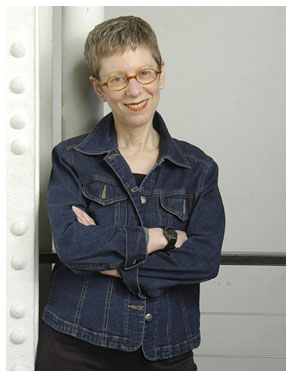

I’ve long considered Terry Gross to be a national treasure. As host of the most intelligent talk show in America, public radio’s “Fresh Air,” she emanates such reason and empathy that she routinely succeeds in coaxing the most revealing interviews out of even the cagiest artists and celebrities. Since the show debuted in 1975, Gross has interviewed over 10,000 musicians, actors, writers, comedians, painters, politicians, scientists, tycoons and generals — a pageant of personalities whose stories provide one of the most vivid chronicles of life in America between Vietnam and Iraq. (Forty of these interviews are collected in Gross’ new book, “All I Did Was Ask,” from Johnny Cash to John Updike to Chris Rock.)
But there is no cultural oasis left in America that is free of political strife. Gross found this out last September while interviewing Fox News blowhard Bill O’Reilly, an interview he abruptly terminated by denouncing Gross for alleged political bias and then storming off the show. Last week Gross gamely accepted O’Reilly’s invitation to come on his own show, where she resolved not to walk out of the studio, even as the permanently aggrieved host again lectured her for being “a victim of the NPR mind-set,” whatever that is.
I began our own conversation with Gross, of course, by bringing up the strangely abrasive new man in her life. But we also found time to talk about Paul McCartney, Bob Dylan, Sean Penn, John Kerry and whether at age 53, a queen of the airwaves, she has any regrets about her life.
If Fox had an ombudsman — like NPR does — what would he say about Bill O’Reilly’s interview of you last week? Was it fair and balanced?
O’Reilly said that I spent my interview with him on “Fresh Air” throwing defamations at him and I didn’t let him talk about his book (“Who’s Looking Out For You?”). But I actually asked him several questions about the book and his life, and I actually gave him a chance to answer the questions that I asked. But on O’Reilly’s show — and it’s always like this, or often like this — it’s really hard to complete a sentence, let alone a paragraph. After a long rant, then he’ll look at you and say, “OK, go!” And that’s your sign that maybe you can get in two sentences (laughs). But, you know, that’s the rules of the show — I think he calls it “an action show.” So that’s what it is.
What was he like off-air?
We hardly spoke off-air. I walked in, extended my hand for a handshake, and said, “So we meet at last.” Then the interview started, and afterwards I extended my hand again, and he said, “Well I imagine we’ll both get a lot of good e-mail out of this one.” And it’s true — I certainly have and I’m sure he has too. And I guess that’s the point of shows that are intentionally controversial.
Do you think his eruption on your show was spontaneous, or did he plan it ahead of time for effect?
You know I almost asked him that on the show. If I had more time, I would have asked, “Did you plan to come on the show and say this?” It’s hard for me to imagine that Mr. Tough Interviewer isn’t tough enough to handle the questions I was asking. Let’s face it, he wouldn’t even respect an interviewer who didn’t ask some challenging questions of someone like him. He’s someone who prides himself on being tough. If someone doesn’t come on his show, he calls them a coward. He makes them “The Most Ridiculous Item of the Day” and calls them a coward. The week before I went on the show Jimmy Carter and Jane Fonda were “Most Ridiculous Items of the Day” because they declined to be on his show. And going along with that, he calls them too cowardly to answer his questions. So how could it be that he couldn’t handle my questions?
I thought one of the more interesting parts of your “Fresh Air” interview with him was about his childhood and his tough, hard-drinking father.
I did too! I’m curious about the man, as I am with most of my guests. What made you the kind of person you are, what happened in your life? And I had read his book and I knew some things about his life and I wanted to know more.
The way O’Reilly described his childhood on your show made it seem that his father was an abusive bully. Is that how you would describe O’Reilly himself after your encounters with him?
I don’t want to get into characterizing him. I’ll just say that he’s professionally controversial; that’s the way he sees his job. Controversy helps you get ratings, it certainly helps get you attention. And he’s very good at what he does, at generating controversy.
O’Reilly has accused you and NPR of being biased. How do you respond to those conservatives who say that Rush Limbaugh and his type might dominate talk radio, but NPR is a bastion of the left?
I would say that some people equate the absence of a conservative agenda with the presence of a liberal agenda. And that’s just not true and not fair. NPR doesn’t have an agenda, liberal or conservative. Its agenda, particularly in its morning news shows, is to cover the news as fairly and accurately as possible. And I think they succeed. There’s not a political agenda that goes along with that — the agenda is information and education.
Do you think that you have a bias?
On the air?
Yes.
I think we try to be very fair on the air. We’re always asking ourselves if we’re being fair — we have constant editorial discussions about how to handle issues.
How about off the air? Which way do you lean politically?
Off the air I have opinions which I don’t care to share publicly. Because I have confidence as a professional that I can treat issues fairly. It doesn’t mean I don’t have opinions — but I like to leave them out of my public life.
Why do you think the NPR ombudsman felt obliged to issue a critical statement about your O’Reilly interview — a report that O’Reilly used against you on his show last week?
I assume he felt obliged because he got so many e-mails of complaint. But I should say that we at “Fresh Air” got a lot of e-mail complaints before we even broadcast the interview, because O’Reilly played an excerpt of it on his show the night it was recorded.
You mean he taped the interview too?
Yes, because he recorded his end at the radio station where he broadcasts his show. So we got a lot of e-mails saying I was unfair before the “Fresh Air” show was even broadcast. Which, when you think about it, is pretty ridiculous. Because what did the listeners hear? They heard him telling me that I was being unfair — that’s all they heard! So you have to take the e-mails there with a grain of salt.
PBS, of course, is not the same thing as NPR. But there are signs that, under pressure from the right, public TV is becoming more conservative. As a public radio icon, are you starting to feel those same political pressures at NPR, to tone it down?
I’m not feeling any pressure. I don’t work at NPR headquarters, so I can’t really say anything about the climate there. But I can say that there’s been no pressure on me to change our editorial judgments.
How about the ombudsman’s critique — did that have a chilling effect at all in your office?
No. It caused a lot of introspection. But after that introspection, I totally stand by my interview and strongly disagree with nearly every point that he made. I respect our right to disagree, and I think that’s very healthy.
And actually it sparked a very healthy debate within the NPR system. WIthin NPR, we’re known as being very civil and cordial and reflective, as interviewers. What do you do when you’re interviewing somebody whose style is combative? That is what they do, what they’re famous for. So it’s going to be a little different than your typical interview with an artist or expert.
And in fact the interview with O’Reilly was pretty darn quiet until he made his speech at the end. I never raised my voice. And sure I asked a few challenging questions. But what did I do? I quoted things he had said about other people. Is that wrong?
NPR, as you say, is known for trying to create an oasis of intelligent and civil discourse in this country. But do you think it’s just getting harder and harder to do that, given how polarized and acrimonious the country has become?
Well I think that talk shows are becoming more and more about being divided. Because controversy gets attention. And it’s sometimes not the best way to find out the underlying story. Because if you’re always arguing with each other, no one is really getting a chance to explain their point of view in any depth.
I promise this will be the last question related to O’Reilly. But listening to your show over the years, I get a sense of which types of guests you particularly enjoy, and which ones just rub you the wrong way. And maybe I’m wrong, but it seems to me one of the types you really don’t like is a certain kind of bad boy. Like Hugh Hefner, whose inveterate Playboy ways you seemed to disapprove of. Or Gene Simmons of Kiss, with whom you had another notoriously contentious conversation. [In her book, Gross writes of the aging cock-rocker, “It’s tough, not to say pointless, to pretend that you’re conducting a typical interview when the guest says things like, ‘if you want to welcome me with open arms, I’m afraid you’re also going to have to welcome me with open legs.'”] And maybe O’Reilly falls into that high-testosterone category too with his brow-beating and bluster. Any truth to this observation?
I don’t know if that’s true. In the case of Simmons and O’Reilly, they came in being combative. So if they come in that way, it’s no surprise that I’m going to engage with them on the terms they’re creating. Like when I was interviewing Simmons, I was thinking, now what are my options? I can say something like (in a singsong schoolmarm voice), “Mr. Simmons, that is so rude. This interview will have to end right now unless you become more polite.” Or I could just pretend that nothing weird is going on here and I can just keep asking questions about the process of making music. But that would’ve been too strange. So instead I said something like, “Hey, that’s really obnoxious” (laughs). I decided none of my options were good, so why don’t I just say what I’m thinking.
Do you feel that you have fans in both red and blue America?
Yes.
Can you relate to red-state listeners as much as those in gay-friendly, artistically curious, urban America?
Well, you know, mostly I’m in my studio and it’s not like I’m hanging out with people who listen to the show, so that’s a hard one for me to answer.
I guess what I’m asking is, do you have a sense of your listeners and how would you describe them?
I tend to describe people who listen to NPR as people who are curious, people who want to learn things and know more and are willing to put in the time to do it. Whether it’s listening to a six-minute news report on the insurgency in Iraq or listening to a 40-minute interview on “Fresh Air.” There’s a certain patience and curiosity that’s required — if you’re just interested in the headlines, I’m not sure you’d be the most avid NPR listener.
Shifting gears a bit here — which guests over the years have evaded you, which ones do you hunger to have on your show?
I’ve stopped thinking that way because the people who evade you are the big-name people, the celebrity actor or rock musician.
So you don’t have a wish list?
No, I pretty much stopped having a wish list after Lou Reed walked out on me. He’d been on my wish list for so long. And I realized he really hates being interviewed. And he probably did the interview because a publicist said he should do it. I think a lot of people who are famous are either tired of having to repeat the story of their life and they don’t want to be put through it one more time. Or they don’t like being public outside their public persona that they present through their art.
I was surprised that Sean Penn really opened up with you in the couple interviews you did with him. He’s also notoriously difficult with the press, the Brando of his generation. What was your secret there?
I don’t think I had one. Sometimes it might just be how the person is feeling that day. I mean, who knows? But I certainly like his work a lot. I did two interviews with him, but I never met him. He likes to smoke, and you’re not allowed to smoke in the studios, so we had to reschedule it for his office, where we did it by phone and where he probably felt a lot more relaxed.
Have you ever interviewed Bob Dylan?
No.
Is he someone you’d like to?
Sure.
I imagine he’d be a difficult conversationalist, though.
I bet he is. I mean he’s a pretty obtuse lyric writer too (laughs). He’d be a challenge. And he’s worn so many masks in his time — I mean, who is Dylan? I think we know all the Bob Dylan personas — but who is Dylan. I’m not sure how accessible Dylan himself would be in an interview.
Who was your favorite Beatle?
(Laughs) Well, at the time it was Paul, but later on it was John.
Did you tell Paul that when he was on your show?
(Laughs) Uh, no.
What was it like for you to interview him? You’re a baby boomer, so I’m sure you were as dazzled by the Beatle aura as the rest of our generation.
Sure, well, the challenge was he probably wouldn’t want to talk about the Beatles. He had a book of poetry that included some of his lyrics, and I knew he’d want to talk about that. The problem with a lot of people who are as famous as he is, is that what we want to hear about is exactly the part of their life that they’re most tired of talking about. They want to move on, but they feel stuck in that part of their past. So it made the interview challenging, because obviously I wanted to know about the Beatles and how that affected him and his relationship with John. And because there were some Beatle lyrics in his book of poems, I was able to use those lyrics to relate to John Lennon and get at that. But he did let me know at some point that he had talked about that part of his life as much as he cared to.
You still managed to get several revealing stories out of Paul — the story about how he and John got drunk and talked about their mothers, who had both died when they were young, for instance. You don’t think of Paul as the deep, reflective one, like John. But you managed to get a side of him that most people weren’t aware of.
Yeah, I really enjoyed that interview a lot and I was grateful that he was willing to talk about the early part of his life to the extent that he was.
Do you remember the first rock show you went to?
Yeah, it was at the Fillmore East, it was the Doors. I was a junior in high school, I think. And to actually be in a room with a band that you listened to on the radio was just amazing. I remember very little about the music, actually, but I remember getting home very late, like 1 in the morning or later, which was very late for me. And my parents didn’t believe that the show started really late, they were sure there was some sort of hanky-panky and there would be horrible repercussions.
My favorite Doors moment came years later when the band’s keyboard player, Ray Manzarek, was on the show and he sat down in the studio and played a piano version of the famous organ solo in “Light My Fire.” It was so entertaining, and so funny to hear that on piano.
What are you listening to these days?
Sadly for my producers and probably a lot of my listeners, I like to listen to dead jazz singers. I love them — my tastes include Billie Holiday and Chet Baker singing Sinatra and Una Mae Carlisle, Maxine Sullivan, Ivy Anderson. A lot of people I like aren’t well known — early Carmen McRae, the 1950s Decca recordings. So it’s a conflict for me — a lot of time the people I like to listen to for pleasure will never get to be a guest on “Fresh Air.” And I always feel a little bit guilty about it, because I feel I should always be listening to a new band.
You love who you love.
You love who you love.
I just heard a replay of your interview with Bernie Mac — and your entertaining interview with Chris Rock is included in your book. Both of them were very interesting on how their tough childhoods shaped their comedy. You seem to have a special love for comedians, as well as musicians — is that true?
Well, sure, I love comedians. My father was always very good at telling jokes.
What did your father do?
He was in millinery. It was a family business he was in; he was a wholesaler for the material that they use to make hats, the cloth, the ribbons, all that kind of stuff.
This was New York?
Yes, Manhattan. I grew up in Brooklyn.
So he was a frustrated comedian?
Always told a lot of jokes.
Who were his favorite comics?
Well, it was always a big debate in the house whether Jackie Mason was good or bad for the Jews (laughs). He always liked Myron Cohen a lot too, because he was like a dialect comic.
If you were asking Bush and Kerry the questions at the Thursday debate instead of Jim Lehrer, what would be at the top of your list?
I’d really like to think about that before giving you an answer. I mean I always prepare for interviews, so it’s not like I have things off the top of my head that I’d want to stand by. So I hesitate to give you a glib answer on that — it’s something that I would genuinely think about before.
As communicators, how do you think each one is doing in the campaign?
Well, it’s interesting for me to see Kerry being criticized for being complex. I guess in a campaign situation maybe you need to speak more simply, but it surprises me that complexity should be seen as a liability for a president. The issues are, in fact, complex.
As you write in your book, you’ve been hosting “Fresh Air” since 1975, nearly your entire adult life. At age 53, evaluating your life and career, are you happy with where you are? Any regrets?
I don’t have any big regrets that I can think of. I actually feel lucky to have a show that’s lasted this long on public radio, I feel lucky to be in radio, I feel lucky to work with the people I do. Like Danny Miller, the executive producer of the show, we’ve worked together for over 25 years, he started when he was an intern. Our relationship together has outlasted your average marriage. I have such confidence in his judgment, and just in him as a person. And the rest of the staff too.
Reading the introduction to your book, it becomes clear how much work the show is. Preparing for each day’s show, reading the books and bios, doing the interviews, editing them — it’s kind of relentless. You comment on how hard it is to keep your friendships going, since you’re working all the time. Do you have any regrets about that? And then there’s family. You don’t talk about this in the book, but I don’t imagine you have children.
I’m actually happy to talk about that, and I have no regrets about that.
About not having kids?
Yeah. I mean I understand what I’m missing out on, because I have two wonderful nieces and Danny has a fantastic daughter. And so watching them all grow I have an idea of how fulfilling it must be for a parent to have a child. But at the same time, I think of myself as being a member of the first generation of women who genuinely had a choice about whether to have children or not. And genuinely had a choice for two reasons — one, the reproductive technology, the Pill or the diaphragm or something, and two, a social climate in which you could make that choice and not be a pariah, someone we should all feel real sorry for, who could never be a part of the mainstream. Growing up, I don’t think I ever felt called to be a parent. Some people know they really want to be a parent. But once I got out of the playing dolls stage, that’s not what I wanted for myself.
And I know that I could never have done something like “Fresh Air” if I’d been a mother. So I don’t feel any regrets. And I’m married to someone [music critic Francis Davis] who feels the same way.
How long have you been married?
We’ve been married since ’96, but we’ve been together since 1978.
Looks like it has legs.
(Laughs) Yeah, I think it might last. So anyway there’s no conflict in our relationship over that, where one person wanted kids and the other didn’t. We’ve always been of the same mind about that.
Speaking of your childhood, what did you want to be when you were growing up?
Well, in high school I wanted to be a lyricist.
What kind of song lyrics did you write — moon, June, spoon? Or was it more ’60s-influenced and spacey?
Oh, it’s just too embarrassing to even talk about. But I enjoyed it a lot.
Nothing you’d like to sing for me now?
Absolutely not, but I really loved it. And then you get older and realize how hard it is to write really good lyrics.
What would you do for a living if your gig at “Fresh Air” ended tomorrow?
I have no idea. I’d probably want to continue doing interviews, probably want to stay in journalism. I mean, I do consider myself a journalist. A lot of people ask me, “Do you consider yourself a journalist?” And yeah, I do. I mean, I’m not a reporter. But even on a talk show, there are certain journalistic standards you’ve got to hold yourself to.
But you don’t see yourself hanging it up any time soon?
I do not. I mean, my goal in life for as long as I can remember has been to work a little bit less. My success rate has been abysmal.
– – – – – – – – – – – –
Terry Gross will be appearing at the following places in the coming months:
Oct. 15, 8 p.m.: WHYY event at the Free Library of Philadelphia, 1901 Vine Street, Philadelphia, Penn. Talk, Q&A, and book signing.
Oct. 29, 12:30 p.m.: Book signing only at Borders Books & Music, 10-24 School Street, Boston, Mass.
Oct. 29, 6:30 p.m.: WBUR fundraiser, 890 Commonwealth Avenue, Boston, Mass. A conversation with Tom Ashbrook, Q&A, and signing.
Nov. 12, 8 p.m.: Playhouse Square/Ohio Theatre, Cleveland, Ohio. Talk, Q&A, and signing.
Nov. 14, 8 p.m.: 92nd Street Y event, New York, N.Y. A conversation with Frank Rich, Q&A, and signing.
Dec. 16, 7 p.m.: Barnes & Noble, 1805 Walnut Street, Philadelphia, Penn. Talk, Q&A, and signing.
