

You’d guess it less and less from the news, but it’s easy to become infatuated with Iraq. As a measure of my own fascination, my heart leapt when I saw “Baghdad” on the departures board at Dubai Airport two weeks ago, although I was on my way to my first love among war zones, Afghanistan. Iraq felt like a might-have-been great romance. And I was not alone: One of my embedded reporter friends was nearly on the verge of tears when he left in May 2003 after two months of sand, heat and shooting. Baghdad is ugly and polluted and the situation continues to deteriorate. Yet journalists I know have returned again and again.
What grabbed us is the people, their warmth and paradoxical openness. They can give of themselves fully. My driver in Baghdad — everyone I knew there, and Jon Lee Anderson, too, bonded with their driver — spoke to me about his life. It felt no different from listening to a good friend. I am sure there are thoughts he did not want to share with an American, a non-Muslim and a woman, but he shared his feelings. This is a trait I’ve noticed in Afghans, too, and I’ve come to the conclusion that it is the one positive effect of living under oppressive or corrupt governments.
My friend Roberto, a Colombian businessman, had an insight into this. “Of course you think people in the Third World are nicer. We are. But we are nicer because we have no rules. That is how we get things done. All Third World countries are like that.” He might have added, “and all dictatorships.”
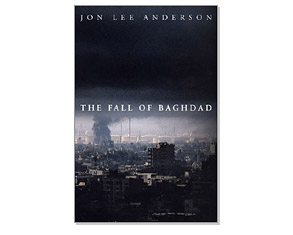
The dark other side to this coin has been more obvious in the last year and a half in Iraq. It’s the deformations of character that living under a bad government produces. Saddam Hussein didn’t just terrorize his people — and Anderson’s book, “The Fall of Baghdad,” is full of abundant evidence of the degree to which he did. Saddam accomplished something more horrifying. He deprived them of a context where moral choice and responsibility had a meaning. One of the side effects of this is ambient depression and negativity.
Interviewing Iraqis in late May and early June of 2003, I heard a litany of complaints about the situation — no security, jobs, electricity, water or trash pickup. I was getting the impression that Iraqis — especially the educated and relatively affluent — were whiny, self-pitying, defensive and exaggeratedly pessimistic. (As a Jew, I hope I’m entitled to say that they sometimes reminded me of the worst of my own people.) Yet when I asked when the American troops should leave, the answer was always that it shouldn’t be anytime soon. And I was greeted with warmth and humanity, even by those who were already fed up with Americans.
Anderson gives a more dramatic example, coming from an Iraqi named Muslih, whom he meets as supplies are being collected for Fallujah at the Mother of All Battles Mosque outside Baghdad. Muslih was educated in the United States in the 1970s, but he launches into a predictable diatribe against Americans’ humiliations of Iraqis, their role as a tool of Israel, and so on. But then he adds, “You know, there are those of us who don’t want the Americans to leave so quickly, but they should behave.”
In Baghdad in June 2003, I asked an Iraqi friend about these apparent contradictions. Entifadh Qanbar, whom I met when he was still the Iraqi National Congress spokesman in Washington, had thought a great deal about the Iraqi character. He had lived in Iraq until he was imprisoned by Saddam in 1990, and after that in the U.S.
“Because of Saddam, Iraqis are a completely frustrated people,” he said. “So if you ask them anything they will tell you it is bad. If you tell an Iraqi that you are giving him a Land Cruiser, he will complain that he cannot pay for the gas. Iraqis are cynical. You cannot ask them directly about something. You have to talk with them awhile and when they get to know you they will tell you how they feel. They will complain about the Americans, and then after a half hour, they will tell you that they love Bush.”
This concluson is doubtless less true today than it was then, but Qanbar’s insight still holds. It calls to mind a Jewish joke: A grandmother gives her grandson a red shirt and a blue shirt for his birthday. A week later, he comes to Sabbath dinner wearing the blue shirt. She greets the little boy by asking, “What, is there something wrong with the red one?”
My first day in Baghdad, I’d asked Tamara Chalabi, daughter of Ahmad Chalabi, what Iraqis had in common that would enable them to form one nation without force. “We have all suffered under Saddam,” she quickly replied. I joked that this was a typically melancholic Shiite answer, but it was true. So was the consequence, that all Iraqi groups — Sunni and Shiite, Kurd and Arab — have a chip on their shoulder. They all see the glass as half empty. This may be the enduring legacy of Saddam.
Jon Lee Anderson first went to Iraq to understand Saddam, he tells us in his foreword. “I wanted to witness Saddam’s tyranny and to understand what made it work,” he continues. He is not an analytical thinker, so this understanding is anecdotal. Much of Anderson’s book is about the Iraqis he got to know, and these were limited by the situation. Nearly all the other Iraqis he talks to are high officials of Saddam’s government and Sunnis. Yet Anderson makes it clear exactly how dreadful a place Saddam’s Iraq was, simply by letting these privileged Iraqis speak for themselves, or show how they are afraid to speak. And to his credit, Anderson comes down hard on Saddam apologists of all stripes, such as former Attorney General Ramsey Clark and the other Western lefties who thronged to prewar Baghdad in an effort to prevent the conflict.
Perhaps the most interesting sections of “The Fall of Baghdad” recount Anderson’s friendship with Ala Bashir. Bashir was one of Iraq’s top plastic surgeons and also one of Saddam’s favorite sculptors, with many public commissions in Baghdad. He was a close friend of Saddam who spent many hours alone with him. Unsurprisingly, Bashir was an admirer of Hitler and a vicious anti-Semite who blamed Iraq’s problems on the familiar international Jewish conspiracy.
Yet in minor ways Bashir refused to surrender his independence. When Saddam requested a work he considered tasteless, he would delay it for years; he spoke his mind on aesthetic grounds on a few occasions. Nor was he blind to the effects of Saddam on Iraq, telling Anderson before the war, when such words were risky, “This repression has made everyone passive.”
After the war, Anderson asks Bashir if he’d worried about what other Iraqis thought of his friendship with Saddam. Anderson is asking whether Bashir felt ashamed, and doubtless he feels he might get a truthful answer now that Saddam is gone. But Bashir has long since lost the necessary moral apparatus for remorse or shame. He can discuss Saddam with some appearance of objectivity (“His fatal mistake was to allow the supreme power he had to overcome all the other good things inside himself”) but not his own actions.
That Anderson believes that Bashir will suddenly become ready to explain his feelings about Saddam shows a lack of understanding of what Saddam really did to Iraqis, and what they allowed him to do to them. It also shows a lack of interest in people’s inner lives. Anderson never fails to give a brief description of what everyone he runs into looks like, but he rarely goes beneath the surface to show us how they feel, or how they make him feel.
When Anderson tells a weeping Iraqi doctor treating the briefly famous child burn victim, Ali, “So it’s untrue what they say about doctors being able to suspend their emotions,” I wasn’t sure if Anderson realized that this inappropriate response was his own defense against his sadness. His driver, Sabah, kisses a photo of the two of them together and says they are good friends, but Anderson only comments that it was an argument “which I found hard to disagree with.” Surely he should be able to tell us how he feels about Sabah, but what we get is a condescending description of his routines and “pidgin English” that felt cruel to me.
I have the sense that Anderson is a decent person, and that he likes Iraqis, but that he isn’t quite aware why. I suspect it is for the same reason that most of us foreigners do, a reason that requires some self-scrutiny. We love Iraq, and Iraqis, not in spite of the fact that they are broken, but because of it. We enjoy being able to feel compassion, empathy and tenderness toward our fellow man, but in a self-contained environment where we can always walk away. This is not a condemnation, or if it is, it’s one I apply to myself. But I’ve come to believe it’s behind many an infatuation with the Third World.
Anderson’s lack of sensibility, emotional and aesthetic, looms large because this isn’t a book in which much happens. As one of the 16 foreign reporters who remained in Baghdad during the American bombing campaign, Anderson was cut off from knowledge of the war. His sleep was shattered by the nightly bombardments, but Iraqi television and the press conferences run by the notoriously in-denial Mohammed Al Sahaf ignored the American advances until they were literally inside Baghdad. Then, on the morning of April 7, 2003, Anderson spotted American soldiers across the Tigris from his room at the Sheraton, and knew the end had come. When Anderson returns to Iraq in late June and chonicles the beginnings of the insurgency in the book’s last 60 pages, the action picks up, but until then, his project succeeds or fails based on his ability to convey the human dimension of the war.
The clumsiness of his writing doesn’t help. Too often, Anderson approaches the English language as a blunt instrument that he must wrestle with — sometimes unsuccessfully — to make his point. I’d noticed this in his turgid biography of Che Guevara, which I threw down as unreadable after the first couple of hundred pages, but it is less obvious in his magazine articles for the New Yorker. It’s back again here, along with a crying need for a thesaurus, and a second draft: “One man came past me carrying a wasted-looking young man, perhaps his brother, who looked to be near death. A couple of old men came past, looking completely lost …”
The writing gets better as the book progresses, but there are bad patches even in the faster-moving last pages. Anderson describes “armed, turbanned men, most of them masked with keffiyahs and wearing the trademark black turban of the Mahdi Army. They had the nervous energy and furtive movements of feral creatures, and looked a bit wild.” Must Anderson tell us that turbanned men are wearing turbans, that feral creatures are wild, or that Iraqi prison guards “ran around waving and yelling in Arabic,” as though they might plausibly have been speaking Spanish or Japanese?
I also found it maddening that Anderson’s blow-by-blow of the war gives us the day of the week, but not the date. Anyone who followed the war closely has an idea of what happened on April 7, 8 or 9, but not on Tueday, Wednesday or Thursday. “On Wednesday morning, I went outside to find out what was happening” may sound more “literary” to Anderson, but it is just obtuse.
More seriously, Anderson takes a lot of what people tell him at face value. Many of his Baathist acquaintances say that at least Saddam was not an Islamist, but in recent decades Saddam had reinstituted many elements of Sharia law in Iraq, including the prohibition on women traveling without a male guardian. He also removed all but the most token penalties for honor killings. Nor does Anderson have much interest in the Shiites; his obligatory interviews with clerics are so perfunctory that they might as well have been omitted.
Anderson’s best lines are his last: “A year after the fall of Baghdad, it seemed as if the city had not really fallen at all. Or, perhaps it was still falling.” It will probably be falling for many years to come, as long as it takes for a generation to grow up that has not known a totalitarian society. And the Iraqis are no longer just broken, they are trying to break us, too. Anderson came to Iraq for a good reason, but he was unable to see that the most interesting thing about Saddam was not specific to Iraq: It was what his rule showed us about human beings in general.
