
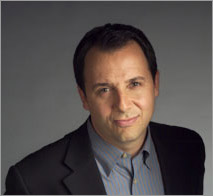

Believe it or not, Bush aides once welcomed reporter Ron Suskind into the West Wing, invited him to attend some meetings, gave him lengthy interviews and even found him his own desk to work at inside the White House. That was back in early 2002, when Suskind, who had won a Pulitzer Prize while working for the Wall Street Journal, was profiling Karen Hughes for Esquire magazine. “That was the brief springtime of our relationship,” he says.
Today, Suskind may rank near the top of the administration’s enemies list of least favorite journalists. Through a series of revealing magazine profiles as well as a bestselling book, “The Price of Loyalty: George W. Bush, the White House, and the Education of Paul O’Neill” (published earlier this year), Suskind has pulled back the White House curtain perhaps more effectively than any other reporter. And the portraits Suskind has painted of Bush and his advisors are not at all flattering, though they are reality-based.
Suskind’s latest article, “Without a Doubt,” appeared in Sunday’s New York Times Magazine, and it is arguably the most damning of all. It made headlines when the Kerry campaign seized upon a remark Bush reportedly made to top donors, quoted in the article, during a closed-door lunch in September, promising that after his swearing in in January he would “come out strong with … privatizing of Social Security.” The Bush campaign denied the quote, labeled it a fabrication, accused the Times of practicing “Kitty Kelley journalism” and attacked Suskind as a partisan hack, even including his picture and voter registration information in an e-mail blasted to the national press corps as a combination of preemptive intimidation and inoculation.
“Without a Doubt,” which relies upon mostly Republican sources, examines the extraordinary degree to which Bush and his senior aides are “faith based” in their decision making, and disdain those who are “reality based.” It also discusses how Bush allegedly sends special symbolic signals to his evangelical constituency of “faith-based” true believers.
Suskind’s White House reporting began with the 2002 profile of Karen Hughes, Bush’s then chief of communications, who was just departing her position. Suskind included quotes from chief of staff Andrew Card about Bush’s being “in denial” about Hughes’ leaving and Card’s nervousness over the need to find somebody new inside the inner circle to “balance” Karl Rove’s ideological and hard-edged political agenda. Conservative columnist Robert Novak subsequently reported that President Bush was “unhappy” with Card for talking to Suskind.
Next for Suskind was an Esquire profile of Rove, which featured John DiIulio’s “star turn,” as Suskind calls it. Dilulio served briefly as director of the White House Office of Faith-Based and Community Initiatives. In a seven-page memo to Suskind about his resignation, he detailed how the White House suffered “a complete lack of a policy apparatus,” how everything is “being run by the political arm” — in a notable turn of phrase, “the reign of the Mayberry Machiavellis.”
DiIulio, under pressure from the White House, abjectly apologized, asserting his charges were false. “That was an overreach,” says Suskind. “And that caused great reaction in the media community. People just said, What was that? Why would somebody like John DiIulio, such a proud member of the public dialogue, why would he say his own experiences were baseless and groundless?”
One month later Suskind met Paul O’Neill, Bush’s former treasury secretary, and their conversation turned to DiIulio. Suskind recalls the meeting: “O’Neill says, ‘Goodness gracious. Why would a guy like that say his own comments were baseless and groundless?’ And then he says, ‘These people have very long memories and they’re as nasty as they come, and I’ve met them all. And John DiIulio is a young guy and I guess he had to make some tough decisions about whether he could afford a 50-year struggle with them professionally and personally. And I guess he decided he couldn’t, so he pled for mercy.’ And then O’Neill says the key thing, ‘But here’s the difference: I’m an old guy, I’m really rich and there’s nothing they can do to hurt me.'” Suskind’s book featuring O’Neill depicted Bush as remarkably incurious and as a puppet of those around him, especially Vice President Cheney.
Finally, this past Sunday, Suskind published the latest chapter in his revelations about the Bush White House. I spoke to him by telephone on Tuesday.
What did you suspect would be the reaction to the Times article, and did the whole Social Security privatization flap surprise you?
I wasn’t expecting that. I was expecting Bush’s quote — “I’m going to be real positive while I keep on John Kerry’s throat” — to create a lot of heat and light. I was surprised the privatization quote got so much play. I think it was largely because Kerry focused on it.
Did that then force the Bush campaign to deny the quote and call it fabricated and “Kitty Kelley journalism”?
Of course. At this point, with two weeks to go until the election, it is regrettable but expected that either side, frankly, will do just about anything. It’s regrettable that both sides have jumped onto the little rowboat of that one word [privatize]. But the fact is, that’s what Bush said.
As well, the president said, “I’m going to have an opportunity to name somebody to the Supreme Court right after my swearing in.” That certainly suggests to me a quid pro quo, that there’s been at least a passing of communication, if you will, between someone on the Supreme Court and the White House that immediately after the president’s swearing in he’ll have his first of what he considers, as he said at the luncheon, the first of four spots that he’s expected to [be able to name] in his second term.
Were you surprised to see your picture included in a Republican National Committee e-mail?
At this point, not surprised, but troubled. I’ve been doing this for a long time. I’ve been a reporter for more than 20 years, and I grew up in an era when there was a justified respect for what journalists of all political affiliations did, which is act as honest brokers. It is part of our professional creed to be open to searching for the modest truths we’re able to know in life and to render them effectively in what we write and what we say. That is a long and venerable tradition in this country.
What’s happened to that respect today?
In some ways my reputation has, in large measure, never been stronger because people read what I write. And as they ever more turn to that, they see clearly that the news strategies of those in power are really born of a dark corner of the American ideal, which is kill or be killed, which is to rely on assertion rather than authenticity and to use power as best you can to get to the agreed-upon ends. That’s what this is about.
Do you think there’s a coordinated attempt to knock journalists down so that what they have to say is taken less seriously?
There is a varied, national, forceful, coordinated campaign to do that, to try to create doubt about the long-held and long-respected work of the mainstream media. Absolutely. So that Americans believe that what we do and say, what the mainstream media offer, is not of value, is not honest, is not factually accurate. And [that we are] not in any way connected to strong traditions of American public dialogue, that we’ve been co-opted, that we’re not objective, and that essentially we are carrying forward an agenda.
I fiercely disagree with that. I talk to more Republicans now than Democrats [for my stories]. This is not simply the effort of a single party [of people criticizing Bush]. It’s the effort of a group within a single party. There are many, many conservatives and libertarians and Republicans who believe ardently in the value of public dialogue based on fact. Paul O’Neill is one of them. There are lots of Republicans who are troubled by this tactical force, this kill-or-be-killed desire to essentially undermine public debate based on fact.
Do you think the attack on the press is a way to eliminate a national point of reference on facts?
Absolutely! That’s the whole idea, to somehow sweep away the community of honest brokers in America — both Republicans and Democrats and members of the mainstream press — sweep them away so we’ll be left with a culture and public dialogue based on assertion rather than authenticity, on claim rather than fact. Because when you arrive at that place, then all you have to rely on is perception. And perception as the handmaiden of forceful executed power is the great combination that we’re seeing now in the American polity.
So what are you left with? Perception and, increasingly, faith. Think about faith. Try to anchor that in the traditional public dialogue of informed consent in America, which has in large measure at least been based on discernible reality and on facts that can be proven — not only facts coming out of the government but facts people feel in their own lives.
It is one devil of a challenge. One man’s conversation with God guides the globe and human affairs. How exactly do you frame that inside the secular writ of informed consent based on facts? I think those who are forcefully running the White House electoral machine — and the soul of this machine is an extraordinary operation — understand this with great alacrity.
What grade would give the mainstream press in covering Bush?
Oh, God. Let me just say that I think we have the most skillful and most energetic press corps on the planet. What they’ve had to wrestle with is a very evolved and eloquent operation to undercut what they do. Without giving them a letter grade, I think that everybody in the fourth estate realizes that the White House has won most victories, especially after 9/11, when they then had that to use as part of their tool kit.
I think there’s been a reaction in the past year among the major publications, certainly the Washington Post and the New York Times, to say, “Let’s stop and think about who we are and what is our charge.” I think certainly in this last year I’d give the national press corps an A for effort if not necessarily an A for the outcome.
I am curious about the outcome grade, though.
I’ll back off that one.
Fair enough. You seem to have luck with Republican sources, and specifically with those from Bush’s faith-based community and his advisors. Do you think they’re among the most disillusioned?
Absolutely. They’re among the most disillusioned because it comes from a direct, personal experience with the president of the United States.
So they thought there was a connection with Bush. They thought there would be a follow-through, that he meant what he said during the 2000 campaign?
They thought a whole variety of things, and then they saw what “is” is. And some of them were troubled by it, and some of them have been, frankly, frightened by it. These are Republicans who in significant numbers have been coming to my office. One of the jokes is that my office is now the government in exile for Republicans. They come because they’re concerned — not as members of a political party but as American citizens. That’s what they say over and over. And they take not insubstantial risks to come.
I recently talked to Roger Porter, who’s someone I talk to not infrequently. He was the domestic policy chief for Bush 41, and he’s now a Harvard professor in American government. He is part of the tribe of old rock-ribbed Republicans, many of whom have served presidents over the past 30, 40 years. And Porter says a key distinction [between the Bush administration and previous ones] is that in other administrations, key officials and members of the Cabinet — people of consequences and expertise — were brought into the conversation.
Every president, he says, wants his administration to stay on message. The difference here is that other presidents have allowed top officials, experts, men who run parts of the government to be involved in writing the song sheet. This president decided very early on that this was not going to happen. [But if] the president does not hear a wide array of alternatives, that can create significant dangers and bad outcomes.
I don’t just talk to Democrats; I know what they’re going to say. I’m talking to Republicans who have personal experience with the president or with his innermost circle. Those are my sources. And the fact is, many of them have been calling over the last few days to say thank you for writing this story.
In the Times story and your Esquire work, as well as in the O’Neill book, you paint a portrait of the president that’s very different from that provided by the rest of the press corps that has been covering him for four years. In fact, after one of the Esquire flaps, there was a quote in the Washington Post from someone at the White House saying incredulously, ‘This town is filled with journalists covering Bush and somehow Suskind supposedly gets these people to talk?’ Why does your portrait of Bush come through so different?
To tell you the truth, it’s two things. What I’ve been able to report over the last two or three years are things that many people in the Washington press corps suspected but have been unable to confirm or to get people to talk about. That I’ve been able to get them to talk about it is in some measure a function of preparation meets opportunity, a lucky break. With the first piece, on Karen Hughes, I spent time in the West Wing and had serious conversations. And they got to know me. After that story came out the White House’s reaction was so angry, it sent a kind of tone where I stumbled onto something. That was the first little crack in the dome of silence. After that it just evolved, that’s all.
There are many reporters in town who are as good as or better than I am. Many of my friends in town I consider to be heroes in the cause of trying to report on this White House when what they’re literally having to do is run into a brick wall every single morning. That early crack, that break if you will — and the fact that I can step back and don’t have to worry about issues of access day to day and can dig 10 or 20 feet below the crust — has allowed this thing to evolve over three years. And it has clearly evolved rather strikingly.
Who’s going to win the election?
My betting line right now is, and has been since midsummer, to stick with Bush. There was something very interesting from that [September] luncheon, where Bush spoke for 65 minutes in a very open and freewheeling way to his top contributors. He said, “I’ll be criticized and there will be a lot of who won, who lost. And just prepare yourself for [the fact that] I will not necessarily be at my best. But after that, during the final three weeks, that’s when the real campaign will resume.” That means an extraordinary electoral machine targeted at energizing the base, largely the faith-based core of the base. And that machine is kicking up now, and I think you’re seeing it in the poll data.
It’s like two great machines racing across the horizon. I think the Bush machine, with its support from the powers of the executive, is a machine that’s hard to beat. Having said that, I think the Kerry machine is certainly the most forceful, energetic and well-running machine the Democrats have ever created. But the Republican machine is also best of breed for Republicans. At the end of the day, it’s not just the man but the machine he sits on, and I think Bush sits on a slightly more pointed and efficient machine — one that Karl Rove has been building and oiling and calibrating the gears on for four years. That’s why, right now, it looks to me at least, like Bush.
