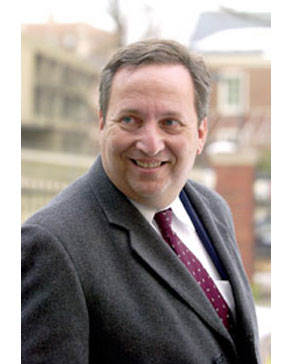

Larry Summers

Summers’ simplistic stereotyping

Women fail or succeed just as men do, for all sorts of reasons. Why not leave it at that until science proves otherwise?

  • more
    • All Share Services

Summers' simplistic stereotyping

The storm of controversy that swirled in the media in response to Harvard University president Lawrence Summers’ thoughtless hypothesizing last month that innate sex differences might account for the dearth of women in high-level positions in science doesn’t show signs of abating anytime soon. Indeed, next week the university’s faculty is to meet for the second time to express its unhappiness with Summers, who ultimately could be forced to resign.

Much of the press coverage simply reinforced the gender stereotyping evident in Summers’ comments. Readers of the New York Times, for instance, learned interesting — but irrelevant — facts, such as the existence of sex differences in green spoon worms. And in the New Republic the outcry of women’s groups was derided as a fatwa. But those who still don’t understand why the Summers controversy represents a setback for women’s equality, need look no further than the media’s coverage of Carly Fiorina’s dismissal as CEO of Hewlett-Packard last week, which more than anything else linked her firing to the fact that she is female.

USA Today’s headline screamed “Did Glass Ceiling Just Slam Down?” The paper quoted an industry analyst who asserted that if Fiorina had succeeded in her position, it could have “opened wide the doors for women, but now any board director on the fence has an excuse to not take the chance.” Did I miss the coverage of how board directors were going to think twice about hiring male CEOs after Kenneth Lay, Gerald Levin, Michael Eisner and countless other men were fired from their CEO jobs?

USA Today further reported that “the stock of the eight Fortune 500 companies run by women rose 2.2% in 2004 vs. 9% in all S&P 500 stocks.” It is gimmicky, and statistically meaningless, to compare the stock earnings of eight companies with the stock earnings of 500 companies. I’m just a girl, but even I know that that sample is skewed. When male CEOs preside over low stock earnings, nobody raises gender issues, nor do their failures have broader implications for other male leaders.

USA Today featured a box with the eight Fortune 500 companies run by women that showed that investing in them in 2004 “was not a good strategy.” The companies — from Avon to Rite Aid to Xerox — were not even in the same sectors. To imply that the companies were not as successful because they were run by women is part of the same attitude that informed Summers’ statement that being female was a determinative factor above all else.

If only this view had been limited to one newspaper. The Los Angeles Times referred to Fiorina as the “high-gloss chief executive,” and the New York Times informed readers that management specialists say “it is naive to pretend that Ms. Fiorina’s downfall will not have an impact on women’s aspirations.” Walter D. Scott, a professor at Northwestern’s business school, told the Times, “There are still a lot of people who do not feel women are as accomplished as men, and they will simply shake their heads and say, ‘I told you so.’”

Unfortunately, when Summers and his defenders suggest that there is a genetic reason for the underrepresentation of women in science, they open the door for that argument — basically just old-fashioned stereotyping — to be made more widely. That 20 percent of positions in science, engineering and technology development are held by women, as noted in the New Republic, proves nothing but that 20 percent of those positions are held by women. As any sixth-grade science student knows, the effect is the not the cause. So one would hope that university presidents, journalists and scientists would know better than to equate the two.

To argue that a small number of women in a given sector means ipso facto that gender differences are responsible is reckless and, to date, scientifically baseless. Fewer than 5 percent of Fortune 500 CEOs are women, and only 14 percent of U.S. senators are female. Is this proof that innate sex differences are keeping women from achieving in these areas? Consider that not so long ago, the prospect of a female president or secretary of state was unthinkable. Now we’re up to two female secretaries of state, and Sen. Hillary Clinton is a leading contender for the Democratic presidential nomination in 2008. As has been widely noted, women were once believed to be inferior musicians — until orchestras began blind auditions behind a screen, hiding the gender of the musician.

Until they can cite a supporting body of evidence, Summers and others shouldn’t make comments that disparage all women. If you aren’t convinced, replace the word “Jew” or “black” for “woman” in the coverage of Fiorina.

Summers’ defenders have offered some alternative explanations to genetics for the dearth of women in science, such as discrimination that leads to stereotyping about women’s abilities and the lack of adequate child care, which would allow women to pursue careers while raising children. And in more rigorous careers such as science, many women are unable or unwilling to commit to the years of education and training that are required to reach the top echelons because of their family obligations. With all these other factors indisputably contributing to the dearth of women in the sciences and at the higher levels of other professions, the desire of Summers and his supporters to tie the phenomenon to an inherent lack of ability is perplexing.

One irony in all this is that HP’s board, which watched closely as a woman failed to run the company effectively, has included a woman on its shortlist of internal candidates to take over where Fiorina left off. If this well-established company is able to separate Fiorina’s performance from her gender, then is it too much to expect the media, the analysts they quote, and the academics who are weighing in to do the same?

Hewlett-Packard apparently knows that many factors account for Fiorina’s failure that have nothing to do with her genetics. She was the first outsider brought in to run an insular company that was accustomed to doing everything the “HP way,” and she has been described as a cultural mismatch. She was bold and charismatic but by most accounts better at the big picture than at day-to-day management. She led a lifestyle of private jets, yachts and large compensation packages that was foreign and alienating to most people who worked at HP. Most important, she oversaw a failed merger with Compaq.

Fiorina’s situation recalls that of Steve Case when he became chairman of AOL Time Warner after orchestrating the disastrous merger with AOL. But when Case was pushed out, nobody attributed it to his gender. And when Gerald Levin — the other half of the duo who orchestrated the merger — was fired, he was quickly replaced by another man, and nary was a word mentioned about men’s inherent inability to run major corporations.

I am part of the first generation to be told that girls can do anything boys can do. Yet the truth is, it’s still hard for women to reach the top echelon of many professions. Nevertheless, I would rather tell young women to reach for the stars than give them messages that they might fail because of their genetic makeup.

True equality will be achieved when women are allowed to fail just as men do, all the time. Former NOW president Patricia Ireland famously said that equality exists when an average woman moves up the career ladder at the same pace as an average man. Equality also exists when a female CEO loses her job for bad performance and it is treated the same way as a male CEO who loses his job for bad performance. We clearly still have a long way to go.

Kirsten Powers, a former Clinton administration appointee and AOL executive, is a Democratic political consultant and Fox News political contributor.

The miseducation of the president

Ron Suskind describes a leader pulled off course by his staff. But we still don't know where Obama wants to take us

  • more
    • All Share Services

The miseducation of the presidentPresident Obama

President Obama has a feisty new tone this week, offering up a deficit plan with taxes on the rich and no increase in the Medicare eligibility age (a reported feature of his failed “grand bargain” with the GOP last month). And when Republicans (and silly Dems) called his proposals “class warfare,” he shot back: “This is not class warfare. It’s math.”

Maybe Obama read Ron Suskind’s controversial book over the weekend, and decided it was time to take control of his presidency and put it on the side of struggling Americans, rather than on the side of super-wealthy Wall Street titans who destroyed the economy, where it’s been since Inauguration Day.

It’s unlikely the president is finding lessons in “Confidence Men: Wall Street, Washington and the Education of a President”; the White House is pushing back, hard, on Suskind’s revelations. The coverage has mostly hyped “shocking” anecdotes about an inexperienced president poorly served by scheming aides and Cabinet members who fought among themselves and frequently ignored the president’s own wishes. But the question at the heart of Suskind’s book is much more interesting: Who is Barack Obama, and what exactly did he want to do with his presidency?

Was he a bold visionary with big plans, who was hampered by disloyal aides and his own lack of leadership experience? Or did the many examples of underlings “slow-walking” or “relitigating” or simply ignoring the president’s alleged decisions, without paying any penalty for their insubordination, reflect Obama’s own lack of clarity about and commitment to his priorities and choices?

At the end of the book, the reader has to make a leap of faith — of confidence, in fact — about the answer to those questions. Suskind provides evidence for both views.

Bold visionary Obama periodically sides with staffers pushing big moves to break up what Suskind memorably describes as “the debt machine”: the financial sector contraption that seized the American economy, almost destroyed it in 2008 and yet, tragically, still runs it in 2011. The book’s good guys — former Fed chair Paul Volcker, consumer protection visionary Elizabeth Warren, Commodity Futures Trading head Gary Gensler, Council of Economic Advisors chair Christina Romer, adviser Austan Goolsbee and the FDIC’s Sheila Bair — turn up regularly with good progressive ideas to beat back financial sector treachery that catch Obama’s attention and win his backing … for a while.

But in the end, whether it’s “Volcker’s Rule” keeping banks out of speculative, proprietary trading; Gensler’s effort to force the trading of poorly understood derivatives on “exchanges” where their shady contents could be better examined; or Bair’s push for a contingency plan to force the toxic behemoth Citibank into bankruptcy; the tough reforms never materialized. They were watered down to insignificance, or as in the case of the Citi breakup, abandoned completely.

The book’s most controversial revelation, strenuously denied by the White House, is that Treasury Secretary Timothy Geithner either “slow-walked” or absolutely ignored the president’s directive to come up with a plan to break up the spectacularly failing Citibank. It’s become a big story, because it serves a couple of narratives: It provides Obama admirers with evidence that the president had progressive priorities and values, but his underlings thwarted them. It provides his critics (on left and right) with more fodder for the view that the president is in over his head, unready for the job we gave him.

The fact is, the material Suskind presents is inconclusive. By the president’s own admission, the “instructions” to draw up a contingency plan to dismantle Citi were vague enough that his different advisors could legitimately disagree about his real intent.

When Suskind asks Obama if he was “agitated” by Geithner’s failure to develop a plan for Citi, his answer is classic no-drama Obama, Zen Man:

“Agitated may be too strong a word. During this period what we are increasingly recognizing is that there are no good options.”

He goes on:

“What’s true is that I was often pushing hard, and the speed with which the bureaucracy could exercise my decision was slower than I wanted. But I don’t think, it’s not clear to me — and I’ll have to reflect on this at some point — it’s not clear to me that that was necessarily because of a management problem, as it was that this is really hard stuff.”

Frankly, given Obama’s answer, I’ll give that one to Geithner. There’s no hard evidence he ignored a firm directive from his boss — and if he did, it obviously wasn’t a big deal, because Geithner is one of the few people from the president’s original economic team still employed at the White House. If the president wanted a tougher approach with Citibank, or with any other malefactor of great wealth, he’d have forced his subordinates to develop one, and fired them if they didn’t.

- – - – - – - – - -

Whatever happened with Citibank, it’s clear that at every turn, Obama made choices that protected the Wall Street status quo, and Geithner was behind every single decision. Although during the campaign Obama seemed to be closer to a group of economists Suskind labels Team A — voices for strong action like Volcker, former Clinton Labor Secretary Robert Reich, and Clinton advisor Laura Tyson — when it came time to staff his economic shop, he chose from Team B, most of whom had clustered around the infamous Robert Rubin, who moved from the Clinton White House to Citibank. He picked Geithner and Larry Summers precisely for their caution when it came to dramatic action regarding the banks. Obama seemed reassured by Geithner’s tiresome reliance on the Hippocratic Oath, “First, do no harm.”

On the Volcker team, “harming” the debt machine that destroyed the economy was precisely the point. Suskind does a magnificent job explaining the way an economy centered on debt has decimated the middle class and made the top 1 percent of Americans impossibly wealthy. The entire machinery of government, under Democrats and Republicans, has been rigged to privilege the financial sector over any other business sector for the last 30 years. Household debt, which had run between 30 and 50 percent of GDP for decades, doubled in the 2000s, to almost 100 percent of GDP. Family savings rates became “negative,” meaning people used credit to spend more than they earned. Essentially, the economy now runs on the financial sector’s genius in finding ways to profit by lending Americans the money they haven’t received from their employers in wage increases since the 1970s.

A Wall Street lobbyist says as much to Suskind during the debate over financial regulatory reform: “Maybe we did this to ourselves, sure, but we’re just responding to the way things are. We’ve gone ‘long’ on developing markets around the world, and gone ‘short’ on America, where the whole game is using debt to give people what they haven’t been able to earn, and may never earn.”

Geithner worked hard to protect the debt machine and its masters. He opposed limits on executive compensation at firms receiving TARP funds, insisted on paying AIG’s debts at 100 percent (instead of a smaller sum like creditors would have had to accept in a bankruptcy proceeding), squashed a tax based on bank size (to discourage “too big to fail” titans). One prominent banker tells Suskind his colleagues expected much harsher treatment from the Obama administration in the administration of TARP and other decisions. “For Washington to not demand anything when it saved us, even stuff that we know is for our long-term good, was one of the stupidest moves in modern times … I feel like I should go over and hug Tim. It’s a shame we can’t pay him, ’cause that’s a guy who really earned a big-time bonus.”

Suskind also spends time on the stimulus debate, where proponents of big moves likewise lost. Romer argued forcefully the stimulus should be at least $1.2 trillion, but Peter Orszag told Suskind they couldn’t do anything over a trillion, out of “a concern we would look wacko lefty.” Better to let the economy decline than look “wacko lefty,” I guess. Larry Summers didn’t even present Romer’s $1.2 trillion suggestion to Obama, but she pushed for it herself in a meeting, and Obama chose to go with the pragmatists.

Some of the book’s most unsettling revelations have to do with White House sexism, or maybe it’s best described as “guyism,” as in Obama just misses the way his guy culture leaves out women, however inadvertently. Most of the juicy stories have already been dissected — and denied, not convincingly, by some of the women involved: Anita Dunn saying the White House would “fit all of the classic legal requirements for a genuinely hostile workplace to women”; Christina Romer complaining she was overlooked and undermined so often by Larry Summers she “felt like a piece of meat”; a “women’s dinner” convened by Valerie Jarrett to allow the president to hear the complaints of his top female staff directly.

Since I wrote this, Suskind released an audio recording of Dunn’s “hostile workplace” complaint, to prove she made it. but in fact the book omits a key phrase. Dunn told Suskind,  “I remember once I told Valerie that, I said if it weren’t for the president, this place would be in court for a hostile workplace.” Those six words, “if it weren’t for the president” is a disclaimer that blurs the meaning of the rest of the sentence. Dunn might be saying, “if it weren’t for the president’s fairness;” she might be saying, “if it weren’t for the president’s power.” Either way, it’s a short and powerful qualifier, and it should have been included.

But most of this stuff has been known since the New York Times’ Mark Leibovich revealed that the president’s fondness for bonding on the basketball court and golf course was leaving female staffers on the sidelines. (Although I hadn’t heard that Obama greeted Christina Romer, the first time they met, by declaring that monetary policy had “shot its wad.”)  Suskind offers one telling anecdote about Obama’s approach to gender that’s been overlooked in coverage to date. Early in the book, during a campaign strategy session on candidate Obama’s economic program, he and his advisors discuss the continuing erosion of jobs and wages for low to moderately skilled male workers. The big job opportunities, one researcher explains, will be in the exploding realm of healthcare — positions for nurses, hospital orderlies and in-home assistants to frail seniors will boom.

Obama jumps in: “Look, these are guys,” he says. “A lot of them see health care, being nurse’s aides, as women’s work. They need to do something that fits with how they define themselves as men.” Quickly the conversation turned to infrastructure: fixing the nation’s crumbling roads, bridges, schools and public buildings. Men like to build, the group concludes, and infrastructure offers a campaign promise that promotes employment, improves our public roads and buildings, and makes working-class men feel better about themselves. It’s a threefer, the kind of big idea Obama likes. He leaves the meeting energized. “Good meeting,” he tells the guys. “Real good.

Of course, there was no big infrastructure campaign, although Obama has made a pitch for an infrastructure bank in the last year, when he’d already lost control of the economic and political narrative. I could shrug off Obama’s “guyism” in that conversation about “women’s work,” if only he’d had the courage to follow through and push a program that would create jobs, fix what needs fixing and shore up male employment. Instead, we have unconscionably high unemployment, plus a window into the president’s retro view of “men’s” and “women’s work.”

That meeting is important for another reason. Princeton economist Alan Krueger gave a seminar on all the trends taking down the economy. He presented a graphic slide: “Growing Together (1947-1973) vs. Growing Apart (1973-2005).” I’ve seen the slide: It starkly depicts the American dream years, when real family income grew 3 percent a year and the big increases went to those at the bottom. After 1973, we move into the American bust years. Growth for most people slowed or declined — except for the top 5 percent. Candidate Obama professed to understand and want to tackle that crisis head-on, with tax hikes for the wealthy, tough new reforms for Wall Street, an infrastructure crusade for unemployed and underemployed men (and, I trust, women), but he didn’t do any of that. He didn’t even push for it very hard.

Maybe more vexing, candidate Obama had smart early advisors who saw what was coming on Wall Street and warned him: about the derivatives disasters; the “repo books” where companies borrowed and loaned one another cash without examining the shoddy collateral put up to secure loans, which increasingly companies couldn’t pay back; about the extent to which big firms like Goldman Sachs made money betting against their clients and the entire economy. You can argue that Obama became president because he spoke knowledgeably and reassuringly about the Lehman Brothers bankruptcy apocalypse in September 2008, while John McCain was still insisting “the fundamentals of our economy are strong.” With his head start, Obama should have been wiser about how to get on top of the Wall Street disaster, and his early speeches were. It’s also possible the intimacy that led his Wall Street friends to give him a heads up on the coming crisis also prevented him from breaking up their racket.

- – - – - – - – - -

Suskind frequently stops mid-narrative to grapple with the central question of his book: Was the problem mainly with Obama’s staff, which can be corrected by a staff shakeup, and with the president’s early inexperienced leadership, which can be ameliorated by experience? Or is there something missing in Obama himself, in his vision and values, that led to the lack of bold action to solve the nation’s biggest problems? He points to a defining moment in Obama’s candidacy, when he’s making his final decision about whether to run for president with his closest advisors, and Michelle says:

“You need to ask yourself why you want to do this. What are you hoping to uniquely accomplish, Barack?”

Obama answers:

“The world will see us differently. Millions of kids across this country will see themselves differently.”

Clearly, that was a worthy goal; electing our first black president would change — did change — America. But his answer didn’t reveal what he would accomplish after he was elected president. Obama’s appeal and his motivation were wrapped up in his story; but his story isn’t a platform, an ideology or a set of policy prescriptions.

If we take Obama’s answer a step beyond where Suskind leaves it, if we examine Obama’s story, and look at the “American exceptionalism” that made his presidency possible, I think it also explains his worldview, and his priorities: Obama believes he is the creation of a fundamentally sound American meritocracy, which is often but not always distorted by race; where a kid whose father came from Kenya and whose mother came from Kansas, mostly raised by his grandparents in Hawaii, could get the opportunity, despite his race and his funny name, to rise and just keep rising — Punahou Prep, Columbia University, Harvard Law School. Is this a great country, or what? It helps explain how an administration made up of Ivy League standouts, “the best and the brightest,” to use David Halberstam’s chilling phrase about JFK’s team, updated for the 21st century, could wind up in an economic quagmire to rival the one Kennedy’s men created in Vietnam.

On the question of whether the problem is with Obama’s political values and priorities, or just his lack of leadership experience, Suskind doesn’t seem sure himself. He closes the book with a picture of a president who’s been “educated” on the ways of the White House, a picture that reassures Suskind a little. Obama cleans house after the midterm debacle, getting rid of most of his top staff, and he executes a big deal with Mitch McConnell and John Boehner to extend the Bush tax cuts, in exchange for extending unemployment insurance and a payroll tax cut, which would provide a stimulus of almost $500 billion over the next year. Suskind questions the content of the deal, but there’s no doubt he sees a glimmer of hope for the young president in his bold deal-making: Finally, he wasn’t paralyzed by the indecision of his staff or the carping of congressional Democrats. Indeed, Obama’s approval ratings rise, briefly.

Obama explains his rationale to Suskind this way:

“What I think I was able to recognize was that, at this juncture, the country will feel better about itself and that will have important ramifications. If they see Democrats and Republicans agreeing on anything … Because right now they are just exhausted with the partisan wars that are taking place.”

Of course, that’s the kind of values-neutral, content-free maneuver the president specializes in, and it doesn’t offer a vision for how the country can and must change, to get out from under the debt machine and to begin to create an economy that works for everyone. It’s the very attitude that led to the worst paralysis of his presidency, the debt-ceiling debacle, when Republicans held the economy hostage and Obama indulged them, for a while, hoping to reach a grand bargain that would again, he sadly believed, make the country “feel better about itself,” because Washington worked, and Republicans and Democrats agreed. Even if they agreed on moves that would damage the country.

But it’s possible, since the book was completed, that Obama himself learned from that disaster: The country won’t feel better about itself if the president surrenders and makes bad deals; it will feel better when conditions are better, and that’s going to require Obama to stand up and fight. He may finally have learned, as he’s watched his approval rating decline in the nine grim months since the tax-cut deal, that the country wants results. It wants its leader to lead. That’s the Obama we’ve had a glimpse of in the last week, as Suskind’s book laid out his early mistakes. Let’s hope this guy sticks around. 

Continue Reading Close
Joan Walsh

Joan Walsh is Salon's editor at large.

A revealing outbreak of candor

Political and financial Masters of the Universe make it clear who "matters" -- and it's not the American people

  • more
    • All Share Services

A revealing outbreak of candorLarry Summers

If honesty is contagious, then we may be experiencing a brief outbreak right now as America’s political and business elite seem momentarily intent on acknowledging oligarchic reality.

On Sunday, as previously noted, the New York Times quoted Tom Watkins, a top business consultant, admitting that corporate education reformers are hoping the recession continues so that nobody notices their scheme to convert public schools into high-tech companies’ private profit-making machines.

Two other similarly frank declarations from our political and financial Masters of the Universe provide candid, if brutal, insights into how the elite see the economy and democracy.

First up was Larry Summers, the hedge funder-turned-architect of the Obama administration’s economic program. In a little-noticed speech he revealed a reason the Obama administration may not have been nearly as focused on creating American jobs as many had hoped:

“There are those today who would resist the process of international integration; that is a prescription for a more contentious and less prosperous world,” stated Summers. “We should not oppose offshoring or outsourcing.” (emphasis added)

Before departing his White House perch, Summers was the Obama official who led the administration’s successful fight against congressional Democrats’ proposed “Buy American” provisions. Those provisions, which would have mandated stimulus funds actually be spent in the United States, were needed to prevent what Businessweek called “leakage,” i.e., stimulus money heading overseas to subsidize offshoring. Thanks to Summers, though, the “Buy American” proposals in the stimulus were gutted. Now we know why: because, as he made clear in his recent speech, he’s against any effort to halt the flow of American jobs offshore, even during a massive unemployment crisis. (Considering how closely this tracks to the Bush administration’s position on outsourcing, we can add Summers’ revelation to the long and growing list of similarities between the Obama and Bush White Houses.)

Then came the New Republic’s Jonathan Chait, who (true to his signature contrarian form) penned a screed in the New York Times criticizing the American left for daring to question President Obama about the gap between campaign promises and governmental actions. In the process of lambasting those who had presciently argued for a bigger stimulus program, Chait exposed how he and most of his fellow elites in Washington see the general public:

“At the time, Obama’s $800 billion stimulus was seen by Congress, pundits and business leaders — that is to say, just about everybody who mattered — as mind-bogglingly large.” (emphasis added)

In declaring who “matters” and who doesn’t, Chait took a cue from Dick (“Public Opinion Doesn’t Matter”) Cheney, who famously  insisted that the American people are insignificant serfs. Only, in this case, Chait shows us the obverse of the Cheney-ism — he tells us the only people who supposedly do “matter.” In the nation’s capital, that’s Washington politicians, Washington pundits and corporate executives. Everyone else — tens of millions of Americans who think differently — are of little concern.

Give Watkins, Summers and Chait some credit for giving the public a rare glimpse into the true motives that forge elite consensus. Often, those shadowy forces are buried under platitudes and poll-tested buzzwords. So when openly expressed, these statements help us understand how seemingly haphazard Washington policymaking actually expresses a cogent ideology.

The trouble, of course, is that ideology runs counter to what most Americans want: a government that defends their interests. 

Continue Reading Close
David Sirota

David Sirota is a best-selling author of the new book "Back to Our Future: How the 1980s Explain the World We Live In Now." He hosts the morning show on AM760 in Colorado. E-mail him at ds@davidsirota.com, follow him on Twitter @davidsirota or visit his website at www.davidsirota.com.

The awesome stupidity of replacing Larry Summers with a CEO

If Obama's advisors think the president has an "anti-business" problem, they should be fired

  • more
    • All Share Services

The awesome stupidity of replacing Larry Summers with a CEOLarry Summers

If the Obama administration appoints a corporate executive to replace Larry Summers as National Economic Council director then the White House fully deserves the thumping it will get in November.

The ostensible reason for this colossal misunderstanding of the current political situation, sourced to anonymous adminstration officials, is that the White House wants “to allay the business community’s doubts about administration policies.”

This is nonsense. The only way for Obama to “allay” the so-called business community’s “doubts” would be to join with Republicans in seeking a repeal of bank and healthcare reform, abandon his efforts to raise taxes on the wealthy, and fire Elizabeth Warren. By the definition currently employed on the opinion pages of the Wall Street Journal, anything to the left of Ayn Rand or Jim DeMint is “anti-business.” The bleating from Wall Street executives who feel bullied and demonized only proves one thing: Anything less than their total freedom to pursue profit free of all government restraint is utterly unacceptable — no matter what the consequences for the country at large.

The very notion that Obama is “anti-business” is an absolute charade, cooked up by conservative pundits and fed by financial industry lobbying muscle. It has no connection to on-the-ground reality, and if administration officials think it is one of Obama’s problems then they are the worst kind of spineless idiots.

Obama’s dilemma is that his middle-of-the-road approach to solving problems has outraged the base of both parties. Hardcore Republicans — let’s say the 47 percent of the country who voted for John McCain — were always going to view the new president with suspicion. The fact that he managed to get things done — the stimulus, healthcare, bank reform — only made him more of a dangerous threat. He’s no socialist, but he accomplished a hell of a lot more than either Clinton or Carter in his first two years, and that has got to be a fundamentally destabilizing reality for many conservatives. But appointing former Time-Warner CEO Richard Parsons to Summers’ job will not make an iota of difference to that section of the electorate. Meanwhile, the disappointment on the Democratic side is generated largely by Obama’s failure to be anti-business enough — to have stocked his Cabinet with advisors perceived to be aligned with Wall Street, to have rejected breaking up the big banks, et cetera. Again, appointing a CEO will not solve that problem — it will only exacerbate it.

The truly crazy thing here is that by historical standards Obama is not unpopular. His approval rating, at this juncture in his term, is better than both Ronald Reagan and Bill Clinton enjoyed. The fact that this is true when unemployment is at 9.6 percent, the country is bogged down in Afghanistan, and the prospect for a vibrant economic recovery is still years away is really quite amazing.

Obama needs to reject the idea that Wall Street must be placated any further than it already has been. It’s going to be tough enough over the next two years defending the ground that has already been won. He doesn’t need to concede any more. What he really needs to do is fire whoever is floating to the press the idea that the administration is concerned about being perceived as “anti-business.”

Continue Reading Close
Andrew Leonard

Andrew Leonard is a staff writer at Salon. On Twitter, @koxinga21.

Larry Summers abandons ship

Bloomberg reports that the nemesis of the left is set to leave his post. Which means: Geithner reigns supreme

  • more
    • All Share Services

Larry Summers abandons shipLarry Summers

Progressives distraught at the news that Senate Republicans squashed a repeal of “don’t ask, don’t tell” on Tuesday may have at least one reason for cheer today. Bloomberg News is reporting that their longtime nemesis, Larry Summers, plans to leave his post as director of the National Economic Council shortly after the midterm elections in November.

Ah, but some pessimists might say, the damage has already been done! Summers protected Wall Street banks from nationalization, held down the size of the stimulus, neutered bank reform and underestimated just how badly the recession would smack the labor market. Now he’s leaving just at the exact point when the White House’s ability to actually push through an aggressive economic agenda will be severely constrained by likely legislative losses in November. And he won’t depart until after the election, which means Obama won’t have a chance to appoint a replacement who might get progressive juices flowing in time to make a difference at the ballot box.

Maybe all that’s true, although I suspect that when a definitive history of the Obama administration is written we will learn that the most important person determining the shape of Obama’s economic policies was likely Obama himself. But I also can’t help recalling reading just last week that Christina Romer, the chairwoman of Obama’s Council of Economic Advisers, had been “widely believed to have left her post … because Larry Summers had successfully walled her off from Obama.” Too bad she didn’t hang on! Or maybe, just maybe, the Kremlinological implications of each change in Obama’s economic team are overrated.

There just might not be any real tea leaves to read here. The departures of Peter Orszag, Obama’s budget director, Summers and Romer, taken together, diminish the impact of any single exit considered separately. We know that Orszag was very concerned with the deficit, while Romer wanted stronger stimulative measures and Summers was supposed to be the advocate of less heavy-handed regulation. But when all three leave in relatively close proximity to each other, the entire process feels more like a routine changing of the guard than the outcome of any kind of factional struggle.

The real excitement will come in analyzing who gets named to replace Summers. Obama replaced Romer with his longtime advisor, Austan Goolsbee , ensuring near perfect continuity with his original economic team. He replaced Orszag with former Clinton budget director Jacob Lew — the very antithesis of a shakeup. He has a clear opportunity to signal a real change of direction now, perhaps with the appointment of someone like Jared Bernstein, who hasn’t been heard from much since being sidelined as Vice President Biden’s economic advisor. Or he could really get people talking by bringing in Paul Volcker.

Or he could completely irritate the Democratic base by plucking a Wall Street executive for the position:

Bloomberg:

Administration officials are weighing whether to put a prominent corporate executive in the NEC directors job to counter criticism that the administration is anti-business, one person familiar with White House discussions said. White House aides are also eager to name a woman to serve in a high-level position, two people said. They also are concerned finding someone with Summers experience and stature, one person said.

Hmm. Somehow I think that the theory that Obama is “anti-business” really isn’t the White House’s biggest problem. But if he is determined to go that route — here’s a way to kill three birds with one stone. Appoint former eBay CEO Meg Whitman to the job. In one stroke  Obama would get a corporate executive, a woman, and the undying gratitude of millions of Californians.

Continue Reading Close
Andrew Leonard

Andrew Leonard is a staff writer at Salon. On Twitter, @koxinga21.

Wednesday link dump: What’s not to like?

The mind of Steven Rattner, Howie Kurtz on the power of journalism, and why voters believe lies

  • more
    • All Share Services

Alex Pareene

Alex Pareene writes about politics for Salon and is the author of "The Rude Guide to Mitt." Email him at apareene@salon.com and follow him on Twitter @pareene

Page 1 of 5 in Larry Summers