

Let’s say you like cats. When you visit a friend’s house and he happens to have a cat, you make a big deal about stroking it, picking it up, talking to it. And you do the same thing with every cat you encounter. It demonstrates to the people around you that you’re a sensitive, sympathetic, tactile person. All these things are true of you, including your innate adoration of cats. But that doesn’t mean to say you haven’t cultivated your cat-fancying into a self-conscious, gushing performance that somehow represents you. This doesn’t make you a phony; it makes you something else: mediated.
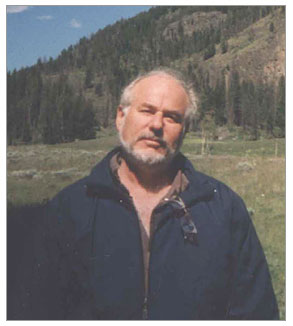
This example of naturalized performance — and the appropriated friendly prose style, forgiving and scathing in equal measure — is Thomas De Zengotita’s, and it’s one of many painfully familiar and riotously entertaining tidbits in his new book, “Mediated: The Hidden Effects of Media on People, Places, and Things.” De Zengotita, who teaches philosophy and anthropology at New York University, has mined 30 years of private study and writings to form a theory — a phenomenology, actually — of human behavior in a postmodern world overflowing with exhaustingly flattering media representations and endless choices about what kind of person you want to be, but also with the strange demand, always, to be yourself. The result, De Zengotita says, is that we are all mediated, all “method actors” — again, not phonies, but experts at expressing our authenticity in a performative way.
Mediation — all those fuzzy, comforting options and representations that stand between us and the real — is a massive, necessarily messy theory that encompasses more than naturalized performances. It means that everything in our culture is for you and everything is about you.
So politics becomes personalized. The effects of this range from an obsession with Bill Clinton’s penis to nurturing and defending one’s position on, say, the Iraq war so carefully that one’s stance starts to matter more than the war itself (this last is my own example, something the book provokes by the dozen).
And in the “Cult of the Child” chapter, De Zengotita describes how mediation makes education about nothing so much as the exaltation of children’s feelings and the sanctity of their opinions: molly-coddled, “padded” kids are asked by teachers and fretful parents to develop a “MeWorld” through assignments about their pets, family, ethnicity, favorite things, dreams and fantasies. The MyTwin dolls available at certain malls — customized to look just like your child — offer a neat example of how kids are mediated into seeing the world primarily as a reflection of themselves.
Mediation finds its perfect ally and facilitator in the “Mall World” of hyper-consumerism, where every product and lifestyle choice reflects and creates the kind of person we want to be. And thanks to the global reaches of Wal-Mart, Ikea and the like, our “Mall World” in the West is spreading to the rest of the world.
Still, De Zengotita feels that mediation is “mostly a good thing.” Salon met with him at NYU to discuss this and why we should be patient about finding a solution (if, indeed, it’s really a problem that needs to be solved at all), even though what often gets lost with mediation’s desperate focus on the real is the real itself.
You say in the book that you’ve never found an adequate definition of postmodernism. Is it the same way with mediation? The two seem to have a lot in common.
I think mediation is the essence of the postmodern condition. The book is about what kind of person exists in a world of representations that constantly make them more and more self-conscious, forcing them to be aware of themselves in relation to a field of options. This kind of reflexivity is a perpetual haunting. You can’t get out of it.
How is your book different from others about media saturation?
The core original thought in the book is this idea of representations being inherently flattering. Everyone knows that ads seek to flatter you, but as far as I know, no one has noted the significance of just being addressed, period. I mean this in the sense that an evolutionary psychologist might think of it: You’re wired to respond when someone addresses you. Someone says hello, makes a token gesture, acknowledges your existence, and you respond. In this mediated environment, you’re incessantly addressed in flattering ways just by virtue of the fact that you are surrounded by these representations. But it’s in the nature of flattery to fail to satisfy you.
That’s where the motivation for what I call the virtual revolution comes from. As the technology became available, and even before, a class of spectators began to claim the status of celebrity. They felt entitled to it because they’ve been flattered so much. I think this idea is synthetic: It pulls together phenomena all the way from the popularity of memoirs and autobiographies of ordinary people, from reality TV to blogs, to taking pictures of your life on your cellphone. On and on.
Haven’t people always been concerned with representing themselves?
Sure. Ever since the invention of print, I think there has been this incredible half-conscious flattery that goes out to every person who is at the center of this world of addresses. So many things I’m writing about now are no different than they ever were, except there’s so much more of it. But the difference is important: It’s like the difference between a breeze and a hurricane. As we get to the hurricane end of the mediation spectrum, we find unprecedented levels of reflexivity and self-consciousness. People have always played social roles and had some kind of image of themselves, of course, and the media have always catered to that in one way or another. But nowadays people are aware of all this. Media creators, in turn, know that people are aware of all this and address them accordingly.
You yoke so many things together in the book to describe mediation, from behavior to speech patterns to politics to nature. All of these things are inflected — or tainted — with this vague sense of unreality. Everything seems to be a symptom of mediation. Were you afraid of being called a grouch?
Oh yes. And I didn’t want to be a grouch. I had to watch for that. I think I used the expression in the book a few times, the “curmudgeon factor.” But there was an enormous change from when I first had these ideas, before I got the flattery idea down, when it was just media I was writing about. I wanted it to be all bad, I wanted to attack simulacra, I wanted it all to be the fault of capitalism, and I wanted there to be a way out — even though I didn’t know what it was. Blanket condemnation seemed fine.
But the more I got into the details of people’s lives under the regime of mediation, the more good I saw coming from it. I developed the “Justin’s-helmet principle.” That’s what I call judgments of mediated options where you say “OK, this puts me off aesthetically, but…” I see these kids in certain neighborhoods, all padded up in their padded playgrounds — and it looks so precious, almost ridiculous, compared to the way things were in my childhood when no one had ever heard of a bike helmet. If I just stopped there, I would be a grouch. But the truth is, if I had a young child today, she would be padded to the nines. And that’s the way it goes across the field of options the media present to us. It’s easy to make fun of those talk shows — the ones where regular folks bare their souls to Dr. Phil. But Dr. Phil and the whole therapy culture has helped millions, I’m sure of it.
What else changed in your thinking?
I talk a lot in the book about how schools today reinforce a sense of centrality in mediated kids, often using yet more mediation to do it. And I make fun of that and other things too: excesses of identity politics, self-esteem programs, relativism and so on. If I stopped there I’d be a grouch. But I also realize that gay rights, minority rights, the whole idea of being free to be who you are, to have you own identity, the expectation in school that we won’t hurt people, won’t be cruel to people, alternative lifestyles — certain aspects of mediated educational settings are easy to mock, but it’s undeniably mostly a good thing. So, in the end, I realized that a lot, not all, but a lot of the effects of mediation, even though they grind away at reality and lead to some terrible losses — of nature, for example — are mostly a good thing.
You seem to like creating, or identifying, brick walls like this in the book — things that stop us in our well-worn intellectual tracks and stop us from making the normal comfort-blanket condemnations.
Absolutely. Here’s the main one: It would be very interesting to find out what would happen to what remains of the left if their attacks on global corporate culture and Disneyfication could be separated from their concern for the misery of the millions of people who are exploited by or left out of globalization. What if you said: “OK, suppose you could ameliorate the living conditions of those people who are starving, dying, horribly, by the millions, and the price of that would be a global mall. Everyone would become mediated. Everyone would be politically correct. There’d be foolish tourists everywhere. There’d be no nature left. Everything would be an attraction site. The whole world would be Disneyfied. But there’d be no starvation.” What would you choose? I don’t think you’d have a choice. I think it’s a giant case of the Justin’s-helmet principle.
Are you doing this as a thought experiment to cause us intellectual pain, or do you actually think that’s the way the world is going?
I think that’s essentially what liberalism is becoming — a liberal imperial vision of bringing what we’ve got in the West to everybody, though of course in a multicultural sort of way. It’ll be a multicultural global mall. Really huge food courts. Whether this vision is realistic or not, I can’t say, but it’s practically the only coherent international economic political vision out there that’s capable of articulation and from which certain policies follow. I don’t know if that’s the way things are actually going.
But do I put it this way in order to cause this intellectual pain? Yes. It certainly causes me intellectual pain. Not to be able to think of a real alternative, I mean, like socialism used to seem to be. But maybe we should just sit with this for a while. We’re surrounded by so many bogus solutions and predictions about the world, and there are so many spheres of activity you can rush into and feel you’re doing something.
And do you think we’re kidding ourselves?
Not necessarily. There are certainly lots of practical things you can do that make a positive difference to poverty, for example. But in grand political terms, I just don’t know. I mean that. But I do believe that everything has to be thought through again for this age, from scratch: a theory of consciousness, what it means to be embodied, mind, what’s property, what’s power…
Think of how much time Marx on the one hand and Adam Smith on the other spent understanding early industrial conditions — early and middle modernity — before they issued forth with their policies and prescriptions. And the world we live in makes their world look like a peasant farmhouse setting by comparison. For me to spend 30 years studying and still not really know what to do — that doesn’t seem like a lot to me.
You devote the whole last chapter of the book to refuting our addiction to trying to find a solution to the problem, whatever that problem may be.
I think: Diagnosis first, prescription later. People listen to some analysis of society or culture for five or 10 minutes and then go “Oh, that’s interesting. So what do we do about it?” Implicit in that question — I can hear it in their tone — is that if the author of the diagnosis can’t come up with a plausible scenario for curing world poverty, or whatever, and can’t trot it out in a minute and half … then what is this?
But there does seem to be a subtle prescription in the book for how to escape from mediation on a local level: Opening yourself to accident and necessity.
Yes, I do believe that, in our mediated lives, what’s left of reality are those kind of contingencies, intersections of chance and necessity. So if you’ve had a terrible illness strike your family or yourself, I don’t care how many self-help books you read or support groups you seek out. The culture will try to introduce a mediated distance between you and cancer. But it’ll fail, to a large degree.
The same is true of having children. The deal is, you don’t choose. Before it happens, you make all these choices, but then bang! You have this person. From nowhere. The world used to be like that, but now it isn’t. Now we choose everything. But we don’t choose who our kids are. Yet. We’re trying, though — that’s why the book ends with a riff on cloning. Because we’re trying to make even that optional, mediated. I don’t mean individual human beings are all longing to clone themselves. I mean that the logic of the culture is, so to speak, longing to clone.
We want to choose everything, but that effort gets constantly interrupted, momentarily, by accidents. They can be serious, like an illness, or it can be as simple as losing your car keys, or nearly tripping over something. Then as soon as you recover your balance, so to speak, you become what I call in the book a “method actor” again.
How so?
The basic idea with method acting, as it was developed by Stanislavski, James Dean, Marlon Brando, and since then practically everyone, is that you don’t act: You react, you “live in the moment,” as they say, even though you are onstage or in a film. The techniques are a lot like therapy because the goal is the same — to get to real feelings and spontaneous expression. But the irony is that, at the very same moment that you achieve that, you turn real feeling and expression into performance. In the book I use this as a way to introduce the more complicated ways in which mediated people — because they are so reflexive and so aware of their options — actually perform their lives.
Is there something to be said though for playing these roles that we cultivate with gusto?
I’d go for that. A lot of stuff that right now might not look so good could turn out to be great. There’s the possibility of turning this whole idea — that we’re constantly performing our lives and riddled with self-consciousness — into a virtue. Maybe we look back on our grandparents — who had little sense of who they were, compared to us, they were just there — and envy the authenticity of their being: I feel like such a phony compared with my grandfather. But then, on the other hand, you could look back and say, poor man, he was practically a zombie. So I don’t know what the solution is, but I do know that entertaining possibilities like the one you just did is what people should be doing.
There’s a section on “adultolescents” — and they’re also called “twixters” now, I think — the people who drift around deep into their 20s, the people who want to keep their options open at all costs. But the decision to grow up is also an artificial one in the mediated world; it becomes a decision just to be “busy, busy” and to naturalize our little performances. So again, no way out of this dilemma?
Well, you decide. That’s your demographic. But of course “deciding” is the problem itself! Pretty soon, you’ll come to a point and say, “I can’t take this any more,” living like a piece of flotsam, floating around in a sea of options, and you’ll get married, or make some other commitment. Even though it feels arbitrary, you’ll get scared enough to do it. Because you’ll realize that nothing’s going to happen to do it for you or to you. No puberty, no ritual moment when all the elders of the tribe gather around you and slice your penis up the middle or something like that to convince you that you’ve grown up. You just have to do it yourself. Grow up, I mean.
I like your new definition of commitment: throwing your whole self into it and hoping it works out, rather than until death do us part, richer for poorer.
When women say, “You can’t commit,” they’re not complaining that you can’t commit in — what do they call that new kind of marriage down South? — a covenant marriage. No sane, fully mediated, urban blue-state person would expect anybody to commit to the life, death, no matter what, anymore. Women aren’t complaining about that. They’re complaining that you’re not completely there for them, that there’s some little part of you that you’re keeping off the board. Now commitment is a matter of the intensity of your engagement.
But because of the arbitrariness of it all, even a commitment feels like just another one of the billions of options we have.
The second really original idea in this book is that when chance and necessity are all that’s left to you of reality — and there’s not much of it — then the opposite of real is no longer phony or artificial, which is what it has been since the romantics. The opposite of real now is optional. The slight feeling of unreality that attends all the commitments you actually make attends them because they’re made against this horizon of choices. So this plays into the idea that reality is accident and necessity. To the degree that your life is literally furnished with people, things, activities, places that you’ve chosen, there’s a slight feeling of surface-ness about it all. Because on the horizon there is always “Oh, I could have done this other thing, or been this other way, and maybe I still will.” That haunts the way you are. And that’s why real things in your life have this slight feeling of simulacra-ness.
But situations where you’re not mediated, where you haven’t made a choice, are painful ones, in some way. It’s not something you’d want to seek out.
Yes, that is often true, not always, but often. But notice how we actually do make efforts to achieve the pain that makes something real, as long as that pain is part of the choice we made. In our efforts to recover nature, for example, we get more and more extreme: boats across the Atlantic, cliff climbing for three days and nights, sleeping in nylon hangers, Outward Bound-type stuff, vision quest, naked on the mountain overnight. We seek raw experience precisely because it gives the feeling of the real. But the ironies are apparent. You’re choosing to go out there and starve on a mountaintop. Not because your tribe will expel you if you don’t or because you don’t know what else to do, but because you want to feel real. So you take a reality trip, as it were…
I’m trying to think — not of solutions! — but of things that could emerge to fill this hole in real experience. National service?
Sure, that might emerge. And it would certainly be a good thing, because it would have practical results. But on the issue of filling this hole in general, I’d be more inclined to say: What’s the problem? To me, compared with the millions of people in the world, living in misery, left out of mediation entirely — this isn’t a problem! We’re so fucking lucky it’s ridiculous. The only way this is a problem is because we’ve got so much … [makes hand gestures suggesting an overwhelming torrent of options and stimulation forcing its way into the brain].
[In depressed-teenager voice.] “I don’t know what to do with all my options. I’ve got angst and depression because I’m not significant enough.” Please!
My art isn’t important enough!
Exactly! Everyone’s an artist, or a DJ, or something. Wonderful, isn’t it? And who’s to say what’s better art? I like this, you like that, whatever. Isn’t this mostly a good thing?
If not provide a solution to the problem, what do you hope the book can do?
I’m hoping I’m going to cause intellectual pain. I hope people will be stimulated by that pain to find ways to come to some kind of new plateau of authentic existence, perhaps, but there’s something more important than that. This was really a revelation to me, the way it came up in the conversation. And that is: What’s the problem? I don’t care about us. What really matters is all those people out there dying while we’re playing video games and our culture is ignoring them, usually. There’s a feeling that mediation is perpetuating the grave injustices in the world. I don’t think that has to be the case at all. In principle, I see no reason why it couldn’t become enormously fashionable for a whole generation of Western Europeans and Americans to suddenly do something about world poverty. You don’t have to do that much to make a serious dent in it. That seems to me to be a conceivable thing to happen, even without finding some authentic way to exist first. You can continue to struggle with the authenticity of your options and performances and still be of concrete assistance.
To me, that’s a bit like accepting the artificiality of a role and doing it anyway.
That might well be a good way to go. I’m a phony and I love it!
