
Roger Ebert

Roger Ebert and Mohammed Atta, partners in crime

David Horowitz has a new project calculated to give the left apoplexy: A Web site that proclaims insidious links between latte liberals and murderous Islamists.

  • more
    • All Share Services

Roger Ebert and Mohammed Atta, partners in crime

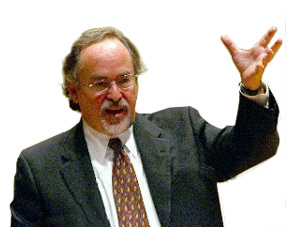
David Horowitz has lived a rich, and contradictory, life. He once contributed to seminal leftist magazine Ramparts and hired for the Black Panthers, but then bitterly split with his leftist friends and reinvented himself as a conservative who may be the leading scourge of left-leaning professors nationwide. His crusade to make liberal “indoctrination” a statutory offense has seized the backing of Republican lawmakers and the imaginations of campus followers. Recently, Horowitz launched a new Web site, DiscoverTheNetwork.org, to catalog and expose his enemies on the left.

When I called to interview him for Salon, listed on his site as an “apparatchik far-left” publication practically in league with Islamists, the former Salon columnist was strangely eager to appease me. Famous for breathing fire in public before admiring college Republicans, he scampered when I confronted him about his site’s claims, even promising to rewrite some of them.

Purportedly a serious counterbalance to liberal sites that track conservatives, Horowitz’s online “Guide to the Political Left” lays out what he considers the extensive connections between liberals and terrorists. Its controversial picture gallery of “leftists” runs the gamut from movie critic Roger Ebert and Omar Abdel Rahman, the mastermind of the 1993 World Trade Center bombing, to crushed Holy Land protester Rachel Corrie and even Sen. John Kerry.

You just can’t separate Ebert from a terrorist like the blind sheik Rahman, Horowitz told me. Chalk it up to the limits of presenting information on a two-dimensional computer screen. “It’s a limitation of — what? Of language? The human mind?” mused Horowitz. “The two-dimensional, three-dimensional, four-dimensional universe?”

The human minds with limitations, of course, belong to his critics. But Horowitz’s latest venture has his critics asking if the right-wing provocateur has finally flipped in his long-running battle with the left.

Columbia journalism professor and longtime liberal activist Todd Gitlin calls the site the “venomous” product of Horowitz’s 1950s childhood as the son of Stalinists, and of his lasting guilt over the killing of a friend by his former allies, the Black Panthers. “The psychodynamics here are not pretty” says Gitlin, whose squashed face appears on the site. As No. 376 on the list, he’s accused of “harboring the belief that his country is ultimately unworthy of his respect and even allegiance.” The Web site, Gitlin says, reflects “a demonology that’s about as unsubtle as the one [Horowitz] pursued when he was a Marxist in the ’60s, except the terms are inverted.”

The Horowitz files at Discover the Network, at last count, span 948 people and 552 organizations, from America Coming Together to the Pearl Jam fan club to the Al-Aqsa Martyrs’ Brigades. Horowitz says that his critics have fixated excessively on his Web site’s “picture grid” — Paul Begala diagnosed it as “stark raving mad” — and refuse to answer the weightier accusation implicit in Horowitz’s database: that the political left has forged an “unholy alliance” with terrorists. His critics, Horowitz wrote on FrontPageMag.com, “squeal about putting radical Islamists in the same database … as Michael Moore, Ward Churchill and Barbra Streisand.”

“It may seem extreme to some people to have John Kerry in the same database as [Sept. 11 hijacker] Mohammed Atta,” he told me, yet he was at a loss for a way to separate them on his site. It was “an infinite regress,” he said: Toss out Stanley Cohen, lawyer for Hamas, and he’d have to remove the allegedly similarly minded ACLU. Take out the ACLU, and the next thing you know you have to delete Democrats from the “network.”

The searchable site, with a staff of two, opened to the public in February after about two years in development, at a cost of about $500,000 by Horowitz’s estimate. It has met with scattered applause from the right as an educational tool. Conservative blogger “Jeff Blogworthy” declared that the “leftist attack strategy” has been laid bare by Horowitz’s site. “Few people understand the Left like David,” he wrote.

Horowitz offers his A-to-Z master list of leftists as a gift of wisdom through experience — i.e., his transformation from a radical to a repentant, hard-line anti-Communist. But is he the right man to build a cool-headed research database that uses accuracy as a weapon?

Horowitz hopes to outdo progressive watchdog sites like the Southern Poverty Law Center’s Intelligence Project, which tracks white supremacists, Holocaust deniers and Horowitz himself (whom it labels a bearer of “radical ideas”); Media Matters for America, a site run by Republican turned liberal David Brock (whom Horowitz calls a “snake and liar and a backstabber”); and Media Transparency, a handy database that links Horowitz’s college groups to hundreds of thousands of dollars in support from the conservative coffers of Richard Mellon Scaife and the Bradley Foundation.

Media Transparency’s Rob Levine calls Horowitz’s site a “comic cartoon imitation” of the Minnesota-based liberal site, which Horowitz acknowledged was an inspiration for Discover the Network. “One reason,” Levine says, “is that there just isn’t the same kind of progressive infrastructure and coordination on the left as there is on the right, so in some sense he’s swatting at a chimera.”

The mission statement of Horowitz’s site is to “identify the individuals and organizations that make up the left and also the institutions that fund and sustain it.” For instance, Discover the Network identifies the Ford Foundation as a supporter of “communist front groups” and the Tides Foundation as the “nerve center of the left,” asserting that Teresa Heinz Kerry has funneled $8 million through the foundation “to further her radical environmentalist agenda” (a claim that’s debunked at Snopes.com).

In 1989 Horowitz confessed to Sun Myung Moon’s Insight magazine that fate had bound him, like Ahab, to pursue his “white whale” forever — a quest “to stigmatize the Left and separate it.” But he presents his new project as a fountain of data, not stigma. “I want to make it clear at the outset that I have striven to make an informational database, and not … a ‘tar and feather the left’ database,” he told Salon.

He’s sick of what the other side does, he says, surfing the Web while we talk for examples of anti-Horowitz rants. “It’s like, ‘Is Horowitz a lunatic?’” he says. He ends up at Media Transparency and points to a headline: “David Horowitz’s imagined supporters speak out.” In comparison to that language, Horowitz says, “I feel I set a standard here … I don’t think there’s another site that’s as responsible” as Discover the Network.

Adds staffer Genesio Zenone, the site is an “electronically overdue other side of the argument.”

But many Discover the Network entries run hotter than the ones on Media Transparency. Hillary Clinton’s dossier soars into a many-paragraphed rumination on Clinton loyalists, explaining what one can learn from their “sordid, criminal means” about the evil nature of progressives, whose idealism is skin-deep: “They hate you because you are killers of their dream … Since the redeemed future that justifies their existence and rationalizes their hypocrisy can never be realized, what really motivates progressives is a modern idolatry: their limitless passion for the continuance of Them.”

Confronted with this vitriolic passage, Horowitz concedes it was excerpted from a 2000 piece of his published on FrontPageMag.com, “Progressive Narcissism,” but says his overly reverent staff improperly cut-and-pasted a polemic as an entry in a strictly nonpolemical data source. “I have this problem with my staff,” Horowitz says, “and that is, they won’t touch my words.” He says that while his writings have formed the basis for many entries, they’re supposed to be edited down to just the facts. His editor is going to have to fix that one, he says.

One man who won’t be removed from the database is Ebert, No. 298. “I was surprised to find myself linked to a terrorist I have never heard of,” Ebert said, facetiously. “I was not curious enough about him to Google him, but perhaps he will Google me and, having discovered my wonderful reviews, will renounce terrorism and spend more time at the movies.” (What earned Ebert his spot, the site says, was his criticizing “runaway corporations,” accusing the U.S. death penalty system of inequity, and making an unflattering reference to former Florida Secretary of State Katherine Harris.)

“The one link Discover the Network seems to be missing is ‘David Horowitz and Sen. Joseph McCarthy,’” Ebert says. “David was a respected journalist. He could be a respected conservative commentator. Why does he lower himself to rabble-rousing?”

Told of Ebert’s criticism, Horowitz began to call the movie critic “an a — ,” but stopped and settled for calling him “probably ignorant of everything I’ve ever written.”

In fact, it’s Horowitz’s past work that explains his method of lumping together the individuals and organizations on his site into one vast left-wing conspiracy — including last year’s book, “Unholy Alliance: Radical Islam and the American Left,” praised by former CIA director James Woolsey for revealing the enemy within. “This is the left that I see,” Horowitz says. “The background for this, for 20 years I’ve had in my head.” With a burning fuse on its cover, “Unholy Alliance” argues that groups who despise one another might actually be working closely together, maybe without even knowing it. This philosophy forms the backbone of Discover the Network, which digitizes theories of Horowitz’s that are long in the making.

You can’t simply connect the dots from Ebert to, say, Marwan Barghouti, leader of the Palestinian faction Fatah, on Horowitz’s site. His precariously programmed Java engine puts an interactive graphic on the screen that ostensibly links isolated conspiracies of the “political left,” but a recent attempt to find the link between Ebert and terrorists came to an early dead end at the listing for the International Association of Democratic Lawyers in Brussels, Belgium. Then the program crashed.

Horowitz initially defended the organization of his database, saying that seemingly disparate people are all linked by anti-Americanism. “They [would] probably say that 9/11 or the [Iraq] beheadings were the wrong way to carry out a right cause,” he says. “They come together when it comes to opposing America’s wars, America” — he laughs — “and seeing America as the Great Satan.” And he says “they,” including Michael Moore, must be purged from the Democratic Party for the good of the country.

But later Horowitz announced some revisions to his site. Some of the members of the picture grid, he wrote on FrontPageMag.com, are “patriotic Americans.” So are the editors of Salon, he added. “If you visit the individuals search page [of the site], you will see that we have separated the individuals into five columns, which we identify as ‘totalitarian radicals,’ ‘anti-American radicals,’ ‘leftists,’ ‘moderate leftists’ and ‘affective leftists’ … We have arranged the grid this way, even though we think it feeds certain illusions, to accommodate those who expressed anguish over the grid in its original format.”

He also fixed the description for No. 819, media critic Norman Solomon. He was listed not only as an “anti-American writer” but as a University of California at Berkeley professor, when he isn’t, in fact, a professor of any kind. Recently checking his entry, Solomon said of Horowitz: “Imagine Joe McCarthy with a Web site, proudly stuck in a time warp … Horowitz strains to throw as much mud as he can, evidently with the fervent belief that some of it is bound to harm his targets. Along the way, his material is riddled with demagogic smears, weird leaps of semi-logic and factual errors.”

Days later, the clarifications and changes kept coming. “I’ve modified the descriptive text on the Individuals search page to make clearer that the [database] obviously includes moderates who don’t think America is an imperialist power or the Great Satan,” Horowitz wrote in an e-mail subsequent to our interview.

Still not off the hook, however, are his eternal enemies — college professors — whom he considers the most closely enmeshed with terror. As he explained it to Salon, Washington Democrats are products of the university “feeder system,” an underworld where “40,000 professors have signed antiwar letters.” And that’s the impetus for his “Academic Bill of Rights” crusade in various state Senates, which among other things would outlaw “indoctrination” by liberal professors in classrooms. Defeated in Colorado last year, a similar law is resurfacing in the California Senate this month and is making some progress in the Florida Assembly.

But Horowitz’s crusade is clearly driven by more than a push for diversity; he believes those he disagrees with not only are overrepresented in academia but represent threats to national security. For him, much anti-Bush rhetoric seems to be interchangeable with collaboration with the enemy. He likens Islamic fervor to “Western radicals’ efforts to purify their tainted souls of ‘racism, sexism and homophobia,” saying that the two movements “reflect parallel inclinations … Both are exacting in the justice they administer and the loyalty they demand.”

Is Horowitz concerned that people might read his site the wrong way and believe that Mohammed Atta and a local college professor are literally co-workers? “I can’t be accountable for people who misread what’s here,” he says. The professors he has criticized, he says, complain, “‘I’m getting death threats or whatever.’ I get death threats all the time. The level of our political rhetoric is horrible, and I don’t think very much can be done about it.” He adds: “I treat people the way they treat me.”

Continue Reading Close

John Gorenfeld is a freelance writer in San Francisco.

Five pop culture items we missed

Today's catch: Gwyneth Paltrow is a 9/11 hero, Gerard Depardieu pees on people, and "Lone Ranger" nixes werewolves

  • more
    • All Share Services

Five pop culture items we missed"What do you mean we-rewolves, kemosabe?"

1. Cause of the day: Kate Winslet founds “British Anti-Cosmetic Surgery League” (for very famous people) along with Emma Thompson and Rachel Weisz. Maybe they can be like sister suffragettes and battle the Barbie Mom!

2. Celebrity story involving airlines and urine of the day: When Gerard Depardieu wasn’t allowed to use the toilet during takeoff, he peed all over fellow passengers on an Air France flight. Says Air France spokesperson: “I confirm the fact that he [Depardieu] did indeed urinate in the plane.” That is all.

3. “Gwyneth Paltrow saved my life on 9/11″ story of the day: Wait, really? I could almost forgive Paltrow for her multitude of sins if she acted heroically on Sept. 11. So let’s check it out:

“Clarke, then a 24-year-old account manager at Baseline Financial Services, was on her way to work shortly before 9 a.m. and about to jaywalk across the street to catch the 1/9 train in Tribeca when the Oscar winner abruptly cut her off in her silver Mercedes.”

Oh wait, so Paltrow almost ran over a woman, inadvertently making her late for work at the World Trade Center? Man, and here the firefighters got to take all the credit. 

4. Narrowly averted train wreck of the day: Disney has split with Jerry Bruckheimer on “The Lone Ranger” movie, apparently because the director’s insistence on adding werewolves and “Indian spirits like Obi-Wan Kenobi” to the plot was getting too expensive.

5. Must read of the day: Roger Ebert’s new memoir, of which he’s posted the first several pages on his blog. It begins, “I was born inside the movie of my life,” which might be the best opening line since that Dickens book people are always quoting when they want to reference a good opening line.

Continue Reading Close

Drew Grant is a staff writer for Salon. Follow her on Twitter at @videodrew.

Ryan Dunn’s alcohol level played factor in fatal crash

Police now confirm that the "Jackass" star was more than two times over legal drinking limit at time of death

  • more
    • All Share Services

Ryan Dunn's alcohol level played factor in fatal crashRyan Dunn

Ryan Dunn, the “Jackass” star who died in a fatal car crash on Monday, had a blood alcohol level of .196 percent at the time of his death, police told the press today. That is over twice the legal amount, confirming reports that Dunn had been intoxicated when he drove home from a Pennsylvania bar early that morning.  Dunn’s death has been at the center of a media firestorm for the past three days, with “Jackass” fans lashing out at Roger Ebert after the critic tweeted about “not letting Jackasses drink and drive.”  Photos of Dunn doing shots with friends surfaced on Twitter hours before his death, but until now there was no confirmed evidence that alcohol played role in the crash.

Dunn and his passenger, a Navy SEAL named Zachary Hartwell, skidded off the road at 3 a.m. in Dunn’s Porsche. The car was going approximately 132-140 mph when it hit a tree, causing the vehicle to catch on fire. Their deaths were caused by “blunt and thermal trauma,” according to the autopsy report.


Drew Grant is a staff writer for Salon. Follow her on Twitter at @videodrew.

The best and worst celebrity tweets about Osama’s death

Steve Martin, Charlie Sheen and Rob Lowe: Who had the craziest reaction to the killing of bin Laden?

  • more
    • All Share Services

The best and worst celebrity tweets about Osama's death

Yesterday we asked two very important questions about people’s reactions to Osama bin Laden’s death: “Is it too soon to laugh?” and “Can celebrities be held responsible for their (or their kids’) tweets on historic occasions?

As it turns out, the answer is “yes” and “yes.” While some comedians actually provided clever and insightful commentary on yesterday’s news, far more went the easy route and just added to the deafening roar of bloodthirsty pro-America shouting. Today we look back and find the good, the bad and the ugly of celebrity Twitter reactions to Osama’s death.

First, there was the “What about ME?” response: Both Lily Allen and The Rock celebrated their birthdays yesterday and didn’t want that fact to get overshadowed in all the hubbub.

On the complete opposite side of the spectrum, there were the thoughtful responses from men like Rob Lowe, Roger Ebert, and — not joking — MC Hammer:

 Some people bordered on the brink between knee-jerk response and good taste, like Jim Carrey, Judd Apatow and a somewhat restrained tweet from Charlie Sheen:

 Other celebs used the time to start a death certificate conspiracy club, like Johnny Weir:

 … or just sidestep the issue completely with a pithy remark, like Aziz Ansari:

But by far the award for the weirdest response goes to Steve Martin, whose reaction to America catching the #1 most wanted man in the world was to make a completely bizarre joke about drugs and flying body parts:

Too soon? We doubt this joke would have been funny even if we gave it a year.

Continue Reading Close

Drew Grant is a staff writer for Salon. Follow her on Twitter at @videodrew.

Ebert attacks my “Secretariat” review — it’s on!

My response to the critic's takedown of my takedown

  • more
    • All Share Services

Ebert attacks my Diane Lane in "Secretariat"

I recently published a review of the new Disney film “Secretariat” that took an unorthodox and admittedly inflammatory approach to a would-be inspirational movie about a lady and a racehorse. Nearly all viewers will choose to see or not see the movie based on their level of interest in watching Diane Lane in an awesome array of early-’70s fashions, or watching exciting re-creations of the 1973 Triple Crown races. I accused the film of concealing — or embodying, that’s a better word — an ideological worldview that is never made explicit but is present in every frame.

I don’t claim the review makes its case with perfect clarity, and I didn’t expect many people to agree completely. Being forcefully told that you’re full of crap goes with the job description, especially in an inherently subjective endeavor like movie criticism. I was gratified that a lot of people read the review, and e-mailed or Tweeted it onward — and was somewhere between flattered and startled that Roger Ebert posted a lengthy takedown of my review on his Chicago Sun-Times blog. Like almost everyone in this insular field, I venerate Roger as a passionate movie lover, a generous spirit, and an old-school journalist who has made the transition to new media and now pretty much owns the joint.

I thought Roger’s response was worth a response of my own, partly because I think he’s misreading or misinterpreting me, but mostly because I think the cultural gulf between our understandings of “Secretariat” offers a fascinating opportunity to talk about all kinds of stuff film critics don’t generally discuss: the nature and meaning of propaganda, the ideology (or lack thereof) of Hollywood movies, the role of religion in public discourse and maybe the gap between idealism and cynicism when considering movies, or the world. (Actually, activists and commentators on the right are way ahead of us: They talk about this stuff all the time, and have compelled Hollywood to understand that there’s enormous demand for a movie like “Secretariat.”)

UPDATE: I also posted this to Roger’s blog, where he has responded. Scroll to the bottom of the page to read that.

——————–

Well, gee. Thanks, Roger. (I think.)

I’m not eager to get into a public dispute with you over a Disney movie that you found “straightforward” and “lovingly crafted” and I found weird, fake and inexplicably disturbing, which may be all this boils down to. The world isn’t likely to care much, and will render its verdict without our help.

I appreciate that you opened and closed this piece with some kind words, and I have great respect for you as a man and a critic. That said, I think the only place where we agree here is when you say, “O’Hehir’s reading [of 'Secretariat'] is wildly eccentric.” I’ll cop to that happily — my review of the film was willfully hyperbolic, even outrageous, in hopes of getting people to look at a formulaic Disney sports movie through fresh eyes. I know I don’t have to explain the function or uses of hyperbole to you, since it’s a technique you often employ (here and elsewhere). My hyperbole in the “Secretariat” review was supposed to be funny, and also to provoke a response. I appear to have succeeded brilliantly with the second part! The results on “funny” are more mixed.

Now, clearly I could have written a more “normal” review, in which I said something like: “Secretariat” was kind of fun to watch, but it bugged me. It presents a prettied-up, phony-baloney vision of America in the early ’70s, in a transparent effort to appeal to the “family-values” crowd who ate up “The Blind Side” — people who want a comforting and unchallenging movie without any sex or swearing. There’s nothing wrong with that as a way to make a buck, but this example is ultra-tame, scrubbed clean of any genuine conflict or drama, and I pretty much think it’s crap.

Now, I gather you would have disagreed with that, and pretty sharply, but I very much doubt you’d have bothered writing several thousand words ripping me apart. Now perhaps you see the genius of my plan!

Seriously, that is what I think — and pretty much what I said, albeit in somewhat stronger language. In your haste to take me down, I think you frequently read my gag lines as being deadly serious, mix or conflate different aspects of my argument (e.g., I don’t say or think anything about the horse being evil, or representing evil), and confuse events in real life with what we see in the film.

Now then: I do indeed compare “Secretariat” to “master-race propaganda almost worthy of Leni Riefenstahl,” a deliberately outrageous claim that, I suspect, pissed you off right at the outset. Let me elaborate a little. In my view, the most effective propaganda movies are not the ones about dudes with guns that espouse militarism, or the Soviet boy-meets-tractor films, or the Nazi cartoons about Jews. Those are too obvious. The most effective kind of propaganda depicts normal life, or rather an idealized vision of normal life, one that (as one of my readers put it) “makes a particular worldview seem natural, right and appealing.” Viewed that way, of course, a very large proportion of Hollywood movies could be considered propaganda, which is a subject for another time. (The shoe may fit.)

Of course it’s offensive to compare a contemporary filmmaker to Riefenstahl — although she was unquestionably a great director — but I never said or suggested that Randall Wallace had consciously or deliberately created a film whose primary purpose was ideological. It’s more like the ideology of reassurance and comfort and gorgeous images — what I refer to as the “fantasia of American whiteness and power,” which is, yes, going kind of far — is so built into this kind of movie you can’t get it out. I do, however, see Wallace’s desire to appeal to Christian audiences and a never-enumerated set of “middle-American values” as politically coded, at least to some degree. (Or rather, it’s coded if you want it to be; of course he’s happy with secular left-wing types watching the movie too.)

You believe, or suggest, that I damn the film for not noticing Vietnam or Watergate, but that isn’t quite right. As I think I make clear, I was struck by the oddness of the film’s idealized, “Ozzie and Harriet” portrait of American life, which feels more like the ’50s, being set in one of the most tumultuous periods of American history. That’s a suggestive fact, an element of the overall picture, not an indictment. You indulge in some hyperbole of your own in suggesting that I accuse Penny Chenery (the movie character? the real person? I am not sure) of being an evil right-winger, when I never say, and do not know, anything about her politics. Watch out for the “O’Hehirian Riefenstahlian TeaPartyite” clique, though –we’re on the rise!

I could go on, and I guess I will just a little: I never say or suggest that anyone considered the Triple Crown victories “as a demonstration of white superiority.” (I honestly don’t believe you don’t get the “Nietzschean Überhorse” joke. Secretariat was a product of eugenics if any living creature ever was.) You suggest that I attack Randall Wallace for his religious faith, but I do not, and you cite nothing to support this. You say that I see “a repository of Christianity (of the wrong sort, presumably)” in the film, when I say clearly that religion plays almost no role in the story. On the other hand, it’s simply a fact that Disney is marketing the film to Christian conservatives, and neither of us is required to have an opinion about it. And I’m not sure what you mean when you say you refuse to allow me to define the film as “Tea Party-friendly.” Is Sarah Palin not allowed to like it?

On the film’s racial issues: You suggest that I am demeaning the real-life Eddie Sweat, Secretariat’s groom. I say nothing about Eddie Sweat. I am discussing a fictional character, the only black person ever seen in the film, who is presented as subordinate, unreflective, constantly cheerful and uniquely well equipped to communicate with an animal. Could there be such a person? Of course. But in the context of my perception of the film’s total universe, this feels like an unwholesome and old-fashioned stereotype (for which there is a borderline-offensive name I will not use).

Similarly, I have a tough time believing you don’t get what I’m trying to say about the Pancho Martin character. Those who reported on the Triple Crown at the time have said that the real Pancho Martin was neither talkative nor boastful, and had no particular adversarial relationship with Penny Chenery. That stuff we saw in the movie did not happen. But the filmmakers have taken the one faintly “ethnic” or non-American character in the movie, and made him thoroughly despicable. What was that? An accident? An aesthetic choice? Or a lazy and coded shortcut?

For me, all in all, “Secretariat” adds up to something that looks pretty but tastes pretty bad, and apparently I expressed that view with a degree of force you found “insane.” Frankly, I wish you had avoided those kinds of epithets, and focused more on areas where we may have real differences of philosophical or political or aesthetic opinion and interpretation to discuss. I’m inclined to believe that you understood my argument well enough — better than you claim to, at least — but that it pissed you off so much you just didn’t want to deal with it. But that’s only a theory, and I assure you that my faith in Roger Ebert remains. Generally speaking.

——————–

UPDATE: Ebert’s response, just posted on his Sun-Times blog, is typically concise and gracious, and comes with a zinger or two:

Thanks for responding. I understand your points, and have had similar thoughts of my own about some films. But you’re correct: I didn’t read it as satire, maybe because I’ve been softened up by so many similar Armond White reviews that he (apparently) writes seriously.

We can agree perhaps on one thing: Your review helps us define what Rotten Tomatoes considers “positive.”

Continue Reading Close

Not eating, but still cooking: Roger Ebert pens cookbook

Critic was inspired by responses to a blog post about ... rice cookers?

  • more
    • All Share Services

Cancer may have robbed Roger Ebert of the ability to eat, but it won’t stop him from dishing out cooking advice.

Four years after cancer surgery left the famed film critic unable to speak or eat, Ebert is publishing a cookbook dedicated to rice cookers, a kitchen appliance he lovingly calls “The Pot” and champions as an answer for those strapped for cash, time and counter space.

“To be sure, health problems have prevented me from eating,” Ebert writes in the book. “That did not discourage my cooking. It became an exercise more pure, freed of biological compulsion.”

The idea for the book came after a 2008 blog post he wrote about rice cookers prompted hundreds of comments, with many readers including their favorite recipes. “I think I was somewhat frustrated by not being able to eat and I wanted to live vicariously,” the 68-year-old said during an interview at his Chicago home, his laptop computer speaking his typed answers.

The book includes many of those comments, as well as more than two dozen recipes for dishes such as chili, risotto, jambalaya and oatmeal — Ebert’s favorite. He took a witty and funny tone when writing it; he says he didn’t want it to sound too specialized or difficult.

“The basic recipe is: throw everything in the pot and slam on the lid,” said Ebert, who has battled cancer in his thyroid and salivary gland over the last eight years. He now uses a feeding tube for nourishment. His book, “The Pot and How to Use It. The Mystery and Romance of the Rice Cooker,” will be released Sept. 21.

During his recovery, Ebert turned to social media such as Twitter and his blog, cultivating a tremendous following. And increasingly he’s reached out to mainstream media to tell his story. In February, for example, he talked to Esquire magazine about missing his former late movie review show co-shot Gene Siskel, who died in 1999 from complications following surgery to remove a growth from his brain.

And in March, Ebert appeared on “The Oprah Winfrey Show.” During the appearance, he made his Oscar predictions using a computer voice patterned after his own.

Ebert fell in love with the rice cooker after receiving one as a present for his 1992 wedding. The Chicago Sun-Times critic says he even took the rice cooker with him to the Sundance Film Festival, where he would cook with it during his busy movie-viewing schedule.

“We used to take the rice cooker almost everywhere we went,” his wife, Chaz Ebert, said.

Ebert urges his readers to improvise with the recipes and ingredients, saying there are no rules. He also says it is easy to adapt recipes not written for the rice cooker. Someone could go a week using the rice cooker three meals a day, he said.

And how do you learn to use a rice cooker?

“With experience you develop a sixth sense,” he said.

But writing a cookbook when you can’t eat?

It isn’t as sad as one might imagine that he is unable to eat or drink, he wrote in a blog post earlier this year. Rather, he misses the loss of dining with friends and family, rather than the loss of the food itself.

“The food and drink I can do without easily,” Ebert wrote. “The jokes, gossip, laughs, arguments and shared memories I miss.”

And his memory for flavor hasn’t faded. He wrote he has vivid memories of “an entire meal at Steak ‘n Shake, bite by bite” and for the “taste and texture of cheap candy.”

Anna Thomas, author of the cookbook “The Vegetarian Epicure,” wrote an introduction to Ebert’s book. She calls Ebert, who won a Pulitzer in 1975 for his newspaper film criticism, “a Renaissance man” who combines elements of standup comedy and memoir.

“Cooking, for him, I think in the last few years has become a very selfless act,” Thomas said. “This really tells you about Roger. He doesn’t stop living, doing things or being interested in things or having a good time because in a way something changes. But Roger does not get discouraged. He has such a zest for life.”

That zest is reflected in the book’s many small quips: “Grind it fresh in a mortar and pestle,” he writes about cooking with flax seeds. “You don’t have a mortar and pestle? People these days want everything done for them. Do like the Indians did and grind it with the end of a stick in the depression of a boulder.”

Thomas said she sees Ebert enjoying the social aspect of food, the kitchen and cooking.

“It’s something that he has always loved, so it’s not for him that if ‘I can’t taste it and eat it and swallow it then I’m not interested,’” she said. “For Roger, it’s very much his family, his friends and the people around him. He’s there’s for it. He loves it.”

Ebert even says in his book that he wrote it “simply to establish that I enjoy cooking.” Chaz Ebert says though her husband doesn’t cook as much as he used to, he still spends time in the kitchen. She said he chops apples into thin slices for her.

“I think it’s more of an art form for you and the kitchen is such a relaxing place for you,” she told Ebert.

Ebert explains it more simply saying the reason he cooks: “Satisfaction.”

——

Online:

http://blogs.suntimes.com/ebert/

http://rogerebert.suntimes.com/

Continue Reading Close

Page 1 of 5 in Roger Ebert