
United Nations

“There’s just no way I can walk away”

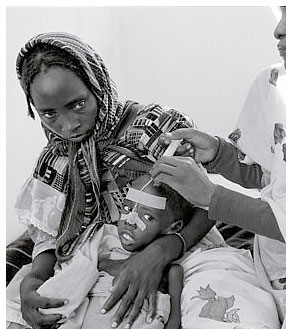
A professor urges action on Darfur, saying the U.S. should be embarrassed about declaring the violence genocide while doing so little to stop it.

As southern Sudan enjoys the first fruits of peace from the comprehensive treaty it signed with the Khartoum government on Jan. 9, ending a 21-year civil war, hundreds of civilians continue to die violently on a daily basis in Sudan’s western region of Darfur. The situation in Darfur exploded in February 2003 after the Islamic regime disarmed insurgent African groups and left weapons in the hands of Arab militias, which it then hired to control the insurgency. The Arab militias began slaughtering and raping Darfuri civilians and razing their villages, displacing 2 million people and creating an untold humanitarian crisis.

In July 2004, Congress led the world in unanimously declaring the violence in Darfur a genocide, as the Bush administration also subsequently did. And Congress is considering the Darfur Accountability Act, which would take strong steps against the Khartoum regime and provide support for the meager African Union monitoring force that is now in Darfur.

But recent media reports suggest the Bush administration may be backing off its earlier genocide determination, and even trying to neuter the Darfur Accountability Act.

While the world was wringing its hands over Darfur, Smith College English professor and Sudan expert Eric Reeves was taking action on the tragedy. Since becoming involved with Sudan in 1999, Reeves has taken off six semesters to focus on raising awareness about the genocide. His writing has appeared in over 150 publications; State Department officials read his reports, and journalists quote his mortality assessments. Reeves also led the divestment campaign that eventually forced Talisman Energy, a Canadian oil and gas company that was operating in Sudan, to exit the country.

Asked what the world can do now about what he says is “arguably the most destructive civil conflict since World War II,” Reeves told Salon, in a phone interview from his home in Northampton, Mass., “We can pass all the U.N. resolutions we want, but if we don’t see to it that Khartoum is forced to adhere, none of these will make any difference … If we wait for meaningful action from the U.N., we will be waiting forever.” What’s needed to stop the genocide, Reeves said, is immediate humanitarian intervention and military support to protect civilians and aid operations.

How did Sudan become your central preoccupation?

I just finished my 26th year as a professor at Smith. About a dozen years ago, I also began a career as a wood-turner, and found that my work was marketable. I resolved that all the profits I made would go to humanitarian organizations, and that led to contributions to Doctors Without Borders, or Médécins Sans Frontières. In January 1999, I met in New York with Joelle Tanguy, the executive director of MSF at the time, and our conversation turned to Sudan. It was looking more and more intractable; that year, MSF named it the most underreported humanitarian crisis in the world.

At some point, she said something to the effect of “Sudan needs a champion.” And for reasons I couldn’t fully explain, I said, “I’ll see what I can do.” That launched what became a very intensive Sudan career that’s now over six years old.

There have been six semesters in which I’ve found myself doing both Sudan and teaching, and that has been almost overwhelmingly difficult. In fact, three years ago I tried to retire from Sudan work. But I found after a week I couldn’t retire. I’m not unusual in finding that Sudan presents a spectacle of human destruction and suffering that is overwhelmingly compelling. Even before I traveled to Sudan I’d met many Sudanese, looked into many Sudanese eyes — there’s just no way I can walk away from these people. Not with the powerful voice I’ve developed; it registers in a lot of important places.

I can assure you that I won’t rest until peace comes to Darfur, and it is a peace that is sustainable throughout the country.

What was the catalyst for the crisis in Darfur?

The current conflict arose in February 2003 out of the Khartoum National Islamic Front Regime’s asymmetric disarming of African tribal groups, leaving weapons in the hands of Arab militias and taking them away from African tribal groups. That led to an increase in Arab raiding, which was deeply alarming to village leaders.

In the 1980s, Khartoum changed the administrative order by refusing to respect traditional tribal lines of authority. In recent years, they began disarming African villages, which were then completely vulnerable to attacks. One of the precipitating events was the storming of a police station by African villagers who were simply reclaiming their weapons to protect themselves. That act was soon replicated throughout Darfur.

In February 2003, Darfur exploded, and Khartoum was obliged to redeploy forces from the south. In military-to-military confrontations between Khartoum’s regular forces and the Darfuri insurgents — the Sudan Liberation Army (which is different from the Sudan People’s Liberation Army, the southern movement) — Khartoum began to lose badly. That was the beginning of its recruitment of the Janjaweed, who don’t attack insurgents; they attack civilians. That’s what they were hired to do.

How does the civil war in the south relate to the situation in Darfur?

They are both responses to central tyranny, but they are not directly related. In the catastrophe in southern Sudan, over 2 million lives were lost in 21 years of conflict, over 4 million are internally displaced and another half a million are refugees. The people of southern Sudan have long demanded the right of self-determination, including the right to secede from Sudan.

In Darfur, the issue isn’t secession; it’s greater autonomy, greater political and economic representation. The Sudan Liberation Army and the Justice and Equality Movement are the two insurgency movements in Darfur. They are fighting against political and economic marginalization and for a secular democracy. The SLA is fighting to protect their people as the Arab militias attack African villages.

Why was the world so slow to react to the genocide?

In October 2002, the Sudan People’s Liberation Army signed a cessation of hostilities agreement with Khartoum, and major fighting between the South and the North began to slow down. And on Jan. 9, 2005, the parties signed a comprehensive peace agreement.

The United States so wanted a peace agreement. If you look at the lack of commentary from the key Western negotiators in the North-South peace process — Norway, the U.K. and the United States — they were deliberately muting their criticism of Khartoum over its genocidal behavior in Darfur in order to get the North-South agreement completed.

Convinced that the West [really] wanted a North-South peace agreement, Khartoum [figured] that if they could string out a final agreement, the West wouldn’t press them on Darfur. The signal Khartoum sent was: “Don’t push us too hard on Darfur. We’re not quite ready.” In December 2003, the U.N. special envoy for humanitarian affairs reported that Khartoum was deliberately obstructing humanitarian aid to areas where the African population was concentrated. Yet, nobody else picked up on it, either inside or outside the U.N.

Back in January 2004, I would have conversations with my contact at USAID [U.S. Agency for International Development] to figure out whether we inhabited the same moral universe as the people around us. It was mind-boggling. We could see what was happening in Darfur, and nobody else could see it. If they saw it, they’d have to react.

Have any of the six U.N. resolutions on Sudan had any effect?

No, and we need only look at the first of these, on July 30, 2004, which had only one demand in it: that Khartoum disarm the Janjaweed and bring its leaders to justice. There has been no progress whatsoever in terms of a response from the Khartoum regime. But beyond that, the Chinese permanent representative to the United Nations has made it clear China will veto any real sanctions measures against Khartoum. China is the dominant player in oil development and production in Sudan, and Sudan is China’s premier source of offshore oil development.

What is the Bush administration’s stance on the genocide?

Bush himself has publicly declared that what is going on in Darfur is genocide. But lately, there seems to be a very troubling policy to lowball the Darfur crisis. We began to see signs of it when [Secretary of State] Condoleezza Rice had an extensive interview with the Washington Post at the end of March. She was asked repeatedly, “How many troops would be necessary to stop the genocide in Darfur?” Rice said she didn’t know. Are we really to believe a woman as intelligent as Condoleezza Rice has no idea what an appropriate force is to stop genocide? Or is it that she didn’t want to put a number on it, and subject that number to criticism?

Two weeks later, Deputy Secretary of State Robert Zoellick traveled to Khartoum. He pointedly refused to answer the question, “Is genocide still being committed in Darfur?” We already had an answer to that question by the State Department as well as Congress, in a unanimous, bipartisan, bicameral vote. Now the State Department is backing away from its earlier genocide determination, because it becomes more and more embarrassing the longer you declare it a genocide but don’t do anything to stop it.

The State Department has issued a document estimating that 60,000 to 160,000 people have died in Darfur. That’s an absolute scandal. It’s not a mortality assessment; it’s propaganda. The document does not provide a single citation or bibliographic reference, not one URL. There is no statistical analysis; there is nothing but bald assertion.

Among actual epidemiological studies of mortality, we have a consensus of 350,000 to 400,000. My most recent assessment has a figure of 400,000. I have written 12 full-scale analyses looking at every bit of data in the public domain, and a good deal from confidential sources, and that includes data from the World Health Organization, the Coalition for International Justice and USAID, as well as from my contacts at the U.N. and nongovernmental organizations.

The Darfur Accountability Act is hardly what you would call silver bullet legislation, but it does ask for serious things to be done. And as Nicholas Kristof wrote in a recent column in the New York Times, he has a letter in which the Bush administration talks about its desire that various provisions of the act be stripped out.

This is an extension of the view that we can’t push the Khartoum regime too hard or we’ll lose the North-South peace agreement. Khartoum sees right through it. It’s the wrong signal to send.

When the U.S. declared the conflict in Darfur a genocide without the backing of the U.N., were we really committing ourselves to anything?

[Former Secretary of State] Colin Powell said no. He essentially said, “We find that it’s genocide; we refer it to an obviously paralyzed U.N. Security Council. Genocide proceeds, but we’ve made our determination and our legal obligations end.”

I would argue that there is ultimately a moral force that creates a legitimacy such that all actions that will stop the genocide are justified. That would include unilateral intervention. That’s politically impossible, but the moral obligation is there, and it should take the form of working publicly to put pressure on the Europeans, NATO, the Arab League and Japan.

What are the short-term and long-term actions needed to resolve the crisis in Darfur?

We need immediate humanitarian intervention, with all the necessary military support, to protect civilians and aid operations that are increasingly at risk of being suspended. The only credible military assessments I’ve seen — the ones that begin not with African Union capacity, or what’s politically possible at the U.N. — range from a low of 25,000 to a high of 60,000. The African Union has no mandate for civilian protection, and it has taken half a year to deploy 2,300 unequipped men. Any force must have an extremely robust mandate to protect civilians and humanitarian operations. It cannot be a monitoring mission, as the A.U. is.

You need to secure the perimeters of camps that have over 2 million people in them. You need to provide a way for people trapped in rural areas to try to get to camp areas. People are desperate to go back to their lands — this is the planting season — but they will not leave the camps unless they are provided security.

And the Janjaweed must be disarmed. If you look at those tasks, and you ask what is required to address them, you’re talking about a force of six to seven brigades of NATO-quality troops, assuming a brigade of 6,000.

Finally, for the next year, as people move back to their homes, we are going to need to ramp up emergency transitional aid. If we don’t, we risk this peace falling apart before it has a chance to take hold. And yet, the U.S. appropriation for emergency transitional aid has been negligible.

What other actions should the U.S. take at this point?

The United States has comprehensive economic and trade sanctions against Sudan. No American businesses are operational within Sudan, but many European and Asian companies that do business with the regime trade on the New York Stock Exchange. That fact has become much more salient in recent weeks, and there is a booming divestment campaign on campuses and among state legislatures directed at clearing investment portfolios of holdings in these companies. Only foreign investment makes it possible for this regime to survive and commit genocide. But there is no sign that the Bush administration is prepared to countenance capital-market sanctions.

Are there any reasons for optimism at this stage?

In Security Council Resolution 1590, passed in March, the U.N. committed to a peace support operation for southern Sudan of 10,700 personnel, including roughly 900 observers. But there is no civilian protection mandate and no mandate to stop the fighting initiated by the Khartoum-backed militias in southern Sudan. (The cease-fire agreement of 2002 has largely held, but there have been many violations, and many of these have targeted civilians.) Going forward, the greatest threat to the North-South peace agreement is the threat of military assault by these militias.

I am hopeful that the comprehensive peace agreement of Jan. 9 will hold — not because I have any confidence in the Khartoum regime but because I think they miscalculated. I don’t think they expected that the U.N. peace operation would have a chance to deploy.

If war resumes in southern Sudan, it will be because Khartoum concludes that too much has been given away in the peace agreement, calculating that it’s better to resume the war before peace really has a chance to take hold. It’s an all-or-nothing state of affairs right now. If [the war] resumes, it will be hell on earth.

Meanwhile, Darfur has captured the attention of a great many people. I don’t know how it happened. I’ve been working on Sudan for six years now, and at the beginning my main frustration was not being able to interest college students in Sudan. Now, I lecture constantly on college campuses. Just look at the number of Darfur Web sites, the number of prominent pieces published on Darfur. I think Congress’ determination that this was genocide was very significant.

But is it too little, too late?

Yes and no. If I’m right that 400,000 people have died, how can we not be too late? The question, though, is too late for what? Jan Egeland, the head of the U.N.’s humanitarian office, estimated in December 2004 that if humanitarian operations were forced to suspend their operations — and some have — monthly mortality could be as great as 100,000 civilians. If that occurs, we’re going to surpass the Rwandan genocide total before the end of the year. That, it seems to me, would be an even greater failure.

I was lecturing at Bowdoin College the other night, and I told the students that I have this fantasy about going to Darfur: I look into the eyes of a little girl there, and I’m told by those who know that she is the last child who would have died a genocidal death but for the efforts that finally, finally stopped the genocide. We’ve already failed, but she is the measure of our success.

San Francisco-based freelance journalist Julia Scott writes about water and energy issues for various publications. She also covers the environment for Bay Area News Group, a chain of newspapers in Northern California.

Is Agenda 21 a U.N. plot to kill the suburbs?

Or is "sustainable growth" a sensible policy demonized by a right-wing conspiracy theory?

McMansions endangered from on high (Credit: iStockphoto/Dmitry Galanternik)

In a resolution approved in January, the Republican National Committee characterized the United Nations’ Agenda 21 as “destructive strategies for sustainable development.” Included in this resolution was the RNC’s condemnation of the “insidious nature” of Agenda 21, and the recommendation by the RNC to adopt this resolution at the 2012 RNC Convention. An increasing backlash against this 19-year-old nonbinding U.N. plan shows how a conspiracy theory can become part of a major party’s platform.

How did a 40-chapter U.N. work plan on sustainable development, published in 1992, foster such a fervent backlash among conservative groups? Agenda 21, first revealed at the U.N. Conference on Environment and Development in Rio de Janeiro in 1992, aimed to address environmental and development concerns through global partnership initiatives. While the plan covered everything from the sharing of educational resources to strategies for economic and environmental development, conservative groups have focused primarily on its fourth section — titled “the means for implementation” — as revealing Agenda 21’s true and, for them, insidious nature.

While a recent New York Times article described anti-Agenda 21 activism as emerging roughly two years ago, the roots of the Agenda 21 conspiracy theory go back at least a decade. As early as 2002 Dr. Stanley Monteith, a Santa Cruz County, Calif., physician, who runs the conservative Christian website Radio Liberty, hosted a series of lectures on the dangers of Agenda 21. An insurance salesperson named  Joan Peros gave a nearly hour-long lecture on the perils of Agenda 21, warning, it “doesn’t matter which party is in power or control … some of our leaders totally understand and embrace the ushering in of a one-world order.”

The paranoia behind such fears was expressed by another guest lecturer on Monteith’s program, Jean Soderman, a self-professed former participant in Local Agenda 21 planning in Santa Cruz. When asked whether Agenda 21 would be worse than what Hitler did, she responded, “Yes. We are controlled by computers now and it has been said … that they have been trying this for two times already … first with Hitler, and it is going to be much, much worse.”

Michael Shaw, also from Santa Cruz and founder of the anti-Agenda 21 website Freedom Advocates, gave a lecture in 2006 at the Eagle Forum Conference in Santa Rosa, titled “Speaking of Agenda 21.” Shaw spoke about the loss of property rights through the ruse of “sustainable development,” and described Agenda 21 as “political globalists … moving toward a form of … state capitalism.  It is an assault on land and that is where we have to stand up and protect our land.”

The anti-Agenda 21 critique entered the conservative mainstream in an October 2009 article in the American Thinker. Scott Strzelcky and Richard Rothschild charged that, through the implementation of “smart growth” initiatives,  Agenda 21 would  force people to relocate into highly urbanized areas — what anti-Agenda 21 activists commonly describe as “stack ‘em and pack ‘em” housing, evoking the image of Soviet-era East Berlin apartments. According to Strzelcky and Rothschild, Agenda 21 will ultimately lead to the demise of the suburban way of life.

Such concerns over the loss of private property rights are not a new phenomenon in the United States. The Wise Use movement in the West of the late 1980s brought together farmers, loggers, industries, religious groups, libertarians and conservatives to oppose the Endangered Species Act and other federal environment laws. According to investigative journalist Jeffery St. Clair, the Wise Use members saw themselves as players in “a high-stakes-chess game” against the environmental movement, whose members were “overtly carrying out a sinister master plan, a vast socialist experiment to depopulate the rural West.” When asked about the evolution of property rights movements, Jeffery St. Clair told me, “in the West, many of the Tea Party activists are the same old Wise Users in new hairstyles.”

But while the Wise Use movement centered around protecting rural and federal lands from perceived government encroachment, anti-Agenda 21 activists are concerned that private property, for them an extension of one’s liberties and freedoms, will cease to exist entirely.

The movement really took off in July 2011 after Glenn Beck devoted a show to those “who had mastered the art of hiding it in plain sight and then dismissing it as a joke.” Beck held up  a copy of United Nations Earth Summit Agenda 21. “Sustainable development is just a really nice way of saying centralized control over all of human life on Planet Earth,” he stated. “Whenever you start unraveling this, it is like an onion … its real intentions are being masked with environmental issues.”

With his patented chalkboard, Beck drew the web of connections that has been fueling Agenda 21 panic ever since: the activities of a group called the International Council for Local Environmental Initiatives, known as  ICLEI — or Local Agenda 21. Started in San Francisco in 1990, ICLEI’s primary goal is to provide consultation, training and information to support sustainable development at the local level.  For Anti-Agenda 21 activists, ICLEI is the real enemy.

As Andrew Cohen wrote in a recent article for the Atlantic:

You would think that the Tea Party, with its disdain for large government, would be delighted with the ICLEI’s emphasis on “locally designed initiatives.” No. To the “Agender” crowd, as they are called, the ICLEI is the local instrument by which the UN forces its “sustainability” agenda upon the U.S.

It’s only within the last few months that the New York Times and the Atlantic have reported on this backlash by anti-Agenda 21 activists against local planning projects. Recently in Florida, a Tea Party group in Citrus County argued against the restriction of boating rights in Kings Bay (designed to protect the Kings Bay manatees). Edna Mattos, the leader of the Citrus County Tea Party Patriots, cited Agenda 21 as being behind this proposed restriction.

At the same time, Agenda 21 has become a talking point for presidential hopeful Newt Gingrich. Speaking in South Carolina on the perils of Agenda 21,  Gingrich decried what he called “taking control of your private property and turning it into a publicly controlled property.” Gingrich has also proposed an executive order “to cease all federal funding of any kind of activity that relates to United Nations Agenda 21.” In addition, bills publicly condemning Agenda 21 have been introduced by Republican state representatives in Tennessee, New Hampshire and Georgia.

Anti-Agenda 21 rhetoric not only plays into fears over the declining suburban lifestyle, but has changed the vocabulary of city planners. Many of the planners that I have spoken with are taking to heart Andrew Whittemon’s recommendations to take the concerns of Agenda 21 more seriously and to speak more clearly.

Whittemon, a professor of planning at the University of Texas, Arlington, said, “Planners can avoid conflict by being explicit about the most direct harms coming to residents and businesses, giving attention to local solutions, and certainly dropping the jargon.”

The impact of the movement is already felt. One city planner I spoke with, who wished to remain anonymous, told me: “The Agenda 21 accusations that we hear in public meetings are the most counterproductive to reaching consensus or middle ground in land use planning. So we are staying away from using words like ‘sustainable development.’”

Continue Reading Close

Liam Hysjulien is a freelance writer. Reach him by e-mail at LiamHAIOTB@gmail.com and follow him on Twitter @Liam_Hysjulien.

Palestinian leader asks UN to recognize state

Mahmoud Abbas defies U.S., Israeli opposition, requests recognition as member state

Palestinian President Mahmoud Abbas holds his hands to his face as U.S. President Barack Obama speaks during the 66th session of the General Assembly at United Nations headquarters Wednesday, Sept. 21, 2011. (AP Photo/Seth Wenig)(Credit: AP/Seth Wenig)

The Palestinian president on Friday formally asked the United Nations to recognize a state of Palestine, defying U.S. and Israeli opposition.

The application for full U.N. member sidesteps nearly two decades of troubled negotiations and risks a threatened American veto.

Palestinians won’t seek vote delay on UN bid

President Mahmoud Abbas reportedly won't cave to U.S., French pressure to push back vote on statehood

French President Nicolas Sarkozy, left, meets with Palestinian President Mahmoud Abbas at the Millennium Hotel in New York during the 66th session of the United Nations General Assembly on Tuesday, Sept. 20, 2011. (AP Photo/Andrew Burton)(Credit: AP)

A top Palestinian official said Wednesday that President Mahmoud Abbas had no plans to agree to a delayed vote on his bid for membership in the United Nations, rejecting mounting pressure from the United States and France.

The Palestinians plan to submit their letter of application on Friday when Abbas is to speak to the U.N. General Assembly, but he faced a withering lack of support as the world body opened its annual meeting. President Barack Obama said there could be no “shortcuts” in the quest for Middle East peace, a message that was echoed by French President Nicolas Sarkozy.

“We will not allow any political manoeuvring on this issue,” said Saeb Erekat, a senior aide to Abbas and former chief of negotiations.

Erekat said Abbas had made that plain in discussions with all parties involved over the last three days of meetings in the lead-up to the annual UN global gathering of presidents, heads of state and ruling royalty.

Sarkozy proposed a one-year timetable Wednesday for Israel and the Palestinians to reach a peace accord, part of a concerted push with the United States to steer the Palestinians away from an application for U.N. membership.

Sarkozy spoke shortly after Obama warned against action on the Palestinian bid before there was a peace agreement. He said negotiations, not U.N. declarations, were essential to a lasting peace.

While Obama stopped short of calling directly for the Palestinians to drop their bid for full membership — an effort the U.S. has vowed to veto in the Security Council — Sarkozy sounded a more compromising tone and urged each side, and the international community, to approach the deadlocked process with new ideas and tactics.

“Let us cease our endless debates on the parameters and let us begin negotiations and adopt a precise and ambitious timetable,” Sarkozy told the leaders and officials gathered at the U.N. “Sixty years without moving one centimeter forward, doesn’t that suggest that we should change the method and the scheduling here?”

“Let’s have one month to resume discussions, six months to find agreement on borders and security, one year to reach a definitive agreement,” he said.

A senior European Union official said the proposal laid out by Sarkozy matched one by EU foreign policy chief Catherine Ashton during a meeting with EU foreign ministers on Tuesday. The official spoke on condition of anonymity because of the sensitivity of the discussions.

Abbas’ push for full membership, which he has said would be submitted on Friday, has dominated this year’s U.N. meeting, pushing the U.S. and Israel against a wall of international sympathy for Palestinians. While the full membership bid would meet with a certain U.S. veto in the Security Council, assuming the Palestinians muster enough votes to have it approved, they have succeeded in bringing the issue again to the forefront of the world’s political discussions after years of failed negotiations, bickering and sporadic outbreaks of violence.

Sarkozy said that by setting preconditions, “we doom ourselves to failure. … There must be no preconditions.”

It remained unclear whether the latest proposal would be enough to avert a showdown over statehood that has consumed the U.N. over the past few days and sparked a frenzy of last-minute diplomatic door-knocking by the Israelis and the Palestinians, as well as a flurry of discussions between the Quartet of Mideast negotiators — the U.S., the E.U., the U.N. and Russia.

But the proposal outlined by Sarkozy received a warmer welcome from the Palestinians than Obama’s comments.

Yasser Abed Rabbo, a senior Abbas aide, told The Associated Press that the Palestinians “appreciate the speech and the positions included in that speech.”

“The Palestinian leadership will study seriously the positions and the ideas in that speech,” he said.

Obama’s remarks, however, drew a lukewarm response, with the Palestinian delegation wearing stern and disapproving looks as the U.S. president spoke.

“Peace will not come through statements and resolutions at the United Nations — if it were that easy, it would have been accomplished by now,” the president told U.N. delegates. “Ultimately, it is the Israelis and the Palestinians who must live side by side. Ultimately, it is the Israelis and the Palestinians — not us — who must reach agreement on the issues that divide them.”

Obama showed solidarity with Israel, not mentioning a return to the borders before the 1967 Arab-Israeli war in which Israel annexed territory. The remarks may rile some in the Arab world where mass uprisings against authoritarian regimes have also sparked a new measure of anti-U.S. sentiment. Obama’s words also stood in stark contrast to the image he left behind when he addressed the Muslim world from Cairo in 2009, pledging to improve relations and cooperation.

Senior Palestinian officials said Abbas will reiterate to Obama his decision to move forward with the application for membership that will be submitted to the Security Council. But they also said that the Palestinians seek to cooperate with the U.S. and will be ready to return to the negotiating table once a solid foundation for talks was in place.

Nabil Abu Redeineh said that “peace in the Middle East needs an immediate end of the Israeli occupation” and that the U.S. needs to pressure Israel to immediately withdraw from lands annexed in 1967. The Palestinians are ready to return to talks “the minute Israel accepts” those borders and stops settlement building, he said.

Obama was scheduled to meet later Wednesday with Abbas.

He met earlier in the day with Israeli Prime Minister Benjamin Netanyahu.

With Obama at his side, the Israeli premier said the Palestinian bid to appeal directly to the U.N. was a short cut that “will not succeed.” Netanyahu also lauded Obama for speaking up on principle.

The issue of Palestinian statehood has gained new momentum in the Arab world amid the so-called Arab Spring uprisings that have ousted the leaders of Egypt, Tunisia and Libya and laid the still rocky foundations for a new era of freedom and democratic nations in a region dominated by dictators, monarchs and other entrenched regimes.

Associated Press writers Mohammed Daraghmeh, Amy Teibel and Julie Pace in New York contributed reporting.

Continue Reading Close

Obama should support Palestinian statehood

If the president wants to foster peace and be on the right side of history, he must back the Palestinian U.N. bid

A Palestinian waves a flag during a demonstration in the West Bank, Friday, Sept. 9, 2011

BOSTON — President Obama should not veto Palestinian national aspirations in the United Nations Security Council.

The president is not wrong in thinking that this would be better handled in negotiations between the Palestinians and Israel. It would be wonderful if Israel itself were to sponsor a Palestinian state, but this is not going to happen as long as Prime Minister Benjamin Netanyahu is in power.

He has spent his entire career trying to avoid Palestinian statehood with delaying tactics and maneuvers — seemingly willing to negotiate everything anywhere, but in reality putting up every obstacle he can in the path of peace and permanent settlement with the Palestinians.

Not that the Palestinians are guiltless in this stand off. They have had offers and opportunities they have not taken. But the entire Middle East is now in a state of flux and transition, and, as a practical matter, to try to keep the Palestinians frozen in their status as an occupied people without political rights is to ask for serious trouble — both for Israel and the U.S. The next Intifada will be far more destructive than the last two.

As a moral matter it is simply time to let the Palestinians have their state just as Harry Truman recognized that the Jews, after all they had been through in Europe in World War II, should have their state in 1948.

Many Israelis understand this. Former Defense Minister Binyamin Ben-Eliezer told The New York Times that “the world is tired of this conflict and angry at us because we are viewed as conquerors, ruling over another people. If I were Bibi Netanyahu I would recognize a Palestinian State. We would then negotiate borders and security.” But Netanyahu comes from the so-called “Revisionist” wing of Zionism that is reluctant to give up any part of what they consider the biblical land of Israel.

When David Ben Gurion on May 14th, 1948, declared that the state of Israel would come into being at midnight, America responded with de-facto recognition almost immediately. But the Soviet Union came through first with de-jure recognition, something the U.S. did not grant until an elected government had been formed in January of 1949.

Even with the two superpowers onboard, the U.N. Security Council did not grant Israel U.N. membership until May 11, 1949 — a full year after the state was declared — and after a long fight to physically secure its borders.

Palestine might come into being in reverse order — declare sovereignty now, gain admittance to the U.N., and then negotiate the borders with Israel, as Ben-Eliezer suggested.

There are many who say there are dangers involved in a Palestinian state, and they are right, just as those in Truman’s State Department, including George C. Marshall, were right in warning that the creation of a Jewish state would cause a sea of troubles.

And there are those who say that the Palestinian problem is exaggerated, that it doesn’t really matter if they remain an occupied people, because giving them their freedom would not solve all the issues of the Middle East or placate Islamic extremists. And they, too, are right. Giving the Palestinians their state would not solve all the issues of the Middle East, but it would surely help. Again and again, year in and year out, the centrality of the Palestinian problem never goes away. Even General David Petraeus, from his command post in Afghanistan, recognized that Israel’s occupation of the Palestinians was hurting America’s war efforts as far away as Pakistan and Afghanistan.

Richard Perle and David Frum, in their book, “An End to Evil, How to Win the War on Terror,” submit that “in the Arab and Muslim World, the Palestinian issue has never been about compassion, mercy, or even justice. First and always, this issue has been about vengeance…”, i.e., “the destruction of Israel and the re-conquest of the Holy Land.” This might be true of some, but this is akin to saying the Jews in Israel want to take over Jordan just because that was an original “revisionist” goal back in 1947, or because David Ben Gurion once put feelers out to the British and French in 1956 that Jordan should be divided up between Israel and Iraq. Yes, some Arabs still might want to destroy Israel, just as some Israelis want to expel all the Palestinians, but that does not represent the vast majority nor government policy in either Israel or the Arab world.

The Obama administration tried its best to talk the Palestinians out of going to the United Nations to legitimize their state but failed. Given the administration’s record, this failure was entirely predictable. Obama came into office seeming to promise a renewed energy toward trying to solve the Palestinian problem, following President Bush’s near-total support for whatever Israel wanted.

Obama went eyeball to eyeball with Netanyahu over settlements, and the Palestinians saw that Obama blinked first. It was obvious then that Obama might talk a good game, but that the Israeli tail was always going to wag the American dog. The sight of Netanyahu who, having defied and insulted the American president, addressing a joint session of Congress with congressmen and senators of both parties jumping to their feet like jack-in-the-boxes to show their support, was all anyone needed to understand Israel’s power in the American Congress.

The Democratic Party has to be mindful of pro-Zionist political support. But it is in America’s strategic interest, and ultimately in Israel’s interest too, to lance the boil of the Israel-Palestinian conflict.

If it was the right thing to do to recognize the state of Israel when it was first born, it is time now to grant the same rights and privileges to the Palestinian people. The Obama administration is always talking about being on the right side of history in the Middle East. The United States could abstain, if it must, but vetoing Palestinian nationalist aspirations would put us on the wrong side of history.

Continue Reading Close

Serbia arrests last war crimes fugitive

The U.N. charged Goran Hadzic with crimes against humanity for activities during Balkan wars

FILE - In this Feb. 6, 1993 file photo, Goran Hadzic, who heads representatives of the Krajina Serbs, talks with reporters at the United Nations in New York, United States. It has been reported on Wednesday, July 20, 2011 by Serbian TV station B92 that authorities have arrested Goran Hadzic, the last remaining fugitive sought by the U.N. war crimes court. Hadzic has been on the run for eight years. He is wanted for atrocities stemming from the 1991-1995 war in Croatia. (AP Photo/Bebeto Matthews, File)(Credit: AP)

The last fugitive sought by the U.N. Balkan war crimes tribunal was arrested by Serbian authorities Wednesday, answering intense international demands for his capture and boosting the country’s hopes of becoming a candidate for European Union membership.

Former Croatian Serb leader Goran Hadzic was taken into custody as he met a man delivering him money in a forest in a mountainous region of northern Serbia where many of his relatives live, authorities said. He had dramatically changed his appearance and was armed but did not resist, they said.

Hours later, Hadzic was brought in for questioning at the war crimes court in the capital Belgrade, a key step toward his extradition to the tribunal in The Hague, Netherlands. His lawyer said Hadzic will not appeal the process, paving the way for a quick extradition, possibly within the next few days.

State TV footage showed Hadzic entering the courtroom escorted by guards. He walked slowly, slightly hunched, wearing a gray shirt, short hair and a mustache. His black beard had been shaved.

An unknown figure before the 1991-1995 ethnic war for control of Croatia, Hadzic suddenly rose to prominence through his links to Serbian leader Slobodan Milosevic’s secret police. Put in charge of the self-styled Serb ministate in eastern Croatia, he was seen as a pawn of criminal gangs that collaborated heavily with the secret police and made huge profits from smuggled cars, gasoline and cigarettes.

The Hague tribunal indicted him in 2004 on charges of war crimes and crimes against humanity including the murder, torture, deportation and forcible transfer of Croats and other non-Serbs from the territories he controlled.

Less than two months after the capture of Bosnian Serb Gen. Ratko Mladic, Serbia’s Western-leaning president announced live on national television that “Serbia has concluded its most difficult chapter in the cooperation with the Hague Tribunal.”

“It was our moral duty,” President Boris Tadic said. “We have done this for the sake of citizens of Serbia, we have done this for the sake of the victims amongst other nations, we have done this for the sake of reconciliation, we have done this for the sake of establishing credibility of all societies, not only Serbian society.”

In his indictment Hadzic is accused of responsibility for the 1991 leveling of Vukovar, said to be the first European city entirely destroyed since World War II.

In one of the worst massacres in the Croatian conflict, Serb forces seized at least 264 non-Serbs from Vukovar Hospital after a three-month siege of the city, took them to a nearby pig farm, tortured, shot and buried them in an unmarked mass grave.

A month before about 20 kilometers (12.43 miles) southwest of Vukovar, about 50 Croats who had been detained for forced labor were made to walk through a minefield to render it safe for the Serbs, according to the indictment.

“Upon reaching the minefield, the detainees were forced to enter the minefield and sweep their feet in front of them to clear the field of mines,” it said.

Hadzic worked with paramilitary forces that became notorious for their brutality, including the “Tigers,” led by Zeljko Raznatovic, known as Arkan. In that same month of October 1991, Arkan’s men captured 28 civilians from a police facility in Dalj, tortured them and threw their bodies in the Danube. Arkan was assassinated in a Belgrade hotel in 2000.

Serge Brammertz, chief prosecutor of the Yugoslav war crimes tribunal, said the arrests of Mladic and Hadzic “mark a long-awaited step forward in Serbia’s cooperation.”

EU leaders immediately welcomed the arrest and saluted “the determination and commitment” of Tadic’s government.

“This is a further important step for Serbia in realizing its European perspective and equally crucial for international justice,” said a joint statement by EU president Herman Van Rompuy, European Commission chief Jose Manuel Barrios and foreign policy chief Catherine Ashton.

A tribunal statement said Hadzic will be transferred to The Hague as soon as judicial procedures are completed in Serbia. That normally takes several days.

He will then be brought before a judge to hear a reading of the 14 charges against him. He may enter a plea or delay for a month.

Tribunal president O-Gon Kwon said the arrest was a milestone in the history of the court, which has indicted 161 leaders from the former Yugoslavia since it was created in 1993 at the height of the fighting.

The tribunal has been under U.N. pressure to wind up its cases and close its doors.

Serbian security police found out that Hadzic was meeting a money courier and arrested him Wednesday morning outside the village of Krusedol, Serbian war crimes prosecutor Vladimir Vukcevic told reports.

Until this week, Tadic said, Serbian officials did not know where Goran Hadzic was, despite suspicions that he had been sheltered by former allies.

In the past, Hadzic had narrowly escaped arrest, apparently due to tips from within the Serbian security authorities. Serbia’s post-war authorities have for years faced accusations that they are not doing enough to hunt down the war crimes suspects.

Serbia, widely viewed as the main culprit for the wars in the Balkans, has been working to reintegrate into the international community following years of sanctions and pariah status in the 1990s.

Milosevic was extradited to the Hague tribunal in 2001 and died there in 2006, while on trial for genocide.

Along with Mladic, Serbia has also arrested war crimes fugitives Radovan Karadzic. Both are currently facing war crimes charges in the Hague.

Dusan Stojanovic and Slobodan Lekic contributed.

Continue Reading Close

Page 1 of 42 in United Nations