
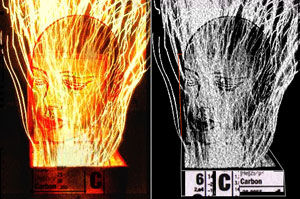

Don’t call me Ishmael, for I am not a survivor. Don’t call me Cassandra either, since some might believe what I foretell. Perhaps I am the final manifestation of the singularity ignited in Olduvi Gorge a million and a half years ago. The flame that has grown to consume our planet and send sparks into outer space. The singularity that started as an ineffable, ineluctable pulse resonating through the neural matrix of Homo habilis. A voice that said, You whoever you are, You must sharpen that stone, pick up that bone, cross that line. A voice of supreme paradox; one that simultaneously makes us uniquely human, yet is itself not human. Nor is it the black extraterrestrial monolith of Stanley Kubrick’s imagining. Rather, it was always here. Hard-wired into us at the atomic level — and we into it. A voice whose physical manifestation, the tool, sang its song millions of years before human beings walked the earth. This voice prophesied and then enabled our coming. It will instruct us in our going. Or so I say, while understanding too well that in the 21st century we are all jaded and stultified with sensory overload. It’s always the end of the world as we know it — and we feel bored.
So why listen to the voice of one who is not Ishmael, not Cassandra, not even Ralph Nader? Because I can tell you something that no one else can. I can tell you the exact moment when Homo sapiens will cease to exist. And I can tell you how the end will come. I can show you the exact design of the device that will bring us down. I can reveal the blueprint, provide the precise technical specifications. Long before we can melt the polar ice caps, or denude the rain forests, or colonize the moon, we will be gone. And we will not — definitely will not — end with a bang or a whimper. The human race will go to its extinction in a state of supreme exaltation, like an actor climbing the stairs to accept an Academy Award. We will exit the stage of existence thinking we are going to a spectacular party.
The usual suspects — those who have become known for predicting the evolution of humans and their technology — just don’t get it. Mainly because they don’t understand what the definition of “it” is. They don’t realize what evolution is. They have come to the problem from artificial intelligence, or systems analysis, or mathematics, or astronomy, or aerospace engineering. Folks like Ray Kurzweil, Bill Joy and Eric Drexler have raised some alarms, but they are too dazzled by the complexity and power of human cybersystems, devices and networks to see it coming. They think the power of our tools lies in their ever-increasing complexity — but they are wrong. The biotech folks just don’t get it either. People like Craig Venter and Leroy Hood are too enthralled with the possibilities inherent in engineering biology to get it. And our “bioethicists,” like Arthur Kaplan, and those who cling to their human DNA like it was the Holy Grail or the original tablets of stone, blathering on like Captain Kirk about what special, sacred things we humans are — they can’t possibly get it. All these people who think (or fear) that technology will ultimately trump biology have missed the cosmic point. They are not even wrong. To begin to get it, one must dispense with artificial boundaries. If you are only thinking about cybersystems and DNA you cant possibly get it. And if you are thinking outside the box, you are still thinking too much like a human being.
Linus Pauling would have gotten it right away. Erwin Schrödinger too, and probably Robert Oppenheimer. Bertrand Russell got it. In fact he named it. What Ray, and Craig, and Eric, and Arthur can’t see is the power of pure chemistry — what Bertrand Russell called “chemical imperialism.” What they don’t get is this — a system does not have to be complex to be transcendently, transformatively powerful. After all, we and everything we have created are nothing but the product of “carbon imperialism” — carbon being the element that all known life is based on. Nothing but the power of pure chemistry. Living and nonliving materials, everything that exists in the physical world of our experience burns with that same electron fire. The fire of the chemical bond.
And Prometheus has returned. His new screen name is nanobiotechnology.
Quick. What’s the difference between artificial life and synthetic biology? Don’t know? Neither does anyone else, but that isn’t stopping nanobiotechnology researchers from building them — or it, or that, or whatever. To stay up to speed, there is always Artificial Life, the official journal of the International Society of Artificial Life. According to the editors, the humble mission of the journal “is [to investigate] the scientific, engineering, philosophical, and social issues involved in our rapidly increasing technological ability to synthesize life-like behaviors from scratch in computers, machines, molecules, and other alternative media.” Whoa!
The federal government is in the game big-time as well. For example, the Physical Biosciences Division at Lawrence Berkeley National Laboratory tells us it has established the world’s first Synthetic Biology Department, “to understand and design biological systems”
Some people might argue that it is pretty cavalier to work on “artificial life” or “synthetic biology” before we have even agreed on definitions for these “things.” They might even point out that “artificial life” containing nonbiological components or new forms of biology could drastically alter the ecological balance or even the evolutionary trajectory of life on Earth. Of course the Lawrence Berkeley folks tell us we “need” synthetic biology for all kinds of excellent reasons. We need it for the efficient conversion of waste into energy and sunlight into hydrogen. We need it to create new life forms to use as “soft” biomaterials for tissue/organ growth. We need it to spawn new cells that will swim through the air or water to get to chemical and biological threats and decontaminate them. We need it, and we will build it, and it will be OK because we are the good guys (and gals). Our new life forms will only do good things.
In fact, we are very dangerously confused. To understand how confused, we must introduce the First Law of Nanobotics: The fusion of nanotechnology and biotechnology, now called nanobiotechnology, will result in the complete elimination of the barrier between living and nonliving materials. In other words, nanobiotechnology not only has the goal, it has the mandate to break through the “carbon barrier” of life. The result: We will produce not mere cyborgs, but true hybrid artificial life forms — or manifestations of synthetic biology, take your pick. In a previous article on nanomedicine I described a few of the rudimentary “things” that will emerge from nanobiotechnology: molecular machines that contain parts from both the worlds of biology and human engineering. Single-walled carbon nanotubes linked to DNA. Gold nanoshells linked to antibody proteins.
But gold nanoshells linked to antibodies are just a simple prototype. The fact is, we have no idea what artificial life and/or synthetic biology is, much less what it could do, or how it will behave. A recent article in Science provides terrifying evidence of our hubris. Toward the end of this article, the author explains, “Ethical and environmental concerns must also be dealt with before synthetic biology fully matures as a field. MIT, the Venter Institute, and the Center for Strategic and International Studies in Washington, D.C., have teamed up to examine issues such as how to keep any new life forms created under control … One solution: Alter synthetic genetic codes such that they are incompatible with natural ones because there is a mismatch in the gene’s coding for amino acids.”
In other words, we will be protected because these organisms will have genomes never before seen on Earth! Perhaps, but that could also be a description of the ultimate biohazard. If the Ebola virus is considered a Biosafety Level 4 threat, what level would categorize a pathogenic organism made completely from synthetic genetic codes?
In order to understand the astonishing leap we are about to make, one needs to grasp that nanobiotechnology is more than just another tool. It is also a monumental experiment in molecular evolution over which we may ultimately have very little control. A nanobiotechnology device that is smart enough to circulate through the body hunting viruses or cancer cells is, by definition, smart enough to exchange information with that human body. This means, under the right conditions, the “device” could evolve beyond its original function. Cancer-hunting nanobots are often depicted as tiny robotic machines — thus reassuringly impervious to fundamental changes brought on by merging with their biological environment. But they will not be tiny robots. That mechanical fantasy, promulgated by proponents of “Drexlerian” nanotechnology who appear devoid of even the most rudimentary knowledge of chemistry, has been decisively refuted by people who actually build the components for nanobiotechnology systems. People like the late Nobel Prize-winning chemist Richard E. Smalley and the great Harvard bioorganic chemist George Whitesides.
What will really go into our bodies, or out into the environment, will be hybrid molecular devices composed of both synthetic and biological components. These “devices” will have been fabricated to specifically exchange chemical information with biological or ecological systems. They will not be nanobots, they will be nanobiobots — and those three letters make all the difference.
In fact, the ability to exchange molecular information with biological systems will be an absolute requirement for these devices to carry out the functions for which they will be created. To find cancer cells, or dissolve arterial plaque, or modify damaged neurological pathways, nanobiobots will be required to “speak” the language of biochemistry — our language, evolution’s language. Yet they will not be classifiable as the products of biological evolution, or genetic or human engineering. They will be true hybrids. We cannot, must not, assume that our current safety and testing standards, whether chemical, biological or toxicological, will be sufficient to predict the behavior of nanobiobots once they are released into the world.
The precautionary principle developed for environmental policy states that “where there are threats of serious or irreversible damage to the environment, lack of full scientific certainty should not be used as a reason for postponing cost-effective measures to prevent environmental degradation.” This is generally interpreted to mean that a lower level of proof of harm can be used in policymaking whenever the consequences of waiting for higher levels of proof may be very costly and/or irreversible.
Given that we don’t even have definitions for artificial life or synthetic biology, how would we even begin to apply the precautionary principle here? But we urgently need to.
Let’s take a simple example. Plans are currently underway to create medical nanobiobots that will use our own metabolic energy (for example, glucose oxidation) as a source of power. That means these devices could remain operational as long as we are alive — or longer if they manage to get into human egg or sperm cells. Any nanobiobot that develops the ability to propagate in this or any other manner across even one human generation has fulfilled the definition of a non-biological life form. A true alien. And it can happen.
Suppose a glucose-powered nanobiobot has been created to hunt cancer cells via a component antibody moiety. In effect, this nanobiobot has a protein grappling hook designed to dock it with a specific type of tumor cell. Standard dosing therapy will require that billions of these nanobiobots be released into their human “host.” If the antibody arm on even one of these nanobiobots is modified (either by some type of catalytic recombination with circulating antibodies or by simple chemical damage) so that it binds to a different type of cell, it could stay in that body for life, like cryptic viruses such as Epstein-Barr. If this nanobiobot is modified so that it can attach to a human sperm or egg cell, it could theoretically stay in the population for generations.
If this type of nanobiotechnology-based cancer therapy becomes common (and according to the NCI’s nanomedicine site, that is a real possibility), we could have tens of thousands of people carrying cryptic nanobiobots. Even though these nanobiobots were designed for different functions, it is reasonable to assume that they will have a number of components in common. For example, many of them may have antibody components that, in turn, have regions of identical protein structure. These interchangeable parts could act just like the repetitive DNA of introns in eukaryotic genomes. What happens when one nanobiobot (say) on a sperm cell meets a second one on an egg cell? The probability of this is, of course, extremely low. But if the population of nanobiobots introduced into the body is high (say, billions), then a one-in-a-million event becomes common. In fact, microbial and viral systems like E. coli and bacteriophages enabled the molecular genetics revolution precisely because with billions (or even trillions) of test organisms in hand, one-in-a-million events become commonplace.
Suppose in the near future, a routine nanomedical procedure involved the introduction of billions of nanobiobots designed to scour the arteries dissolving plaque. Cleaning out the circulatory system would be considered a “one shot” treatment so that these therapeutic nanomedical devices (nanobiobots) would not have the engine necessary to use human metabolic energy as a power source. But what if, during another “routine” nanomedical procedure, a second therapeutic nanomedical device (nanobiobot) designed to vaccinate against cancer is introduced into the same person? This latter nanobiobot would, by definition, be designed for longevity so that metabolic energy would likely be the power source. Now, what if these two meet up and combine, or exhange vital components? This could happen through physico-chemical damage or perhaps via some type of catalysis mediated by the host’s own complex biochemistry. Now we have a novel, hybrid nanobiobot capable of crawling through our circulatory system for life. Or until it exchanges even more information — either with another nanobiobot or with the body itself. In the world of biology, this type of event would be called a mutation.
Even more likely is the “prion” scenario, in which one of the billions of nanobiobots in the body is damaged or modified and, as a result, gains the ability to convert other nanobiobots in a manner that alters longevity, tissue target, etc. (This is what the abnormally structured proteins called prions do. Prions are responsible for fatal, mysterious brain-tissue diseases like “mad cow” and fatal familial insomnia.) These myriad possibilities bring us to…
The Second Law of Nanobotics: It is not possible to ensure that devices created using the techniques of nanobiotechnology will only transmit molecular information to the target system.
This law essentially says it is impossible to ensure that molecular information only flows in one direction. Just as today’s pharmaceuticals almost always have side effects, there is no natural law that guarantees against the reverse movement of fundamental chemical information from the biosystem to the nanobiobot. Any real nanobiotechnology system — one that uses a combination of biological and synthetic components — is theoretically vulnerable to a reversal in the flow of molecular information. This, in turn, will create opportunities for the unpredictable evolutionary advances of these devices via a process similar to biological mutation.
Put plainly, if the nanobiobot can modify us there is no way to ensure that we can’t modify the nanobiobot.
Corollary to the Second Law of Nanobotics: Before nanobiobots are used outside of a controlled research laboratory environment, we must try to define and understand what it is we are making. And rigorous algorithms and adversary-analysis systems must be developed to test these devices to ensure that they are not obviously vulnerable to the reverse flow of molecular information. Of course, we will never know this with certainty. But we haven’t even started trying to find out.
What this all means is that within a generation, biology will face its ultimate identity crisis. Researchers in the field of nanobiotechnology are racing to achieve the complete molecular integration of living and nonliving materials. We will hack into the CPU of life in order to insert new hardware and software. The purpose is to extend the capabilities of biology far beyond the limits imposed by evolution, to integrate the incredible biochemistry of life with the equally spectacular chemistry of nonliving systems like semiconductors and fiber optics. The idea is to hard-wire biology directly into any and every part of the nonliving world where it would be to our benefit. Optoelectronic splices for the vision impaired, micromechanical valves to restore heart function.
But the moment we close that nano-switch and allow electron current to flow between living and nonliving matter, we open the nano-door to new forms of living chemistry — shattering the “carbon barrier.”
This is, without doubt, the most momentous scientific development since the invention of nuclear weapons. When we open the door and allow new forms of chemistry to enter, we will change the very definition of life. Yet no coherent strategy exists to identify the moment when nanoengineered smart materials cross over into the realm of living materials. Could we even recognize a noncarbon life form at the moment of its creation? The answer seems intuitively obvious until we remember that we too are made of materials. That we too are machines.
Humans operate entirely on electric current. There are 10 trillion living cells in your body, each powered by an electrical potential of 12,000,000 volts per meter. A thousand times as hot as the plug on your wall. The voltage of life is produced inside every cell by a sophisticated electrochemical power generator. Each subcellular “mitochondrion” is a protein nanomachine designed by evolution to burn sugar, one molecule at a time. The heat from this controlled burn yields high-energy electrons that are the anima of the living state. Every move you make can be traced back to a specific flicker of this electron fire. Electromechanical systems drive the contraction of your heart. Electro-optical systems capture the image on your retina. Layers of electrochemical switches form the architecture of the neural CPU in your brain.
The bioenergetic transformations that fuel life are an amazing sequence of reactions that convert light into chemical bond energy. The biological ecosystem of Earth is one gigantic solar-powered fuel cell. Plants harvest the sun and animals harvest the plants. The first step is the light-driven fusion of water and carbon dioxide into sugar via the photosynthetic organisms — green plants and some microbes. This sugar is the fuel that drives the chemical engine of animal life. Our mitochondria use bio-catalytic converters to strip electrons from sugar and feed them into your cellular power grid. As electrons move between energy levels, current flows.
Electronic conduction thus provides the true interface between living and nonliving materials. Today’s technology does not allow fabrication of components that plug directly into this interface, but we are getting close. In the early 21st century, nanotechnology will create the tools to hard-wire into the CPU of life, while biotechnology will provide a complementary molecular schematic of our living circuits. It is the engineering destiny of nanobiotechnology to create the first electro-molecular interface between the living and nonliving worlds. Or, more correctly, the first interface that does not discriminate between the living and nonliving states of matter. Fabrication of the world’s first true Biomolecule-to-Material interface will be infinitely more than a landmark in the evolution of human technology. Like the separate days of Genesis, the first nanofabricated BTM interface will be its own monumental act of creation and a crucial step on the path to bona fide living materials, aka artificial life.
In the history of science, the conduction of signals between living and nonliving materials will be divided into the pre-nanotech and nanotech eras. We are still pre-nanotech, which means that a direct BTM interface has yet to be fabricated, although bioengineering has created synthetic devices that communicate indirectly with living materials. Take an artificial pacemaker. This device transmits an electrical voltage to the biological pacemaker cells of the heart. In a healthy human, these pacemaker cells generate their own action potential, an electrical waveform of about 100 millivolts. This may not sound like much energy until we remember that this electrical potential is sustained across an insulating membrane only five nanometers thick. That is 5 billionths of a meter. So the energy of an action potential is almost 20,000,000 volts per meter. Compare this to the 12,000 volts per meter at a standard wall plug. Healthy pacemaker cells spark the electrical wave that drives heart muscle contraction. When these cells malfunction, an artificial pacemaker may be implanted to take over. Waves of electrical voltage generated at the metal lead of the artificial device cross over to living tissue and initiate normal muscle contraction.
While the pacemaker is a magnificent feat of bioengineering, it does not operate via a true BTM interface. The metal lead of the artificial pacemaker, a small wire, is physically embedded in cardiac tissue and the wave of voltage spreads from the charged tip into the surrounding region. Only pacemaker cells will respond to the artificial voltage wave by initiating a further action potential. So the living system must identify the artificial signal and act upon it. The voltage produced by an implanted pacemaker, like a radio signal, will pass through space unnoticed unless there is an antenna to pick it up. In this case the receiving antennae are individual protein molecules embedded in the membrane of the living cardiac pacemaker cell. Other heart cells feel the electrical signal, but do not respond to it. They may be considered as nonspecific noise in the system. We must flood the local tissue with electricity in order to obtain the desired response.
This strategy is extremely effective, but it does not constitute a direct interface between living and nonliving materials. In the end, the pacemaker does not “know” that the target cells are out there. It will send its signal regardless of whether it is received or not. Likewise, the cardiac pacemaker cells do not “know” that the charged metal lead is out there; they simply respond to an electrical shock.
By contrast, a nanofabricated pacemaker with a true BTM interface will feed electrons from an implanted nanoscale device directly into electron-conducting biomolecules that are naturally embedded in the membrane of the pacemaker cells. There will be no noise across this type of interface. Electrons will only flow if the living and nonliving materials are hard-wired together. In this sense, the system can be said to have functional self-awareness: Each side of the BTM interface has an operational knowledge of the other.
Molecular imprinting offers one nanotechnology strategy to build a BTM switch in the near future. A molecular imprint works exactly the way one would think. An isolated biomolecule is surrounded by some type of self-reactive liquified matrix, often an unpolymerized plastic like acrylamide. A cross-linking reagent is added, and a polymer forms around the biomolecule. When the biomolecule is removed, its ghostly outline is etched into a surface of solid plastic. The imprint fits the biological surface with atomic precision so this nanoengineered component is now a socket into which any identical biomolecule can be plugged. In the case of a pacemaker, the voltage-sensitive protein switches from cardiac cells would be imprinted into an electronic material. The imprinted material would be nanomachined and joined to an equally small power generator. The entire nanodevice, except for the imprinted socket, is then coated with a biomimetic ultrathin film. This coating makes the surface compatible with heart tissue. This nanopacemaker will occupy less than 1 cubic micrometer, smaller than a single bacterium. To complete the BTM interface, a living cardiac pacemaker cell is excised from the patient and plugged into the socket created by the original molecular imprint process. This can be accomplished with a micromanipulator similar to those currently used to move living nuclei in and out of cells. The “hard-wired” nanopacemaker is implanted into the heart where it is cemented into place by the body’s normal healing process.
The example above was selected because it is relatively simple, using technology that is already in the pipeline. Far more sophisticated strategies are on the horizon. One involves literally drawing the imprinted surface around the biomolecule by polymerizing monomers with a computer-targeted laser. When bioengineers begin to fabricate these BTM interfaces we will have entered the nanobiotech era.
If we continue to insist that life on Earth can only result from biological evolution, then the first BTM interfaces built by nanobiotechnology will be speciously trivialized as just a great invention of Homo sapiens. We will congratulate ourselves and conclude that the supremely gifted toolmaker has built the first portal between the worlds of living and nonliving materials. This simplistic view of nanobiotechnology is very much like humanity’s current strategy in the search for extraterrestrial life. In a chemically diverse universe we insist on a perversely self-congratulatory strategy. Water and organic molecules, such as methane, are the identified spoor on this trail. We look for these signs because the biology-centric assumption is that aliens will be just like us, only very, very different — little green people with acid for blood, sentient jellyfish with a taste for cheeseburgers, or insects that have evolved with a sense of humor. Even search strategies that use “universal mathematical constants” ignore the possibility, proposed by some postmodern philosophers of science, that formal modern mathematics is a function of cognitive structure unique to humans, or less specifically to a narrow range of beings similar to humans, for example, hominids. The point is that technology analysts who can only see life as some variation on biology will see the BTM interface as a way for “us” to plug into “it.” Within this paradigm there are no consequences for the definition of life, only new enhancements for the one true life form: biology. We hold up the mirror of humanity and see our own image reflected in the universe.
Most dictionaries define biology as “the science of living things.” But the (correctly) limitless nature of that definition is truncated when plants and animals are immediately used as the prime examples. NASA, an agency that should know better, has saturated the media for decades with hypnotic invocations of water and organics as the true signs of extraterrestrial life. Meanwhile, Hollywood and pop culture endlessly anthropomorphize aliens. Robots get the blues. Silicon sentience springs directly from human mythology. Stories of demonic computers and undead cyber-blood lust are endlessly refilmed with really cool graphics, a variety of soundtracks, and excellent eyewear. Skynet, the “self-aware” computer system of the “Terminator” series, hates us and wants us dead. The equally demonic cyber-beings of “The Matrix” want to enslave us and eat our energy (making this computer both physically dangerous and dangerously ignorant of the physical laws of the universe). It is distinctly ironic that when we consider aliens, life on Earth infuses our scientific models, our dreams, and our entertainment. We could call this “the biology paradox.” The biology paradox makes xenobiology speciously comprehensible, but by clinging to it we dismiss almost all of the chemistry in the universe.
It is time for serious students of sentience to accept that common usage has rendered the term “biology” completely useless in the nanotech age. Thinking outside the biology box leads to the alternative, much more radical concept of living materials — materials with anima.
To describe this new state of life, I suggest a contraction of the term “anima-materials” — “animats.” This term has previously been used to describe adaptive or cognitive systems capable of robust action in a dynamic environment. The goal of these systems involves the creation of higher levels of cognition from many smaller processes. Many scientists who work in this field appear ready to dismiss chemical sentience as smaller and simpler than anything they would consider smart. But we must not assume that minds are built from mindless stuff. Chemical intelligence can manifest as the ability to catalyze a single chemical reaction. It is a dangerous, and possibly terminal, error for the children of carbon to dismiss the power of pure electron fire. Much of our fear of bioterror is based on the power (chemical intelligence) of a single molecule that allows it to block a single metabolic reaction inside the human body.
Better to heed Bertrand Russell’s prescient warning that “Every living thing is a sort of imperialist, seeking to transform as much as possible of its environment into itself.” Russell goes on to use the term “chemical imperialism” as the driving force for biological life. The obvious corollary to this warning is that chemical imperialism spawned human intelligence, not the other way around. Therefore, the definition of an animat as a living material should have primacy over any definition involving more complex cognitive functions. If we accept this logic, the creation of the first BTM interface by nanobiotechnology will require a new operational definition for the living state.
To expand the chemical franchise of the living state we must first deconstruct biology. The Human Genome Project sold us the concept that DNA is the chemical basis of life. But, in fact, that is not true. DNA is the result of life, not its cause. Our genetic code is the crowning achievement of biochemistry, not its progenitor.
It is crucial to keep this distinction in mind when considering the concept of animats. Life is not defined by DNA but by a continuous chemical struggle against entropy. The second law of thermodynamics tells us that all natural systems move spontaneously toward maximum entropy. By literally assembling itself from thin air, biological life appears to be the lone exception to this law. The gaseous molecules snared by plants during photosynthesis were once free to roam the entire atmosphere of Earth. Plants — Earth’s primary producers — fix gas molecules from the air and minerals from the water into sugars and proteins. Humans eat the plants, or we eat the animals that eat the plants. Now those molecules that were free to roam the skies and waters must be where you are, go where you go, and do what you do. Clearly, the atoms in your body have experienced a radical reduction in entropy. But thermodynamics takes the full measure of the physical world. What little biology can build is barely visible against the chaotic horizon generated as the sun exfoliates into space. Like a tiny windmill in the solar hurricane, the wheel of life is turned by a unique set of chemical reactions that capture and channel the least part of that storm of dissipating energy into further cycles of replication. Biological life is a tiny stowaway on the entropy-powered craft of our solar system.
Life, then, is not based on DNA but on a chemical programming language spoken by a discrete set of biomolecules. This language directs the set of operations necessary to assemble the next generation of biomolecules. DNA or RNA, the genetic material, stores the directory of available biochemical operations but does not execute them. The program steps for replication are executed by a set of protein catalysts collectively known as enzymes. It is probable that the first biological life forms were RNA molecules capable of both catalytic replication and data storage — so-called ribozymes. Through evolutionary time, RNA generated two biochemical subroutines, proteins and DNA, to carry out some of the operations of replication and data storage with greater efficiency. Yet a cursory look at the molecular biology of the cell proves that RNA retains its central role. If life is viewed as a discrete set of chemical operations, then nanofabricated components that directly interface biological and materials chemistry must create the possibility of new life forms. These nanofabricated components are, in fact, the next generation of self-replicating systems: not enzymes but animats.
One could argue that it is too early to be talking about animats. It is easy, and reassuring, to dismiss even the most advanced nanobiotechnology systems of the near future as mere devices. But if biological evolution is any guide, that viewpoint is both specious and potentially catastrophic. During the 3-billion-year operation of the algorithm called evolution, revolutionary new adaptations often began as trivial events. A small genetic mutation resulting in a slightly altered protein that provides an incremental, almost trivial, enhancement to catalytic function.
Thermal tolerance is a classic example. A mutation to the DNA sequence translates into a modified physical structure for an essential protein. This new structure has enhanced thermal stability, which means it retains enzymatic function at a higher temperature than the original. As a result, the mutant is capable of 100 percent catalytic efficiency in climates a few degrees hotter than normal. This change in protein structure will only involve the rearrangement of a few atoms, making molecular evolution the original nanoengineer.
Over time, the heat-tolerant progeny of the original mutant may be able to migrate into a warmer climate: say, move down the Sierra Nevada into Death Valley. But it takes thousands of reproductive generations or more for this migration to actually occur. The original mutation will not become essential for a hundred thousand, or even millions of years. Evolution covers enormous distances one angstrom at a time, which means it is almost impossible to catch an adaptation at the exact moment, or even in the exact generation, that it becomes essential for survival. Likewise, it is highly probable that the BTM interface will evolve from smart material to living material. This means that, in order to find the moment when the first animat appeared on Earth, we will have to backtrack from the future. Or be watching the present very, very carefully.
Based on this evolutionary model, it is highly unlikely that animats will spring fully grown upon the Earth. It is much more likely that animats will initially evolve as part of a larger biological system. In order to identify the first true manifestation of a living nonbiological material, we must develop a definitive test to distinguish an organism that is at least part animat from one that carries a smart material designed simply to assist or enhance life function.
This brings us to the Third Law of Nanobotics: The carbon barrier will be eliminated when humans create the first synthetic molecular device capable of changing the state of a living system via direct, intentional transfer of specific chemical information from one to the other.
This law formalizes the concept of animats and leads directly to the “Animat Test,” which is designed to identify the moment in time when life on Earth evolves to include both biological and nonbiological materials — the date when we break the carbon barrier.
Let us define a life form as an entity that reduces entropy by self-executing the minimum set of physical and chemical operations necessary to sustain the ability to execute functionally equivalent negentropic operations indefinitely across time. Given that, a life form will be considered an animat (living material) if all the information necessary to execute that minimum set of physical and chemical operations cannot be stored in DNA or RNA. The corollary: If all the information necessary to execute that minimum set of physical and chemical operations can be stored in DNA or RNA, the life form is biological.
In the beginning, nanobiotechnology will create minute supplemental lifesaving medical devices for humans. The purpose of these devices will rapidly expand to include the performance-enhancing — an inexorable development I have discussed previously. Some of these things will remain devices. But some will have the potential to evolve and should be termed proto-animats. The animat test is designed to be a practical engineering tool to identify the point in time when the proto-animat crosses over and becomes a true living material, an animat. The conditions of the test are independent of both the physical structure of the life form and the physical modality by which the life form perpetuates a negentropic existence across time. That modality could include replication, and/or duplication, and/or continuous self-restoration. The test cannot be applied to entropic life forms since human understanding of physical laws does not currently allow discrimination between life forms and other natural phenomena without cycles of entropy reduction.
Much as we track incoming comets on a possible collision course with Earth, extraordinary vigilance is required as we transition into the age of nanobiotechnology. If the evolutionary model prevails, we are seeking to identify proto-animats: smart materials potentially capable of evolving into animats, living materials. This, in turn, will require a radical expansion of our thinking with respect to the potential sources of artificial life. Up till now (and thanks to people like Ray, Bill and Eric), most models have focused on computers and machine intelligence. Smart materials can certainly contain computers. But it is unlikely that animats will spring to life via some Hollywood scenario whereby a supercomputer crashes into A.I. self-awareness and begins photovoltaic-powered reproductive assembly of little A.I.s (subsequent end-of-the-human-world-as-we-know-it scenarios optional, heavy metal sound track preferred). If the evolutionary algorithm is any guide, animats will break the carbon barrier the way the Bell X-1 broke the sound barrier, carried aloft on the wings of a mother ship. The mother ship will be named Homo sapiens. The initial manifestation of an animat life form will be evolutionary in form, but revolutionary in function. There is also the possibility of progression from the ternary fusion of biological life, machine intelligence, and smart materials (proto-animats). But it is crucial to recognize that living materials need only think with their chemistry. No Boolean or humanoid logic is required to qualify as life. The absolute progress of chemical imperialism can only be measured in entropy reduction.
Unless we know what we are looking for, the first proto-animats will be invisible in the storm of nanobioengineering systems expected to come online over the next generation of human life. Most of these nanodevices will not have the potential to evolve beyond cyborg mode, i.e., technical augmentations to biological life forms. There are many future scenarios in which humans will need their machines to continue to live, but until an animat is carried through time as part of a life form’s self-executing set of essential operations, the carbon barrier will remain intact. But when the portal between two worlds is atom-size, how will we know when it finally opens?
In a world where we are already doing research on artificial life, synthetic biology and nanobiotechnology, this question cannot possibly be considered academic. Materials will continue to get smarter until they finally break the carbon barrier. In the near future, some nanoscale cyborg technology will undoubtedly be designed to propagate along with the host using molecular self-assembly, the same strategy used by biological systems.
But self-assembly is not unique to living systems and, therefore, cannot be used as the litmus test for new forms of life. Water molecules can self-assemble into the simple crystalline pattern of an ice cube or the infinite complexity of a snowflake. Quartz and other inorganic minerals can spontaneously crystallize and grow with a concomitant reduction in entropy, yet geodes are definitely not alive.
However, molecular self-assembly is an excellent strategy for building nanomachines and many researchers are studying ways to harness this phenomenon. Such nanomachines could even be designed to use self-assembly to replicate. The original “Grey Goo” scare (the very mention of which is anathema to most nanoscientists) involved a scenario whereby endlessly self-replicating nanomachines literally covered the earth. This scenario is generally attributed to speculation contained in Eric Drexlers 1986 book “Engines of Creation.”
While the science behind the original Grey Goo scare was and remains completely unrealistic, we are getting better and better at using molecular self-assembly to build, maintain and propagate nanomachines. For example, it is certainly realistic to posit nanomachines that use ingested trace metals and semiconductor nanoparticles (for example, silica) to replicate inside the host’s cells, including germ cells. This type of device could enhance human performance and even move from parent to child, yet would not be considered to be a new life form (either alone or in combination with its human host) unless it could pass the animat test. More to the point, the animat test gives us a way to determine when a smart material crosses over and becomes a life form.
It is ironic that, because of nanobiotechnology, we have never been closer to a Grey Goo scenario — although the actual color will more likely be green or red. Because biomolecules learned self-assembly through billions of years of evolution, nanobiotechnology has a tremendous advantage when it comes to applying this particular strategy to create artificial life.
In fact, we have put into motion research that will create every component necessary to build an animat. One formula is as simple as A + B + C.
A = Nanobiotechnology devices that can survive and function inside human beings. Many therapeutic devices in development for drug delivery, cancer therapy, etc., are designed to survive in the physicochemical environment of the body.
B = Nanobiotechnology devices that can derive energy from biological metabolism. Many nanomedical devices will be powered by the fuel available inside the human body. A common idea is to take our own glucose-oxidizing enzymes and use them as a fuel cell for the nanobiobot.
C = Nanobiotechnology devices capable of copying themselves by molecular self-assembly.
Which creates a completely realistic animat formula. A + B + C = a self-replicating nanobiobot capable of living inside the human body powered by our own metabolic energy.
Of course, scientists are not intentionally putting A together with B and C. No one is trying to create the first true animat — they’re just working on rudimentary forms of artificial life or synthetic biology. But if, as part of this benign research initiative, they happen to create nanobiobots some of which have traits A or B or C — our definition of life will have changed forever.
Does this mean we will immediately cease to be human? Probably not. The most probable scenario is that an array of proto-animats will be carried as an evolutionary adaptation that enhances biological function for generations before any of them become an essential part of our phenotype. After that…
If the animat test described here is not sufficient, let it stand as a challenge for the development of a completely rigorous test for the unequivocal identification of nonbiological life forms. The larger point is that humanity must initiate a search-and-test protocol now in order to prepare for the arrival of the literal alien from within.
Nanofabricated animats may be infinitessimally tiny, but their electrons will be exactly the same size as ours — and their effect on human reality will be as immeasurable as the universe. Like an inverted SETI program, humanity must now look inward, constantly scanning technology space for animats, or their progenitors. The first alien life may not come from the stars, but from ourselves.
