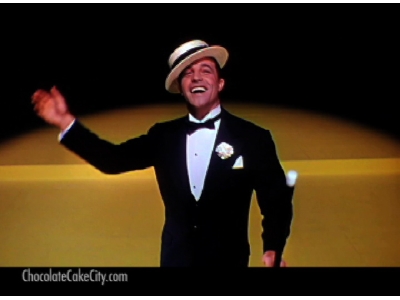
The classic song and dance retooled for the Xbox set.
This little holiday satire should put a spring in your step — and maybe the Force, as well. Created by those old masters, Chocolate Cake City.
The Salon you’re reading today is a bolder, faster machine. We’ve liberated 15 years of accumulated pixels from our earthbound servers and released them into the Web cloud. We’re experiencing some expected technical hiccups along the way, but we’re heading in an exciting direction
Salon doesn’t just feel different. It is different. Along with this speedy new publishing platform, we’re taking a bolder editorial direction. We’re doing more of the deep, provocative reporting that you, our readers, have asked us for – the kind that is pursued less and less in the media. Salon is making a stronger commitment to do what we’ve always done best: speak the uncomfortable truths, and uncover the stories that those in power want to keep hidden.
Like a lot of our online peers, we’ve toyed with the shorter-faster-punchier approach in recent years, chronicling what mattered with a speed that matched readers’ habits, cheerfully grazing on Twitter sprouts or Tumblr bonbons. We’ll continue to be fast when it matters. But we know our readers want more than aggregated cheat sheets; they don’t want to just seem smarter, they want to be smarter. So we’re increasing our deep dives into the important and fascinating stories of our time, and offering more investigative reports that require time and care to develop. We’re plunging into this deep and passionate journalism because we know that these critical times (captured well here by our returning founder David Talbot) demand it.
You’ve probably already been noticing this renewed emphasis. In the past week, we revealed a frightening new lapse in e-voting security; exposed the Rick Perry policies that are fanning the flames now consuming Texas; launched a series of vivid reports on the nation’s massive underground economy; documented the big influencers in the 2012 campaign; explored the troubling demise of the creative class; looked into the quiet, fascinating return of psychedelic research; honestly considered the antagonism of atheists toward faith; and raised troubling questions about the lethal legacy of military hero and new CIA director David Petraeus.
Some of those were — in Twitter parlance — #longreads; the sort of pieces we’re not supposed to want to read online because of our diminished attention span and supreme impatience. But you did. All of those stories were bona fide hits with readers.
We’ve also unveiled several new features and series. With Opening Shot, Steve Kornacki has hung up his editing duties to give us a deeply informed morning briefing each day. With Am I Normal? Tracy Clark-Flory takes the love-and-sex advice column to a new level, offering meticulously researched responses to questions some people would be too embarrassed to ask their own doctors. With Interview With My Bully, we’ve continued our history of personal memoir series, but with a twist — we’re inviting Salon’s audience to look up their bullies, record their showdowns with their former tormenters, and share them with the world at large.
And very soon, we’ll launch a new e-book division with Alex Pareene’s brilliant satire, “A Tea People’s History.” Watch for the excerpt on Salon — and look for more e-books from Salon writers and other leading authors in the future.
Salon also has plans to become more richly visual — with new comics, illustration and animation, as well as video projects. Salon is developing its own WPA program — Worthy Poster Art — inspired by the FDR-financed arts explosion during the Great Depression. Salon’s WPA program will feature artwork by many of today’s most brilliant artists. Their striking posters will be sold online to benefit arts programs all across the nation that – because of government budget cuts – need extra help. Make your own case for a local arts program endangered by budget cuts by emailing us here.
Here’s the rub: To keep bringing you this robust flow of new journalism and art, we need your support. Salon’s community has always been the heart and soul of our enterprise. As the founder of Open Salon, our pioneering blog network, I’ve always felt a passionate commitment to our community, and I’m dedicated to making Salon readers part of our creative process. The strongest media enterprises are those powered by the users themselves. By joining Salon Core, our new paid community, you will not only keep Salon thriving and independent, you will become part of our process like never before. Salon Core members will participate in real-time discussions with our best thinkers – like Glenn Greenwald, Joan Walsh, Kornacki and more — as well as engage in editorial brainstorming sessions and join us at Salon parties and events. I really hope you’ll pull up a chair.
And even if you don’t, you can still support Salon by continuing to read – and to tell us what you think.
Thanks for making Salon a daily destination. I know you’ll keep finding more reasons to join us each day.
In a perversely exciting turn this week, the tireless water-carriers of Fox News turned their sights on Salon, placing us on a short list of “once popular sites” that are “dead or dying.” It’s an odd list that lumps user platforms (Bebo, MySpace, Blogger), communities (Digg, Slashdot), Chatroulette, and two content sites: Salon and Gawker. Hey, it’s the Internet: Everything is a “site,” I suppose.
The story’s art clumsily, hilariously, seems to include Fox News in its loser lineup (I like to imagine it as the subversive handiwork of a pissed-off graphic designer):
The write-up has Salon shedding readers like scales from Roger Ailes’ backside — “losing about 1 million regular visitors over the past year, a 37 percent decline.” The fizzling started “almost immediately last November when the main editor, Joan Walsh, took a back-seat to write a new book.” Fox reports that we’re “ad-heavy” (not actually a bad thing for a site relying on ad revenue, by the way) and that we have a hard time competing with the “classier” New Yorker.
I’m going to come clean. He’s right — the New Yorker is definitely “classier”! And I’ll confess to missing Joan’s regular presence in our daily meeting. Other than that, that blurb is pure bunk. Unique visitors (as opposed to recurring readers who come to the site all the time) to Salon this year are up 16.31 percent from 2010, as you can see from the chart below, which comes from Google Analytics (click chart for a larger image):
We’re consistently topping 5 million unique visitors a month (a first for Salon) and hit an all-time high of 6.5 million in March. It took real effort for this intrepid Fox reporter to find the (notoriously unreliable) Compete.com data to prove his counter-thesis; Quantcast, a more reliable traffic monitoring site for us, shows no such traffic drop. (Oddly, Fox has prevented Quantcast from even measuring its data.)
But Fox didn’t stop there; today, it unleashed its dead-eyed morning charmer Steve Doocy on the story, which seems to exist purely as an attack on Joan, and a way to promote Andrew Breitbart’s network of paranoid news sites (the jabs at Salon begin at around the 2:35 mark):
So why would Fox . . . wait, do I need to even finish that question? Being attacked by Fox means that you’ve been identified as an enemy (Gawker — the prime target of the “F&F” spot — tracks the attention to a Fox investigation they have brewing). But what could we have done?
Here are 10 good reasons from this year alone.
Steve Doocy: Roger Ailes’ Attack Poodle
Fox nation shocker: Obama invited black guys to his birthday party
News Corp.-owned media outlets say people are overreacting to News Corp. scandal
The mystery of the Japanese “poop burger” story
Fox confuses Tina Fey for Sarah Palin
J. Crew ad may be transgender baby propaganda, warns Fox
Fox News chief again caught demanding conservative spin (Bill Sammon again)
Bill O’Reilly and Glenn Beck arguing that that whole Japan radiation thing wasn’t that serious:
Glenn Beck accuses Planned Parenthood of assisting in sex trafficking
Dan Savage, right, and his husband, Terry Miller, wait for President Obama to speak at the LGBT Pride Month event at the White House in Washington in June.
The evolution of Dan Savage from sex columnist to political stunt artist has been an inspiring, and often really dirty, tale.
Early readers who discovered his Savage Love advice column (which he launched in 1991 for Seattle’s the Stranger and which went into heavy syndication in the nation’s free weeklies) were first jarred by how readers’ questions began — “Hey, Faggot,” Savage’s attempt to reclaim and defuse the word — then hooked by his remarkably candid style. In that just barely pre-Internet world, when sex was a subject left to breathy advice columnists in the glossies and late-night radio, Savage was like a breath of fresh air. Or maybe a quick whiff of poppers.
His was a blazing, rude voice bursting out in a ’90s culture still weirded out by reports of teens, gays and presidents actually having sex. Along the way, he dropped the “faggot” tag, created a wildly popular podcast, and coined irresistible expressions — from “GGG” (his advice that partners should be “good, giving and game”), to “pegging” and “diamondbacking” (go ahead, look them up) — that are as rudely hilarious as he is. He’s got a show slated for MTV, and he’s emerged as the leading voice not only on sex information but also sexual identity, and may well be the most effective gay rights spokesman around.
And the key is his showmanship. He and his husband, Terry Miller, drove the “It Gets Better” campaign into the feel-good viral campaign of the YouTube era. But he’s also done well with his hilarious feel-bad campaigns, like his very successful neologism of the word “Santorum,” created in 2003 to shame then Sen. Rick Santorum for comparing homosexuality with bestiality and incest. “There’s no better way to memorialize the Santorum scandal than by attaching his name to a sex act that would make his big, white teeth fall out of his big, empty head,” Savage wrote readers, asking for submissions. A campaign was launched (just try searching the name), and this summer a frustrated Santorum, a GOP presidential candidate, finally was driven to denounce Savage by name on a radio show — a prankster’s purest victory. Savage also recently went after Marcus Bachmann, alleging — relying on nothing more than his trusty gaydar — that the “reparative therapist,” who sports a slight lisp, was probably gay (an idea picked up by “The Daily Show” and criticized elsewhere).
It should be mentioned that Salon early on was home to a controversial Savage prank: In 2000, we sent him to Iowa to volunteer for the presidential campaign of Gary Bauer. In riveting gonzo style, a flu-addled Savage described being so infuriated by Bauer’s gay-baiting in the press that one night in Bauer HQ he began “licking doorknobs … the front door, office doors, even a bathroom door. When that was done, I started in on the staplers, phones and computer keyboards. Then I stood in the kitchen and licked the rims of all the clean coffee cups drying in the rack.” Conservatives and media mavens condemned both Savage and Salon. Iowa even went after Savage; he ultimately pleaded guilty to a misdemeanor charge of fraudulent voting in a caucus, and was sentenced to some probation and community service and given a small fine.
I spoke to Savage last week about politics, President Obama and the latest prank he may well have in store for Rick Santorum.
There’s still a lot to be concerned about. But do you get giddy with the progress you’re seeing?
[Laughs.] Yeah, I actually am! You know, we’re winning.
Anyone who wants evidence that we haven’t won yet just needs to look at the Republican field. You know, we live in a two-party system, and for one party, the only thing they can seem to agree on is hating gay people. They hate us like they hate evolution. Unfortunately, they just can’t wish us away, any more than they could wish evolution away. It’s not a done deal and it’s not sewn up. But they’re now fighting a rear-guard action, while we’re advancing on all fronts.
The heartening thing, even if we are cursed with a President Santorum, which is not going to happen, or President Perry or Bachmann, is what we’ve seen over the past 20 years, under Democrats, there’s been some progress. There’s been great progress since the Democrats got the wake-up call in November of last year, on gay issues, legislatively. But there’s not a lot of regress under Republicans. They seem to shrug and live with it, with gay progress, once it’s achieved.
And yet, increasingly, there seem to be many Republicans who no longer think of it as an issue, who are even willing to lead on it.
Really? Wait, wait, wait. So many? I thought it was three.
[Laughs] OK. Maybe a few more than that, at least in New York.
I think if there are so few that if you fucked them all at once it wasn’t an orgy, but a four-way, you can’t call that a lot.
But even a Michele Bachmann — who has genuinely shocking views about homosexuality — she has to completely muzzle herself on the campaign trail.
Yeah, I mean we’ve been seeing that for 18 years. I think back to Colin Powell, when “don’t ask, don’t tell” passed, before he gave testimony in the Senate in favor of it, had to clear his throat and say that gay and lesbian Americans were good and loyal and brave and true, just like other Americans. But not fit to serve. He had to pass a compliment before he stuck a knife in us.
You’re seeing this sort of — you can’t engage in the kind of vicious demagoguery when everybody loves Ellen. And, more important, 75 percent of Americans have a relative who’s out. So they’re having to — depending on which audience they’re playing to — really moderate their anti-gay bigotry. You’re not talking about the gay boogey-monster anymore. You’re talking about Neil Patrick Harris. And you’re talking about my gay nephew. And you’re talking about my lesbian co-worker — who aren’t these monsters. Which is why they’ve had to craft these photo-negative arguments, compared to their previous arguments, where they acknowledge that gay people are contributing members of society — which even Santorum does now — but that marriage needs to be reserved for [straight people].
And it’s hilarious! But I think their anti-gay hatred is just as toxic. They’re just trying to dress it up. What we’re seeing is the Southern strategy, and dog whistles on race, which we’ve been seeing since Nixon. We’re going to get dog whistles about sexual orientation for 50 years.
One of the things I like about your podcast so much is you do spend a lot of time talking to people outside urban elite areas — you spent a lot of time last year talking about Constance McMillen, for example – where life for gays hasn’t evolved that quickly.
One of the things that was a wake-up call for me last year before the “It Gets Better” campaign — why we launched it, my husband and I — was when I was sort of unaware how bad it was getting out there. You know, in the Greensburg, Indianas, and the Topachakees, Californias, where Constance McMillen was. What I didn’t realize before those suicides opened my eyes, was that as it was getting better in New York or San Francisco or Seattle, it was getting worse out in the sticks, out in mega-church land. Because those of us who are out and urban and fully integrated into our work lives and families, our existence has made it impossible for queer 14-year-olds to fly under the radar in a Greensburg.
When I was a kid, and I was odd, the default assumption was that I was odd, not that I was gay. Now when a kid is odd in a Greensburg, gay or straight, the default assumption is gay. Because my job requires me to be in constant communication with people all over the country who are writing in to “Savage Love,” calling the podcast, I think I’m a little more conscious of what’s going on out there in the boonies — but even I didn’t see that. And that’s a bitter pill for those of us my age to swallow. Us out there leading our lives and being successful have actually kind of made it worse for 14-year-old gay kids in Greensburg, Ind.
Well, made it worse, but that’s part of progress, right?
Absolutely. I’m not suggesting that we shouldn’t have lived this way, or we shouldn’t have come out. And the people who are most responsible for making it worse are of course anti-gay politicians and anti-gay preachers, and parents, teachers and peers who are persecuting these kids. But we’ve created a kind of hyper-awareness about sexuality and sexual orientation that has let to hyper-scrutiny about those things, in places where people weren’t on the lookout for it before. Everybody’s on the lookout for it now.
It’s going to be hell on that kid from Greensburg before it gets better.
Yeah, absolutely. It’s going to be, unfortunately.
So, Obama. A lot of gay supporters of him obviously feel the same larger disenfranchisement with him that a lot of people on the left feel — maybe even more acutely, because he’s waffled on his language about gay marriage, now claiming that he’s “evolving” on the issue. How do you feel about him?
Well, I think my feelings began to evolve after the midterms in 2010. I think the Democrats saw the writing on the wall, with the percentage of the gay vote going to Republicans [doubling] to 30 percent; donations from gays — gay groups, gay orgs, gay people — to Democrats plummeting; that they realized they could no longer just fob us off with speeches and the occasional appearance with the Human Rights Campaign — that they had to deliver. It wasn’t until after that, that we got “don’t ask, don’t tell” [effectively ended], that they stopped the DOMA appeal. Anyone that argues that this was the plan all along, to pass the DADT repeal at the 11th hour in a lame duck session, a hail-mary pass thrown by Joe fucking Lieberman, is an apologist and an idiot. But we got those things because we began to push back and play hardball.
The gay vote isn’t just gays — my dad … well, my Dad will vote for jackasses … but my siblings won’t vote for anti-gay politicians — the gay vote is our families, our extended families. And the gay vote is bigger than the Jewish vote. It’s bigger than the Miami-Cuban vote. And Jews and Miami Cubans get everything they want. Tremendously powerful blocs. And it was after the November 2010 midterms that we suddenly, in the eyes of the Democrats, overnight morphed into Jewish Miami-Cuban cocksuckers who couldn’t be taken for granted anymore. And they had to give some winners.
So how do I feel about the Obama administration? I’m really very pleased with what’s been delivered. I am not an idiot, and I’m not a Pollyanna sort of kumbaya type. I don’t doubt we wouldn’t have seen these things, that these things would not have been delivered, if we didn’t make it clear there would be a price to pay if they weren’t. Obama “isn’t there yet” on same-sex marriage — if you believe him. And, frankly, I don’t. I don’t think somebody who was for same-sex marriage in ’96 is against it in 2011. And I agree with Tracy Baim, the editor of Windy City Times, who did the interviews with Obama back in the ’90s when he was running for state Senate in Illinois, that we’re not going to listen to what he says anymore, because it’s too aggravating. We’re going to watch what he does. And he’s doing the right stuff.
Not on every front, for LGBT — the gay guy whose partner is being deported. I’ve been screaming about this for two, three years. Janet Napolitano issued a directive saying we’re not going to enforce the Widow’s Penalty anymore, which is where somebody who is not a U.S. citizen — a foreign national marries a foreign citizen — emigrates to America and then their partner dies within a year — they’re supposed to be deported.
It’s a shocking policy.
I guess it’s to disincentivize murdering your new American husband, at least for 12 months. And they don’t enforce it, and it’s the law. She literally said at the time, we’re going to stop enforcement while Congress works on a solution. And we know how Congress smiles on immigrants.
So when’s that solution coming? The same argument, we could suspend enforcement of the deportation of legal spouses of same-sex couples, under the same logic — but we don’t. That’s a failure of the Obama administration. And, the administration says, we have to follow the law. Well, Janet doesn’t, apparently. She has more power and authority than the president, her boss, to address this injustice?
So there are things that are frustrating and galling, still. But DADT, dropping the DOMA appeal, all the little fixes around the edges that they’ve done. All that adds up to something that has to be rewarded. The LGBT movement, I think, doesn’t do itself any favors if we convince our ostensible allies in the Democratic Party that we’re never satisfied. We won’t be fully satisfied until we have full civil equality, but these developments are satisfying and there has to be a payback. It’s a political process.
You were invited to a White House reception, but you wore an “evolve already” button, jabbing Obama for his “evolving” comments. But you support his political pragmatism.
Right. Which means, I went to the president’s reception. I didn’t leap over the rope line to meet him. I’m going to write him a check. I’m going to wear an “evolve already” button, and participate in this kabuki nonsense around his position on gay marriage. What we know about evolution now is there are leaps in evolution. I believe the president will experience an evolutionary leap in January of 2013, win or lose the election. I think we’re going to see a lot of evolution then. And that’s, it’s insulting when somebody says your relationship, your marriage isn’t as important or valid, and your family doesn’t deserve the same protections as everybody else, for political reasons. But we’ve got to play the game. We have to win the argument. And we are — we are playing the game and winning the argument.
You see the polls on marriage equality moving in our favor. Unfortunately, you know, some people say therefore the president should come out in favor of marriage equality. Fifty-one, 52 percent of Americans aren’t for marriage equality in every state. And the overwhelming support for marriage equality in California and New York, and blue states, isn’t going to add up to a victory. I’ve actually written and think that if the president came out for marriage equality now, I don’t think Republicans who are for marriage equality are going to vote for him on that basis, but I do think Democrats who oppose it will vote against him, for that reason. So politically, I don’t think it’s unwise for the president to evolve at the pace he’s evolving right now. But I don’t believe him.
It does feel like there’s this inexorable pull toward gay marriage, ultimately, in every state. That the die is cast.
Remember when abortion was legal in all 50 states? And now, effectively, it’s disappeared from some states.
Everything can be turned back.
Yeah. It’s a little like skirmishes you see with gay marriage are going to play out nationally in really fascinating ways. You have states like Louisiana, that have refused to issue birth certificates for children who were legally adopted by same-sex couples. And they’re violating the law. And you’ve got to sue them at every step.
Were you surprised when Rick Santorum started invoking you? It’s so amazing.
Oh my god. I think, you know, it’s hilarious that all these years later, he’s having to jump down in the gutter with me. Republicans run on victimology. Sarah Palin is a victim, and now Bachmann is a victim, because Newsweek made her look crazy, because she’s never looked crazy in a photo before. And I’m persecuting Rick Santorum, and his own children can’t Google his name. I think it’s hilarious. There’s a reason they used to lock up editorial cartoonists in the 19th century. Because someone who is powerful, or lusts for power, you can really harm him by making him ridiculous. And my readers and I really succeed in making him ridiculous. And Rick Santorum himself ran that ball the last five yards into the touchdown zone when he sent out that [fundraising support] letter to all his supporters. So any of his supporters who had not yet heard about the neologism — and he didn’t spell out exactly what it was — anyone who read his letter who were curious what it might be all ran to their computers and Googled his name.
[Laughs.] And it fills me with delight! What’s funny is, people said: “Oh, ‘It Gets Better’ is anti-bullying, and here you are bullying Rick Santorum.”
Do people really say that?
Oh, abso-fucking-lutely. Oh my god.
That’s amazing.
There’s a difference between taking a piss out of a powerful politician and mocking him, and bullying a 14-year-old kid to death in a rural area. And, Rick Santorum, who wants to reinstate “don’t ask, don’t tell”; have a federal anti-gay marriage amendment; prevent me from going to my partner’s bedside in a medical emergency, which is what that boils down to, when you get down to actual marriage; impoverish my husband and child, should I die, because I’m the sole income in our family; destroy my family. He would prevent me from adopting, if he could, and take our kid out of our home, if he could. He would literally destroy my family. I made a dirty joke at his expense, and I’m the monster.
Now, you’re issuing “a new definition of Rick,” if he doesn’t lay off gay people during this campaign.
[Laughs.] Well, that was just a joke. It looks like I might have to follow through on it now.
Ricks across the world, watch out.
I get all the credit for “The frothy mix of lube and fecal matter that is sometimes the byproduct of anal sex.” But it was actually a Savage Love reader that suggested that definition [of "Santorum"] and readers voted from a field of 10 and picked that one. And a reader actually sent in a great definition for “Rick,” that turns “Rick Santorum” into a sentence, that I might actually put in the column next week. So I won’t say exactly what the new definition of “Rick” is, but it’s coming.
OK, we’ll look for that. If you suddenly had a change of heart — or actually, if he did — and you wanted to stop the Santorum campaign, do you think you really could at this point?
I don’t know. I offered, if Rick Santorum made a $10 million donation to Freedom to Marry, to pull down SpreadingSantorum.com, in the interest of civility, and penance for him. But I’m not sure that would do it.
Clockwise, from top left: Anthony Weiner, Jacqueline Kennedy, Lynndie England. Center: Wayne Koestenbaum
Ever since poet and critic Wayne Koestenbaum broke onto the scene with his acclaimed “The Queen’s Throat,” which theorized about the distinct connection between gay men and opera, his dazzlingly personal approach to his subjects has been known to draw both intense loyalty and furious detractors (his deconstructed approach to Jacqueline Kennedy Onassis, for example, “Jackie Under My Skin,” seemed to draw exclusively either raves or raspberries).
But his subjective approach can, at minimum, offer illuminating deconstructions of his own complex emotions, and also often captures a larger truth about the way we think or feel. When he says, “I don’t know if that’s true, but I feel it very deeply as fact” – as he does in the interview below — it’s likely to drive the more literal reader a little bonkers. But Koestenbaum follows his own internal compass of what counts, and it can lead him to sparkling insights about human nature that all those “Tipping Point” knockoffs can’t match. He’s a master at overthinking a simple subject to both an exhaustive — and endlessly exhilarating — degree.
That’s what he’s done with his short but potent new book, “Humiliation,” a subject he tells us that has left him tired “after a life spend avoiding humiliation and yet standing near its flame, enjoying the sparks, the heat, the paradoxical illumination.” He actually explores this lifetime fascination with gusto, and in a wonderfully cringe-inducing final chapter, recounts his most memorable humiliations in short vignettes:
I gave two of my poetry books, warmly inscribed, to a major poet. A few years later, my protege told me that she’d found those very copies, with their embarrassingly effusive inscriptions, at a used-book store.
Koestenbaum, a distinguished professor of English at the City University of New York, spoke to Salon last week about his new book, and what we all can learn about our obsession with those shameful moments.
You identify three key parties in any humiliation: the victim, the abuser and the witness. Why do we relish the role of witness as much as we do?
To be fair, it’s probably not just us as a culture, but probably many, many civilizations. I’m not a sociologist or historian, I go on my intuition. But I really imagine that this dynamic is not peculiar to either the West or the contemporary United States. I think it sped up, where it was given a kind of manic fuel by the media, particularly the Internet — the speed of the Internet and the viral way it moves, the contagion — echoes the speeding movement of humiliation. It used to be that if your reputation was ruined in the village, you could move to a nearby village and it could take them a generation to hear about what happened to you.
If there’s an upskirt scandal now, we know about it instantly.
I also think that now, because of the speed and voracity of the transmission, the victim can acquire a kind of celebrity. In that little village your life was simply ruined, and now [laughs], you know you can become a media figure.
Humiliation has a kind of currency.
Absolutely.
If it’s the right kind of humiliation.
Right. And I think that’s something that courtesans always knew. [Laughs]
And if you can sort of make it through the horrible, baptismal fire of a big humiliation, there’s a bigger payoff if you can somehow triumph over it. Which do you think people are more intrigued by, humiliation or the triumph over the humiliation?
Well, in terms of watching it, I think we probably prefer the humiliation. Maybe the fact that we are watching it means that the person has already triumphed, because that person is already exemplary, allegorical, storied, haloed.
As you were talking I was thinking: You know, the way I say it in my book, my theorem is that the aftermath of humiliation is relaxing and that there’s some sort of consolation in aftermath. I don’t know if that’s true, but I feel it very deeply as fact. Even the figure in a Greek tragedy, or a Shakespeare drama like “King Lear,” you know he loses his royalty, but then he gets to wander around the storm, and that’s sort of relaxing. In terms of Jackie O., you know, it was awful to have her husband assassinated. It was awful. All of it was awful. But then [afterward] you got to relax, finally. And it’s sacrilegious to say, but it’s always been a deeply felt emotional truth.
In the book, you describe a sort of strange calm that follows a horrible humiliation.
Yes [sighs], my life is over.
It’s the cliché about hitting bottom, no place to go but up.
I’ve had a decently happy and privileged life, I suppose. I’ve never been tortured. But I know that when I look back at my most humiliating moments, I noticed there was a shiver of a hot-cold feeling, a sense of inhabiting a terrible physiological paradox, almost. There was a kind of stillness at the center of the moment, that I could even then understand to be a kind of ground or rock.
I think we are all familiar with that sense of stillness. Is it just because it is such an intense moment that it makes you more aware, more — forgive the New Age lingo — present?
No, I love being New Agey! I give you permission to. [Laughs] I would say that all the fictions and scaffolding that you call your personality have been shattered, and something is still left. And it may be embers, but it’s still glowing. And that sensation that it’s the bare residue, that sort of Spartan kindling that’s left – I just have a sense that when all the striving is over, you could say I’m ruined now, it’s over, “this catastrophe of my personality,” as Frank O’Hara once put it, the comedy is ended, but I’m still here, and I have now a new story to tell.
You interpret humiliation very broadly in the book, and you include perpetrators whom I think we usually think of as sadistic. Someone like this woman — who loomed large in my life, growing up in Indiana – Gertrude Baniszewski.
Yes.
I never really thought of her as someone who humiliated anyone else . She just seemed like a sociopath and a monster.
No, I agree. Except, for me, the fact that a crime took place in a suburban home and the victim was a neighbor girl, surrounded by all the trappings of family. And this inhumane mother also included her children in the act and she was the ringleader of the family of torturers. Yes it is torture rather than humiliation. But some of the stage props of the torture were humiliating.
I think it was also that Jim Crow Gaze [a term Koestenbaum uses in his book to suggest the expression of an extreme, unrelenting abuser], it was the look in her eyes, the completely devastating absence of empathy that I could almost recognize in the face of, say, a judge. Any excoriator has that look in their eyes. So I really picked her as a sort of talisman out of context and also because I think I just have this feeling. I always see those eyes. I know that face. That sick alter ego.
What you recognize is this fine line between torture and humiliation. Especially when you write about Lynndie England and Abu Ghraib.
[Torture] kills a person’s sense of self and sense of pride. What was so emblematic about and concerning about those photos was the weird amusement, the party atmosphere, the festive gaiety that surrounded the poses.
They looked like they were having a great time, like there was something fun going on behind the scenes.
Yes, and that’s why, you know, I’m afraid of crowds, I’m afraid of bars, I’m afraid of people having a good time together, because it always seems like Lynndie England’s somehow hovering over such scenes. I’m a little phobic, perhaps.
Phobic about, specifically, a big party atmosphere?
Yes. Like, you know, there are these stories — a girl was dancing at a bar and then she was raped — that kind of frat house mentality.
That Jodie Foster movie, “The Accused”?
Yes, exactly. That feeling that I get when — you know if I’m staying in a hotel and there’s loud carousing at the bar, I always feel like I’m going to be gay-bashed at any moment.
[Laughs]
It’s true, though! And Abu Ghraib is a far cry from that, but it’s a look of morally deadened amusement. And togetherness.
You make a point about how seeing a man being humiliated seems to be less bothersome, more just, than when a woman is being humiliated.
It’s a terrible generalization, I know, but — I talk about Anita Bryant, and you know, even if I don’t like Anita Bryant, when I see her with a pie thrown in her face, it seems very cruel to humiliate someone you already hate. I think that’s the difference for me, in that I’ve already committed distinct acts against her in my imagination, so when I see it, I feel that I did it.
But, for me, I feel like I have a grudge against men in power. I just do. Call me an anarchist or something, or a May ’68 kind of guy. So that when I see the shallowness and shabbiness of male power revealed, I get a kind of thrill.
How much of that has to do with being a gay man.
Probably a lot.
Gay men internalize humiliation a lot.
I think, at least in my generation, being gay involved traveling a long, often illegible, and very badly marked trail of shame. Really without signpost, except for knowledge of what to avoid. So that just to arrive at anything close to a salvageable identity is to experience that hot-cold shiver of humiliation along the way. And I also think that, at least in my aesthetic sensibility, we’ve made an art out of finding humiliation sometimes reparative. I’m thinking of John Waters very specifically, and I think that what I just said was a little too formal. But, you know, in terms of enjoying watching a man deposed, watching a many deprived of his power — what happens in John Waters’ movies is the trappings of normality get removed and [the people in power] turn out to be filthy. And that there’s some sort of poetic justice in that reversal, relishing that seems like a kind of gay sensibility that I espouse.
But there’s also a pretty well-documented fetishization of humiliation, too, with a pretty intense, sexual subtext. And I don’t mean porn, but religion.
Yeah, you know, lick my wound. Totally. See my scars. Martyrology.
I mean, I’m not a churchgoer, so it’s a little hard to — I know that churches are not very comfortable. I mean, I think there is something about church that involves coercion and forced attendance and power and flagellation. I kind of get off on Christ in a way. I know I perhaps refer to Christ too often, in this book and as a whole. Even though I’m not in the least Christian, I use Christian iconography. It’s perhaps the gay icon of Christ that I respond to, a kind of Saint Sebastian. Oscar Wilde’s Jesus Christ, which is a kind of attractive poster boy for the reparative side benefits of humiliation.
You seem to reveal a lot about yourself in this book. Did you think that this was a dangerous book for you to write in any way?
I actually didn’t; well, let me be honest, let me think about this. The kind of stuff I published in this book is stuff I’ve written about for years in poetry, in essays. They had a different kind of circulation and audience … It’s all the same stuff there. I wrote my very first book of poems in 1990, I talk about all those childhood themes of being afraid that I look like a girl, alienation from my body. I wrote a long poem about my mother as tyrant in 2004 called “Model Homes.” It’s not really about my mother as a tyrant but I felt like I really exposed my family. So there’s nothing that different in this book, it’s just that it circulates differently. In a way, I worried about getting published before I wrote this book, because getting published is hard, and in a way finding a handle for my material that makes it attractive to others has been a blessing for me. Because I mean, like, you’re interviewing me. I found a way to frame one of my life issues, to frame it in a popular way and to generalize about it in a way that speaks to others.
You describe how, when overhearing people laughing, you assume they are laughing at you, triggering a deep humiliation. I think we all experience that; if you’re feeling particularly vulnerable, there’s nothing more alienating than hearing laughter. Have you always had that?
Yes. I don’t have it quite as vividly as I used to, but in New York it’s hard to feel that; people are always laughing, and there’s so much noise, so it’s kind of hard to take the laughter of others seriously. But in a smaller town, the suburbs, I used to feel it. But yeah, I do. I love gossip, in a way, but I don’t like to talk about even strangers within earshot. I’m terrified that I will inadvertently wound someone in some way. It’s not that — I don’t mean to brag about how super-sensitive and nice I am either.
Though you write about being the victim and witness to humiliation. Are you ever the perpetrator?
I do mention that pedagogy includes humiliation. Here I say: “I wonder if my students … were ever to detect in my face those tell-tale traits of amoral indifference that mark the Jim Crow gaze. I wonder if when my students look at me, they see, if only for an appalling millisecond, a cold, deadened mask.” Like that Gertrude Baniszewski face, I fear that unconsciously, when I’m not fully recognizing somebody else’s existence—whether it’s because it’s a homeless person I’m walking by, or a student I’m not paying attention to or I’m responding to with inappropriate snideness—I feel that my face could take on, in their eyes, the Gertrude Baniszewski deadness.
But it wouldn’t be deliberate, which is what I think of when you write about the Jim Crow gaze. To me, you’re describing someone who is deliberate about their actions.
It’s interesting. In another book I have coming out in February called “The Anatomy of Harpo Marx,” I mention hitting my baby brother with a wet towel in the bathroom. All my books have it, but no one’s going to notice it because it’s in a book about Harpo Marx.
Were you snapping the towel?
I was snapping the towel. I don’t remember if it really hurt him that much, but I remember doing it. When and if anything ever went wrong in my brother’s life, I always felt like it was the cause. And I talk a lot about the primal scenes of witnessing my siblings being punished. I don’t even remember them consciously that much, but the feeling of these scenes is with me and it’s one I take with me to my role of spectator of suffering.
I’m still evading your question of whether I’m ever the tyrant. Let’s just say I hope I’m never really the tyrant, but that there is a kind of unhappy slippage between the spectator, the inadvertent tyrant and the deliberate tyrant.
Because you don’t do anything to stop it.
Right. I don’t do anything. Just to snub is a form of tyranny. To erase, to not respond, to cause others to feel shame.
You’ve been very cagey about whether or not the personal humiliations you recount in the book are true or not.
I don’t want to be in some kind of James Frey position — I don’t want that kind of scandal — but it is a book of nonfiction and I’m not making anything up. Nothing is fictionalized. In the last chapter, I changed the scene a little bit so that a person’s identity is protected. But I use real names. The childhood bully? That’s the real name. The kid who got punished in third grade? That’s his real name. I’ve written about it before and I used a made-up name before, it’s true.
The reason I’m cagey is that I have a certain style when we write — we all do — but I think that in my writing, the style is more forward. One of the first things that catches a reader’s eye is that there’s a higher level of artifice or constructedness or self-conscious manner in my writing. It comes from being a poet and having certain literary tastes, and from being aware that when I’m writing, I’m writing. It isn’t just speaking the truth. I’m making these sentences and it’s a complicated act of artifice … It’s not fictional, but it means that I don’t think it’s the same as just blurting out my secrets on a talk show. It’s a constructed act that comes from a certain literary taste.
I don’t want to sound pretentious, but I think what inspired me to write like that was a book my Michel Leiris called “Manhood.” He should be more famous. He’s long dead. I love him. He’s a French writer. This book is in these little fragments and it’s about weird things that happened to him. One of the sections is called “Bitten Buttock,” and when I read that in 1985, it totally changed my life as a writer. When I do something like this last chapter [in "Humiliation"] the technique is to find the really embarrassing, weird thing and just say it in a couple of sentences like a haiku, with no emotion, and move on. When I do that, it is an act of literature. The scenes are true. I know that was a wordy explanation, but I think it’s an important point.
OK, with that in mind, there was another very personal anecdote early in the book when you describe stumbling upon a nude photo of a former student and becoming extremely excited by it. What I thought was interesting is that you not only described the humiliation you felt by the experience, but also his. Now, he of course would have no idea that you ever saw the photo or reacted to it. How can someone be humiliated if he’s unaware of the act?
That would be analogous to what I say about Susan Sontag’s corpse being photographed by Annie Leibovitz. Even though her son and other people say that she was humiliated by this act of exposure, I say: “But she’s dead. How can she be humiliated?” Humiliation floats around her as this kind of assumption or speculation or an atmosphere. Similarly, with this student, you’re right, he doesn’t know — until he reads the book. I’ve had several students who have appeared nude on the Web.
How will they know which one they are?
What are these kids doing over at CUNY?
I don’t even know. Some of them were Yale students. I don’t even remember which one I was talking about. Let’s just say for me, that the atmosphere of humiliation, or what a pretentious Derridian would call “always already humiliated,” is hanging over him.
From my terrain of humiliation, if a writer gets a really bad review, but the writer doesn’t read it, is the writer still humiliated? Let’s say my book gets translated into Chinese and gets panned. Would people in China think, “My God, that pretentious, American writer has been so humiliated,” if I never read it?
I think that’s what I mean about the student. I also mean that I am really aware of having stepped into the proscenium of the tyrant, the witness and the victim. I think, in fact, the student would be proud to have been seen by a teacher. Not necessarily this teacher, or that student, but I would speculate that there’s some kind of weird triumph involved for the person who puts a nude photo on the Web knowing that all sorts of people can see it.
It’s a dramatic act asking for a response.
Yes.
You’ve started putting up Web videos where you offer advice to the humiliated. I’m wondering, are you getting a lot of these letters now, and are you seeing any trends on what other people feel shame and humiliation about?
I’m not surprised by anything that anyone is ever humiliated by, whether it’s being fat, having a pimple, being a divorcee, being disfigured, wearing white after Labor Day, whatever. When it comes to clothing, I have a heightened sense of both pride and shame. For example, with something like publishing a book, I’m much less concerned about reviews, or having exposed too much of myself, than I am about whether the collar of my pink shirt will sit flat when I’m on TV. That’s an inadvertently evasive answer to your question. The point is I’m not surprised by anything that people are humiliated by. In terms of trends, the only trend I can see is that there’s more payoff for the humiliated person who is willing to weather the spotlight and appear in public. More perks.
If you live in Seattle, you can have your own humiliation workshop with Wayne Koestenbaum at this Aug. 4 event put on by the Stranger.
It’s news that should shock and delight dog owners, scolded for decades by trainers and dog whisperers that they must relentlessly assert their dominance over their dogs: Yes, it’s perfectly acceptable to let Fido sleep in your bed.
You can also let him enter a room before you, and you can let him win at a game of tug of war, all without fearing that you will somehow signal that you are the submissive one and he is in charge. Contrary to long-cherished theories, dogs aren’t competing with us for position in the pack, but are largely performing for our approval. And that — no matter what the Cesar Millans of the world would have you believe — is because much of what we’ve been led to be believe about dogs’ hard-wired behavior has been totally wrong.
In his densely illuminating new book, “Dog Sense: How the New Science of Dog Behavior Can Make You a Better Friend to Your Pet,” John Bradshaw explains how our understanding has been skewed by deeply flawed research, and exploited by a sensationalized media. In place of the rigid, often violent, alpha-led wolf societies we once believed produced the modern dog were actually cooperative, familial groups. And in place of the choke-chain school of negative reinforcement should be a training program based primarily on the positive.
Bradshaw, the Waltham director of the Anthrozoology Institute at the University of Bristol, articulates a revolutionary change in thinking in “Dog Sense” that should liberate both dog and owner from what had so often been portrayed as an adversarial relationship. He spoke with Salon recently by phone.
What’s the biggest misconception we have about dogs?
I think the biggest misconception is that dogs are basically wolves that have put on cute little furry coats but are kind of wild animals underneath. And I think that all the science that’s been done over the last 10 years really shows that to be a myth. The only bit of it that’s true is that the DNA is identical, to all intents and purposes [to wolves]. But DNA doesn’t, except very indirectly, code for behavior. And the way that dogs grow up, the way they learn about the world, is completely different from the way that wolves do. That change, brought about by domestication, means that they are very easy to integrate into our world in a way that wolves are not.
But it’s fascinating to learn that the influential studies about wolves — which have so heavily influenced how we treat dogs — were seriously flawed.
In the earliest studies of wolves, going right back to the late 19th century, they put wolves together in zoos. I think, for its time, the science was perfectly valid, but they did construct these wolf packs assuming that wolves you put together in a zoo would form a society which was typical of wolves. And then it emerged — really, didn’t emerge until the 1990s, when it became possible to really keep an eye on wild wolf packs with developments like GPS — that families should behave completely differently to groups of animals that are not family.
It’s basically the conception, now, that the wolf is an animal that breeds [a lot like] many other social species, birds and all sorts of things, not just mammals. The young, when they grow up, have essentially two choices. One is to stay and help their parents raise the next generation, the next litter. The other one is to leave. Staying behind is genetically very good because they share genes with their parents. When those conditions are good, it’s a sensible strategy to stay around for a couple of years. Help your parents, learn a bit more, and then go off on your own. And that’s essentially the way that the wolf biologists now conceive wolf societies. Family-based units. Also, voluntary. I think the key point is it is voluntary.
The young, the so-called subordinate or submissive animals, are not there because they’re being compelled to stay by their parents, by a diet of aggression. They’re there voluntarily and, in fact, have to almost ask their parents if it’s OK to stay every now and again. Because, of course, they are competing for food and so on. So it’s turned the whole idea of wolf society on its head.
Which had been portrayed as this violent, very rigidly hierarchical pack.
And, essentially, despotic. You know, the parents were forcing the young to stay behind. You will stay behind and help me, you won’t go off and breed on your own, you will stay here and you will help us to raise your brothers and sisters next year, the year after, and so on. The way it’s now seen, it’s exactly the other way around. The young ask to stay, they’re not forced to stay at all.
It’s a cooperative culture –
Exactly.
And yet dog trainers still frequently invoke this idea that our dogs are alphas we must dominate, or be dominated by.
Yes, that’s right. I mean, there is obviously a strong and very cool group of people who have been around for some years and are growing in number who have pointed out the fallacies of this. But I think they’ve tended to approach it from a kind of ethical point of view, that you don’t really have the right to do this, that it’s much kinder to the dog to train it using reward rather than punishment. And I would agree with all of that.
What I’m adding here, I think, is that it’s not only a good idea from the point of view of ethics, and also cementing your bond with your dog, it’s also right because that’s the way the dog is apparently thinking, and also it’s right because it’s more effective, especially in the hands of individual owners. Owners who use all sorts of different punishment tend to end up with dogs that actually aren’t terribly obedient.
It does strike me that a lot of your suggestions mirror our approach toward children. It wasn’t that long ago that the idea of hitting your children was considered entirely appropriate.
Yeah, and I think you can put it in a broader cultural context. I think the additional science that’s come along has come along at a time when, as you say, there is, in other areas of human thinking, and especially in child rearing, the idea that encouragement is better than punishment. It’s a kind of a general ethos, which is spreading. It’s timely in that sense.
So why does the idea that we must break our dogs persist?
One of the things that clearly is an issue is that the sorts of methods people administering punishment use are much more media-friendly. They make that kind of story easy to tell. People have approached me, you know, “Can we just get some TV on this?” And they film it, and then they realize it’s incredibly boring to watch. Because being nice to a dog, it’s repetitive, it takes time. The dog kind of looks sheepish or slightly confused at times, but other than that, doesn’t react very much. Other than doing, eventually — well, quite crucially — doing what the trainer wants it to do. But it isn’t as visually exciting as seeing Dog vs. Man. People who use a lot of punishment have that kind of built-in advantage, so I think it will take a while before this kind of approach becomes more widespread. But I’m obviously hopeful that, over time, it will.
I should make the point that there are some people on the other end of — the other fringe, if you’d like — of dog training, who are really espousing a kind of libertarian attitude, that dogs will kind of fit in with people if you leave them alone. And I don’t support that either. I think you have to control your dog. And in that sense, I think all the trainers have it right. You owe it to the dog, and not just to yourself, to keep it under control so it doesn’t run out in traffic, or injure somebody, or attack another dog, or whatever. We have to be responsible. We’ve domesticated these animals. We have a moral, but also very practical, responsibility to carry out. And so, training and control of the animals that we take on — especially dogs — is terribly important, and I wouldn’t want anyone to think that I was putting forward an agenda of let the dog do what it wants.
And you believe positive reinforcement is always the way to go for dogs in all situations?
With all the research we’ve done — I’ve worked a lot with the military, and with dogs used in places like prisons to sniff out narcotics, I’ve worked with people who train dogs for obedience competitions, and with people who train guide dogs — most of them now use positive reinforcement. The research, there’s not very much of it, but the research that’s been done all points in the direction of the dog is much more reliable if it’s been trained with reward, whether it’s been trained to help a blind person around or whether it’s been trained to attack terrorists. The dog that goes into that because it’s fearful of its handler is less effective, and particularly less predictable, than the dog that’s been trained that biting somebody’s arm is fun, which is how they do it. So, I’ve obviously not been privy to every single bit of training that the military have ever done, but most of what I’ve seen has been very much focused on positive reinforcement, and seems to be very effective. As far as I know, almost all the agencies that I’ve certainly had much to do with, both in the U.K. and in the United States, have moved over to positive reinforcement. If the Navy SEALs can train their dogs with a lot of praise and reward, then I think anybody can.
Right. Cesar Millan and “The Dog Whisperer” is probably the biggest proponent of the old-fashioned approach toward dog training here; I’m not entirely sure how big he is over there …
He’s got quite a following over here. He did a stadium tour just over a year ago, which, you know — big, big arenas like the size of Madison Square Garden — and filled them, so that gives you an idea of how popular he is.
I haven’t seen many of the shows, so it’s difficult for me to comment on individual techniques he uses. I think, as I say in the book, I think the encouraging thing is that he’s now at least in dialogue with people who espouse the opposite approaches, people like Ian Dunbar, and encouraging them to meet him halfway. I’m not sure whether they’re prepared to meet him halfway; that’s up to them. But I think it shows that what initially started out as essentially a guy who’s using techniques that were traditional and were very widely, almost universally accepted, 20 years ago, is catching up. So I think that’s all good.
You do suggest in the book that our dogs don’t have the deep emotional nuance that we sometimes like to pretend that they do, or hope that they do. Though they feel intensely.
I think the science says there is a certain level of emotional experience which dogs are very unlikely to have. But that, on the other hand, given that they have, you might say, a more limited range of emotions, does that mean that they experience them less intensely than we do? I argue that they probably experience them more intensely. Because they can’t distance themselves from them. They can’t manipulate their own emotions in the way that we do. We watch horror movies, which are kind of scary but we know that they are not real. I don’t think there’s a doggy equivalent of that. So I think they experience their emotions more, maybe as a child would, more in the now, more intensely, perhaps, than we do.
I think I’ll draw a parallel with the Eskimos’ many, many words for snow. Maybe they have a lot of different words for different kinds of love because they feel that affectionate bond, perhaps, in more nuanced ways than we do. I don’t know. It’s pure speculation. But I didn’t want to say that their emotional lives are any less rich than ours are. They may be less complicated. But certainly no less rich. I think they have an emotional life which goes on every waking moment, same as ours does.
Do you have a dog?
At the moment, no, but I’ve had dogs all my life. Pretty much up to now. I have what I call grand-dogs now, which are friends’ and relatives’ and my kids’ dogs, and that sort of thing. And I look after those.
I grew up with a dog, and we certainly treated her as a member of the family. But we did use negative reinforcement with her. And now I of course cringe when I think of the swats on the nose with the rolled-up newspaper …
I have the same experience as you, same reflections as you. I bought the dog-training books. When I got my first dog around 40 years ago, and got the dog-training books, which all talked about the rolled-up newspaper and a pinch on the nose, and yanking the choke chain, and I’m sure I did all those things.
A rolled-up newspaper — such a weird idea to become so widespread!
It does its damage in the wrong hands. If you hit something very hard with a rolled-up newspaper, it just buckles, I guess that’s where it comes from. But I don’t know. It’s lost in the myth of somewhere or other. But now, no, I put my hand up, and any responsible friend over here would put his hand up — yeah, I punish dogs. But I punish them by withdrawing affection. The best way to get a dog’s attention is to give it three treats and then refuse to give it the fourth. And you can calm and get the attention of all sorts of unruly dogs by doing that very, very quickly, and then once you’ve got their attention, half the battle is won.
To say that you don’t use punishment when you’re using these positive reinforcement techniques is nonsense. You inevitably do. What you don’t do is hurt the dog. There doesn’t seem to me to be any need for it. Dogs can understand all sorts of things without having to be hurt to make them understand.
You end the book on a sort of gloomy note about the future of dogs, questioning whether humans are really evolving in a good way for them, with increased urbanization, and with increasingly extreme breeding practices.
I think there’s a number of people around the world — and I wouldn’t claim to be the only one, and not even the first — to say, look, if we think dogs are a tremendous adjunct to human society, they’re not just a kind of whim, they’ve been around for 10,000 years or more as pets (and longer as working animals), they must have a future with us. But we need to give it some thought, some careful consideration, particularly in terms of what kinds of dogs can we produce that are healthy, and happy, and fit for modern lifestyles. There’s not a lot of thought, I think, being given to that, not enough to generate the dogs that we — that most people — actually need.
I have nothing against these little dogs, provided they’re not bred to the point that their bones are too weak for their bodies, which in some breeds is the case. I’m director of charity called Medical Detection Dogs, I do their sort of science for them, and they just trained a little Affenpinscher, which is a tiny little handbag dog with a flat face, to alert somebody who has unpredictable diabetic attacks. She can carry this little dog around, even around the supermarket, and if her blood sugar suddenly takes a dive, the dog sniffs her and goes, Come on, take a blood sample. And it saves her, already, many trips to the emergency room. And this is a little dog which apparently has no nose. Nobody believed they could train it, and they trained it in two weeks.
That’s amazing. And they can tell just by scent?
We think so. This is a real-life example, it’s not been backed up by research. We document the training, obviously, and how effective it is, so we can continue to get money for the medical charity so it can continue to work. But it’s most likely odor, in my book. There are probably changes in body language as well, but given that these things are about sudden changes in body biochemistry, I can’t believe there isn’t a change in the body odor that any dog, even with a little squashed-up nose, can tell apart from normal.
Page 1 of 38 in Kerry Lauerman
Interview With My Bully: When I confronted my bully about racism
Iran’s Greens aim to rise again
The prettiest boy in the world
Should I donate a kidney to my friend?
America’s billionaire-run democracy
The bishops go off the deep end
No, Newt, don’t quit to make room for Santorum
Whose Wisconsin recall is it?
Can Greece thwart a complete meltdown?
Ruth Bader Ginsburg’s alternative abortion history