
Barack Obama

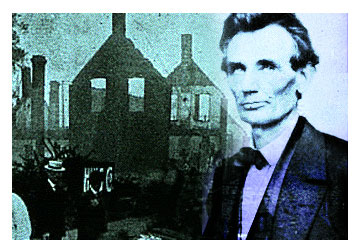
Barack Obama and the Springfield race riot

Springfield, Ill., where Barack Obama officially announces his presidential campaign on Saturday, has a tortured racial history. What happened, and what it could mean for Obama.

  • more
    • All Share Services

Barack Obama and the Springfield race riot

Barack Obama is declaring his candidacy for the presidency of the United States on Saturday, two days before Abraham Lincoln‘s birthday, not in Chicago, the city where he launched his political career, but in Springfield, the Illinois state capital.

The meaning of Springfield will not be lost on anyone who paid attention in history class. Springfield was Abe Lincoln’s hometown, the frontier settlement-turned-capital where Lincoln started a law practice in 1837 and from which he later launched his own national political career. What better place to roll out the campaign of the first African-American with a realistic shot at becoming president than in the city that gave us the “Great Emancipator”? Whatever Obama may say on Saturday, the mere sight of him among the Lincoln monuments in Springfield — the old statehouse where Lincoln gave his famous “house divided” speech, his home on the corner of Eighth and Jackson, the grave in Oak Ridge Cemetery — will deliver a feel-good message of racial harmony, of white goodwill and black perseverance, that Americans can embrace.

Except, as Obama may know, there’s more to the history of Springfield than Abe Lincoln. There’s the part, for instance, where the whites tried to run the blacks out of town.

Though now largely forgotten, the events and aftermath of the Springfield Race Riot, as it came to be known, are as relevant to the hopes of Obama as is the legacy of Abraham Lincoln.

The year was 1908. It was mid-August and America was in the throes of a very different presidential race. Republican William Howard Taft was running out the clock against perennial Democratic candidate William Jennings Bryan, whom Taft would beat easily in November. The economy had rebounded from a crash in 1907 and was back on a soaring trajectory. The U.S. Navy’s Great White Fleet was sailing around the world, the Wright brothers were being hailed as “conquerors of the air,” and Robert Peary had sailed off to discover the North Pole. These were giddy times in America, and booming times in Springfield, which had grown from a country village to a city of 50,000.

The one group untouched by the nation’s prosperity and optimism was African-Americans. Even by the standards of what had come before, and would come later, 1908 was a brutal year for black people in this country. Jim Crow laws had wiped out most of the gains of Reconstruction and a steady campaign of lynching and other forms of physical intimidation kept blacks in near subjugation throughout the South. More recently, and ominously, Northern cities had begun imposing their own brand of Jim Crow. “A few years ago no hotel or restaurant refused Negro guests,” journalist Ray Stannard Baker noted in 1908 after visiting Boston. “Now several hotels, restaurants, and especially confectionery stores, will not serve Negroes, even the best of them.”

And then came August, and Springfield exploded.

The incendiary event was a white woman’s accusation of rape against a black man. The charge would later turn out to be the deception of an unfaithful wife; her boyfriend had beaten her up and she’d used the excuse of a black stranger to explain the bruises. For the moment, though, her lie was taken as gospel truth. On Aug. 14, as local newspapers fanned outrage, several thousand whites descended on the county jail. They demanded that the suspect, a laborer named George Richardson, be delivered to them. What the mob intended to do to Richardson did not, in 1908, require much imagination.

Getting no satisfaction at the county jail, the mob turned its wrath elsewhere. Thousands marched into the black sections of town. “Abe Lincoln brought them to Springfield,” someone shouted, “and we will run them out.” Which is exactly what they attempted to do. Over the next several hours, whites attacked blacks wherever they found them and set fire to dozens of black businesses and homes. Whites who feared their own homes would be accidentally torched nailed white sheets to their doors.

As midnight passed, the mob advanced remorselessly into an area of town known as the Badlands. Coming upon an elderly black man named Harrison West, the rioters beat him severely. Finding a paralyzed man named William Smith, they dragged him from his house and threw him into a patch of weeds.

At 2 a.m., the mob arrived at the home of Scott Burton, a 56-year-old black barber. After firing buckshot at the mob, Burton tried to escape through a side door of his house, but he was overtaken and knocked unconscious. In the light of burning buildings, the mob lynched Burton from a nearby tree.

With daybreak on Saturday, Aug. 15, as Springfield smoldered and state militia poured in by train, some of the city’s 3,000 blacks took refuge in the State Arsenal downtown. Many more fled into the surrounding countryside. Finding nearby towns inhospitable, they camped in the forest and cornfields.

The soldiers tamped down the violence, but only temporarily. Saturday night brought more rioting and burning, and ended with the lynching of an 84-year-old African-American named William Donnegan. A retired cobbler, Donnegan had been friends, long ago, with Abraham Lincoln.

When the white journalist William English Walling arrived in Springfield from Chicago on Sunday, he was stunned by the lack of remorse he encountered among the city’s whites. Even those who had not participated in the pogrom seemed to condone it. Certainly few had intervened to stop it. “Springfield,” Walling would write in a widely circulated left-wing journal, “had no shame.”

Nor apparently did the rest of America. “If these outrages had happened thirty years ago, when memories of Lincoln, Garrison and Wendell Phillips were still fresh,” Walling asked his readers to imagine, “what would not have happened in the North?”

What happened in the North in 1908 was tepid outrage, followed by tenuous explanations, followed quickly by nothing at all. By the time America celebrated the centennial of Abraham Lincoln’s birth on Feb. 12, 1909, the riot had been effectively brushed under the rug. In Springfield, the Great Emancipator’s centennial was celebrated with a feast in the State Arsenal, the same building into which blacks had fled back in August. This time, no blacks were invited.

But there was a silver lining in the dark cloud over Springfield, one that has not been forgotten. Galvanized by the riot, a group of 60 prominent men and women, white and black alike, including Walling, Jane Addams, Ida Wells-Barnett, John Dewey and W.E.B. DuBois, cosigned an open letter, released that same Feb. 12, to protest injustices and violence against African-Americans. The letter became the founding document of the National Association for the Advancement of Colored People.

The NAACP, as we now know, went on to become a beacon of hope to African-Americans in the 20th century, even when there was not much reason to hope. It’s in large part thanks to the NAACP that the Civil Rights Act was passed 56 years after the Springfield riot– and that an African-American named Barack Obama has a chance to become the next president of the United States.

As I write I don’t know whether Obama will mention the 1908 riot in his announcement speech. Given that his bid for 2008 rests partly on his appeal as a man who can cross America’s racial divide, I wouldn’t be shocked if he skipped it. Does he really want to dredge up a century-old race riot in the kickoff speech of his campaign?

But here’s hoping he does mention it. Because there is a message in the shameful history of the 1908 riot that is every bit as stirring as memories of Lincoln. The riot reminds us, for one thing, that as far as we still have to go in race relations, we have come a very long way. More broadly, it reminds us that even when things seem to be beyond hope, as they do now in Iraq, for instance, and in New Orleans — and as they did for African-Americans in the early part of the last century — they do sometimes, in some ways, get better.

If Obama can make Americans believe that, he really may be our next president.

Jim Rasenberger is a screenwriter in New York. He has written for Vanity Fair, New York and Yahoo! Internet Life.

Obama campaign raps Romney on Trump rhetoric

McCain has yet to speak out against "Birthers"

  • more
    • All Share Services

Obama campaign raps Romney on Trump rhetoricRepublican presidential candidate, former Massachusetts Gov. Mitt Romney, looks out the campaign charter airplane window during the flight between San Diego and Hayden, Co., Monday, May 28, 2012. (AP Photo/Mary Altaffer)(Credit: AP)

WASHINGTON (AP) — President Barack Obama’s re-election campaign is releasing a television advertisement accusing Mitt Romney of failing to stand up to “the voices of extremism” in his party.

The ad was released Tuesday as Romney was poised to clinch the Republican presidential nomination in the Texas primary. It takes the former Massachusetts governor to task for failing to speak out against real estate mogul Donald Trump, a supporter who has consistently charged that Obama is not a U.S. citizen.

The commercial opens by showing 2008 nominee John McCain brushing aside a woman who raised the citizenship issue at a town hall-style meeting, and asks, “Why won’t Mitt Romney do the same?”

A Romney aide is shown telling a TV interviewer that “a candidate can’t be responsible for everything a supporter has said.”

Guess who’s coming to dinner?

George and Laura Bush dine with the Obamas

  • more
    • All Share Services

Judy Gold

Emmy Award-winning actress and comedian Judy Gold is best known as the star of her two critically acclaimed off-Broadway shows, "The Judy Show - My Life As A Sitcom," and "25 Questions For A Jewish Mother." Judy has had her own comedy specials on HBO, Comedy Central and Logo. She appears regularly on Tru TV's World"s Dumbest. Check out www.JudyGold.com and follow her on Twitter at @JewdyGold.

Presidential race is most costly ever

The election is poised to dwarf the cost of 2008, when Super PACs didn't pump millions of dollars into the race

  • more
    • All Share Services

Presidential race is most costly everPresident Barack Obama, left, tours TPI Composites, a manufacturer of wind turbines blades, with plant manager Mark Parriott, Thursday, May 24, 2012 in Newton, Iowa. In Obama’s second visit as president to Newton, a city of about 15,000 east of Des Moines, he argued for Congress to renew wind energy tax credits.(AP Photo/Pablo Martinez Monsivais)(Credit: AP)

The battle between President Barack Obama and Republican Mitt Romney will be the most expensive presidential contest ever — by a long shot.

There are two main reasons. It’s the first time both major-party candidates are declining post-Watergate federal campaign financing — and the spending limits attached. And the proliferation of super PACS is pumping untold millions into the fray on both sides, mostly for advertising.

So fashion your seat belts and prepare for a howling tempest of broadcast ads, especially if you live in a battleground state.

Obama and Romney were both coming off a week of intensive national fundraising.

Without Democratic primary opposition, Obama had a huge early advantage.

But Romney, likely to surpass the 1,144 delegates needed for the GOP nomination next Tuesday with a primary win in Texas, is starting to catch up as major conservative donors begin opening their wallets.

Through April, Obama and Democratic groups supporting him have raised nearly $450 million and have more than $150 million in the bank. Romney and Republicans backing him have collected more than $400 million during the same stretch and have about $80 million at their disposal.

Both candidates are shooting for raising around $800 million, which would put their combined campaign spending at roughly $1.6 billion. Add another few hundred million from super PACs and convention spending.

Obama opted out of public financing in 2008 and raised $750 million. His spending swamped GOP rival Sen. John McCain, limited to spend the $84 million he received from taxpayers. Super PACs didn’t exist then.

We know what happened in that race. Romney didn’t want to see it happen to him.

Neither candidate had public appearances Friday. Romney was taking a long weekend California hiatus from campaigning, while Obama planned several ceremonial events on Memorial Day.


Continue Reading Close

When leaders actually lead

Some Obama backers insisted the president could do nothing on his own to advance gay marriage. Boy, were they wrong

  • more
    • All Share Services

When leaders actually leadU.S. President Barack Obama speaks at a campaign fund raising event in Denver, Colorado May 23, 2012. (Credit: Reuters/Kevin Lamarque)

I count myself as a supporter of President Obama who reserves the right to criticize him when I disagree. And I disagreed with his reluctance to come out in support of gay marriage for a long time. I’m also on record wishing he’d taken a stronger public stance behind several big progressive priorities — a larger stimulus, tougher Wall Street reform, a public option for health insurance, a big jobs bill – whether or not he had the congressional support to make it happen.

Throughout the president’s first term, his most ardent supporters have reacted to those of us pushing him to do – and say – more on such issues with frustration and anger, some of it nasty and personal, some of it thoughtful and well-argued. They rightly blame Congress for blocking action on key progressive priorities, but strangely downplay the power of presidential leadership. Late last year, New York magazine’s Jonathan Chait twice attacked liberal Obama critics for being “unreasonable” about what the president alone could accomplish, because “liberals, on the whole, are incapable of feeling satisfied with a Democratic president.”

Chait took particular aim at lefty image guru Drew Westen, a one-time Obama admirer who criticized the president in the New York Times not merely for what he hadn’t accomplished, but for failing to tell a compelling story. Chait accused Westen and other progressives of embracing:

…a model of American politics in which the president in not only the most important figure, but his most powerful weapon is rhetoric. The argument appears calculated to infuriate anybody with a passing familiarity with the basics of political science. In Westen’s telling, every known impediment to legislative progress — special interest lobbying, the filibuster, macroeconomic conditions, not to mention certain settled beliefs of public opinion — are but tiny stick huts trembling in the face of the atomic bomb of the presidential speech. The impediment to an era of total an uncompromising liberal success is Obama’s failure to properly deploy this awesome weapon.

Chait caricatured Westen’s argument (and the beliefs of those who agreed with it), but he got lots of love for both pieces in the pro-Obama blogosphere, where folks finally felt they had a real diagnosis for the illness of those they dismissed as “emoprogs.” But now that we see the changes wrought by Obama’s politically risky embrace of gay marriage, maybe it will be easier for folks to understand that it’s the job of political advocates not merely to praise, but to push their leaders forward.

Steve Kornacki runs down the astonishing political changes we’ve seen in the mere two weeks since the president carefully announced his supposed change of heart on gay marriage. The nation’s largest African-American organization, the NAACP, has come out behind it – and maybe most important, recognized it as an important civil rights issue. Maybe most dramatic, in Maryland, African-American voters have now flipped to support the state’s gay marriage ballot measure 55 to 36 percent –almost the exact percentage by which they opposed it in previous polling on the state issue. And in the latest ABC News/Washington Post poll, African-Americans’ support for gay marriage jumped to 59 percent from 41 percent in the wake of the president’s historic announcement.

Now, I’m not going to argue that Obama’s turnaround alone caused this sea change. The arc of the moral universe has been bending toward justice on gay rights for a long time, and as I wrote last week, the president gave it an additional tug. There have been advocates within the NAACP working to make this happen for a long time, and they deserve a lot of credit. African-American voter opinion had already been trending in this direction, even if black voters had been less receptive to gay marriage than other demographic groups. There is also an emotional and personal component to the president’s stance that makes his moral suasion hard to replicate on behalf of, say, the jobs bill or the public option. (And let’s also remember it’s white voters who are most hostile on some of those economic issues, thanks to the divide and conquer politics of the GOP over the last 40 years.)

Still, it’s hard not to conclude that Obama’s words made a significant difference in the political course of this debate. Ironically, it was once critics of Obama who mocked the power of words, and specifically the candidate’s own oratorical gifts. Obama shot back at them many times.

“Don’t tell me words don’t matter,” he told Wisconsin Democrats in February 2008. “‘I have a dream’ — just words. ‘We hold these truths to be self-evident, that all men are created equal’ — just words. ‘We have nothing to fear but fear itself’ – just words. Just speeches.” At many times over the last three years, I’ve been amazed at how Obama’s critics and supporters seemed to change sides on the question of the power of his words.

I give the folks who call themselves “prag progs” – pragmatic progressives, as opposed to “unreasonable” emoprogs – a lot of credit for fixing attention on what the president has accomplished, and reminding others not merely to fixate on what he hasn’t. But I think it’s time that all of us acknowledge that there’s a role for constructive pressure, too. Progressive change has always required impatient agitators – and it will continue to.

Continue Reading Close
Joan Walsh

Joan Walsh is Salon's editor at large.

Obama courts LGBT vote

The president has launched a new website and video touting his "evolution" on gay marriage

  • more
    • All Share Services

After a long “evolution” on marriage equality, the Obama campaign is moving to take full ownership over LGBT rights as a political issue today, rolling out a new website and video narrated by Glee’s Jane Lynch.

Lynch, who married her partner in 2010 after New York legalized same-sex marriage, praises Obama in the video, calling him “a leader who not only acknowledged the LGBT community, but who embraced us.” Lynch ticks off a series of Obama’s accomplishments, saying the president has made “more significant advances on LGBT issues than other president that came before him.”

But on a conference call this morning, campaign officials said the website, called “Obama Pride,” is as much about touting the president’s advances on LGBT rights as it is a means to organize and engage with the LGBT community. “We will run robust LGBT Vote programming to turn out LGBT voters this November,” said National LGBT vote director Jamie Citron.

The five-minute video also features new interview-style footage of Obama, who explains how his view on marriage has changed over time and notes that “we’ve seen a profound cultural shift just over the past decade,”

Indeed, the roll out — timed to coincide with Harvey Milk Day — comes as a new Washington Post/ABC News poll finds opposition to gay marriage at all time low in the wake of Obama’s announcement.

That puts Obama on the right side of history, the campaign said. “[Mitt] Romney’s position on same-sex marriage is also historic but not in the way it should be,” said Obama co-chair Joe Solmonese, the outgoing president of the LGBT advocacy group Human Rights Coalition, who noted that Romney has pledged to push for an anti-marriage equality amendment.

While the marriage reversal carries major political risks, the aggressive PR effort from the deliberate Obama campaign suggests they feel confident that Obama’s stance on gay rights will be a net gain, politically. Already, fundraising is reportedly up as both disillusioned gay Democrats and even some gay Republicans are coming back into the fold. Indeed, the founder of the Log Cabin Republicans, Rich Tafel, told NPR last weekend that he’s considering defecting to Obama in light of the announcement. If the campaign and Jane Lynch have their way, he won’t be the last.

Continue Reading Close

Alex Seitz-Wald is Salon's political reporter. Email him at aseitz-wald@salon.com, and follow him on Twitter @aseitzwald.

Page 1 of 586 in Barack Obama