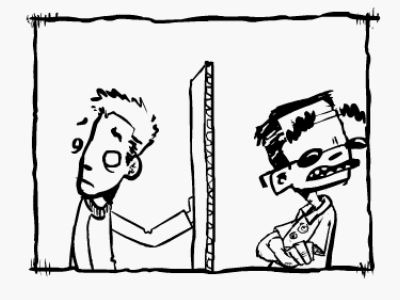
What can Tony see with his new glasses?
The latest from Sean McBride.
Singer Whitney Houston is shown during the Whitney Houston "I Look To You" CD Listening Party held at the Beverly Hilton Hotel on Thursday July 23, 2009 in Beverly Hills, California.
Before the tragic tabloid headlines, the “crack is wack” denials and the tumultuous marriage to Bobby Brown, pop/soul diva Whitney Houston towered over the music world in the mid-1980s and early ’90s.
Houston died Saturday in Beverly Hills, on the eve of the Grammy Awards. She was 48.
She sold 200 million records worldwide, won six Grammys, two Emmys and nearly two dozen American Music Awards. Hits like “How Will I Know,” “Saving All My Love For You” and “I Wanna Dance With Somebody” ruled the pop charts — and made her one of the few singers who could be identified by one name.
With royal music roots — the daughter of gospel sensation Cissy Houston, the cousin of Dionne Warwick and the god-daughter of Aretha Franklin — she seemed destined to become a pop queen. But drugs and erratic behavior helped tear her career down.
“The biggest devil is me. I’m either my best friend or my worst enemy,” Houston told Diane Sawyer in a 2002 interview, with Brown by her side.
Let’s remember her at her peak, with some of her biggest hits:
“Saving All My Love For You”
“I Wanna Dance With Somebody”
“Star-Spangled Banner” at the Super Bowl
“I Will Always Love You,” Grammy performance
“I’m Your Baby Tonight”
“How Will I Know”
Singer Whitney Houston is shown during the Whitney Houston "I Look To You" CD Listening Party held at the Beverly Hilton Hotel on Thursday July 23, 2009 in Beverly Hills, California.
Two weeks ago, a story by Los Angeles celebrity journalist Nick Papps began, “It’s hard to believe that the drugged, dazed woman staring out from [an accompanying] picture was once one of the most popular singers in the world … But today that woman, Whitney Houston, 42, is just another crack head.”
The dim assessment came in response to tabloids that on March 29 printed photos of what is supposedly Houston’s Atlanta bathroom, littered with crack pipes, cocaine-coated spoons, cigarette butts, Budweiser cans and garbage. The photos were taken, and sold to the magazines, by Houston’s sister-in-law, who provided an accompanying tale of the singer’s cracked-out habits, from hallucinating violent demons, to biting and hitting herself, putting her hand through walls, and locking herself away to smoke rock cocaine and pleasure herself with an apparently prodigious collection of vibrators. Speaking about the mess on Fox’s “The O’Reilly Factor,” Billboard executive editor Tamara Conniff said, “I think that she was a really well-manicured diva star and she just turned a little ghetto.”
Whitney Houston has sold more than 120 million records. Her first album, “Whitney Houston,” sold 24 million copies in 1985, becoming the highest-selling debut for a female solo artist. She was the first American singer to have seven consecutive No. 1 hits. She won six Grammys and 21 American Music Awards; her 1992 cover of Dolly Parton’s “I Will Always Love You” was the highest-selling single by a woman in pop music history. But her impact went deeper than that: Houston’s was one of the only black faces that white girls like me who grew up in the 1980s ever saw in magazines in our dentist’s office or in video rotation on early Af-Am-light MTV. For many black girls, she was the only young female role model presented in lily-white teen bibles or mainstream entertainment who looked anything like them.
But 20 years after her record-breaking debut, and a decade-long dominance of the pop charts, Whitney Houston has been reduced to this: “just another crack head,” “a really well-manicured diva” who “just turned a little ghetto.”
Hearing someone who mattered to me as a child, who was famous in a daily, first-name-only kind of way, whose voice and face were so very beautiful, get tossed away so unceremoniously was jarring to me. Yes, jarring, even after a decade spent watching her career circle the drain. Listening to the ugly overtones of her dismissal — “crackhead” just half an epithet away from “crack whore” — I found myself wanting to blame everything that’s wrong with American culture. I wanted to point out that successful black women get punished, that women’s entertainment careers get manipulated to conform to standards they can’t maintain, that Houston’s thunderous slide was surely precipitated by racism and sexism and a celebrity machine that chews people up and leaves them for dead. Literally. In 2001, the New York Post reported that MTV has collected B-roll for a Houston obit, an honor normally reserved for geriatrics.
So I called the kinds of people who could shed light on these possibilities. And they did. But in talking and thinking about Houston’s story, walking past newsstands where her shiny, bloated face stared up from the tabloid covers, I realized that part of what’s so sad about this particular pop culture tragedy is that racism and sexism and celebrity culture only went so far in destroying this woman; the rest she seems to have done herself.
“She couldn’t have been a bigger or more beloved star, and she was really the first black America’s sweetheart,” said Janice Min, editor of Us Weekly, about Houston’s mid-’80s profile. “Now she’s not even worthy of ‘The Surreal Life.’ She’s fallen below the entertainment C-list level. It’s almost too tragic to deal with.” Perhaps the surest sign that Houston has essentially ceased to matter is that Min’s magazine, whose pages burble and hiss with every plodding plot point in every celebrity soap opera, did not run a story on the Enquirer’s “Inside Whitney’s Crackden!” scoop.
“We kind of ignored it,” Min explained, adding that she decided against covering it only at the last minute. First of all, the story was one hell of a celebrity bummer. “It’s a little tawdry for an Us audience, where celebrities have a nice shiny veneer on them. This is a little hardcore,” said Min. “You turn to celebrities for escape and voyeurism. When their problems are worse than yours, then you don’t want to read about them.” And there’s no worse buzz kill than a predictable one. “The interesting thing was that when you saw the pictures, you almost wanted to be more surprised than you were,” Min continued. “There are a few celebrity stories that filter into the white noise category: Paris Hilton breaking up with a boyfriend, Nicole Richie looking stick thin, and on a much more tragic level, Whitney Houston using drugs. This has been an ongoing plotline for a long time.”
It certainly has. Houston has been missing concerts for years. She was booted from the Oscars in 2000 for blowing off rehearsal. When she does perform, she often sings badly and looks consumptive. She’s been in and out of rehab, was arrested for marijuana possession in 2002, and admitted to Diane Sawyer that same year that she “partied.” Her husband of 14 years, Bobby Brown, has spent time in jail for drunk driving, failure to pay child support, and breaking parole by assaulting his wife in 2003. Houston hasn’t released an album since 2003; the most exposure she’s had in recent years has been “Being Bobby Brown,” the train wreck of a reality show she and her husband headlined last year.
But all that doesn’t change who she used to be. It doesn’t change the fact that many women in their 30s and late 20s can still remember the 17-year-old fashion model as one of the first women of color to grace the cover of Seventeen in 1980. It wasn’t hard to suss out the ways that America’s historical anxiety about black femininity and sexuality was manifesting itself during the ’80s: These were the years when Vanessa Williams, the first black Miss America, was dethroned for having been photographed naked, and when Lisa Bonet, aka Denise Huxtable, was savaged for costarring in the kinky movie “Angel Heart” with Mickey Rourke. If young black women were going to be in the public (white) eye, they had to be pure and unthreatening, especially sexually.
For a long time, Houston fit the bill. And while there’s lots to be said about the lengths she, or her P.R. people, may have gone to to make her a palatable crossover sensation, there was no question that her roots were deep in African-American musical tradition. Slick and overproduced though they may have been, Houston’s songs were soul and R&B ballads; her voice was huge, and straight out of her Newark, N.J., church choir. She was the product of music royalty, daughter of gospel star Cissy Houston, who sang backup for Aretha Franklin and Elvis Presley. Franklin is Whitney’s godmother; Dionne Warwick is her cousin.
Houston’s run is often described in shorthand now: She sang “the ‘Bodyguard’ song” (“I Will Always Love You”) and “The Greatest Love of All,” a tune popular at sixth-grade graduations everywhere. But those are the tip of the iceberg; between 1985 and 1997, she slammed out hit after hit after hit, from peppy dance tunes to ocean-liner-size ballads: “All at Once,” “How Will I Know,” “I Wanna Dance With Somebody,” “You Give Good Love,” “Saving All My Love,” “So Emotional,” “Where Do Broken Hearts Go,” “Didn’t We Almost Have It All,” “One Moment in Time,” “Run to You,” “I’m Every Woman.” Houston’s pipes could shake the stereo, make you shiver even when you knew the song was schmaltzy.
It’s hard to convey now, in a more diffuse media landscape, the intensity of radio and video play she got. I “grew out” of my Whitney fandom around puberty and haven’t sat down to listen to her in 15 years; while writing this, I downloaded some tunes and found that I still knew every word. That’s not just a mark of early devotion; it’s a sign of what was her inescapable ubiquity.
“Whitney Houston was probably the most important African-American singer between Aretha Franklin and Mary J. Blige. For a decade or so, she was probably the most important black female singer out there,” said Craig Werner, chairman of the University of Wisconsin-Madison’s African-American studies department and author of “A Change Is Gonna Come: Music, Race and the Soul of America.” Werner also pointed me to the work of music journalist Danny Alexander, who has argued that the untold story of black music in the past two decades — lost amid the attention showered on rap and hip-hop — was the emergence of the black female vocalist as the most powerful force on pop charts.
In an e-mail, Alexander explained that while it wasn’t “all about” Houston, there was “a sea change that follows her initial success. Black women, in particular, [including] extraordinary vocal groups such as En Vogue, TLC, SWV … Destiny’s Child, but also Mariah Carey, Toni Braxton, Mary J. Blige and others in line for Whitney’s undisputed throne, played the largest role in chart history as talent to be reckoned with … it’s unlike anything that happened before.” According to Alexander, Houston and her peers, including Madonna, Janet Jackson and Tina Turner, “carved out a space for women to come close to dominating pop radio in the early ’90s — as not simply producers’ pawns … but serious artists demanding artistic control and respect and, in Whitney’s case in particular, with a vocal talent to rival anyone else on the radio.”
But if Houston was helping to spearhead a music industry revolution, that revolution was concurrent with tectonic shifts of another kind. Houston was a product — literally — of MTV. And that meant that she was packaged within an inch of her life — pinched and prodded and tweaked to look a certain way. Check out the cover of her first album. Houston was 21; her face looks about 14. But she’s done up like a piece of Grecian statuary, her hair pulled into a severe bun, a string of pearls around her neck. She looks unrealistically pristine.
“She was like the black Princess Di — always in a gown; beyond gorgeous,” said Danyel Smith, former editor in chief of Vibe who has profiled and spent time with Houston over the years. Smith observed that in the mainstream press, many female stars are motivated to present themselves — or others choose to represent them — as rebel bad girls who defy prudish expectation and wholesome good looks by staying out late, drinking too much and sneaking off to bathroom stalls with Wilmer Valderrama. Back in the mid-’80s, Houston was defying a different set of cultural expectations — the ones applied to black girls — to a much different effect. She was presented to us as youthful feminine perfection: all sugar and spice and poofy dresses, a solid rearing in the church, a close family. Her unraveling “is not the same thing as a bad girl getting worse,” said Smith. “It’s a good girl seemingly tumbling to the bottom of a ravine. We have to watch, but it’s really not pretty, and not entertaining.”
Houston was famously guarded about her private life. If there was the sense that everything we saw about her as a young performer — her family, her faith, her clothes — was what we were meant to see, then at the least that publicity lockdown presented her (or someone) as in control. After her marriage and the birth of daughter Bobbi Kristina in 1993, the media began to get glimpses, with the missed performances and weight loss, that something was amiss. There were rumors that she was doing drugs with her husband, who often was assumed to be the catalyst behind her self-destruction.
This loosening of her grip on her public presentation seemed a sign that Houston’s private life was in free fall. In the now-infamous 2002 interview with Diane Sawyer, Brown arrived uninvited, an irritating presence whose desire to control his wife, or to keep her from emerging from whatever private universe they inhabited, seemed to emanate from his pores. But Houston didn’t appear to mind. She came off as defensive and vaguely unpleasant as she crowed to Sawyer that she made “too much money to ever smoke crack.” “Crack is cheap,” she said. “Crack is whack.”
Her raucous denials served not only to make her sound like someone who might well have done crack, but also like someone who was drawing invisible and unattractive class and race lines around herself. No matter how strung-out she was willing to look on television, this was a message she seemed determined to control: I’m not that kind of drug user, she was saying. Not the kind who’s poor. And while it was clear that whatever kind of person she was in 2002, it bore little resemblance to the young woman on the cover of Seventeen; it was hard to tell whether her new, unlikable presentation was any more authentic than the clean-scrubbed package. “I watched with hope that I would see something in her face that was real,” said Smith of the interview. “But I don’t know what her real is. And I’ve spent time with her a couple of times over the years. Like the best and biggest pop stars, she is a very veiled persona.”
The veil dropped more dramatically last year, when Houston appeared on her husband’s Bravo reality series “Being Bobby Brown.” The show dealt intimately with the action taking place (and not taking place) in Houston’s lower intestine, and was peppered with lines from the former “black Princess Di” like, “I’ve got to poop a poop!” It was disgusting — not because of the scatological humor, which actually seemed refreshingly real — but because of the context in which that humor played to the scads of viewers who made the show one of Bravo’s biggest hits. Houston and Brown didn’t look right; they didn’t appear to be well, or particularly sane. And so it seemed that the message was not, “Look at the successful celebrities who, like real people, talk about farting,” but rather, “Laugh at these strung-out has-beens who can’t help but degrade what’s left of their image by talking about their bowel movements on camera.”
Smith was clear that she doesn’t know what to make of the story behind the current set of drug-den photographs: “If it’s old, if it’s new, if it’s Bobby Brown, if it’s drugs, if it’s fatigue, if it’s depression, if it’s freedom; we don’t know what it is at all.” But she also said that she could bring herself to watch only one episode of the reality show. “It seemed so tragic and broken that I just couldn’t take it.”
Perhaps the most surprising twist of “Being Bobby Brown” was that it turned a lot of assumptions about just what had happened to Houston on their ears. There had been a pretty simple imaginative narrative about the singer’s decade-long decline: that as a victim of her own early success, she had been pushed into a public marriage to an abusive man, perhaps been badly treated and forced to live a lie, and fallen into drug addiction and depression at his hands. Who knows — maybe there’s truth in that story arc. But what “Being Bobby Brown” made clear was that however the Houston-Brown marriage has developed over the years, it is now, if not blissful, then at the very least functionally codependent. And more than that, that Brown is not the only bully in the family.
“That was a show where you probably saw more pathology than you needed to,” said Us Weekly’s Min. “I think a lot of people stopped feeling sorry for Whitney Houston after that show. It looked like she had the upper hand in that relationship. Where people had probably assumed Bobby was the thug, I think they began to consider that maybe Whitney was the thug.” Houston was pushy and mean and dismissive, and she looked physically wrecked: from her waxy skin to straw-dry hair to her oddly protruding belly. “And,” Min paused before pointing out, “she looked like probably not the best mother in the world. In America you can be forgiven for a lot of things. But not being a fully engaged mother is a sin.” Here, she recalled a “Being Bobby Brown” episode in which Houston locked young Bobbi Kristina out of her bedroom so that she and Brown could have sex. “People were shocked by that,” said Min. “Especially coming from America’s former pop princess.”
But isn’t part of the demonization of black female sexuality about our attitudes and assumptions more than it is about reality? Houston’s meteoric rise, after all, had occurred during what Wisconsin professor Werner described as “an extremely chaotic period in African-American culture” during which the class-carving effects of Reaganomics dissolved black communities, the church lost its role as a centralizing organizing structure, and drug wars ripped through black neighborhoods. “The cultural moorings that had held black life together during all kinds of turmoil and suffering in some way fell apart,” said Werner. If Houston had become unmoored by her early success, he hypothesized, she might not have found the communal support she once would have. “Celebrity culture replaced the culture of community that had nurtured soul music and early rock ‘n’ roll,” he said. “It was a perfect storm of how to screw up somebody’s life.”
The circumstances of Houston’s trajectory were in some ways reassuringly stereotypical. “The media particularly likes this kind of story because it plays into stereotypes of black degradation,” said Werner. “The specific squalor of the Whitney Houston crack story, that part of it is racialized. There’s the idea that crack is a black drug. Which is horseshit. But look at how we love the stories of black people doing it: Remember Marion Barry in Washington? We like this because it’s a ghetto story. And it shows no matter how high they rise, this is how they all fall.”
But while Houston may have steered her way into a perfect storm of unjust racial expectation, she was still at the wheel. And she has had ample offers of rescue, including, by her own admission, family interventions. While writing this piece, I spoke to a friend who strenuously argued that Houston’s present circumstances have little to do with race. If distant engagement with celebrity life can be compared to friendship, she said, then Houston is the friend on whom we have finally been forced to give up. We did gasp with horror over her skeletal appearance, were saddened by her no-show concert appearances, shaken by tales of spousal abuse and drugging. But she has sworn she’d get help and then failed to do so too many times, returned again and again to the abusive boyfriend, gotten clean only to relapse, stolen money from our wallets — if minutes spent poring over dismaying People photo spreads count as currency — until we eventually told her never to call us again. Moreover, mentioning Robert Downey Jr. by way of comparison, my friend said that if Houston had been able to smoke crack and still produce compelling product — hit songs — we would have forgiven her anything, regardless of color.
Downey is a fair example of down-and-out celebrity (at least temporarily) redeemed. One that’s even more apt would be Mariah Carey, who went all-out bonkers and still managed a glorious return. Or Courtney Love, an addled and unwell figure who has been pilloried even more brutally than Houston, but who has managed to retain a claim on some fuzzy corner of our hearts. Houston has no such fuzzy place. At least in the mainstream (white) press.
But, Danyel Smith reminded me, that doesn’t mean that everyone’s given up on her. “When you say, ‘How did we discard her so quickly?’ ‘We’ is too big a word,” said Smith. “I don’t think the African-American community has discarded her. There is equal parts sadness and on some levels disgust, and I hesitate to speak for every African-American like we’re all joined hand-in-hand. But I do think that however misguided, there is a huge hope for her recovery. And there is still a deep and abiding love for the Whitney we knew on those first three or four albums.”
So maybe that’s all I want: for the mainstream press to save Whitney from the tabloid and reality-TV haze that seems to have enveloped and obscured everything about who she was before. The tragedy here — in addition to the loss of a talent and the apparent illness of a once-healthy woman — is the way that loss and illness have sucked dry our well of respect for someone who made an artistic and social impact. Maybe in an extremely twisted way, MTV’s obituary B-roll is the right idea. What we need to be doing is not laughing, or looking away. What we need to be doing is mourning.
Brittany St. Jordan, a 28-year-old leggy redhead in a plunging gold number, was all dressed up with somewhere to go: the Adult Video News Awards, the so-called “Oscars for the porn industry.” But she ended up standing in line for three hours waiting to walk the red carpet, as other female performers were sent ahead. When she finally got her turn, event organizers directed her away from interviews with the press.
St. Jordan had an idea of why: Unlike the ladies who were sent right in, she’s a transsexual woman.
After the night was over, having lost in the Best Transsexual Performer category, St. Jordan took to the Web to protest her treatment. Her story inspired Kelly Pierce, a female trans performer who didn’t attend the ceremony, to write a lengthy blog post titled “AVN’s Inequality & Segregation Needs to Stop!” Soon, industry blogs and message boards picked up on the controversy.
It was an explosion of long-building resentment over their treatment within the industry. Beyond the red carpet delay this year, which AVN says was not limited to transsexual performers, the company has never allowed the Transsexual Performer of the Year award to be presented on stage. Instead, it has been announced on a JumboTron as the audience starts to filter out of the auditorium. As one star told me, “We’re the black sheep.”
That is despite the genre’s tremendous popularity: “T-girl sites are the fourth most popular category of adult Web site,” according to “A Billion Wicked Thoughts,” a book that crunches the numbers behind Internet porn. (Although female-to-male transsexual stars are on the rise in queer porn, what we’re talking about here are trans women — more specifically, biological males who have transitioned to being female but still have a penis.) There are more frequent Web searches for this genre — often through terms like “shemale” and “chicks with dicks” — than for basic X-rated categories like “butts” or “blowjobs.” Authors Sai Gaddam and Ogi Ogas found that the genre’s average viewer is a straight-identified male (and, based on their analysis, passing curiosity doesn’t explain its popularity).
After St. Jordan’s outcry gathered virtual steam, AVN called a meeting last week with a handful of concerned trans women. On Tuesday, the company published a press release announcing that the transsexual winner would be announced on stage in the future. AVN also promised to allow more trans performers to walk the red carpet and talk to the press, and to present awards during the ceremony.
St. Jordan, who says she put her career on the line by speaking out, is thrilled. “Whether or not I ever get nominated again or get invited to anything with AVN again, the fact that the Transsexual Performer of the Year will be on stage and seen by everybody? That’s huge.” Tomcat, director of Kink.com’s TS Seduction site, agrees: “Not sharing the stage with Ts performers has allowed the majority of non-trans performers to dismiss them as outsiders and perpetuated discrimination against a group who should be equally praised for the work they do and the revenue they generate for the industry.”
While AVN’s decision marks serious progress, St. Jordan says that recent commentary on industry message boards reveals just how far there is to go. “Some of the hate and ignorance that came spewing from people was unbelievable, and this was people in, or associated with, the industry. You saw where a lot of people stood.”
Not that it wasn’t already apparent. There’s a huge stigma against mainstream straight stars working with transsexual female performers — they’re stereotyped as gay and therefore at higher risk for transmitting HIV. Tomcat, a trans man, told me in an email, “I still encounter many non-trans performers who will not work with [female] Ts performers because they consider [them] to be more of a STI risk to do a scene with — this is bullshit. In a industry where everyone is tested and everyone makes choices, the same risks are present regardless of gender identity.”
It perhaps goes without saying that the marketing of transsexual porn is often problematic. “People still search for Ts porn using ‘shemale,’” Tomcat says. “To me, this is like searching online for a cab company by typing in ‘stagecoach.’ It’s an antiquated term that is ignorant, incorrect and no longer OK to use.”
Some performers, like Wendy Williams, aren’t so concerned about the lingo. “I don’t live in a utopia, it’s what it is,” she says with her Southern lilt (she’s from Eastern Kentucky). “I’m not trying to be a transsexual activist.” Plus, “It’s a porn term that describes a genre. That way, some country, straight-ass guy in the corner is going to understand,” says Williams. “You say ‘transsexual’ and they’re confused, you say ‘shemale’ and they know what that is.”
A major struggle for the transsexual female niche is to get recognition within the straight side of the business as opposed to the gay side. “This is one of my biggest pet peeves, when I go into a store to do research to see if they’re carrying my DVDs or product lines and you have the transsexual stuff mixed in with the gay stuff,” says Williams. “Putting it next to ‘Harry Men Volume 1,’ it’s just not a good idea,” she says, since the vast majority of their fans identify as hetero. “My gay friends squeal at the idea of having sex with anything but a masculine male — the breasts and all that is just a huge turnoff.”
For most fans of transsexual porn, the genre is just one of many categories that they’re interested in. “A Billion Wicked Thoughts” argues that T-girl porn has such a significant straight male following because it combines the key sexual cue of female anatomy with that other fixture of heterosexual porn: a big, hard cock. Madison Montag, a nominee for Transsexual Performer of the Year, says, “They get tired of just the same old thing. Transsexuals are more feminine, they’re like hyper-feminine. To me, it’s kind of get the best of both worlds.”
The mis-categorization of Ts female porn has been painfully evident at the AVN awards in the past, Williams says: Buck Angel, the first recognized FTM trans performer, won the Best Transsexual Performer award in 2007. “It was a huge scandal in our community,” she says. “How do you judge his porn against our porn? His fan base is totally different. That’s just one example of how ignorant the porn community is.” (In an aside, she mentions the scene she filmed with him in 2005: “Actually, Buck was the very first, quote, vagina I had ever been in.”)
Many female transsexuals feel like they’re rejected from both the straight and gay world. “Even if you go into the [gay] clubs, transsexuals and drag queens are primarily there for entertainment,” says Williams. “It’s not really inclusive. We’re kind of in limbo, we’re in between both worlds.” In the straight world, men are often timid about revealing their interest in the genre. Most sales happen online, says Williams, who has a line of signature toys, including a $240 cyberskin mold of her ass. She says, “We’re the taboo, and where does taboo usually happen? Behind closed doors.”
Then again, Pierce, a blond with pixy features, says that when she signed autographs in a booth at the AVN Expo in 2008, she was allowed in the “female section” and had a line longer than some bio-girls. “They were kind of upset with me,” she laughs.
In terms of fans’ willingness to announce their interest in public, it all has to do with a performer’s “passability,” according to Pierce: “Some men feel like they’re more straight if they’re attracted to more feminine looking transsexuals who bottom” — because topping is seen as masculine. Passability is also a factor in how girls are treated within the industry, she says: “If you look like a woman, they’re more accepting of you. And if you don’t look like a woman, they’re less accepting.”
Montag, a 19-year-old, doe-eyed brunette who calls me “sweetie,” says she got stellar treatment at this year’s AVN awards — she rubbed elbows with Ron Jeremy on the red carpet and scored a seat in the second row — and attributes it in part to her passability. “I’m very young. I’m only 5’1″ and 81 pounds. I’m very petite.” She adds, “I started hormone therapy earlier than other girls.”
St. Jordan agrees: “When it comes down to it,” she says matter-of-factly, “this is business, and it’s a beauty contest every day.”
Williams, who is 6-feet-tall with red, va-va-voom hair, says the pressure to pass as a porn star is even greater than in everyday life. Normally, she says, “I pull my hair up into ponytail and throw on some lip gloss and people just think I’m a tall girl with big boobs.” On camera, everything is different: “You need to seem extremely feminine, but if you want to seem feminine, then you need to be on hormones — but if you’re on hormones, you can’t stay hard and come, and if you can’t stay hard and come, you’re a bad performer.” On top of that, she says, the same viewers who expect this expensive nipped and tucked aesthetic “want to pirate my videos and not sign up for my website and have it for free.”
The irony is that many female trans performers get into the sex industry to pay for their transitions. Well, that and because it can be difficult to get a job anywhere else: “I interviewed for a job that I should have got,” says Williams about her pre-porn days, “and the guy told me, ‘I just don’t know how the cohesion in the office would be if people knew that you were a transsexual woman.’” Things have improved in the decade since then, but the same issues persist: “I couldn’t get a job, not even at Burger King,” says Montag, who lives in a small town in Texas where “people get beat up just for being punk and emo.”
She may be sexually outgoing on the Internet, but it’s not so in real life. Montag says she gets far more action on-screen and doesn’t pursue men in real life, for fear of them having a bad reaction to the discovery that she’s trans. Instead, she sticks to the Web: “[You get] a better reaction and it’s safer, too,” she explains. “It’s not like they’re gonna beat you and leave you in a cornfield to die.”
Courtney Trouble, a queer porn star and director who has worked with many trans performers, hopes that porn might actually help reduce transphobia in society at large. “Porn, while seemingly a private, frivolous luxury, has the immense power to gently create an awareness for trans issues in the audience,” she says. “If porn can create a change in the minds of people outside the industry, that’s where the real rewards are.”
Tobi Hill-Meyer, director of “Doing It Ourselves: The Trans Women Porn Project,” left the mainstream business “to create an alternative that allowed trans women to be represented the way each performer wanted to see herself represented,” she says. “I had to leave the mainstream industry in order to accomplish that, but I’ve seen a similar thing happening within it. More and more performers are speaking out about changes they’d like to see and setting up their own websites or productions.” Trouble believes that independently produced porn will do away with terms like “shemale,” “tranny” and “chick with a dick.”
Others predict transsexual porn will explode within mainstream straight porn. That’s in part because “so many transsexual stars are transitioning younger and getting more beautiful,” says Pierce. But she adds, “Sexuality in general is becoming more open-minded and the new generation is really pushing the limits on sexuality, and I think it’s going to push the transsexual market.”
St. Jordan agrees: “I think there’s gonna be some great crossover stuff real soon, within the next year or so,” she says. That means transsexuals performing not only with bio-girls but also with straight male performers. This is partly because of growing acceptance and interest on the part of porn viewers, and partly because the up and coming generation of young performers have increasingly liberal attitudes. She says, “As new minds and ideas are coming into the industry, there are more people willing and open to work with us.”
(Credit: Wallenrock and Maxx-Studio via Shutterstock/Salon)
In 1998, my father riffled a red deck of playing cards while we attended a family reunion on the outskirts of Bogota, Colombia. He asked me to pick one, and I told him to stop when his fingers reached the middle of the pack. As he closed his eyes, I pulled out the ace of hearts and placed it near the end. He ordered me to think hard about my random selection, and then pretended to write something on the inside of his left arm.
“Concentrate,” he said while I watched him roll up his sleeves. “This won’t work unless you focus on your card.”
He pretended to be lost. He looked around, shook his head and grabbed a newspaper by a fireplace. After selecting a faded page, he set it on fire, gathered the gray-white ashes and gently spread them over his slightly tanned arm. Two dark figures slowly appeared on his grayish skin: “A♥.”
I was fascinated. It wasn’t the first trick my dad had performed for me — since I was 8, coins had frequently come out of my “dirty ears” and ropes had disentangled themselves from impossible knots — but this was certainly the first one that captivated me. I begged him to tell me how he had done it. Like a parrot, he repeated over and over again a conversation-ending mantra that I would soon adopt. “A magician never reveals his secrets,” he stated sternly. Of course, that argument lacked prescriptive force for a 10-year-old, and several days of relentless questioning later, he finally caved in. He made me quite aware, however, that he wasn’t going to teach how me to do it.
Soon after, my father drove me to the School of Magical Arts of Bogota, an old, spacious edifice that housed a magic school, a theater and a remarkable shop crammed with variegated paper flowers, disappearing wands, jumbo decks, vintage posters and rabbit-size contraptions. There, he said, I would finally learn the secret.
- – - – - -
Since the late 19th century, when two German brothers named Francis and Antonio Martinka opened a conjuring store in New York, brick-and-mortar magic shops have played a central role in America’s magical culture. For more than a hundred years, these often small, dark chambers have been a gathering place where traveling illusionists and celebrated performers like Houdini, Thurston and Kellar discussed their latest creations, shielded from the pestering presence of hobbyists and the general public. More important, up until a decade ago, they were the only places where magicians could teach eager teenagers like myself the right methods to produce ashen apparitions and the more complicated tricks that inevitably follow.
But then the Internet broke that monopoly. Today, any 10-year-old kid can type “magic tricks” into Google and gain access either via YouTube or other websites to the biggest trade secrets in a matter of minutes. He can watch a video or buy an expensive apparatus without leaving his house, seeing a live demonstration or talking to another human being.
As a result, magic stores are slowly vanishing across America. With their gradual disappearance, as Jamy Ian Swiss — a leading card-expert and magic historian recognized for his brilliant technique and for his outspoken column in Genii, a conjuring magazine — has argued, one of the foundations of this ancient art form is disappearing.
“Magic has always depended on the control of information,” Swiss told me in an interview. “When I was young, you had to hang around a magic shop, and learn to ask, and ask politely. You would approach a guy and he would tell you, ‘Well, show me what you are working on, kid,’ and you’d show him. And then he might say, ‘Let me help you out with that,’ or ‘Let me show you something different than what you asked.’
“The biggest problem with DVD and YouTube exposure is that it has damaged the skill of learning through asking, and it has created the mistaken assumption, perhaps, that all knowledge and all wisdom is available to buy,” he said. “And there’s so much difference between those two acts, because asking involves a human experience, while buying is just sitting in your coach and passively absorbing countless secrets that you think constitute magic.”
In New York, the Yellow Pages listed 16 magic shops in 1960 but just three by 2003. Now there are only two, Fantasma and Tannen’s Magic, says George Schindler, the dean of the Society of American Magicians.
Fantasma and Tannen’s are lingering throwbacks where young magicians can still learn secrets directly from their elders, sidestepping DVDs and videos from online sites. They are sanctuaries where awkward 10-, 14- and 20-year-olds can meet and talk to each other and to older magicians without fearing ridicule or censorship. They are the last place where kids who mask their timidity through magic can find someone to help them overcome the challenges of art and life.
- – - – - -
On a recent visit to Fantasma, “Magic Mo,” a laconic 14-year-old who wouldn’t part with his real name, fanned the cards while he waited for his mentor. As he opened and closed a red-backed deck, Mo watched David Roth, a world-renowned sleight-of-hand artist, perform for an English couple.
After divining several cards and correctly naming a random word a woman mentally chose from a book, Roth walked to the cashier and added up the cost of tricks the couple had bought for their magic-obsessed godson. The woman waved as she disappeared through the main door. Roth closed the register with a sigh and returned to check on Mo.
With a soft and at times faltering voice, the teenager showed him a card-control technique he was working on. Roth corrected him and urged him to do it again.
“Don’t practice in front of the mirror,” he told him. “You get used to blinking when you are doing a pass, which is not good. Video is better. But then again, you should do it in front of your friends here. The camera doesn’t think.”
Roth stood behind a display case filled with DVDs, multicolored decks of cards and several types of coins in a 3,500-square-foot exhibition room on the corner of 33rd Street and Seventh Avenue. (Fantasma serves as a store and display room for one of the world’s leading magic manufacturers, according to Roger Dreyer, one of the owners.) Directly in front of him, just behind a caged pet rabbit named Rambo, lies a collection of original Houdini memorabilia, which includes handcuffs, locks, books and black-and-white photographs. A couple of bookshelves line a part of two walls to the left of the exhibition, near a table with four seats that are occasionally occupied by amateur and professional magicians spreading blue-backed Bicycle decks over a blood-red cloth lined by black felt.
“Magic shops are disappearing because of the Internet,” Roth said during one of my visits while he extended his calloused hands toward the roof. “This place is an oddity.”
He works at Fanstasma twice a week, demonstrating tricks to potential customers and holding court over the enthusiasts who come by to talk to him or to show him something they’ve developed. Roth, 69, has short white hair that contrasts with his rosy face.
As most magicians will tell you, Roth is a legend within the guild. An expert coin manipulator, he was mentored by Dai Vernon, a man revered by close-up magicians throughout the 20th century. Vernon was a Canadian sleight-of-hand artist known as “The Professor” who revolutionized card magic by developing techniques he learned from gamblers all around the country. He eventually adopted Roth as a protégé from the 1970s to the 1990s — the final years of his life — in the Magic Castle in Los Angeles.
Within the walls of the Hollywood private club of the Academy of Magical Arts, Vernon advised Roth on the importance of practice and highlighted the beauty of a flawless technique in which all movements seemed natural.
“There are terrible magicians online that do tricks as if they had just learned them in the schoolyard,” Roth told me when I asked him about people who posted magic videos on YouTube. “They don’t practice. They see something and think they can do it immediately.”
Lack of practice is a constant complaint. You hear it even from amateur magicians like Uriel Nashofer, 20, a New Jersey native now studying in Missouri who likes to hang out at Fantasma whenever he comes home.
“Kids don’t read books anymore. They just watch DVDs or download effects from websites like Penguin and Theory11. The problem is they don’t think about the presentation,” he said after showing me a series of card tricks. “The effects I just did, for example, it took me nearly eight months of practice to master.”
- – - – - -
Unlike Fantasma, Tannen’s Magic doesn’t sell toys, only items used by professionals. The store is located in the sixth floor of an unremarkable building near Herald Square. Three black-and-white rabbit silhouettes decorate a blank wall in the corridor that leads to the shop. The dimly lit quarters house six glass counters and several floor-to-roof shelves covered with an assortment of colorful cylindrical gimmicks, colossal dice, papier-mâché flora and countless DVDs and special kinds of playing cards inside transparent plastic bags.
Tannen’s moved its catalog online a couple of years ago, and now sales are split evenly between the shadowy locale on West 34th Street and its own website, according to Adam Blumenthal, 27, the young Broadway light-designer and magician who owns the place. (Balay calculated that in Fantasma 70 percent of the sales still took place in the shop.) The store, nevertheless, still attracts a loyal throng of kids, especially over the weekend.
On a Saturday afternoon, four teenagers and a 25-year-old stand-up comedian were practicing flourishes, spreading fans, cutting the deck in three smooth movements and making cards fly from one hand to the other, and showing each other new tricks on a table in the center of the room. After watching them for a while, I joined them and asked how they thought the Internet was affecting magic.
“I started by learning from YouTube and it messed up all my future performance,” Vlad Verba, 14, said while he kept on cutting a deck in his hand. “I’m a righty, so I have to hold the deck in my left hand. I didn’t know that and I learned all the sleights using the wrong hand. I had to start all over after I came here.”
Harrison Greenbaum, a stand-up comedian, magician and counselor at Magic Camp — an event that Tannen’s organizes each year in which magicians from all around the country fly to Philadelphia to mentor and teach kids about performance and the psychology of the art — emphasized the social aspect of the store.
“In a brick-and-mortar magic shop there is a sense of community,” he said. “You get to know other people and you have somebody who’s an expert, who can help you with specifics that you don’t know about. You meet incredible magicians and you are able to walk up to them and show them what you can do, so that they’ll critique you and give you some tips.”
For Danny Braff, 15, visiting Tannen’s at least once a week offered a related advantage. “I met my best friend here,” he told me. “He’s a magician named Ruben Moreland and he’s helped me a lot with everything. I wouldn’t be nearly as good as I am if it wasn’t for him.”
The kids talked about Magic Camp and Harrison joked about how videos would inevitably fall short when answering important questions.
“What do you do if the bar mitzvah boy starts crying?” he asked, shrugging. “What do you do if your pants rip during a show? That happened to me once, you know.”
Everyone laughed and after a long silence, Joshua Kurzbam, 20, a sinewy teenager with receding black hair who sat next to Braff, looked at me, as if asking for permission to speak. “Magic allows us to be social,” he said. “It gives us an excuse to talk to people.”
Two of his companions lowered their eyes and nodded. They kept on talking until it was closing time, ceaselessly shuffling the packs of playing cards in their hands.
- – - – - -
The online videos often resemble movie trailers. They range from around 45 seconds to almost two minutes, featuring cyan- or red-saturated images and original short-lived soundtracks. Typically, they start with the logo of the website or a fading title over dark backgrounds, and then feature fast, short frames in which viewers can catch a glimpse of the effects being sold.
There are now dozens of Internet-based companies that sell products online. Two of the biggest, as kids in shops will tell you, are Penguin Magic and Theory11. Penguin strives to project a youthful image by using cartoons and a bright color interface, while Theory11 reinforces the aura of mystery cultivated in its videos by using black and gray tones.
Penguin started in 2002 and has grown ever since to become one of the most visited magic sites. One of the company’s main strengths is the sheer amount and variety of effects that it sells. The same is true of Theory11, a website founded in 2007 by 11 magic industry insiders, which last year launched “The Wire,” a global marketplace that allows magicians to directly publish their creations online.
The philosophy behind both ventures was to offer their clients an ever-increasing inventory capable of fulfilling any kind of style or concentration.
“The idea was to start a store where magicians could actually see a demo of every trick in the shop,” Acar Altinsel, a co-founder of Penguin, wrote me in an email. “Walk into most magic shops and the magician behind the counter can only perform a handful of what you see. This was constantly disappointing for me as a kid.”
Videos are supposed to solve that problem, according to Altinsel. “A ‘good’ magic DVD will get as much into presentation as an in-person lecture or book. Further, online video chat ‘sessioning’ has put magicians in an even better position to get mentoring and correction,” he wrote.
Most professional conjurers would disagree. The difference between a live performance or even a live chat and an online interaction is qualitative. As any music lover will testify, there are essential differences between watching a live video of a concert and actually attending the concert. The feeling and the power of the experience are heightened by the use of all the other senses, by the crowd’s feelings and the immediate surroundings. The statement is equally valid for couples who try to rekindle their passion via Skype or for any other art-form that thrives on human responsiveness.
Eric DeCamps, a magician from Forest Hills who was the second man in 107 years to receive the Gold Medal of Excellence for Close Up Magic of the Society of American Magicians, put it in somewhat similar terms in a recent conversation.
“Magic is a performing art,” he said, “and while it is interesting and fun to solve magic problems on your own, the problem doesn’t take full life until you perform in front of a live audience. I can’t explain the feeling I get when you are in front of that audience and you communicate and you almost become one consciousness; I mean, you almost know what they are thinking and there’s a level of communication that is indescribable.”
- – - – - -
As Jamy Swiss points out, magic is timeless, perhaps the spawn of a single moment of ingenious play. “It is likely that even in ancient times someone in a cave took a stone and pretended to put it in one hand while keeping it in the other, and magic was born,” he said.
Nevertheless, just one trick, as my father knew, was worthless. He was aware that even though the ash effect I coveted was relatively simple, to perform it properly I would first have to learn to perfection certain card techniques. He also knew I rarely spoke to other people. He knew I would rather hide behind a book than talk to a classmate or participate in a social event that involved more than two people. I presume that in part that was why he decided that a brick and mortar magic shop was the only place where I would be able to acquire the skills I craved.
The two-story house was a gathering place for Colombian magicians and for quiet, awkward kids like myself. While dozens of doves cooed from cages in the second floor, a group of five teenagers would sit around a green felt table and watch Richard Sarmiento, the stout, bearded magician who ran the school, execute basic sleight-of-hand techniques twice a week. With exacting detail, Sarmiento would explain under a weak yellow light the essential hand movements, and correct our own poor attempts to mirror him, much like Roth had done with Mo in Fantasma.
We would rarely ask questions or talk to each other. We stifled our wavering voices as we concentrated on how to palm a coin or divine a card. As we got better, Sarmiento taught us more complicated effects and pressed us to speak. We had to shed our shared shyness, he said. Our low voices would not do, for it was important to control the stage, to act naturally while performing passes or using misdirection in front of a live audience.
After a year of study, my colleagues and I staged an evening of magic in the theater. I closed my act by inviting a woman from the audience to choose a card. I joked with her and the audience laughed while I grabbed a lighter from a top hat. I asked her to concentrate on her selection and pretended to write something with an imaginary pen on a silver tray, which I held over the inside of my left arm.
I burned a newspaper over the tray and triumphantly showed the audience the blackened silver. A couple of people clapped even though the darkened metal had no particular shape. After feigning panic for a couple of seconds, I spread the black ashes over my left arm while Sarmiento and my father watched me. A “2♥” appeared in bold letters on my skin.
I’m in Boise today to deliver the keynote address to the annual Bill of Rights dinner of the ACLU in Idaho, and will be traveling back home tomorrow, so posting will be light to nonexistent over the next couple days. In the meantime, C-SPAN this weekend is broadcasting the book event I did last November in Boston with Noam Chomsky, and the one-hour discussion can be viewed online here.
And here is Cenk Uygur on his CurrentTV program this week discussing the poll showing liberal support for President Obama’s drones and due-process-free citizen assassinations as well as the continued use of Guantanamo:
Page 1 of 15123 in All Salon
Whitney Houston dies at 48
Didn’t she almost have it all?
Porn’s taboo transsexual stars
The Internet makes magic disappear
The case for a global currency
Bridging the Irish-Italian divide
Paul Gauguin’s Polynesian “paradise”
Taking sex out of the city
“Walking Dead” creator: Get ready for breakneck pace
Female soldiers fight the brass ceiling