
Baseball

The 18 best Jewish ballplayers of all time

With bashin' boychiks knocking the seam off the ball this year, Salon highlights the greatest Hebrew hammers and fireballers to step onto the diamond.

“Would you like something to read?”
“Do you have anything light?”
“How about this leaflet, ‘Famous Jewish Sports Legends.’”

– “Airplane”

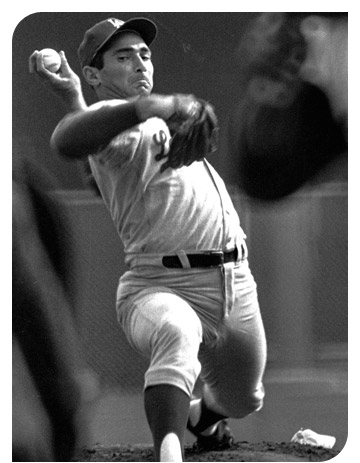
Mark Spitz, the seven-time gold medalist swimmer at the 1972 Olympics, is Jewish. So’s Dolph Schayes, honored as one of the 50 greatest NBA players of all time. Then there’s the great Sandy Koufax. His refusal to play on Yom Kippur in 1965 sparked a firestorm of criticism and philosophical debate, since the holiday fell during Game 1 of the World Series. But Koufax came back to start three times, including a complete-game shutout in Game 5 and a three-hit shutout on just two days rest in Game 7, which clinched the Series for the Dodgers.

Koufax’s decision to put his religious beliefs ahead of his pitching career enhanced his Jewish folk hero status and his legacy remains a big reason why so many otherwise non-observant Jews take the day off every Yom Kippur. Yet Spitz, Schayes and Sandy represent an exceptionally rare group of Jewish athletes who have reached the top of their profession.

Given the guidance that many Jewish children get from an early age, it’s no surprise that few become superstar athletes. Growing up, I wanted to be a professional basketball player. I was 6 feet tall by the time I hit my bar mitzvah, 6-foot-4 by age 14, and had been playing competitively since I was 7. But in the Jewish culture, old biases still often rule. Kids are encouraged to become doctors or lawyers. Practicing jump shots and learning to throw a curve ball are seen as frivolous pursuits. I quickly realized I lacked the natural talent to even play Division I basketball, let alone get a shot at the NBA. So at one family dinner just before I started college, my great-uncle Jack asked me what I wanted to do for a living. Sportswriting, I said, smiling. Jack threw me a cold stare and shouted: “What kind of career is that for a good Jewish boy?!”

As luck would have it, 2007 has been a banner year for Jewish athletes, most notably on the baseball diamond. Ryan Braun, a third baseman for the Milwaukee Brewers, has led the charge, engineering one of the greatest rookie seasons in the history of the game. While most of his teammates have struggled in recent weeks, Braun has kept crushing the ball, keeping the Brewers in the race as they pursue their first division title in 25 years. And yes, Ryan Braun is a member of the tribe (Jewish, not a player for the Cleveland Indians). The great thing about being part of an exclusive group of athletes is that it allows a player to immediately jump to all-time-best status. Braun’s meteoric rise has propelled him onto the list of the 18 greatest Jewish baseball players in history.

So who are these 18 bashin’ boychiks? You’ll find the answers below. Some quick ground rules: In the name of inclusiveness, we’re counting players with one or more Jewish parents (even those not raised Jewish), converts to Judaism, and non-Jews who practiced the Jewish faith. For instance, Rod Carew was married to a Jewish woman, raised his children as Jewish, while never actually converting to Judaism himself — but he still counts. Also, since this list includes 12-year veterans and rookies alike, from all different eras, the players are ranked using a combination of statistical analysis and wildly irrational bias. Oh, and if you’re wondering why this is a top 18 list, the number “18,” in Hebrew numerology, stands for the word “Chai,” meaning “life.” It’s also a symbol for good luck — not that any of these guys need it.

18) Ian Kinsler

This second-year second baseman for the Texas Rangers is short on track record but long on potential, after finishing 7th in Rookie of the Year voting last season and swatting 17 homers so far this year. On the downside, you ever try getting a decent potato knish in Arlington, Texas? Not easy.

17) Brad Ausmus

His life looked so promising 20 years ago. Smart kid from Connecticut, shuns the Yankees out of high school and goes to Dartmouth instead. Ausmus would later leave the Big Green to take up baseball as a career. Oh sure, he’s now a 15-year veteran considered one of the best defensive catchers to ever play the game. Still — an Ivy League education, and he chooses mound meetings with Jose Lima over a career in law or medicine? Oy gevalt!

16) Dave Roberts

No, this isn’t the guy who famously stole second base in Game 4 of the 2004 ALCS against the Yankees, launching the Red Sox’s historic run to the World Series. This Roberts, from Gallipolis, Ohio, pitched 13 seasons in the big leagues for eight different teams. He showed flashes of brilliance, especially in 1971, when his 2.10 ERA ranked 2nd in the league and placed him 6th in Cy Young voting. On the 61-100 Padres, though, that was merely good for a 14-17 record, typifying a career spent with some forgettable ball clubs.

15) Ryan Braun

My buddy Chris Liss of fantasy sports site Rotowire.com has dubbed Braun “the Hebrew Hammer” — but I’m pretending I made it up. The 23-year-old Southern California native ranks among the major league leaders in batting average, home runs and slugging percentage. Had he gotten the call before late May, Braun would be a legitimate candidate for MVP, an award only two other rookies (Fred Lynn 1975, Ichiro 2001) have ever won.

14) Kevin Youkilis

In Michael Lewis’ bestseller “Moneyball,” Billy Beane famously referred to Youkilis as “the Greek God of Walks.” Not quite. The Red Sox first baseman has parlayed a great batting eye into a key role on baseball’s best team. But he’s actually Jewish, not Greek. He’s also the inspiration for the funniest Internet clip ever about Jews in baseball. “Where’s Mel Gibson now?! Where’s Mel Gibson now?! He’s in rehab, and Youkilis is at first base!”

13) Harry Danning

“Harry the Horse” was a four-time All-Star for the New York Giants, ranking as one of the best catchers in the National League in the late ’30s and early ’40s. Danning’s career was solid if not quite spectacular — kind of like fellow Giant Freddie Lindstrom’s career. The biggest difference between the two: Lindstrom made the Hall of Fame on the strength of his teammates’ success a few years earlier, while Danning could only settle for No. 13 in this slightly less illustrious fraternity.

12) Benny Kauff

The Ty Cobb of the Federal League hit .370 and .342 in his two seasons in that splinter circuit, before catching on as an outfielder with the Giants in 1916. Historians have long called the defunct Federal League an inferior version of the major leagues. But Kauff’s stats still count on his career record — a .311 batting average and 234 stolen bases. Kauff later evoked some of Cobb’s uglier personality traits, getting implicated in a car theft ring that prematurely ended his career. Although later acquitted, commissioner Kenesaw Mountain Landis upheld Kauff’s ban from the game, calling the acquittal “one of the worst miscarriages of justice that ever came under my observation.”

11) Ron Blomberg

A high school star in baseball, football and basketball, Blomberg received 125 scholarship offers to play college hoops and 100 more to hit the gridiron. Choosing baseball instead, Blomberg was drafted 1st overall by the Yankees in 1967, where he spent most of his impressive, but injury-shortened eight-year career. Asked for his thoughts on becoming the first designated hitter in major league history, Blomberg quipped: “I’ve been a DH all my life: Designated Hebrew.”

10) Mike Lieberthal

Lieberthal ranks 5th on the list of Jewish major leaguers with the most homers, with 150. He’s now a rarely used backup for the Dodgers, finishing out an impressive career that includes 13 prior seasons with the Phillies and a pair of All-Star berths. Lieberthal wasn’t raised in the Jewish faith, and only his father is Jewish, which would disqualify him according to certain branches of Judaism. Here, we say, “Bruchim habaim” (welcome)!

9) Steve Stone

For the first nine years of his career, Stone was an effective if uninspiring pitcher, toiling for his fourth team. Then, in 1980, the light clicked on: Stone went 25-7, posted a 3.23 ERA in 250.1 innings, and became one of the unlikeliest Cy Young Award winners ever. A year later, he was out of baseball after ongoing struggles with tendinitis. His broadcasting career has met with mixed reviews, with supporters admiring his cerebral take on the game and his critics complaining about his sometimes abrasive style.

8) Sid Gordon

An excellent hitter who posted a .377 career on-base percentage and made two All-Star teams, Gordon is nonetheless unfairly remembered as the reason the Braves left Boston for Milwaukee in the 1950s. When franchise shortstop Alvin Dark and veteran second baseman Eddie Stanky stopped getting along with embattled manager Billy Southworth, the Braves responded by trading them to the Giants for a four-player package, led by Gordon. Dark led the 1951 Giants team to the pennant and the 1954 team to the World Series title. Gordon enjoyed three excellent seasons in Boston, but the fans hardly noticed, as attendance plunged from 14,000 a game before the trade to 3,000 per game in 1952. The next year, the team fled for Milwaukee.

7) Shawn Green

Growing up, Green felt little connection to Judaism, and was not bar mitzvahed. That all changed when he cracked the big leagues as a sweet-swinging outfielder for the Blue Jays. Green began embracing his religion while developing a bond with that city’s vibrant Jewish community, often getting invited to local simchas. Traded to the Dodgers in 1999, he continued to reconnect with his Jewish roots in Los Angeles. When he famously took a day off to honor the Jewish atonement day of Yom Kippur, he evoked memories of Koufax decades earlier. With more than 300 homers and 1,000 RBIs in his standout career, Green ranks as one of the prolific Jewish sluggers of all time.

6) Ken Holtzman

Only Koufax won more games or struck out more batters among Jewish pitchers. Holtzman’s 15-year career included three World Series titles with the A’s in the ’70s, capped by a 21-13, 2.97 ERA effort in 1973. One of the most successful postseason pitchers in history, Holtzman spun a 6-1 record and 2.30 ERA in four playoff appearances. Like Blomberg, Holtzman is a manager in the fledgling Israel Baseball League, where he serves as skipper for the Petah Tikva Pioneers.

5) Al Rosen

Considered by many as the 3rd-greatest Jewish player in MLB annals, Rosen ranks 5th on this more inclusive list. Not that there’s anything wrong with that. Rosen’s 1953 MVP season remains one of the best ever for a third baseman: .336 batting average; .422 on-base percentage; .613 slugging percentage, with 43 homers and 145 RBIs. The four-time All-Star and five-time 100-RBI man retired at age 32 due to back and leg injuries. But Rosen’s legacy lived on in his 20 years in MLB front offices, including a turnaround with the Giants from worst in 1985 to first two years later. Slurred in his youth and his playing days for his Jewish heritage, Rosen was a tough customer who’d stand up to anyone who insulted his lineage. An amateur boxer who broke his nose 13 times during his baseball playing career, Rosen defied the stereotype of the skinny, nebbish Jew who lacked toughness.

4) Lou Boudreau

He wasn’t raised Jewish and never identified with being Jewish. But his mother was on the team, so he is too. Boudreau was one of the greatest shortstops of any faith to ever play, making eight All-Star teams and winning the MVP award in 1949 with a .355 average and 106 RBIs. Following a long managing career, Boudreau was inducted into the Hall of Fame in 1970, making him one of four players on this list to be enshrined.

3) Rod Carew

“O.J. Simpson, not a Jew. But guess who is? Hall of Famer Rod Carew.”

Adam Sandler missed the mark a bit in his “Chanukah Song,” since Carew isn’t actually Jewish. But the man who once appeared on the cover of Time as “Baseball’s Best Hitter” stood by his convictions. Carew received death threats when he announced plans to marry a Jewish woman, but went through with the ceremony. He went on to observe Jewish customs, including raising his kids in the Jewish faith. One of the best pure hitters the game has ever known, Carew retired with 3,053 hits, a .328 batting average, and a 1991 induction in Cooperstown.

2) Hank Greenberg

As with Ted Williams, you wonder what Greenberg’s career numbers would’ve looked like if he hadn’t taken three years off for World War II. Even with those lost seasons, the two-time MVP was one of the most feared sluggers of his day. The original Hammerin’ Hank, Greenberg’s 58 homers in 1938 stood as the single-season record by a right-handed hitter for 60 years. He was also the first Jewish baseball player to gain widespread attention for refusing to play on Yom Kippur, a decision that was especially controversial since it occurred in the middle of the 1934 pennant race. If you’ve never seen the superb 1998 documentary “The Life and Times of Hank Greenberg,” run, don’t walk, to your Netflix queue.

1) Sandy Koufax

This year’s Hall of Fame ceremony brought 55 of the 63 living inducted players to Cooperstown, including Willie Mays, Bob Feller and Tom Seaver. But only one player truly left me in awe — Koufax. Tremendous career, one of the best pitchers who ever lived, yada yada. But how about this: In 1995, a New Jersey collectibles company sold yarmulkes signed by Sandy for $75 each. Let’s see Tom Terrific do that.

Guillen’s pro-Castro candor

The Miami Marlins' manager is lucky to get a suspension. Not so long ago, he might have received a car bomb.

A contrite Miami Marlins manager Ozzie Guillen gestures at a news conference on Tuesday. (Credit: AP/Lynne Sladky)

There’s not much reason to doubt that baseball manager Ozzie Guillen admires Fidel Castro. He said so five years ago in an interview with Men’s Journal. When asked to name the toughest man he knew, Guillen replied, “Fidel Castro. He’s a bull—- dictator and everybody’s against him, and he still survives, has power. Still has a country behind him. Everywhere he goes, they roll out the red carpet. I don’t admire his philosophy; I admire him.’’

No one cared about that macho thought because Guillen was skipper of the Chicago White Sox at the time. As the newly hired manager of the Miami Marlins, Guillen repeated the notion to Time last week–”I respect Fidel Castro,” he said. “You know why? A lot of people have wanted to kill Fidel Castro for the last 60 years, but that [expletive] is still there”–and he found himself on the brink of unemployment.

As Miami’s Cuban-American talk radio hosts whipped up a storm of protest, the Marlins denounced Guillen and suspended him for five games. On Tuesday the chastened manager repudiated his statements, said Castro was a bad man, and apologized “on my knees.” With Guillen’s job hanging in the balance, most sportswriters attributed the controversy to his big mouth: He is known for insulting gays and admitting he likes to get drunk often.

But Guillen’s real problem is Cuban Miami, where enforcing the anti-Castro party line is a more popular pastime than baseball, not the least because the Marlins owners arranged to stick the city’s taxpayers with the bill for their new $640 million ballpark in Little Havana while depriving local residents of legal parking spaces. The combination of Guillen’s candor, Miami politics, and the Marlins’ arrogance is what has brought the Cooperstown-bound skipper to the brink of being fired.

The city has never shown much tolerance for people who say nice things about Castro. In 2000, Jim Mullin, editor of the city’s alternative weekly New Times, compiled a chronology of violent intolerance that has few parallels in modern America. In 1975 a Cuban American man was murdered after advocating closer relations with Castro’s Cuba. In 1978, an anti-Castro talk radio host had his legs blown off by a car bomb because he dared criticize his fellow exiles for resorting to violence. In 1983, the Little Havana branch of a Miami bank was bombed because one of its executives had negotiated with the Castro government for the release of 3,600 political prisoners. In 1998, a bomb threat emptied a concert hall during a performance by Compay Segundo, a 91-year-old musician made famous by the movie “The Buena Vista Social Club.” All told, Mullin found more than 40 instances of bomb threats and explosions directed at people who had somehow offended the anti-Castro orthodoxy.

A 1994 Human Rights Watch report on the sorry state of free speech in Miami concluded,  the city is “dominated by fiercely anti-Communist forces who are strongly opposed to contrary viewpoints.” The HRW reports linked these forces to “acts of repression ranging from shunning to violence.” The reports found “significant responsibility” by the government at all levels, including “direct harassment by the government and government support of groups linked to anti-free speech behavior.”

That tradition continued this week when two local politicians injected themselves into the controversy by calling for Guillen’s firing. The call was echoed by a vigilante group known as Vigilia Mambisa, which describes itself as “a hard-line, right wing, Anti-Castro, Anti-Communist group of dedicated Cuban-American demonstrators … known for their rapid response to calls for protest aired on Miami Spanish-language stations.”  The group is calling for a boycott of the Marlins until Guillen is fired.

The problem is Miamians are already boycotting the Marlins. The team ranked 28th out of 30 major league teams in attendance last year. Dario Moreno, a professor of political science at Florida International University, said, “I don’t think this is a free speech issue. There’s a lot more tolerance than there was 30 years ago.” Moreno noted that south Florida’s three Cuban-American congressional representatives and the state’s Cuban-American senator have not called for Guillen to be fired.

“This has more to do with the Marlins and a community that invested large sums of money in their stadium over the objections of lots of people,” Moreno said. “The promise was that they would bring the community together and give us something to be proud of. It’s not working out very well.”

Moreno says he thinks Guillen may be able to keep his job if the Marlins muzzle Guillen (good luck with that) and reach out to the community. “The baseball fans are willing to let this one go by if he just promises to not talk politics,” Moreno said.

“As a Christian, I accept his apology,” said Alberto Muller, a former newspaper columnist who spent 15 years in a Cuban prison. “But in Miami, not everybody is a Christian.” Muller thinks Guillen will be fired.

A Miami Herald online reader survey found 57 percent of 2,500-plus respondents saying Guillen’s five-game suspension was sufficient punishment. If Guillen only loses his job for expressing admiration for Fidel’s toughness, it will be a sign of civic progress. Not long ago, he might have lost his legs or his life.

Continue Reading Close
Jefferson Morley

Jefferson Morley is a staff writer for Salon in Washington and author of the forthcoming book, Snow-Storm in August: Washington City, Francis Scott Key, and the Forgotten Race Riot of 1835 (Nan Talese/Doubleday).

The year of the baseball book

From a treatise on Yankee hating to a "people's history," a number of great books covered the national pastime

This article appears courtesy of The Barnes & Noble Review.

A simple and unsettling calculation reveals to me that this year marks the 40th anniversary of my coming to New England and setting up shop as a Red Sox fan. How innocent I was in that distant day: how little I understood the faces etched with pain, the haunted eyes, the lips that writhed in uttering “Yankees.” It did not take long to become afflicted by the same symptoms and, in my time here, certain Yankee-related events have been so traumatic that they are best designated by numerals alone: 1978 and 2003. The ALCS of 2004 (when the Red Sox came from a 0-3 game deficit to vanquish the evil ones) changed the region’s mental landscape — as, of course, did the subsequent World Championship(s). Since then, Yankee hating has become more of a pleasant pastime than a crippling mental and spiritual disorder.

Barnes & Noble Review
It is in this happier frame of mind that I turn to “Damn Yankees: Twenty-Four Major League Writers on the World’s Most Loved (and Hated) Team,” edited by Rob Fleder. Among the two dozen pieces is the funniest consideration of Yankee hating I have ever read. “Take Me Out to the Oedipal Complex” is illustrator and writer Bruce McCall’s confession that, because his father was a Yankee fan, he himself embraced hating the team, leaving little anti-Yankee pamphlets of his own making around the house for his father to stumble upon. It was his own “unique form of patricide” and constituted his identity: “We Yankee-haters, by God, knew who we were. We were losers. We also knew that the devoted Yankee fan, wallowing in his smug prosperity, betrayed a contemptible character flaw. He was not only a front-runner but also a weakling and a sissy and a stranger to the humiliation and failure that toughens the spirit, readying you for more humiliation and failure.”

All-out Yankee attacks are actually few in this book, Frank Deford’s may be summed up succinctly: Y$a$n$k$e$e$s, and Nathaniel Rich’s more forlornly: Mets fan. Charles Pierce, though a Red Sox supporter from birth, writes sympathetically of the proud ethnic divisions in his native Worcester, which — thanks to Joe DiMaggio — put an island of Italian-American Yankee fans in the middle of Massachusetts. Among the other contributors, who range from Jane Leavy to Colum McCann, are Peter Dexter with a mean-spirited, humblebragging consideration of Chuck Knoblauch, and Dick Telander with an appreciative one of Jim Abbott. Economist James Surowiecki provides an excellent assessment of George Steinbrenner’s contribution (marketing genius). Derek Jeter has two big fans in Roy Blout Jr. and Tom Verducci, while Bill James asks the question that may — or may not — have given you sleepless nights: “Did you ever find yourself wondering which season was the greatest ever by a Yankee catcher?” I will reveal the season (1950) and the player (Yogi Berra) because that is only the beginning. James, a driven man, pushes on, with amusing commentary, to rank the 100 best seasons for Yankee catchers.

The catcher who appears most often in high places on that list is also the costar of Harvey Araton’s “Driving Mr. Yogi: Yogi Berra, Ron Guidry, and Baseball’s Greatest Gift.” Guidry, who had played for the Yankees during Berra’s time as a coach and last tenure as manager, has, for over a decade, picked up the ancient backstop every spring at the Tampa airport to drive him to the Yankee training camp. Around that annual journey are spun a number of tales including the story of Berra’s mighty fourteen-year umbrage at a highhanded George Steinbrenner, which was finally resolved in a July 1999 celebration of Berra’s return to Yankee Stadium. The event was elevated by the perfect game pitched that afternoon by David Cone — triumphantly bringing back the memory of Berra’s own role in Don Larsen’s perfect game in the 1956 World Series. We find here too the introduction of frogs’ legs by the Louisianan Guidry into Berra’s diet and a sense of the deep friendship between two great baseball men.

The title of Tim Wendell’s “Summer of ’68: the Season That Changed Baseball, and America, Forever” is one that could be used, mutatis mutandis, as we say around the farm, for any number of seasons. Nonetheless, outside the park, 1968 was a doozy, marked by assassinations, riots, an increasingly unpopular war, and a violent Democratic Convention in Chicago. The effects of this were felt inside the park as racial tensions increased and a number of players had to interrupt their time on the field for military training. As for the game itself: it was a season of phenomenal pitching, with the magnificently fearsome Bob Gibson emerging with a preternatural 1.12 ERA (and 1.67 in the World Series). Alas, the season’s hurling greatness changed the game forever: the next year saw the mound lowered by six inches and the designated hitter appear in the American League. The book includes excellent photographs and is strongest when it concentrates on baseball.

The “gentlemen’s agreement” that banned black players from organized profession baseball was struck behind closed doors toward the end of the nineteenth century. In “Conspiracy of Silence: Sportswriters and the Long Campaign to Desegregate Baseball,” Chris Lamb shows that the ban was maintained in great part by its existence never being acknowledged. The book is a chronicle of bad faith, on the part of owners and organizational big bugs, and of a press that remained generally silent on the subject. It is also an absorbing account of how that silence was finally broken. Key to this were a few white sports reporters, a few black ones from the black press, and the (Communist) Daily Worker, a paper that, until the Nazi-Soviet Pact of 1939 was far more influential than most of us can quite take in today. The entrance of the United States into the war against a racist regime made baseball’s own racial hypocrisy increasingly untenable, which fact was increasingly reflected in the formerly circumspect mainstream press. In the largest sense, Lamb shows how pivotal the desegregation of baseball was to that of the nation as a whole.

Mitchell Nathanson claims that “A People’s History of Baseball” “is baseball history from an alternative point of view,” and to that end it visits some of organized professional baseball’s most notorious institutions and episodes, among them segregation; the Reserve Clause; the banning of players from the game without due process; the blind eye turned by club owners to “performance-enhancement drugs” and subsequent scapegoating of a few players; and the battle over who owns baseball statistics. Nathanson’s goal is to reclaim baseball and its story from those who have spun a falsely uplifting version, first among the guilty being Henry Chadwick (a.k.a. the Father of Baseball), who promoted ideologically skewed statistics (in Nathanson’s opinion) and offered baseball as an edifying example of individual sacrifice and teamwork (bad). To offer Chadwick as villain is a real stunner to my way of thinking, but in this case even more so as his success in making statistics integral to baseball made possible what Nathanson considers — most eccentrically — to be the means of restoring the game to both players and fans. That is fantasy baseball: the game that takes the actual game out of baseball.

Continue Reading Close

The Marlins’ bizarre new look

The team's revamped logo involves a whimsical rainbow swoosh. The effect is anything but intimidating

So far the biggest story to come out of baseball’s early off-season isn’t some splashy free agent signing or the abrupt retirement of St. Louis Cardinals manager Tony LaRussa, but that of the logo and uniform redesign of the Florida Marlins. The new look was officially announced on Friday, and if you haven’t seen them already, you might not believe your eyes. In fact, when some of the images of the new logo were leaked there was such shock and disbelief by the baseball world, most people assumed it was a farce, calling the look everything from “Hawaiian Shaved Ice” to “Push-up Pop” to “Rainbow Bright.”

Florida Marlins

The rebrand was planned as part of the team’s big move to their new stadium, New Marlins Ballpark (which also sports a logo with a rainbow motif), a baseball-only park with a retractable roof to keep the tropical rains away. With a name like New Marlins Ballpark, the powers-that-be decided the team needed a new identity as well. So not only are the uniform colors radically different, but the team will now be called the Miami Marlins.

Gone is the teal, silver and black color scheme the team has worn since its inception in 1993 (and in which it won two World Series), and in its place, as you can see, is a curious combination of oranges, yellows, blues and assorted other bright hues. Gone too is the detailed illustration of the eponymous fish, bursting around and through the logo with furious determination. Instead there is now a whimsical suggestion of a marlin swooshing from some unclear source out of the Aztec-influenced M letterform. Whatever its origin, one thing is sure: The overall effect is anything but intimidating.

In addition to the new logo and color scheme, new uniforms will also be revealed. Again, this look isn’t certain to be the one unveiled on Thursday (and in light of all the backlash, it’s entirely possible the Marlins’ design team has gone back to the drawing board) but this is what has been floating around the ether and seems to make sense based on the logo. White home jerseys with black caps. Away grays with a radically out of place blue cap (that strangely echo the original Tampa Bay Devil Rays uniforms). And some assortment of combinations for Fridays and other games.

Apparently the team’s (and stadium’s) colorful new look is meant to reflect the multicultural heritage of the many diverse ethnic groups living in the area. But you have to wonder if the Marlins’ head honchos learned nothing from the atrocious Houston Astros uniforms of the mid-1970s (known as the “rainbow era”) that made even Nolan Ryan and J.R. Richard, at left (two of the era’s most dominating pitchers), look a tad sheepish.

Not to say orange is a bad choice for a sports team (the Giants, Orioles and Tigers pull it off pretty well), but it does require some tasteful design skill and a healthy grasp of workable color palettes.

Perhaps it’s not the worst logo ever (for some ideas on that front click here); there are always the Chicago White Sox shorts and collared unis from the ’80s to claim that distinction. But if this is indeed the look of the new Miami Marlins, my guess is it won’t be around long.

Copyright F+W Media Inc. 2011.

Salon is proud to feature content from Imprint, the fastest-growing design community on the web. Brought to you by Print magazine, America’s oldest and most trusted design voice, Imprint features some of the biggest names in the industry covering visual culture from every angle. Imprint advances and expands the design conversation, providing fresh daily content to the community (and now to salon.com!), sparking conversation, competition, criticism, and passion among its members.

Continue Reading Close

Exonerating Bill Buckner

25 years after the Red Sox infielder's infamous World Series error, we look at what really happened that October

(Credit: AP)

Bill Buckner’s error in the 1986 World Series – 25 years ago today, a day of infamy for Red Sox fans — is one of the two most famous plays in World Series history. (Willie Mays’ catch in the 1954 fall classic is the other.)

Like Mays’ over-the-shoulder catch, Buckner’s booboo is entrenched in American folklore. Jimmy Fallon’s Red Sox fanatic in “Fever Pitch,” distraught over breaking up with his girlfriend, watches Buckner’s play over and over on his VCR. During congressional hearings in 2008, U.S. Rep. John Yarmuth, D-Ky., called former Treasury Secretary John Snow, then-SEC chief Christopher Cox and former Federal Reserve Chairman Alan Greenspan “three Bill Buckners.” On “Curb Your Enthusiasm” this season, Larry David loses a softball game when a ball rolls between his legs; his coach screams, “You Buckner-ed me!”

Everyone knows that Buckner lost the 1986 World Series for the Red Sox. But what everyone knows is wrong.

At the time, the Red Sox were burdened with 68 years of frustration; their last championship was in 1918. Leading three games to two against the New York Mets, Boston was ahead by a score of 5-3 in the bottom of the 10th inning. Red Sox pitcher Calvin Schiraldi got two quick outs. In the Sox locker room the champagne was iced, and the scoreboard flashed “Congratulations Red Sox.”

Gary Carter, Kevin Mitchell and Ray Knight all singled, and the score was 5-4 with Mitchell on third. Reliever Bob Stanley came into the game to pitch to Mookie Wilson and threw a wild pitch that brought Mitchell home and tied the score. But it’s the next play that still has Red Sox fans screaming in the middle of the night.

Stanley threw a sinker-ball, designed to produce ground balls to infielders. What was supposed to happen did happen—Mookie Wilson tapped a slow grounder at Buckner at first base. But the ball rolled between Buckner’s legs, and the Mets won in the most incredible finish to a World Series game ever. (See it with commentary by the inimitable Vin Scully.)

Buckner’s career changed in an instant. Up to that moment, he was one of the game’s great unsung hitters. He’d batted better than .300 seven times in his career, winning the 1980 American League batting title. He led the league four times in assists. During that crucial September 1986 playoff run, he carried the team, hitting .340 with eight home runs. All that was soon to be forgotten.

The scholar Stephen Jay Gould (in Natural History magazine) called him “a gallant first baseman and a veteran with a long and distinguished career.”

“For weeks,” wrote Gould, “manager John McNamara had been benching Buckner for defensive purposes during the last few innings of games with substantial Red Sox leads, but after a long and hard season, Buckner’s legs were shot … he could hardly bend down.”

Plagued with chronic ankle soreness—he was the first player to wear high-top baseball cleats to ease the pain— Buckner had been relieved in three previous series games by Dave Stapleton. Why was he still playing when Wilson hit the ground ball? Because McNamara was sentimental; he wanted his regulars on the field when the Red Sox won the series.

But Buckner’s error did not lose the championship for the Red Sox; it didn’t even lose Game 6 for them — the Red Sox had already blown their two-run lead. Two nights later, with another chance at the ring, Boston lost 8-5.

(Buckner, incidentally, had two hits in four at-bats and scored a run in Game 7.)

Red Sox fans cried “Curse of the Bambino”—the punishment Boston supposedly merited for selling Babe Ruth to the Yankees in 1919—but the focus of the curse that season was Buckner. Yet Buckner did not put the tying runs on base. He didn’t throw the wild pitch that made it 5-5. He did not make the decision to keep his defensive replacement on the bench. Had he made the play, the Red Sox could have lost the game anyway.

When so many others contributed as much or more to the Red Sox defeat, why has history made Buckner the goat? Perhaps Gould said it best when he suggested that in the collective minds of Red Sox fans, “If Buckner fields the ball properly, the Sox win their first World Series since 1918 and eradicate the Curse of the Bambino. In this scenario, Buckner’s miscue marks the unkindest bounce of all, the most improbable trivial little error sustained by a good and admired man. What hath God wrought?”

What God wrought, perhaps, was a curse on both teams. The New York Mets have not won another World Series since; their greatest stars on that 1986 team —pitcher Dwight Gooden and slugging outfielder Darryl Strawberry—saw their careers cut short by drug abuse. In 2007 and 2008, the team crumbled down the stretch and missed the playoffs. And this year, the Red Sox, who seemingly broke the Curse by winning the World Series in 2004 and 2007, suffered the all-time worst collapse in baseball history, losing 20 of their last 27 games.

But that was kid’s play for what God had in mind for Donnie Moore. Red Sox fans were quick to forget that they never would have had a crack at their own little tragedy had it not been for Donnie Moore. Boston made it to the World Series by beating the then-Anaheim Angels in the American League Championship Series. After four games, they were in better shape against the Red Sox than the Red Sox ever were against the Mets.

On Oct. 12, 1986, playing in Anaheim, the Angels were up three games to one with a 5-2 lead going into the top of the ninth. Then, a real curse revealed itself. Don Baylor hit a two-run homer to make it 5-4. Moore had been a fine relief pitcher that season, tallying 21 saves. With two outs and the tying run at second, Moore got two strikes on Dave Henderson, then tried to slip a fastball by the Red Sox outfielder. The pitch changed his life. Henderson slammed it to deep left field for a two-run homer. On TV, Al Michaels screamed, “Unbelievable! Astonishing! With one strike away Anaheim Stadium was one strike away from turning into Fantasyland! You’re looking at one for the ages here!”

Like Buckner, Moore was damned for losing the big one. What was forgotten is that the Angels came back to tie it, and Moore, still in the game, induced Jim Rice to ground into a double play. But in the 11th, the Red Sox scored another run off Moore on a sac fly by – of course – Dave Henderson. The Angels lost 7-6.

But that still left them with two chances to win their first-ever pennant and trip to the World Series. The Sox blasted the Angels pitching for 19 runs over two games and went on to meet their destiny against the Mets, without the slightest thought that they owed a great big ugly debt to sheer luck – one that would soon be repaid with interest.

Still, to Angels fans, it had all come down to the pitch that Donnie Moore threw to Dave Henderson. All the subsequent chances that they lost were the evil spawn of that one pitch.

For the next two years, Moore couldn’t walk out on the field without being booed, crushed and heckled. When he left the ballpark, fans were lineup to scream insults, even when he won. Moore began to drink heavily and his talents eroded. On July 18, 1989, Moore got into a shouting fight with his wife at their home in Anaheim Hills. He went to his closet, got an automatic pistol and, in front of his children, shot his wife and one of his daughters. The daughter drove herself and her mother to the hospital; they survived. Moore did not. Back in the house, with his son pleading for him to drop the gun, Moore shot and killed himself.

Now that is tragedy. That puts Bill Buckner’s error in perspective. It’s only a game, unless you choose to regard it as something more.

Meanwhile, the infamous Buckner ball, once owned by Charlie Sheen, is up for auction on eBay, asking price $1 million. The bid will close at the exact minute of the 25th anniversary of the play.

Now a successful businessman, Buckner has lived down the error by turning the joke on himself. On “Curb Your Enthusiasm,” he won the cheers of a New York crowd by catching a baby dropped from a burning building.

In 2008, he threw out the first pitch of the Red Sox home opener and got a standing ovation from the sell-out crowd. Somewhere, one has to feel, the Bambino himself was applauding.

Continue Reading Close

Allen Barra's next book is "Mickey and Willie -- The Parallel Lives of Baseball's Golden Age," from Crown.

What baseball tells us about racism

Most home-plate umpires are white -- and they seem to be hurting the careers of minority pitchers

Despite recent odes to “post-racial” sensibilities, persistent racial wage and unemployment gaps show that prejudice is alive and well in America. Nonetheless, that truism is often angrily denied or willfully ignored in our society, in part, because prejudice is so much more difficult to recognize on a day-to-day basis. As opposed to the Jim Crow era of white hoods and lynch mobs, 21st century American bigotry is now more often an unseen crime of the subtle and the reflexive — and the crime scene tends to be the shadowy nuances of hiring decisions, performance evaluations and plausible deniability.

Thankfully, though, we now have baseball to help shine a light on the problem so that everyone can see it for what it really is.

Today, Major League Baseball games using QuesTec’s computerized pitch-monitoring system are the most statistically quantifiable workplaces in America. Match up QuesTec’s accumulated data with demographic information about who is pitching and who is calling balls and strikes, and you get the indisputable proof of how ethnicity does indeed play a part in discretionary decisions of those in power positions.

This is exactly what Southern Methodist University’s researchers did when they examined more than 3.5 million pitches from 2004 to 2008. Their findings say as much about the enduring relationship between sports and bigotry as they do about the synaptic nature of racism in all of American society.

First and foremost, SMU found that home-plate umpires call disproportionately more strikes for pitchers in their same ethnic group. Because most home-plate umpires are white, this has been a big form of racial privilege for white pitchers, who researchers show are, on average, getting disproportionately more of the benefit of the doubt on close calls.

Second, SMU researchers found that “minority pitchers reacted to umpire bias by playing it safe with the pitches they threw in a way that actually harmed their performance and statistics.” Basically, these hurlers adjusted to the white umpires’ artificially narrower strike zone by throwing pitches down the heart of the plate, where they were easier for batters to hit.

Finally, and perhaps most important, the data suggest that racial bias is probably operating at a subconscious level, where the umpire doesn’t even recognize it.

To document this, SMU compared the percentage of strikes called in QuesTec-equipped ballparks versus non-QuesTec parks. Researchers found that umpires’ racial biases diminished when they knew they were being monitored by the computer.

Same thing for high-profile moments. During those important points in games when umpires knew fans were more carefully watching the calls, the racial bias all but vanished. Likewise, the same-race preference was less pronounced at high-attendance games, where umps knew there would be more crowd scrutiny.

Though gleaned from baseball, these findings transcend athletics by providing a larger lesson about conditioned behavior in an institutionally racist society.

Whether the workplace is a baseball diamond, a factory floor or an office, when authority figures realize they are being scrutinized, they are more cognizant of their own biases — and more likely to try to stop them before they unduly influence their behavior. But in lower-profile interludes, when the workplace isn’t scrutinized and decisions are happening on psychological autopilot, pre-programmed biases can take over.

Thus, the inherent problem of today’s pervasive “post-racial” fallacy. By perpetuating the lie that racism doesn’t exist, pretending that bigotry is not a workplace problem anymore, and resisting governmental efforts to halt such prejudice, we create the environment for our ugly subconscious to rule. In doing so, we consequently reduce the potential for much-needed self-correction.

Continue Reading Close
David Sirota

David Sirota is a best-selling author of the new book "Back to Our Future: How the 1980s Explain the World We Live In Now." He hosts the morning show on AM760 in Colorado. E-mail him at ds@davidsirota.com, follow him on Twitter @davidsirota or visit his website at www.davidsirota.com.

Page 1 of 81 in Baseball