
FISA

Vengeance is Brandon Mayfield’s

Falsely accused of being a terrorist, the Oregon lawyer wanted something more from the government than a cash settlement. He's fighting the Patriot Act -- and so far, he's winning.

  • more
    • All Share Services

Vengeance is Brandon Mayfield's

“Someone must have slandered Joseph K,” begins Franz Kafka’s classic novel “The Trial,” “for one morning, without having done anything truly wrong, he was arrested.”

Last week America’s own Joseph K., the terrorist who was not a terrorist, got a little more revenge on the government that had persecuted him. Brandon Mayfield, falsely accused of involvement in the Madrid train bombings of 2004, has already collected a hefty cash settlement; on Sept. 26, a federal judge in Portland, Ore., ruled that the two Patriot Act provisions the government had used against him violate the Constitution. Though the ruling will be strongly challenged on appeal, its larger importance may be as another straw in a judicial wind blowing against the Bush administration’s contemptuous treatment of the Constitution and the courts.

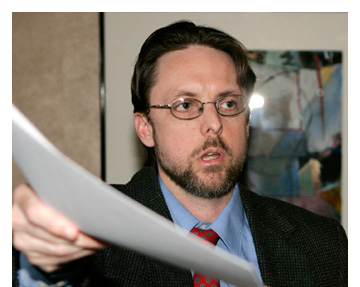
These days, Mayfield lives much as he has for the past decade or so, practicing family law from a small solo office next to a strip mall on the southern edge of Portland. He is a slight man, 41 years old, who likes to take his lunch at a nearby Middle Eastern restaurant. In many ways, what’s most interesting about Mayfield is how utterly unexceptional he is. He was born in Kansas and got his law degree from Washburn University in Topeka. An Army veteran, he is married, with three children, and lives with his family in a nearby suburb with the homey name of Aloha.

Almost the only vaguely exotic thing about Brandon Mayfield is his religion: He is a Muslim convert and belongs to a local mosque. But like Alexis de Tocqueville, the 19th-century French writer whom he likes to quote and who helped define the American spirit, Mayfield worries that in a democratic system, the tendency of government will be to augment its power at the expense of minorities. “I’m suspicious of government anyway,” he said in an interview last week. And it’s not hard to conclude that Mayfield’s one deviation from the norm, the thing that makes him a minority, explains why, for a few weeks in 2004, he was one of the most famous people in the world.

On May 6, 2004, FBI agents descended on his law office, his home, and the family farm in Kansas to search for evidence that Mayfield was a terror mastermind. Media leaks let it be known that he was responsible for the Madrid train bombings of March 2004, which killed 191 people. The evidence was said to be a fingerprint found on a plastic bag of detonators at the scene. Federal agents threw Mayfield into the Portland city lockup not as a defendant but as a “material witness.”

But not only had Mayfield been far from Madrid at the time of the bombing, he hadn’t even left the United States since 1994. The FBI, however, insisted that his Army fingerprint matched a digital photo of the print from the Madrid bag. The Spanish police, who had the original fingerprint, were never convinced that Mayfield’s was a match. But that didn’t stop the FBI from swearing to a judge that it was.

The case collapsed when, after Mayfield had been held for two weeks, the Spanish police identified an Algerian, Ouhnane Daoud, as the real holder of the fingerprint. The feds released Mayfield.

Then the payback began. Gerry Spence, the Jeremiah Johnson of America law, ambled down from the Wyoming mountains to represent Mayfield in a civil-rights lawsuit against the government. The FBI apologized and gave him a $2 million settlement. Mayfield agreed to waive all his personal claims against the government and specific agents; but he insisted on retaining one claim: that two provisions of the Patriot Act were unconstitutional on their face.

In the weeks before his arrest, Mayfield’s wife, Mona, repeatedly came home to find the deadbolt locked on their house, even though no one in their family ever used it. Sometimes she would feel an eerie sense that someone was in the house. She would walk through their home calling the family cat, Mayfield recalls, “not because she wanted the cat to come, but because she wanted to let any intruders know she was coming.” In general, the entire family began to suspect that someone was going in and out when they were not at home. Mayfield, who had heard of federal investigations among the Muslims of Portland, suspected it was law enforcement. “If it was a burglar,” he recalls thinking, “why didn’t they take anything?”

And in fact, FBI agents, using a warrant issued under the Foreign Intelligence Surveillance Act, had begun to enter Mayfield’s home and office surreptitiously, photographing papers, downloading hard drives, and planting listening devices. This kind of warrant is known as a “sneak and peek,” and does not require any notice to the target of the surveillance.

When FISA was passed in 1978, the government could obtain “sneak and peek” warrants only when it certified to the secret FISA court that eavesdropping on foreign agents was “the purpose” of the surveillance. The Justice Department was careful to segregate this type of intelligence information from ordinary law-enforcement proceeds, which were gathered under the Fourth Amendment’s protections against “unreasonable” search and seizure. Under the Fourth Amendment, a law-enforcement warrant must be supported by “probable cause” — in essence, good reason to believe that the target has committed a crime.

The Patriot Act did away with this separation. Now foreign intelligence need only be “a significant purpose” of the surveillance — and the feds are free to share the information thus gathered with any part of law enforcement. This new tool gives the government a much broader power to investigate citizens without meaningful court review and use against them the evidence it acquires.

Those two provisions — the authorizations for secret searches and secret wiretaps against Americans — formed the subject of Mayfield’s remaining claim. And on Sept. 26, District Judge Ann Aiken held that both provisions violated the Fourth Amendment. In place of its specific guarantees, she wrote, “the people are expected to defer to the Executive Branch and its representation that it will authorize such surveillance only when appropriate.” She added that the government “is asking this court to, in essence, amend the Bill of Rights, by giving it an interpretation that would deprive it of any real meaning. This court declines to do so.”

In order to reach the Fourth Amendment issue, Aiken had to find that Mayfield and his family had what lawyers call “standing” to sue the government. In essence, that means that, despite the settlement, some live “case or controversy” still exists. Mayfield argues that the dispute continues because the government has the information it seized from his home and office, and there’s no guarantee that it won’t use that information against him or, as it apparently did during his 15 minutes of fame, selectively leak it to the media. And beyond that, Mayfield says, there were confidential legal files in the office. “What if I have clients who were subject to a FISA search?” he asks.

The judge found “standing” by reasoning that a decision in Mayfield’s favor would at least put the government on notice that it should not misuse the information.

That part of the ruling will surely be contested before the Ninth Circuit Court of Appeals. In addition, there is another case flatly disagreeing with Aiken’s — a mysterious decision titled In re Sealed Case, issued in 2002 by the highly secretive Foreign Intelligence Surveillance Court of Review (called “the FISCR”). This court meets at an undisclosed location, and only the government is a party to its cases. When the Foreign Intelligence Surveillance Court itself turns down a government request for a warrant, the government (but no one else) may appeal to the FISCR, and if it loses in the FISCR, the government (but no one else) may appeal to the U.S. Supreme Court.

Not long after the Patriot Act changed the “purpose” requirement, the FISC issued an order requiring the government to continue to segregate the information to prevent misuse by law enforcement, holding that those measures were needed to protect citizens against a violation of the Fourth Amendment. The FISCR reversed that decision, holding that “the procedures and government showings required under FISA, if they do not meet the minimum Fourth Amendment warrant standards, certainly come close” and that the amended act “is constitutional because the surveillances it authorizes are reasonable.”

But that was then, and this is now. Just as the tide of public opinion has turned against the Bush administration, so does the tide of judicial approval seem to be running against it. While Mayfield’s motion was pending, another federal court, in New York, held that the Patriot Act’s provision allowing investigators to obtain phone and other business records using “national security letters” is also unconstitutional. Even the Supreme Court of Chief Justice John Roberts has recently shown heightened concern about administration’s conduct of the war on terror. Last April, the court denied review of the law stripping courts of jurisdiction over Guantánamo detainee challenges. But two months later, in an all-but-unprecedented move, the court reversed itself and granted review — apparently because of an affidavit from a military lawyer stating that the detainees are receiving only a travesty of due process.

By repeatedly lying to the nation and to the courts, by extending government secrecy to new heights, and by pushing its constitutional and statutory authority to the furthest imaginable limits, the Bush administration has forfeited the trust of the courts. Judges of all political stripes simply no longer believe government assurances. Trust us, the government said, Mayfield’s the guy; he wasn’t. Trust us, we won’t abuse national security letters; they did. Trust us, we don’t torture; they do.

Harvard professor Jack Goldsmith, a conservative and a Bush appointee, is the man who withdrew the infamous “torture memos” that apparently authorized cruel and inhuman interrogation by soldiers and spies. In his recent book, “The Terror Presidency,” Goldsmith writes that Bush, unlike other strong wartime presidents, has repeatedly refused to consult with Congress, defer to the courts, or make any concession even to public opinion. “He has instead relied on the hard power of prerogative,” Goldsmith writes. “And he has seen his hard power diminished in many ways because he has failed to take the softer aspects of power seriously.”

This diminution suits Brandon Mayfield fine. Behind his desk are two framed posters, made at a local copy shop, of the Bill of Rights. Black-clad federal agents worked directly beneath them, he notes, as they ransacked his computers and his clients’ confidential files in a fool’s quest for a Spanish bomber.

Mayfield is now working on his own account of the events of 2004, and he spends other free time reading the history of the Constitution and the Bill of Rights. The Constitution guarantees every American the right to choose a religious belief, even if it’s one the government does not approve of. And it’s impossible not to believe that Mayfield’s spiritual choice is what landed him in prison, branded a mass murderer, on the basis of phony assertions and faked “evidence.”

Mayfield’s prescription for what ails the country is as straightforward as most other things about him. It’s the Constitution.

“We have a perfect balance between liberty and security, between criminal investigation and privacy. It’s called probable cause,” he said. “We ironed out these issues a long time ago. That’s why we’re such a wonderful country.”

Garrett Epps is a professor of law at the University of Baltimore and a former reporter for the Washington Post.

Court allows constitutional challenge to new FISA law

The ACLU has a major victory over the Bush/Obama tactic for shielding presidential lawbreaking from judicial review

  • more
    • All Share Services

Court allows constitutional challenge to new FISA lawPresident Barack Obama speaks at Kenmore Middle School in Arlington, Va., in this photo taken Monday, March 14, 2011. Barack Obama once said it was a scandal that then-President George W. Bush didn't force a renewal of the assault weapons ban. Now it's Obama himself who's steering clear of that and other politically sensitive gun safety measures, even while calling for "a new discussion on how we can keep America safe for all of our people." (AP Photo)(Credit: AP)

In October, 2007, candidate Barack Obama — in response to the Bush administration’s demand for a new FISA law — emphatically vowed that he would filibuster any such bill that contained retroactive amnesty for telecoms which participated in Bush’s illegal spying program.  At the time, that vow was politically beneficial to Obama because he was seeking the Democratic nomination and wanted to show how resolute he was about standing up against Bush’s expansions of surveillance powers and in defense of the rule of law.  But in a move that shocked many people at the time — though which turned out to be completely consistent with his character — Obama, once he had the nomination secured in July, 2008, turned around and did exactly that which he swore he would not do:  he not only voted against the filibuster of the bill containing telecom amnesty, but also voted in favor of enactment of the underlying bill.  That bill, known as the FISA Amendments Act of 2008, was then signed into law by George W. Bush at a giddy bipartisan signing ceremony in the Rose Garden, which — by immunizing telecoms and legalizing most of the Bush program — put a harmless, harmonious end to what had been the NSA scandal.

Beyond telecom amnesty, the FISA Amendments Act also wildly expanded the Government’s power to conduct warrantless surveillance of telephone calls and emails.  In large part, the bill was intended to legalize the illegal Bush NSA program that had caused so much faux controversy among Democrats.  As Yale Law Professor Jack Balkin put it:  ”Through the FISA Amendments Act of 2008, Congress has legitimated many of the same things people are now complaining about”; separately, Balkin contended that Obama voted for the bill because, as President, he himself would want the same powers Bush had to intercept people’s communications without bothering with court approval.

When trying to placate his numerous supporters furious over his reversal, Obama insisted he voted for the bill with “the firm intention — once I’m sworn in as president — to have my Attorney General conduct a comprehensive review of all our surveillance programs, and to make further recommendations on any steps needed to preserve civil liberties and to prevent executive branch abuse in the future” (that promise caused his then-large band of faithful followers to evangelize that Obama only voted for the bill to make sure he won the election, so that he could then use his majestic power to fix civil liberties abuses of the type he had just voted for; that was when people were still willing with a straight face to invoke the 11-dimensional chess justification for everything he did).  Needless to say, it would have been unhealthy in the extreme holding one’s breath for that “we’ll-fix-it-when-I’m-President” promise to be fulfilled, as — more than 2 years into his presidency — nothing like it has remotely happened. 

Immediately upon enactment of the Bush/Obama-supported FISA Amendments Act, the ACLU filed a lawsuit seeking to enjoin its enforcement on the ground that the law’s expanded warrantless eavesdropping powers violated the Fourth Amendment.  Aside from its warped and radically enlarged “state secret” doctrine, the Bush administration’s standard tactic for avoiding judicial review of their illegal eavesdropping programs was a two-step “standing” exercise grounded in extreme cynicism:  (1) they shrouded their eavesdropping actions in total secrecy so that nobody knew who was targeted for this eavesdropping, and they then (2) exploited that secrecy to insist that since nobody could prove they were actually subjected to this eavesdropping, nobody had “standing” to contest its legality in courts (that’s how the Bush DOJ got an appeals court to dismiss on procedural grounds a lower court ruling that their NSA program broke the law and violated the Constitution). 

In the case brought by the ACLU, the plaintiffs were a variety of human rights activists, lawyers and journalists (including Naomi Klein and Chris Hedges), who argued that both they and their sources have a reasonable fear of being subjected to this expanded surveillance, and that fear– by rendering them unable to perform their jobs and exercise their Constitutional rights — constitutes sufficient harm to vest them with “standing” to challenge the new eavesdropping law.  In response, the Bush administration argued — as always — that the plaintiffs’ inability to prove that they were actually targeted by this expanded surveillance precluded their suing; their mere “fear” of being targeted, argued the Bush DOJ, was insufficient to confer standing to sue.

In late 2008, a lower court judge granted the Bush argument and dismissed the ACLU’s lawsuit on “standing” grounds.  On appeal, the Obama DOJ — needless to say — faithfully adopted exactly the Bush argument to demand dismissal of the ACLU’s lawsuit on procedural grounds of “standing,” i.e., without assessing the merits of whether this law violates the Fourth Amendment.  

But today, a three-judge appellate court dealt a serious blow to the Bush/Obama tactic for shielding government eavesdropping from judicial review (i.e., placing secret executive surveillance above and beyond the rule of law).  The unanimous court ruled that the plaintiffs’ fear that they will be subjected to this expanded warrantless eavesdropping is reasonable given the sweeping powers the law vests in the Executive, that these fears substantially impede their work, and that these impediments constitute actual harm sufficient to allow them to challenge the constitutionality of the FISA Amendments Act:

This may sound like a legalistic development but its significance extends far beyond that.  Unlike the bastardized Bush/Obama “state secrets” weapon for avoiding judicial review, ”standing” is actually a legitimate and important constitutional restriction on a court’s jurisdiction.  The idea is that courts are permitted to resolve only actual disputes between actual parties where the defendant’s conduct has uniquely injured the plaintiff in direct ways; we don’t want courts to be free-floating, omnipotent tribunals that issue binding answers to every abstract political question.  They are empowered to issue legal rulings only when there is an actual “case or controversy” before them involving parties directly and uniquely harmed by the challenged conduct.

But what the Bush DOJ and then the Obama DOJ have done is manipulate that important “standing” limitation beyond all recognition into a weapon of full-scale presidential immunity.   If one were to accept their tactic, a President need only break the law in total secrecy and prevent anyone from finding out what exactly he did and to whom he did it.  With that secrecy in place, the DOJ can then tout that secrecy as a means of preventing any judicial challenges to the President’s conduct — which is another way of saying that the President has placed his conduct outside of the rule of law (because we did it in secret, everyone is unable to sue over it).  Obviously, if one can break laws but then block courts from adjudicating allegations of lawbreaking, then one is — by definition — free to break the law.  That has been the case thus far with the Bush administration thanks to the warped doctrines it pioneered and the Obama DOJ then swallowed whole.  

This danger is particularly acute in the post-9/11 world where so much of what the Executive branch does of any significance — I’d say most of what it does — takes place behind a wall of secrecy.  To allow Presidents to escape all legal challenges on “standing” grounds merely because they managed to conceal the identity of the victims of their lawbreaking would be, in essence, to have laws that apply to Presidents only in theory but not in reality.

Today’s ruling puts at least some brakes — for now — on that license of lawlessness.  It rejected the Bush/Obama claim that citizens must prove they have been targeted by an illegal presidential program before they have the right to ask a court to declare it illegal.  Instead, a plaintiff’s reasonable fear that their rights are being violated due to enactment of an allegedly unconstitutional law  — combined with actual harm suffered as a result of that fear — suffices to allow them to challenge the legality of those actions.  It is, of course, possible that the Supreme Court can review and reverse this ruling, but the Second Circuit is a well-regarded court — situated on the level immediately below the Supreme Court — and this well-reasoned decision will have significant sway.  At the very least, this is an important ruling in eroding what is easily one of the worst political problems plaguing America in the post-9/11 world: the ease with which Presidents and their underlings can insulate their secret actions from the rule of law.

Continue Reading Close
Glenn Greenwald

Follow Glenn Greenwald on Twitter: @ggreenwald.

Confessions of a terrorist sympathizer

A volunteer attorney for Guantanamo detainees comes clean: You got me, I'm shilling for al-Qaida

  • more
    • All Share Services

Confessions of a terrorist sympathizerDavid Frakt

What you might have seen: Last Thursday night, Rachel Maddow exposed a group of al-Qaida sympathizers who had served as lawyers on behalf of Guantánamo detainees, revealing that these pro-terrorist attorneys have not only taken over the Department of Jihad (previously known as the Department of Justice) but have even infiltrated our armed forces. One of the military lawyers identified on the broadcast was Air Force Reserve Lt. Col. David Frakt, who served as a defense lawyer for Guantánamo detainees in 2008 and 2009.

What you missed : On Friday, Lt. Col. Frakt agreed to an exclusive interview with Maddow. But shortly after the interview was taped, federal agents, sporting a secret warrant from the FISA Court, forced their way onto the set and confiscated the video footage, citing national security. Fortunately, one of the technicians secretly recorded the interview on his iPhone, which is how Salon obtained the following transcript:

Maddow: Lt. Col. David Frakt is a JAG officer in the U.S. Air Force Reserve and a law professor in California. Professor Frakt, welcome back to the program.

Frakt: Happy to be here, Rachel.

Maddow: Is it true that you’re a terrorist sympathizer?

Frakt: Yes, Rachel. That’s why, in 2008, I volunteered to represent detainees at Guantánamo. The chance to actually be a U.S. government-paid spokesperson for al-Qaida under the guise of “promoting fairness, justice and the rule of law” was just too delicious an opportunity to pass up. I figured the military commissions at Guantánamo would be the perfect soapbox for me to espouse my terrorist ideology.

Maddow: And did your position as a defense counsel give you the opportunities that you were seeking?

Frakt: Not exactly, Rachel. The whole experience was a bit disappointing. Initially, things looked very positive. The first detainee I was assigned to represent, Ali Hamza al Bahlul, was a member of Osama bin Laden’s inner circle and a very committed al-Qaida member. In fact, he has been frequently referred to as the al-Qaida minister of propaganda. So, I thought I’d hit the jackpot.

Maddow: So why didn’t it work out?

Frakt: Well, sadly, Mr. al Bahlul wouldn’t cooperate. He refused to let me represent him in court or speak on his behalf. He said he didn’t trust me because I was an American military officer. In fact, he basically boycotted the proceedings and ordered me to do the same. Can you believe that?

Maddow: That must have been very frustrating for you. Didn’t you also represent another client, a juvenile?

Frakt: Yes, I did represent another young Afghan named Mohammed Jawad, but he was a big disappointment also.

Maddow: How so?

Frakt: Well, as it turned out, he wasn’t a member of al-Qaida, or even the Taliban. In fact, he wasn’t a terrorist at all. He didn’t even know any terrorists! The only real consolation with Mohammed was that the United States had tortured him, so I was able to exploit that for substantial propaganda value, but otherwise, he was a dud.

Maddow: What happened to him?

Frakt: Unfortunately, after I proved that his confession was the product of torture and that he was innocent, he was ordered released by a federal judge. I’m pretty sure she is a terrorist sympathizer as well. In fact, your viewers may be interested to learn that all the judges on the Federal District Court bench in Washington are part of one big al-Qaida sleeper cell.

Maddow: How do you know this?

Frakt: Well, it’s obvious, Rachel. What other explanation is there for the fact that they’ve granted habeas corpus petitions and ordered the release of 33 detainees out of the 44 cases they’ve heard?

Maddow: Could it be that the government didn’t have sufficient evidence?

Frakt: Don’t be naive, Rachel. They’re obviously fellow al-Qaida sympathizers. The only reason they don’t let them all go is they don’t want to blow their cover.

Maddow: I see. One final question, professor Frakt. In your previous appearances on the program, you were in uniform; why aren’t you in uniform today?

Frakt: Well, after I actually won a case at Guantánamo, the Pentagon didn’t want to give me any more cases, so I was forced to leave active duty and return to my civilian position as a law professor.

Maddow: And how is that going?

Frakt: It’s not so bad. At least in this position, I can indoctrinate the impressionable young minds of the next generation of lawyers with my pro-terrorist views, while getting paid to churn out pro-terrorism “scholarship.” Academic freedom has its advantages, although I’m obviously opposed to it for those with differing viewpoints. If I didn’t have to grade papers, this would be the perfect job. Fortunately, I have teaching assistants for that.

Maddow: Well, we appreciate your taking the time to be on our program this evening.

Frakt: Any time, Rachel. I’m always glad to have any opportunity to advance my pro-terrorist agenda.

David Frakt is a lieutenant colonel in the Air Force Reserve who has defended Guantanamo detainees Mohammed Jawad and Ali Hamza al-Bahlul in front of military commissions.

Continue Reading Close

David J. R. Frakt is an Associate Professor at Western State University College of Law in Fullerton, California and a Major in the U.S. Air Force Judge Advocate General's Corps Reserve. He has served as defense counsel for Guantanamo detainees since April 2008, including juvenile Mohammed Jawad, ordered released by a federal judge in July.

The NSA is still listening to you

Bush went away, but domestic surveillance overreach didn't. It's now the law, and the ACLU is fighting back

  • more
    • All Share Services

The NSA is still listening to youThe National Security Agency/Central Security Service (NSA/CSS) building in Fort Meade, Md., Wednesday, Sept. 19, 2007, during a visit by then President Bush.

This summer, on a remote stretch of desert in central Utah, the National Security Agency will begin work on a massive, 1 million-square-foot data warehouse. Costing more than $1.5 billion, the highly secret facility is designed to house upward of trillions of intercepted phone calls, e-mail messages, Internet searches and other communications intercepted by the agency as part of its expansive eavesdropping operations. The NSA is also completing work on another data warehouse, this one in San Antonio, Texas, which will be nearly the size of the Alamodome.

The need for such extraordinary data storage capacity stems in part from the Bush administration’s decision to open the NSA’s surveillance floodgates following the 9/11 attacks. According to a recently released Inspectors General report, some of the NSA’s operations — such as spying on American citizens without warrants — were so questionable, if not illegal, that they nearly caused the resignations of the most senior officials of both the FBI and the Justice Department.

Last July, many of those surveillance techniques were codified into law as part of the Foreign Intelligence Surveillance Amendments Act (FAA). In fact, according to the Inspectors General report, “this legislation gave the government even broader authority to intercept international communications” than the warrantless surveillance operations had. Yet despite this increased power, congressional oversight committees have recently discovered that the agency has been over-collecting on the domestic communications of Americans, thus even exceeding the excessive reach granted them by the FAA.

I am an author and journalist specializing in national security issues and terrorism, and often communicate with parties in the Middle East as part of my work. Because of concerns that my communications might have been monitored, in early 2006, shortly after NSA’s warrantless surveillance program was revealed by the New York Times, I became a plaintiff in a lawsuit brought by the American Civil Liberties Union against the NSA that argued that the program was illegal and should be shut down. We prevailed in federal district court, with Judge Anna Diggs Taylor finding that President Bush had violated both the law and the Constitution, but lost on the government’s appeal when the court ruled the plaintiffs could not prove that they were personally victims of the secret eavesdropping program. In a decision worthy of Lewis Carroll, the appeals court held both that the government could refuse to confirm or deny whether it had monitored plaintiffs’ communications and that plaintiffs could not challenge the constitutionality of the program unless they could show that their communications had been monitored. A dissenting judge pointed out that the court’s decision was inconsistent with Supreme Court precedent and would effectively render the program unreviewable by the courts.

On Wednesday, the ACLU will once again appear in federal court, this time in a separate lawsuit charging that the new FAA statute is unconstitutional. The ACLU is right. While the FAA prohibits the agency from intentionally “targeting” people within the U.S., it places virtually no restrictions on the targeting of people outside the U.S. even if those targets are communicating with U.S. citizens and residents. The law essentially allows the agency virtually unfettered access to the international communications of innocent Americans in clear violation of the Fourth Amendment.

Also troublesome is the fact that the FAA emasculates the Foreign Intelligence Surveillance Court, the one independent check and balance between the agency and the American public. Originally established as a response to the discovery by Congress in the mid-1970s that the NSA had been illegally eavesdropping domestically for decades, the FISA court required the government to show that there was probable cause to believe that its surveillance target was an agent of a foreign government or terrorist group in order to obtain a necessary warrant. But the new law does away with this requirement, and now the NSA does not even have to identify the targets of its surveillance at all as long as it is targeting people outside the U.S., leaving the agency free, for example, to target human rights activists or media organizations overseas, even if they are communicating with family or editors back in the U.S. As former NSA “voice interceptor” Adrienne Kinne told me in my book, “The Shadow Factory: The Ultra-Secret NSA From 9/11 to the Eavesdropping on America,” the agency targeted both groups during the Bush administration, including eavesdropping on intimate bedroom conversations.

Further removing the FISA court from any meaningful role, the new law even gags the judges, prohibiting them from asking the government who, what, where or why it is launching any particular surveillance program.

Finally, the FAA fails to place any meaningful limitations on the NSA’s retention of phone calls, e-mail and other communications that it collects — necessitating the colossal data storage mausoleums it is now building. The agency need only show that it has “reasonably designed” procedures to minimize information retention, which must give way to the NSA’s need “to obtain, produce, and disseminate foreign intelligence information.” And because “foreign intelligence” is very broadly defined, this allows the NSA to conduct immense data mining operations within those centers.

Among the most striking discoveries to come out of the Inspectors General report was that, despite the enormous expansion of the NSA’s capabilities, including turning its giant ear inward for the first time in three decades, no one could point to any significant counterterrorism success. Instead, it warned that while the agency had little difficulty collecting vast amounts of data, the trouble was analyzing it all. It was a problem akin to Jorge Luis Borges’ “Library of Babel,” a place where the collection of information is both infinite and at the same time monstrous, where the entire world’s knowledge is stored, but not a single word understood. In this “labyrinth of letters,” Borges wrote, “there are leagues of senseless cacophonies, verbal jumbles and incoherences.” In addition to the civil liberties and constitutional defects in the new surveillance law, another compelling argument against it is that it only increases the amount of “senseless cacophonies” in America’s Library of Babel.

Continue Reading Close

[James Bamford is the author of three books on the National Security Agency, including his latest, "The Shadow Factory: The Ultra-Secret NSA From 9/11 to the Eavesdropping on America," which has just been released in paperback.

Report: Bush’s surveillance program larger than previously thought

The previous administration's surveillance was even more extensive than we'd known, and DOJ didn't like it

  • more
    • All Share Services

Report: Bush's surveillance program larger than previously thought

When Congress passed its amendments to our surveillance laws a year ago, part of the compromise — much-criticized among liberals — required the inspectors general of a number of federal agencies to review the warrantless wiretapping programs. Now, a year later, the report is complete, and has been partially declassified.

Though we can’t get anything like a complete picture because so much is still classified, the report says that the program exceeded the warrantless wiretapping we already knew about. The IGs use the term “President’s Surveillance Program” to encompass the full monitoring effort.

The Atlantic’s Marc Ambinder has a good run-down of key nuggets from the report. Most notably, at the urging of Vice President Cheney, President Bush recertified the program without the consent of the Department of Justice, outraging Deputy Attorney General James Comey. In fact, for two years, no one in the DOJ who ranked below deputy attorney general even knew about the program, with one exception: John Yoo, who was somewhat mysteriously tasked with writing legal opinions in defense of the operation. (Indeed, Ambinder says, it’s not even clear that then-Attorney General John Ashcroft knew that Yoo was providing the department’s legal opinions on the program.)

The surveillance operation appears to have been quite large, because random sampling was used, rather than case-by-case examination, to make sure that it was monitoring appropriately suspicious targets. Senior intelligence officials were unsure whether the surveillance had led to any arrests, but the IGs seem to believe it did.

President Obama probably isn’t thrilled that the compromise, for which he caught so much flak, hasn’t put the issue to bed. Judging by his performance thus far on sensitive constitutional and national security issues, we can probably expect him to try to avoid getting too involved in the impact of this report, though it may affect some terrorism prosecutions.

Continue Reading Close

Gabriel Winant is a graduate student in American history at Yale.

Another brutal year for liberty

The good news is that it's clear what the Obama administration must do to end the decade-long war on the Constitution.

  • more
    • All Share Services

Another brutal year for liberty

Befitting an administration that has spent eight years obliterating America’s core political values, its final year in power — 2008 — was yet another grim one for civil liberties and constitutional protections. Unlike the early years of the administration, when liberty-abridging policies were conceived of in secret and unilaterally implemented by the executive branch, many of the erosions of 2008 were the dirty work of the U.S. Congress, fueled by the passive fear or active complicity of the Democratic Party that controlled it. The one silver lining is that the last 12 months have been brightly clarifying: It is clearer than ever what the Obama administration can and must do in order to arrest and reverse the decade-long war on the Constitution waged by our own government.

The most intensely fought civil liberties battle of 2008 — the one waged over FISA and telecom immunity — ended the way most similar battles of the last eight years have: with total defeat for civil libertarians. Even before Democrats were handed control of Congress at the beginning of 2007, the Bush administration had been demanding legislation to legalize its illegal warrantless NSA eavesdropping program and to retroactively immunize the telecom industry for its participation in those programs. Yet even with Bill Frist and Denny Hastert in control of the Congress, the administration couldn’t get its way.

Not even the most cynical political observer would have believed that it was the ascension of Harry Reid and Nancy Pelosi that would be the necessary catalyst for satisfying Bush’s most audacious demands, concerning his most brazenly illegal actions. If anything, hopes were high that Democratic control of Congress would entail a legislative halt to warrantless eavesdropping or, at the very least, some meaningful investigation and disclosure — what we once charmingly called “oversight” — regarding what Bush’s domestic spying had really entailed. After all, the NSA program was the purified embodiment of the most radical attributes of a radical regime — pure lawlessness, absolute secrecy, a Stasi-like fixation on domestic surveillance. It was widely assumed, even among embittered cynics, that the new Democratic leadership in Congress would not use their newfound control to protect and endorse these abuses.

Yet in July 2008, there stood Pelosi and Reid, leading their caucuses as they stamped their imprimatur of approval on Bush’s spying programs. The so-called FISA Amendments Act of 2008 passed with virtually unanimous GOP and substantial Democratic support, including the entire top level of the House Democratic leadership. It legalized vast new categories of warrantless eavesdropping and endowed telecoms with full immunity for prior surveillance lawbreaking. Most important, it ensured a permanent and harmless end to what appeared to be the devastating scandal that exploded in 2005 when the New York Times revealed to the country that the Bush administration was spying on Americans illegally, without warrants of any kind.

With passage of the Act, Democrats delivered to the Bush administration everything it wanted — and more. GOP Sen. Kit Bond actually taunted the Democrats in the Times for giving away the store: “I think the White House got a better deal than they even had hoped to get.” Making matters much worse, by delivering this massive gift to the White House, the House undid one of its very few good deeds since taking over in 2006: its galvanizing February 2008 refusal to succumb to Bush’s rank fear-mongering by allowing “The Protect America Act” to expire instead of following the Senate’s lead in making it permanent.

Adding the final insult to this constitutional injury, Barack Obama infamously violated his emphatic pledge, made during the Democratic primary, to filibuster any bill containing telecom immunity. With the Democratic nomination fully secured, Obama blithely tossed that commitment aside, instead joining his party’s leadership in voting for cloture on the bill — the opposite of a filibuster — and then in favor of the bill itself. The photographs of the celebratory, bipartisan signing ceremony that followed at the White House — where an understandably jubilant George Bush and Dick Cheney were joined by a grinning Jay Rockefeller, Jane Harman and Steny Hoyer — was the vivid, wretched symbol of what, in 2008, became the fully bipartisan assault on America’s basic constitutional guarantees and form of government.

The FISA fight was the destructive template that drove virtually every other civil liberties battle of the last year. Time and again, Democrats failed to deliver on a single promise. They failed to overcome a GOP filibuster in the Senate to restore habeas corpus, which had been partially abolished in 2006 as a result of the Military Commissions Act that passed with substantial Democratic support and wholesale Democratic passivity. Notably, while Senate Democrats, when in the minority, never even considered a filibuster to block the Military Commissions Act, it was simply assumed that the GOP, when it was in the minority, would filibuster in order to prevent passage of the Habeas Restoration Act. And filibuster they did.

A similar scenario played out with the attempt in February to redress America’s torture crisis by enacting an amendment to the Defense Authorization Act compelling all government agencies, including the CIA, to comply with the Army Field Manual when interrogating detainees. The most immediate effect of such a law would have been to impose an absolute ban on the use of waterboarding, along with any other coercive tactics — torture techniques — which the Manual does not explicitly authorize.

Knowing that the president would veto the bill, the GOP allowed a floor vote on the Army Field Manual amendment. Signaling what would be his year-long, soul-selling captivity to the far right of his party, John McCain — despite years of parading around as a righteous opponent of torture — voted against the torture ban. The bill passed both houses largely along party lines, President Bush vetoed it as promised, and the House then failed to override the veto. The path taken was slightly different, but the outcome was the same: total failure in reining in Bush’s abuses. Indeed, by the end of 2008, civil libertarians could point to many defeats suffered in the Democratic-controlled Congress, but not a single victory.

The fate of civil liberties in the judiciary was much more mixed, punctuated with several significant victories. Undoubtedly the most important win was the Supreme Court’s June decision in the Boumediene case, which struck down as unconstitutional one of the worst constitutional assaults of the Bush era: Section 7 of the Military Commissions Act, which had purported to abolish habeas corpus for Guantánamo detainees and prohibited them from challenging their detention in a federal court.

The Court ruled, by a precarious 5-4 margin, that Guantánamo detainees could not constitutionally be denied the right to have their detentions reviewed by an American federal court. That seminal ruling paid quick dividends for some of the detainees. Last month, a Bush 43 federal judge — the same jurist who had originally upheld the Act’s abolition of habeas review for Guantánamo detainees and was ultimately reversed by the Boumediene court — conducted a habeas hearing for six Algerian-Bosnian detainees imprisoned without charges at Guantánamo for the last six years.

The judge concluded that the Bush administration had no credible evidence to justify the detention of five out of the six detainees and thus ordered them released immediately. Four of the five are now back in Bosnia, while the fifth awaits release. Without the Boumediene ruling, the truly heinous provisions of the Military Commissions Act would still be operative and would continue to empower the government to hold those detainees — along with dozens if not hundreds of others — indefinitely and without charges. Boumediene is one of the few civil liberties bright spots of this decade.

The Bush administration, also earlier this year, suffered another judicial defeat at the hands of a very conservative, Bush 43-appointed federal judge, when that judge emphatically rejected the administration’s claim that Bush aides Harriet Miers (former White House counsel) and Josh Bolten (former White House chief of staff) are entitled to absolute immunity from Congressional subpoenas. That dispute, which arose from the House Judiciary Committee’s efforts to investigate the notorious firing of nine U.S. attorneys, dispensed with one of the administration’s most radical tools — a claim of absolute, unconstitutional executive privilege — for shielding itself from accountability.

One of the most potentially damaging judicial developments of the year was a horrendous ruling issued in July by the conservative Fourth Circuit Court of Appeals in the case of Ali Saleh Kahlah al-Marri. The al-Marri court actually upheld the president’s claimed authority to detain legal residents and even U.S. citizens in a military prison as “enemy combatants,” rather than charge them in a civilian court with a crime. But the damage done by that ruling was mitigated substantially when the U.S. Supreme Court announced just two weeks ago that it has agreed to review the al-Marri ruling, and civil libertarians are cautiously optimistic that the Court will likely reverse it.

For the last seven years, Democrats have repeatedly cited GOP political dominance to excuse their wholesale failures to limit, let alone reverse, the devastating war waged by the Bush administration on America’s core liberties and form of government. With a new Democratic president and large majorities in both Congressional houses, those excuses will no longer be so expedient. As dark and depressing as these last seven years have been for civil libertarians, culminating in an almost entirely grim 2008, there is no question that the Obama administration and the Democrats generally now possess the power to reverse these abuses and restore our national political values. But as the events of the last 12 months conclusively demonstrate, there are substantial questions as to whether they have the will to do so.

Continue Reading Close
Glenn Greenwald

Follow Glenn Greenwald on Twitter: @ggreenwald.

Page 1 of 12 in FISA