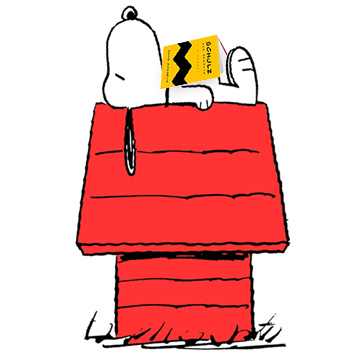

Charlie Brown

“I only dread one day at a time!”

Charles Schulz, the author of the beloved "Peanuts," was himself a depressive, self-deceiving character many found hard to love.

  • more
    • All Share Services

For 45 years, Charles Schulz’s comic strip “Peanuts” was part of the furniture of American culture. More ubiquitous and essential to the ’60s and ’70s than bell-bottoms or shag carpeting, “Peanuts” was almost as pervasive as that supreme totem of Americana, Coca-Cola — and in my house, even more so, since we were forbidden to drink soda, while the place was littered with as many paperback cartoon collections as could be bought with the allowances of five children. Most remarkable of all, everybody liked “Peanuts”: adults as well as children, hippies and straights, Middle America and the coasts, highbrows and the salt of the earth. According to David Michaelis’ new biography, “Schulz and Peanuts,” by 1971, Schulz had 100 million readers and the fourth-highest sales figures of any 20th century author.

In an era of market niches and polarization, it’s astonishing to realize just how universal the appeal of “Peanuts” was. In 1970, at the same time that my family was sympathizing with Snoopy’s misadventures during a riot at the Daisy Hill Puppy Farm, so was the man we considered the personification of political wickedness. Ronald Reagan would write, “It is a great comfort to know that other Head Beagles are having problems, too … My hero Snoopy has also experienced the joy of a campus disturbance.” That Snoopy had been caught up in a demonstration against the enlistment of dogs in the Vietnam War, and tear-gassed with the rest of the crowd, doesn’t seem to have fazed the California governor who called out the National Guard to quell similar “disturbances” in Berkeley. Somehow, without (it seems) actually trying to, Schulz succeeded at making all of his readers think that his strip was about them.

Actually, it was about him. Michaelis reveals that the upshot of Snoopy’s brush with campus protest — a breathless romance with a “girl-beagle” who had “the softest paws” — was inspired by Schulz’s extramarital affair with a 25-year-old office worker named Tracey Claudius. Snoopy’s sentimental swooning over his lady love was no exaggeration, either; Schulz inundated Claudius with doting notes and flowers and gifts commemorating each month of their “anniversary.” For the straight-arrow Schulz, the affair was a first foray into adultery after almost 20 years in a marriage that, while difficult, produced four kids and underpinned the most productive period of his life. Claudius, who regarded “Peanuts” as “holy,” was terrified when he took her to the Tonga Room in San Francisco’s Fairmont Hotel, convinced that the newspaper columnist Herb Caen would spot them and blow their cover. “I would be the one that would ruin his image for the world,” she told Michaelis. “God! If I’d found this out when I was reading it, I would have been crushed. Charlie Brown wouldn’t be innocent to me any longer.”

Some readers may feel much the same after finishing Michaelis’ biography. Not, however, about the affair with Claudius, which was heartfelt and, in its own small way, tragic. Schulz was no philanderer, though he was prone to crushes on “distant princesses” (cf, Charlie Brown’s little red-headed girl). Rather, it’s learning about the depressive, anxious, detached, resentful, self-defeating and self-deceiving personality of the comic strip’s creator that’s likely to puzzle and sadden some of those who grew up with “Peanuts.” (And, really, what American child didn’t grow up with Charlie Brown, Lucy, Linus and Peppermint Patty, as well as Snoopy?) I realized, reading this book, that it’s as impossible for me to be objective about “Peanuts” as it is to be impartial about my own parents; like Mom and Dad, Schulz’s characters had always been there, four panels every weekday and in color on Sundays. (Schulz retired in late 1999, and died just before his last strip appeared in February 2000.)

No wonder, then, that reading “Schulz and Peanuts” feels like reliving the last 40 years. Strangely enough, Schulz’s own life seems to recapitulate the quintessential experiences of postwar America’s middle class. Born into Midwestern rectitude as the son of a popular barber in St. Paul, Minn., his early life was shaped by neighborhood baseball games, the funny pages, Depression-mandated economies and, finally, World War II. Schulz, known to his intimates as Sparky, went into the army a sensitive only child (“a mother’s boy,” as a sympathetic corporal referred to him) and emerged, to quote his own Brokaw-esque formulation, “a man.”

He got a day job as a drawing instructor at a correspondence school in Minneapolis, palling around with co-workers who introduced him to modern art and classical music. With the help of the GI bill and his first contract with United Features, the syndicate that handled “Peanuts” for its entire run, Schulz got married and moved into a series of suburban homes with his wife, Joyce. Then “Peanuts” really began to catch on, first on college campuses, where “a student generation absorbed in irony and tension, paradox and ambiguity” found a mirror in the light existential musings and chronic social discomfort of Schulz’s round-headed child characters. “When Charlie Brown first confessed, ‘I don’t feel the way I’m supposed to feel,’” writes Michaelis, “he spoke for Eisenhower’s America.”

These sections of “Schulz and Peanuts” conjure a time of brand-new ranch houses and earnest young men, autodidacts in dark skinny ties and heavy, black-rimmed glasses, listening intently to classical LPs and reading “The Great Gatsby” on the train to work. Michaelis describes dinners the Schulzes threw for their friends, Fritz and Louanne Van Pelt (who gave their surname to Linus and Lucy), where the dishes served included, “Joyce’s specialty, pear halves in green Jell-O topped with a dollop of mayonnaise and grated cheddar cheese, followed by an evening of auction bridge to a background of Beethoven’s symphonies.”

Eventually, Schulz’s burgeoning wealth made a move to California seem somehow inevitable. In 1958, they bought a ranch in Santa Rosa, not far from San Francisco, and Joyce, a dynamo, proceeded to build the ultimate family-oriented paradise in which to raise their five children. (She had a daughter from an improvident first marriage, whom Schulz adopted.) It featured an 11-room open-plan house with a central redwood deck, tennis courts, a Little League-size baseball diamond, riding stables, a swimming pool, a privet maze and even, eventually, a nine-hole miniature golf course with an around-the-world theme. Their daughter Amy called it “our little Disneyland.”

By the late 1960s, however, the marriage began to splinter under the pressures so common to that time: a frustrated wife, a remote husband and wayward teenagers. After the Schulzes split up in 1972, they both remarried, he to a divorcee, a 33-year-old fitness buff who introduced him to jogging, benignly tolerated his many crushes and expertly managed the moodiness that had always exasperated his first spouse. Despite living a notably abstemious life — he never smoked, “could count on his fingers the number of times he had drunk alcohol,” and remained rail-thin to the end — Schulz died at 77, not young, but too soon for a man who had expected to go on drawing his strip into his 80s.

The emotional terrain of Schulz’s life sounds typical for his time, as well. Joyce and his children complained incessantly of his detachment and obsession with work. Amy recalls hearing an interviewer ask him how his kids were doing, and get a reply about Charlie Brown and Co., rather than his flesh-and-blood children. “Oh great,” she thought, “he thinks of his characters before us … Were we his everything? No. His strip was his everything.” Yet “Peanuts” usually reflected some family dynamic, often with Joyce cast as Lucy (ouch!) and Sparky Schulz submerged in his drawing like Schroeder at the piano.

The niftiest part of “Schulz and Peanuts” is the way Michaelis juxtaposes biographical material with the strips Schulz was writing at the time. Some of the details are merely droll: After Schulz won his first award from a comic artist’s association, he drew Lucy receiving a trophy for “Outstanding Fussbudget of Hennepin County.” Peppermint Patty and Marcie take part in an “all-woman transcontinental air race” (flying Snoopy’s doghouse) at the same time that Schulz’s second wife got her pilot’s license. But readers loved “Peanuts” for dealing with deeper concerns, as well; Schulz’s slowly building disenchantment with religion was reflected in Linus’ misguided commitment to the doctrine of the Great Pumpkin.

Above all, Lucy Van Pelt — aggressive, blunt, ambitious, bossy, blithely unreasonable — was the avatar of Joyce Schulz, a woman who reminded her husband, he once remarked, of “a speeding bullet.” Michaelis attributes the strip’s increasing mildness in the ’80s and ’90s to the Schulzes divorce. Without the daily jolt of Joyce’s personality, Sparky lost his spark. “What had once been a masterfully played chess game, a continually renewed power struggle between Lucy and each of the other characters, became a world-weary exercise in filling white space,” Michaelis writes. “In small but important ways, the central Peanuts characters had become rather dull and adult.”

Ultimately, Joyce turned out not to be Schulz’ real problem after all. Despite the loving ministrations of his second wife (her family joked that her evening schedule included the item “9:15 to 9:30: Comfort Sparky”) he continued to be “melancholy” (the word he preferred to “depressed,” even though “Peanuts” was the first comic strip to popularize that term). More than ever, he hated to travel or otherwise disrupt his routine. And he would plunge without warning into “a feeling of impending doom.”

Michaelis traces all of this back to Schulz’s childhood, which could easily have doubled as one of the less sunny passages in a Garrison Keillor monologue. His mother’s family, Norwegian farmers, practiced a needling deflation of anyone in the clan who seemed to be getting too big for his britches. They didn’t appreciate rarefied indoor activities like drawing, just about the only thing Sparky really cared about from the first time he picked up a pencil. His father was an agoraphobic workaholic who wouldn’t — and probably couldn’t — interrupt a haircut, not even on the day his son walked back into the shop after returning from the war in Europe. Threads of depression and catastrophe ran through Schulz’s family history on both the paternal and maternal sides, but Sparky at least managed to avoid the alcoholism that plagued his mother’s relatives — by becoming a rigorous and often judgmental teetotaler.

Schulz regarded the untimely death of his mother as the great tragedy of his life, and Michaelis, for the most part, concurs. She succumbed, after a long, painful battle, to cervical cancer when he was 20. Her decline progressed in a household where no one ever talked about what was really going on, and even the patient herself was never told her diagnosis. Her son, although virtually an adult, had to hector the word “cancer” out of an aunt. However much Schulz resented this, his own children experienced the same lack of parental communication; they learned that their mother had filed for divorce from a radio news report.

But Michaelis also makes the case for a more complicated view of Schulz’s gloomy temperament. Even on his deathbed, the cartoonist grumbled about his old neighborhood and “kids that push you down and knock you over and won’t let you swing on the swings that you want to swing on.” It’s an image that blends seamlessly into that of his comic strip counterpart, poor ol’ Charlie Brown. The character widely presumed to be Schulz’ stand-in was everyone’s target, pranked again and again by Lucy with her football, knocked into the air by a line drive he’s just pitched, his kite eaten by a tree, even his face extensively critiqued by the neighborhood girls.

Schulz himself encouraged the comparison. Yet Michaelis, who managed to track down several of Schulz’ boyhood friends, men who can recall in detail various hockey and baseball games from the period, can remember no such incidents.

What they do remember, however, is that Schulz’s own aggressive style of play sometimes wound up causing injury to his friends. This theme recurs much later, when Schulz’s son Monte describes getting badly slashed with a hockey stick by his 50-ish father while they were playing on opposite teams not long after his parents separated. “You’re lonely,” Monte complained. “I come and visit you all the time. Now you’ve maimed me.” But apologies were always difficult to wrest from Charles Schulz. Michaelis doesn’t make much of this, but an old friend of Schulz’s from his correspondence school days tells of “not so humorous practical jokes,” and “a mean streak,” alluding to the deeply buried current of rage in Schulz’s character.

Why was Schulz so angry? Michaelis speculates that he felt unappreciated and underestimated by his parents and extended family. He had a great-uncle who once announced, “That kid isn’t going to be worth five cents when he grows up. All he wants to do is scribble.” As a successful adult, Schulz told many stories about teachers or prospective employers who had stupidly ignored him, and he claimed to have been “invisible” to his peers at school. Certainly his own parents, who never intervened or showed the slightest degree of concern when his grades began to plummet in the eighth grade, were sometimes neglectful, at least by middle-class contemporary standards.

Yet Michaelis also finds evidence that Schulz’s parents did care about his ambitions, if not his schoolwork. His mother dragged the whole family (including, impressively, Sparky’s work-obsessed father) to an exhibit of comic strip art at a local museum, and she was the one who brought him a magazine ad for the correspondence school course that became his first real training as an artist. In Schulz’s high school yearbook, Michaelis discovers surprisingly warm and personal inscriptions from the peers who supposedly didn’t know he existed. One popular girl remembered appreciating the instructions Schulz gave her on using a protractor, but recalls that when she tried to talk to him outside of class, he “clammed up.” A murky incident involving some drawings Schultz submitted to the yearbook turns out not to be a simple case of high-handed rejection — though that was how he would portray it for the rest of his life.

Charles Schulz could really hold a grudge, even if he had to trump it up in the first place. Time and again, Michaelis records incidents of Schulz relishing his triumph over people who most likely had no idea he thought they’d offended him. Feeling aggrieved supplied him with fuel for his relentless creative ambition, and surely justified the competitive drive that pulsed in him to his dying day. Schulz presented a gentle, mild-mannered front to the world, but like his strip, with its deceptively minimalist, apparently gentle tone, he was capable of a shocking coldness and cruelty. That, however, was one of the things that set “Peanuts” apart from the many merely sweet or cute comics that feature children.

Michaelis acquits himself well in describing Schulz’s innovations to the comic strip form, but it is the convoluted personality behind the work that serves as the main attraction in “Schulz and Peanuts.” This comes across despite prose that is often clumsy, sometimes to the point of ineptitude: Michaelis describes Saturday Evening Post cartoon editor John Bailey as “a habitual, Irish curmudgeon,” although neither Irishness nor curmudgeonliness can be habits because they are not behaviors. Occasionally, he glues marginally coherent clauses together without establishing any meaningful connection between them: “Fame distressed him and he would not allow it, which left Joyce — at the dawn of the woman’s liberation movement in mainstream America — neither as the wife of a famous man nor as a woman in her own right, nor even as a model for one of America’s best known cartoon characters.”

Nevertheless, Michaelis convincingly excavates the heart of his subject, no easy task with a man as retiring, evasive and fundamentally unself-reflective as Schulz. Like all true biographers, Michaelis refuses to buy into Schulz’ version of his own life, and the resulting portrait goes far beyond the conventional notion that Schulz was the grown-up version of Charlie Brown. Charlie Brown was so much nicer, really, than his creator. But then Charlie Brown never grew up to beguile 100 million readers, either. That was the secret of both Schulz and those decades of American history during which he spoke for, in his words, “a generation that really did fear the next day, sometimes wasn’t sure if the next day was going to come.” None of us were ever as innocent as we seemed.

Laura Miller

Laura Miller is a senior writer for Salon. She is the author of "The Magician's Book: A Skeptic's Adventures in Narnia" and has a Web site, magiciansbook.com.

Good grief! “Peanuts” and the death of comics

Charlie Brown turns 60 today, but it's a gloomy reminder that no strip will ever be as beloved, or as important

  • more
    • All Share Services

Good grief!

From the international headquarters of Things Ain’t What They Used to Be, a bulletin: This weekend marks the 60th anniversary of “Peanuts,” which debuted Oct. 2, 1950. After honoring the date by revisiting Fantagraphic Books’ handsomely designed anthologies of Charles Schulz’s strips — highly recommended to any “Peanuts” fan — I want to pose a couple of questions here.

First, is there any recent-vintage daily comic strip being published regularly in North America that’s as widely recognized, never mind beloved, as “Peanuts”?

And second, is such a scenario even possible?

I’m pretty sure the answer to both questions is “no.” But I’m throwing them out anyhow in hopes that someone will persuade me otherwise. I love the comic strip form, but I feel fairly certain it’s either dead or doomed — because even if there were somebody out there doing early Schulz-quality work, who would know about it? I mean, besides die-hards who consciously go spelunking for good new strips online and spread the word when they find something? Seriously, does anyone even do that? The world has changed to the point where that’s less possible, maybe impossible.

It all comes back to the daily newspaper and the strips they carried. The daily strip was a gateway into appreciating all sorts of comics simply because it was right there on your doorstep or in your local news box. And the comics were one of the reasons you read the paper.

“The Far Side,” “Herman,” “Bloom County,” “Doonesbury” and “Calvin and Hobbes” were probably the pantheon strips during the years that I read newspaper comics pages regularly (roughly the ’70s through about 2000) because those were the years I read newspapers on paper. (I continued to read “Peanuts” during that period — though admittedly more out of nostalgia than because Schulz was doing great, or even good, work. By that point, the strip had become pretty gimmicky and thin, more often focusing on Snoopy’s fantasy life and sitcom-style farce than on the psychological dynamics of the little round-headed kid and his pals. But as my tombstone will one day read: I digress.) The daily strip is (or was) inextricably associated with daily newspapers. And as the daily newspaper ebbs in prominence, the daily strip must ebb, too. Or maybe I should say “has.” Past tense.

If so, too bad. One of the beautiful things about the daily newspaper — something the self-reinforcing ego chamber of the Internet can’t provide — is the ingrained certainty of discovery. The daily paper was an omnibus format, a potluck. Even if you picked up a paper for something you already knew you wanted — the sports section, the crossword, Dear Abby or the latest dispatch from an Op-Ed columnist you absolutely despised but couldn’t stop reading — the physical act of separating the sections and leafing through the pages meant that you might stumble onto something you weren’t looking for, perhaps even something interesting, well-done and, in general, worth knowing about.

That same dynamic applied in microcosm to the comic page. Maybe you went there to read “Peanuts,” “The Far Side,” “For Better or for Worse,” “Dilbert” or “Apartment 3G” (I just threw that in there for the hell of it, by the way; I feel relatively certain that nobody in the history of human civilization ever actually read “Apartment 3G”), and you just happened to glance upon a strip that was either brand-new or that had previously escaped your notice — and voilà, you were hooked, and so you added another title to the daily list of must-reads.

That’s how I first discovered Bill Watterson’s sublime “Calvin and Hobbes” sometime into its first year of publication; my paper used to bury it at the bottom left-hand side of a two-page spread of comics, bumped right up against the vertical fold. Then one day it moved up a couple of rows so that it was directly beneath one of my favorites, Jim Unger’s “Herman,” at which point I noticed it and became a fan. As I continued to read “C&H” over the next few years, I watched it climb to the very top, above “Herman,” until it sat right next to “Peanuts” — a vicarious pleasure that ranks with watching a talented franchise expansion team make its way to the playoffs faster than you expected, or a single by a talented new band skyrocket to the top of the charts.

It’s hard to envision anything like that happening to a daily strip now. That tiny pleasure is mostly gone because the conditions no longer exist — mainly, I think, because the daily newspaper we once knew no longer exists.

It’s important to note that what we’re seeing now — the daily strip becoming a nostalgic art form rather than something central to popular culture — isn’t some out-of-nowhere coup de grâce. It’s the final phase of a de-evolution that’s been going on for a century. Comics were once much bigger that they are now, much bigger — and I don’t just mean in a figurative sense. The comic page used to be where publishers flaunted their ability to print in color, and flaunt they did. In the early years of the form, the more visually daring, draftsmanship-driven strips were spread out over a half-page on Sundays, even a full page, and the best were as aesthetically ambitious as any modern graphic novel: “Krazy Kat,” “Prince Valiant,” “Little Nemo.” Thanks to newsprint shortages in World War II, papers started offering less acreage for cartoonists to play in. The shrinkage continued over the next few decades, to the point where daily strips were busted down to near business-card size, a visual correlative to their diminished presence. (Supposedly this is one reason — but by no means the only reason — why Bill Watterson got out of the business. “Calvin and Hobbes” was an aggressively visual strip, a haven of detail for detail’s sake, and as the strips shrank, he had neither the opportunity nor the motive to strut his stuff.)

The last time we saw daily strips being regular conversation pieces was the ’90s — maybe the early ’00s, tops. (I’m thinking specifically of “Dilbert” and “The Boondocks,” and to a lesser extent “Mallard Fillmore” and the continually evolving and seemingly indestructible “Doonesbury.”) Not coincidentally, that’s the period when Internet access turned into a utility, the virtual world started to eclipse the “real” world, and all sorts of pop culture delivery devices (the daily newspaper, the magazine, the CD, the ink-on-paper book) endured identity crises or crippling, often irreparable financial blows (often both). The world simply didn’t need or want daily newspapers anymore. The spreading lack of interest was nothing personal. Changes in technology and lifestyle meant that newspapers had stopped making sense, in much the same way that the nightly half-hour network newscast stopped making sense. Thus their fates were sealed — along with the fates of genres and formats that were all bound up in the daily newspaper experience.

Granted, every strip I’ve mentioned in this piece is available online, either at a dedicated website or as a piece of syndicated content. For instance, Tom Tomorrow’s “This Modern World,” once an alternative press mainstay, is a regular Salon feature, and “Doonesbury” has partnered up with Slate. And yes, new comic artists have thrived in the post-newspaper world — but they’ve done it by thinking of their strips not as self-contained creations but as components of a digital-age brand. One conspicuous example is animator Simon Tofield’s Simon’s Cat, one of many modern strips to position itself as a brand that just happens to include comic strips. (Tofield regularly produces YouTube shorts that drive traffic to his website, where he hawks printed anthologies of old-fashioned black-and-white strips, plus T-shirts and other merchandise.)

Such strips exist apart from the venue that once served as a reliable launching pad. They’re little islands of personal expression in a sea of data. That’s no small accomplishment — but perhaps not enough to counteract a certain sadness over the realization that Atlantis isn’t coming back.

Matt Zoller Seitz is a Salon contributor. Follow him on Twitter at mattzollerseitz.

Continue Reading Close

Blue Glow

Salon's TV picks for Wednesday, May 10, 2000

  • more
    • All Share Services

Series

Dawson is none too happy that Pacey stole his girl on Dawson’s Creek (8 p.m., WB). Beverly Hills 90210 (8 p.m., Fox) airs its next-to-last episode (the finale runs next week), followed by the special 90210: The Final Goodbye (9 p.m., Fox). Goodbye, already! On The West Wing (9 p.m., NBC), the staff awaits the president’s new favorability rating. The Drew Carey Show (9 p.m., ABC) has another big production number, in which Geppetto, er, Drew sings his heart out to Kate.

Specials

Here’s to You, Charlie Brown: 50 Great Years (8 p.m., CBS) looks back at memorable moments from the Peanuts strip and TV specials. Whoopi Goldberg, Faith Hill and Joe Montana (football, get it?) pay their respects. A child psychologist (Mare Winningham) discovers that her own daughter is bulimic in the new TV movie Sharing the Secret (9 p.m., CBS).

Sports

Baseball:

White Sox at Red Sox (7 p.m., ESPN2)

Dodgers at Diamondbacks (10 p.m., ESPN2)

NBA Playoffs:

Pacers at 76ers (8 p.m., TNT)

Suns at Lakers (10:30 p.m., TNT)

Talk

David Letterman (CBS) Kelsey Grammer, Caroline Rhea

Jay Leno (NBC) Joaquin Phoenix, LeAnn Rimes

Politically Incorrect (ABC) Al Franken

Conan O’Brien (NBC) Roma Downey

Continue Reading Close

Joyce Millman is a writer living in the Bay Area.

A “Peanuts” virtual quilt

Net cartoonists pay tribute to Charles Schulz, stitching together drawings celebrating Charlie Brown and the gang.

  • more
    • All Share Services

Weeks before the death of Charles M. Schulz on Saturday, Internet cartoonists began piecing together an online tribute to the creator of Charlie Brown, Snoopy and the gang. The ongoing project is a virtual quilt, which knits together panels drawn by professional cartoonists, amateur comic artists and “Peanuts” fans.

The Charles M. Schulz Tribute Quilt now includes nearly 100 squares, including a red-haired girl penned by Greg Evans, creator of “Luann,” which says “From all the red-haired girls, we’ll miss you Sparky!” And Bill Holbrook, creator of “Kevin and Kell” and “On the Fastrack,” drew one of his own characters lying on top of Snoopy’s doghouse.

The idea started in the rec.arts.comics.strips newsgroup, where “Melonpool” cartoonist Steve Troop had suggested that Web cartoonists run Schulz-related themes on Jan. 3 — the day that Schulz, who had announced that he was retiring to fight colon cancer, had scheduled his last daily “Peanuts” strip. Web cartoonist Thomas K. Dye, creator of “Newshounds,” says he pictured it as something like the AIDS Memorial Quilt and suggested that they all contribute panels. “Calling it a ‘quilt’ would show the unity of our good wishes,” says Dye.

They enlisted a third cartoonist — Ken Plume, creator of “Tibby’s Bowl” — to coordinate the page. “‘Peanuts’ was very much a part of my childhood,” Plume says, “and I thought it would be a wonderful way to show my respect for Sparky’s work.”

By Jan. 3, they had assembled 25 panels commemorating Schulz’s 50 years of cartooning, and 10 more panels were posted by the end of the week. “Y2K gets worse by the second,” reads one. “Thanks for the love and the laughs,” adds another. The majority of the quilt’s first panels came from Internet cartoonists, like Illiad, who drew his Dust Puppy character from the “User Friendly” strip saying “We’ll miss you, Snoopy.” Other panels came from drawing aficionados who also happened to be Schulz fans.

“It’s a very grass-roots affair,” Plume notes, “and its existence has mainly been spread by word of mouth, through newsgroups, message boards and mailing lists.” Shortly before Schulz’s death, Plume contacted the cartoonist’s office. “I hope they let Sparky know about how much everyone cared for him and his strip.”

Elsewhere online Daryl Cagle, president of the National Cartoonists Society, has collected 77 cartoons drawn by newspaper cartoonists about Schulz’s retirement and death. The Orange County Register’s Mike Shelton drew a heart-breakingly empty pitcher’s mound and an abandoned security blanket, while the Detroit Free Press’ Mike Thompson relocated Charlie Brown to the pitcher’s mound of the Detroit Tigers. (An onlooking manager explains that “he needed a job, he can’t be any worse than the rest of our pitching staff and he’s used to working for peanuts.”) But perhaps the most touching was by the Hartford Courant’s Bob Englehart. He drew Charlie Brown finally kicking that football after all.

After Schulz announced his retirement, newspaper cartoonists across the country began planning a May 27 tribute to the creator of Linus, Lucy, Woodstock and the rest of the gang. It was to have been a surprise for Schulz, commemorating his 50-year contribution to cartooning; it will now be a memorial.

The Net cartoonists’ efforts will, of course, be more than a one-day affair. Plume says he’ll maintain the quilt indefinitely — “as long as the squares come in.” Dye adds, “We’re hoping that it can become one of many monuments to a man who inspired us all with his work.”

Continue Reading Close

David Cassel is an Oakland, Calif.-based freelance writer covering the Internet and popular culture.

Letters to the editor

Flirt at your own risk. Plus: Good Grief! "Peanuts" deserves some respect! Should Sherman Alexie speak for Native Americans?

  • more
    • All Share Services


Strangers in the night

BY CHRISTINE SCHOEFER
(02/15/00)

Christine Schoefer’s article was quite interesting and informative, but missed one salient facet of flirting: It’s cruelty. For any man or woman who is unattractive to the opposite sex — and especially those for whom this has always been the case — “flirting” might better be described as “taunting.”

It is one thing for a person to flirt or be flirted with when they are confident in the knowledge of their own attractiveness. They can enjoy flirting in its more innocuous social context. But for people who are the opposite, whose self-knowledge is of a sadder sort, flirting becomes inherently degrading.

This is best summed up in a short passage I read in a book many years ago: “She stroked his hand in the friendly and familiar but uninviting way women had with unattractive men.” It is cruel to “flirt” with people who are obviously outside of the society of courtship, and unnecessary.

— Rob Anderson

Flirting is as dead as politeness in this country, at least in the big city. Nowadays, if you practice one or the other (or both), people think that you are crazy or perverted. The best way to put a worried look on a woman’s face is to give her that “half smile” or to make eye contact in public. Times have changed and there are a lot of dangerous people out there.

— Dave Wrobleski

All praise to Christine Schoefer! Americans are stumbling, demented buffoons when it comes to flirting. I’m a 30-year-old single man who has spent much time abroad, and the staggering lack of flirtatious grace in American women should be a national source of shame. It seems especially true of my generation. For the sake of education, let’s just clear a few things up:

1) Flirtation is not “slutty.” They did it in Victorian times, OK?

2) Sneaking peeks at someone and then looking away, hiding behind your hair, standing in one place and waiting to be noticed (and becoming bratty when you’re not) and being afraid of your own shadow does not qualify as flirting. You therefore have no right to complain when it doesn’t work.

3) When all else fails, try starting an actual conversation — perhaps even without a life vest.

— Tom Foreman

What’s up with Schoefer? Everybody in America flirts. Perhaps our style is a just a bit too subtle for her. Maybe she notices flirting more when she’s abroad precisely because she’s traveling and therefore a little looser and more aware of those around her.

Ease up, Christine, and enjoy the eye contact.

— Stuart Cohn

Forget Charlie Brown
BY DAVE CULLEN
(01/13/00)

I totally agree that “Peanuts” lost its luster once I grew up and entered high school in 1979. But that’s just one side of the coin.

I suspect part of the fact I find it so “not funny” is because I’ve aged and the strip hasn’t. How many things from childhood do we still engross ourselves in? Not many, because they are boring and not funny anymore. Like most kids, I transitioned to “Doonesbury” and “Bizarro.”

But even as an adult, “Peanuts” was like an old childhood friend. It was somehow comforting to see that “Peanuts” was still there when I was disillusioned and needed a chocolate cream and a pat on the back, and that there might be a place where I could get advice for only a nickel.

So may I humbly suggest that people cut “Peanuts” and Charles Schulz some slack? We all grow up, but good grief, thank goodness Charlie Brown didn’t.

— Joseph M. Hardegree

Of course Schulz repeated jokes and motifs. The final Sunday strip was his 18,000th, or so they say. Do you expect that many new jokes? Cartoons are half about familiarity and repetition. Today’s top cartoonists (Larson, Watterson and Breathed) couldn’t hack it and split with the cash. Schulz stayed and worked every day — a dying art, that — and seemed to me still capable of brilliant moments. Just a couple of months ago Charlie Brown suggested to Snoopy that the real way for a watchdog to bark is to go, “ROWRGHR!”, to which Snoopy replied, in the last frame, “ALL CAPITALS?”

Your parents never let you have a dog, did they, Mr. Cullen?

— Chuck Wilson

The godfather from Dallas ends the party
BY MICAH L. SIFRY
(02/14/00)

There were many of us at the Reform Party meeting in Nashville who saw it very differently from Sifrey.

An important detail that he missed was the fact that all of the disruptive behavior at the beginning of the meeting was initiated by supporters of Jack Gargan and lasted a very short time. Many of those who voted Jack Gargan and Ronn Young out of office were in tears after the votes because they were very sad about what they had to do to preserve their party.

There was no power grab led by Ross Perot. If there had been, he could have easily controlled the elections of pro-Perot committee members and had them elect Russ Verney as party chairman again. Rather than get involved in the issue, Perot did exactly what he said he would do — he stayed out of the internal workings of the party and let the members handle it themselves.

— Mike Hicks
Dallas County chairman
Reform Party of Texas

Sherman Alexie’s cultural imperialism
BY JONATHAN MILES
(02/15/00)

I read Alexie’s review of “On The Rez” when it first appeared, and agree with much that Jonathan Miles has to say. However, I don’t think you have to go as far as Alexie’s fiction to find examples of his cultural imperialism. In his review, Alexie wonders if Frazier ever asked if the Oglala Sioux wanted to be written about. But did Alexie ever wonder if the Oglalas wanted him to defend them against Frazier? After all, if we’re going to create “cultural enclosures,” we should all stay on our own side of the fence. And that includes Spokane/Coeur d’Alenes who presume to speak for other tribes, or Indians as a whole.

— Shelley Silva

I haven’t lived on my “rez” for 12 years, having left Santa Clara Pueblo, N.M., to live in New York to pursue video-making. Sherman Alexie’s position and response to Frazier’s recent successful book about, but not for, Indians is not without some historically rooted bias. Basic to the critical response by Alexie is the national miseducation about Indians that is historically bound to the fact that native people have had almost no access in contributing to the world of ideas as respected writers. Who was the last native critic to write for any major magazine or newspaper?

Alexie simply is using his opportunity as a critic to point out that until there is wider representation of actual native people in print and all other media, books like Frazier’s repeat a familiar cycle of momentary interest in Indians that is like the same road going nowhere. We need more voices like Alexie’s to share them so the public can know us firsthand.

— Beverly Singer

Do the multiracial count?
BY GREGORY RODRIGUEZ
(02/15/00)

The people of the United States of America have classified themselves into a corner. The racial classification was first developed by European scientists back in the late 1700s and has since been abandoned by scientists of the 20th century. It explains nothing about human biological variation which is very real and fascinating. Sickle-cell anemia is not a “black” person’s disease. It has absolutely nothing to do with one’s skin color. Sickle-cell anemia is not an African disease. It is not found everywhere in Africa, and it is found out of Africa in parts of the Old World Tropics. Malaria explains the geographic distribution of sickle-cell anemia, not race. Race is not just some antiquated relic of two centuries ago, it is a dangerous concept which continues to emphasize differences rather than similarities, and which continues to divide us.

— Dan Cring
biological anthropologist
University of Louisiana

Rodriguez says that multiracial people will “resist the dilution of any non-white racial group.” But not diluting the minority also means not diluting the majority. Whose purposes, then, does this resistance actually serve, the minorities or the majority?

A demographer says: “What we do know is that it’s going to use up a lot of RAM.” Surely the number of possible graphs is problematic, but shouldn’t the way the racial information is interpreted interest us more? Focusing on the task of managing the data denies and hides the possible implications of living in our multiracial society.

Rodriguez suggests that somehow the new data may free us to think about the “real” demographic issue of the future: class. Yes, class is of increasing concern. But does Rodriguez really believe that one’s class will no longer be tied to one’s color (gender, etc.)?

— Brook Partner

Continue Reading Close

Blue Glow

Salon's TV picks for Weekend, Feb. 11-13, 2000

  • more
    • All Share Services

Series

Funding for Dr. Morris’ project — Michael — may not be renewed on Now and Again (9 p.m. Fri., CBS). Julianna Margulies hosts Saturday Night Live (11:30 p.m. Sat., NBC). King of the Hill (7:30 p.m. Sun., Fox) concludes its two-parter with Hank under suspicion for murder, and a recurring character bites the dust on The Simpsons (8 p.m. Sun., Fox). Hint: The episode is called “Alone Again, Natura-diddl-ly.” Noel and Ruby await the results of a pregnancy test on Felicity (8 p.m. Sun., WB). On the conclusion of a two-part episode of The X-Files (9 p.m. Sun., Fox), Mulder finally learns the truth about his sister’s disappearance. No lie. A central mystery will be solved. Or so says Chris Carter. Melfi’s shrink helps her unravel her feelings for Tony on The Sopranos (9 p.m. Sun., HBO). Helen and Bobby clash (what else is new) over a murder case involving a detective’s son on The Practice (10 p.m. Sun., ABC).

- – - – - – - – - – - -

Specials

Walter Cronkite hosts Good Grief, Charlie Brown: A Tribute to Charles Schulz (8 p.m. Fri., CBS). The anti-Ricky performs from Madison Square Garden in Marc Anthony: The Concert (10 p.m. Sat., HBO). It’s Black Entertainment! (8 p.m. Sun., Showtime) unspools the greatest film moments from African-American musical performers. Vanessa Williams hosts. Everybody who was ever a series regular shows up for a final bow in Homicide: The Movie (9 p.m. Sun., NBC), and that includes Andre Braugher, Daniel Baldwin, Ned Beatty, Melissa Leo and dozens more. The miniseries Sally Hemings: An American Scandal (9 p.m. Sun., CBS) dramatizes the romance between Thomas Jefferson and one of his slaves. Sam Neill and Carmen Ejogo star.

- – - – - – - – - – - -

Sports

Basketball:

NBA All-Star Game (6:30 p.m. Sun., NBC)

Hockey:

Bruins at Rangers (7 p.m. Fri., ESPN)

Panthers at Bruins (7 p.m. Sat., ESPN2)

Red Wings at Avalanche (8 p.m. Sun., ESPN)

Figure skating:

U.S. Championships:

Women’s short program highlights (after hockey, Fri., ESPN)

Men’s and dance finals (3:30 p.m. Sat., ABC

Women’s and pairs finals (9 p.m. Sat., ABC)

- – - – - – - – - – - -

Talk

Rosie O’Donnell (syndicated) Danny De Vito, Mary J. Blige

David Letterman (CBS) Paul Shaffer interviews Steve Martin, Billy Crystal

Jay Leno (NBC) Chynna, Smash Mouth

Politically Incorrect (ABC) Russell Simmons, Leif Garrett

Conan O’Brien (NBC) Julia Sweeney, Macy Gray

Craig Kilborn (CBS) David Arquette, Tonic

Continue Reading Close

Joyce Millman is a writer living in the Bay Area.

Page 1 of 2 in Charlie Brown