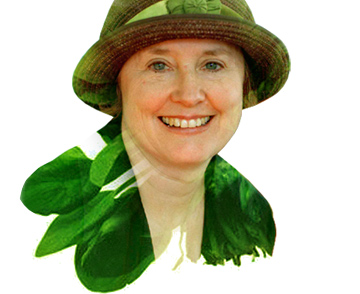

Are Alice Waters' gastronomic principles -- shop locally, eat organically -- too hard to live by? A frank talk with the renowned guru of fresh food.

To listen to a podcast of the interview, click here.
To subscribe: Click here to add Conversations to iTunes or cut and paste the URL into your podcasting software:

I had been prepared to skewer Alice Waters. Though I have eaten some of the best food I’ve ever encountered at her Berkeley restaurant Chez Panisse, and though I have generally tried to live by the gastronomic principles that she’s become famous championing, and though I believe that the world would be better off in nearly every way if more people listened to her, there is a limit to what can be expected of us — of me! — and I wanted to tell her, Alice Waters, you just want too much.
Alice Waters is not content for you to simply eat organic produce. No, no. It’s got to be organic and local and seasonal, and really, for it to be any good at all, you have to get it from the farmer who pulled it out of the earth. And ideally that farmer would be a friend of yours. You and he would discuss the soil and seasons and his search for heirloom varieties, and he would give you tips for your own garden, where, of course, you’d spend many of your weekends.
Alice Waters doesn’t want you to use store-bought stock, or mayonnaise from a jar, anything frozen (even peas!), or salad that comes in a bag. She would rather you stay away from nearly every kitchen appliance, including a blender — a food mill or a Japanese mortar and pestle called a suribachi is wholly preferable.
Consider the eggs Alice Waters wants you to buy, the eggs she serves at Chez Panisse: eggs from chickens raised on a pasture, chickens who enjoy, among other humane conditions, freedom from having their beaks trimmed by their handlers. This is a practice performed at nearly every egg farm in the country, including the ones that sell the $4-a-dozen eggs you buy at so-called responsible stores like Whole Foods. Even in the San Francisco Bay Area, it is extremely difficult to find Waters-approved eggs — for long periods of the year, production is so low that farms impose rationing and stop supplying most stores; you have to wake up very early even to find them at the farmers’ market. “People don’t have enough time for this!” I would tell Alice Waters. We don’t have enough money, either. It’s just too much.
And then I opened her new book, “The Art of Simple Food: Notes, Lessons, and Recipes From a Delicious Revolution,” and I fell into Alice Waters’ world. Waters is known for the rhapsodic manner in which she talks about food, but her writing is every bit as engaging. “Poached eggs perched on a buttered toasted slice of tender bread is the perfect breakfast,” she writes, and at that moment you’d move mountains to get those eggs to make such a breakfast.
More remarkable, though, is that she makes it seem, if not easy, at least not daunting. The book begins with a set of principles by which to live — among them to eat locally and sustainably, eat seasonally, eat together with friends and family, and most important, to remember that “food should never be taken for granted.” In the rest of it, Waters outlines straightforward ways that most of us can reach those goals. The most basic thing is this: Go to the farmers’ market. Go often, go early, spend a long time there.
I spent several weeks cooking by the book, preparing Waters’ recipes with the sort of ingredients she favors. I won’t say it was easy — especially when I couldn’t get out of work to get to the market. It wasn’t cheap, either, but it wasn’t expensive. Every meal I made cost more than $10, but none cost more than $20.
Many times, I cheated in small ways. I bought a suribachi, but I also used the blender. In a risotto, I added frozen peas. In a polenta torta, I used conventional imported Parmigiano-Reggiano ($14 a pound) rather than organic ($24 a pound). I used organic canned tomatoes instead of fresh tomatoes in a pasta sauce, but Waters says that’s OK to do out of tomato season.
The food was wonderful. If Waters’ methods can be fussy, if her objectives can sometimes seem unattainably pure, the end result is inarguably fantastic. A Caesar salad I made from romaine I bought during an epiphanic morning at the farmers’ market was as delicious as any salad I remember having at Chez Panisse. More amazing was that it came together in about 20 minutes, dressing and all. Linguine with clams in a tomato sauce spiked with fennel took three pots and an hour, but was so well worth it that I made it again the next day.
Earlier this week, I visited Waters at her office, which is set in a charming, woodsy annex building off Chez Panisse. She’s in the middle of a long book tour, and had come into town briefly. She looked harried. The office buzzed with young assistants getting her set up to fly off to her next reading locations. I found her, as expected, unyielding — this is a woman who believes food should be the No. 1 issue of the presidential campaign.
And yet, after buying and cooking and eating the sort of food she hails, you really can’t help feeling that maybe it wouldn’t be so hard to change your whole life around — or at least to try. (You can listen to the interview here.)
You definitely have a goal for this book beyond recipes and technique. What is your objective?
I want people to focus on where the ingredients come from. That’s really what’s important to me. It’s not so much what they’re cooking, it’s with what ingredients they’re cooking. It can be a hot dog — but where’s that hot dog from? What kind of ranches are producing the meat? Are the animals being fed hormones and antibiotics out there on the range? Are they in feedlots? Are they enjoying the natural resources of the region? You know, what’s in the hot dog? What’s in the bun? What’s in the mustard? What’s in the ketchup?
That’s what I’m interested in. Because every decision we make about the food that we eat has consequences. And they aren’t just about people’s personal health. There are consequences in terms of the healthcare system for all of us if people eat food that makes them sick. And there are environmental consequences. But I think the thing that people don’t understand is that there are cultural consequences.
When we’re eating fast food, we’re not just eating the food, we’re eating a set of values that comes with the food. And it’s telling us that food should be cheap. It’s telling us that food should be the same no matter where we are on the planet. It’s telling us that advertising confers value. That it’s OK to eat 24 hours a day. That there are unlimited resources. It’s telling us that the work of the people who grow or raise the food is unimportant — in fact we don’t even need to know. And all of those values are informing what’s happening in the world around us. We’re ending up with malls instead of beautiful places to live in.
I’ve been cooking from this book for about a month now.
You have? Tell me, did the recipes work?
Yeah, they were wonderful. But as you say, it’s less about the recipes than your ideas of where to get the food. And I’ve been following those ideas too. I went to the farmers’ market several times.
You know this would be any old book of recipes if it weren’t for the philosophy of food at the beginning. If you’re just going into the store and buying those ingredients, if you’re really a good cook you could probably make something. But what is beautiful is that this changes your life. It brings you into the whole community of people and hopefully brings you back to the dinner table.
I agree. But, some things I’ve noticed. First of all, it’s not easy to do this. I’m a writer so I have a lot of free time. I can take Tuesday afternoon off and go to the farmers’ market. So it was relatively easy for me to do it compared to someone who has to punch a clock. What do those people do?
I think there are lots of ways, actually. I think you have to decide you’re going to work at this a little bit. To begin with, you set aside a day that you might want to eat with your family. It doesn’t have to be a dinner or a complicated thing — it could be an afternoon tea. It could be a Saturday lunch. It could be a breakfast. But hopefully you will decide the following week you can do it twice a week. That’s the beginning.
I think you have to plan ahead. When I go to the market on a Saturday and I’m buying for family and friends I’m thinking about what I’m going to eat on the weekend but also about what I’m going to make for the following week. You know those tomatoes, I’m not getting them dead ripe unless I’m eating them for lunch — I might get them a little firm so that by Wednesday I can have them in a salad. I’ve always got something in the pantry — I talk a lot about what you can cook when you just have a closet full of pasta and grains.
So how often would you go to the farmers’ market in a week?
Twice. I mean, if I could I’d go every day, but I go on Saturday when I can buy a lot of things, and on Tuesday. And then I’ll go get other things in the regular market as a sort of backup.
You recognize, though, that it takes more time to do it this way than going to the store.
I do absolutely recognize it takes more time. But this is all part of fast food values. Let’s do it quickly. Let’s get it over with. Let’s let the machines do it for us, because kitchen work is drudgery and so is garden work. Let somebody else do that.
Get out of that mind-set and tell yourself cooking is a meditation. I like to do it. It’s relaxing for me to come home — it truly is! — and wash the salad. I love to see the salad in the sink. To spin the salad. I like to dry it. I like to pound to make a vinaigrette with my mortar and pestle. I enjoy grinding coffee and putting it in the filter and warming up the milk. It’s part of a ritual that gives my life meaning and beauty.
I feel particularly like this on my book tour, that this is a crazy kind of life. It’s over before you know it. And so you have to find ways of slowing it down. And this is an everyday delightful way to slow it down. Take time. Take a moment. The most important value of this book aside from nourishment is that there’s pleasure in the doing. It’s pleasure in work. It’s something that we don’t understand in this country. Work is over there and pleasure’s over here, and we work our whole lives so that we can go on a cruise ship. It’s just insanity, and some people don’t even make it to the cruise ship.
So we have to figure out about everyday pleasure. It’s trying to bring people back to their senses. Put the smells in the house. Make the chicken stock so it makes people hungry. Burn the rosemary, make the farro, make the bread. These are all aromatic ways to bring people back to the table.
In addition to time, it’s costlier to do it this way. One of the reasons that people eat fast food is because that’s all they can afford.
For some people that is true. But I would say that you have to decide — it’s not going to be cheap but it can be affordable. And that’s where this book comes in. When polenta costs $6 for a hundred portions, I’m pretty certain that I can make something tasty for less money than a fast food dinner for my family.
So you’re saying it’s more but it’s not prohibitive?
That’s right. You just decide, OK, well, maybe I won’t rent that DVD.
I was struck often in making the recipes by how simple they were. So the buying of the food was more time-consuming than the cooking –
That’s right. When you spend time buying tasty things you hardly have to cook them. You just slice a little piece of fig and some fresh cheese, and, voilà!
We have to demystify this whole idea — many restaurants are complicated for the sake of complication. And I think that leads people to believe that they can’t cook it. I’m trying to empower people in the kitchen. It isn’t anything but slicing a tomato. You can do this. You can do this.
What do you make of the mass-market, luxury organic food movement — people getting their organic food from places like Whole Foods?
They’re trying to use fast-food values to eat organic food. They’re trying still to do it in a minute, and they’re not thinking about what it really means. Going to the farmers’ market, being present, talking to the farmers, reporting back on how the produce was, encouraging them so they stay in business.
I’ve heard you describe yourself as an optimist about this stuff but from the way you’re discussing it, it doesn’t seem that you’re very optimistic.
I’ve been a little pessimistic today. But I am an optimist because I see the potential of feeding children in the public schools. And with good food comes the values that could change the world.
I’m focused on the next generation, because I think it’s very hard to break the habit of adults who’ve got salt and sugar addictions and just ways of being in this world. It’s very hard even for the most enlightened people at famous universities that are very wealthy to spend the money that it takes to feed the students something delicious.
We’ve been working in Berkeley with the Edible Schoolyard for 10 years, and we have a sister program in New Orleans. It’s the idea of teaching gastronomy — “eco-gastronomy” if you will, edible education. It’s changing the pedagogy of public education with an interactive school lunch program.
Way back when, the president of the United States said, We want our children to be physically fit, and he put physical education into the core curriculum of the school system. We built gymnasiums, we hired teachers, we got equipment, and every child had to take it. And they got credit for taking it. And now we want them to take eco-gastronomy and get credit for eating it.
Because when they grow it and they cook it, they all eat it — that’s the lesson of the Edible Schoolyard. They want to do it because it’s a kind of pride in the process. They have been involved in it since the seed when it was in the ground. They love to give it to their friends. It gives them a kind of pleasure.
The big discussion about kids and food usually focuses on obesity and health. That’s not something you focus on directly.
I’ve never focused on that directly. I think health is the outcome of finding a balance and some satisfaction at the table.
You think that if people eat this way, good health will be a natural outcome.
This isn’t a new philosophy. This isn’t mine — it’s been around since the beginning of time. Eat what’s locally available. Eat with your family and friends. Buy from a nearby market. Eat what’s exactly in season. These are all understood by people around the world.
You’ve been traveling around the country recently. I’m sure one of the things people who are not in our West Coast climate wonder about is –
Everybody asks that question. I was waiting for you to ask it. “It’s all fine and good in California, but how are we going to do this and other places?” Well, I’ve visited Yale University, which is a pretty difficult climate. They have 300 varieties of fruits and vegetables in their garden including artichokes, radicchio lettuces and a whole lot of things that don’t grow in California. They have to use greenhouses, and that’s very important. Everybody on this planet is going to have to do greenhousing because of global warming.
We serve root vegetables here at Chez Panisse in the wintertime. We only have fresh tomatoes here for four months. That’s it. It’s not nine months or 12 months. Likewise with eggplants and peppers and corn on the cob. These aren’t things that grow here. We can have salad outside all winter long, but it’s a different kind of salad. Escarole. My mint dies out, my lemon verbena’s gone. I have rosemary and thyme but it’s different tasting in the winter than the summer.
What do they do in the winter in the Midwest?
You have to think of a different kind of menu. You eat dried fruit and nuts. You make pasta sauces out of canned tomatoes. And you’re eating different kinds of grains — farro with root vegetables. All the root vegetables are there, and now because of all the heirloom varieties you can have a beautiful winter palette just the way the summer palette is beautiful.
There are turnips of every color and shape! Carrots that are white and red and orange and pink! You have different preparations of long-cooking meat. Beautiful eggs and cheese. There are wonderful things to eat in the winter. Cabbages! Cauliflower! We just have to learn to cook these things — there are cuisines like Italian and Indian that cook these vegetables in such extraordinary ways. We just continue to boil up Brussels sprouts and wonder why we aren’t happy.
You told the New York Times that you’re disappointed with the presidential candidates.
I am disappointed because nobody is talking about food and agriculture. They’re talking about the diets of children, but they’re talking about Band-Aids. We’re not seeing a vision.
What would you like one of them to say?
I’d like one of them to say — this is what Richardson just said — “In my first hundred days I’m going to make public education a No. 1 priority. I’m going to rebuild schools.” I know that a lot of them feel strongly about local food and helping farmers but I’m really looking for a big vision that helps us to dramatically change things.
Someone should at least put it out as an issue that’s important.
As the issue. The No. 1 issue. Not one of 10. This is No. 1. It’s what we all have in common, what we all do every day, and it has consequences that affect everybody’s lives. It’s not like this is the same thing as crime in the streets — no, this is more important than crime in the streets. This is not like homeland security — this actually is the ultimate homeland security. This is more important than anything else.
It seems rather unlikely that any one of them would put this out as a major issue.
I know. But that’s because we have been thoroughly indoctrinated to believe that food is not important.
One more thing. I saw that you have an iPhone. That seems like a departure.
I am an extremely non-tech person, and they have an e-mail on that iPhone that I can actually do. And so I use it for that purpose. And I also use it to take pictures of food and places and ideas. And I use it as a phone. And I wish I could just throw it out the window, but when I’m on book tours it’s a little hard to throw it out the window. But I intend to at some point.
I was surprised considering you say that the only appliance that you use in the kitchen is a toaster.
I don’t have any justification other than … I mean I hate it. I really find it annoying. And I find myself feeling like it’s necessary. Answering the phone, answering messages that people have left you. Worrying that they aren’t calling when they leave a message. Why didn’t they call? Or when you have 20 messages and you can’t answer all. The whole trip of it is kind of insane. The worst part of all is that people are sitting on their laps playing with their cellphones when they’re eating dinner at a table or listening to you at a lecture. Nobody’s paying attention to anybody fully. You can see this happening all over.
I sometimes get the sense that you’re kind of advocating for returning to a time long ago.
No, I’m not, not really. Because a time long ago, they were very much locked into a hard life, a narrow life in terms what was being eaten. I think we now have a way of sharing a lot of information that makes the growing of food and the cooking of food and the preparing of food much more diverse and healthy and tasty. So I’m not ready to go back to the diet of gruel.
I was just thinking about something Brillat-Savarin said. “The destiny of nations depends on how we feed ourselves.”
That’s a really important thing. I want whoever’s running for president to say that. The destiny of our nation depends on how we nourish ourselves.
Escape to the red states
We were tired of Portland's yuppie brunch culture. Volunteer farming could challenge our thinking, and way of life
The night before we leave the Pacific Northwest, Jenne and I sleep over at her parents’ house in Seattle. We live a three-hour drive south, in the smaller city of Portland, but we are flying out of Seattle because it is cheaper.
After dinner, we sit with her father in their living room and make small talk over decaf coffee and cookies. He is a criminal defense attorney who specializes in civil rights law and a professor at a local university. I am an occasional poet and part-time barista, although the latter position I have recently resigned.
Then he asks why we are going.
Jenne and I exchange glances. After a pause, she mumbles something about food and sustainable agriculture. I murmur my assent.
Her father, nodding slightly, looks even more confused than before.
Why were we quitting our jobs and subletting our apartment (effectively putting our lives on hold) to spend our summers sweating on organic farms?
In a more inviting environment, I might have been able to explain part of it. We had been feeling restless in Portland (little about our lives felt tethered to the city), and volunteer farming provided us a cheap way to travel. Of course, we did want to learn more about where our food came from and sustainable agriculture. But there was something else, too, murkier, more difficult to talk about, impelling us away from our Portland home. It had something to do with the festering distaste we felt with northern cities, Portland the latest in a succession of such communities that had housed us since birth.
Jenne and I were both raised in Seattle, we began dating in Brooklyn, N.Y., and we moved together to Portland. We had been born and bred in blue America. Our parents held college degrees, professional jobs and predictable points of view on issues like reproductive rights, marriage equality and preemptively launched wars. We were raised to believe in recycling, temperance and respecting other people’s differences.
Recently, however, we had begun to feel a little disillusioned with the culture. The brew pubs and brunch spots. The high-class cafes and cheapo burrito shops. The happy hours and house pets and crass condo construction. We were tired of the hipsters, with their gaudy mustaches and flannel shirts, unimpressed with the environmentalists, with their blinkered social concern and preening sense of self-righteousness, disgusted by the corporate shills, with their shimmering cocktails and newly minted lofts, and put off by the housewives piling their shopping carts high.
After 25 years surrounded by such people, we were looking for something new. Farming provided us with a point of departure.
Among 20- and 30-somethings of a certain disposition, “woofing” is well-known as a reputable, more economical alternative to straightforward backpacking. The exchange is simple: Woofers provide grunt work; farmers supply room and board; no money changes hands. The organization that facilitates the exchange, WWOOF, or World-Wide Opportunities on Organic Farms, was founded in Great Britain in 1971 by a low-income clerical worker. Now the organization spans six continents and approximately 100 countries, including such far-flung locales as Slovenia, Kazakhstan and Sierra Leone.
Our destination is somewhat less exotic, though perhaps no less foreign: the southern regions of the United States. We contact three farmers — one in Alabama, a second in Texas and a third in New Mexico — via email, arranging dates and clarifying the exchange. (A typical scenario is four hours of work per day in exchange for meals and a place to sleep, although arrangements do vary.) We plan to commute between the farms using a combination of Craigslist ride share and Greyhound bus.
Our decision to venture south of the Mason-Dixon line confounds many of our Northwest friends. They seem to conceive of the South as a backward place: plainly racist, politically reactionary, possibly inbred. It doesn’t matter that most of them have never even been.
—–
We head first for Alabama, where our hosts turn out to be refugees from suburban Michigan. Will is pudgy, ponytailed and partial to vintage rock T-shirts; he addresses everyone — man, woman or plant — as “dude.” Laurie, meanwhile, laughs loud, talks fast and seems to make sure everything gets done.
In mostly red Alabama, we have landed on a pinprick of blue. But plenty here is unfamiliar. We are 100 miles from the nearest city, 15 from the closest town. Pigs pace pens yards from where we sleep. The woods behind the barn seem to extend into forever.
Jenne and I mostly work the weeds. But we also learn how to harvest squash blossoms (early in the morning, before they close up in the heat), distinguish among different herbs, and properly use a hoe and shovel. In the mornings, we gather eggs from the hens. In the afternoons, we pour slop for the pigs. At night, we sleep in our own house equipped with a kitchen, bathroom and soft, wide bed.
“If you need a break,” Laurie tells us on our first day, “take one. We’re not into pain.”
In fact, they’re into pleasure. Just days before we arrived, they processed (a euphemism, we learn, for slaughter) one of the farm’s few pigs; they are remorseless in their enthusiasm for the taste of its flesh. We eat some form of the animal with nearly every meal.
Jenne and I are by no means vegetarians, but we eat animal protein sparingly. After a few days stewing in the presence of unabashed carnivorousness, I find myself conflicted. After yet another dinner of meatloaf and sausage with a little grilled squash on the side, I bring up the subject with Laurie and Will.
“How do you feel about eating animals?” I ask.
“If God hadn’t wanted us to eat critters,” Will says with a guffaw, “he wouldn’t have made them out of meat!”
Laurie smiles, waiting for him to quiet.
“These pigs aren’t pets,” she says. “We all have our role to play.”
It seemed like a reasonable attitude — provided you took care of the animals yourself. Treat the critters well until a certain point, after which they become food.
As our two-week stay comes to a close, Jenne and I joke that if things go to hell back in Portland, there are worse places we could land.
At the next farm, located about an hour south of Austin, we find an altogether different situation. The incongruity begins with a couple of fellow Woofers who pick us up at the Greyhound bus station. Mark and Lindsay hardly look like volunteer farmers: He has bright blond hair sculpted in the military style and a stiff collared shirt tucked into blue jeans, while his wife wears a shy smile and a skirt covering her knees. It is Sunday, I remember absently; they are coming back from church.
It turns out they are taking a year off from their white-collar jobs in Austin to volunteer on organic farms and camp in national parks. They are only a few years older than we are, but their parents — in Dallas and Virginia, respectively — have been expecting grandchildren for some time. The trip is their last chance to wander unencumbered.
After the conversation turns to politics, Mark expresses regret about John McCain’s recent electoral defeat, while Lindsay professes to liking Ron Paul. Neither has even heard of our favored choice, Dennis Kucinich.
We swerve away from political talk. After we discover Mark has suffered a recent death in his family, as I have in mine, we talk grief, loss and the protracted process of healing. After Lindsay reports she went to an inner-city public high school, as I did, we talk race, class and the supreme relativity of privilege. After we learn Mark loves photography, as does Jenne, we talk cameras, composition and the criticality of self-expression.
An hour later, we arrive at a long narrow driveway that brings us up to the main house. The farmer, a woman named Kathleen, is smoking a cigarette on the porch. She smiles wearily as we approach, stubbing the butt out, beckoning us in.
Inside, a young boy watches television in a corner of the room. When Jenne goes over to say hello, he won’t look away from the cartoons.
The next morning, we begin work in the vegetable garden, an acre or so plot that comprises the bulk of the farm. Where Laurie and Will’s farm had been nearly weed-free, here gaudy flowers bloom, crowding out the vegetable plants, and thick grass carpets the walkways. I go to work prying up the carpet while Jenne tugs out flowers on her hands and knees.
By noon, the heat is swarming, intense, so we break for lunch. With Kathleen nowhere to be found, we rummage through cupboards for cans of tuna fish, as we had been instructed to do this morning. Discovering a jar of pickles, Jenne chops a wedge up and mixes it in.
A moment later, Kathleen appears. She looks noticeably older in the daylight, her face gaunt, her shoulders bony and brittle.
She points to the jar on the counter.
“Did someone eat one of my pickles?” she asks.
We shrug our shoulders sheepishly.
She fixes us with a glare.
The next morning, we wake at the agreed upon time. The house is dark, quiet. I tiptoe to the kitchen to start the coffeemaker, as I’d seen Lindsay do the morning before.
A moment later, Kathleen appears wearing nothing but a baggy T-shirt.
“I don’t provide coffee for Woofers,” she snarls, swooping past me to disable the machine.
It doesn’t take much to recognize the woman is having a hard time. She is moody, self-absorbed and difficult to communicate with. (“You ask too many questions,” she admonishes after Jenne attempts to clarify an instruction.) She feeds us inorganically and sometimes not enough. (Dinner the first two nights consists of corn dogs and potato chips.) Our sleeping area, which doubles as the packing room for her CSA (Community Supported Agriculture: a subscription program by which farmers provide produce to urban consumers), is open to the public, not to mention cramped and hot.
The situation is obviously less than ideal. And there are times, during our first week there, when we consider packing it in. In the end, though, we decide to stick it out for the full two weeks, in part because the third farm, in New Mexico, won’t yet be expecting us, and in part because we don’t want to bail on our commitment.
If you could look past the erratic behavior, then, and our own occasional pangs of hunger, you began to make out the contours of a farm brimming with wonder. The creek that ran behind the house was crisp and inviting after a long morning’s work. Chickens wandered the farm freely, immune to the yapping dogs. Each morning the scratch of cicadas filled the air, a sound I grew to recognize as a kind of music.
This was new for me, this noticing nature. I had always been someone who preferred cities, those thrumming, human ecosystems, to more undeveloped spaces. On the farm, though, life went on before your eyes. Creatures competed for territory. Plants unfurled their leaves. Vegetables matured in dirt. Jenne and I played our role, too, picking parasites off plants and hacking away at the thick growth. We swung at the vines as though life depended on it. Of course, it did.
Imagine. As you stoop to clear a vine, a cocklebur pierces your finger. Wincing, you tease it out.
Funny, it almost sounds like pain.
As the week wears on, our apprehension of Kathleen gives way to feelings of sympathy. Her CSA has been in decline ever since the advent of the recession; attempts to make up the difference at farmers’ markets have yet to bear much fruit. She is a single mother trying to manage an organic farm alone. She teeters on several kinds of brinks.
We do what we can to lessen her burden. We weed her rows, sound out her complaints. One night, we even baby-sit her kid.
After two weeks, it is time for us to leave. She seems sad to see us go.
—–
Our third farmer, Joe, is arguably in worse shape than Kathleen. The farm, situated somewhere south of Santa Fe on a mostly deserted hamlet (population 35) squeezed between two Indian reservations, is a bedraggled, weed-ridden affair. Joe works the land for another man, a wannabe cowboy in blue jeans and oversize belt buckle, in exchange for a share of the profits. We meet the owner only once: When he smiles, he shows the impeccable white teeth of a winner. Joe’s smile, on the other hand, is scarred with yellow, and there is a sense about him that he hasn’t won anything for a very long time.
It has been an especially difficult year by all accounts. A late frost put him behind on planting, which delayed the harvest, which means by the time we arrive, all he has to take to market are a couple of buckets stuffed with yellow squash and a cabin full of curing garlic. His income, while we work there, appears to be nonexistent.
We eat even worse with Joe than we did in Texas. Hot dogs and TV dinners, packaged ham and cups of noodles, canned vegetables and canned meat: The man’s diet runs the gamut of cheap, mass-produced quasi-edibles. One night, the roast beef rolled into my tortilla tastes suspiciously like cat food.
As with the other farms, our job is the weeds, in this case a notoriously insidious vine called bindweed. The plant has a long taproot that drills deep into the soil, making it nearly impossible to pull out cleanly. Chopping the vine out doesn’t work because it reroots with ease. If you ignore it for too long, the plant sprouts seedpods that contain hundreds of future plants. And it grows fast.
Joe assigns us to a plot infested with the stuff and basically leaves us alone. We go at it with hoes at first, raking the plants into wheelbarrows and carting them away. Then we sprawl out on all fours and yank the roots out by hand.
Taproots curl on the ground like the carcasses of slaughtered snakes. Dirt begins to show through where before there had only been vine. As our burn pile grows tall, we learn to look on it with pride.
For two weeks we work that plot, stopping only when the sun grows too hot. Lunch is a piece of liverwurst sausage slapped between halves of a supermarket bagel. In the afternoons, we hike to the river, where Joe or someone has strung up a hammock, and dangle our feet in the water, or read old novels, or make notes in our journals. And sometimes we fight, the fatigue, dry heat and high altitude taking a toll.
Mostly, though, all is peaceful in New Mexico. There is no Internet or television, our only contact with the outside world a transistor radio Joe keeps tuned to NPR.
“Damned conservative media,” Joe, a professed anarchist, likes to growl, but he keeps it on.
Our sleeping quarters consist of a defunct camper parked a few hundred yards from the main house; we sleep on a pull-out bed beneath an unzipped sleeping bag, our only light the plastic camping lantern Joe provided the day we arrived.
One night, an overripe bladder pushes me outside where the sun still glows. It shines a distant, eerie red, seeming to illuminate the earth’s edge. I stand there for a while, just staring. Whole worlds exist between me and that light.
Two weeks later, we are back in Portland. Back sleeping in the old apartment, sipping Stumptown in cafes, looking for work on Craigslist. It doesn’t take long to slip back into your native culture.
Every so often, though, I find myself thinking back to the farms. The nighttime sun in New Mexico. The cicada screech in Texas. The fresh pork in Alabama. And I remember that Jenne and I experienced something remarkable on our trip last summer.
Farming, even our amateur brush with it, was not easy or glamorous work. It was a relentless, economically perilous vocation that could make you crazy like Kathleen or leave you broke like Joe. Even in the era of Michael Pollan and Alice Waters, small-scale organic farming remains a tenuous pursuit, at best.
But our trip was about more than just farming. It was about pushing ourselves outside of our comfort zones, shedding some of our prejudices about what makes a life worth living, and opening to another way.
In some small way, it was about growing up.
Now, I want to go back. To pour slop for the pigs and harvest squash blossoms in the dawn, before they close up in the heat, and tear bindweed out with my fists. To weed and water and water and weed.
I want to grow.
Why are we still eating bluefin tuna?
This beautiful fish is in serious trouble. Fishermen, diners and chefs need to band together in order to save it
(Credit: holbox via Shutterstock)
If you eat fish regularly, you’ve probably grown used to regularly being told by conservation groups — or that slightly irritating, politically correct friend — that certain fish shouldn’t be eaten: American striped bass, Atlantic swordfish, Chilean sea bass and Caspian sturgeon have all been the focus of vocal consumer and chef boycotts. Happily, some of these campaigns have been effective in helping fish populations recover. But amid all the sustainable seafood media noise, we’ve somehow managed to let the biggest and arguably most beautiful fish of all slip away.
The Atlantic bluefin tuna — an animal that reaches 1,500 pounds, swims at 40 miles per hour, heats its blood 20 degrees above ambient and crosses the breadth of the ocean — is in serious trouble. The western, American stock has declined by about 80 percent and the Mediterranean-spawned population by about 70 percent. Even after the fish garnered a series of major PR hits (such as campaigns by Greenpeace and Sea Shepherds to liberate netted tuna in the Mediterranean last year and my subsequent New York Times Magazine cover story), the bluefin remains persistently present on menus around the country and around the world.
Why is this the case? Why is any chef out there still serving bluefin?
The answer is complicated, and a work in progress. So much so that the answer may change by the time you read this article. But as delegates to the International Commission for the Conservation of Atlantic Tunas (ICCAT) sit down this week in Istanbul to discuss the fate of the bluefin, it’s useful to identify a few reasons why we are still eating what ranks among the most abused fish in the sea.
Reason No. 1: Confusingly, there is more than one species of bluefin
Since the seafood world has few recognizable brands, the “brands” seafood consumers respond to most are species names. “Sea bass” “snapper” and “cod” all have many actors playing those respective, marketable roles. So it is with the bluefin.
There are not one, but three species of bluefin: the Atlantic, the Pacific and the southern. Each species has declined severely, but each fares differently from year to year. Recently, Pacific bluefin have probably been the bluefin most commonly served in American restaurants and some argue that this is due to the Pacific being the healthiest of the three species. Others would point out that we have yet to even complete a full stock assessment of Pacific bluefin, and we have no idea how many there may be. And quite often, because of poor labeling and tracking, an even more distantly related fish, the bigeye tuna, may be fitted in and passed off as bluefin when no bluefin can be found. But whatever the case, the confusion of species means that different creatures can be substituted when a deficit occurs in a particular ocean, giving a false sense of abundance in the marketplace.
Reason No. 2: Every fish, even one in serious trouble, can have a good year, which can cause bad decision-making by regulators
One of the trickiest things about managing fisheries is that fish populations go up and down naturally — a typical fish abundance graph looks something like the Dow Jones going through successive bear and bull markets. This is because most fish play penny stock odds that only occasionally yield significant dividends. Large blue water fish like tuna lay hundreds of thousands of eggs, and out of those, only a few individuals survive. But a slight shift in temperature or planktonic blooms or some other random factor can radically, albeit temporarily, shift the odds in a given fish’s favor. When this happens a boom year ensues, something that can persuade fishermen and science-ignorant regulators that the fish has recovered and can now be caught with abandon.
The Atlantic bluefin did indeed have a year of “strong recruitment” a few years back and if this good class of fish was protected — as was done in the recovery of American striped bass — it could probably fuel a recovery for future generations. But instead, regulators seem to have taken a short-term approach, fishing this momentary good blip as if it were a long term trend. Not a good idea. As Andre Boustany, a postdoctoral tuna researcher at Duke University wrote me, regulators are not taking into account “that there are several years with extremely poor recruitment behind this good one, so when looking at the overall picture, it becomes quite a bit less rosy.”
Reason No. 3: The Atlantic bluefin trade involves dozens of countries, and a consumer boycott would have to be global to be effective
Most successful fish rebuilding campaigns to date have had one distinctive quality: The fish being rebuilt were pursued by just a few nations. In the 1980s, only Americans were fishing striped bass when the fish went into decline. When consumer pressure to preserve them became political, draconian limits and even moratoria on the catching of stripers could be imposed.
But there really is no single lever that can be thrown to stop the vast global bluefin-catching machine. The majority of Atlantic bluefin are consumed in Japan, where fish abstinence campaigns are unheard of. And the Japanese don’t really do any of the catching of Atlantic bluefin anymore. Most of that happens in the Mediterranean, where 20-plus countries that range from post-revolutionary Libya to desperate Greece share portions of an overall quota. A recent study by the Pew Environment Group found that the total poundage of Atlantic bluefin sold in the world exceeded the legally sanctioned quota by 50 percent. Indeed, one of the biggest “asks” being made by conservationists at this fall’s ICCAT meeting is to institute an electronic tracing system aboard bluefin vessels, so we can at the very least nail down who is catching what.
—–
So, will the Atlantic bluefin tuna ever get a break? There are nascent campaigns like that of World Wildlife Fund which maintains a badge-of-honor list of purveyors that have exited the bluefin trade. And there is a coterie of artisan hook-and-line and harpoon fishers on both sides of the Atlantic which have the potential to fish the bluefin less egregiously than the large ships and spotter planes that regularly scoop up entire schools in today’s over-the-top fishery.
But like many of the major environmental problems facing humans today, it is no longer up to a handful of nations to change the dynamics of the bluefin business. Regulators, fishermen, chefs and diners from New York to Paris to Beijing to Tokyo will all have to agree that a fish has no business being on a menu until it is managed well enough to endure.
How to save small farms
By protecting farmland from development, land trusts are making small-scale agriculture more viable
(Credit: Courtesy of Maine Farmland Trust)
You could say Penny Jordan saved the farm. A veteran of the insurance industry with a business degree, she came back to work at her Maine family farm at age 48. Since then, she’s revitalized her old farm stand business with a bus that delivers produce to senior centers. She’s opened a tiny restaurant on wheels, The Well, where a fine-dining chef turns out an ever-changing menu to be eaten at picnic tables by the parking lot—albeit one with a stunning view of Spurwink River. Jordan, a spunky, silvery blonde who favors fleece and Carhartts, has so much energy she almost bounces as she walks. Her creativity may spark new business models for other small farms, and why not? This is a woman who seems like she could do anything.
But Jordan doesn’t take the credit. The secret to her booming business, she says, is instead a complex and seemingly rather dull legal contract called an agricultural easement. The arrangement, made with a land trust, allows farmers to be paid in return for stripping their land of its development rights – no new subdivisions or shopping malls allowed – and instead keeping it as farmland. In 2004, the Jordan family placed 47 acres of their property under an easement with the Cape Elizabeth Land Trust for an undisclosed sum. “The Jordans settled Cape Elizabeth,” Jordan says. “We would not have kept the farm, let alone been able to invest in the business, without this.”
Interest in small-scale agriculture has soared over the last decade. But it’s still anything but easy for farmers to get in or stay in the game, not least because farmland itself is disappearing: In Maine, for example, 75 percent of farmland has vanished since 1950. What’s left is often worth more as future house lots than as a farm—especially if it has panoramic views like the Jordan farm. Over the next decade, about 400,000 acres, or about one-third of Maine’s remaining farmland, will be in transition as older farmers retire or die. Here in the Pine Tree State, agricultural easements are an increasingly powerful tool to help revive and grow small farms.
John Bliss and Stacy Brenner have built their business – a 150-member CSA, a farm stand and flower design studio – thanks to an agricultural easement. Their 150-acre Broadturn Farm is actually owned by the local Scarborough Land Trust, which leases it “at a very modest rent” to the young couple. Bliss and Brenner are your stereotypical new farmers. They’re young, business savvy and hip – you can just picture them sampling cheese and sipping a craft brew at a bar in Brooklyn – and neither of them grew up farming. (Plus, if either of them decides to give up on farming, they have a future as models for J. Crew.)
Over the next decade, about one-third of Maine’s remaining farmland will be in transition as older farmers retire or die.
After apprenticing for a few years, Bliss and Brenner learned enough to want to set out on their own. But had they bought the land they currently occupy, it would have cost $750,000 and one of them would have had to take an off-farm job to pay the mortgage. “This is an arrangement where we have an affordable rent and we can reinvest in our business, not the real estate,” says Brenner.
In Damariscotta, about an hour north, the Maine Farmland Trust, a state preservation non-profit, purchased a 67-acre farm for $500,000 along the state’s main thoroughfare, Route 1. Its plan: To sell it for less than half that to the local food co-op, Rising Tide, or to a new farmer. It’s an example of what the Trust calls a “Buy, Protect, Sell” program, which has preserved 3,000 acres of farmland since it was launched in 2008. “Buy high, sell low doesn’t seem like a good business plan. But to preserve land, it makes sense,” says John Piotti, the Trust’s executive director.
Initially, the farm’s owner planned to sell the land to Wal-Mart. But the community revolted, and the deal was abandoned. Concerned that the land would still be developed, the Trust purchased the land and put an easement on the property. The easement payments, which come from federal and state agencies, plus private fundraising, will allow the Trust to sell the acreage at the farmland value, $180,000, and still just about break even.
For the Jordans, an easement was their ticket to stay on the farm, which was experiencing financial issues. Money had been diverted from the business to help pay for family health care, among other things, and there were overdue bills and unpaid taxes.
The money the Jordans received for the easement allowed the family to make a substantial capital investment in the farm. They almost doubled the number of acres under cultivation, from 40 to 70. They built a new three-room farmstand, where at this time of year you might find squash, shell beans, kale, salad greens, beets, eggs, apples, cider and maple syrup. Retail sales, which are far more profitable for farms, now make up 90 percent of the family’s business.
Business certainly was brisk on a recent sunny autumn afternoon. Older couples parked their cars and greeted sales staff by name. Mothers piled apples and greens in their baskets and appeased their children with pumpkins stacked on a bale of hay by the door. “Writing an easement – it was the hardest process. But it forced the family to confront the hard decisions that had to be made,” says Jordan. “And that’s what saved the farm.”
How to fix fish farms
A deadly salmon-farm disease has reached the wild. What can the industry do to protect itself and the environment?
A salmon jumps for food pellets at a salmon farm in Chacabuco, Chile. (Credit: Reuters/Carlos Barria)
My brother, in a mad dash to get dinner on the table, once made a crucial error. Instead of reaching for his stepdaughter’s plastic Barbie plate that neatly defined the space for vegetables, carbs and protein, he put down three overlapping portions of the three unlike items. When he presented this intimate arrangement to my niece, bedlam ensued. Tears poured down. Fists pounded. Dinner, The Sequel, soon followed, with food properly meted out to their respective containers. With calm finally restored, my niece let forth one of our more memorable family utterances. “Keep the food separate” she said. “That’s my motto.”
As it turns out, this has may have to become the motto for the fish-farming industry.
This past week, the disease Infectious Salmon Anemia (or ISA) was first discovered in wild salmon off the coast of British Columbia.This was something people in the anti-farmed salmon camp have been anticipating, perhaps even greeting the news as validation. In the last decade ISA mutated from its benign wild state in densely-packed populations of farmed salmon until it finally became a virulent epidemic. The disease has done serious damage to the European farmed salmon industry; the Chilean salmon industry was leveled and is only now starting to hobble back to life. Until now, though, ISA had not reached the heartland of the world’s last truly robust wild salmon populations. British Columbia and Alaska are home to wild runs of hundreds of millions fish a year and contribute billions of dollars to the region’s economy. Should ISA make the jump from the farm to the wild in those parts we will be facing a serious economic as well as a potential ecological catastrophe.
The fish farming industry is understandably skeptical. The Canadian government’s high profile “Cohen Commission” is just now in evidentiary hearings on the question of farmed salmon’s impact on the wild and more than one fish farmer has suggested that the anti-aquaculturists have gone looking for the ISA disease rather than applying a scientific method to judge its real threat. But whatever the case, many “what ifs” are being suggested if ISA has indeed taken up Canadian residency.
Which brings me back to my niece’s compartmentalized Barbie plate. In a world where nearly 50 percent of our seafood is farmed, we really don’t have the luxury to say we will no longer farm fish and shellfish. The demand is too great. The industry is too entrenched. But with the alleged appearance of ISA on America’s west coast we have to think about how we might separate the farms from the wild.
Fortunately, good technology and methods already exist to make this happen, and have lots of benefits besides. The first and most obvious way to get farmed fish out of the way of wild fish would be to put them into land-based tanks. While energy intensive, “recirculating aquaculture systems” not only keep wild fish from catching farmed-fish diseases, they also do the reverse, providing a sterile environment where fish can thrive. Temperature and water current can be carefully regulated, which adds to fish health and growth rates. Using these advantages, companies like SweetSpring of Washington state have managed to grow coho salmon in containment that reach maturity in a year and the market at a reasonable price. Closed containment’s other major advantage is the ability to create fish farms close to markets. In an experimental facility in downtown Baltimore, Yonathan Zohar, the director of the Center for Marine Biotechnology at the University of Maryland, is growing a variety of chefs’ favorite species in containment and providing fish to local restaurants that are steps rather than miles away.
The second, slightly lower tech way is to choose species and waterways that do not interact with the wild. Farmed “striped bass” are in fact a hybrid of striped bass and white bass that are sterile and cannot interbreed with wild populations. They are grown in manmade ponds and raceways that have limited interaction with the surrounding environment. It’s interesting to compare the fates of salmon and striped bass since the modern age of aquaculture was born. Whereas wild salmon populations have generally declined, striped bass have not. In fact, striped bass populations have been largely rebuilt over the last two decades even as the farmed striped bass industry grew. Today, 60 percent of all striped bass eaten are farmed.
The third path to separation is markedly less popular among conservationists. Instead of removing fish from the ocean, “offshore aquaculture” seeks to move fish farms away from sensitive coastal migration routes and put them offshore where there is little or no interaction with similar species. This, of course, has its problems. Wave action is considerably more extreme far offshore and a heavy storm can make mincemeat of the best technology. Moreover, an aquaculture operation three or more miles from land incurs a pretty heavy gasoline tax. Indeed, depending on how you run the numbers, a recirculating land-based facility can come off as more fuel efficient that an offshore pen.
The fourth and final way to separate things is on a hemispheric scale. Despite its salmon farming industry, salmon are not endemic to Chile. The equator acts as a “thermal barrier” to salmonids and so there are no wild populations in the global south farmed salmon can impact. But damage has been done: The introduction of salmon and trout to the region has probably dealt a blow to indigenous fish we never even had data on. A family of southern hemisphere fish called galaxiids probably suffered considerably from the competition. But a cynical argument can be made that this is already old news, and we needn’t worry about lost, unknown fish so much so long as farm-based diseases do not cross back up to the north and infect salmon populations there.
Whichever of these four avenues humanity chooses it’s clear now that wild populations will increasingly be exposed to the vagaries of a globalized farmed fish sector. Nevertheless we may still have time to keep the farmed food and the wild food separate. For the sake of both, it might be worth trying.
Welcome to the food justice movement
Navina Khanna has dedicated her life to fighting for more equitable and sustainable food systems
Navina Khanna (Credit: Navia Khanna)
Hunched over a table at an Oakland, Calif., coffee shop, Navina Khanna is talking about one of the most moving moments in a “Food and Freedom Ride” she organized over the summer.
On their way from Birmingham, Ala., to Detroit, her group of 12 riders had reached Columbus Junction, Iowa, near a humongous pork plant operated by Tyson, the multinational meat processor. A former Tyson employee named Julio was describing his working conditions.
“Julio told us that in a day’s work there, he had to move 4,000 hog hearts by hand,” says Khanna, a 31-year-old South Asian American who has devoted her life to pushing for more equitable and ecologically sustainable food systems. “He talked to us about the number of injuries he’s sustained — everything from both of his shoulders being messed up to losing 20 percent of his hearing and his wrists getting broken. Every worker that we talked to said that in the morning they have to run their hands under hot water for 10 or 15 minutes just to get their fingers to move.”
For Khanna, Julio’s story epitomized everything that was wrong with the industrial food system in the United States — a system she has been trying to change since she was 17. Consciously modeled on the Freedom Rides of the 1960s civil rights movement, the Food Rides aim to shine a light on issues of “food justice” — a catchall term that focuses on “ecological and community revitalization and reorganization” as it relates to diet and agriculture. Julio’s workplace travails represented a kind of food injustice — part of a larger system that deepens racial and class divisions, contributes to surging rates of obesity and diabetes, and weakens the traditional relationship between farmers and the land across the globe.
Khanna has been well positioned to trace all these links from her earliest years. At the age of 9, her family moved from New York, where her father worked for Kodak, back to his native India. Leaving the affluent Rochester suburbs for the crowded poverty of Bombay, says Khanna, induced an intense culture shock. Another two years of high school in England meant that, before Khanna was 17, she had grown up on three continents. The result: an intimate understanding of the “stark realities” of global economic disparity, as well as the ties that bind everyone in the world together — simply because of what we eat.
While getting her master’s degree at the University of California at Davis, she organized the creation of the first undergraduate major in sustainable agriculture. Since then she has worked steadily at organizing awareness and action around food justice issues. If we “change our relationship to food,” she says, “we can change our relationship to the planet.”
Khanna doesn’t believe the problem can be solved simply by ramping up farmers’ markets and promoting the consumption of locally produced organic food. To address food injustice, she argues, we have to attack poverty. She describes a vision that recalls the Ford Motor Co.’s policy of paying its workers relatively high wages that enabled them to afford to buy the cars they were building.
“There is definitely a lot of room in the food chain for quality jobs and higher wages. If the 20 million people in the food chain all were paid well, that would probably revitalize our economy … and people would actually be able to afford good food.”
Page 1 of 9 in Sustainable food
Whitney Houston dies at 48
Porn’s taboo transsexual stars
The Internet makes magic disappear
The case for a global currency
Bridging the Irish-Italian divide
Paul Gauguin’s Polynesian “paradise”
Taking sex out of the city
“Walking Dead” creator: Get ready for breakneck pace
Female soldiers fight the brass ceiling 

