
R.I.P.
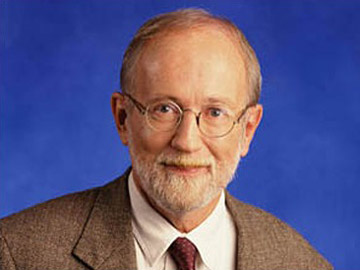
Remembering John Leonard
"The books we love, love us back," wrote the great critic, editor and reader, who died Wednesday.
John Leonard, who died Wednesday in New York at age 69, was many things: editor, critic, journalist, leftist, social commentator, television personality and father (of Salon’s own Andrew Leonard) among them. But most of us knew him as a reviewer who wrote and talked about television, movies, the media and, above all, books. He wrote for just about everybody, including Salon, and appeared as a cultural critic on CBS’s “Sunday Morning” for 16 years. He may be best known for his work at the New York Times, where he served as one of the daily book critics and edited the New York Times Book Review from 1971 to 1975, a period that many regard as the golden age of that publication.
Leonard was famous for putting Don DeLillo’s second novel, “End Zone,” on the cover of the Book Review, for running a long, multi-title review essay of books on Vietnam by Neil Sheehan that was the first salvo of the newspaper’s increasing criticism of that war, for championing the work of African-American, Asian and women novelists like Toni Morrison and Maxine Hong Kingston. He helped give Pauline Kael her start at Pacifica Radio in Berkeley. He won the National Book Critics Circle lifetime achievement award in 2006. He was one of the few critics whose essays merited publication in several hardcover collections. And he was also the guy whose TV column you’d turn to in the back of New York magazine every week, wondering if that new one-hour drama on Fox had anything to recommend it.
To say John Leonard was a reviewer at heart is to pay a great compliment to a profession that currently seems to be limping toward an undeserved obsolescence. I remember having lunch with him in a ratty ethnic dive off Times Square in early 2000, when he explained that, what with one thing and another, he’d somehow drifted out of the practice of reviewing books. That happens to many a fine critic; take time off to write your own book or to work some other beat, and eventually you migrate to the inactive section of book review editors’ rolodexes. It bothered him. He was a book reviewer, he needed to review new books, and he didn’t much care that, with the tech sector collapsing, Salon had very little money to pay him. For a while, I had the privilege to regularly edit John’s billowing, exuberant prose, that distinctive style of compounded clauses that I always privately thought of as “the cascades.” Those splendid cascades!
It was a style that perfectly embodied the particular blend of enthusiasm and intellect that distinguished John’s writing; you rarely find both in a single critic, and you almost never find the first of those two traits in anyone who has reviewed for as long as he did. Unlike most of his colleagues, he never burned out, never grew bitter or nasty about the books. He could be world-weary and supremely jaded about his own workplace experiences — “They will always fuck with your copy,” he wrote in a 2000 essay for the Nation on his adventures working for large media corporations — but he held onto the ability to thrill to new voices and new art. “My whole life I have been waving the names of writers,” he said in his acceptance speech before the NBCC. “From these writers, for almost 50 years, I have received narrative, witness, companionship, sanctuary, shock, and steely strangeness; good advice, bad news, deep chords, hurtful discrepancy, and amazing grace.”
He went on, in that inimitable style, “The books we love, love us back. In gratitude, we should promise not to cheat on them — not to pretend we’re better than they are; not to use them as target practice, agitprop, trampolines, photo ops or stalking horses; not to sell out scruple to that scratch-and-sniff infotainment racket in which we posture in front of experience instead of engaging it, and fidget in our cynical opportunism for an angle, a spin, or a take, instead of consulting compass points of principle, and strike attitudes like matches, to admire our wiseguy profiles in the mirrors of the slicks. We are reading for our lives, not performing like seals for some fresh fish.”
There’s a story around New York, perhaps apocryphal, about John’s early days at the Times, when he showed up for work one day in a black turtleneck and was scolded for daring to enter the inner sanctum without a tie. No doubt he laughed at that, took it in stride, and then went on to revolutionize the Book Review, turning it from a fusty museum of fading modernist gravitas (“Here’s this week’s Thomas Mann biography” is how one wag characterized the previous regime’s editorial approach) into a vital, lively, contentious engagement with a still-breathing literary culture.
One small consolation today is that this visionary reader, a man who recognized the significance of long-excluded voices before many of his peers, survived long enough to witness this year’s momentous election and the dawn of a new era. He’s one of the ones who helped pave the way, and he’ll be sorely missed.
Laura Miller is a senior writer for Salon. She is the author of "The Magician's Book: A Skeptic's Adventures in Narnia" and has a Web site, magiciansbook.com. More Laura Miller.
The death of two pop powerhouses
Jerry Leiber and Nick Ashford helped define American music -- and created the sound of strength
Jerry Leiber and Nick Ashford. In a strangely poetic bit of coincidence, the world lost two songwriting legends Monday, men whose tunes defined modern pop and whose collaborations have become classics.
In his lengthy partnership with composer Mike Stoller, lyricist Jerry Leiber helped invent the burgeoning rock ‘n’ roll sound, penning the bluesy hits “Kansas City” and “Hound Dog.” The duo went on to write exuberant smashes like “Jailhouse Rock,” “Yakety Yak” and “Love Potion #9,” among others, amassing a catalog of hits that’s still one of the recording industry’s most successful. Yet Leiber’s sound was far from brash. You can hear his style all over the achingly lovely “Stand By Me,” which he and Stoller co-wrote with Ben E. King; in the melancholy and determined collaboration “On Broadway”; and in the great Peggy Lee anthem to disillusionment, “Is That All There Is?” He and Stoller were also prolific producers, the masterminds behind the sweeping sounds of hits as diverse as the Drifters’ “There Goes My Baby” and Stealers Wheel’s “Stuck in the Middle With You.”
Continue Reading Close
Mary Elizabeth Williams is a staff writer for Salon and the author of "Gimme Shelter: My Three Years Searching for the American Dream." Follow her on Twitter: @embeedub. More Mary Elizabeth Williams.
Winehouse family, friends attend singer’s funeral
Mark Ronson and Kelly Osbourne among mourners at the Jewish service held in London
FILE - In this Oct. 25, 2007 file photo, British singer Amy Winehouse performs during her concert at the Volkshaus in Zurich, Switzerland. Winehouse was found dead Saturday, July 23, 2011, by ambulance crews who were called to her home in north London's Camden area. She was 27. (AP Photo/Keystone, Steffen Schmidt, File)(Credit: AP) Friends and family said goodbye to Amy Winehouse Tuesday with prayers, tears, laughter and song at a funeral ceremony in London.
The singer’s father, mother and brother and close friends, along with band members and celebrities — including producer Mark Ronson and media personality Kelly Osbourne, her hair piled beehive-high in an echo of the singer’s trademark style — were among several hundred mourners attending the service at Edgwarebury Cemetery in north London.
Photographers and a few fans lined the lane outside.
Continue Reading CloseCreator of “Brady Bunch,” “Gilligan’s Island” dies
Sherwood Schwartz gave up a career in medical science to write for radio and TV
FILE - In this Dec. 9, 2008 file photo, Hall of Fame inductee Sherwood Schwartz, right, and actress Florence Henderson pose together at the Academy of Television Arts and Sciences 2008 Hall of Fame Ceremony in Beverly Hills, Calif. Schwartz, who created "Gilligan's Island" and "The Brady Bunch" died Tuesday, July 12, 2011. He was 94. (AP Photo/Matt Sayles, file) (Credit: AP) Sherwood Schwartz, writer-creator of two of the best-remembered TV series of the 1960s and 1970s, “Gilligan’s Island” and “The Brady Bunch,” has died at age 94.
Great niece Robin Randall said Schwartz died at 4 a.m. Tuesday at Cedars-Sinai Medical Center, where he was being treated for an intestinal infection and underwent several surgeries. His wife, Mildred, and children had been at his side.
Sherwood Schwartz and his brother, Al, started as a writing team in TV’s famed 1950s “golden age,” said Douglas Schwartz, the late Al Schwartz’s son.
Continue Reading CloseFormer first lady Betty Ford dies at 93
The former first lady and co-founder of the Betty Ford Center passed away of unspecified causes
A family friend says former first lady Betty Ford has died at age 93.
Marty Allen says Ford, whose battles with cancer and substance abuse inspired millions to seek treatment, died Friday. Allen did not say how Betty Ford died. He says he expects the Gerald R. Ford Presidential Library to release additional information.
Her husband, Gerald, died in December 2006.
The couple married in 1948, the same year he was elected to Congress. She was thrust into the spotlight in 1974 when he became president after the resignation of President Richard Nixon.
She was diagnosed with breast cancer weeks later and won acclaim for her openness and courage.
Ford lost to Jimmy Carter in the 1976. Mrs. Ford later was treated for drug and alcohol addiction and then helped found the Betty Ford Center to help others.
Celebrated American painter Cy Twombly passes away
The groundbreaking artist was 83
Celebrated American painter Cy Twombly, whose large-scale paintings featuring scribbles, graffiti and unusual materials fetched millions at auction, has died. He was 83.
Gagosian Gallery spokeswoman Virginia Coleman said Twombly, who had cancer for a number of years, died Tuesday. Eric Mezil, director of the Lambert Collection in Avignon, France, where a Twombly show opened in June, said he died in Rome.
Twombly is known for his abstract works combining painting and drawing techniques, repetitive lines and the use of graffiti, letters and words.
In 2010, he painted a ceiling of the Louvre museum, the first artist given the honor since Georges Braque in the 1950s.
Page 1 of 20 in R.I.P.