
Religion

Why churches fear gay marriage

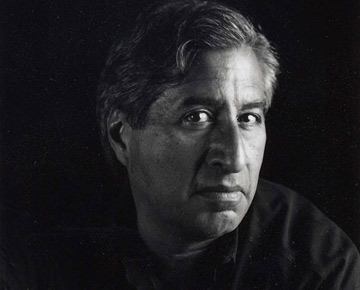
The crusade for Proposition 8 was fueled by the broken American family, explains gay Catholic author Richard Rodriguez.

  • more
    • All Share Services

Topics: , , ,

Why churches fear gay marriage

For author Richard Rodriguez, no one is talking about the real issues behind Proposition 8.

While conservative churches are busy trying to whip up another round of culture wars over same-sex marriage, Rodriguez says the real reason for their panic lies elsewhere: the breakdown of the traditional heterosexual family and the shifting role of women in society and the church itself. As the American family fractures and the majority of women choose to live without men, churches are losing their grip on power and scapegoating gays and lesbians for their failures.

Rodriguez, who is Mexican-American, gay and a practicing Catholic, refuses to let any single part of himself define the whole. Born in San Francisco in 1944 and raised by his Spanish-speaking Mexican immigrant parents to embrace mainstream American culture and the English language, he went on to study literature and religion at Stanford and Columbia. His first book, “The Hunger of Memory: The Education of Richard Rodriguez,” explores his journey from working-class immigrant to a fully assimilated intellectual — angering many Latinos with his view that English fluency is essential. “Days of Obligation: An Argument With My Mexican Father,” which was a Pulitzer Prize finalist in 1993, continued his investigation into how family, culture, religion, race, sexuality and other strands of his life all contribute to the whole, a complex “brownness” of contradictions and ironies. “Brown: The Last Discovery of America” completes the trilogy — but not his insatiable intellectual curiosity, which he is now shining on monotheism.

Rodriguez’ stinging critiques of religious hypocrisy are all the richer for his passionate love of Catholicism and the Most Holy Redeemer parish in San Francisco, where he and his partner of 28 years are devoted members. Today, Rodriguez is at work on a new book about the monotheistic “desert religions” — Christianity, Judaism and Islam. Ever since Sept. 11, “when havoc descended in the name of the desert God,” Rodriguez said in one of his Peabody Award-winning radio commentaries for PBS’s News Hour, he has been trying to understand the strands of darkness that run through these religions.

Salon spoke to Richard Rodriguez by phone at his home in San Francisco.

What was your reaction to California voters’ going heavily for Obama and also passing Proposition 8, banning gay marriage?

I was like a lot of other Americans at the moment when the West Coast tipped the balance in favor of Obama. I didn’t so much think it represented the end of racism but the possibility of change. At the same time, I also knew that large numbers of Californians in religious communities were voting against gay marriage and that Latinos and blacks were continuing to take part in this terribly tragedy. We persecute each other. The very communities that get discriminated against discriminate against other Americans.

The Spanish language newspaper La Opinión called the results an “embarrassment,” saying “California still has two faces.” Do you agree?

La Opinión represents the opinion of a lot of Latinos who are more educated and — what should I say? — more cosmopolitan. But Latinos in both my family and the Catholic Church belong to a more traditional America. This is a troubling aspect of the way our country is formed right now. It is a time of great change but also a time when people are afraid of change.

You said recently the real issue behind the anti-gay marriage movement is the crisis in the family. What do you mean?

American families are under a great deal of stress. The divorce rate isn’t declining, it’s increasing. And the majority of American women are now living alone. We are raising children in America without fathers. I think of Michael Phelps at the Olympics with his mother in the stands. His father was completely absent. He was negligible; no one refers to him, no one noticed his absence.

The possibility that a whole new generation of American males is being raised by women without men is very challenging for the churches. I think they want to reassert some sort of male authority over the order of things. I think the pro-Proposition 8 movement was really galvanized by an insecurity that churches are feeling now with the rise of women.

Monotheistic religions feel threatened by the rise of feminism and the insistence, in many communities, that women take a bigger role in the church. At the same time that women are claiming more responsibility for their religious life, they are also moving out of traditional roles as wife and mother. This is why abortion is so threatening to many religious people — it represents some rejection of the traditional role of mother.

In such a world, we need to identify the relationship between feminism and homosexuality. These movements began, in some sense, to achieve visibility alongside one another. I know a lot of black churches take offense when gay activists say that the gay movement is somehow analogous to the black civil rights movement. And while there is some relationship between the persecution of gays and the anti-miscegenation laws in the United States, I think the true analogy is to the women’s movement. What we represent as gays in America is an alternative to the traditional male-structured society. The possibility that we can form ourselves sexually — even form our sense of what a sex is — sets us apart from the traditional roles we were given by our fathers.

I think Proposition 8 was also galvanized by insecurity around gay families.

I agree. But the real challenge to the family right now is male irresponsibility and misbehavior toward women. If the Hispanic Catholic and evangelical churches really wanted to protect the family, they should address the issue of wife beating in Hispanic families and the misbehaviors of the father against the mother. But no, they go after gay marriage. It doesn’t take any brilliance to notice that this is hypocrisy of such magnitude that you blame the gay couple living next door for the fact that you’ve just beaten your wife.

The pro-8 campaign calls itself the Protect Family Movement, even though the issue of family was the very reason gays needed to have marriage. There are partners in gay unions now who have children, and those children need to be protected. If my partner and I had children, either through a previous marriage or because we adopted them, I would need to be able to take them to the emergency room. I would need to be able to protect them with the parental rights that marriage would give me. It was for the benefit of the family that marriage was extended to homosexuals.

Religions have the capacity for being noble and ennobling but they are also the expression of some of the darkest impulses in us — to go after the “other.” For Christians, if the other isn’t the Muslim, it’s the homosexual. That is the most discouraging part.

Speaking of hypocrisy, churches have plenty of sexual skeletons in their closet.

Right. The Mormon Church has this incredible notoriety in America for polygamy and has been persecuted because of it. The very church that became notorious because of polygamy is now insisting that marriage is one man and one woman. That is, at least, an irony of history. But as a number of Mormon women friends of mine say, the same church that espouses the centrality of family in their lives is also the church that urges them to reject their gay children.


Then there is the Roman Catholic Church, my own church, which has just come off this extraordinary season of sexual scandal and misbehavior in the rectory against children. The church is barely out of the court and it’s trying to assume the role of governor of sexual behavior, having just proved to America its inability to govern its own sexual behavior.

Look at the evangelicals. In their insistence that people be born again, they know Americans are broken. In their circus-tent suburban churches, you find 10,000 people on a Sunday morning. You find people who have been divorced, people who have had drug experiences, people who have been in jail. These churches touch upon a dream that people can put our lives back together again.

Now these churches are going after homosexuals as a way of insisting on their own propriety. They are insisting that they have a role to play in the general society as moral guardians, when what we have seen in the recent past is just the opposite. I mean, it’s one thing for the churches to insist on their right to define the sacrament of marriage for their own members. But it’s quite another for them to insist that they have a right to define the relationships of people outside their communities. That’s really what’s most troubling about Proposition 8. It was a deliberate civic intrusion by the churches.

I wonder if these churches sense they’re losing some of the influence they’ve had for the past eight years.

To my knowledge, the churches have not accepted responsibility for the Bush catastrophe. Having claimed, in some cases, that Bush was divinely inspired and his election was the will of God, they have failed to explain why the last eight years have been so catastrophic for America.

Now I think evangelicals are falling back on issues that have been reliable for them in the past. Mike Huckabee, a Baptist minister, who said that children of immigrants should be educated, was essentially frightened away from that position by Mitt Romney. The tentativeness of the evangelicals on immigration only allowed them to be more vociferous on the gay issue. That’s traditionally easy for them — to go after the sinner. But it doesn’t convince me of their ascendancy; it merely convinces me that they are retreating. They don’t know how to extend their agenda beyond gay marriage and abortion.

There’s going to be an ongoing legal battle over Proposition 8. How do you think  gay activists should proceed?

I think gay activists should be very careful with this issue. We should not present ourselves as enemies of religion. I am not prepared to leave the Roman Catholic Church over this issue. The Catholic Church is my church. I was a little concerned about the recent protests outside the Los Angeles Mormon temple. I’ve seen this sort of demonstration escalate into a sort of deliberate exercise of blasphemy.

For example, in the most severe years of the AIDS epidemic, activists from ACT UP went into St. Patrick’s Cathedral, took the communion wafer and threw it on the ground. That is exactly the wrong thing to do. One should be respectful of the religious impulse in the world. If we decide to make ourselves anti-religious, we will only lose.

But religious communities must be challenged too. I was in Jerusalem a couple of years ago for Gay Pride. All the leaders of religious communities — Muslim, Jew and Christian — were brought together by their mutual animosity toward gay activism to protest the parade. There was the grand patriarch of the Eastern churches, the high rabbi of Jerusalem, the Roman Catholic archbishop, the mullahs, and they were all united in one cause. The police outnumbered the parade participants. One marcher was attacked and stabbed by an Orthodox Jew.

We have to be very clear about male violence within the monotheistic religions. This is a failure within churches and we can’t be casual about it. But we can’t be casual about the importance of religion either. We need to be both respectful of religion and critical of religion. Otherwise I suspect we won’t get very far at all.

What do you think about gay rights as universal rights? Many argue that it’s a cultural issue and that specific communities, such as Latinos and blacks, have their own understanding of homosexuality and shouldn’t be messed with.

 In my own my family, and my parents were not well educated, it would have been impossible for them to have dealt with the words “gay” or “homosexual” in my relationship with them. But there was no way for them to reject me either. I was a member of the family and I couldn’t sin my way out of it.

Once my partner became part of my life, he became part of their life too. They didn’t want it said, they didn’t want it named or defined, but they assumed it and accepted it. At family events, when my partner wasn’t there, my mother would get on the phone and call him and insist he come over.

These communities have very intricate ways of dealing with these things and they are not necessarily the highly politicized tactics that you see in traditional middle-class society in America.

I have not been to a Mexican family without some suspicion of homosexuality in children or grandchildren. But people deal with it within the larger context of family. That’s why I suspect the revolution will come not from the male church but from how women treat their children, and whether or not women are willing to reject their children. I don’t think they are. I saw too many times during the AIDS epidemic that when death came and the disease took its toll, if one parent was there, it was almost always the mother and not the father. That bond is so powerful.

I also think about the role of gays as caregivers to the elderly parent while siblings are too busy with their children. At the Most Holy Redeemer Church in San Francisco, which is the gay Roman Catholic parish, a number of old Irish women essentially adopted the gay parishioners, and were adopted by them, because their children had moved to the suburbs, or Pennsylvania, or Orlando, and were no longer in a position to care for them. That’s a bond that no one really talks about.

My partner has taken care of many elderly people over the years. They know who he is and they know who I am. But it’s unspoken. I don’t know how they voted on Tuesday, but I do think that it is their responsibility now to speak out.

Are you saying individual relationships will ultimately be more powerful than organized religion?

Well, I’m working right now in the Middle East on monotheistic religions because I’m very worried about the direction of religion. Ever since Sept. 11, when I heard that prayer being spoken at the moment the planes hit the World Trade Centers, I realized how much darkness there is in religion compared to how much light there is. I am very much concerned with whether or not these religions can be feminized.

The desert religions — Judaism, Christianity and Islam — are male religions. Their perception is that God is a male god and Allah is a male god. If the male is allowed to hold onto the power of God, then I think we are in terrible shape. I think what’s coming out of Colorado Springs right now, with people like Tony Perkins of the Family Research Council, is either the last or continuing gasp of a male hierarchy in religion. That’s what’s at stake. And women have a determining role to play. Are they going to go along with this, or are they going to challenge the order?

Well, yes, but then we have the rise of someone like Sarah Palin, who is just one example of how complicated things get in this issue.

Yes, you have Sarah Palin. But you also have women deciding to leave marriages. When a woman decides to leave the kitchen and seek a career outside the family, when a woman decides not to take on the name of her husband, when a woman wants to be more than simply the mother of children, when she wants to have some place in the world that is not defined by her family or her husband, that seems to suggest something comparable to what gays experience when they come out of the closet. Notice that both those metaphors of getting out of the kitchen and getting out of the closet are domestic images.

But are you saying Palin represents this?

I’m not that kind of optimist!

It does seem she wants to have a career separate from the family, but in many ways she embodies the old conservative order. 

Clearly, what you say is true. I don’t see women challenging the male order of things in every case. Wives tolerate all kinds of behavior of fathers toward their children. But I do think it’s important that some woman are starting to challenge that. The divorce rate suggests that women are not happy with the relationship they have with men. And whatever that unhappiness is, I would like people to know that, as a gay man, I’m not responsible for what’s wrong with heterosexual marriage. On the other hand, whatever is wrong with the heterosexual marriage does have some implication for the world I live in. Women are redefining sexuality in a way that’s going to make it easier for me to be a gay man.

The formal role of women is also undergoing change in some churches, right?

That’s right. The Episcopal Church in America is now under the leadership of a woman. Feminism is going to change a great deal. The most radical people in the Roman Catholic Church are women. They’re challenging everything from the priesthood to the male God to what it means to be married. I don’t expect to see gay marriage enter these conservative institutions in my lifetime. But I do see change.

I belong to a Catholic parish in San Francisco, where my partner and I are acknowledged by the other people in the parish as a couple. We take communion together, the priests know who we are, they’re supportive of who we are, and what we are, and they see us in various roles — giving eulogies to dead friends but also helping to baptize little babies. We’re very much a part of that community. That’s why I’m not prepared to lose it because some archbishop in Colorado or cardinal in Los Angeles is behind Proposition 8. It is not my church that they’re talking about, it’s not even my experience of love.


Continue Reading Close

Jeanne Carstensen is a former managing editor at Salon.

But I’m a good Mormon wife

Sean and I had the perfect life. Then his faith started to crumble -- and mine did, too

  • more
    • All Share Services

Topics: , , , ,

But I'm a good Mormon wifeA photo of the author with her husband

“I don’t believe in God,” my husband whispered in the darkness of our bedroom.

My breath caught, and I was afraid to look at him, this boy I met and married eight years ago.

I was only 19 on the day we were sealed for eternity, the wet snow blowing into our faces as we exited the Portland, Ore., temple. I imagined a life of Church service, my husband at my side as we finished our BYU degrees, raised our children, and served missions together in our old age. On the night we got engaged, we struck a deal. “I’ll get you to heaven,” I said. “But you have to keep me here on earth.”

Now his confession hung over our nuptial bed. And though I’d known this was coming — he’d been struggling with his faith for at least two years — I’d never considered what I’d say. Sean had always been the rational one, a brilliant computer scientist who spoke sense when I was in the throes of clinical depression. Now, my thoughts went still as I groped for his hand. Before I could process what I was saying, forbidden words slipped off my tongue. “You are more important to me than the Church,” I said.

I wondered what my pioneer ancestors would say if they could hear me, these grandparents so faithful that they abandoned their East coast relatives for a life here in this Utah desert. Some of their graves stood a few blocks from where I whispered my betrayal, but I didn’t care. I loved Sean, and that had to be enough.

But in the weeks that followed, there was a distance between us. We stepped lightly around conversation, kept talk to the kids, work and the mundane. Our friendly touches in the kitchen disappeared. My acceptance shifted to bitterness and anger.

I spent my morning runs worrying about what was being said around my Mormon neighborhood. We lived 20 minutes south of BYU’s desert campus, and most of my running partners had husbands high up in the Church hierarchy. I waited anxiously for them to mention my heathen family, wondered if they’d heard that my eternity with my husband was now in jeopardy, that in the hereafter I’d likely be pawned off to some other righteous man as a plural wife — probably my ex-boyfriend; hopefully not Brigham Young. And all the while I couldn’t stop thinking. Why, Sean? I didn’t sign up for this. You promised me we’d spend eternity together, and now you might as well be gone.

That sinister word flickered around in my head: divorce. It manifested itself onto my notebook paper as I scribbled out my daily morning pages. I didn’t want it, but sometimes I thought both of us would be happier if we said good-bye.

Sean and I spent our time in the usual way, taking long summer walks along Hobble Creek. While our two eldest sons raced ahead on their bicycles, we followed with the baby (okay, the two-year-old) in the stroller. Sean obsessed about death. “I’m so terrified of losing you and the boys,” he said one day after waving hello to our neighborhood women’s leader. He looked over at me and said, “I couldn’t bear it.”

Confused sadness flickered in my eyes. His fears were utterly foreign to me. We’d both been taught from an early age that death was simply the gateway back to God. How could he not see — as I did — that this was true? I know we’ll be together again, I wanted to say. Instead I said gently, “I hope for your sake that you die first. Then you won’t have to deal with the grief of losing us.”

Sean was as supportive as an atheist could be. He even went with me for the first hour of church to help with the Squirmy Ones. But when he’d leave early, I’d cry in the bathroom, feeling completely alone. I never said that word aloud: Atheist. My heart clenched just thinking it.

We rarely talked about religion, yet it consumed us. When Sean replaced his temple garments — the sacred underwear he’d promised to wear day and night — with boxers, I couldn’t take it anymore. It was too much betrayal. I called up a neighbor with a husband like mine and cried. But instead of empathy, she offered questions that stunned me into silence. Was Sean addicted to pornography? Watching R-rated movies? What sin had brought him to this terrible place?

My tears stopped. Her questions were so off-base that they seemed absurd. She was sincere, and trying to help, but she believed what the Church teaches — that a man would only leave because he’s disobeying the commandments. She couldn’t understand this was a rational inquiry. She saw everything as the result of sin.

This started my brain twitching. I knew Sean was still a good person, that he still maintained the same moral standards he had when he married me. The Church was wrong about him. What else might they be wrong about? I shoved the thought away.

But I wanted to understand him. This was Sean, the man who stood by me during years of clinical depression. The man who pretended to be a dinosaur while he chased our shrieking sons around the room. He wasn’t some heathen. I couldn’t believe that. I wouldn’t believe it. He’d always been a skeptic, and even though I didn’t agree with him, I knew intellectually that he’d never make this decision without careful consideration of the facts.

As summer shifted to fall, I often found him hunched over his iPad reading everything he could find on Mormon origins. I started to join him in his nightly bath, and the information would seep out. He’d pause from our usual safe topics and bite his lip. “I’m sorry, but I just have to tell you. Did you know that …” and then he’d tell me what he’d been reading. About how Joseph Smith mistranslated some Egyptian hieroglyphics that are part of our canonized scripture. About how he translated the Book of Mormon while looking at a stone inside of a hat.

I listened half-heartedly, questioned his sources, though I wasn’t about to go looking at them myself. Our prophets had made it clear that anything written outside church documents was suspect and anti-Mormon, fabricated for the sole purpose of destroying faith. Yet Sean continued, until one night it was about polygamy, my archnemesis.

“Did you know that Joseph Smith married a 14-year-old girl against her will? Did you know that he’d send men on missions and marry their wives in secret when they were gone?” I sat there silent as he kept talking, a horror growing in my gut. I knew that if Sean was right, then Joseph Smith was a fraud. I saw no difference between his acts and the modern-day acts of Warren Jeffs, whom I abhorred. And if Joseph Smith was a fraud — then what did that make the Church?

I left the bath early and went straight to bed, feeling a magmic pressure building inside me. The scholar in me couldn’t let it go. I had to know.

I already did know.

When I finally broke down a few weeks later, Sean was the one to hold me as I wept into my pillow and traipsed down the familiar road to despair, wondering what my life even meant if the Church wasn’t true.

“It’s OK, Maren. It’s OK. I’m here,” he said as he stroked my hair, whispering into the darkness. What felt like an end, though, slowly opened up into something else.

Over the next few days our usual mile walk turned to four as my brain tornadoed through discovery, my conversations stopping mid-sentence with “Whoa, then that means …” Whoa, we suddenly have 10 percent more income. Whoa, our weekend free time just doubled. Whoa, we can try alcohol, coffee and tea — the trifecta of forbidden drinks.

The sad whoas came, too. Whoa, will my father ever talk to me again? Whoa, what will my friends say? Whoa, we are going to die.

My transformation consumed me for the next month, and we stayed up late talking every night. When I shed my garments for slippery Victoria Secret panties, my self-esteem skyrocketed, and our late nights shifted to other things. We were finally adults, taking our firsts together, learning about each other without barriers.

Ironically, the Mormon Church teaches that marriage can only thrive if God is an equal part of it. But when we left God out of it, we were free to love each other completely, to share the burden of our grief as two individuals with no one else.

It’s been seven months now, and I don’t know what the future holds. I have never been more uncertain in my entire life. But one thing is clear to me. Whatever happens, wherever we go, Sean will be at my side, holding my hand as we face it together — and alone — for the first time.

Continue Reading Close

Maren Stephenson is a writer who loves hiking, camping, and mountain biking in the Utah desert. She is currently working on her third book.

Atheism’s new clout

Non-believers are becoming increasingly successful fundraisers -- and cultural forces to be reckoned with

  • more
    • All Share Services

Topics: ,

Atheism's new cloutA billboard erected by atheists in Oklahoma City. (Credit: AP/Sue Ogrocki)
This article originally appeared on AlterNet.

Why would any organization or social change movement want to ally itself with a community that’s energetic, excited about activism, highly motivated, increasingly visible, good at fundraising, good at getting into the news, increasingly populated by young people, and with a proven track record of mobilizing online in massive numbers on a moment’s notice?

If you need to ask that — maybe you shouldn’t be in political activism.

AlterNetAnd if you don’t need to ask that — if reading that paragraph is making you clutch your chest and drool like a baby — maybe you should be paying attention to the atheist movement.

The so-called “new atheist” movement is definitely not so new. Atheists have been around for decades, and they’ve been organizing for decades. But something new, something big, has been happening in atheism in the last few years — atheism has become much more visible, more vocal, more activist, better organized, and more readily mobilized — especially online, but increasingly in the flesh as well. The recent Reason Rally in Washington, DC brought an estimated 20,000 attendees to the National Mall on March 24 — and that was in the rain. Twenty thousand atheists trucked in from around the country, indeed from around the world, and stood in the rain, all day: to mingle, network, listen to speakers and musicians and comedians, check out organizations, schmooze, celebrate, and show the world the face of happy, diverse, energetic, organized atheism.

Atheists are becoming a force to be reckoned with. Atheists are gaining clout. Atheists are becoming a powerful ally when we’re inspired to take action — and a powerful opponent when we get treated like dirt.

Case Study Number One, “Powerful Ally” Division: The million dollars currently being raised — and the goodness knows how many people being mobilized — for the Leukemia & Lymphoma Society’s “Light the Night Walks,” by the non-theistic Foundation Beyond Beliefand the Todd Stiefel family.

The Stiefel Family and the Foundation Beyond Belief have wanted to make a large atheist contribution to the fight against cancer for some time. Like many people, Todd Stiefel has had many people in his life afflicted with cancer. His family has the resources to make a large financial donation to the fight against it. And as the largest non-theistic charitable organization in the world, the Foundation Beyond Belief was the perfect organization to channel and structure the Stiefel family’s matching offer — and to round up supporters for it.

But it was distressingly difficult to give this money away. If this whole “atheists donating pots of money to the fight against cancer” story seems familiar… you may be remembering theAmerican Cancer Society controversy, in which the ACS initially accepted a $250,000 matching offer from the Stiefel family and the Foundation Beyond Belief to participate as a national team in the ACS’s Relay for Life — and then, suddenly and mysteriously, turned it down. (And were then deluged with angry protests — and withdrawals of donations — when the story hit the Internet. More on that in a tic.)

That isn’t happening this time around. The Stiefel family and the Foundation Beyond Belief have found an organization that’s more than happy to partner with them in the fight against cancer. When Stiefel reached out to the Leukemia and Lymphoma Society, they cheerfully accepted his offer — a half million dollars in matching funds, as a “Special Friend” team partner in the LL&S’s “Light the Night” Walks, with the goal of uniting the freethought movement around the world to raise a million dollars for the fight against cancer. Andrea Greif, Director of Public Relations for the Leukemia & Lymphoma Society, says, “LLS is appreciative that Foundation Beyond Belief has set such a generous goal to help us beat blood cancer and we look forward to having their teams join LLS’s Light the Night Walk.” And Stiefel describes the Leukemia and Lymphoma Society as “enthusiastic at the prospect of working with us.” He went on to say, “We LOVE working with the Leukemia and Lymphoma Society. They have been very kind, supportive and helpful. They have made it very clear that cancer doesn’t discriminate and neither do they. LLS just wants to put the mission of fighting cancer first.”

This could easily have been a controversial effort. For one thing, the Honored Hero for the FBB in this year’s Light the Night Walk is the recently deceased Christopher Hitchens — a hero to many in the atheist movement, but a very controversial figure to many outside of it (and indeed, even to many atheists). But Hitchens’ status as the FBB’s Honored Hero is apparently not an issue. The Leukemia and Lymphoma Society is accepting FBB’s partnership and generosity with open arms. And these efforts have been extremely effective. As of this writing, the Foundation Beyond Belief has already hit 50 LLS local teams — halfway to the 100 team minimum goal. (By the way: If you were ticked off about the American Cancer Society thing, and you want to translate that anger into action? Participating in the FBB’s Light the Night Walks in your area — or starting an FBB LTN team in your area– would be a great way to do that.)

And this isn’t an isolated incident. In recent months, the atheist community has proven to be extraordinarily good at raising money, visibility, and support for people and causes that capture their imagination. And they have exceptional skills when it comes to fundraising and hell-raising on the Internet.

When high school atheist Jessica Ahlquist was being harassed, bullied and threatened by her schoolmates and community for asking her public school to enforce the state/church separation laws and take down a prayer banner from the school auditorium, the atheist community rose to her aid, with an outpouring of love, admiration, and emotional support… and a college fund totaling over $62,000. When high school atheist Damon Fowler was being harassed, bullied, and threatened by his schoolmates and community for standing up against prayer at his public high school graduation — and was kicked out of his home by his parents — the atheist community rose to his aid, with an outpouring of sympathy and support… and a college fund totaling over $31,000. When Camp Quest, the summer camp for children of non-theist families, was engaged in a major fundraising drive last year, several atheist bloggers (conflict of interest alert — including me) teamed up in a fundraising contest involving a series of grandiose and increasingly ridiculous dares and forfeits, ultimately raising $30,074.80 for the cause.

Atheists aren’t just raising money for their own, either. On Kiva — the microlending organization working to alleviate poverty and empower people in need around the world — theAtheists, Agnostics, Skeptics, Freethinkers, Secular Humanists and Non-Religious team is the #1 all-time leader in amount of money loaned… not just among religious affiliation teams, but among all the teams on Kiva. The Reddit atheist community raised over $200,000 for Doctors Without Borders last November, in a fundraising drive that came close to crashing Reddit with the traffic. The Foundation Beyond Belief has been supporting charitable and human rights projects for over two years — well before the Leukemia and Lymphoma Society project began — and to date has raised over a quarter of a million dollars to support human rights, the environment, education, child welfare, anti-poverty efforts, public health, and more.

And the power of atheist organizing extends beyond simple fundraising. To give just two recent examples: When preacher Sean Harris was caught on tape exhorting parents to beat their gay kids, the local atheist communities in the area immediately began sounding the alarm — and rounded up activists to protest at the church the following Sunday. According to Priscilla Parker, President of Military Atheists & Secular Humanists, 27 of the Sean Harris protestors last Sunday were from secular/atheist groups. That may not sound like much — but when you realize that there were a total of about 70 protestors at the event, the atheist presence suddenly looks a lot more significant. (Especially for an event in a highly religious, largely conservative town — and especially for an event that was organized on extremely short notice.) And when American Airlines was planning to air an anti-vaccination ad on their planes’ video systems and in their in-flight magazines, the atheist and skeptical communities dove into action: publicizing the Change.org petition against the Australian Vaccination Network’s ad, and slamming the decision all around the Internet. The story went viral, in large part because of the Internet power of atheists and skeptics — and the joint effort between heathens and other activists ultimately pressured the airline into rejecting the ad.

When a cause catches their hearts, the atheist community can be a powerful ally.

And when a cause catches their hearts in a different way, they can be a powerful opponent.

The American Cancer Society snafu is probably the most obvious example of this. When the ACS turned down the Foundation Beyond Belief’s offer to participate as a national team in the Relay for Life, they apparently didn’t expect much pushback. But when the story broke, it went viral — and made misery for the ACS. For weeks, the ACS was deluged with emails, letters, phone calls, and posts to their Facebook wall. For weeks, their Facebook wall was taken up almost entirely with angry posts about the story. Importantly, while the chief instigators of the rage-fest were atheists, they were quickly followed by a crowd of religious believers, who were just as outraged at the anti-atheist bigotry — and at the rejection of perfectly good money — as the heathens. And very importantly, a flood of people halted their donations to the ACS… including many people who had been regular donators for years.

But there are plenty of other examples as well. The abovementioned American Airlines anti-vaccination ad. The abovementioned Sean Harris protest. The sublimely ridiculousGelatogate, in which a local gelato merchant in Springfield, Missouri posted a sign in his store window reading, “Skepticon [a skeptical/ atheist conference] is NOT Welcomed To My Christian Business”… and then got a faceful of Internet fury when a photo of the sign was Facebooked, Tweeted, G-plussed, texted, blogged, emailed, and generally spread through the atheosphere like wildfire… and then backpedaled as fast as it is possible for a human being to backpedal. Like many social change movements, organizing atheists is like herding cats, and it’s not easy to predict which issues will catch their imaginations — but when it happens, the combination of passionate motivation and Internet savvy turns them into a powerhouse.

And very importantly, the atheist movement is increasingly becoming a youth movement. The Secular Student Alliance – an umbrella organization of non-theistic college and high school groups around the United States and the world — is growing at an astonishing rate. In 2009, they had 143 affiliates: in 2012, they had 351. Impressively, their high school rates are climbing at an even faster clip. In 2010, the organization had only four high school affiliates: this year, that number has climbed to 37. And as anyone knows who understands politics getting young people inspired and on board is enormously important for the long-term future of any social change movement. What’s more, many of these student groups are active in service projects and social change activism outside of atheism… and are eager to partner with other groups to get the job done. If you’re in any doubt about the power of atheism to help move political mountains, now and in the coming years — pay attention to those SSA affiliate numbers. And pay attention to how they keep growing… and growing… and growing.

So what’s the take-home message?

Atheists are your friend. Or they can be. And they can be a very powerful friend indeed.

Progressive and social-change organizers and organizations are having a hard time seeing the atheist movement as… well, as anything, really. Except maybe as a pain in the neck. Many progressives are undoubtedly aware of the existence of atheists: the atheist community’s efforts at visibility have been paying off, and atheism is being discussed in progressive circles as widely as it is everywhere else. But somehow, while the existence of atheists has become undeniable, the existence of atheism as a social change movement is still largely being ignored. To give just one example: In over 100 panels, training sessions, and other presentations at the upcoming 2012 Netroots Nation conference for online progressive activists, not one is about atheists or atheism. (Conflict of interest alert: I was one of the proposed panelists on a proposed atheism panel for Netroots Nation 2012.)

It’s hard to tell what this is about. Do social change organizations see atheists as toxic — too controversial, too likely to draw negative attention, more trouble than we’re worth? Or are these organizations simply unaware that atheists have formed into a serious social change movement — and are growing this movement at a rapid pace?

If it’s the former… then shame on you. In the early days of the LGBT movement, queers were far more controversial than they are now, and associating with queers was considered by many to be toxic. It was still the right thing to do. (Not to mention the smart thing to do.)

If it’s the latter… then sit up. Pay attention. Atheists are here. In just a few short years, the movement has gone from zero to sixty, in both visibility and mobilization. And the atheist movement is largely comprised of people who are passionate, compassionate, courageous, Internet savvy, skilled at seeing through bullshit, willing to defy the status quo, excited about activism… and dedicated to changing the world. After all, as far as they’re concerned, it’s the only world they’ve got.

You want these people on your side.

Continue Reading Close

Religious belief: How it helps conservatives

Christianity provides the right wing with stability, self-confidence and ambition. What can liberals learn from it?

  • more
    • All Share Services

Topics:

Religious belief: How it helps conservatives (Credit: Antonov Roman via Shutterstock)
This article originally appeared on AlterNet.

Progressives often marvel at how focused, coordinated and aggressive our conservative opposition is. They seem to fall into lockstep and march, building large organizations and executing complex strategies with an astonishing rate of success. We may be smarter, better educated and more reality-based — but they seem to have a cohesion and a discipline that eludes us. What’s going on here?

AlterNetThere are a lot of answers to that question. But I’d suggest that some intriguing answers might come from a close study of conservative religious paradigms, which play an essential role in giving conservatives a unique kind of emotional and social durability.

Conservative faiths — particularly evangelical Protestantism, but orthodox Catholicism and Judaism also include similar teachings – inculcate a worldview that equips people with extra tools to work with in face of large-scale change. The same qualities that lead non-believers to deride faith as a crutch also give believers very real psychological support in turbulent times — the kind of sure footing that makes organizing for political and social change easier, more effective, and more gratifying for those who are operating off this sturdy base.

What follows are just a few examples of advantages followers of conservative religions may enjoy when facing transformative change. I offer them not as an argument for belief — that’s not an option for many of us, and not even most religious liberals would agree with the theology at work in these systems — but rather in the hope that if we study these advantages closely, we might find authentic ways to cultivate similar strengths that are firmly rooted in our own worldview. There are lessons to be learned here.

Knowing you are on the side of right

The soul-deep certainty that God is on your side, and that you are fighting on the side of Eternal Truth, may be the biggest political and cultural confidence-builder there is. Conservatives know, beyond the shadow of doubt, that they are on the side of the angels, and this profound sense of spiritual assurance reduces hesitation, spurs action, and increases their willingness to take big risks for the sake of the ultimate victory they know in their bones is coming. They shake off defeat more easily, too, because they know it’s only a temporary setback on their way to that promised victory. After all, the Bible asks: if God is for us, who can be against us?

Progressives operate from a far more open-ended place. We’re suspicious of that kind of deep spiritual certainty, because we know how often it’s led people and nations into moral catastrophe. Instead, we prefer to operate out of our heads. We’re always questioning, taking in new data, re-analyzing, and re-deciding what we’ve already decided, triangulating and re-triangulating against our own moral lines. In our minds, the final outcome is never preordained; and what’s “right” is an ever-shifting target that we constantly need reorient ourselves toward. Chris Mooney documented these tendencies in his recent book, “The Republican Brain: The Science of Why They Deny Science — And Reality.” He notes that this hyperflexibility can make it devilishly hard for liberals to settle on a plan of action — let alone actually act effectively together with confidence when the time comes.

Also: because we’re not buttressed by the reassuring conviction that the CEO of the Universe has our backs, we feel more acutely alone in the battle, and often doubt that our ultimate victory is anything but assured. Because of this, it’s much easier for us to feel overwhelmed, discouraged and burned out. When religious conservatives feel this way, they can resort to sanctuaries of prayer, fellowship and reconnection with their sense of larger purpose. Most secular progressives don’t have any kind of built-in weekly restoration-and-regeneration process — and the lack of safe healing space does take its toll.

I’d gently suggest that there are authentically progressive, non-theistic ways of tapping into that deep spiritual conviction, raising our own sense of trust in the righteousness of our vision, and finding regular sources of sanctuary and restoration. And that it would be good for us to start exploring ways to do this.

We might, for example, make telling pieces of our own glorious history a regular feature of all of our gatherings. We could make a bigger ritual out of invoking the achievements of our progressive forebears, the noble example of the lives they lived, and the ways in which they altered the course of American history. These stories ground us in our own progressive identity, forge us into a community, reaffirm our shared vision, and rouse our courage. We are capable of everything Mother Jones and Martin Luther King Jr. were. Our enemies are no more dangerous or implacable now than the segregationists, the robber barons, the slaveowners, or the royalists were back then. We don’t know for sure if God is for us or against us, but we do know, with certainty, that “the moral arc of the universe is long, and it bends toward justice.” And we are the ones in our generation who have been entrusted with the sacred task of bending it a little further. History, at least, is on our side.

Being accountable to God, and nobody else

Which brings us to another, closely related item: Religious conservatives are highly motivated by the sense that, today and every day until the end of time, they’re ultimately accountable to God for how things on earth turn out. The fear of failing the test before St. Peter — and again on Judgment Day — gives their temporal efforts a sense of urgency and commitment to the cause that we progressives sometimes have a very hard time mustering.

At the same time — perhaps paradoxically — believing that the only consequence that matters will be deferred until after death makes it easier to let go of the day-to-day ebb and flow of one’s fortunes here on earth. Conservative Christians believe that they are in this world, but not of it; and therefore, it’s a sin to worry too much about what goes on here. And they certainly don’t care much about what people outside their own tribe think about them. (Inside the tribe, they care very much.) God’s judgment is the only one that matters in the end; here on earth, persecution is just the clearest possible sign that you’re doing the right thing. This ability to disengage can be a profound source of peace and courage.

Progressives, on the other hand, worry a lot about this world. We have to: we believe that we are directly accountable to history and our grandkids for what happens on our watch. There is no mercy, no grace, no forgiveness or born-again do-overs if we screw it up. And that, frankly, makes us a little tense. We think we should control everything, and take it out on each other when we can’t. They know they can’t, and let God handle the rest. And that ability to let go of what they can’t control very often makes them easier to be around, and far less likely to take out their frustrations on each other.

Recognizing your special destiny in the eternal human story

All three major monotheisms have a linear view of human history as an ever-progressing struggle between the forces of Good and Evil. This narrative gives every succeeding generation an ever-more-important role on the front lines of the Ultimate Cosmic Battle (the final scene of which is always viewed as possibly happening Any Day Now).

Seeing your personal struggles as part of an eternal battle between Good and Evil locates you in time, and gives an epic quality to your very existence. No matter how ordinary your existence is, the notion that God Has A Plan For Your Life — and every life —  lends a vivid sense that your everyday actions have tremendous potential to affect the ultimate fate of humanity. How you manage your family and raise your kids matters. How you allocate your resources, devote your talents, and spend your time matters. What your church congregation does matters. The entire world is fraught with meaning, because your existence is exquisitely precious in the sight of God. You matter.

Again, this sense of being a chosen warrior in a heroic and eternal struggle is a tremendous psychological confidence-booster. It encourages people to dream big — and to take concrete steps toward fulfilling those dreams. It justifies all kinds of risks. It stirs feelings of deep love and respect toward one’s fellow warriors, which in turn creates strong movement cohesion. It gives people a vast mental space in which to regain their perspective following setbacks.

And perhaps most importantly: it confers the long view required for high-quality foresight, and the ability and inspiration to make bold plans that span decades and even generations. If your sense of time takes in all of history, from the Creation to the Apocalypse, then it doesn’t really matter whether or not you’ll live to see the changes you’re working for. The battle is forever; your job is to fight it as well as you can while you can, while also raising the next generation to take over for you when their time comes. And the most important work isn’t about getting big wins today; rather, it’s the work that builds enduring institutions that will enforce the conservative worldview long after your generation is gone.

Progressives need to bear in mind that we have a long history, too. We are today’s heirs to the Enlightenment, the latest in a series of generations that have been upholding America’s founding values and worldview since before the nation began. The progressive argument for justice and freedom is a conversation that will not end in our lifetimes. We don’t have to win all the battles, but we were born to this fight, and must also write our own chapter in its history before handing it over to the next generation.

And, most importantly: we need to cultivate that same long foresight that leads conservatives to protect their existing institutions like they were prized forts on a battlefield (which they are), and seed new ones constantly to expand their capacity to dominate the future. Our progressive legacy includes the vast array of public and private amenities — universities, parks, transit systems, social organizations, hospitals, libraries, public programs, on and on — that were created by our forebears for the same purpose, and continue to add to the dignity, opportunity and enlightenment of every American. Protecting this inheritance is the first duty of every progressive. Expanding it to serve future generations is the way we pay the gift forward.

I once was lost, but now am found

Another huge strength of the conservative side is the Christian redemption narrative. We make fun of the way the right-wing’s fallen angels do penance and are accepted readily (often far too readily, in our view) back into respectability. Make the obligatory confession, do your ablutions, and you’re back in good graces in time for Sunday dinner. And the rest of the movement will have your back the whole way. They may hate the sin, but they do walk their talk when it comes to continuing to love the sinner.

Our way of handling disgrace is demonstrably much more damaging, both to our own fallen angels and to the movement as a whole. If someone on our side is tarred — even if we all know the smear is completely unjust and undeserved — we will not defend the accused. Instead, we’ll close ranks and jettison them before anybody else has a chance to. And over and over, we lose incredibly valuable and talented people this way — people we’ve invested a lot of capital in raising up to leadership, and whose future contributions to the movement are forever lost to us when this happens.

As long as we’re so willing to off our own disgraced members, the right wing will always have an edge on us. They can take shots at our leaders and organizations (ACORN? Van Jones? Anthony Weiner?), and consistently score fatal hits, because we will reliably join them in putting their targets out of our misery. But because they have a theology that enjoins them to protect and forgive their own, they get to redeem their own disgraced people (David Vitter? Newt Gingrich?), and keep their talent in circulation. On their side, these hits are seldom fatal. They don’t lose their stars very often.

We could do with our own universally accepted rituals of repentance and redemption — a known, established path that lets our good people make their amends and put their mistakes behind them, and enables us to acknowledge both flaws and growth in each other with grace and mercy. If someone has done their penance, there will be room again for them in our circle. And our refusal to turn on each other will also do wonders for our overall level of community trust.

A mistake should not be the end of the world — or even people’s otherwise brilliant careers. And it won’t be if we find our way back to a belief in the power of redemption.

Coming together for love and community, not just work

Religion is a potent social technology — and its greatest strength is not about theology, but rather in its ability to knit people together in tight, close communities of trust, commitment, care and meaning. And regular observance of shared rituals is central to this power. Religious conservatives attend services at least once a week (in some churches, they go twice) to affirm their commitment to their shared values, celebrate and mourn the passages of life, and connect with each other not as workers and warriors, but as human beings.

Those rituals are social superglue. They build trust that extends outward into everything else these communities do. They inspire and engage people’s hearts, minds, bodies, and spirits, offer incredible healing and solace when things go wrong, and provide a ready-made outlet for celebration and re-commitment to doing even more when things go right.

The rituals that make community are simple, powerful, essentially human, and independent of any theology. Sitting down together to share a good meal. (In my long experience, there’s far more likely to be large quantities of good food at a conservative gathering than a progressive one. Eating together is vastly big mojo, and we often shortchange this.) Raising voices together in song, poetry, or a shared creed. Being present with each other to mark the passages of life — birth, marriage, parenthood, retirement, and loss. Gatherings that are about joy, play, sensual pleasure, and relaxation. Other gatherings that give us safe places to struggle among trusted friends with the things that are hardest and darkest within ourselves.

Secular progressives might even consider keeping a Sabbath. How much more effective would we be if we set aside a day of personal downtime every week? Shut off the phone, turn off the computer, and re-focus on life’s deep essentials:, home, self, health, family, community, and our own sanity. It might be a day to make a real meal, have friends over, create something beautiful, linger in a hot bath with a book, take a long bike ride, watch old movies, or make a picnic with your kids. You don’t have to be a person of faith to appreciate and savor the gift of simply being human. And such days are a potent reminder of why we’re doing this work in the first place, and what this life is for.

Conservatives may think and believe differently than we do. But their sheer political durability is due to some specific strengths in their communities and characters — strengths that aren’t out of reach for us, even if we arrive at them by different routes. We may not believe in God; but we have every bit as deep a need to believe in our cause, our future, our prospects, ourselves, and each other. And anything we can do to deepen our confidence in those things makes our movement more effective going forward.

Continue Reading Close

Sara Robinson is a trained social futurist and the editor of AlterNet's Vision page.

Obama’s faith-based failure

A troubling hallmark of "compassionate conservatism" -- the faith-based initiative -- persists despite promises

  • more
    • All Share Services

Topics: ,

Obama's faith-based failure (Credit: Reuters/Kevin Lamarque)

“Compassionate conservatism” may seem a relic of the Bush era, but one of its signatures — the so-called faith-based initiatives — quietly persist under President Obama.

The Obama administration’s Friday night news dump of recommendations for reforming faith-based initiatives was yet another frustrating disappointment in the sad history of the president’s faith-based effort. More than a year late, the recommendations were reportedly delayed because the administration wanted to avoid further inflaming the fevered imaginations of those who claim he’s waging a “war on religion.” Insurance coverage for contraception and guaranteeing constitutional rights for Americans who receive taxpayer-funded social services from faith-based organizations are apparently two great tastes that don’t taste great together.

A little history is in order. As a candidate, Obama pledged, “if you get a federal grant, you can’t use that grant money to proselytize to the people you help and you can’t discriminate against them — or against the people you hire — on the basis of their religion. Second, federal dollars that go directly to churches, temples, and mosques can only be used on secular programs.” Church-state separation advocates cheered; the center-right religious coalition Obama was assiduously courting objected mightily.

And yet, nearly four years after Obama’s campaign trail pledge to reform the faith-based office, beneficiaries of federally funded faith-based social services — people seeking drug treatment, mental health services, marriage counseling, pregnancy prevention services, prenatal care and more — have insufficient legal guarantees that their constitutional right to be free from government-funded, imposed religion will be protected. Today, your tax dollars can still fund, under a George W. Bush executive order, a religious organization that decides, for example, that it can fire the gay employee because its religion so dictates or that it will only hire people of the same faith. Its supporters call it “co-religionist hiring,” but that’s just a polite term for taxpayer-supported discrimination.

For three years the advocacy groups that make up the Coalition Against Religion Discrimination have prevailed on the administration to change this rule — after all, it would only take a stroke of the pen to undo the Bush executive order — and the president has done nothing. Obama has tried to claim the administration “has struck the right balance” by requiring a nebulous “case-by-case” review of instances of discrimination rather than prohibiting it altogether, an assertion the Rev. Welton Gaddy, president of the Interfaith Alliance (a CARD member) has called “misguided and untrue. There is no such thing as balance when it comes to discrimination supported by government funding.”

Instead of tasking administration lawyers to draft new regulations, shortly after taking office Obama appointed an Advisory Council of liberals and conservatives, which he dispatched to offer its own recommendations. Contentious issues, such as discriminatory hiring, were not part of its dossier. While the 2010 Advisory Council report addressed another contentious issue — whether religious organizations receiving federal grants should be required to form a separate nonprofit organization in order to segregate public and private funds — when Obama issued an executive order six months later, it was silent on that matter. Under the executive order, the Interagency Working Group, chaired by the White House Office of Faith-Based and Neighborhood Partnerships and the Office of Management and Budget, was formed to draft uniform model regulations across the 15 federal agencies with faith-based offices. Because Obama left that crucial question out of his executive order, the Working Group, which included representatives from each of those 15 agencies, did not address it in its mishmash of model guidance and regulations.

By offering model “guidance” in some areas and model regulations in others, the Interagency Working Group’s report, church-state separation advocates say, actually weakens some of the recommendations of the Advisory Council in some areas.

“For a year and a half’s worth of work,” said Maggie Garrett, legislative director at Americans United for the Separation of Church and State, also a CARD member, “there’s nothing in there that says, ‘we’ve identified all the regulations that apply to faith-based social services. Here are all the regulations that actually conflict with the Obama executive order and what we need to do to conform.’

“Any time a difficult issue came up, or any time it seemed like there would be the slightest burden on faith-based groups in order to adhere to the Constitution, the issue was sort of dropped,” Garrett added. While the Advisory Council report said that beneficiaries must be given the option of an alternative provider, the model regulations in the Interagency Working Group report only require that the federally funded faith-based organization “undertake reasonable efforts to identify and refer the beneficiary to an alternative provider to which the prospective beneficiary has no objection.” That’s different, Garrett said, from saying, “You must have an alternative provider.” And what constitutes “reasonable” is left vague.

None of this, of course, is designed to accomplish anything before the election. Obama’s November 2010 executive order calls for another round of guidance from the Office of Management and Budget and the Department of Justice after the Working Group report. “It seems like we’re never going to get to rule-making,” said ACLU legislative counsel Dena Sher. “Meanwhile beneficiaries are left without important protections — the right to be referred to an alternative service provider, and improved rules on prohibited uses of federal funds that clarifies they don’t have to pray before receiving government-funded services.”

On the whole, Sher added, because the Working Group proposed only non-binding model guidance, rather than regulations, on crucial issues, the “teeth seem to be missing” from the report.

In attempting to clarify some issues (although not by regulation), the report further muddied the waters on how scriptural materials can be used in federally funded programs. In one example, in a question and answer appendix intended to clarify prohibited uses of federal funds, the report states:

[S]taff in Federally-funded programs may not provide devotional religious instruction, but, where consistent with the purposes of the program, they may teach about religion, such as the history of religion, comparative religion, literary and other analysis of the Bible and other scripture, and the role of religion in the history of the United States and other countries.  Such instruction may make use of the Bible or other scripture.  Similarly, it is permissible for staff in Federally-funded programs to discuss any topics consistent with the program’s purposes, including religious influences on art, music, literature, and social studies.

Got that? I’m sure the line between “analysis of the Bible” and “devotional religious instruction” is abundantly clear to a faith-driven provider, and to a client who is in many cases in dire need of social services.

Those clients, it should be pointed out, are frequently seeking intensely personal services, such as a variety of counseling, and may be in distress or in desperate situations. A government employee, even if there were resources to staff such a thing, cannot exactly sit in on a counseling session to make sure that the counselor is merely analyzing the Bible rather than preaching to her.

The reason why church-state separation advocates have pressed for bright lines — a clear prohibition on hiring discrimination, and separate incorporation to ensure federal funding is not mixed private funding that can be used to proselytize — is that once you start to blur those lines, the rules become far less clear. And when faith-based providers insist that their essential religious character must be preserved even if they’re receiving federal funds, you start to wonder: Which is more important, bolstering the faith-based organization, or protecting the rights of the clients it serves?

While the Advisory Council’s report addressed many of these issues imperfectly, at least it did so with some clarity. The Interagency Working Group’s report is a muddle that fails to track the recommendations it was ordered to follow. It seems unlikely that federal agencies will be implementing regulations any time soon. And it’s starting to feel like it was intended to be that way.

Continue Reading Close

Sarah Posner is the senior editor of Religion Dispatches, where she writes about politics. She is also the author of God's Profits: Faith, Fraud, and the Republican Crusade for Values Voters" (PoliPoint Press, 2008).

Joel Osteen worships himself

At a D.C. rally, it's clear that the megachurch pastor's childlike faith is really about the power of narcissism

  • more
    • All Share Services

Topics: ,

Joel Osteen worships himselfJoel Osteen

If history is told by the winners, then Joel Osteen — the relentlessly upbeat spiritual caretaker of the national attitude — is history’s designated chaplain. In a marathon Sunday faith rally in the heart of the nation’s capital, Osteen, who presides over America’s largest megachurch congregation, the nondenominational Lakewood Church in Houston, exhorted the tens of thousands of believers amassed in Nationals Stadium to “live in victory,” to seize their “destiny moments,” and to fulfill God’s plan for their personal, financial and emotional success.

The Washington rally — billed as “America’s Night of Hope” — had gone a bit afoul of its own victory plan, however. It had originally been scheduled the night before, but as a persistent afternoon drizzle gave way to some spirited cloudbursts, the event’s organizers rescheduled it for the following afternoon. As I approached the centerfield box office outside Nationals Park on Saturday, the marquee overhead bore what had to be the glummest rainout announcement of the young 2012 baseball season: “Night of Hope postponed until 4 p.m. Sunday.” And since the Osteen message involves a lot of merchandising, the imposing tables hawking T-shirts and other commemorative swag seemed suddenly off-kilter. One prominent Night of Hope T-shirt was emblazoned with the inspirational divine message “I can do all things”  — all things, that is, but summon the faithful to stand out in the rain.

But the Osteens were not about to let the intervention of the elements become any sort of setback. As the megachurch pastor — turned out in a blue suit and a beatific grin, looking for all the world like a fitter Tim Allen, fresh out of rehab — took his spot at the second-base perimeter of the infield, before the bank of TV cameras set up on the pitchers mound, he called out, “Isn’t it great to be here? It’s another great day the Lord has made!” He paused to note that, yes, “we had some rain last night,” but that the event’s reshuffled schedule could well mean that some people who couldn’t have made the evening version of the prayer gathering might well have turned up serendipitously today. In any event, Osteen declared his certitude that “God put the right people here right now.”

That confident assertion of — and indeed, identification with — the divine will is one of the calling cards of the Osteen faith. Amid all the spirited self-affirmations and folksy homilies that stud an Osteen sermon, it’s easy to miss the oddly deterministic invocations of divine prerogative summoned up by the preacher, who belongs to the “Word Faith” tradition of Pentecostal belief. Osteen’s serene depictions of God’s eternally uptending designs for the fates of individual believers are a sort of inverted Calvinism. Where the Puritan forebears of today’s Protestant scene beheld a terrible, impersonal Creator whose rigid system of eternal reward and punishment dispatched many an infant and solemn believer to the pit of damnation, Osteen’s God is an intensely personal presence, guiding believers out of pitfalls into inevitable glory and joy — not so much a raging Patriarch as a genial cruise director. “God’s dream for our own life is so much bigger than our own,” went one frequent refrain at the D.C. rally. “Let’s not put any limits on God.” Osteen characterized the Deity as a “running-over” and “abundant” God. “Have you ever been to a fast-food restaurant, and they ask you if you want to supersize this? Well, God is a supersizing God,” who is determined, Osteen assured the crowd, to “supersize your joy.”

It stands to reason, in this arrangement of cosmic fate, that the stubborn human weakness for anxious introspection and downbeat self-doubt is something of an affront to the author of being. “When you are criticizing yourself,” Osteen announced, “you are criticizing God’s creation. The next time you think something negative, turn that around, and say, ‘I am God’s masterpiece.’”

The talismanic faith in positive utterance is another key article of belief in the Word Faith tradition. Some Word Faith devotees are devout believers in faith-healing, and one of the key episodes Osteen cites in his own account of his faith journey is the miraculous recovery of his mother from an apparently terminal case of liver cancer in 1981. Faced with the prospect of losing his mother, the young Osteen — then a communications student at Oral Roberts University with no ministerial ambitions — turned to prayer, saying to God, as he now recounts, “I know you can do what doctors can’t do, what medical science can’t do.” Sure enough, Osteen’s mother, Dodie, went on to be cancer-free, and took to the podium on Sunday after her son’s testimonial. She reprised the story of how she fought off the specter of death by seeking out the “most healing” passages of scripture, which she assembled into a digest she still consults regularly: “Like American Express, I don’t leave home without it,” she said. Then she issued a disclaimer for her listeners contending with severe illness: “I don’t advise you not to seek treatment — get treatment any way you can.” Such cautions sounded a bit rushed and legalistic next to her own account of her recovery: When she and her preacher-husband both sensed the end was near, she recalled, “We lay on our faces …  He said, ‘I need you, the church needs you, the children need you … And now, almost 31 years later, I won the battle and so will you!” God, after all, “delights in answering the prayers of his children,” and “loves everybody the same, but he can do for you what he did for me.”

The Word Faith image of the wonder-working, healing God is discomfiting to ponder, and not just because he might tempt desperately sick believers to go rogue beyond the dictates of medical science. The constant recitation of God’s transcendent goodness and the deference paid to his ironclad ability to lift believers magically out of suffering and woe both subtly downgrade the divine presence into a glorified lifestyle concierge. This God has no real way of accounting for the age-old paradoxes of theology, such as the tolerance of personal and historic evil, or the deeper ironies and unintended consequences of the believing life. Even less does the Osteen family’s success gospel encompass a sustained social ethic — even though the D.C. event featured an appeal on behalf of the World Vision ministries to adopt a needy child in the developing world. The believer’s chief task is to ratify the preexisting divine script of success in his or her individual life — and then to bear testimony to that joyous transformation in a community of like-minded success believers.

It’s a curiously childlike vision of faith — a point driven home in a homily offered up by Joel’s wife, Victoria, who serves as a kind of co-pastor of the separate domestic sphere at the couple’s revival meetings. When she finds herself assailed by cares, anxieties and negative thoughts, Victoria reported, “I visualize a bouquet of helium balloons in my hands, and I literally hold those balloons out and release them to the heavens … And as I release those balloons to Him, I say, ‘I may not have the power to change my circumstances, but God has that power to change our circumstances.’” In a later homily on the properties of unconditional love and forgiveness, Victoria delivered an extended gloss on what was apparently one of the few remotely traumatic moments in her suburban Texas upbringing — a time when, as a freshly licensed driver, she had taken out her dad’s car and negligently instructed a friend to roll down a passenger-side window that was malfunctioning, thereby breaking it once and for all. When she finally summoned the nerve to fess up to her dad, she found him to be disappointed but gloriously forgiving; he “didn’t judge my future from that one mistake” — and neither will the indulgent dad of the Osteen heavens. “You may not have been shown unconditional love in your life,” Victoria announced, “but God loves you unconditionally.” The problem, of course, is that even those of us who did survive unhappy childhoods are no longer 16 — and as a result, we need a God who can meet the challenges of the new responsibilities we’ve taken on as we’ve matured, not a figure of undifferentiated sentiment, handing our forgiveness and love like lottery tickets.

The other childlike quality of the Lakewood account of divine grace has to do with the past — which, together with negative thinking, represents the closest thing to evil in the Osteen’s scheme of salvation. The past is bad because it mires believers in remembered hurts and slights, and thereby obstructs God’s grander design for their lives. “When we hold on to the past, when we don’t go to God, that just puts more baggage in our suitcases,” Victoria exhorted, in a not-altogether-wieldy metaphor.

This spiritual hostility to the past was an all too frequent refrain in the event’s musical selections — a monotonous offering of anthemic, bombastic Christian rock, all composed without the benefit of a single minor chord or any discernible melody. “I’m moving forward,” went the lyrics to one of these intra-sermon studies in Journey-esque hymnody. “I’m not going back / I’m moving ahead / I’m here to declare to you that the past is over.” An American idol contestant named Danny Gokey also offered testimony about how the Osteens had helped him conquer his depression in the wake of the untimely passing of his wife. Gokey then performed a Christian rock number of his own, “My Best Days Are Ahead of Me,” which seemed to make short work of his once-debilitating grief: “I don’t get lost in the past or get stuck in some sad memories,” he sang, rather creepily; the song’s bridge announced that “Age isn’t nothing but a number,” and then resolved on a Successories-style upgrade of a well-known Army recruiting slogan: “If I keep getting better / I can be anything I want to be.”

There’s a term from the psychiatric clinics that neatly captures the outlook of someone possessed of grandiose fantasies about the imperial reach of the self, and a principled refusal to acknowledge anything poised to diminish such fantasies — such as the passage of time. That term is “narcissistic personality disorder,” and it does nothing to detract from the positive features of the Osteen gospel — the injunctions to persevere in the face of adversity, or the appeals for donations to World Vision — to note that this is a system of faith tailor-made to sustain narcissistic delusion. To grasp the overweening self-absorption of the Osteen faith, one need look no further than the frequent recourse Osteen makes to his own success story in sealing the case for God’s providential plan for the believer’s own life. Now, unlike other well-known evangelists, Osteen can’t lay much claim to a hardscrabble Horatio Alger-style life story. His 1920s forebear in Pentecostal media preaching, Aimee Semple McPherson, was a single-mother missionary before coming into fame and fortune as an evangelical celebrity in the Radio Age; Billy Graham was the son of a poor North Carolina dairy farmer. Osteen, by contrast, was a second-generation evangelical leader, who’d been working as a TV producer for his father John Osteen’s growing ministry before he succeeded to the elder Osteen’s pulpit after his father’s death. His personal biography tracks closer to fellow Pentecostal TV preacher Pat Robertson’s background: Robertson was the son of a U.S. senator before finding his own adult spiritual calling.

Nonetheless, Osteen repeatedly cites his own success presiding over the spiritual flock he inherited as the prime exhibit of God’s ready transposition of divine grace into worldly success. When he first acceded to the pulpit, he recalled from his riser above second base, he felt no special aptitude for ministering; he’d heard that Lakewood church leaders were raising doubts about his vocation, and the church needed to move into a bigger, upgraded new facility. “At one point,” Osteen preached, “it seemed like everything was coming against me. The enemy was fighting me not from where I was coming, but from where I was going … He didn’t want Lakewood to be in the Compaq Center” — the former home arena for the Houston Rockets, and now home to the Lakewood congregation of nearly 50,000 souls. The Compaq Center deal is a frequent touchstone in Osteen’s faith reminiscence; it occupies a good stretch of his blockbuster best-selling self-improvement tract, “Become a Better You,” which also finds evidence of divine favor in a home-flipping deal Joel and Victoria struck at the height of the housing bubble, as well as in such mundane votes of divine confidence as setting the pastor up with a premium parking space. Indeed, the steady parade of testimonials from the wider Osteen clan on the Night of Hope risers bespeaks a family-wide penchant for casting one’s commonplace personal biography as a sort of infomercial version of the Christian faith. (In addition to mother Dodie and wife Victoria, Osteen’s brother Paul, who runs a medical charity in Africa, took to the stage Sunday to relate a more responsible story of healing, in which due medical diligence properly preceded the broader appeal to faith; Joel’s two children, Alexandra and Jonathan, are respectively a vocalist and guitarist in the ministry’s Christian rock ensemble.)

Now, it may very well be that in a certain kind of conviction of grace, believers feel themselves suffused with the divine presence, and find their most quotidian activities reflect celestial favor; the 14th-century Saint Julian of Norwich recorded a vision in which she beheld the entirety of creation in an object no larger than a hazelnut, cupped in her hand. Perhaps, in this view of things, a converted sports arena or excellent parking spot is no great stretch when it comes to testifying on behalf of a God for whom all things are possible.

Still, the claustral feel of Osteen’s success gospel paradoxically works exactly the same effect that he warns believers to resist: It imposes limits on God, by largely confining his workings to the dominant American culture of success. If the Osteen-coached believer does not reap abundant and large reward in career, family life or creative pursuits, they are not necessarily going to curse their God, as Job’s comforters had counseled him to do amid his notorious personal setbacks. But neither are they going to make the key connections that earlier Protestant divines have preached, going back to Jonathan Edwards and John Calvin: that the divinity does not, in fact, have your own personal happiness occupying pride of place on his exhaustive to-do list. The universe is ultimately about a larger set of concerns, and faith concerns a much vaster striving toward justice than believers are wont to see in their personal affairs, their social conquests or their annual paychecks. This is why Edwards, for all of his better-known hell-and-brimstone sermons, urged onto believers a stoic “consent to being in general” — not a plan for individual life advancement.

This disjuncture between Protestantism’s more humbling counsel and the feel-good Word Faith gospel became most painfully evident during one of Osteen’s closing perorations.  In chilling detail, he recounted the story of a young Tutsi Christian woman who’d hid out in the bathroom of her church pastor’s office at the height of the 1994 Rwandan genocide. The machete-wielding Hutu killers who pursued her returned to the pastor’s office every day for 91 days, usually calling out for her by name. At one point, Osteen said, a Hutu militia man was poised to turn the knob on the door to the tiny bathroom where the woman was quartered alongside six other Tutsi believers — but at the last moment, he became distracted and walked away. Finally, when the genocide had been contained, the woman was free, and has been traveling with ministers ever since to testify to the amazing story of her survival. “Nearly 1 million Rwandans were killed in this genocide,” Osteen said as he wound up to the story’s larger moral. “It was very sad.”

Well, no. The Rwandan genocide was something far more than sad — it was a colossal failure of moral and political agency, going back to the German and Belgian colonial partition of the country that set up artificial power conflicts between the nation’s two main tribes. This horror also most certainly came about thanks to the wretched failures of the Clinton administration and other Western powers to arrest a well-documented string of massacres, even as senior U.N. officials such as Lt. Gen Romeo Dallaire, the leader of the agency’s Rwandan peacekeeping mission, implored them to.

For Osteen, of course, the story of this woman’s survival was a divine miracle. But if this one survivor was enjoying the loving favor of an omnipotent God, what are we to conclude that this same God thought of the more than 800,000 Rwandans murdered in the genocide? Was their faith wanting? Was God planning unparalleled new successes and joys for their surviving family members? Are these the people Osteen has in mind when he exhorts his listeners not to be victims, but victors?

It’s something of an obscenity even to frame such questions.  Yet they are the inevitable outcome of a theology-free success gospel, pitched exclusively to tales of individual triumph. Osteen’s sermons all begin with a self-empowering chant from believers. “This is my Bible,” it goes in part; “I am what it says I am. I have what it says I have.” But there are legions of dead  — now confined by definition, it’s true, in the hated past — who come bearing the testimony that the Bible is not actually about you.

Continue Reading Close

Page 1 of 136 in Religion