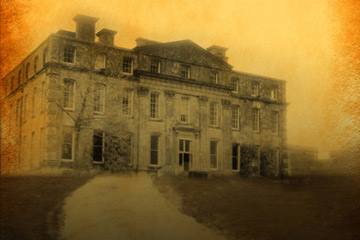

“The Little Stranger”
This astonishing novel by the author of "Tipping the Velvet" gives the traditional ghost story a creepy twist -- and a dose of class resentment.
Ghosts are not supposed to exist, which is one reason why ghost stories are often about things that people try to deny. The rage and sexual longings of lonely, well-bred women, for example, infuse the two great classics of the form: Henry James’ “Turn of the Screw” and Shirley Jackson’s “The Haunting of Hill House.” Sarah Waters’ masterly, enthralling new novel, “The Little Stranger,” hews to the essential aspects of the traditional ghost story: the big spooky country house with a tragic past, the peculiar noises and eerie events that slowly intensify into a terrifying assault, the blurring line between internal turmoil and external phenomena, the skeptical scientific observer nudged ever closer to belief. Yet Waters has boldly reassigned all these gothic motifs from their usual Freudian duties to another detail entirely: “The Little Stranger” is about class, and the unavoidable yet lamentable price paid when venerable social hierarchies begin to erode.
The setting is Warwickshire around 1947. World War II has been over for two years, but England still muddles on under its shadow. Food and fuel are rationed, decent cigarettes are hard to come by, and for what’s left of the old landed gentry, like the Ayres family of Hundreds Hall, a time-hallowed mode of life is passing away. The master of the house, Roderick, although only in his early 20s, is already profoundly damaged, his face and hands burned in a wartime plane crash and his knee “bashed up” to the degree that he walks with a cane. His older sister, Caroline, is too plain and eccentric to land a wealthy husband. Their widowed mother prefers to dream gently of the past, when Hundreds Hall was still splendid, before her first daughter, Susan (“my one true love”), died of diphtheria. Subsisting on the meager income of the remaining dairy farm, the Ayreses have sold off the estate’s finer possessions and, acre by acre, its choice land. Even so, their grand 18th-century mansion is crumbling all around them. They reuse uncanceled stamps and pin up the peeling wallpaper with thumbtacks.
Into the Ayreses’ lives comes the novel’s narrator, Dr. Faraday, the 40-year-old son of a local shopkeeper and a former Hundreds nursemaid, a man whose parents sacrificed themselves for the sake of his medical degree and a career he now regards as “undistinguished.” Called in to treat a malingering teenage servant, he is invited to tea, and despite his background and profession, eventually into a tentative friendship with the family. (Family physicians were not considered the social equals of people like the Ayreses before the war.) The connection thrills him, since he has never forgotten a boyhood visit to the Hundreds in the last of its glory days, but he’s also troubled by “faintest stirrings of a dark dislike” whenever his new friends exhibit flashes of their old entitlement.
Waters spends a good 100-plus pages building up this forlorn scene and its small congregation of dispirited inhabitants. It seems an unduly leisurely start at first, but as bad things finally begin to happen at Hundreds — little things, really, not the Grand Guignol of a Stephen King — the brilliance of her strategy becomes evident. “The Little Stranger” is so thoroughly grounded in the mundane, material reality of postwar life that these nibblings of unease — mysterious scorch marks on the walls, a maid’s bell that rings for no reason, the sound of footsteps upstairs, a key lying in the snow — are rendered uncannily vivid. Cruder writers settle for generating horror; Waters knows how to be creepy, how to make the wrongness of what’s transpiring at the old mansion crawl around under your skin.
Although Faraday balks at any supernatural explanation for the events at Hundreds, a colleague suggests to him that the cause might be “some dark germ, some ravenous, shadow-creature, some ‘little stranger,’ spawned from the troubled unconscious of someone connected with the house itself.” The question is, whose unconscious? The Ayreses come to see the house itself as malevolent, a “frightful burden,” as Caroline calls it, that “needs to be fed all the time, with money and hard work.” Rather than being haunted by the people who once lived in it, the house seems to be haunting the people who live in it now. Yet even in its dilapidated state, Hundreds has a surpassing, romantic beauty — “its cool fragrant spaces, the light it held like wine in a glass” — that Faraday, too, finds enchanting. It is the embodiment of the old class system: fundamentally unjust yet capable of producing a rarefied loveliness that democracy can never hope to equal.
Waters is best known for a trio of historical novels (“Tipping the Velvet,” “Fingersmith” and “Affinity”) set in Victorian England and featuring intrepid lesbian heroines. “The Little Stranger” is her second foray (after “The Night Watch”) into the postwar period, and her first book without any overtly lesbian characters — in which, in fact, sexuality plays at most a minor role. Some fans may be disappointed by this, but I can’t bring myself to sympathize. Waters has managed to write a near-perfect gothic novel while at the same time confidently deploying the form into fresher territory. It’s an astonishing performance, right down to the book’s mournful and devastating final sentence.
Laura Miller is a senior writer for Salon. She is the author of "The Magician's Book: A Skeptic's Adventures in Narnia" and has a Web site, magiciansbook.com. More Laura Miller.
“Flawless: Inside the Largest Diamond Heist in History”
The real-life "Ocean's Eleven"-style caper that plundered a supposedly impenetrable vault
Winter, too, has its dog days, when “crisp” feels more like just plain cold, the streets are lined with grimy crusts of snow, and all the interesting holidays are shrinking in the rearview mirror. It’s a time of year that calls out for the occasional binge of frivolous reading every bit as much as summer does. “Flawless: Inside the Largest Diamond Heist in History” by Scott Andrew Selby and Greg Campbell, a caper movie in print, complete with European locations and a dash of journalistic scuttlebutt, offers exactly the right blend of diversion and pith. It’s a ripping yarn, yes, but a meticulously reported one.
Continue Reading Close
Laura Miller is a senior writer for Salon. She is the author of "The Magician's Book: A Skeptic's Adventures in Narnia" and has a Web site, magiciansbook.com. More Laura Miller.
Christmas insanity unwrapped
"Tinsel" investigates the allure -- and demented poignancy -- of America's holiday obsession
Every year, Christmas is directly responsible for some of the worst books to cross a reviewer’s desk: stale, overfrosted sugar cookies loaded with the literary equivalent of artificial coloring and high-fructose corn syrup. But now all is forgiven because the season has inspired Hank Stuever to write “Tinsel: A Search for America’s Christmas Present,” a portrait of the holiday as it’s celebrated in the booming Dallas exurb of Frisco, Texas. A delicately calibrated combination of rigorous reporting, observational humor and old-fashioned empathy, “Tinsel” is the book that saved Christmas for this curmudgeon. The first two sentences alone, with their vivid evocation of big-box America and the promise of more crackerjack prose to come, did the trick:
Continue Reading Close
Laura Miller is a senior writer for Salon. She is the author of "The Magician's Book: A Skeptic's Adventures in Narnia" and has a Web site, magiciansbook.com. More Laura Miller.
How memoirs took over the literary world
A new book says: Fiction is dead, long live the age of autobiography
Has the memoir become the “central form” of our culture, as Ben Yagoda insists in his breezy new consideration of the form, “Memoir: A History”? Do I detect hackles rising from coast to coast at the mere suggestion? Today, autobiography is both very popular and widely reviled, for reasons that aren’t always clear. People complain that the modern memoir is narcissistic, formulaic, pretentious and often falsified — all true on occasion, though when pressed the accusers can usually list a few contemporary memoirs that they do admire. What is it about the memoir in its current form that makes it simultaneously so irresistible and so annoying?
Continue Reading Close
Laura Miller is a senior writer for Salon. She is the author of "The Magician's Book: A Skeptic's Adventures in Narnia" and has a Web site, magiciansbook.com. More Laura Miller.
Investigating his father’s murder
A memoirist searches for the truth about a fatal shooting in 1960s Phoenix
In 1975, Ed Lazar was shot in a Phoenix parking garage stairwell by two men he’d never met. Thirty years later, Lazar’s son, Zachary, an acclaimed novelist (“Sway”), began to investigate the murder in preparation for writing “Evening’s Empire,” a book he had been contemplating for as long as he could remember. No “solution” was called for in any conventional sense of that word: Authorities have known who killed Ed Lazar (two hit men affiliated with the Chicago mafia) and why (they were paid to do it by Ed’s former business partner, Ned Warren) for years. But for Zachary, his father’s death remained a mystery. How did a quiet, respectable suburban CPA like Ed Lazar, a man whose friends could make no sense of his violent end, wind up dying in what Walter Cronkite described on the CBS Evening News as “a gangland-style murder”?
Continue Reading Close
Laura Miller is a senior writer for Salon. She is the author of "The Magician's Book: A Skeptic's Adventures in Narnia" and has a Web site, magiciansbook.com. More Laura Miller.
Archaeologists behaving badly
Mystery and conspiracy plague a dig at the site of ancient Sparta in "The Hidden"
During the early fall, publishers release the highest concentration of books by established writers — many of which, incidentally, turn out to be disappointing, like this year’s offerings from John Irving and Philip Roth. As a result, it’s easy to miss fine novels by relative newcomers (who are also less tempted than the big names to phone it in). Tobias Hill’s impressive “The Hidden,” published last month as a paperback original, is a case in point. Hill, a British poet, novelist and short story writer, likes to take subjects conventionally associated with airport thrillers — murder mysteries, quests for ancient treasure, conspiracies — and crack them open to probe for more succulent literary meat. “The Hidden,” set on an archaeological dig at the site of ancient Sparta, circles around the suspicious activities of some of the dig’s team while dissecting the broken inner life of a young man who wants nothing more than to be let in on their secret.
Continue Reading Close
Laura Miller is a senior writer for Salon. She is the author of "The Magician's Book: A Skeptic's Adventures in Narnia" and has a Web site, magiciansbook.com. More Laura Miller.
Page 1 of 5 in Must Read