
Twitter

Call me Ishmael. The end.

Cellphone novels, the rage in Japan, now have competition in America: Twitter fiction.

  • more
    • All Share Services

Call me Ishmael.  The end.

The cellphone grows more wondrous and indispensable to us every day. Talking is the least of it. We text and Tweet our heads off, send photos, watch TV shows, play video games. But in Japan, imperium of the future where all the above is old hat, the keitai (cellphone) has further spawned a wildly successful, populist fiction genre. Keitai shosetsu, the so-called cellphone novel, has been touted (in the pages of the New Yorker, among other places) and reviled (by Japanese literati) as the first narrative mode of the txt msg age — the herald of a written-word future bent by wireless telecom’s powers.

I’m the first and only American author who’s written for Japanese cellphones (and with literary intentions at that). A happy lesson in old-fashioned technique, it was a sobering one about our brave new cyber-world’s eternal essential: interactivity. Most of the auteurs of keitai shosetsu are Japan’s vast demographic of girls and 20-something young women, who thumb out ultra-lurid, mawkish teen romances on their cellphone keypads in scraps of manga-like dialogue, skimpy action, texting slang and emoji (emoticons). They post these skeletal pseudo-confessions in installments, under cute pseudonyms, on dedicated Web sites like Magic i-land and Wild Strawberry where they can be read for a low fee.

Astronomically popular (chiefly among millions of Japanese teen girls), “thumb novels” are much decried as trash for yahori (slow learners, i.e., half-literates). And over recent years this subculture has stormed Japanese commercial book publishing. In 2007 — keitai shosetsu’s annus mirabilis –half the top 10 fiction bestsellers in the shrinking Japanese book market originated on cellphones. Overall list-topper “Love Sky,” by the self-styled “Mika,” has sold 2. 9 million copies in tandem with its sequel, which ranked third.

Last fall a literary grandee joined in. Jakucho Setouchi, the Marguerite Duras of Japan, revealed herself as “Purple,” author of a keitai shosetsu, “Tomorrow’s Rainbow,” about a teen’s search for love after her parents’ traumatizing divorce. Delightfully, Setouchi is also a celebrated 86-year-old Buddhist nun who wrote a contemporary update of “The Tales of Genji,” Japan’s racy ur-novel classic.

But before the great Setouchi stooped to keitai, I beat her to it. In late 2002 I was in Tokyo my first time. Unlike Bill Murray in the Sofia Coppola movie, I’d found myself in translation. Three of my books of brief quirky tales had been very happily serialized and published in Japan. It’s still where I sell most. One morning I watched a Tokyo teen Web-browsing on his cellphone. I was amazed. I’d never yet heard of i-mode, the vanguard keitai Internet service launched in 1999 by Japan’s telecom giant NTT DoCoMo. I’d never even owned a cellphone. But I’d been on MTV with my surreal mini-fables; I’d adapted them into a very episodic indie film that still lives a happy second life online. My work, I always felt, fit the short-attention-span age to a T.

Here at last, it seemed, the culture was catching up with my literary brevity. Despite the impact of Raymond Carver (god of MFA writing programs, and of me too), the short story in general got short shrift in fiction’s limelight. And ultra-shorts were practically offstage. But now technology was about to fix the script.

My translator, professor Motoyuki Shibata of Tokyo University, Japan’s foremost translator of contemporary American writing, enthusiastically agreed. (He didn’t own a cellphone either.) So back in New York I hatched a format: no story over 350 words, for minimal thumb-scrolling; 12 words tops for opening sentences, to fit whole on a single screen.

“Make it shorter,” says Woody Allen, citing all-purpose comedy-writing advice. I got into shortness originally to fight an awful tendency to bloviate. And over the years, I’ve sometimes gotten identified with genres like “sudden fiction” and “flash fiction.” But I call what I write simply “stories.” Compression, I find, intensifies everything. The reader’s imagination will hungrily conjure from the bits you shrewdly serve. Or withhold.

I began my keitai shosetsu in late 2003 (shosetsu means “fiction,” in fact, not “novel”). I knew nothing of “Deep Love,” the seminal Japanese cellphone novel about a sex-for-money girl teen, which had just become the first of its kind to be brought out by a book publisher. (Written by “Yoshi,” actually a 30-something guy, it’s sold almost 3,000,000 copies.) I wrote, as usual, in longhand, reworking on laptop. Here purists might squawk. Even ancient Jakucho Setouchi began “Tomorrow’s Rainbow” on her cellphone — but soon gave up and switched to her customary fountain pen, writing vertically on paper.

Prostitution, AIDS, rape, incest, abortion, drugs, suicide, desperate eternal love: These are the stock in trade of keitai shosetsu’s world. I was clueless. I did figure on youngish readers (of both genders), and the need to Japanify. Shame, I did know, was big in Japanese culture. It was big with me too. So I riffed away, repeatedly, opening with a three-fer about a young office worker, mortified to have accidentally swallowed his cellphone.

Of course I invoked manga, karaoke, baseball (a headless batter) and J-pop. Then I went searching for gold online, at sites like Trends in Japan. My translator marveled at my cultural savvy as I sent up young depressed male shut-ins (hikikomori), needy geeks (otaku), the Burberry fashion craze and the monstrous hegemony of Cute (kawaii). To be plain saucy, I recycled an old item of mine about a horny guy and a cynical sheep.

My pioneering literary keitai shosetsu finally launched with three mini-tales a week, downloadable for a low fee from the “cellphone paperback” i-mode site of my book publisher Shinchosha — 78 stories all told. When they later came out as a slim regular hardback called “I-Mode Stories,” 100,000 readers had accessed them online, which seemed like a pretty fine number. Until I later learned of the 3.25 million racked up by literary nun Setouchi. Revisiting Tokyo in 2007 I’d be recognized on the street; but “I-Mode Stories” sold very modestly, no match even for my other, conventional books.

I know now what probably cost me most: lack of interactivity. I wrote my Kafkaesque whimsies the old, author-as-impervious-god way. I treated the cellphone screen as an innovatively accessed, but inert, mini-page. Keitai shosetsu, however, exist in vast online pools, where writers and readers can dynamically engage with each other. And that’s key. Yoshi shaped “Deep Sky” based on ongoing hits and e-mails. (He even handed out fliers.) Keitai readers notoriously aren’t big book buyers — but they will buy books as mementos of their communal involvement.

Despite warming U.S. press coverage, so far the keitai shosetsu phenomenon hasn’t crossed over here. Yes, a couple of new Web sites, including one from a Japanese company, DeNA, now offer “cellphone novel” templates. But cellphones play a crucially different role in Japan. They, not computers, are the principal portal to the Internet. “The majority of my students (19-22-year-olds) don’t have a P.C. e-mail address,” notes Yuki Watanabe, a Ph.D. candidate in American lit in Tokyo. “Many don’t have a P.C. at home.” They’re of the keypad, not keyboard, generation. The lingo of texting is normal language to them, and they’re tuned to its subtleties.

Just as influentially, says my friend Roland Kelts, cultural critic and author of “JapanAmerica,” Japanese daily commutes often last two hours each way. “Holding a cellphone screen inches from your face on a packed commuter train and reading a confessional, melodramatic narrative” provides the perfect intimate package of content, technology and portability. Keitai shosetsu’s mainstream success, though, is taming its edgy subculture content, according to one Japanese observer. And professional writers are now being hired to supply “amateur” cellphone narratives.

For the U.S. and U.K., the venue where words and cellular/cyber technology seem to be feeling for new forms is Twitter. Unlike in Japan, Twitter is not chiefly for teenagers. Social interactivity is again a key; doubtless many (most?) users are drawn merely by the possible thrill of Tweeting with undisguised celebs. But beyond this there’s emerging energy in the creative potential of Twitter’s 140-character micro-format. (Quillpill, one of the new U.S. “cellphone novel” Web sites, also uses a 140-character per post limit.)

 To me, most interesting aren’t the micro-tales and poems but instead the attempts at an ongoing narrative in short bursts. Two I like are both hard-boiled crime thrillers, not surprising since the genre is conventionally lean, staccato and headlong. “Fuel Dump” by TV writer Tom Scharpling (@scharpling) wields a stripped genre-orthodox style for its wiggy premise:

Morton snapped open the briefcase and his wish was granted — four million dollars laid out in neat rows before him.

Dennis Wilson unrolled the map in the poster tube, focusing on the small red circle over a town called Jalpan.

“Fuck the Beach Boys and that bald asshole Mike Love; when this thing pans out, I’m gonna be richer than Brian,” he thought to himself.

But with “Twiller” (as in Twitter thriller), New York Times reporter, and crime writer, Matt Richtel (@mrichtel), aims more ambitiously. “Think ‘Memento’ on a mobile phone,” says Richtel, and his hectic saga of amnesia and peril unspools using texting lingo and real-time posting context with writerly jazz. It’s a juicy little read, by and large:

forgive my french: jesus #*^%& christ. I’m just outta the hospital myself, AS PATIENT. i’m walking home with JD’s chip, and some asshole..

Tackles me near an alley, punches my face, rips my earring, rifles in my purse, screams: where is chip?! (in broken english). I reach for

my penlight in my pocket and stab his eye; i run. left purse, kept chip, which was..fuck u;not saying where. someone’s reading i can’t trust

Some media critics find “Twiller” too confused and mechanical. But for me, the writer’s funky voice is payoff enough.

So far book publishers haven’t been lured by Twitter fiction. What has lured them is amateur clever bits (the forthcoming “Twitter Wit”) and, very splashily, business advice from wine blogger Gary Vaynerchuk, whose now 300,000-plus Twitter following got him a million-dollar deal. But the Twitter-to-book route is still in infancy.

Will route become highway? For fiction, I doubt it. Twitter narrative strikes me as a curio amid the insider updates and celeb-following. It lacks the urgency of generational cultural release that has driven keitai shosetsu in Japan. And Twitter may prove something of a curio itself: 60 percent of its swarms of users fail to return the next month, a grim augury. As far as Tweeting goes, that number includes me.

As for my keitai shosetsu experience, I took away another lesson beside interactivity’s impact — a writerly lesson. I reeducated myself in the weight of individual words, and the power of cutting, and cutting yet more. Writing on a computer tends to encourage flow, pacy verbal sprawl. For Japan I actually found myself ransacking old notebooks from the days when I first tried short (when I even embraced the fumy term “prose poem,” quickly abandoned as unwise for an aspiring comic author). The irony, and exercise, of salvaging faded pithy poetical scraps for new life on cutting-edge cellphones was a mighty rich one.

“The new, post-print literary media are certainly amenable to brevity,” observed the New York Times in a recent piece about fiction and the zeitgeist. “And the short story may provide a timely antidote to the cultural bloat of the past decade, when it often seemed that every novel needed to be 500 pages long …”

How about tales 500 words long?

Here, previously unpublished in English, are 3 keitai shosetsu from “I-Mode Stories”:

Meant for Each Other

You make a date through the Internet. You meet the girl for the first time at a sake bar. She gulps down a whole bottle of sake by herself. “Okay,” you think. “I guess we know what sort of problem she has. But man, is she cute.”

After two more bottles, the girl falls asleep on her bar stool. “That’s our sweetheart,” grins the bartender, shaking his head at the girl’s snores.

“You mean you know her?” you inquire, uneasily.

“Sure, she’s here every night, with a different guy,” says the bartender. “Whoopee, whoopee.” He winks.

“Really,” you reply. You eye the unconscious girl slumped headfirst on the bar counter. And you decide no matter how cute she is, this first date will also be the last, thank you very much.

And this is how you two meet, you and the love of your life. Four months later you get married and move into a lovely apartment together, where you start to raise a large and happy family.

How you get from point A to point B is a long, complicated, heart-warming, and in many ways wonderfully unbelievable story. But alas it requires someone with far greater narrative powers than mine to properly relate.

Edgar Allan Poe Rice Ball (Medieval Landscape)

Disease strikes a distant town. The victims develop loathsome sores all over their bodies; at the same time they’re maddened by extreme lascivious impulses. Down street after street door after door is splashed with a crude red cross: inside, the lunatic disfigured coupling rages on nonstop — men, women, even children — until exhausted dawn, until death.

In the hills beyond town, a monk makes his way along a darkening road. He chews a stale rice ball for his supper as he goes, so as not to interrupt his march. His sandaled feet move one in front of the other inexorably. His staff leaves a trail of dots behind him in the dusty distances. At last he comes around the side of a hill and he stops. The prospect of the dim town spreads before him. A look of disturbance moves over his face, as he slowly chews the last of his rice ball. Even here the uneasy wind carries the grisly minglings of lamentation and carnal grunting. The monk becomes watchful; he looks uneasily around him and grips his staff in both hands. Two figures are moving feverishly in the darkness ahead. They seem to prance toward him, half-naked, hideous, moaning hoarse endearments. The monk calls to his god as he raises his staff and prepares to meet them.

Woolly

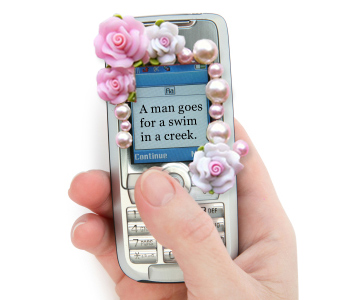
A man goes for a swim in a creek. When he gets out of the water, he sees a sheep standing on the bank, watching him. The man looks at the sheep. The sheep looks at the man. Slyly, the man smiles. He checks up and down the creek. There’s no one in sight. The man steps toward the white, woolly mammal. “Here sheepy, here woolly,” he says softly. The sheep backs up slowly into the bushes, looking confused by the state the man’s in. But the sheep is only faking.

Later, the man dresses by the creek. The sheep lolls next to him, watching him, warm-eyed. The man combs his hair and says, looking down the creek in the direction of his off-road vehicle, “So that was a lot of fun. Maybe I’ll be back up this way sometime. I’ll get in touch.” He puts his comb back in his pocket and gives the sheep a quick pat. He gets to his feet. “Okay?” he says, dusting off his pants.

The sheep lies perfectly still and watches the man picking his way awkwardly down the creek into the distance. “Yeah sure, bud, I believe you,” it thinks.

Barry Yourgrau is the author of "A Man Jumps Out of an Airplane," "Wearing Dad's Head," "The Sadness of Sex" and most recently "Haunted Traveller," released in May.

Twitter sides with Occupier

In a surprise move, the social media giant steps in to quash a subpoena against an OWS arrestee

  • more
    • All Share Services

Twitter sides with OccupierMalcolm Harris (inset) and Occupy Wall Street protesters on the Brooklyn Bridge. (Credit: Sam Margevicius/AP/Daryl Lang)

Last month, Occupy Wall Street participant and Brooklyn Bridge arrestee Malcolm Harris was unable to quash a subpoena demanding Twitter hand over information about his account to the authorities. But in a surprise move this week, Twitter has come out batting for its user.

When a New York judge ruled in April that Harris did not have the standing to fight the subpoena (arguing that his tweets actually belonged to Twitter) and that there were no privacy grounds on which the individual user could refute the demand for his Twitter records, this seemed to suggest something worrying: that we have little jurisdiction over our online identities and can’t even fight for our online speech in court.

Harris’ lawyer, Martin Stolar, told me at the time that he planned to file another motion against the judge’s decision — to re-argue that his client indeed has a standing in fighting the order, and there are strong privacy grounds to resisting the authorities obtaining records of someone’s accumulated Twitter activities (including deleted messages) without a warrant. But now it seems Stolar doesn’t need to file this motion; Twitter has stepped in.

Arguing against the judge’s decision, Twitter’s lawyers point out that Harris does indeed have proprietary rights to his tweets — and has a right to challenge demands for his Twitter records. “To hold otherwise imposes a new and overwhelming burden on Twitter to fight for its users’ rights, since the Order deprives its users of the ability to fight for their own rights.” The social media leviathan’s message is clear: We’ll step in this once so that users can fight for themselves in future.

The points put forward in Twitter’s motion align with those put forward by Harris’ lawyer in the first place. If the district attorney wanted to use publicly available Twitter information as evidence in the case against Harris (which, it bears noting, is a mere violation charge for marching onto the Brooklyn Bridge), then it is possible to follow users on Twitter and glean information this way. It is another thing entirely to demand — without a warrant — an entire record of accumulated Twitter activity be handed over. (Stolar helpfully compared it to the fact that we are able to watch what a driver in a car does at any given time in public; the authorities would need a warrant to put a tracking system into the car to monitor the entirety of its activities.)

“To the extent the desired content is publicly available, the District Attorney could presumably have an investigator print or download it without further burdening Twitter or the Court,” Twitter argued.

Harris responded happily to the news: “It’s an unexpected but reassuring move, now it’s up to the prosecutor’s office whether or not to drop the whole charade. Either way, we’re setting a precedent that social media users and activists won’t be bullied by the state,” he told me via email (full disclosure: we’re friends).

His reference to a “charade” seems apt: Here we have an incident of a California-based social media company with over 140 million users having to deploy its legal resources for a New York case that, at base, is over a charge no more criminal than a traffic ticket. By nesting its little blue tweet birds on the side of its users instead of the authorities in this instance, however, Twitter have set an important precedent in defending online speech.

Harris took to Twitter to comment on the social media giant coming to his defense: “So I wasn’t expecting the two blue birds with shaved heads and ARs standing outside my door, but apparently Twitter goes hard,” he quipped.

Continue Reading Close

Natasha Lennard covers the Occupy movement for Salon. A British-born, Brooklyn-based journalist, she has been covering Occupy Wall Street since before the first sleeping bag was unrolled in Zuccotti Park. One of the first journalists arrested at an Occupy action, she has managed to enrage Andrew Breitbart, Rush Limbaugh and Glenn Beck. You can follow her on Twitter (@natashalennard), and email her any Occupy updates/videos/ideas to natasha.lennard@gmail.com

Obama goes viral, wins Twitter

The president's endorsement of gay marriage becomes a cleverly -- and intensely -- choreographed meme

  • more
    • All Share Services

Obama goes viral, wins Twitter

When Barack Obama blew America’s mind by declaring his support for same-sex marriage Wednesday, he explained that his views on the subject had long been “evolving.” But while evolution is a process that can take millennia, social media moves with considerably more swiftness. However long it took the White House (nudged though it was by Joe Biden’s Sunday blurt that he was “absolutely comfortable” with marriage equality) to get to that place, it took no time at all for Obama’s sentiments to become a meme.

It’s no accident that the president’s change of heart happened to make for a perfect sound bite. Nearly as fast as Barack Obama, leader of the free world, could utter the words “Same-sex couples should be able to get married,” to ABC News correspondent Robin Roberts, @barackobama — the president’s not-nearly-as-popular-as@JustinBieber Twitter account — was announcing “Same-sex couples should be able to get married.” As of Thursday morning, it had been retweeted over 56,000 times and counting.

And just like that, what had been a fuzzy campaign issue for Obama just a week ago became a defiant stance – and an easily forwarded post. The president’s Twitter and Facebook accounts wasted no time issuing a photo of Obama with his statement, under the heading, “history.” The campaign’s main page itself immediately splashed up the quote, along with the ABC News clip and the invitation to “stand up with the president.” And the campaign’s colorful, friendly-looking poster stating that “Every single American/Gay Straight Lesbian Bisexual Transgender/Deserves to be treated equally in the eyes of the law and in the eyes of our society/It’s a pretty simple proposition” popped into a place of honor on the Obama Pinterest and Instagram pages.

Elections can turn on a few provocative words – from “Read my lips” to “It’s the economy, stupid” to, simply, “Hope.” But there’s never been a time when a single sentiment could be parroted across so many different platforms. The Obama campaign knows this, and has shrewdly seized upon the immediate, visceral reaction that one sentence can inspire with impressive immediacy. Watch and learn, Romney. Though we’ve yet to see how the president’s “evolved” stance will shake out into real votes in November, for now, it sure makes for a whole lot of likes and pins. Whatever happens next, Obama’s won Twitter.

Continue Reading Close
Mary Elizabeth Williams

Mary Elizabeth Williams is a staff writer for Salon and the author of "Gimme Shelter: My Three Years Searching for the American Dream." Follow her on Twitter: @embeedub.

Lessons from a Twitter train wreck

Sportswriter Joe Cowley tries to delete his sexist tweets to save himself. Too bad he misunderstands the Internet

  • more
    • All Share Services

Lessons from a Twitter train wreckJoe Cowley

There’s a lot about what went down with Chicago Sun-Times columnist Joe Cowley’s painfully sexist airplane rant on Twitter this weekend that’s hilarious. There was the whining that “I’m more likely to see a Squatch before I see a hot flight attendant.” There was the concern over flying in a plane with a “Chick pilot.” There was his gloriously tone-deaf response to sportswriter Sloane Martin about his comments, culminating with a demand she “hottie up that [profile] pic a bit more.” Had he added a mention of how much he loves scotchy scotch scotch, the entire tirade could still not have felt more deliriously out of time.

But the most wildly out-of-touch element to the whole affair was what Cowley did next. He shut down his Twitter account. It’s a classic response to an online attack of verbal diarrhea — the old waving of the magic delete wand to make all the bad stuff disappear. Too bad it doesn’t work.

We’ve recently seen a surge of hopeful deletions in the aftermath of stupid tweets. Last week, Mitt Romney spokesman Richard Grenell quietly eradicated his tweets suggesting that Rachel Maddow resembles Justin Bieber and ought to “take a breath and put on a necklace,” along with other gems. According to the Associated Press, Grenell, who’s also taken pot shots on the appearance of Hillary Clinton, Calista Gingrich and Michelle Obama, scrubbed more than 800 tweets from his feed. And last month, actress and conservative windbag Patricia Heaton went on a Sandra Fluke tear, saying “you’ve given yer folks great gift for Mother’s/Father’s Day! Got up in front of whole world & said I’m having tons of sex- pay 4 it!” and suggesting that if Fluke’s followers sent her “one condom, her parents wouldn’t have to cancel basic cable, & she would never reproduce—sound good?” At least Heaton had the sense to acknowledge that she purged the tweets after she removed them, saying, “I apologized to Ms Fluke last week. I may not agree with her views but I didn’t treat her with respect and I’m sorry. I was wrong. Mea culpa.”

The hastily issued, immediately regretted tweet is part of what makes online interaction the entertaining train wreck it so often is. After this year’s Grammys, Chris Brown sent an expletive-laced message to the haters — and promptly removed it. And by now, Kanye West is almost as well known for the tweets he’s withdrawn as the ones that inspired a Josh Groban musical interlude. In a world of handlers and publicists and artfully crated personae, human beings – professional human beings who ought to know better, even — still find a way to make utter boobs of themselves. But what makes the likes of Grenell and Cowley look particularly foolish, isn’t just the inanity of their initial tweetstorms. It’s the cowardly, immature way they ran from them.

Here’s a tip: They’re called screen grabs. When you say something offensive or idiotic, or both, to the entire world, people are going to archive it. You can post it for an amount of time so brief you believe Olympic scorekeepers could not measure it. It doesn’t matter. It’s out there. And if you call yourself a journalist, you in particular should be familiar with a little something known as a correction. That way, when you mess up, you don’t come off looking like you have all the wherewithal of a toddler covering her eyes and boasting, “You can’t see me!” Yeah, we can still see you. That’s how we know how many tweets Grenell deleted. That’s how we know what Cowley said.

People screw up and say dumb things all the time. Sometimes they type them and then impulsively hit the send button. Impulse control: always a losing battle. The best people can do afterward is learn from their mistakes, apologize for them, and move on. And there’s certainly a case to be made for removing words that would cause hurt or offense. The delete button can be your friend. But it’s worthless to try to slink off and do a stealth revision of the past. What you do in public is seen in public. More significantly, it is remembered. Forever.

Continue Reading Close
Mary Elizabeth Williams

Mary Elizabeth Williams is a staff writer for Salon and the author of "Gimme Shelter: My Three Years Searching for the American Dream." Follow her on Twitter: @embeedub.

Who owns your tweets?

A judge's decision to uphold a subpoena for an Occupy arrestee's Twitter account raises serious privacy issues

  • more
    • All Share Services

Who owns your tweets?Malcolm Harris (inset) and Occupy Wall Street protesters on the Brooklyn Bridge. (Credit: Sam Margevicius/AP/Daryl Lang)

I tweet a lot. Sometimes I feel like I tweet more often than I have face-to-face conversations — and therein lie multiple issues that will not be addressed here (but perhaps one day, in therapy). However, in the course of constructing these 140-character-or-less nuggets of opinion, information or political agitation, never did I give much thought to whether these tweets were mine. It turns out they’re not, in the eyes of the law. For all the clamor about Twitter’s revolutionary potential in the Middle East, we have a reminder right here in New York of its revolutionary limitations.

On Monday, a Manhattan judge ruled that writer, Occupy Wall Street participant and prankster (and, for the purpose of full disclosure, my good friend) Malcolm Harris will not be able to block a subpoena on his Twitter account, including “any and all user information including email addresses” tied to it because, according to the judge, our tweets are not ours at all.

Harris, like me and more than 700 others, was arrested on the Brooklyn Bridge roadway last October in one of Occupy Wall Street’s most headline-grabbing days of action. He, like most of the bridge arrestees, was charged with disorderly conduct (a violation equivalent in legal terms to a traffic ticket) but, refusing to plea out, is taking the charge to trial. In January, the Manhattan D.A.’s office sent Twitter a subpoena. Twitter promptly informed Harris, who decided to fight the subpoena with his lawyer, Martin Stolar of the National Lawyers Guild.

In his decision Monday to deny the motion to quash the subpoena, Criminal Court judge Matthew Sciarrino Jr. revealed some potentially worrisome issues about how the law views our relationship with our tweets, which raise further questions about speech, privacy and self-representation. As Stolar explained to me, the judge decided that Harris has “no standing” to fight the subpoena in the first place — because his tweets (including direct messages, which are not publicly published) are not his, but belong to Twitter. The judge also rejected Stolar’s claim that Harris has a privacy interest in quashing the subpoena.

The question whether an individual has the standing to intervene on their own behalf to fight a subpoena served to a third party (in this case Twitter) is an interesting one. It should come as no shock that our tweets actually belong to the social media company; we agree to as much when we join Twitter and accept its terms of use. However, as Stolar points out, there’s long legal precedent for individuals intervening in subpoenas relating to, but not served to, them. For example, patients often intervene to quash subpoenas served to doctors regarding their medical records. Stolar plans to argue that Harris should have a standing in whether the government can (without a warrant) go through his accumulated, even in some parts deleted, Twitter history. Indeed, as the laywer also noted, the subpoena is both so broad and so vague that it’s hard to know how much access it would grant to Harris’ private messages and communications related to his Twitter account.

Which moves us on to the issue of privacy. It’s true that our Twitter behavior is in the public domain. But does this mean there’s no privacy interest when it comes to handing over the accumulated records of all our Twitter behavior to the authorities? Stolar offers this helpful but striking comparison: Say you have car — all your actions, driving around, parking, etc., are in public. However, the government would still need a warrant to track your car using a GPS to get an accumulated record of all your driving activity. Stolar argues that our accumulated Twitter activity should be equally considered in terms of privacy and what the authorities can or cannot demand access to.

“It’s very annoying that the judge said that no one has a privacy interest in their own communications here, their own speech,” said Stolar. I’d say it’s more than annoying — it’s downright worrisome. It should have long been obvious that Twitter is a powerful but limited tool for radical political organizing and agitating — the social media leviathan readily admits it will turn over information to legal authorities. (To its credit, Twitter has rejected gag orders in order to inform Wikileaks followers that the government had requested their Twitter information.) However, the fact that we as users are (legally) considered to have no standing or privacy interest when it comes to our own Twitter histories should serve as a chilling reminder that the nuggets of tweeted speech we send out — our very social media identities — are very distinct entities from our legal selves and the protections those selves are granted.

Of course, the lesson to take away is to tweet with caution. It’s also worth keeping in mind that, although throwing up some important insights, this court battle began over a charge for marching on a bridge. As Stolar puts it, “It’s prosecutorial overkill; using a sledgehammer to squash a gnat.” Harris agrees. He is (as he tends to be) disappointed in the state and surprised that a Harvard Law-trained ADA’s time is being used to pursue his minor charge. The precedent set, however, should give pause to those of us who live (perhaps too much of) our lives through Twitter.

Continue Reading Close

Natasha Lennard covers the Occupy movement for Salon. A British-born, Brooklyn-based journalist, she has been covering Occupy Wall Street since before the first sleeping bag was unrolled in Zuccotti Park. One of the first journalists arrested at an Occupy action, she has managed to enrage Andrew Breitbart, Rush Limbaugh and Glenn Beck. You can follow her on Twitter (@natashalennard), and email her any Occupy updates/videos/ideas to natasha.lennard@gmail.com

Mom, get off Twitter!

Courtney Love's recent missteps point to an emerging problem: The oversharing Gen-Xer with a social media account

  • more
    • All Share Services

Mom, get off Twitter!Courtney Love and Frances Bean Cobain (Credit: Reuters/Mario Anzuoni)

It wasn’t that long ago that a generational social media disaster looked like “S#&% My Dad Says.” It was amusing, the way The Olds were inadvertently posting on their adult offsprings’ Facebook walls and thinking it was email. Look at them, with their lack of technical acumen and their crotchety pleas for assistance! You know what embarrassing your kids looks like now? Courtney Love.

Granted, Ms. Love has never been the traditional SUV-driving, cookie-baking kind of mom who posts incredibly detailed stuff about her baby’s poops.  But her recent slew of attention-getting Twitter insanity — and her 19-year-old daughter Frances Bean’s mortified response – suggests we are entering a new era of fail, one in which a parent’s awkward behavior isn’t of the adorable “What’s this button do?” variety. Instead, it may be more like “S#&% My Dad Said At Burning Man.”

Love, always a reliable train wreck and nowhere more in her wheelhouse of crazy than on Twitter, ramped it up last week when she accused Dave Grohl of hitting on her daughter in a lengthy series of tweets on her private account. She ranted freely about how angry she’d be “if frances slept with” him, going on about whether “the actual sex” was a rumor and adding that “dave tried to fuck me alot.” It was a display that Grohl’s publicist described as “Crazy Woman Says Insane Shit No One In Their Right Mind Would Believe.” And the young Miss Cobain, unsurprisingly, felt compelled to retort with her own variation on the classic, “Stop it, Mom, you’re embarrassing me.” Cobain issued a tart statement about “my biological mother,” saying that “her recent tirade has taken a gross turn” and adding, “Twitter should ban my mother.” She may be the most high-profile person to say it, but I’d wager Cobain is far from the only teenager who wishes Twitter could block her parents.

If you’ve never Tweeted your conviction that one of the Foo Fighters banged your teenager, congratulations, you’re not Courtney Love. But her tirade does represent an emerging dynamic that plays out in subtler ways across social media platforms. I’ve seen it with my own wincing eyes from parents who include their teenagers among their Facebook friends – and who post freely of their hangovers, their dating disasters, and their overall rock ‘n’ roll excesses. Those incriminating, spring break-like photos of the half-drunk lady from the party? Yeah, college kid, that’s YOUR MOM. It’s not that children are likely to be blithely unaware of their hipster parents’ lifestyles. But there’s a new blurring of the once easy-to-maintain tactful distance between parents and their young adult offspring, one complicated by the fact that many of us are cavorting on the road of excess a mere few steps ahead of our children.

Love has, in her typical fashion, attempted to kiss and make up with her daughter in the same format in which she originally speculated about her sex life – on Twitter. On Saturday, she posted, “Bean, sorry I believed the gossip. Mommy loves you.”

Mommy no doubt does. But the Gen-X parents who never quite settled down, who grapple with their own varying levels of maturity, now share the Internet with their teenagers. And the children whose shaky first steps and lost teeth have been documented all over Flickr and Twitter and Facebook are now turning into grown-ups themselves, with their own online lives. And while it’s our right as adults to party and to have sex and enjoy life, it’s also our job as parents to not be stupid. If your kid is old enough to read, your kid is old enough to be embarrassed by your Twitter stream. That’s why Love’s meltdown is a cautionary – if extreme – reminder that a typical Old Person Fail may no longer be an adorable “reply all” goof. Instead, it’s something that involves more ranting and thoughtlessness and way too much information. In other words, it looks an awful lot like a Young Person Fail.

Continue Reading Close
Mary Elizabeth Williams

Mary Elizabeth Williams is a staff writer for Salon and the author of "Gimme Shelter: My Three Years Searching for the American Dream." Follow her on Twitter: @embeedub.

Page 1 of 28 in Twitter