
Summer reading

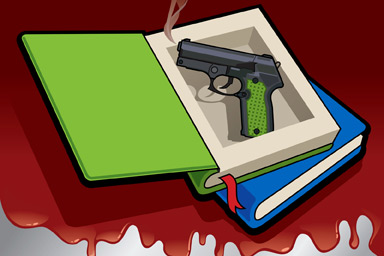
Summer reading: Killer thrillers

Salon recommends four addictive novels to add intrigue and treachery to your beach book list.

  • more
    • All Share Services

Topics: , , , ,

Summer reading: Killer thrillers

When the days grow long and hot, some readers reach for fizzy novels about sex and shopping, or warm-hearted accounts of potato peel societies and ya-ya sisterhoods. Not me. I want blood and murder, intrigue and treachery, dark secrets and paranoia. A good thriller is what keeps me devouring the pages through summer’s sultry afternoons and long flights.

Yet despite the vast popularity of the genre, decent thrillers are hard to come by. Even a writer who’s delivered the goods in the past (I’m looking at you, Carlos Ruiz Zafon!) can disappoint. Some of the worst specimens have hokey plots whose “twists” you can spot a mile away; others feature characters so flimsy and dialogue so clichéd they make your average Stephen Seagal movie look like Ingmar Bergman. Most are just plain dull — and can there be anything more dispiriting than a thriller that fails to thrill? Yes, there can: the knowledge that said thrill-less thriller is the only book in your beach tote or carry-on bag.

To prevent just such a catastrophe, here are four novels of crime and adventure, recently published or scheduled for release later this summer, and cherry-picked from a field of lesser contenders. But consider yourself warned: Don’t start any of these babies just before you plan to get a good night’s sleep or take a dip in the pool. You may find yourself, much, much later, looking up as you turn the last page and wondering just where the summer has gone.

“Dark Places”

By Gillian Flynn

Libby Day has a bad attitude. She’s surly, she’s never held a steady job and she spends most days lying around in her crappy rental house in her crappy Kansas City neighborhood, glaring at her unfriendly neighbors. She refers to suicidal ideation as “a hobby of mine.” Even her favorite aunt has stopped returning her calls. But as excuses for gloominess go, Libby has a doozy: Her mother and two sisters were massacred in the family’s farmhouse when she was 7, and her teenage brother, Ben, went to jail for the crime. Since that horrible night, Libby has lived off charity and the proceeds of a grotesquely dishonest “inspirational” book titled “Brand New Day! Don’t Just Survive Childhood Trauma — Surpass It!”

By the time Gillian Flynn’s sardonic, riveting “Dark Places” begins, however, the cash has run out. A desperate Libby agrees to speak to a “Kill Club,” a convention of geeks obsessed with famous crimes. Naturally, she demands a hefty fee; she even brings along select items of Day family memorabilia, hoping to sell them to some creepy collectors. To her astonishment, at the meeting she’s confronted by prison-house groupies convinced that her brother is innocent, women who blame Libby (and the therapists who coached her) for the testimony that convicted him. It’s a possibility that Libby — who has refused to examine her memories of that night for years — has never seriously considered. Soon she learns that hardly anybody thinks Ben was really guilty of the killings.

“Dark Places” is part mystery, part chronicle of a young woman’s emergence from a 27-year funk. Like Kate Atkinson (“When Will There Be Good News?”), Flynn has figured out how to fuse the believable characters, silken prose and complex moral vision of literary fiction to the structure of a crime story. Alternating with Libby’s grumpy present-day account of reinvestigating the “Kinnakee Kansas Farmhouse Massacre” are chapters set during the day of the murders, told from the viewpoints of her mother, Patty, and Ben himself. Ben’s in the throes of heavy-metal-fueled adolescent rebellion, while Patty struggles to save the family farm from a treacherous economy and her deadbeat ex. You can sense trouble coming like a storm moving over the prairie, but can’t quite detect its shape.

There’s something about the flatness of the Great Plains states and the difficulty of life in the lonely farmhouses there that makes the Days’ murders seem even more stark and unfathomable; this is “In Cold Blood” country. That the secret to the killings lies not in hatred, madness or rage, but in love is Flynn’s ingenious variation on the theme. In tough times, even the tenderest emotions can break us, but as Libby finds out, they can also put us back together again. (Available now)

“The Strain”

By Guillermo del Toro and Chuck Hogan

What’s summer without a big, fat vampire novel? “The Strain,” by Guillermo del Toro and Chuck Hogan, doesn’t have the Old World moodiness of Elizabeth Kostova’s 2005 bestseller, “The Historian,” but what it lacks in misty Carpathian landscapes and haunted libraries it makes up for in apocalyptic action and supersize portions of gore. “The Strain” isn’t really the reinvention of the vampire yarn that its publisher claims, but that’s OK; it’s hard to imagine how anything genuinely original could be done with the genre at this point. Instead, “The Strain” is shamelessly, gleefully cheesy, like one of those sneakily potent cocktails that includes a dash of everything in the bar (and heavy on the grenadine).

Co-authors del Toro (director of the Oscar-winning “Pan’s Labyrinth” and the “Hellboy” franchise) and Hogan (a mystery novelist) kick things off with a transatlantic flight landing at New York’s JFK and going suddenly, totally dark — a nod to Bram Stoker, whose “Dracula” featured an eerily depopulated sailing ship dropping anchor off England. Fearing terrorism, emergency response personnel approach the plane carefully, only to discover that everyone on board is dead. Well, almost everyone. Among the four survivors (none of whom remember anything about the landing) is an attorney who gets all four sprung from quarantine, over the protests of our prudent hero, Dr. Ephraim Goodweather of the Centers for Disease Control.

Of course, the survivors are infected, and soon the semi-supernatural vampire virus is spreading through New York City, abetted by a sinister billionaire financier whose name (Eldritch Palmer) is yet another nod — this time to Philip K. Dick. The vampires themselves behave more or less like zombies, although their wherewithal is somewhat inconsistent; one tries to attack a victim through a car windshield because it apparently doesn’t know about glass, while another manages to send a text message. Goodweather teams up with the obligatory elderly vamp expert (this time it’s an Armenian holocaust survivor turned pawnbroker) and a delightfully saturnine Russian-American rat catcher in a desperate bid to stamp out the epidemic before it spreads beyond the city.

“The Strain” is part “The Andromeda Strain,” part “Night of the Living Dead,” and all B-movie, but despite its air of pastiche, it succeeds on the force of sheer enthusiasm. Del Toro and Hogan aren’t afraid to use lines like, “Everett, this is bigger than you can know!” — and their affection for the genre’s clichés, along with their brisk delivery of suspense and thrills, makes even the hoariest chestnuts seem like old friends.

The only really discordant note is Goodweather himself, a blatant authorial avatar embroiled in a child custody battle with an ex-wife who was too small-minded to accept her proper role as Helpmeet to Genius. Since “The Strain” is the first book in a projected trilogy, I’d like to take this moment to have a word with Messrs. del Toro and Hogan: Gentlemen, I won’t speculate about whose divorce-settlement baggage found its way into “The Strain,” but in the future, leave the score settling with your ex and her toolish new boyfriend at home. We don’t want that in our vampire novel! When it comes to blood sports, please stick to the strictly fictional kind. (June)

“Ravens”

By George Dawes Green

Chance is a cruel god and luck cuts both ways in the Southern strip-mall milieu where George Dawes Green’s “Ravens” takes place. The Boatwright family of Brunswick, Ga. — churchgoing Mitch, his boozy wife, Patsy, their striving, community college student daughter, Tara, and her kid brother, Jase — are no sooner blessed by a $318 million lottery jackpot than they draw the attention of two losers passing through town. One, Shaw, is a charismatic sociopath and the other, Romeo, is Shaw’s devoted, if intermittently ambivalent, Igor. In no time, the Boatwrights’ phenomenal good fortune morphs into calamity.

With a combination of ghastly threats and mesmerizing persuasion, Shaw worms his way into the Boatwrights’ home and alternately cows and seduces them into presenting him as a co-owner of the winning ticket. Romeo plays enforcer, prowling the streets and poised to slaughter their friends and relatives if they rebel. Then, carried away at a press conference, Shaw suddenly proclaims his intention to give his share to charity. This attracts a come-to-Jesus following, some of whom believe that he has the power to heal. In no time, Shaw begins to subscribe to his own charade, convinced that he plans to “bring great beauty into the world” in “this great adventure” he’s sharing with the Boatwrights.

What makes “Ravens” remarkable is how monstrous Shaw can be without ever becoming an absolute monster; he’s a volatile mixture of megalomania, petulant rage and pathetic longing, dreaming of a respectable marriage to Tara, as if he’d never threatened to shoot her in front of her beloved grandmother. Romeo’s much the same, softhearted enough to want to give his roadkill a decent burial (“I was just trying to do right by this animal”) yet determined to fulfill his loyalty to Shaw even if it means cutting down innocents in cold blood.

The novel’s suspense hinges on this precarious dynamic; any little thing — a slight, a smile, a flash of memory — might tip Shaw or Romeo one way or the other, toward savagery or sympathy. This instability also makes the book surprisingly, if darkly, funny. Green’s juicy supporting characters contribute a lot of the humor, from the aging, hangdog deputy who’s shrewd enough to smell a rat, to the appalling Patsy, who takes a break from being terrorized by Shaw to check the going prices for Malibu beach houses and fantasize about sipping tea with Nancy Reagan.

Green writes like Ruth Rendell with a generous injection of Elmore Leonard, but he also waxes philosophical. “Every great idea is enforced by a great terror,” Shaw tells Romeo, as he acquires more and more of the mannerisms of a tent-revival preacher. “That’s how good comes into the world — with a dark escort.” He has a point: How much clout would God wield without the Devil behind him, playing the heavy? The fate of the Boatwrights hangs on the possibility that Romeo’s evil will turn out to be as fraudulent as Shaw’s holiness. A long shot, perhaps, but Green keeps the family’s unstable luck in play until the very end. (July)

“The Girl Who Played With Fire”

By Stieg Larsson

Lisabeth Salander, a ninja-hacker-urchin punkette with an implacable and somewhat inhuman sense of justice, was more of a supporting character in the international bestseller “The Girl With the Dragon Tattoo,” than the novel’s title might lead you to suppose. “Dragon Tattoo” was the first of three long, detailed crime novels written by the late Swedish journalist Stieg Larsson, who died of a heart attack at age 50; all three books have been published posthumously in Sweden, with the English translation of the second, “The Girl Who Played With Fire,” coming out this July. The second novel shifts the focus away from middle-aged investigative journalist Mikel Bloomkvist to dig deeper into Salander’s past, explaining how she became the extraordinary creature she is.

But Salander is only the most obvious attraction in Larsson’s addictive fiction. His secret weapon is his straightforward, methodical, even expository style, most likely an adaptation from his nonfiction feature writing. It’s the very absence of the usual flashy, fast-paced, movie-inspired tricks that hooks you in. When Salander, rocking a bogus identity, sets about furnishing a new apartment, Larsson meticulously lists everything she buys right down to the new mop, naming each item ordered from Ikea. Then he tells you how much she spent. By conventional rules, this level of detail ought to be tedious, but instead it makes the novel feel reported, as if it were the world’s greatest true-crime narrative.

The story this time around hinges on an exposé of sex trafficking about to run in Bloomkvist’s magazine. The freelancer working on the piece turns up murdered, as does Salander’s nasty legal guardian. (She’s been declared mentally incompetent, for reasons that only become clear later.) Forensic evidence points to Salander as the killer, which Bloomkvist, naturally, refuses to believe. She goes on the lam and he tries to clear her name, fighting a state bureaucracy whose doctors, lawyers and case managers have mislabeled the brilliant Salander as (in the words of one cop) a “psycho bitch.” It also doesn’t help that, to judge by Larsson’s fiction, Sweden is crawling with misogynistic bullies. Unfortunately for the villains, they have picked the wrong victim, and the unflappable Salander proceeds to infiltrate networks, office buildings and personal computers, wreaking her terrible vengeance according to her own peculiar code.

Although “The Girl Who Played With Fire” lacks the melancholy island setting of “Dragon Tattoo,” and Stockholm is a less atmospheric replacement, the Swedishness that made the first novel so beguiling remains. It’s in the characters’ uneasiness with their overmanaged lives, their awareness of the danger that lies in permitting your identity to be dictated by a state that doesn’t always live up to its vaunted ideals. That’s what makes Salander, for all her oddity and surliness, so engaging: An antisocial democrat, she refuses to comply. She’s the imp that lurks in every machine. (August)

Continue Reading Close
Laura Miller

Laura Miller is a senior writer for Salon. She is the author of "The Magician's Book: A Skeptic's Adventures in Narnia" and has a Web site, magiciansbook.com.

What did you really read this summer?

As August ends, Arthur Phillips, Laura Hillenbrand, Lev Grossman and others reveal their reading records to Salon

  • more
    • All Share Services

Topics: , ,

What did you really read this summer?

View the slide show

For readers, summer often starts with grand ambition. This will be the year we really tackle Roberto Bolaño or David Foster Wallace; it will be the summer of nothing but lemonade and Alice Munro. Or perhaps we’ll educate ourselves by delving deep into accounts of the financial crisis or the war on terror. Then the days turn lazy and even the most sincere intentions wilt in the heat.

With September looming, we thought it would be a good time to check in with some of our favorite authors — and some of the writers you’re likely to be reading this fall — to see what they really read this summer. Click through the following slide show to see what they had to say.

View the slide show

Emma Mustich is a Salon contributor. Follow her on Twitter: @emustich.

2011′s best — so far!

Check your cultural literacy -- and catch up on the best movies, TV, books, music and more you've missed SLIDE SHOW

  • more
    • All Share Services

Topics: , , , ,

2011's best -- so far!

View the slide show

OK, it’s a little more than midyear at this point. The days are already getting shorter, and that stack of books on your nightstand is only getting taller as your DVR queue gets longer. It’s time to concentrate on what matters. So we’ve asked our crack culture team to pick what you need to experience to be the well-rounded, culturally fluent smarty you want to be, and ordered them by importance. See how many you’ve already checked out, and dive into the rest.

You’ll be better for it –  and seriously entertained.

URGENT (Do this right now!)

WATCHPoetry,” directed by Lee Chang-dong. It’s taken some time, but word has gradually spread about this beautiful and moving story of death and life from Korean academic-turned-filmmaker Lee Chang-dong. With apologies to Terrence Malick’s many defenders, “Poetry” is the  movie released so far that has the pure cinematic craft, human appeal and  emotional depth to be called a masterpiece. You almost couldn’t invent a less sexy or less trendy film: “Poetry” is a leisurely character drama about a dotty, girlish 66-year-old woman who may have early-stage Alzheimer’s and her relationship to her rude and lumpish grandson, who may have committed a terrible crime. I won’t mislead you by claiming this is a thriller, but as this silly, vain and resolute grandma struggles to do the right thing and to write the first (and perhaps last) poem of her life, she seems to speak for all of us, caught between birth and death, remembering and forgetting, with only a few precious moments to grasp and then let go. –Andrew O’Hehir

READ “The Pale King,” by David Foster Wallace. Wallace’s third and final novel was unfinished at his death in 2008 and assembled from completed portions and notes by his longtime editor. You’d never know it. In Wallace’s earlier fiction, it could often be hard to pick out the figure in the carpet — and at the same time very easy to enjoy the individual sections. With “The Pale King,” the reader is off the hook, and free to take each part of this funny, shrewd, suspenseful, piercing, smart, terrifying and profound book as it comes. As has often been repeated, “The Pale King” is “about boredom,” although that is only where it starts. It’s also about the transformation of America from a stakeholder society in which citizens view themselves as active, responsible participants into a consumer market in which people simply demand value for money. And it’s about existential dread and loneliness, which the main character, “David Foster Wallace,” suspects of being the reason people fear boredom, and drives themselves to distraction, seeking “enough stimulation to distract people from some other, deeper type of pain that is always there … Right here before us all, hidden by virtue of its size.” — Laura Miller

WATCH “Game of Thrones” (HBO). In retrospect it seems unthinkable that HBO’s lavish adaptation of George R.R. Martin’s “A Song of Ice and Fire” debuted around the same time as AMC’s “The Killing,” a remake of a hit Danish procedural, but was taken far less seriously by critics. Why? Maybe because AMC’s series was set in something resembling “reality,” where “Thrones” unfolded along pop culture’s J.R.R. Tolkien/Dungeons and Dragons axis, upon which movies and TV series are still considered zit-inducing ComicCon crap no matter what their artistic pretensions. But where “Thrones” slowly kept a phenomenal number of characters, motivations and plotlines straight, sparking arguments about its sex scenes and narrative density, all the while building and building to a stunning finale, “The Killing” made hash of just one story, and eventually collapsed under the weight of its own bad-faith contrivances. “Thrones,” meanwhile, felt like fantasy fiction’s answer to the first two “Godfather” films, with bleak, often ironic commentary on love, sex, family and power, plus warring kingdoms, barbarian Bacchanals, secret incest, slumbering supernatural menaces, undead stalkers, assassinations, beheadings and dragons’ eggs that were ported about from episode to episode like big green plot grenades. — Matt Zoller Seitz

WATCH Melissa McCarthy in “Bridesmaids.” You’re already not having too shabby a year when you’re the titular costar of a hit sitcom. But with her scene stealing turn in “Bridesmaids,” “Mike and Molly” actress Melissa McCarthy took what could have been a one-note, horny big girl shtick and created a character who runs rings of sanity around Kristin Wiig’s self-loathing flake. No wonder she’s reportedly set to star with Jon Hamm in Judd Apatow and Paul Feig’s next comedy. Bonus: When asked about Maura Kelly’s hateful Marie Claire piece last year on TV “fatties,” she sagely told EW this spring, “I thought, what a sad, troubled person.” Score: match point to McCarthy. — Mary Elizabeth Williams

LISTEN “21,” Adele. The London crooner can seem old beyond her years, and her voice sounds like a tool from some forgotten age of pop music: a real instrument. Say the critics: “Adele … [towers] in the same landscape where some of her contemporaries, beehived or not, have lost all their bearings” (LAT); “Timeless” (EW); “[If] you’re looking for a record that’ll make you wanna trash your beloved’s belongings and have make-up sex amid the ruins, 21′s your jam” (Spin).

MANDATORY (Worth faking a sick day for)

READ “Townie,” by Andre Dubus III. The Avenues, the New England mill town neighborhood where Dubus — a novelist best-known for “The House of Sand and Fog” – grew up, was a domain of swaggering bullies and weak, negligent or absent authority figures. As a boy, he resolved to “get so big I scared people, bad people, people who could hurt you.” Dubus’ memoir, “Townie,” recounts his sojourn in the kingdom of violence, and its counterpoint, the time he spent with his father, Andre Dubus II, an acclaimed author of austerely beautiful short stories about the anguish of working-class life. For Dubus, salvation lay in getting at the stories imprisoned within a reality that at first seemed merely brutal and mindless. This is an unusual story of the making of a writer, and a completely unforgettable one. –LM

WATCH “The Tree of Life,” written and directed by Terrence Malick. From the origins of the universe to the first stirrings of prehistoric reptilian compassion (a phenomenon unknown to paleontologists) to a memorable portrait of a mid-century Texas family presided over by a severe but loving Brad Pitt (giving his greatest acting performance) to an almost alarming vision of the afterlife,  Malick’s long-long-gestating “Tree of Life” offers more to chew on and disagree about and be baffled by than any American film since “Mulholland Dr.” I’ve been publicly on the fence about “Tree of Life” since first seeing it, but I also don’t kid myself that I’ve mastered the film or that I’m done thinking about it or that I know what I’ll make of it in five or 10 years. –AOH

WATCH “These are the decisions that keep you alive”: Coverage of a natural disaster had never been more brutally captured by camera than when the 8.9 earthquake sparked a tsunami that swept into Japan. Perhaps the most mesmerizing video originating from Japanese network JNN, and recrafted by Britain’s TBC Channel 4, that showed the critical ways a news crew — and assorted other survivors including a father and his two small terrified children — managed to escape being swept away to a certain death in Sendai, Japan. — Kerry Lauerman

READ New York Post headlines on Weinergate. Give a Murdoch newspaper an unfortunately named Democrat and a tawdry sex scandal, and it’s like Christmas every day. –MEW

READ “It’s the Inequality, Stupid,” 11 charts by Mother Jones. Nothing fuels awareness of class inequity and the staggering gap between rich and poor than recessionary times. And nothing can fuel your understanding — or your rage — like this illuminating, handy breakdown by Mother Jones. –KL

WATCH “Friday,”  the Bob Dylan-spoof version. When Rebecca Black’s bubblegum pop anthem “Friday” hit YouTube  and became a sensation, parodies were inevitable; the best was surely New York singer-songwriter Mike Bauer’s version, arranged, performed and recorded in the style of Bob Dylan circa 1965. On top of its already formidable bona fides as a fetish object — check out the period-accurate Columbia Records 45 RPM logo! — it inspired what is, without question, the funniest and most imaginative YouTube comments thread of the year to date — an ongoing in-joke between the performer and the listeners, who play along with the ruse and insist that, yes, this really is a Dylan tune.

“I think what Dylan ment by ‘Friday’ was any means people use to escape the reality and avoid seeing the truth. For some it could be booze and for some it may be drugs. What Dylan wants, is us to stop. Do not let your personal ‘Friday’ to come.” “I was contemplating suicide when this version of ‘Friday’ came on the radio. I dropped the razor blades & started crying at the simplistic & awe-inspiring beauty of the lyrics.” “I remember returning from the Grenada war in 1983. This song was playing over the loud speaker at the airfield when the wheels of our C-130 touched˛ down in Homestead Florida. The war had been 2 hours and 28 minutes of sheer horror and all I could think about was those that I loved the most but I didn’twant to go home yet so I called a $5 hooker and enjoyed the beach, this song, and some pretty good ass for 10 days. I was so happy when I made it home to my wife. My sunburn was getting bad.”

MZS

LISTEN “Anna Calvi,” Anna Calvi. “Sumptuous, seductive and a little bit scary, this velvety debut will stalk your dreams,” (NME).


ESSENTIAL (Skip “family time” if you have to)

WATCH “Southland” (TNT). This tough, smart series about beat cops interacting with the public in Los Angeles debuted on NBC in 2009, then got booted to cable to make room for Jay Leno’s disastrous prime-time talk show. Its large, ethnically diverse cast of beat cops, detectives, top brass, city officials, civilians and perps sparks fond memories of “Hill Street Blues,” the early seasons of “Homicide: Life on the Street” and the novels of Joseph Wambaugh (“The New Centurions,” “The Choirboys”). Granted, there are more altercations and chases than any real police force would ever see in a week, but in every other way, this is the most realistic cop series on American television. Its second season finale was one of most moving, horrifying, bleakly funny hours of TV in a very long time. Catch up now. — MZS

READ “The Tragedy of Arthur,” by Arthur Phillips. Like the narrator of this novel, the real-life Arthur Phillips has written a novel titled “Prague” and has the same editor, agent and publicist as his fictional doppelgänger. Presumably the real Phillips is not also the son of a small-time con man and the reluctant editor of a play that experts have anointed as a long-lost work by Shakespeare. Presented as Phillips’ skeptical introduction to the play, this treat of a book is an elegant tribute to Vladimir Nabokov (whose “Pale Fire” clearly inspired it) as well as the story of a man whose self-inflicted, tragicomic woes are as affecting and wincingly believable as those endured by the hero of any more conventional novel. — LM

READ “Obama’s Young Mother Abroad,” the New York Times Magazine. Janny Scott’s portrait of the president’s late mother (an excerpt from her book, “A Singular Woman”) is not only a story of the woman who gave birth to great hope and a million conspiracists, it’s the distinct story of a woman of her generation charting a fascinating, difficult and previously unimaginable new path for herself. — KL

SEE “The Book of Mormon,” by Trey Parker and Matt Stone. A Broadway musical about America’s favorite homegrown brand of Christianity from the genius misfits of “South Park” and “Team America,” and Robert Lopez, the raunchy composer of “Avenue Q,” could be expected to be irreverent. But in the same season that the star-powered “Spider- Man” became the Great White Way’s biggest punch line, how did “The Book of Mormon” win over not just “South Park” fans, but the matinee-going out-of-towners, the New York Times and, ultimately, the Tonys?  It might mock the arbitrary absurdity of organized religion or the gruesomeness of a place where a cow carcass marks the town square, but it does so with all the abundant sweetness of a Latter Day Saint’s coffee hour. –MEW

READ “The Apostate: Paul Haggis vs. the Church of Scientology,” by Lawrence Wright,  Feb. 14, 2011, the New Yorker.

WATCH “The Lincoln Lawyer,” directed by Brad Furman. A would-be career-relaunch for star and producer Matthew McConaughey, “The Lincoln Lawyer” was a relative flop when it was released in March. But this stylish and gripping L.A. crime drama has steadily grown in the rearview mirror. There are even whispers that (gasp!) McConaughey’s performance as the sleazy, charming Mick Haller might sneak into the Oscar race. (The DVD comes out on July 12.) — AOH

WORTH IT (Neglect your Facebook and/or Twitter)

WATCH Margot Martindale as “Mags Bennet” on “Justified” (FX). FX’s modern western about a Kentucky-born U.S. marshal (Timothy Olyphant) investigating drug trafficking and racketeering in his kudzu-choked home county, is a terrific show in its own right. But the acting puts it over the top, and this season’s scary, lively, narcotics-smuggling bad guys, the Bennet clan, were truly memorable. But they are all overshadowed by their big, bad mama, Mags Bennet. She was a master of multitasking, playing a land-grabbing mining company against an environmentally skittish citizenry, plotting and executing complex criminal schemes, negotiating truces between rival crime organizations and her own squabbling sons, all while doting on her adopted granddaughter, the only child of a man she murdered with poisoned moonshine. As played by Margo Martindale, Mags was the best kind of villain: one who thinks she’s the hero, and conducts herself with a twisted sense of honor that demands wary respect even as it makes your blood run cold. — MZS

READ “State of Wonder,” by Ann Patchett. With audacity and ambition, Patchett has transfigured the story line of “Heart of Darkness” by setting it in the present day and turning both the seeker and the sought-after into women.  “State of Wonder” follows a Midwestern research pharmacologist who is sent up the Amazon to check on a brilliant and imperious doctor developing a fertility drug in a remote village where the women are reputedly able to bear children into old age. As with “Heart of Darkness,” the seductions and corruptions of power haunt this novel, but it is the power of the Bad Mother — in contrast to the Bad Father embodied by Conrad’s Kurtz. Maternity is the awesome totem at the book’s center, the dubious object of Swenson’s research and an elemental power, capable of possessing Patchett’s dueling doctors, compelling them to do terrible things. — LM

WATCH “Beginners,” written and directed by Mike Mills. Mills really did have a gay dad, who came out of the closet with mixed results and then died a few years later (he talked about it in this great “Fresh Air” interview) and that has resulted in the funniest and most loving portrayal of homosexuality ever created by a straight person. It’s rare to encounter a film that’s so formally audacious, so heartfelt and so beautifully acted, but this one’s three-for-three, anchored in hilarious but understated performances from Ewan McGregor and Christopher Plummer. Don’t even get me started on Mills’ slide show on the history of homosexuality in America, or the moody Jack Russell terrier who communicates with subtitles: “Tell her that the darkness is about to swallow us if we don’t do something.” — AOH

WATCH “Nuclear Boy,” by Kazuhiko Hachiya. A Japanese artist explains nuclear meltdown in the simplest terms possible for his littlest audience members: through poop and farts. — Drew Grant

WATCH “We need to go faster, it’s coming straight at us.” Home video of a tornado in Tuscaloosa, Ala. After watching the awe-inspiring footage taken by two teens in their car when the tornadoes touched down,  you’d be hard-pressed to find a more powerful example of nature’s terrifying thaumaturgy this year. — DG

LISTEN “Bon Iver,” Bon Iver.

EXTRA CREDIT (Better than anything on Bravo)

SEE “Alexander McQueen: Savage Beauty,” New York’s Metropolitan Museum of Modern Art. The unlikeliest hit of the season has already been seen by over 350,000 people who waited up to two hours to say they were there.  The stars? A bunch of dresses. Even before his suicide in 2010, Alexander McQueen could fascinate and exasperate with his provocative, highly charged approach to haute couture. He tattered and splattered his clothes, festooned them with horns and feathers, made them as torturous and romantic as a Byron poem. On display at the Metropolitan with Paul Treacy’s wild haberdashery — and featuring an audio tour that includes Sarah Jessica Parker, Sarah Burton and Naomi Campbell — his defining works prove the art of fashion, and create a glorious tribute to a sartorial one of a kind. — MEW

READ Roseanne Barr’s New York magazine essay on the continued sexism, classism and pure, nauseating awfulness of the TV industry.

WATCH Those twin babies, talking to one another. Seventeen-month-old twins Sam and Ren McEntee became YouTube stars after their parents put up a video of the two holding an intense conversation in baby talk, confirming our deeply held suspicion that babies know more than they are letting on. — DG

WATCH “Natalie Portman Cries a Lot,” Screenrant. This mashup was neck and neck with this year’s other big Natalie Portman viral video: a loop of her odd laugh during the Golden Globes. But ultimately Screenrant’s supercut of tears wins out, because once you watch it, you can never watch a Portman movie again without wondering when the waterworks start. — DG

WATCH “Portlandia,” IFC. The most outstanding Internet success story started as a series of viral videos for ThunderAnt, starring the unlikely duo of “Saturday Night Live’s” Fred Armisen and his friend, Sleater-Kinney’s Carrie Brownstein. IFC picked up “Portlandia” for six episodes. Cult classic from episode one. — DG

View the slide show

Continue Reading Close

“War and Peace” made easy

Finally get around to reading that classic novel this summer by listening to it instead

  • more
    • All Share Services

Topics: , ,

A friend of mine has been vowing to read Thomas Mann’s “The Magic Mountain” every summer for the past several years. Yet once he nestles into his seat on the plane or flops down on the grass in the sun, he just can’t bring himself to crack open that hefty chunk of 20th-century German bildungsroman. The handful of times he has summoned the discipline to try, he found himself falling asleep or swiping a friend’s copy of the latest Michael Connelly mystery instead. After all, isn’t he supposed to be on vacation?

Many people swear that, come summer, they’ll finally get around to reading a classic work of literature they missed during their student years; “War and Peace” is a perennial candidate. For some, this is the intellectual equivalent of using a week of paid vacation to finish a big household project, like installing a patio. Others honestly believe that a 900-page Russian novel that seemed too daunting a prospect in November will somehow be easier to scale in a hammock. Too often, these grand plans end in shirking and a vague sense of failure. “Moby-Dick” the novel becomes almost as elusive as the white whale himself.

Here’s a modest proposal: Try listening to it instead. I first turned to audiobooks because I get motion sickness from reading in cars, buses and other moving vehicles. I soon graduated to listening as I cooked, cleaned house, ran errands, worked out and, of course, drove. As someone who reads for a living, I’m eager to get out of my armchair and give my eyes a break after a long day’s work, but with audiobooks I’ve been able to squeeze in a lot of recreational reading around the edges.

Audiobooks are, furthermore, an ideal way to finally get to those bypassed literary classics. I was never going to find the time to sit down and read all 1,072 pages of “Don Quixote,” but I listened to the whole thing over the course of a month’s worth of waiting in post-office lines and doing lat pulls. With the advent of downloadable digital audiobooks and portable MP3 players, it’s possible to keep recordings of several titles on hand at all times, snatching 15 minutes of Balzac here and there. Still, a long car trip accompanied by an audio version of a Dickens or Austen novel may be the most sublime use of the form.

It’s also the most summery. Listening is less work than reading from a page; it feels like a treat rather than an assignment, and treats are what vacations are all about. If your attention goes a little out of focus during a long paragraph of 19th-century landscape description, who’s to know?

There are a few important things to understand about audio recordings of classic novels. First, avoid abridged versions, which publishers seem to be phasing out anyway. Second, be sure to check out a sample of the recording before you buy. Many of the audio classics on the market are older recordings, with poor sound quality and unappealing narrators. (I can’t recommend the Oxbridge toff who read “Don Quixote” to me, for example, though the material did transcend his performance. And whose idea was it to have an American narrate Boswell’s “Life of Johnson” — a biography of the quintessential Londoner, written by a Scot — anyway?)

A talented narrator, however, can enrich your understanding of a novel. My late-blooming passion for the work of Anthony Trollope is partly due to the performances of Simon Vance and Timothy West. Disdained by modernist critics as an uninterestingly bourgeois Victorian novelist with an overly intrusive authorial persona, Trollope is rarely assigned to college students, but he has a devoted cult among common readers. Since driving from New York to Maine, blasting “Barchester Towers” all the way, a few years back, I’ve joined it. Trollope’s novels are primarily about class and, as read aloud by Vance, each character has a voice and accent that instantly conveys his or her social background.

Able, professional actors cost money, and that’s one reason why audiobooks can be pricey. However, there are economical ways to acquire them. Audible.com, which has practically cornered the retail market, offers a tiered membership plan that dispenses a certain number of credits monthly, with each credit good for one book. You can also buy books outright, at discounted member’s prices. It’s not the simplest system in the world, but it means that you can get decent audiobooks for $15 or less. And while the Audible site is not great, especially for browsers, the company is owned by and linked to Amazon, so you can cruise for titles using Amazon’s dense database of tags and customer referrals, then easily check to see if they’re available as audio downloads.

Sites and apps offering free audiobook downloads of public domain titles almost always use recordings made by LibriVox, the audio equivalent of Project Gutenberg. Volunteers record themselves reading chapters and submit them to Librivox, who distributes the files online for free. This is a noble, selfless project, and a boon to readers with visual impairments who want access to more obscure texts. But if you’re accustomed to professional narrators, chances are you’ll find the LibriVox recordings hard to listen to; many of the readers are wooden, others are outright grating. The recordings frequently switch narrators in the course of a book, which means that even when you find a narrator you like, chances are he or she won’t be sticking around for long.

Alternatively, many libraries loan out audiobook downloads as well as CD and cassette tape sets. (There are also software programs for converting CDs to digital audiobook files for MP3 players, but the process is time-consuming and a bit of a hassle.) Libraries use a service called OverDrive which may have the single worst support documentation I’ve ever encountered, so expect to invest some time in getting it set up. The idea is that you download OverDrive’s console software to your hard drive, then you download specific titles from your library’s website and can play them via the console for a limited period of time.

I have squandered hours of my life trying to figure out why so many of the New York Public Library’s downloadable audiobooks wouldn’t transfer to my iPod. I’ll try to save other Mac users the same frustration: Be aware that much of your local library’s collection simply can’t be played on any Apple device unless the file first goes through a Windows PC — presumably due to conflicts involving digital rights management. Only those audiobooks made available in MP3 format can be borrowed by Mac users; files in the WMA format, more than half of what my library carries, will not work. An OverDrive app recently released for the iPhone is affected by similar limitations. (I can’t testify to how smoothly OverDrive works on a Windows PC, so if you’ve tried it, please post a comment and tell us what you think.)

Finally, while the selection of audiobook classics in English is respectable, translation is another matter. Russian novels usually come in the much-derided Edwardian translations by Constance Garnett. With Proust, it’s C.K. Scott Moncrieff’s version from the 1920s. More recent translations are often still under the translator’s copyright, and publishers apparently think most buyers won’t know the difference, so why pay extra for the rights? It’s often impossible even to find out who the translator is from an audiobook’s product page.

That won’t be a concern for my friend, however: The only recording I’ve been able to find of “The Magic Mountain” is abridged and in Spanish, alas. Well, there’s always next summer.

Continue Reading Close
Laura Miller

Laura Miller is a senior writer for Salon. She is the author of "The Magician's Book: A Skeptic's Adventures in Narnia" and has a Web site, magiciansbook.com.

Your sons’ summer vacation reading list

From amphibian tales to sinister sci-fi, your guide to keeping your boys reading throughout the holiday months

  • more
    • All Share Services

Topics: , ,

Your sons' summer vacation reading list

Last week, we hoped to spark conversation — and further suggestions — with a list of five amazing books to hand daughters this summer. We’re not leaving the boys behind. Here is our list of five great books for boys of all ages (books that will also, of course, appeal to girls, too). If your (or your kid’s) favorite book has been left off this list — John D. Fitzgerald’s “The Great Brain”? Norton Juster’s “The Phantom Tollbooth”? The Lemony Snicket books? Or, for the sports-minded child, Dan Gutman’s Baseball Card Adventure Series, or Kadir Nelson’s remarkable “We Are the Ship”? — blog about it on Open Salon: Just make sure to tag your post “Building a bookworm,” and we’ll cross-post the best ones onto Salon itself.

And now for our list:

“Frog and Toad Are Friends” by Arnold Lobel (Ages 4-8)

The thing about Lobel’s Frog and Toad — see also the equally wonderful “Days With Frog and Toad,” “Frog and Toad All Year” and “Frog and Toad Together” — is that, despite the whole amphibian thing, they’re so damn human. Toad is crabby, self-doubting and, let’s face it, somewhat prone to depression. Frog has a sunny, can-do disposition. And they may be an odd couple, of the Oscar and Felix variety, but they are also kind, supportive, considerate, loving friends. And though these stories are, of course, beloved by children of both sexes, the way these two very different fellows take care of each other — and delight in each other’s company — seems like a particularly valuable example for young boys.

“Diary of a Wimpy Kid” by Jeff Kinney (Ages 9-12)

Kinney’s “Wimpy Kid” series may not be writing at its finest, but it has struck a major chord with boys, capturing the attention of even the most reluctant readers. Described as “a novel in cartoons” — with lots of drawn illustrations, a lined-paper format and a font that looks like handwriting — it has an undeniable charm, evoking the misery that is middle school in spare, deft strokes. Its beleaguered narrator, Greg Heffley, isn’t the most sympathetic character, selling out his best friend Rowley when the occasion suits him, but he has a keen eye for demoralizing details. Like the cheese that lies rotting and repulsive on his school blacktop, spawning the terrors of “Cheese Touch.” “It’s basically like the Cooties,” Greg explains. “If you get the Cheese Touch, you’re stuck with it until you pass it on to someone else. The only way to protect yourself from the Cheese Touch is to cross your fingers.” If that doesn’t take you right back to middle school, well, you’re luckier than some of us.

“Danny the Champion of the World” by Roald Dahl (Ages 9-12)

If there is a more moving depiction of the relationship between a son and his father in all of literature than the one in this rollicking adventure tale, we’d sure like to know about it. “It is impossible to tell you how much I loved my father,” Dahl’s narrator, Danny, tells us. “When he was sitting close to me on my bunk I would reach out and slide my hand into his, and then he would fold his long fingers around my fist, holding it tight.” But Danny’s love for his dad — a filling station owner and widower who is raising his only child in a gypsy caravan — is apparent in every line, every moment of this story. Danny’s dad, he tells us, is an “eye-smiler,” whose eyes flash and twinkle when he is amused, but who never much moves his mouth. “I was glad my father was an eye-smiler,” Danny writes, “because it is impossible to make your eyes twinkle if you aren’t feeling twinkly yourself.” This gentle, funny, genuinely wonderful book will leave boys (and their parents) eye-smiling and deliciously amused.

“The Lightning Thief” by Rick Riordan (Ages 9-12)

Start your son on this first book in Riordan’s Percy Jackson and the Olympians series and watch him read away his summer. When we first meet Percy, he just seems like a troubled kid on the verge of getting kicked out of yet another school. In fact, he’s gone through six schools in six years: Bad things just seem to keep happening to him. It isn’t long before Percy (short for Perseus), and we, learn that those strange things he thinks he’s been hallucinating are actually real. Mythological monsters and gods — satyrs, minotaurs, centaurs — really are populating his life and he himself is a half-blood: His father, whom he never knew and had been told had been “lost at sea,” is, in fact, Poseidon. This popular series is a great read for any myth-minded kid who cut his teeth on “D’Aulaires’ Book of Greek Myths.” Come to think of it, it’s a great read for any kid. Come to think of it again, it’s just a great read.

“The Giver” by Lois Lowry (Young Adult)

This book about a futuristic world that initially seems utopian (no crime, no poverty, no illness, abundantly good manners), but, as it turns out, is less than ideal (no color, no music, no sunshine), is creepy yet altogether compelling. As it begins, 11-year-old Jonas is apprehensively anticipating his Ceremony of Twelve, when he will receive his adult Assignment from the Committee of Elders. Will he be a Nurturer or a judge, like the parents who are raising him? Will be a Caretaker of the Old, like his friend Fiona? But Jonas does not receive a conventional assignment: He is selected to become the community’s next Receiver of Memory, tasked absorbing the collective recollection of pain and pleasure, which the community has long since eschewed in pursuit of comfort, stability and Sameness. Jonas meets daily with the previous Receiver, now the Giver, and learns to appreciate a world with choice and compassion — and love.

Continue Reading Close

Book owners have smarter kids

When it comes to your children, the books in your house matter more than your education or income

  • more
    • All Share Services

Topics: , , ,

Book owners have smarter kids

When I was 12 years old, I read most of the plays of George Bernard Shaw. That’s not to say that I understood the plays of George Bernard Shaw, or even that I passionately loved them. They just happened to be around the house, in a set of neat little green paperbacks left over from my father’s college days. I doubt that puzzling over the mysteries of “Pygmalion” taught me much about the British class system, but it definitely got me into the habit of searching for understanding in the pages of challenging books.

A study recently published in the journal Research in Social Stratification and Mobility found that just having books around the house (the more, the better) is correlated with how many years of schooling a child will complete. The study (authored by M.D.R. Evans, Jonathan Kelley, Joanna Sikorac and Donald J. Treimand) looked at samples from 27 nations, and according to its abstract, found that growing up in a household with 500 or more books is “as great an advantage as having university-educated rather than unschooled parents, and twice the advantage of having a professional rather than an unskilled father.” Children with as few as 25 books in the family household completed on average two more years of schooling than children raised in homes without any books.

According to USA Today, another study, to be published later this year in the journal Reading Psychology, found that simply giving low-income children 12 books (of their own choosing) on the first day of summer vacation “may be as effective as summer school” in preventing “summer slide” — the degree to which lower-income students slip behind their more affluent peers academically every year. An experimental, federally funded program based on this research will be expanded to eight states this summer, aiming to give away 1.5 million books to disadvantaged kids.

Perhaps the most intriguing part of the USA Today article comes at the very end, where one Chicago schoolteacher tells the reporter that the importance of getting books into the house “seems so simple, but parents see it differently.” They’re as “excited” as their kids are when the books come in the door. It’s not that the parents are hostile or even indifferent to books. Most likely, books and reading feel like the privilege and practice of an unfamiliar world: a resource that’s out there somewhere, but not entirely accessible.

The Los Angeles Times Festival of Books — a big outdoor fair held on the UCLA campus every April — is an annual reminder that lots of people are interested in books even if they may not feel at home in a bookstore or library. Over 130,000 attendees turned out for this year’s festival, a mix of races and classes that often astonishes the authors who trek in from out of town. “If only we could get all of them to come to bookstores,” one writer wistfully said to me.

Easier said than done. If you happen to be comfortable in bookstores or libraries — if you’ve been to them many times before and know what to expect, what you want and where to find it, or if you know whom and how to ask and feel entitled to bother the staff with your questions — it can be difficult to appreciate how intimidating these institutions of print culture can seem to someone who has little or no acquaintance with them. I didn’t quite get it until I found myself wheedling a comics-loving friend into picking up issues of a comic book I wanted. “I’m never going to go into the comic book store,” I told him. “They’re confusing and the people who work there are so unfriendly.”

Whether or not I was right about all comics stores, my past experience of them was discouraging enough to put me off. I’ve never even set foot in a gun shop, but it’s equally hard for me to imagine venturing into one. The people who work and shop in such stores may not mean to be unwelcoming, but the same thing that makes these places so inviting to the initiated — the innate clubbishness of human nature — can scare away novices. As homey as a bookstore or local library branch might feel to you or me, they can make other people feel insecure, out-of-place and clueless.

This is, of course, assuming that poor families have bookstores and libraries in their neighborhoods, and that it’s safe and easy for a child to walk to them alone. Furthermore, a single parent working two minimum-wage jobs to keep food on the table may not have the time or energy to make a special trip between shifts. One of the biggest success stories in children’s book publishing, after all, is the Little Golden Books: racks of inexpensive kids’ books cleverly placed near the registers in five-and-dime stores, where the harried working-class parents of the 1940s could pick them up on impulse while running other errands.

Lastly, poor parents may feel that they just can’t afford books. Of course, you don’t have to buy a book to read it, but the act of giving someone a book of his or her own has an undeniable, totemic power. As much as we love libraries, there is something in possessing a book that’s significantly different from borrowing it, especially for a child. You can write your name in it and keep it always. It transforms you into the kind of person who owns books, a member of the club, as well as part of a family that has them around the house. You’re no longer just a visitor to the realm of the written word: You’ve got a passport.

Referred to in this article: This USA Today story by Greg Toppo describes the book giveaway program being rolled out in nine states this summer. An abstract for “Family scholarly culture and educational success: Books and schooling in 27 nations” by Evans, Kelley, Sikorac and Treimand in Research in Social Stratification and Mobility. This blog post from the Chronicle of Higher Education has a bit more detail on the study.

Continue Reading Close
Laura Miller

Laura Miller is a senior writer for Salon. She is the author of "The Magician's Book: A Skeptic's Adventures in Narnia" and has a Web site, magiciansbook.com.

Page 1 of 5 in Summer reading