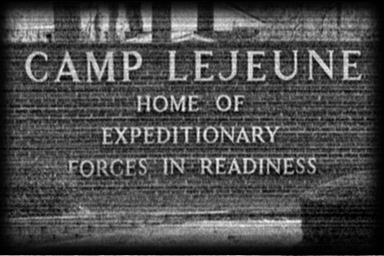

Last April, two Marines at Camp Lejeune predicted to a psychiatrist that some Marine back from war was going to “lose it.” Concerned, the psychiatrist asked what that meant. One of the Marines responded, “One of these guys is liable to come back with a loaded weapon and open fire.”
They weren’t talking about Marines suffering from a tangle of mental and religious angst, like news reports suggest haunted the alleged Fort Hood shooter, Maj. Nidal Malik Hasan. The risk they reported at Camp Lejeune was broader and systemic. Upon returning home, troops suffering mental health problems were getting dumped into an overwhelmed healthcare system that responded ineptly to their crises, the men reported, and they also faced harassment from Marine Corps superiors ignorant of the severity of their problems and disdainful of those who sought psychiatric help.
As Dr. Kernan Manion investigated the two Marines’ claims about conditions at the North Carolina military base, the largest Marine base on the East Coast, he found they were true. Manion, a psychiatrist hired last January to treat Marines coming home from war with acute mental problems, warned his superiors of looming trouble at Camp Lejeune in a series of increasingly urgent memos.
But instead of being praised for preventing what might have been another Fort Hood massacre, Manion was fired by the contractor that hired him, NiteLines Kuhana LLC. A spokeswoman for the firm says it let Manion go at the Navy’s behest. The Navy declined to comment on this story.
While military officials and the media examine whether the Army missed warning signs that might have indicated an unhinged Nidal Hasan was capable of killing 13 people at Fort Hood, Manion’s Camp Lejeune story is a cautionary tale of what happens to those who blow the whistle on conditions for military personnel with mental problems.
Manion says the April incident with the two Marines was just one of a series of disturbing events and serious problems with mental healthcare he saw at Camp Lejeune, a base that may be best known for a water contamination scandal that led to high rates of cancer and birth defects among Marines and their families who lived there. He was particularly concerned to see that troubled Marines were stricken with the overwhelming impulse to commit suicide or murder, telltale signs of severe combat stress.
In a telephone interview from his Surf City, N.C., home, Manion talked of overburdened staff and inadequate resources at the Naval hospital at Camp Lejeune. The psychiatrist charged that medical officials failed to study and discuss violent events among returning Marines in an effort to prevent further, similar events, and did little planning to improve handling distraught Marines who were killing themselves and others in shocking numbers. In 2008, for example, 42 Marines committed suicide and 146 attempted to do so, according to the Marine Corps.
Coincidentally or not, within 12 hours of Hasan’s shooting spree, Camp Lejeune officials discovered the body of one Marine and took into custody another Marine, Pvt. Jonathan Law, who is accused of killing his colleague. Law, who had served a seven-month tour in Iraq, was suffering from self-inflicted wounds when arrested.
Mirroring reports from military installations across the country, Manion also reported harassment of Marines seeking mental help. The psychiatrist began to worry about the possibility of a major outburst of violence on the base.
“A significant number of Navy medical officials and Marine commanders do not get it,” a frustrated Manion said about the situation at Camp Lejeune. “They do not understand the implications of what happens if somebody loses it,” explained Manion, who has 25 years of experience as a psychiatrist and who also specializes in traumatic brain injury — exactly the kinds of skills needed so desperately at military hospitals, because mental problems and brain injuries are the signature wounds of the ongoing wars. “People either commit suicide, commit homicide, get drunk, beat up the wife, all these things. I’ve seen it,” he added. “That is how serious this is and they just don’t get it.”
Manion believes he likely prevented a “Columbine-style attack” late last April after the two Marines who warned that someone might “lose it” directed him to a third Marine who seemed on the verge of violence. Manion also provided his superiors with documentation showing troubling incidents and neglect for the needs of returning Marines that could easily precipitate violence. Maybe not on the scale of the massacre at Fort Hood, but more like the rampage by a frustrated Sgt. John Russell, who gunned down five fellow soldiers at a military mental health facility in Baghdad last May.
Manion provided to Salon a stack of correspondence with superiors, a virtual crystal ball predicting dire consequences if mental healthcare at Camp Lejeune isn’t immediately improved.
In an April 24 memo to his superiors, including Cmdr. Robert O’Byrne, head of mental health for the Camp Lejeune Naval Hospital, Manion describes a frustrated Marine punching a telephone pole with his bare fists outside a treatment clinic, then storming around, cursing, with a piece of lumber with a nail in it, though nothing was done to ensure he didn’t hurt himself, again, or others. In another case, a severely homicidal and suicidal Marine pounded his fists into a table and stormed out of treatment. Yet the hospital, Manion complained to his superiors, made no efforts to discuss these cases or how to better handle similar events in the future.
“There was — and continues to be — no means of discussion of high-intensity/dangerous cases such as this,” a desperate Manion wrote on April 24. He warned of “immediate concerns of physical safety” at the base’s mental health facilities. Manion wanted to set up special protocols for handling intense situations, such as having specially trained MPs ready to intercede if things got bad, and a plan to hospitalize potentially violent patients quickly. “They dragged their feet on that,” he told me.
Within days that April, Manion intervened with the two Marines who’d warned of colleagues potentially losing it. They directed him to a third Marine who they believed was going to go on a shooting rampage. Manion worked hard to get that Marine into treatment, possibly averting bloodshed. The two Marines involved also reported harassment for working limited duty while seeking mental healthcare for themselves. They heatedly claimed that two noncommissioned officers had recently told them, “I don’t care why you are on [limited duty]. You are nothing but worthless pieces of shit,” according to an April 29 e-mail Manion sent to O’Byrne and others, complaining about such attitudes.
Like many healthcare providers at military bases across the country, Manion technically worked for a military contractor, Spectrum Healthcare Resources, a subcontractor for NiteLines Kuhana LLC.
On June 24, a supervisor for the contractor warned Manion to stop making trouble. “Kernan Manion, it is requested that you cease and desist all further correspondence with the government,” the supervisor with NiteLines, Pamela Friend, wrote to Manion.
But Manion was still frustrated that Camp Lejeune did not seem to be taking these risks seriously. On Aug. 30, he appealed to a series of military inspectors general in a written complaint. He warned of an “immediate threat of loss of life and/or harm to service members’ selves or others” if conditions did not improve. He complained of a “complete disregard for … implications for patient safety and well-being.” He decried that officials at Lejeune had ignored “repeated overt and emphatically stated concerns about the very safety and overall welfare of the affected patients.” And he warned that “many patients’ lives are imminently at risk.”
Four days later, the contractor fired Manion “effective immediately,” according to his termination e-mail. The note provides no reason for the firing. Manion was directed to clean out his office the next day, under the watchful eye of a chief petty officer, and have no further contact with his patients.
In a statement to Salon, NiteLines said the Navy wanted Manion fired, but did not explain why. “The treatment facility at Camp Lejeune notified (Nitelines) that Dr. Manion did not meet the Government’s requirements in accordance with the contract, and they directed he be removed from the schedule,” it reads.
Salon e-mailed the spokesman for the Naval Hospital Camp Lejeune, Raymond Applewhite, with details of this story and then described some of these facts with him in a follow-up telephone call, requesting an interview with O’Byrne. The Navy did not respond further.
Manion left Camp Lejeune after he got fired, but he did not stop worrying about the potential for violence there. In mid-September, Manion filed a 14-page complaint with the Department of Defense inspector general. On Sept. 29, he warned the Navy’s Bureau of Medicine and Surgery inspector general in writing of “serious mismanagement of post-deployment mental health services that was both endangering patient, staff and community safety as well as severely compromising the quality of care” for returning Marines. Manion noted that the poor care at Camp Lejeune continued despite “the ever present threat of life-threatening violence by distraught service members towards themselves or others.”
Finally, Manion wrote President Obama that same day. “Frankly, in my more than 25 years of clinical practice, I’ve never seen such immense emotional suffering and psychological brokenness — literally a relentless stream of courageous, well-trained and formerly strong Marines deeply wounded psychologically by the immensity of their combat experience,” he wrote to the president. Manion added, however, that at Camp Lejeune, that immense problem was being met with “inadequate treatment” and “callous indifference.”
He still worries. “I don’t like seeing these guys mistreated,” Manion said. “This is akin to somebody dying on the battlefield and not being attended to,” he added. “These guys are saying they are broken and need help, and the system is saying, ‘next, next, next.’”
As Pfc. Naser Abdo beseeched officials to grant him conscientious objector status and release him from the military, he condemned a fellow Muslim soldier accused of shooting 13 people to death at Fort Hood. Such acts, he wrote, “run counter to what I believe in as a Muslim.”
Less than a year later, officials say Abdo has admitted planning to launch another attack on Fort Hood with a bomb in a backpack and weapons stashed in a motel room where he was arrested Wednesday, about 3 miles from the Texas Army base’s main gate.
The 21-year-old’s writings, including the essay obtained by The Associated Press in which he deplored the 2009 shootings, portray a devout infantry soldier struggling with his faith while facing the prospect of deployment and what he felt was the scorn of his peers.
“Overall, as a Muslim I feel that I will not be able to carry out my military duties due to my conscientious objection,” Abdo wrote in his application for the status. “Therefore, unless I separate myself from the military, I would potentially be putting the soldiers I work with in jeopardy.
“In this instance, I would be failing in my duty to my unit, my army and my god.”
Abdo was approved as a conscientious objector this year, but his discharge was put on hold amid military charges that 34 images of child pornography were found on a computer he used. He went absent without leave from Fort Campbell, Ky., during the July 4 weekend.
On July 3, Abdo tried to buy a gun at a store near the Kentucky post, according to the company that owns the store. Abdo told an AP reporter a week later that he was concerned about his safety and had considered purchasing a gun for protection, but had not yet done so.
Police in Killeen said their break in the case came Tuesday from Guns Galore LLC — the same gun store where Maj. Nidal Hasan bought a pistol used in the 2009 attack. Store clerk Greg Ebert said Abdo arrived by taxi and bought 6 pounds of smokeless gunpowder, three boxes of shotgun ammunition and a magazine for a semi-automatic pistol.
Ebert said he called authorities because he and his co-workers “felt uncomfortable with his overall demeanor and the fact he didn’t know what the hell he was buying.”
“We would probably be here today, giving you a different briefing, had he not been stopped,” said Killeen Police Chief Dennis Baldwin, who called the plan “a terror plot.”
According to an Army alert sent via email and obtained by the AP, Killeen police learned from the taxi company that Abdo had been picked up from a local motel and also had visited an Army surplus store where he paid cash for a uniform bearing Fort Hood unit patches.
Agents found firearms and “items that could be identified as bomb-making components, including gunpowder,” in Abdo’s motel room, FBI spokesman Erik Vasys said. The FBI planned to charge Abdo with possessing bomb-making materials.
An Oklahoma lawyer who has represented Abdo said Thursday he hadn’t heard him in weeks. “I’ve been quite anxious to get in touch with him,” said attorney James Branum.
The Army alert said Abdo “was in possession of a large quantity of ammunition, weapons and a bomb inside a backpack,” and upon questioning admitted planning an attack on Fort Hood.
The military’s criminal investigation division, along with the federal Joint Terrorism Task Force, had previously investigated Abdo after he was flagged for making unspecified anti-American comments while taking a language class, according to a U.S. official briefed on the investigation.
The official, who spoke on condition of anonymity because the investigation is ongoing, said neither the military nor the task force discovered anything at the time to indicate Abdo was planning an attack, the official said.
As the first anniversary of the 2009 Fort Hood rampage approached, Abdo sent to the AP the essay describing how he became a “different Muslim” after going through basic training at Fort Benning, Ga., and enduring religious harassment.
“Often times, during basic training the trainees would insult Islam and insult Muslims,” he wrote. As a result, Abdo said he grew reclusive and stopped socializing.
Abdo grew up in Garland, a Dallas suburb about 170 miles from Fort Hood. In his essay, he said his mother is Christian and his father is Muslim, and that he decided to follow Islam when he was 17.
“Little did I know that when I first became a Muslim that I was going to learn what Islam meant to me and what I was willing to sacrifice for it,” he wrote.
Abdo said life was better after he arrived at his first duty station, but that he studied Islam more closely as he neared deployment to learn “whether going to war was the right thing to do Islamically.”
“I began to understand and believe that only God can give legitimacy to war and not humankind,” he wrote. “That’s when I realized my conscience would not allow me to deploy.”
His application was filed in June 2010. Abdo wrote that if it was granted, he looked forward to “rejoining the Muslim community in Dallas and spending some time on ‘The path of Allah.” He said he would devote days or weeks travelling to other states and sleeping in mosques to “revive the faith of the Muslim nation.”
The Army’s Conscientious Objector Review board denied his request, but the deputy assistant secretary of the Army Review Boards Agency recommended this year he be separated from the Army as a conscientious objector. The discharge was delayed when he was charged with possession of child pornography on May 13.
Fort Campbell civilian spokesman Bob Jenkins said Abdo had been aware of the child pornography investigation since November.
Abdo attempted to purchase a gun July 3 from Quantico Tactical, a store near Fort Campbell in Oak Grove, Ky., said David Hensley, president of the seven-store chain.
Hensley said Abdo went into the store twice that day. The first time, after asking questions, he left. The second time, he attempted to buy a handgun, Hensley said.
“He exhibited behavior that alerted our staff and our staff refused to, based upon that behavior, sell him a firearm,” he said.
The AP was among the media outlets to interview Abdo in the past year when reporting on his request for objector status. On July 12, Abdo contacted an AP reporter with whom he had spoken previously, said he had gone AWOL and considered purchasing a gun for personal protection. Abdo said he had not yet done so, because he knew he would have to give his name and other information to the gun dealer.
The AP described the contents of this conversation on July 14 to a civilian Army spokesman. The next day, when contacted by Army investigators, the AP said it did not know Abdo’s location and provided the telephone number from which he made his original call.
Associated Press writers Diana Heidgerd in Dallas; Danny Robbins in Garland, Texas; Pauline Jelinek, Eileen Sullivan and Robert Burns in Washington; Kristin M. Hall in Nashville, Tenn.; and Bruce Schreiner and Janet Cappiello in Louisville, Ky., contributed to this report.
Continue Reading
Close
“Columbine” author Dave Cullen wrote yesterday that most media figures compulsively — and incorrectly — assign all killers to one of two binaries: Crazy or political. Right-wing commentators do the same thing, for the most part, though they tend to say killers are either crazy or terrorists. And while they’ll usually freely admit that Tim McVeigh counted as a terrorist, for the most part they reserve that term for Muslims who kill.
There is, for example, Charles Krauthammer’s classic column on Nidal Hasan, who killed 13 people at Fort Hood. Krauthammer is a former practicing psychologist — he’s also a former practicing liberal — and he used his considerable skill to argue that because he did not think Hasan was crazy, to call him crazy was dastardly political correctness. The correct diagnosis, according to Krauthammer, was that Hasan was a Muslim. He was driven to kill by Extremist Islamic rhetoric. He had, after all, e-mailed Anwar al-Awlaki, who sympathizes with al-Qaeda. He had even said frankly nutty things to his colleagues about nonbelievers having hot oil poured down their throats.
It’s not just that Krauthammer made a point of highlighting the influence of radical Islamism on Hasan’s crime — Krauthammer mocked those who thought there might be a psychological component to a formerly well-adjusted American suddenly falling under the sway of extremist rhetoric and shooting dozens of people.
Jared Loughner, though? He’s just nuts. Seriously, classic nutcase, end of story. It’s frankly irresponsible to speculate as to whether or not he had a political motivation when he attempted to assassinate a member of Congress.
Jonah Goldberg yesterday attempted to directly answer the question of why it’s “Islamic terrorism” when a Muslim does it and lone nuttery when a white American does it:
The difference is that most of the relevant Muslim mass-murderers in recent years have in fact either taken orders or meaningful encouragement from actual Jihadist organizations and individuals. The Times Square bomber did. The Fort Hood shooter did. The DC sniper didn’t, but he seems more of an exception than the rule.
First of all, “meaninful encouragement” is a wonderfully vague phrase that allows Goldberg to call people who never had any meaningful contact with terrorist groups “terrorists,” but even with that helpful bit of vague nonsense he is unable to justify the inclusion of one of his examples of terrorism, and is forced to consider it an “exception” to the rule he is in the process of inventing.
Did Hasan receive “meaningful encouragement” from al-Awlaki? Sure. But we have no idea whom Loughner may or may not have received “meaningful encouragement” from. We don’t have his e-mails. We don’t have his private conversations.
Goldberg goes on:
The “obvious” distinction is that there are a number of Islamist groups who are calling for violent attacks on America (which is why we are legally at war with them). Those that align with their cause are simply murderous traitors and terrorists. The Fort Hood shooter, we quickly learned, was in contact with Anwar al Awlaki. Loughner, we’ve quickly learned, was not in contact with Sarah Palin, had a grievance with Giffords that predates Palin’s prominence and the rise of the tea parties, and that he was simply out of his gourd.
It was nice of him to put “obvious” in scare quotes himself, thus saving me the trouble. But the fact is that there are plenty of extremist groups that are wholly American-grown and non-Islamic. (And if it’s only “terrorism” when we’re “legally at war” with the specific group who “meaningfully encouraged” the act, then very few things are terrorism anymore.)
But this paragraph, if you strip away the bit that’s clearly Goldberg thinking out loud, actually does explain the world-view succintly: It’s because those killers are Islamic. Yeah, Loughner wasn’t inspired by Sarah Palin’s Tweets. But Goldberg doesn’t say what he was inspired by. He was just “out of his gourd.” QED.
I don’t have a detailed psychological evaluation of either man, but based on the facts as we know them, it seems reasonable to argue that Nidal Hasan is a disturbed loner influenced to kill by extremist rhetoric that appeals to crazy people, and Jared Loughner is a disturbed loner possibly influenced to kill by extremist rhetoric that appeals to crazy people. The fact that Hasan was an increasingly devout Muslim meant that radical Islamic rhetoric appealed to him. The fact that Loughner was an increasingly disturbed young white American man meant that Ayn Rand and possibly David-Wynn: Miller and whatever else he got his hands on appealed to him. And any dangerous extremist supplements his bizarre beliefs with bad misreadings of non-extreme texts — the Koran, in Hasan’s case, and the various dystopian works of fiction on Loughner’s reading list.
The decision to murder innocent people is seldom one made by well men. If we’re going to argue that there’s something fundamental about Islam itself that causes it, when Muslims do it, it’s bald bigotry not to make the same argument when a non-Muslim commits a similarly incomprehensible crime.
If we define terrorism as violence committed by non-state actors aimed at achieving political goals, a case could be reasonably made for either, both, or neither or these men as terrorists. But when you start from the position that the Muslim is the “Terrorist” and the white guy is the “lone nut,” you’re have to work backwards to come up with a much more convoluted definition.
Continue Reading
Close
A gunman appeared to be trying to hit anyone who moved — not any specific person — as he fired upon Army personnel and civilian workers in a deadly rampage at Fort Hood last November, a military court heard Monday.
Pvt. Justin Johnson said he was chatting with his mother on his cell phone as he waited to undergo pre-deployment medical exams when the shooting began. He threw himself down and started to crawl.
The gunman “was aiming his weapon on the ground and he started shooting, and he was hitting people that were trying to get away,” Johnson told the Article 32 hearing via video link from Kandahar in Afghanistan.
“It didn’t seem like he was targeting a specific person, sir. He was just shooting at anybody.”
Johnson, who was shot three times in the attack and still has a bullet wedged in his lungs, could not identify the shooter.
In the first week of testimony, several witnesses said they made eye contact with Maj. Nidal Hasan, a 40-year-old American-born Muslim, and identified him as the gunman in the Nov. 5 shootings at the Texas Army post.
The hearing is to determine if Hasan will stand trial on 13 counts of premeditated murder and 32 counts of attempted premeditated murder in the worst attack on an American military base.
The investigating officer at the hearing, Col. James L. Pohl, said earlier this year that he wanted to hear from the almost three dozen people who were wounded in the attack. The Article 32 hearing is unique to the military in that Pohl, along with prosecutors and defense attorneys, can call witnesses.
Col. Morgan Lamb, a Fort Hood brigade commander appointed to oversee judicial matters in Hasan’s case, will decide if the prosecution has shown probably cause, thereby allowing the case to go to trial.
Witnesses last week told similar stories of how a balding man in an Army combat uniform stood by a front counter, shouted “Allahu Akbar!” — “God is great!” in Arabic — and started shooting at unarmed soldiers in a building where they went for routine medical tests before deploying.
When the volley of gunfire sprayed across a crowded waiting area, startled soldiers initially thought it was a training exercise.
On Monday, Spc. Joseph Tracy Foster said he was among those who thought the bullets being fired were not live ammunition.
“I felt a sharp pain in my hip,” said Foster, of the 20th Engineer Battalion. “I believed it was a paintball round, or something along those lines. … I remember bringing my hand up to my face and thinking: ‘These paintball rounds feel really real.’”
Many witnesses were shot more than once — some as they tried to pull buddies to safety, others as they hid under tables or chairs. One wounded soldier ran outside, but the gunman followed him and shot him again, soldiers testified.
Upcoming witnesses are expected to include the two Fort Hood police officers credited with taking the gunman down. Hasan, who was paralyzed from the chest down after being shot, remains jailed.
The hearing is expected to last at least another week.
(This version corrects that less than three dozen were wounded in the attack. )
Continue Reading
Close
For the first time in nearly a year, Army Maj. Nidal Hasan will come face to face with dozens of people he’s accused of attacking in last year’s shooting rampage at Fort Hood.
An Article 32 hearing, which starts Tuesday in military court and is expected to last at least three weeks, will determine whether there is enough evidence to put the Army psychiatrist on trial. It will also be the first time witnesses have testified about the worst-ever shooting on a U.S. military base.
Such hearings are unique to military court, where prosecutors and the defense can call witnesses, and both sides are able to question them and present other evidence.
Hasan, 40, is charged with 13 counts of premeditated murder and 32 counts of attempted premeditated murder. When the proceeding begins, he will be sitting just a few feet from the witnesses, who are expected to describe graphic details of the attack.
The shootings happened on a sunny autumn day at Fort Hood, one of the nation’s largest Army posts. About 300 people were in the Soldier Readiness Processing Center, a facility where soldiers must go before they are deployed to update vaccinations, get vision and dental screenings, finalize their wills or sign up to talk to a chaplain.
As soldiers waited in various lines, a man suddenly jumped up on a desk, shouted “Allahu Akbar!” — Arabic for “God is great!” — and started firing two guns, witnesses said.
The soldiers and civilian workers were unarmed as 100 rounds came at them directly or ricocheted off the desks and tile floor. Some dove for cover. Others ran outside, bullets whizzing by their heads while they pulled wounded comrades to safety. Victims moaned in pain and screamed for help.
Outside the building, soldiers in nearby buildings heard shouts for medics and ran to a grassy area where people lay bleeding. They ripped off their shirts and used them as a tourniquets. One young soldier loaded a few of the wounded into the back of his pickup and rushed to a hospital.
The rampage lasted only about 10 minutes, until two Fort Hood police officers shot and wounded Hasan, who is now paralyzed. He remains in custody.
The dead ranged in age from 19 to 62 and came from all walks of life: a pregnant soldier who had just returned from Iraq and wanted a lifelong Army career; a woman who had joined the military after the 2001 terrorist attacks and had vowed to take on Osama bin Laden; and a young father excited about his first deployment.
To grief-stricken families who had feared losing their loved ones on a foreign battlefield, this was unimaginable.
“He was on a base,” Marikay DeCrow, the widow of Staff Sgt. Justin M. DeCrow, said last year after the attack. “They should be safe there.”
Three who died and six who were seriously injured were in the same Army Reserve unit that Hasan was supposed to deploy with the following month.
The Madison, Wis.-based 467th Medical Detachment had just arrived at Fort Hood, so it’s unclear if Hasan knew any of the 40 members or was targeting them. Most of the unit, which provides counseling and other mental health services for soldiers, deployed to Afghanistan as scheduled a month after the attack.
In the wake of the rampage, a disturbing picture of Hasan began to emerge. The American-born Muslim was trying to get out of his pending deployment because he opposed the wars in Iraq and Afghanistan. He recently had been saying goodbye to friends and neighbors, and had given away his Quran and other belongings.
But there had been warning signs much earlier. Some fellow students in a graduate military medical program complained to the faculty about Hasan after he reportedly gave a presentation that justified suicide bombings and said the war on terror was a war against Islam.
But no one filed a formal complaint, out of fear that doing so would appear discriminatory toward a Muslim student.
After the shootings, government investigations uncovered critical security lapses. A local terrorism task force run by the FBI had learned months earlier of Hasan’s e-mail contacts with Anwar al-Awlaki, a radical Muslim cleric in Yemen who encouraged Muslims to kill U.S. troops, but the information was not adequately shared with the Pentagon.
An internal Pentagon review concluded that several medical officers at Walter Reed Army Medical Center failed to use “appropriate judgment and standards of officership” when reviewing Hasan’s performance as a student, internist and psychiatric resident. Defense Secretary Robert Gates has said disciplinary action is possible.
According to government documents obtained by The Associated Press, Hasan’s supervisors sanitized his performance appraisals during his residency at Walter Reed, even though he was described as a loner with lazy work habits and a fixation on his Muslim religion. He once appended “Allah willing” to a patient’s medical chart.
Despite their concerns that he might have been developing a psychosis, no mental health evaluation was done, documents show.
The Fort Hood attack spurred the military to make many changes, including a comprehensive weapons policy for military bases. The Defense Department’s final report on the shootings said military supervisors must have access to soldiers’ personnel records and be aware of signs of potential workplace violence. The Pentagon recently said it is taking new steps to beef up security and surveillance programs at its bases, and will join an FBI intelligence-sharing program aimed at identifying future terror threats.
Prosecutors have not said whether they would seek the death penalty if the judge determine there is enough evidence for a court-martial.
Hasan, 40, has been in custody since the shootings, first in a San Antonio military hospital and now in the nearby Bell County Jail, which houses military suspects for Fort Hood. The military justice system does not offer bail.
It’s unclear if Hasan’s military record or mental health issues will be addressed at the Article 32 hearing.
Lead defense attorney John Galligan said a defense psychiatrist plans to review Hasan’s military files, as well as government reports about Hasan’s alleged e-mails with al-Awlaki and the Pentagon review of Hasan’s time at Walter Reed. Galligan said he has not decided what evidence to present, “if anything at all.”
Continue Reading
Close
The Pentagon will investigate its procedures in light of the Fort Hood shooting rampage, looking at how all the military services keep a watch on potential problems in their ranks, officials said Tuesday.
The probe is still in the planning stages, but would be a broad examination beyond the particulars of Army psychiatrist Nidal Malik Hasan, officials said. Defense Secretary Robert Gates wants a unified probe that hits all corners of the Pentagon, Pentagon Press Secretary Geoff Morrell said.
“This is shaping up to be a DoD effort,” Morrell said, using shorthand for the Department of Defense.
“This is larger than the Army. There are issues that need to be looked at department-wide, and the focus at this point is trying to figure out some of those questions,” he added.
The investigation would consider some questions Morrell described as immediate, although he would not be specific, and some he said will take longer to frame and sort through.
Another official said there will be a fast look at whether the military has missed red flags that might signal there are other potentially dangerous service members out there. That official spoke on condition of anonymity because the investigation is still being organized.
The Army has also been preparing to launch its own internal probe. The Pentagon review could supersede that, although it is not clear whether the Army will still go ahead separately.
Though it’s still undecided who would do such a review and exactly what it would include, officials are working to make an announcement on it soon, a senior defense official said Tuesday on condition of anonymity because plans are still fluid.
Morrell said there has ben no decision on the structure, time line or staffing for a review.
“He’s trying to come to a resolution of this as quickly as possible, but this has not been nailed down quite yet,” Morrell said of Gates.
Hasan, an Army major, is accused of killing 13 people in the Nov. 5 shooting rampage at the Texas base.
Army Chief of Staff Gen. George Casey had said earlier that the service would take a hard look at itself following the Nov. 5 shooting.
Any new review would be have to be careful not to interfere with the ongoing criminal investigation, defense officials said. And so it could look at things outside that realm such as personnel policy and practices and whether there are adequate health services for troubled troops, one official said.
A top priority, this official said, likely would be to look at red flags missed in Hasan’s case, with an eye toward ensuring there are not other similar missed cases out there waiting to happen.
“A tragedy like this certainly gives this institution an opportunity to reflect on whether we are doing everything that we can and should to prevent something like this from happening,” said Defense Department spokesman Bryan Whitman. He said Gates has not made any decision on a defense-wide review.
Two military officials said Tuesday that Casey is looking at forming an investigative panel. It would look at Hasan as a whole, his career development and at what point someone should have or might have raised an alarm, one of the officials said. The other said the terms of what the panel would do have not been defined.
The proposed Army probe would focus on Hasan’s six years at Washington’s Walter Reed Medical Center, where he worked as a psychiatrist before he was transferred to Fort Hood in July, one said.
The doctors who oversaw Hasan’s medical training had discussed at a meeting concerns about Hasan’s overly zealous religious views and strange behavior months before the attack, a military official told The Associated Press last week. Hasan also was characterized as a mediocre student and lazy worker, but the doctors saw no evidence that he was violent or a threat. The military official spoke on condition of anonymity because the official was not authorized to speak publicly about the meeting.
The FBI learned late last year of Hasan’s repeated contact with a radical Muslim cleric in Yemen who encouraged Muslims to kill U.S. troops in Iraq. President Barack Obama already has ordered a review of all intelligence related to Hasan and whether the information was properly shared and acted upon within government agencies.
The Senate Homeland Security and Governmental Affairs Committee on Thursday will hold its first public hearing about the incident. Obama on Saturday urged Congress to hold off on any investigation, pleading for lawmakers to “resist the temptation to turn this tragic event into the political theater.”
——
Department of Defense http://www.defenselink.mil
Army http://www.army.mil
Continue Reading
Close