
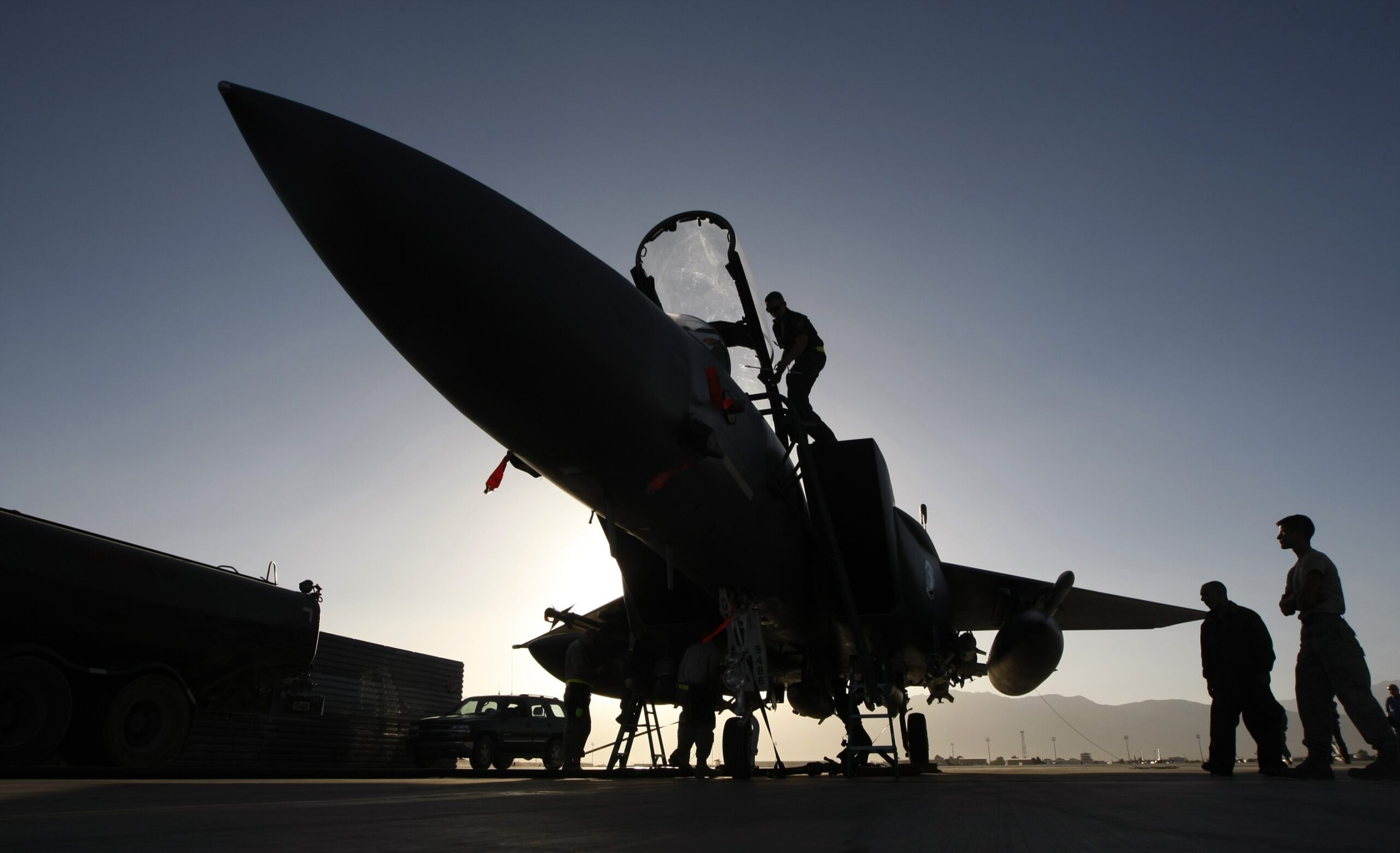

We think of ourselves as something like the peaceable kingdom. After all, the shock of Sept. 11, 2001, was that “war” came to “the homeland,” a mighty blow delivered against the very symbols of our economic, military and — had Flight 93 not gone down in a field in Pennsylvania — political power.
Since that day, however, war has been a stranger in our land. With the rarest of exceptions, like Army psychiatrist Maj. Nidal Hasan’s massacre at Fort Hood, Texas, this country has remained a world without war or any kind of mobilization for war. No other major terrorist attacks, not even victory gardens, scrap-metal collecting, or rationing. And certainly no war tax to pay for our post-9/11 trillion-dollar “expeditionary forces” sent into battle abroad.
And yet, if we are no nation of warriors, from the point of view of the rest of the world we are certainly the planet’s foremost war-makers. If money talks, then war may be what we care most about as a society and fund above all else, with the least possible discussion or debate.
So, let’s pause a moment as the New Year begins and take stock of ourselves as what we truly are: the preeminent war-making machine on planet Earth. Let’s peer into the future, and consider just what the American way of war might have in store for us in 2010. Here are 10 questions, the answers to which might offer reasonable hints as to just how much U.S. war efforts are likely to intensify in the Greater Middle East, as well as Central and South Asia, in the year to come.
1. How busted will the largest defense budget in history be in 2010?
Strange, isn’t it, that the debate about hundreds of billions of dollars in healthcare costs in Congress can last almost a year, filled with turmoil and daily headlines, while a $636 billion defense budget can pass in a few days, as it did in late December, essentially without discussion and with nary a headline in sight? And in case you think that $636 billion is an honest figure, think again — and not just because funding for the U.S. nuclear arsenal and actual “homeland defense,” among other things most countries would chalk up as military costs, wasn’t included.
If you want to put a finger to the winds of war in 2010, keep your eye on something else not included in that budget: the Obama administration’s upcoming supplemental funding request for the Afghan surge. In his West Point speech announcing his surge decision, the president spoke of sending 30,000 new troops to Afghanistan in 2010 at a cost of $30 billion. In news reports, that figure quickly morphed into “$30-$40 billion,” none of it in the just-passed Pentagon budget. To fund his widening war, sometime in the first months of the new year, the president will have to submit a supplemental budget to Congress — something the Bush administration did repeatedly to pay for George W.’s wars, and something this president, while still a candidate, swore he wouldn’t do. Nonetheless, it will happen. So keep your eye on that $30 billion figure. Even that distinctly low-ball number is going to cause discomfort and opposition in the president’s party — and yet there’s no way it will fully fund this year’s striking escalation of the war. The question is: How high will it go or, if the president doesn’t dare ask this Congress for more all at once, how will the extra funds be found? Keep your eye out, then, for hints of future supplemental budgets, because fighting the Afghan war (forget Iraq) over the next decade could prove a near-trillion-dollar prospect.
Neither battles won nor al-Qaida and Taliban commanders killed will be the true measure of victory or defeat in the Afghan war. For Americans at home, even victory as modestly defined by this administration — blunting the Taliban’s version of a surge — could prove disastrous in terms of our financial capabilities. Guns and butter? That’s going to be a surefire no-go. So keep watching and asking: How busted could the U.S. be by 2011?
2. Will the U.S. Air Force be the final piece in the Afghan surge?
As 2010 begins, almost everything is in surge mode in Afghanistan, including rising numbers of U.S. troops, private contractors, State Department employees, and new bases. In this period, only the U.S. Air Force (drones excepted) has stood down. Under orders from Afghan war commander Gen. Stanley McChrystal, based on the new make-nice counterinsurgency strategy he’s implementing, air power is anything but surging. The use of the Air Force, even in close support of U.S. troops in situations in which Afghan civilians are anywhere nearby, has been severely restricted. There has already been grumbling about this in and around the military. If things don’t go well — and quickly — in the expanding war, expect frustration to grow and the pressure to rise to bring air power to bear. Already unnamed intelligence officials are leaking warnings that, with the Taliban insurgency expanding its reach, “time is running out.” Counterinsurgency strategies are notorious for how long they take to bear fruit (if they do at all). When Americans are dying, maintaining a surge without a surge of air power is sure to be a test of will and patience (neither of which is an American strong suit). So keep your eye on the Air Force next year. If the planes start to fly more regularly and destructively, you’ll know that things aren’t looking up for Gen. McChrystal and his campaign.
3. How big will the American presence in Pakistan be as 2010 ends?
Let’s start with the fact that it’s already bigger than most of us imagine. Thanks to Nation magazine reporter Jeremy Scahill, we know that, from a base in Pakistan’s largest city, Karachi, officers of the U.S. Joint Special Operations Command, with the help of hired hands from the notorious private security contractor Xe (formerly Blackwater), “plan targeted assassinations of suspected Taliban and Al Qaeda operatives, ‘snatch and grabs’ of high-value targets and other sensitive action inside and outside Pakistan.” Small numbers of U.S. Special Forces operatives have also reportedly been sent in to train Pakistan’s special forces. U.S. spies are in the country. U.S. missile- and bomb-armed drones, both CIA- and Air Force-controlled, have been conducting escalating operations in the country’s tribal borderlands. U.S. Special Operations forces have conducted at least four cross-border raids into Pakistan’s tribal borderlands unsanctioned by the Pakistani government or military (only one of which was publicly reported in this country). And the CIA and the State Department have been attempting (against some Pakistani resistance) to build up their personnel and facilities in-country. This, mind you, is only what we know in a situation in which secrecy is the order of the day and rumors fly.
In the meantime, the Obama administration has been threatening to widen its drone war (and possibly other operations) to the powder-keg province of Baluchistan, where most of the Afghan Taliban’s leadership reportedly resides (evidently under Pakistani protection) and to the fighters of the Haqqani network, linked to both the Taliban and al-Qaida, in the Pakistani border province of North Waziristan. Right now, these threats from Washington are clearly meant to motivate the Pakistani military to do the job instead. But as that is unlikely — both groups are seen by its military as key players in the country’s future anti-Indian policies in Afghanistan — they may not remain mere threats for long. Any such U.S. moves are only likely to widen the Af-Pak war and further destabilize nuclear-armed Pakistan. In addition, the Pakistani military is not powerless vis-à-vis the U.S. For one thing, as Robert Dreyfuss of the Nation’s “Dreyfuss Report” recently pointed out, it has a potential stranglehold on the tortuous U.S. supply lines into Afghanistan, already under attack by Taliban militants, that make the war there possible.
Pakistan is the Catch-22 of Obama’s surge. As in the Vietnam War years, sanctuaries across the border ensure limited success in any escalating war effort, but going after those sanctuaries in a major way would be a war-widening move of genuine desperation. As with the Air Force in Afghanistan, watch Pakistan not just for spreading drone operations, but for the use of U.S. troops. If by year’s end Special Operations forces or U.S. troops are periodically on the ground in that country, don’t be shocked. However it may be explained, this will represent a dangerous failure of the first order.
4. How much smaller will the American presence in Iraq be?
Barack Obama swept into office, in part, on a pledge to end the U.S. war in Iraq. Almost a year after he entered the White House, more than 100,000 U.S. troops are still deployed in that country (about the same number as in February 2004). Still, plans developed at the end of the Bush presidency, and later confirmed by President Obama, have set the U.S. on an apparent path of withdrawal. On this the president has been unambiguous. “Let me say this as plainly as I can,” he told a military audience in February 2009. “By August 31, 2010, our combat mission in Iraq will end … I intend to remove all U.S. troops from Iraq by the end of 2011.” However, Robert Gates, his secretary of defense, has not been so unequivocal. While recently visiting Iraq, he disclosed that the U.S. Air Force would likely continue to operate in that country well into the future. He also said: “I wouldn’t be a bit surprised to see agreements between ourselves and the Iraqis that continues a train, equip, and advise role beyond the end of 2011.”
For 2010, expect platitudes about withdrawal from the president and other administration spokespeople, while Defense Department officials and military commanders offer more “pragmatic” (and realistic) assessments. Keep an eye out for signs this year of a coming non-withdrawal withdrawal in 2011.
5. What will the New Year mean for the Pentagon’s base-building plans in our war zones?
As the U.S. war in Afghanistan ramps up, look for American bases there to continue along last year’s path, becoming bigger, harder, more numerous, and more permanent-looking. As estimates of the time it will take to get the president’s extra boots on the ground in Afghanistan increase, look as well for the construction of more helipads, fuel pits, taxiways, and tarmac space on the forward operating bases sprouting especially across the southern parts of that country. These will be meant to speed the movement of surge troops into rural battle zones, while eschewing increasingly dangerous ground routes.
In Iraq, expect the further consolidation of a small number of U.S. mega-bases as American troops pull back to ever fewer sites offering an ever lower profile in that country. Keep your eyes, in particular, on giant Balad Air Base and on Camp Victory outside Baghdad. These were built for the long term. If Washington doesn’t begin preparing to turn them over to the Iraqis, then start thinking 2012 and beyond. Elsewhere in the Persian Gulf region, look for the U.S. military to continue upgrading its many bases, while militarily working to strengthen the security forces of country after autocratic country, from Saudi Arabia to Qatar, in part to continue to rattle Iran’s cage. If those bases keep growing, don’t imagine us drawing down in the region any time soon.
6. Will the U.S. and Israel thwart the Iranian insurgency?
Iran has long been under siege. A founding member of George W. Bush’s “Axis of Evil,” the Islamic Republic was long on his administration’s hit list. It also found itself in the unenviable position of watching the American military occupy and garrison two bordering countries, Iraq and Afghanistan, while also building or bolstering bases in nearby Qatar, Bahrain, Kuwait, Oman and the United Arab Emirates. The Obama administration is now poised to increase key military aid to Iran’s nemesis, Israel, and the Pentagon has flooded allied regimes in the region with advanced weaponry. Years of saber-rattling and sanctions, encirclement and threats nonetheless seemed to have little palpable effect. In 2009, however, a disputed election brought Iranians into the streets and, months later, they’re still there.
What foreign militarism couldn’t do, ordinary Iranians themselves now threaten to accomplish. In earlier street protests, young middle-class activists in Tehran chanting “Where is our vote?” were beaten and martyred by security forces. Today, the protests continue and oppositional Iranians from all social strata are refusing to retreat while, when provoked, sometimes fighting back against the police or the regime’s fearsome Basiji militia, even inducing some of them to step aside or switch sides.
A continuing cycle of ever-spreading arrests, protests and violence in 2010 threatens to further destabilize the regime. How Washington reacts could, however, deeply affect what happens. The memory of the CIA’s toppling of Iranian Prime Minister Mohammed Mossadegh in 1953 is still alive in Iran. Any perceived U.S. interference could have grave results for the Iranian insurgency, as could Israeli actions. Recently, President Obama, evidently trying to bring the Chinese into line on the question of imposing fiercer sanctions, reportedly told China’s president that the United States could not restrain Israel from attacking Iran’s nuclear facilities much longer. Such an Israeli attack would certainly strengthen the current Iranian regime; so, undoubtedly, would pressure to increase potentially crippling sanctions on that country over its nuclear program. Either or both would help further cement the current tumultuous status quo in the Middle East.
7. Will Yemen become the fourth major front in Washington’s global war?
George W. Bush unabashedly proclaimed himself a “war president.” President Obama seems to be taking up the same mantle. Right now, the Obama administration’s war fronts include the inherited wars in Iraq and Afghanistan, a not-so-covert war in Pakistan, and a potential new war in Yemen. (There are also rarely commented upon ongoing military actions in the Philippines and a U.S.-aided drug war in Colombia, as well as periodic strikes in Somalia.) Though the surge in Afghanistan and Pakistan was supposed to contain al-Qaida there, the U.S. now finds itself focusing on yet another country and another of that organization’s morphing offspring.
In 2002, a USA Today article about a targeted assassination in Yemen began: “Opening up a visible new front in the war on terror, U.S. forces launched a pinpoint missile strike in Yemen…” Just over seven years later, following multiple U.S. cruise missiles launched into the country and targeted airstrikes by the air force of the U.S.-aided Yemeni regime against “suspected hide-outs of Al Qaeda,” the New York Times announced, “In the midst of two unfinished major wars, the United States has quietly opened a third, largely covert front against Al Qaeda in Yemen.” In the wake of a botched airplane terror attack by a single young Nigerian Muslim, and credit-taking by a group calling itself al-Qaeda in the Arabian Peninsula, the usual cheery crew of U.S. war advocates are lining up behind the next potential front in the war on terror. (Sen. Joseph Lieberman: “Iraq was yesterday’s war. Afghanistan is today’s war. If we don’t act preemptively, Yemen will be tomorrow’s war.”) What began as a one-off Bush assassination effort now threatens to become another of Obama’s wars.
The U.S. has not only sent Special Forces teams into the country, but is now pouring tens of millions of dollars into Yemen’s security forces in a dramatic move to significantly arm yet another Middle Eastern country. At the same time, U.S.-backed Saudi Arabia — whose alliance with Washington ignited the current war with al-Qaida — is aiding the Yemeni forces in a war against Houthi rebels there.
This is a witch’s brew of trouble. Keep your eye on Yemen (with an occasional side glance at Somalia, the failed state across the Gulf of Aden). Expect more funding, more trainers, more proxy warfare, and possibly a whole new conflict for 2010.
8. How brutal will the American way of war be in 2010?
When it comes to war, American-style, the key word of 2009 was “counterinsurgency” or COIN. Think of it as the kindly version of war the American way, a strategy based on “clearing and holding” territory and “protecting” the civilian population. Its value, as expounded by Afghan war commander McChrystal, lies not in killing the enemy but in winning over “the people.” On paper, it sounds good, like a kinder, gentler version of war, but historically counterinsurgency operations have almost invariably gone into the ditch of brutality. So here’s one word you should keep your eyes out for in 2010: “counterterrorism.” Consider it the dark underside of counterinsurgency. Instead of boots on the ground, it’s bullets to the head.
Gen. McChrystal was, until recently, a counterterrorism guy. He ran the Joint Special Operations Command (JSOC) in Iraq and Afghanistan. His operatives were referred to, more or less politely, as “manhunters.” Think: assassins. With McChrystal, a general who credits his large-scale assassination program for a great deal of the Iraq surge’s success in 2007, it was just a matter of time before counterterrorism — which is just terrorism put in uniform and given an anodyne name — was ramped up in Afghanistan (and undoubtedly Pakistan as well). Though the planes may still be grounded, the special ops guys who kick in doors in the middle of the night and have often been responsible for grievous civilian casualties will evidently be going at it full tilt.
As 2009 ended, the news that black-ops forces were being loosed in a significant way was just hitting the press. So watch for that word “counterterrorism.” If it proliferates, you’ll know that the expanding Afghan war is getting down and dirty in a big way. For Americans, 2010 could be the year of the assassin.
9. Where will the drones go in 2010?
If there’s one thing to keep your eye on in the coming year, it might be the unmanned aerial vehicles — drones — flown secretly, in the case of the Air Force, from distant al-Udeid Air Base in Qatar and, in the case of the CIA, even more distantly out of Langley, Va. American drones are already in a widening air war in the Pakistani tribal borderlands, while Washington threatens to create an even wider one. Think of these robotic planes as the leading edge of global war, American-style. While “hot pursuit” into Pakistan may still be forbidden to U.S. troops in Afghanistan, the drones have long had a kind of hot-pursuit carte blanche in Pakistan’s tribal borderlands.
Perhaps more important, they can, to steal a “Star Trek” line, boldly go where no man has gone before. Since the first drone assassination attack of the Global War on Terror — in Yemen in 2002 — in which several men, reputedly al-Qaida militants, were incinerated inside a car, drones have been taking war into new territory. They have already struck in Iraq, Pakistan, Afghanistan and possibly Somalia. As the first robot terminators of our age, they symbolize the loosing of American war-making powers from the oversight of Congress and the American people. In principle, they have made borders (hence national sovereignty) increasingly insignificant as assassination attacks can be launched 24/7 against those we deem our enemies, on the basis of unknown intelligence or evidence.
With our drones, there is little price to be paid if, as has regularly enough been the case, those enemies turn out not to be in the right place at the right time and others die in their stead. Globally, we have become the world’s leading state assassins — a judge, jury and executioner beyond the bounds of all accountability. In essence, those pilot-less planes turn us into a law of war unto ourselves. It’s a chilling development. Watch for it to spread in 2010, and keep an eye out for which countries, fielding their own drones, follow down the path we’re pioneering, for in our age all war-making developments invariably proliferate — and fast.
The Element of Surprise
We know one thing: 2010 will be another year of war for the United States and, from assassination campaigns to new fronts in what is no longer called the Global War on Terror but is no less global or based on terror, it could get a lot uglier. The Obama administration may, from time to time, talk withdrawal, but across the Middle East and Central Asia, the Pentagon and its contractors are digging in. In the meantime, more money, not less, is being put into preparations and planning for future wars. As William Hartung points out, “if the government’s current plans are carried out, there will be yearly increases in military spending for at least another decade.”
When it comes to war, the only questions are: How wide? How much? Not: How long? Washington’s answer to that question has already been given, not in public pronouncements, but in that Pentagon budget and the planning that goes with it: forever and a day.
Of course, only diamonds are forever. Sooner or later, like great imperial powers of the past, we, too, will find that the stress of fighting a continuous string of wars in distant lands in inhospitable climes tells on us. Whether we “win” or not in Iraq, Afghanistan, Pakistan and now Yemen, we lose.
Which brings us to our last question:
10. What will surprise us in 2010?
It would be the height of hubris to imagine that we can truly see into the future, especially when it comes to war. It is, in fact, Washington’s hubris to believe itself in control of its own war-making destiny, whether via shock-and-awe tactics that are certain to work, a net-centric military-lite that can’t fail, or most recently, a force dedicated to a “hearts and minds” counterinsurgency war in Afghanistan and, in the future, globally (under the ominous new acronym GCOIN).
The essence of war is surprise. So, despite all those billions of dollars and the high-tech weaponry, and the nine areas discussed above, keep your eyes open for the unexpected and confounding, and in the meantime, welcome to the grim spectacle of war American-style as the second decade of the 21st century begins in turmoil.
© 2010 Tom Engelhardt and Nick Turse
