
Disability
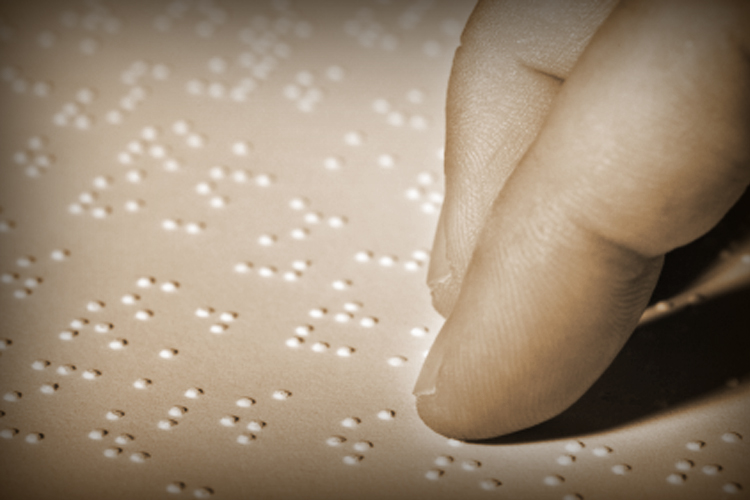
Why is braille dying?
In an age of audiobooks, only 10 percent of blind kids learn it. But listening isn't the same as reading
A version of this post previously appeared on The Biblio Files blog.
If you listen to an audiobook, have you read the book?
It’s undoubtedly a different experience to read a book with just ink and paper (or pixels and screen) between you and the author, than it is to listen to someone’s vocalization of the sentences. In “Proust and the Squid: The Story and Science of the Reading Brain” author Maryanne Wolf describes how the brain processes written information differently than audio or other information. Stanislas Dehaene delves even further into the science of reading in his book “Reading in the Brain: The Science and Evolution of a Human Invention
.” Listening or reading? It seems like an academic question. What difference does it really make? But a couple of articles I read recently have made me wonder.
In this New York Times article, we find that many blind people, including the governor of New York, don’t read braille. Instead they rely on audiobooks, recordings of newspapers and magazines, and human assistants to orally brief them on the business of the day. Text-to-speech technology allows people to hear their e-mails and other documents.
And in this Canadian Broadcasting Corp. article, we find that the major provider of books in braille in Canada is about to go out of business if it can’t get government funding or some other source of revenue. They are having a hard time convincing people that braille is even necessary anymore.
In the New York Times article, one advocate for the disabled characterizes blind people who don’t read braille as illiterate. He describes their writing as “phonetic and butchered.” If it were merely a matter of acquiring information, as seems to be the case with the woman profiled in the New York Times, then there’s no doubt that the quickest, most efficient method of “reading” is preferable.
I can’t help thinking that it’s a mistake to let braille die, though. According to the National Federation of the Blind, only 10 percent of blind children learn braille today, down from 50 percent in the 1950s, and only 10 percent of blind people in America read braille. Is it just as good to listen to a book as it is to read it? When I listen to a book, my mind wanders more often than it does when I read a book. If I want to read faster or slower, it’s up to me, not the person who is reading (although there are audiobooks now with adjustable speeds). My brain seems more passive when I’m listening than when I’m reading, but that could be a lack of mental discipline on my part.
Human beings have been talking and listening to each other for at least 50,000 years. We’ve been reading and writing for around 7,000 or 8,000 years. People don’t have to be taught to listen. Reading is a different, more complex activity than listening.
Don’t get me wrong — audiobooks are great for car trips or when you’re in the gym. Multitasking dynamos like Gov. Paterson and others, blind or not, find audiobooks and other recorded documents an efficient way to acquire information. You have to admire that.
But listening isn’t reading. I hope that braille instruction and braille books remain an available option for people who can’t read print.
Man with Down syndrome seeks “Girlfriend”
An atmospheric low-budget indie, and its compelling star, tackle a tough "disability" issue with compassion
Shannon Woodward and Evan Sneider Taken as a whole, Justin Lerner’s debut feature “Girlfriend” — a surprise hit at last fall’s Toronto International Film Festival — is a modest, uneven example of regional American independent film. But it has tremendous heart and integrity, and also offers remarkable chemistry in its unlikely central pairing of Shannon Woodward, a young actress who has performed several film and TV roles, and Evan Sneider, a young man with Down syndrome. Sneider’s performance is not a novelty act or an affirmative action gesture; he’s playing a complex and affecting character who is slightly out of step with the society around him but seeks to find his own place within it. (Sneider is being billed as the first actor with Down syndrome to play a starring role in an American feature film, and I can’t disprove that hypothesis.)
Continue Reading CloseLady Gaga apologizes for “retarded” comment
The singer used the r-word during an interview, but quickly apologized for her word choice. Do you forgive her?
She's very, very sorry! Lady Gaga may have made amends with Weird Al, but she still has to answer for her politically incorrect remarks during a recent NME interview. When asked (for probably the umpteenth time) if she ripped off “Born This Way” from Madonna’s “Express Yourself,” the little monster got hot under the collar, claiming the only similarities were the chord progressions. Also this:
Continue Reading CloseDrew Grant is a staff writer for Salon. Follow her on Twitter at @videodrew. More Drew Grant.
“Scream 4″: a blind review
What's your favorite scary movie? That's a tough question for Tommy Edison, a critic who with no sense of sight
Wes Craven's masterpiece is little more than sound if you can't see the fury. For the blind, buying a ticket to a horror or action movie must seem like a waste of time. Most of these films have sounds that 90 percent explosions, Hans Zimmer chords, and screaming. To add insult to injury, the little dialogue these movies offer are trite and cliched.
Which is something I never considered before watching the premiere episode of the Blind Film Critic, a new site by radio personality and former mayor of Connecticut (for a day) Tommy Edison. In his review of “Scream 4″ Edison, who has been blind since birth, gleefully eviscerates the slasher film for its many non-visual shortcomings.
Continue Reading CloseDrew Grant is a staff writer for Salon. Follow her on Twitter at @videodrew. More Drew Grant.
Stepmother indicted on grisly death of disabled girl
Investigations suggest that cancer-stricken 10-year-old was victim of dismemberment after finding some remains
FILE -This May 2010 file photo shows Zahra Clare Baker, 10, getting a hearing aid during an event at Charlotte Motor Speedway in Hickory, N.C. Elisa Baker , stepmother of Zahra Clare Baker, was indicted Monday, Feb. 21, 2011 on a second-degree murder charge in Zahra Clare Baker's death. Elisa Baker had previously been charged with obstructing justice in the investigation of Zahra Baker's death. The 10-year-old was reported missing in October, and police later found her remains in different locations in western North Carolina. (AP Photo/The Independent Tribune, James Nix, File)(Credit: AP) The stepmother of a 10-year-old disabled girl was indicted Monday on a charge she murdered the child, and officials released the latest gruesome detail in the case of little, freckle-faced Zahra Baker: Her head is missing.
Medical examiners said Zahra’s death was caused by “undetermined homicidal violence.” An autopsy was done even though authorities haven’t recovered many bones, most notably the girl’s skull, months after she was reported missing. Several bones showed cutting tool marks consistent with dismemberment.
Continue Reading CloseJudge orders disaster plan for L.A.’s disabled
Lawsuit stems from the abandonment of the disabled during Hurricanes Katrina and Rita due to lack of planning
The city of Los Angeles discriminates against disabled people because it lacks specific plans to meet their needs in the event of a natural disaster or other emergency, a federal court ruled Friday, the first such decision in the country.
“Because of the city’s failure to address their unique needs, individuals with disabilities are disproportionately vulnerable to harm in the event of an emergency or disaster,” U.S. District Court Judge Consuelo Marshall said.
Marshall ordered the city to meet with the plaintiffs, Audrey Harthorn, a Los Angeles resident who uses a wheelchair, and Communities Actively Living Independent and Free, a Los Angeles nonprofit independent living center, in the next three weeks to come up with a disaster plan for disabled people.
Continue Reading ClosePage 1 of 4 in Disability