
Coffee and tea
Baristas gone wild: Meet fourth-wave coffee
Thanks to a new machine, the future of espresso is here -- whatever that means
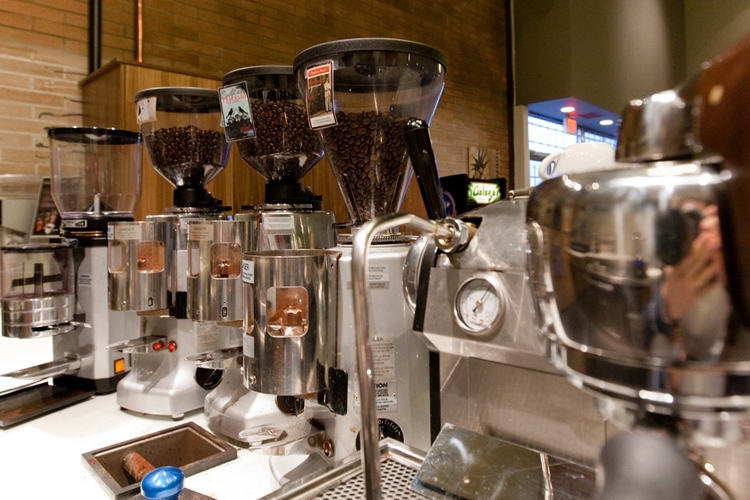
The Slayer Rejoice! Fourth-wave coffee is here, and its name is Slayer. And no, it’s not a coffee-themed WWE wrestler — the Slayer is a tricked-out, handmade espresso machine, and if the buzz is to be believed, no crappy cup of joe is safe. A coffee blogger at Serious Eats swooned about its ability to “enhance or manipulate flavor profiles,” and even claimed that it marked the beginning of a new age: “I can honestly say,” she wrote, “the moment Slayer hit the market, fourth wave coffee arrived.”
Fourth-wave coffee? When, you might wonder, did espresso-making become the feminist movement? In 2003, apparently. That’s the year coffee purists first adopted the “wave” concept to explain the ways in which coffee taste has improved in recent years. The concept was first proposed by Trish Skeie, of Seattle’s Zoka coffee and a prominent figure in specialty coffee, in a 2003 article for the Roasters Guild’s Flamekeeper magazine. The gist: There have been three waves in coffee consumption and preparation — and we didn’t get things right until now.
The first wave, according to Skeie, began in the years following WWII, when instant coffee was all the rage, and the drink was largely being consumed for its stimulating qualities. The second wave of coffee began in the late ’60s, when companies like Peet’s and then Starbucks began selling specialty grade coffees, folks started spending more time in coffee shops, and, egad, drinking espresso. And then, in the early oughts, claims Skeie, the “third wave” of coffee was upon us.
Marked by the proliferation of specialty coffee shops (like the West Coast’s Stumptown and Blue Bottle, and New York’s Ninth Street Espresso), third-wave coffee is all about taste. As Jonathan Gold, the L.A. Times’ Pulitzer-winning food writer, describes it, the third wave is “where beans are sourced from farms instead of countries, roasting is about bringing out rather than incinerating the unique characteristics of each bean, and the flavor is clean and hard and pure.” Since its inception, Skeie’s “third wave” terminology has become standard among baristas and popped up everywhere from the Guardian to the New York Times.
If this seems like barista pretention gone overboard, you’re not alone. As the Shot blog points out, claiming that good coffee hasn’t existed until this decade is like “saying that Christopher Columbus ‘discovered’ America.” “What constitutes quality coffee hasn’t really changed … what has changed is the education and sophistication of the American consumer palate.” Perhaps it’s not that coffee has suddenly gotten much better, Americans have just learned new words to talk about it (crema, coloration, undertones), and coffee sellers have gotten better at marketing coffee as a luxury product.
But is the “third wave” really over? What does Slayer offer that third-wave espresso machines do not? The La Marzocco blog (a company that makes espresso machines) speculated that a fourth-wave machine would allow for “advanced soft preinfusion,” which creates “softer and more rounded” coffee. Slayer isn’t quite there yet, but it allows baristas to manipulate the pressure under which the coffee is extracted in mid-shot, changing the viscosity, shade and “sourness” of the coffee. Or, as Cora Lambert, from New York’s RBC coffee, explained to Serious Eats, the “espresso shot benefits from the analog quality of saturation brewing.”
I’ve guessing that I’m not the only person who has no clue what most of that means, but that’s just fine with me. The coffee connoisseurs and the hipster baristas will be able to taste the difference, and can argue about “waves” and “pressure” all they want. All I care about is whether my cup of coffee is hot, tastes good, and will keep me from falling asleep on the subway in the morning.
Thomas Rogers is Salon's Arts Editor. More Thomas Rogers.
Does coffee make you hear things?
A new study reports a link between caffeine intake and mild hallucinations
Scholars at Australia’s La Trobe University just released a study showing a correlation between caffeine intake and auditory hallucinations. In layman’s terms: Lots of coffee might make you more likely to hear things that aren’t there.
Researchers came to the conclusion after studying 92 people with a broad range of java-drinking habits. Participants — who were told they were taking part in hearing tests — were set up with headphones and asked to press a buzzer every time they heard audio from Bing Crosby’s classic “White Christmas.” As a matter of fact, the only sound played into the headsets was white noise. But participants who drank at least 400 milliliters (or about 13.5 fluid ounes) of coffee per day were significantly more likely to identify Crosby’s soulful croon.
Continue Reading CloseSalon’s Great Coffee Art contest
Send us a snap of your favorite barista's foamy brilliance, and become eligible for cool prizes
Latte art by Chuck Betz / Culture Espresso Bar Update: So sorry if the entry you sent to coffee@salon.com bounced back. Everything’s fixed! Please give it another shot.
Latte art, pouring “textured” milk into espresso to create designs — and in some cases full drawings — is one of the branches of the barista’s discipline. We’ve enjoyed our milky coffees topped with hearts, roses and leaf shapes for years, but a recent smiley bear face finally got all of Salon to wonder, How does that work?
Continue Reading CloseFrancis Lam is Features Editor at Gilt Taste, provides color commentary for the Cooking Channel show Food(ography), and tweets at @francis_lam. More Francis Lam.
Starbucks announces the Trenta, their largest size ever
The 31-oz Trenta is one of the biggest in America -- not even Dunkin' Donuts or 7-11 serve coffee this large
In this undated product image provided by Starbucks, the company's new 40-year anniversary logo is seen on a cup at right. Other cups bearing the company's logo from over the years, from left, 1971, 1987, and 1992, are also shown. (AP Photo/Starbucks) NO SALES(Credit: AP) Like Starbucks coffee? Well, now you can like a lot more of it all at once.
The Seattle-bassed coffee company announced today that it would offer a new size of coffee in the spring: Trenta. Clocking in at a thirst-quenching 31-ounces, the Trenta will be available only for iced beverages and — with the exception of McDonalds’ 32-ounce cup — may be the largest size of coffee offered by a national chain.
Continue Reading CloseAdam Clark Estes blogs the news for Salon. Email him at ace@salon.com and follow him on Twitter @adamclarkestes More Adam Clark Estes.
Nineteen Guatemala coffee workers die in truck crash
The driver is in police custody after authorities smelled alcohol on his breath
A livestock truck packed with workers on their way to a Guatemala coffee plantation veered off a winding road and crashed, killing 19 of the passengers and injuring 44, an official said Monday.
Nine of the coffee workers died at the scene Sunday in the town of Zunil, northwest of Guatemala City, and the others were pronounced dead at nearby hospitals, said Mario de Leon, a spokesman for a local fire department.
Most of the 70 people on the truck were between 12 and 19 years old and a handful of the passengers were children.
The truck driver, who is recovering at a hospital, is in police custody after authorities smelled alcohol on his breath after the crash, De Leon said.
The truck was coming down a road known for its sharp turns when it went off road and crashed into a wall, throwing out some of the passengers, authorities said.
Fifty other coffee workers were traveling the same road in a separate truck.
Coffee is one of Guatemala’s main exports.
What “true” espresso is, and how Americans ruin it
An Italian master tours the super-hot U.S. high-end coffee scene and is shocked at what we've done to his art
Espresso in Italy Giorgio Milos, the master barista at the high-end Trieste, Italy-based illy – whose familiar red logo adorns cans of quality coffee in 140 countries – stands inside a trendy downtown coffee shop in New York City and sucks in his cheeks. Something is wrong with the espresso he has just drunk. It has some of the right components – a bit floral, a bit chocolate – but there’s an astringency that makes him compare it to a green apple. “A good cup of espresso has to be balanced between sour, bitter, and sweet,” he explains. “Maybe they are using old beans.”
Continue Reading ClosePage 1 of 6 in Coffee and tea