Food traditions
Europe’s cupcake backlash begins
The dainty dessert is a big hit across the pond -- but not everyone's a fan
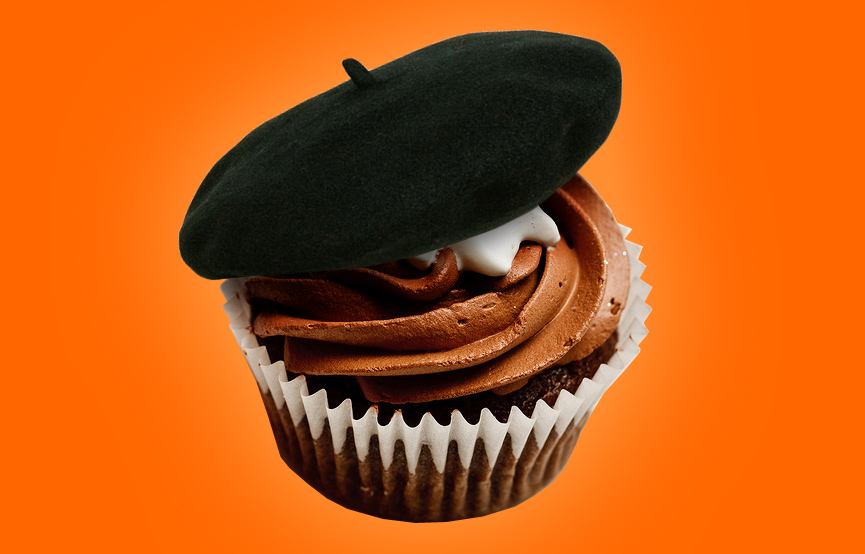
Nearly a decade after the upscale cupcake craze began sweeping America, the tiny frosted treats are finally reaching their tipping point on the other side of the pond. In recent years, the desserts have become popular everywhere from Berlin, whose first cupcake shop opened three years ago, to Italy, which, according to Reuters, has been seduced by their “romanticism,” to France and the United Kingdom (last year, the Guardian’s Zoe Williams wrote about their “unstoppable rise”). And now, three years after our own backlash, the European anti-cupcake movement has begun.
In a piece in Sunday’s Times of London, titled “Enough With the Cupcakes, Already,” Laura Atkinson argued that it’s time for the desserts to go away. They’re not only overpriced and unhealthy, she writes, they’ve caused London’s bakeries to fill with “women in their thirties, cooing over the cutesy, calorie-jammed treats as if they were newborn babies.” Atkinson bemoans that cupcakes now represent a “lifestyle choice”: “Cupcake-maker is also the latest alternative career aspiration for a host of yummy mummies who have stepped off the corporate treadmill, moved to the country or want flexible working.”
For Atkinson, it’s not a cake, it’s a culture of frivolousness, artificial domesticity and fetishistic cuteness. In the same vein, writing in the Guardian, Williams argued that cupcakes, like New Yorkers, are fundamentally selfish (nobody, after all, needs to share them) and that “part of the drama and magnetism of these cakes is their forbidden nature … They’re really not to eat, but to watch.” Those damn Americans, and their tortured relationship with frivolous desserts!
Ironically, our own cupcake trend — popularized, in large part, by “Sex and the City,” and New York’s Magnolia Bakery — peaked about three years ago. They’ve since been replaced by frozen yogurt and, most recently, macaroons as the dessert item du jour — and everyone from the New York Times to the Kitchn food blog have written about the trend’s demise.
To some extent Williams and Atkinson have a point — there is clearly something ridiculous about a $6 red velvet cupcake — but amid their histrionic complaints about cupcakes’ impact on gender roles and, in the case of Williams, thinly veiled anti-Americanism, they also miss out on the most important driving factor of the cupcake trend in America: nostalgia. Most of us remember our moms making cupcakes for birthday parties, or school bake sales, and it remains, in many parts of the country, a symbol of modest homey Americana.
When cupcakes went gourmet in the early 2000s, bakers were largely capitalizing on Americans’ childhood memories. In the European context, the cupcake was imported only after it rode the nostalgia wave to trendiness. This makes these complaints — and some recent European cupcake offerings — seem more than a little bit absurd. Take, for example, the new line of New York-themed cupcakes at German McDonald’s. They come in four different flavors — East Village, SoHo, Central Park and Chelsea — each represented by a different character. (The East Village is a hipster in an ugly sun hat, SoHo is what appears to be Midwestern college student.)
Luckily, the folks at Eater used Google Translate to decipher each cupcake’s description — and, oddly enough, the SoHo cupcake manages to encapsulate my feelings about this whole thing pretty perfectly: “After a spree breath through your town a bit and draw the view once again small. At Vanilla cup-cake, perhaps. But only briefly, because he is sooo yummy.” Well said, SoHo. Well said.
Thomas Rogers is Salon's Arts Editor. More Thomas Rogers.
Today’s must-see viral videos
Watch: The contested winners of annual hot dog eating contest, robots as second-class citizens, and more
I am robot, hear me roar. 1. 365 days of makeup
”Natural Beauty” answers that burning question once and for all, “What would you look like if you put on a year’s worth of makeup all at once?”
2. “District 9″ … with robots
Continue Reading CloseDrew Grant is a staff writer for Salon. Follow her on Twitter at @videodrew. More Drew Grant.
Our government’s terrifying food ads
New exhibit reveals the twisted logic of the Department of Agriculture's marketing department through the years
Government's attempts to explain healthy pig diet through motivational poster goes awry. There’s nothing more appetizing than giving human characteristics to the food you’re about to eat. That’s why we always see pictures of pigs with bibs on at rib houses; because for some horrible reason we feel better about eating Porky if we convince ourselves he’s a cannibal.
I always wondered where that strange impulse came from, and now thanks to a new exhibit, “What’s Cooking, Uncle Sam?” at the National Archives, I think I know. The New York Times ran a piece yesterday about the show, which focuses on posters, videos and other media from the Department of Agricultural, spanning all the way back to the revolutionary war.
Continue Reading CloseDrew Grant is a staff writer for Salon. Follow her on Twitter at @videodrew. More Drew Grant.
The five most ridiculous defenses of Ronald McDonald
A watchdog group is calling for the clown mascot's retirement, but is being creepy grounds for firing?
Who wouldn't accept food from this guy? McDonald’s is under attack again for force-feeding our nation’s children greasy, delicious fries. A group called Corporate Accountability International took out full-page ads today in several prominent newspapers, titled “Doctor’s Orders: Stop Marketing Junk Food to Children.“
And while this grievance might not seem new, exactly, CAI is launching another campaign on Thursday against Ronald McDonald himself, whom the watchdog group called a “Deep Fried Joe Camel.” They claim Ronald’s the equivalent of a drug pusher for MSG-addicted kids.
Continue Reading CloseDrew Grant is a staff writer for Salon. Follow her on Twitter at @videodrew. More Drew Grant.
Is it racist to ban shark’s fin soup?
All three West Coast states may eliminate the Chinese delicacy, but is it pro-environment, or anti-Asian?
Sandbar shark, one of the preferred species for fins My Chinese grandfather was well into the latter part of his life when he made some money. He’d brought his children up on bowls of white rice with soy sauce and maybe a little pat of lard if he was feeling flush. And so, when it was time to feed his grandchildren, he loved that he could feed them the good stuff, the expensive stuff. I remember him being happy to see my grade school straight-A report cards, but the grins he showed me then were dwarfed by the supernova smiles he’d flash when I ate with him, precociously enjoying shark’s fin soup and other delicacies cousins my age were studiously avoiding at the kids’ table. And so I wonder what he’d think of the movement to ban shark’s fin.
Continue Reading CloseFrancis Lam is Features Editor at Gilt Taste, provides color commentary for the Cooking Channel show Food(ography), and tweets at @francis_lam. More Francis Lam.
Toys that really cooked
Turns out you can create a whole dinner menu based on foods made by toys. So we did. Bon appetit!
With the sad-making news last week that the Easy-Bake Oven as we know it will be going to the Great Incinerator in the Sky, we here at Salon Food started reminiscing over our own toy food memories. There were the Easy-Bake knockoff Chuck E. Cheese pizza ovens, there were the heartbreakingly dear Snoopy Sno Cones, there were the furiously lame Queasy-Bake Cookerator Dip n’ Drool Dog Bones.
It wasn’t long, then, before Aviva Shen, editorial fellow extraordinaire, realized that you could put together a whole menu of toy-made foods: “Basically,” she said, looking at dozens of Easy-Bake bootlegs, including one that grilled hamburgers, “if a child had to survive on toy oven food alone, they could do it … though they would quickly develop diabetes.”
Bah! A small price to pay for self-reliance! And probably no more dangerous than giving hormone-charged 17-year-olds keys to thousands of pounds of rocketing steel. (Probably.) So we scoured history to find the finest play-date victuals. Please, sit back and enjoy our menu of toy-made foods.
Francis Lam is Features Editor at Gilt Taste, provides color commentary for the Cooking Channel show Food(ography), and tweets at @francis_lam. More Francis Lam.
Page 1 of 10 in Food traditions