
Food television

Can the Cooking Channel revamp food TV?

The lineup for Food Network's new sister channel looks smarter, worldlier and more Canadian than its predecessor

  • more
    • All Share Services

Can the Cooking Channel revamp food TV?

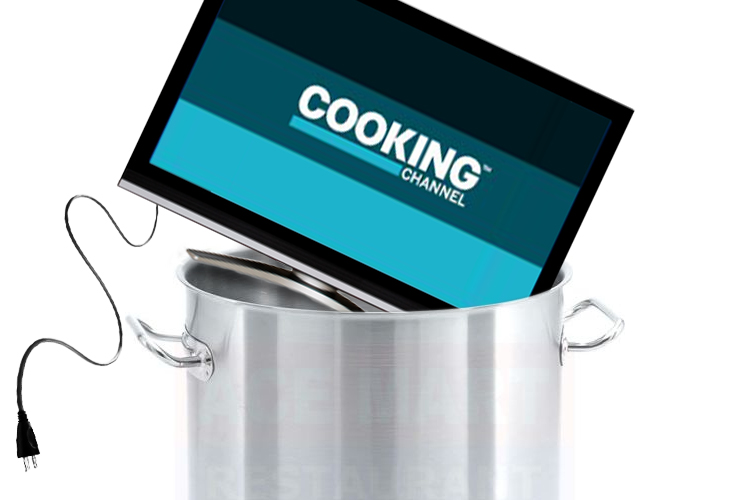
It’s been just over a month since Scripps Networks Interactive, the company that owns the Food Network, announced that it was launching another channel of food programming called the Cooking Channel. The network, which will launch on May 31 and which the New York Times described as “The Food Network, the sequel,” unveiled its lineup for advertisers yesterday morning in New York. The verdict: a somewhat smarter, somewhat hipper, and less polished version of its predecessor, but nothing that’s going to make you sneeze in your soufflé — call it the Food Network’s edgier younger sister.

When Scripps first announced its new endeavor, I spoke to NYU nutrition and food studies assistant professor Krishnendu Ray, who was surprised by the news, in part because ” nothing particularly interesting has happened to food television since the Japanese version of ‘Iron Chef.’” The format of most Food Network cooking shows, he explained, has long since hardened into three genres: daytime domestic cooking shows, travel shows like “Cook’s Tour,” and competition programs that turn cookery into a kind of sports competition. The latter feature professionals using skills that few home chefs actually have — a fact that, Ray argues, makes “cooking more watchable … but also less and less doable.”

So does the Cooking Channel inject anything new into the mix? Well, sort of. The lineup is mostly composed of standard food programming, albeit with a few exotic and intellectual twists. “Spice Goddess” and “Caribbean Food Made Easy” deviate from normal fare by focusing on Asian and Caribbean cooking, respectively. “Drink Up” will feature “creative and complex cocktails served by mad-scientist mixologists in sexy lounges.” On the more bookish end of things, Foodography will feature host Mo Rocca exploring the “past, present and future of iconic, classic and trendy foods” [Full disclosure: Salon food writer Francis Lam will be appearing on Rocca's show] and “Foodcrafters” will “unlock culinary treasures” from across the country (which I sincerely hope involves people eating things they find in safes).

More surprisingly, the New York Times reports that the channel may start featuring “documentary-style programming on topics like bulimia and obesity,” and Ray might be pleased to learn that one show actually bridges the gap between two of the played-out genres (competition and domestic cooking) he spoke to us about. In “Cook Like an Iron Chef,” “Iron Chef Michael Symon teaches viewers the skills and techniques needed” to cook like a reality-TV competitor chef — thereby making high-end cuisine more accessible to at-home cooks.

As Ray pointed out, if the Cooking Channel really wants to change food TV, it should really be looking to other countries — like Korea — to find cutting-edge new formats. The network isn’t venturing to Asia for programming, but it is going to Canada. As the New York Times reports today, at least six of the network’s shows will be imports from the Great White North, including something called “Food Jammers,” in which three hipsters assemble food gadgets, “David Rocco’s Dolce Vita,” and “Everyday Exotic.” It’s a move that makes sense given Canada’s surprisingly wide variety of original cooking-related programming. (Oddly enough, I actually spent two summers working as a production assistant and sous-chef’s assistant for a Canadian cooking show called “The Surreal Gourmet,” which revolved around former Salon writer Bob Blumer driving around Toronto in a giant toaster.)

What do we take away from this announcement? Obviously nobody has gotten a chance to see many of the shows in question, but based on this lineup, the Cooking Channel sounds like it might, without signaling a massive change, be a small step in a more interesting, more relevant and somewhat hipper direction for food programming on TV. It might actually provide programming that bears some relationship with food itself, as opposed to a relationship with competitive and over-the-top food media personalities. And worst comes to worst, it will at least have one sure-fire bit of quality programming: The network also announced that it will be rerunning old episodes of Julia Child.

Thomas Rogers

Thomas Rogers is Salon's Arts Editor.

“Freaky Eaters’” JJ Virgin on shock therapy and french fries

We spoke to the TLC show's nutritionist about the science of food addiction -- and her "shock therapy" approach

  • more
    • All Share Services

JJ Virgin and Dr. Mike Dow on "Freaky Eaters."

JJ Virgin has one of the stranger jobs out there: After spending 25 years studying health and fitness, she now spends her time on TLC, turning around the lives of food addicts on “Freaky Eaters.” (No, that’s not the show about people who eat laundry soap, a similar program on the same network called “My Super Strange Addiction.”) “Freaky Eaters” documents the life of a person addicted to a certain type of edible food — french fries, meat, and corn syrup have all been on the menu — as well as their recovery with the help of two specialists, Virgin and Dr. Mike Dow.

We spoke to JJ Virgin over the phone about what qualifies someone to be a “freaky eater,” as well as some of the more extreme measures they’ve taken on the program to make people confront their dangerous life choices.

This is the second season of the show, and there has been a lot of controversy about programs similar to “Freaky Eaters,” like “Hoarders” and “Intervention.” Some people are wondering if putting these people up on screen is helpful or just exploitative. What is your response to that sort of claim?

On “Freaky Eaters” we are dealing with people who don’t really fall into one specific disorder, one kind of psychological classification that can be treated. These are people that fall through the cracks, and they are desperate. They need help. I watch some of these shows out there that I do think are exploitative — though I do think most of them are more life-changing than exploitative — and I have to tell you, that’s not what we do. We do shock therapy, so you have people see the extent that they need to make the change, but I think everything is done in a very respectful way.

When you are dealing with someone who drinks gallons of tartar sauce and make them wade around in a pool of it, or have a guy who loves meat spend a day turning a pile of it into ground chuck in a freezer basement, would you call that behavioral therapy? Is that something you’d see psychological professionals doing if people weren’t falling through the cracks?

You know, behavioral therapy is really more what we do at the end of the show, what I call the “lateral shift”: having people make small changes in their lives. When someone is an addict of any type, the classic thing is to deny the problem or the extent of it. Shock therapy is to show these people their problem in a way that makes it impossible to deny or to downplay it.

What were some of the more outrageous examples you’ve had on the show?

The meat episode, that was so disgusting. We were hysterically laughing because the meat was spewing everywhere, as it was being ground up. The first season, we had a girl who ate 6,200 calories of sugar every day. She did all her shopping at the dollar store; it was amazing she wasn’t morbidly obese. So we had her lie down in a coffin and covered her with all the sugar she ate, and had her son read off a eulogy about all the things she was going to miss if she died from her lifestyle.

That’s intense.

We also had a pizza guy, where we had him pour all the fat from all the pizzas he ate in a year into a big bucket. And then we had him pour the bucket into jars. And at the end we had him dump the bucket, but instead he threw it, and it landed right on the cameraman, who was then covered in fat goop. And then we had a guy who ate 3-6 burgers a day, so we backed a truck filled with burgers right up to him and dumped out all the patties, just covered him up.

I can see how a lot of this is TV-friendly. Do you have a hard time differentiating yourself from the other TLC show, “My Strange Addiction,” where people eat stuff that is non-edible (like couch cushions, cigarette ash, and laundry detergent)?

People confuse us all the time. But what I think makes our show stand out is how relatable it is. I have people come up and ask me all the time, “This is what I do, am I freaky eater?” And I’m like “No, just because you eat a muffin everyday doesn’t get you qualified, sorry.”

Well that’s what’s so interesting, right? How blurry the lines can get? Because you’re not showing people with Pica, you’re showing people addicted to French fries. And I think a lot of people at home roll their eyes and go “Sure, we’re all addicted to French fries” until they see exactly how much this person is eating of it.

We did have a woman who had Pica and ate a lot of corn syrup, but that is still edible.

In my mind, the difference is severity … you can die from being obese, but it’s probably not going to kill you as fast as, say, downing laundry detergent every day.

Maybe not as fast, but you’ll find what we deal with is way more common, and therefore way more relatable. We try to get to the root of a lot of these issues on the show, because there is a psychological element to it, though a big part of being a “freaky eater” is biochemistry. Many of these people have a food sensitivity. They either are addicted to one taste, or they hate another kind. So the burger guy and the french fries person, they were both supertasters, they could taste things a mile away. And then this year we have a guy addicted to maple syrup, and he’s a “sweet taster”: nothing is sweet enough for him. These people can’t taste sweet well, so they keep wanting things sweeter and sweeter.

That’s interesting: so our predetermined sensitivity to different tastes can determine how hooked we get on a food?

Oh totally…we’re only at the beginning of understanding the biochemistry behind “taste.” It turns out you can taste things all down your G.I. tract. What we’re seeing now is just the tip of the iceberg in terms of some of the extreme forms of people with a tasting sensitivity.

“Freaky Eaters” can be found on TLC at 10:00 and 10:30 EST every Sunday night.


Continue Reading Close

Drew Grant is a staff writer for Salon. Follow her on Twitter at @videodrew.

The five most ridiculous defenses of Ronald McDonald

A watchdog group is calling for the clown mascot's retirement, but is being creepy grounds for firing?

  • more
    • All Share Services

The five most ridiculous defenses of Ronald McDonaldWho wouldn't accept food from this guy?

McDonald’s is under attack again for force-feeding our nation’s children greasy, delicious fries. A group called Corporate Accountability International took out full-page ads today in several prominent newspapers, titled “Doctor’s Orders: Stop Marketing Junk Food to Children.

And while this grievance might not seem new, exactly, CAI is launching another campaign on Thursday against Ronald McDonald himself, whom the watchdog group called a “Deep Fried Joe Camel.” They claim Ronald’s the equivalent of a drug pusher for MSG-addicted kids.

But how “friendly” is Ronald? A new study done by outside marketing group Ace Metric found that in a survey group of 500, an overwhelming amount found a guy with big red lips and white greasepaint more creepy than cute.

McDonald’s refuses to give up on Ronald, though, and its defense on why it needs to keep a terrifying clown as its mascot would be charming if it weren’t so ridiculous and backward. Below, five of the responses McDonald’s has given for keeping Ronald on the payroll.

1. Complaint: “It’s really remarkable how often I saw the word ‘creepy’ [in regards to Ronald],” says the V.P. of a company that conducted the survey.

McDonald’s response: “For everyone who may feel that way, there are more who feel the opposite.”

2. Complaint: Ronald McDonald is an evil clown.

McDonald’s response: “He is a force for good,” says McD’s CEO, Jim Skinner.

3. Complaint: Too many damn clowns running around.

McDonald’s response: “There’s only one Ronald,” McDonald’s chief creative officer Marlena Peleo-Lazar said in response to several questions about how many actors portray the smiling clown.

4. Complaint: He is hurting a brand image that is trying to be more adult … like Starbucks.

McDonald’s response: He is the brand image. “It would be almost as if the Geico gecko disappeared, or the Aflac duck,” says one marketing strategist. God forbid.

5. Complaint: Ronald encourages childhood obesity.

McDonald’s response: Around 2004, McDonald’s christened Ronald as a “balanced, active lifestyles ambassador,” and stuck him in commercials where he trained for the Olympics. He got workout clothes. He got a tuxedo. He moved from McDonaldLand into the real world. 

You know who can also move into the real world after being trapped in a fantasy land? Freddy Krueger.

It’s actually in CAI’s favor to have a scary mascot act as a deterrent for children trying to buy fries. It should be thanking McDonald’s for keeping such a creepy figure right in front of the golden arches.

Continue Reading Close

Drew Grant is a staff writer for Salon. Follow her on Twitter at @videodrew.

A burger by Daisy Martinez that says “party on my plate”

Figs? Ham? Host of "Viva Daisy" on the Food Network introduces salty and sweet to your hamburguesa

  • more
    • All Share Services

A burger by Daisy Martinez that says The Barcelona burger is seen in this July 2, 2010 photo. Contrasting flavors that all balance out is the aim of this burger from chef Daisy Martinez. (AP Photo/Larry Crowe)(Credit: AP)

For Daisy Martinez, a great burger does a bit of tug-of-war in your mouth.

“I always like to put together flavors that complement as well as contrast each other. This concept is especially important when creating a burger because you should experience that ‘kapow factor’ with each and every bite,” she said in an e-mail.

So for her contribution to AP’s 20 Burgers of Summer series, Martinez sought a balance of salty and sweet, which she satisfied by pairing grilled fresh figs with serrano ham.

“It was a short leap then to add the piquancy of a Cabrales blue (cheese), which complements the beef component of the burger,” she said. “Can you say ‘party on my plate’?”

Martinez is a big believer in big flavor in her burgers, and over the years says she has enjoyed many variations, including ones made from Kobe beef and seafood, even veggie varieties. But in the end, her blueprint for a great burger goes back to her childhood.

“Some of my fondest hamburger memories involve making homemade patties with my dad when I was little. He would season them with salt, fresh ground pepper and onion powder, then we would grill them over charcoal briquettes in our backyard, and the result was a slightly charred burger on the outside that was pink and juicy on the inside,” she said.

For the topping, it was beefsteak tomatoes and lettuce fresh from her mother’s garden, as well as her “salsa golf” (a mayo-ketchup blend).

“That was a little bit of heaven, right there on our plate,” she said. “Nothing compares to the burgers of my youth, made with love by Mom and Dad.”

BARCELONA BURGER

Start to Finish: 35 minutes

Servings: 4

1 pound ground beef

Kosher salt and ground black pepper

1/2 cup mayonnaise

Zest of 1 lemon

1/2 cup water

3 tablespoons extra-virgin olive oil

2 large Spanish onions, halved and thinly sliced

4 fresh figs, halved

4 large hamburger buns

1/4 pound Cabrales or other blue cheese, crumbled

1/4 pound serrano ham, thinly sliced (prosciutto also can be used)

Form the beef into 4 equal patties, then season each with salt and pepper. Set aside.

In a small bowl, stir the mayonnaise with the lemon zest. Set aside.

In a large skillet over high, add the water, olive oil and onions. Cook until the water is completely evaporated, then reduce the heat to low and cook, stirring occasionally, until golden brown and completely caramelized. Season with salt and pepper, then set aside.

Heat a grill to medium-high. Coat the grates with cooking spray.

Place the beef patties on the grill, cover and cook for about 3 1/2 minutes per side for medium-rare.

Season the figs with pepper, then place on the grill cut-side up. Place the buns on the grill cut-side up, as well. Sprinkle the bottom halves of the buns with the blue cheese. Cover the grill and cook for 1 minute.

To assemble, place each beef patty on a bun half with the melted cheese. Top with 2 slices of ham, 2 grilled fig halves and a dollop of the caramelized onions. Spread the remaining toasted bun halves with lemon mayonnaise, then top the burger.

Nutrition information per serving (values are rounded to the nearest whole number): 658 calories; 333 calories from fat; 37 g fat (11 g saturated; 0 g trans fats); 104 mg cholesterol; 44 g carbohydrate; 39 g protein; 3 g fiber; 1,381 mg sodium.

Continue Reading Close

Police arrest Kobayashi for hot dog contest outburst

A former eating champion illegally stage rushes the famous Coney Island competition's award ceremony

  • more
    • All Share Services

Hot dog!

Competitive eater Joey Chestnut has held on to his title at the annual July Fourth hot dog eating contest at New York’s Coney Island, but one of his biggest rivals tried to crash the celebration and has been taken into custody.

Chestnut chomped down on 54 hot dogs in 10 minutes on Sunday to win the annual Nathan’s International Hot Dog Eating Contest for the fourth year in a row.

Watching from the crowd was six-time champion Takeru Kobayashi (tah-KEH’-roo koh-bah-YAH’-shee), who has not signed a contract with Major League Eating to be free to compete in contests sanctioned by other groups.

But Kobayashi went on stage after the competition. Police officers grabbed him, and he tried to hold onto police barricades as they took him into custody.

Ladies, back away from the BBQ

Anthony Bourdain calls it a man's meat, but this female BBQ snob begs to differ

  • more
    • All Share Services

Ladies, back away from the BBQportrait of sexy young girl licking her thumb with bar of chocolate; isolated on white(Credit: Pavel Sazonov)

Usually, I’m a fan of chef Anthony Bourdain and his TV show “No Reservations.” He’s dashing, he’s adventurous, he traipses across the world gorging on drink and the kinds of street food that makes vegetarians — and health-code enforcers — shudder. And, in between bites of pickled goats brains and octopus entrails, he serves up a quip or four. Last night’s episode, glibly dubbed “Food Porn 2″ (with king of sleaze Ron Jeremy introducing each segment), yielded a couple such nuggets as Bourdain palled around with chefs and sampled some of the fattiest, richest, most insanely indulgent concoctions known to man. On a strip of aged prime beef at Porter House he cracked, “I think I saw this on a website — www.holyfuck.com.”

But then Bourdain dropped a wisecrack that irked more than amused. “Barbecue: It’s like chocolate for men,” he quipped, introducing a segment about some succulent, slow-roasted meats.

Thanks for that gender translation, there, Bourdain, but let me be the first to disabuse you of the notion that women like sweet things and men like meat things. I may have two X chromosomes, but that doesn’t affect my taste buds, thank you very much. Chocolate isn’t something I can tell you much about, but barbecue? Believe me, I can deliver a thesis defense on the best pulled-pork sandwich (without question: the Big Al’s at Al’s in Clarksdale, Mississippi) and the regional differences in sauce consistency (you’ve got your vinegar-based ones and your tomato-based ones, your sweet and your spicy). Just ask my long-suffering friends, forced to hear me constantly kvetch about the miserable state of barbecue in New York. On my trips home to Alabama, I regularly import home huge jars of sauce at great danger to every other item in my suitcase, just to try to recreate the elusive taste of my favorite sticky, tender, falling-off-the-bone BBQ ribs. For my birthday one year, my parents shipped up a container with three freeze-dried racks of ribs, complete with plastic bibs and wet-naps.

If there’s anyone who doubts that women understand the glories of barbecue: Just check who’s manning the kitchen at some of the legendary pits in Tennessee, Mississippi, Alabama, or the Carolinas. I guarantee you that behind most of those sliced pork platters, there’s a women expertly working the smokehouse. Like Paulette Washington, the co-proprietor of Archibald’s in Tuscaloosa, Alabama — hands down one of the best rib joints in the state. I can appreciate that there are women — and men — who don’t love either barbecue or chocolate, for that matter. But take it from a Southerner: There are a lot of us ladies who would rather get a plate piled high with brisket and baked beans than a box of chocolates any day.


Continue Reading Close

Margaret Eby is an editorial fellow at Salon.

Page 1 of 2 in Food television