
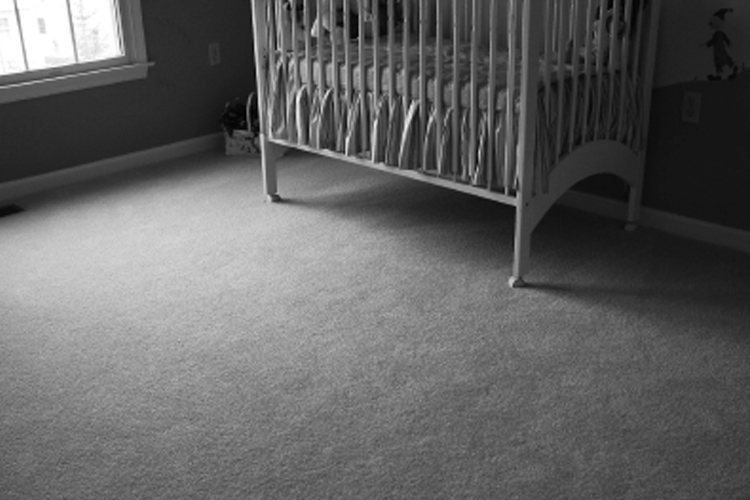

Do you let your baby girl smoke cigarettes in her crib? Do you allow your son to light up in his stroller, after a tough morning at daycare? Do you nurse your child while puffing on a Marlboro Light?
If not, you may be interested in what’s happening in a few top research labs around the world, where scientists have found evidence suggesting that chemicals designed to prevent fires are getting into your children’s blood and rewiring their brains, leading to attention deficit disorder, hyperactivity, hearing problems, slow mental development and, possibly, cancer. They’re not great for adults either — men with high blood levels of flame retardants had a decreased sperm count, and women took longer to conceive — but because children’s nervous systems are still developing, they are even more vulnerable.
Chemical flame retardants have been on the market since the 1970s, and are used in everything from computers to upholstery, including nursing pillows, cribs, strollers and fleece baby carriers. In the past 10 years, there’s been an explosion of evidence that the most widely used kind, called PBDEs (polybrominated diphenyl ethers), do more harm than good — especially when used in baby products, which have little chance of bursting into flames. The problem is that the chemicals can flake off the products and land in your baby stroller, your couch, your computer desk and your carpet, ending up being inhaled or swallowed by people and pets.
The EPA is so concerned about this risk that last month it proposed putting PBDEs on an official list of Chemicals of Concern, a new, short roster of products that pose an unreasonable hazard to consumers. If the list is approved by the Office of Management and Budget, it won’t quite have the weight of law but will send a message to consumers and manufacturers. But banning these chemicals has proven an intensely difficult task, as the $4.1 billion chemical industry manages a massive lobbying campaign against states that try to ban them, and individual scientists whose work raises questions about their safety.
Last December, the EPA was able to negotiate a voluntary phaseout of one ubiquitous flame retardant, known as “Deca.” Two other types were taken off the market in 2004. But there are more than 200 kinds of PBDEs, and the industry is developing different mixtures to replace the banned chemicals.
“The industry moves a few molecules and calls it a new product,” says Kathleen Curtis, policy director of Clean New York, an environmental advocacy group based in Albany. “Going after these flame retardants one at a time is like playing Whack-a-Mole. You knock one out and another one pops up. They are just buying time.”
Deborah Rice, a highly regarded Maine toxicologist who initially served on an EPA advisory panel on flame retardants, said, “Absolutely, the substitutes will be as bad or worse if they are halogen compounds — bromine or chlorine. The bromine industry is just creating new compounds to replace Deca. It’s a game.”
The latest replacement that regulators may want to whack is a flame retardant based on chlorine instead of bromine. The industry says it’s safe, but these chlorinated chemicals are closely related to a product called Tris, which was banned from children’s pajamas in 1977 because it was absorbed into the skin and was found to cause gene mutations. But Tris is now present in a commercial mixture used in furniture foam, baby strollers and other products. “People continue to be exposed to chlorinated Tris, which we already know is a very potent mutagen and probably a carcinogen,” said Linda Birnbaum, the director of the National Institute for Environmental Health Sciences, in a speech last September. Years ago, Birnbaum, formerly a top flame retardant researcher at EPA, said she did not believe Deca was a health threat, but recent studies changed her mind. She also expressed concern about the prospect of flame retardants interacting with other toxic compounds in the body: mercury from fish; BPA from a water bottle or pesticides in fruit. “Our propensity to think one chemical at a time is probably not where we should be headed,” Birnbaum said.
The EPA concedes that it’s worried about what the chemical industry is selecting to replace Deca, as it is phased out over the next three years. In an e-mail to Salon, agency spokesman Dale Kemery wrote that the “EPA is also concerned with the issue of the safety of the substitutes for decaBDE and other flame retardants.” Noting that there is a range of chemical and non-chemical alternatives being developed, Kemery said that the EPA plans to work with manufacturers and other interested parties “to evaluate potential substitutes on a cooperative basis … and hopefully EPA’s and others’ participation in the review will positively influence substitute selection.”
But depending on hope — and industry promises — is how U.S. citizens, along with seals, seabirds and other creatures, ended up with the highest blood levels of halogenated flame retardants of any place on earth. The Centers for Disease Control and Prevention says that 97 percent of Americans have flame retardants in their blood — a disturbing number since the EPA admits there’s no evidence that these chemicals actually reduce fires.
The chemical flame retardant business is dominated by three companies: Chemtura, Albemarle Corp. and ICL Industrial Products, based in Israel. (Chemtura filed for bankruptcy last year.) The companies agreed to phase out Deca without admitting any health hazard — the regulatory equivalent of nolo contendere.
“What I think of the deal doesn’t really matter, the deal is done,” said John Kyte, a managing director with Burson-Marsteller, the global P.R. and lobbying giant that runs the Bromine Science and Environmental Forum, the industry’s trade group. “Market pressures have created a perception that is not in keeping with the science, but nonetheless they are important market pressures.”
Chemical industry lobbyists seldom welcome studies that may lead the EPA to ban their products, but the flame retardant lobby is especially quick to strike back at researchers and lawmakers who take them on.
Nearly 10 years ago, Per Eriksson of Uppsala University, Sweden, found that two kinds of PBDEs caused learning and memory problems in lab mice. Eriksson was then accused of scientific misconduct by Albermarle. He still flinches at the memory, but Eriksson was defended by his university and scientists around the world. Since then, he has gone on to show that flame retardants cause subtle but lasting neurological damage in lab animals at levels only slightly higher than those found in people.
A landmark report led by Deborah Rice, who formerly worked at both EPA and Health Canada, documented Deca’s developmental neurotoxicity. Rice’s work prompted the American Chemistry Council to get her ousted from the EPA advisory committee in 2007, claiming she was biased against them. (Rice went on to be named as a Heinz laureate for her achievements in neurotoxicology.) The industry also launched an enormous advertising campaign against her work, but the tactic backfired and Maine became the first state to ban Deca, prompting Washington state and Maryland to follow suit.
But the industry can also be generous when it’s trying to get something. Heather Stapleton, a Duke University researcher who discovered high amounts of both old chemical flame retardants and new substitutes in baby products, said that Joel Tenney, of ICL North America, stopped by her office several times, suggesting that they would be happy to give her money. “I just won’t take it,” she said.
Tenney doesn’t deny it. “We’re doing some work in a couple of different universities on the benefits on flame retardants,” he said. “Hopefully, we’ll do something with Heather.”
The industry maintains a list of doctors and scientists it can call on to defend the safety of its products. Virtually all of them are paid consultants. Asked if he can produce even one independent scientist to refute any of the recent studies, industry P.R. man Seth Jacobson comes up with Andre Feliz, of the University of California, Davis. In a phone interview, Feliz, an M.D. now working on a postdoc, discussed the role of fire retardants in reducing fire fatalities and made an impassioned plea to keep them on the market. But Feliz also acknowledged that, while he had not yet taken any industry money, he was in the process of applying to the major manufacturers to fund his lab. Such sponsorship, he said, would also help him win a federal grant.
Two of the most nerve-wracking studies for parents — and those who want to be — were published this year by researchers at U.C. Berkeley and Columbia University. The Berkeley study found that women in Salinas, Calif., who had elevated concentrations of a flame retardant mix were 30 percent less likely to become pregnant than women with lower levels. They also had shorter menstrual cycles. “With recent evidence that PBDEs are associated with infertility and impaired development in children, we should strive to minimize human exposure,” said Brenda Eskenazi, director of Berkeley’s Center for Children’s Environmental Health Research, who worked on the study with lead author Kim Harley.
At Columbia, children who had the highest levels of flame retardants in their umbilical cord blood scored lowest on tests of mental and physical development.
Martha Sandy, a senior toxicologist for the State of California, said researchers there are investigating several products; among them two PBDE replacements called Firemaster 550 and 600, which contains a brominated phthalate compound. “We don’t know very much about it,” Sandy said. “But because it’s a phthalate and it’s brominated, we’re worried. We’re concerned because phthalates like DEHP can cause cancer and male reproductive effects.” In 2008, Congress banned DEHP along with five other phthalates.
Marshall Moore, of Chemtura, said that the products are safe. “The EPA required specific testing to be done,” Moore said. “It’s all been done and reviewed by the EPA and the EPA is satisfied that testing has addressed any of the concerns or questions that they had around the material.”
But critics say that information is now outdated and that the EPA should take another look.
“EPA is operating on a pretty limited amount of information,” said one EPA staffer who asked not to be named. “That information is now over 5 years old and doesn’t reflect the latest research.”
Researchers are also concerned about the safety of another product, called Firemaster 2100, made by Chemtura, as well as TBBPA, used in electronic and circuit boards, and HBCD, used in electronics, textile backings and as insulation in buildings. TBBPA disrupts the endocrine system, and HBCD is also thought to alter the developing brain. A spokeswoman for Dow, which manufacturers HBCD, says the chemical is “essential to meet stringent fire safety standards and protect human lives and property from fire.”
In 2008, when California Democrat Mark Leno, then an assemblyman, heard about Californians’ high blood levels of flame retardants, he tried to ban them. Leno was trounced by an industry group that, following the tradition of other purveyors of dangerous products, operates under a more palatable name, Citizens for Fire Safety. Together with BSEF, Citizens spent more than $6 million lobbying against Leno’s bill — a state record.
Last year, Leno tried another approach, writing a bill that would not ban the chemical flame retardants, but would permit stores to sell baby pillows, strollers and other infant products that were not treated with them. The tactic won Republican support and Leno expected it to pass. But, fresh from losses in Washington state and Maine, Citizens for Fire Safety was ready. Led by former tobacco industry lobbyist Grant Gillham, they flew young burn victims to Sacramento to testify. They sent Asian American burn victims walking with crutches to lobby Asian lawmakers, and targeted African-American burn victims to black lawmakers — successfully shifting the debate away from chemical safety to Leno’s perceived heartlessness.
“I should have expected it,” Leno said. “This is about large quantities of money, so of course they are going to protect every inch of their turf. We were out-staffed 10 to one. They are disseminating and spreading fear every step they take, showing images of buildings going up in flames, with the implication that I wanted to set children on fire.”
Leno is trying again. Recently he authored a bill to require the state to evaluate any chemical that may be used as a flame retardant before it goes on the market. It sounds obvious, but to the industry, it’s a radical, frightening approach. So, Jacobson has launched a new group, called Safephaseout.org, which advocates sticking to the schedule established by EPA for banning Deca — and fighting states, like Maine and Washington, that try to do it faster, or those, like California, that propose to block new chemical flame retardants from the market unless they are first proven safe. Late last week, Leno’s bill was killed in the California Senate.
Some electronics manufacturers are phasing out brominated fire retardants. Others say that they are — but won’t give a precise timetable or divulge what they will use as replacements. Microsoft, for example, refused to discuss the issue.
Greenpeace’s Guide to Greener Electronics ranks manufacturers by their progress in phasing out hazardous chemicals, plus their handling of other environmental concerns, such as toxic waste. Greenpeace gave Apple and Sony Ericsson high marks for their new products, which are virtually free of brominated fire retardants. Toshiba has no personal computer models made without them. Dell has introduced more than 35 products with no brominated fire retardants, or, at least, reduced levels. Microsoft was rated poorly to its failure to get BFR out of its printed circuit boards.
Few products actually list fire retardants on their labels.
“Parents hear so much about cadmium and lead and BPA and phthalates,” said Stapleton. “You can walk into a store and buy phthalate-free. But you can’t walk into a store and buy anything flame retardant-free.”
Sheila Kaplan is a fellow with the Nation Institute’s Investigative Fund, which provided support for this story.
