
Body Wars
Pro-ana websites abound
A study finds that websites encouraging anorexia are "alarmingly easy to access"
My friends and I put on weight our first semester of college — and oh, how fast it came, the packing away of our tightest jeans and the purchasing of babydoll tops. Diet and exercise became social; we worked out together, running or doing crunches in our dorm hallway. We ate dinner as a group, trying to stick to salad and grilled chicken, until one of us said “screw it,” and we shared a heaping bowl of our favorite makeshift dessert: marshmallow fluff and butter melted in the dining hall microwave and mixed with sugary cereal and chocolate chips. We ate light on nights we planned to drink our calories.
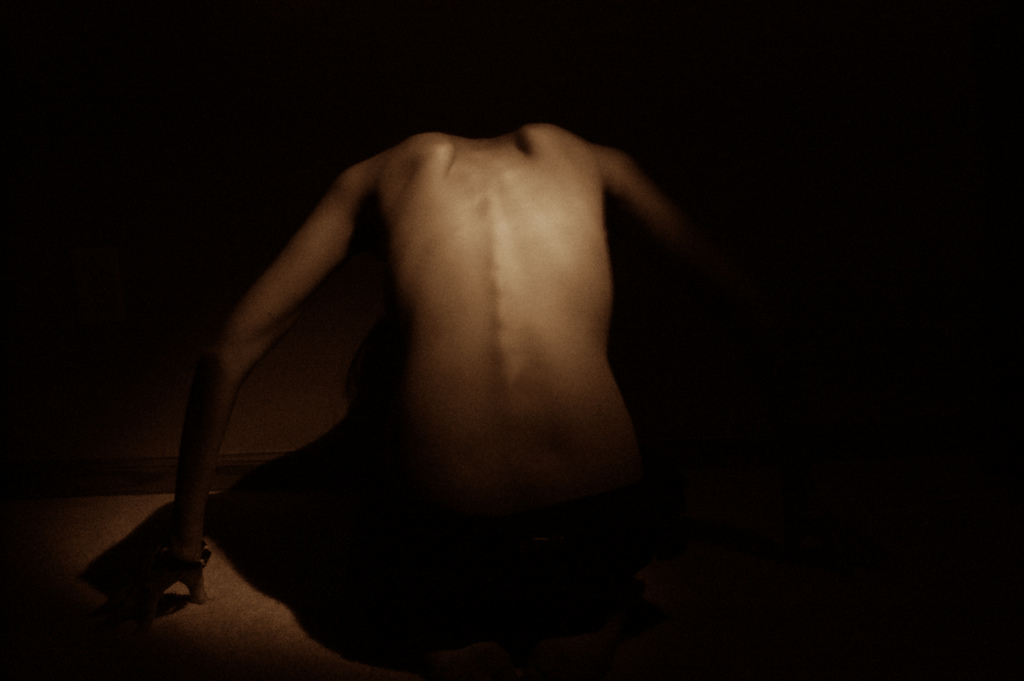
It’s easy to let your social group dictate whether you run another mile or skip the gym to go to happy hour. But when support networks form online, the stakes can rise tremendously. A new study in the American Journal of Public Health examines the contents of pro-eating disorder websites in the largest review of these online communities to date. While its findings aren’t shocking, they are an important reminder of a problem of the Internet Age: vulnerable anorexic and bulimic people gather on the Internet to encourage each other’s behavior.
Pro-ana and pro-mia websites (for anorexia and bulimia, respectively) have been around for a long time. Salon covered them as early as 2001. The new study examined the contents of 180 active websites to find out exactly what kinds of messages they send and found that 83 percent provide forthright advice for maintaining eating disorders. Particularly disturbing to the researchers, led by Dina L.G. Borzekowski of the Johns Hopkins Bloomberg School of Public Health, is the websites’ accessibility. They are “alarmingly easy to access and understand” with “half written at less than a high school grade level.” This leaves young teenagers particularly vulnerable.
Eight-five percent of the websites contain “thinspiration,” glorified images of thin models and celebrities — not so different from your average fashion magazine, but a recipe for disaster when combined with the interactive facets of the websites. Visitors can communicate on message boards and function as a social support network for one another. It’s a lot like eating and exercising with your friends, except that all your friends have a psychiatric illness. And when that illness is anorexia, 5 to 10 percent of sufferers die within a decade of onset.
Interestingly, the study also found that 38 percent of pro-ana and pro-mia websites provide information about recovery and seeking help. “One of the complicated features in treating individuals with eating disorders is … ambivalence about recovery,” Dr. Evelyn Attia, director of the Center for Eating Disorders at Columbia University Medical Center and Weill Cornell Medical College, explains to ABC News. “For many folks, even those who pursue treatment, there’s often a flirtation with not getting better.”
My friends and I lost our college weight and, while we weren’t always healthy about it, we weren’t suffering from serious mental illnesses. For those who are, the support networks found online can be incredibly dangerous. Dr. Katherine Loeb, associate professor of psychology at Fairleigh Dickinson University, tells the Chicago Tribune, “[Anorexia] is a mean friend. It’s familiar and close and they feel loyal, but it’s like a friend who says you can’t be friends with anyone else. It’s also like a parasite but worse; a parasite has an interest in the host not dying; anorexia can kill you.”
Old ladies who didn’t love me
I thought a gym class with elderly women would ease my aging anxiety, but it made me miserable in new ways
“Isn’t it soon for me to be getting arthritis?” I asked my orthopedist. I assumed I had a young person’s pain: an injury, or maybe a cyst.
“No,” he said, then checked my chart again for my age. “No, not at all.”
At 36, I had been preoccupied by my age, and this didn’t help. I’d been looking at every woman’s neck to see when the accordion stretch of the chin would kick in. Could I stave it off a few more years? Had I blown it by not being skinny, so that I couldn’t later gain five pounds to smooth out my wrinkles?
Continue Reading CloseTaffy Brodesser-Akner has written for the New York Times, Los Angeles Times, Self, Redbook, and other publications. More Taffy Brodesser-Akner.
Ashley Judd’s facial war
In a bold new essay, the actress confronts the critics of her body head-on -- and makes some incisive points
Ashley Judd (Credit: Reuters/Jean Amet) Ashley Judd would like you to get out of her face. The 43-year-old actress, activist and sometime controversial memoirist has had a high-profile return to the public eye, with the debut of her new drama “Missing.” And it’s a profile that has been the subject of much snark and WTFing.
In the past few weeks, Radar has lamented that she’s gone from “pretty to puffy” and “fattened her face with fillers” while Us declared her “nearly unrecognizable.” SheKnows hit her even harder, complaining that “the pretty face we’re used to [has been] replaced by a puffy disaster.” And when her reps declared that her swollen look was the result of steroids for a sinus infection, they only fanned the flames, leading The Stir to snap of her “way chubbier than usual” look, “Come on, Ashley, we may be dumb, but we’re not stupid.”
Continue Reading Close
Mary Elizabeth Williams is a staff writer for Salon and the author of "Gimme Shelter: My Three Years Searching for the American Dream." Follow her on Twitter: @embeedub. More Mary Elizabeth Williams.
Fat-shaming a child into a book deal
A mom's horrible dieting strategy for her 7-year-old pays off
Dara-Lynn Weiss with her daughter, Bea.
How could a story that Jezebel last week declared “The Worst Vogue Article Ever” get even more terrible? By becoming a book.
It began with a feature called “Weight Watchers” in the April Vogue, written by Dara-Lynn Weiss. In it, Weiss chronicles her then 7-year-old daughter Bea’s dieting odyssey after the child had “grown fat.” It was a tale that involved putting Bea — who at 4-foot-4 and 93 pounds was veering toward childhood obesity — on an intense regimen of calorie restriction and public shaming. “I once reproachfully deprived Bea of her dinner after learning that her observation of French Heritage Day at school involved nearly 800 calories of Brie, filet mignon, baguette and chocolate,” she writes. “And there have been many awkward moments at parties, when Bea has wanted to eat, say, both cookies and cake, and I’ve engaged in a heated public discussion about why she can’t.”
Continue Reading Close
Mary Elizabeth Williams is a staff writer for Salon and the author of "Gimme Shelter: My Three Years Searching for the American Dream." Follow her on Twitter: @embeedub. More Mary Elizabeth Williams.
Surprised to see me
The biggest shock of losing weight is the (sometimes weird) reaction by my old friends
It’s funny what you notice when you lose 40 pounds. I have noticed, for instance, that it is much easier to get dressed when your clothes actually fit. I have noticed the way certain bones feel underneath my hands (my rib cage, my pelvis) or how I look in the mirrored glass of a store I am passing. I have also noticed how people react to me. Mostly, I have noticed what they say.
“You look healthy!” they exclaim, giving me a hug, or grabbing my shoulders like an aunt at a family reunion. They say it so often and with such enthusiasm that it can have the inverse effect of upsetting me. I can’t help wondering how unhealthy I used to look.
Continue Reading CloseSarah Hepola is an editor at Salon. More Sarah Hepola.
Can a viral video save an obese man?
A 700-pound man begs for his life -- and becomes an online sensation VIDEO
Robert Gibbs (Credit: YouTube screen shot) It’s difficult to watch Robert Gibbs. But it has nothing to do with the fact that he weighs nearly 700 pounds.
In a candid and wrenching plea on the eve of his 23rdbirthday last week, the Livermore, Calif., man did something extraordinary. He braved the mockery and opprobrium of the entire Internet in the calculated hope of “trying to go viral” and turn his life around. In a clip self-explanatorily called “Overweight guy asks for help,” Gibbs explains, “I’m making this video because I don’t know what else to do. I’ve tried losing weight on my own. Tried doing everything possible. Been on diets, been hospitalized. Always done what needed to be done at the time and then I’d just gain the weight back.”
Continue Reading Close
Mary Elizabeth Williams is a staff writer for Salon and the author of "Gimme Shelter: My Three Years Searching for the American Dream." Follow her on Twitter: @embeedub. More Mary Elizabeth Williams.
Page 1 of 21 in Body Wars