
Salon Home
Topic

Afghanistan

Tuesday, Aug 17, 2010 7:45 PM UTC2010-08-17T19:45:00Zl, M j, Y g:i A T

Afghan women and the Taliban stoning

A couple's killing stirs up outrage, as well as anxiety about the country's women being used as propaganda

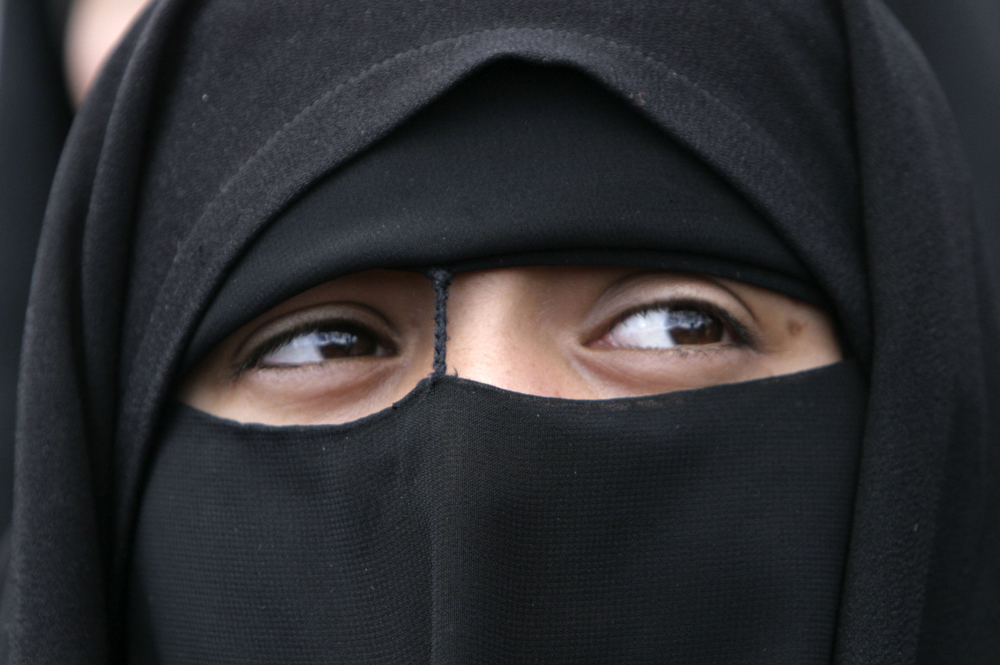
A Shiite counter protester takes part in a demonstration by some 1,000 male and female Afghans in Kabul, Afghanistan, on Wednesday, April 15, 2009.

A Shiite counter protester takes part in a demonstration by some 1,000 male and female Afghans in Kabul, Afghanistan, on Wednesday, April 15, 2009.

Just when you thought the situation in Afghanistan couldn’t look more dire, the Taliban goes and stones a young Afghan couple to death for adultery. Twenty-year-old Sadiqa was engaged to another man and 28-year-old Qayum was married to another woman, but they eloped and publicly declared their love. Their punishment, believed to be the first of its kind since the Taliban’s fall in 2001, was carried out Sunday in northern Afghanistan by hundreds of men, including their family members.

This tragic story only adds to a recent flood of coverage that, implicitly or otherwise, raises the question of what a U.S. withdrawal would mean for Afghans, especially women. The most memorable, of course, was the image of Aisha, a mutilated 18-year-old, on the cover of Time magazine last month along with the headline, “What Happens If We Leave Afghanistan.” There is good reason to ask that question (although, note that Time did not pose it as a question).

Continue Reading
Tracy Clark-Flory

Tracy Clark-Flory is a staff writer at Salon. Follow @tracyclarkflory on Twitter.  More Tracy Clark-Flory

Monday, Jan 23, 2012 9:06 PM UTC2012-01-23T21:06:00Zl, M j, Y g:i A T

Rate of Americans killed in Afghanistan soars

As President Obama escalated the war, the numbers of soldiers and civilians killed rose dramatically

A U.S. soldier keeps watch at the site of an explosion in Kandahar on January 19.

A U.S. soldier keeps watch at the site of an explosion in Kandahar on January 19.  (Credit: Reuters/Ahmad Nadeem)

Topics:

In the past six months, President Obama has repeatedly declared that “the tide of war is receding.”

And, if one measures by reduction in the aggregate number of troops deployed in Iraq and Afghanistan, the president is right. But it’s also true that Obama has presided over a significant escalation in the war in Afghanistan.

Continue Reading
Justin Elliott

Justin Elliott is a Salon reporter. Reach him by email at jelliott@salon.com and follow him on Twitter @ElliottJustin  More Justin Elliott

Thursday, Jan 19, 2012 3:00 PM UTC2012-01-19T15:00:00Zl, M j, Y g:i A T

Rethinking the Taliban

Don't confuse them with al-Qaida. It's time to start negotiating our way out of Afghanistan

Ready to talk?

Ready to talk?  (Credit: AP/Ishtiaq Mahsud)

Topics:

Soon after 9/11, President Bush ensured that al-Qaida and the Taliban were conflated in the American imagination. “If any government sponsors the outlaws and killers of innocence, they have become outlaws and murderers themselves,” he said in his speech announcing strikes against Afghanistan.

Now the United States faces the opposite problem: decoupling the Taliban from what remains of al-Qaida. Vice President Joe Biden was guilty only of being impolitic when he conceded in December that the Taliban per se are not America’s enemies. Thankfully, reports of low-level talks between the Taliban and the U.S. and/or the Afghan government are now as plentiful as heroin poppies. But these preliminary, scattered negotiations are not enough; the United States needs to dialogue with the Taliban to extricate itself from Afghanistan.

Continue Reading

Jordan Michael Smith writes about U.S. foreign policy for Salon. He has written for the New York Times, Boston Globe and Washington Post.  More Jordan Michael Smith

Saturday, Jan 14, 2012 2:00 PM UTC2012-01-14T14:00:00Zl, M j, Y g:i A T

Afghanistan: “The tide of war is receding”

The reporter who cost Gen. McChrystal his job talks about al-Qaida myths, Karzai's weirdness, and endless war

Afghan President Hamid Karzai

Afghan President Hamid Karzai  (Credit: Reuters/Ahmad Masood)

Glenn Greenwald wrote recently about how reporter Michael Hastings’ new book on Afghanistan exposes some of the pathologies of national security journalism as it is commonly practiced today. But the new book, “The Operators: The Wild and Terrifying Inside Story of America’s War in Afghanistan,” also contains lots of interesting reporting on the recent history of the war, particularly the period between 2009 and 2010 when Gen. Stanley McChrystal was in charge. McChrystal, of course, resigned in June 2010 after the publication of a Rolling Stone article by Hastings that contained sundry damaging material, including quotes from McChrystal aides mocking the White House.

Continue Reading
Justin Elliott

Justin Elliott is a Salon reporter. Reach him by email at jelliott@salon.com and follow him on Twitter @ElliottJustin  More Justin Elliott

Friday, Jan 13, 2012 2:06 PM UTC2012-01-13T14:06:00Zl, M j, Y g:i A T

The scandal that isn’t on the video

Is it worse to desecrate a few corpses than to mass produce a lot of them?

Screen shot 2012-01-13 at 8.45.04 AM

The United States and its allies were quick to go into damage control mode to try to contain the political and diplomatic fallout from a video posted on YouTube apparently showing US Marines urinating on the mangled corpses of dead Afghans,

A Pentagon spokesman, Captain John Kirby, told CNN: “Regardless of the circumstances or who is in the video, this is egregious, disgusting behavior. It’s hideous. It turned my stomach.”  Afghan President Hamid Karzai agreed. “This act by American soldiers is simply inhuman and condemnable in the strongest possible terms.”.

Continue Reading

Saree Makdisi is a professor of English and Comparative Literature at UCLA and the author of, among other books, "Palestine Inside Out: An Everyday Occupation." Follow him @sareemakdisi on Twitter.  More Saree Makdisi

Tuesday, Jan 3, 2012 3:59 PM UTC2012-01-03T15:59:00Zl, M j, Y g:i A T

It’s time to admit defeat

If we want to avoid repeating our mistakes, we need to stop whitewashing the disasters in Iraq and Afghanistan

U.S. Army Sgt. Omar Sprott of the 115th Brigade Support Battalion carries his luggage in preparation for leaving Camp Kalsu near Hillla

U.S. Army Sgt. Omar Sprott, from Brooklyn, New York, of the 115th Brigade Support Battalion carries his luggage in preparation for leaving Camp Kalsu near Hillla, Iraq December 6, 2011.  (Credit: © Shannon Stapleton / Reuters)

This originally appeared on TomDispatch.

It was to be the war that would establish empire as an American fact.  It would result in a thousand-year Pax Americana.  It was to be “mission accomplished” all the way.  And then, of course, it wasn’t.  And then, almost nine dismal years later, it was over (sorta).

It was the Iraq War, and we were the uninvited guests who didn’t want to go home.  To the last second, despite President Obama’s repeated promise that all American troops were leaving, despite an agreement the Iraqi government had signed with George W. Bush’s administration in 2008, America’s military commanders continued to lobby and Washington continued to negotiate for 10,000 to 20,000 U.S. troops to remain in-country as advisors and trainers.

Continue Reading

Tom Engelhardt, co-founder of the American Empire Project, runs the Nation Institute's TomDispatch.com. His latest book, "The United States of Fear" (Haymarket Books), has just been published.  More Tom Engelhardt

Page 1 of 117 in Afghanistan

Other News