
Atheism

“The Moral Landscape”: Why science should shape morality

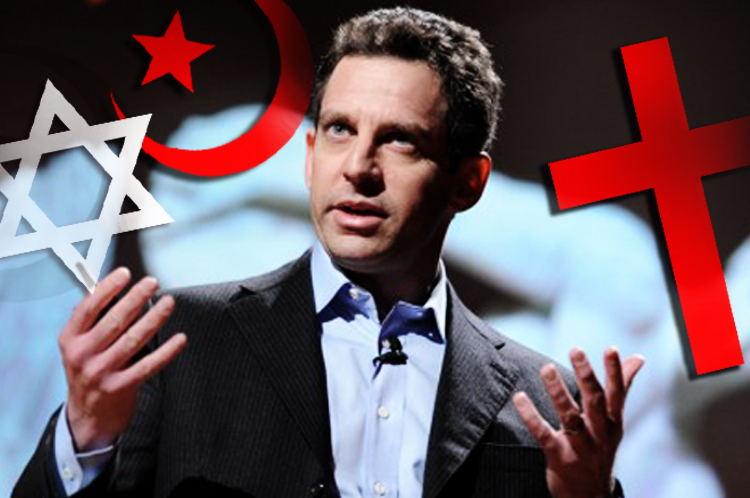
Sam Harris, the notorious atheist, explains his controversial stance on religion -- and his provocative new book

  • more
    • All Share Services

To call Sam Harris a divisive figure is to put it mildly. Harris — along with Richard Dawkins, Daniel Dennett and Christopher Hitchens — is considered one of the most influential members of the so-called New Atheism movement, a term that generally refers to nonbelievers who seek a true separation of church and state, civil rights for atheists, and the freedom to openly criticize religious belief.

In his previous book, “Letter to a Christian Nation,” Harris aimed to “demolish the intellectual and moral pretensions of Christianity in its most committed forms.” In the wake of the book, theologist Madeleine Bunting wrote an article in the Guardian comparing Harris’ arguments about Islam to “the kind of argument put forward by those who ran the Inquisition.” In a debate about religion on Beliefnet, an exasperated Andrew Sullivan called one of Harris’ arguments “a form of intolerance that reminds me of some of the worst aspects of fundamentalism.”

His long-awaited new book, “The Moral Landscape: How Science Can Determine Human Values,” deals head-on with issues that many atheistic thinkers have been skirting for years. If religion is so bad, where should humans look for a moral authority? The answer, for Harris, is science. Harris defines morality as anything related to the “well-being of conscious creatures.” Since many scientific findings have implications for how to maximize well-being, Harris believes scientists should be authorities on moral issues. As Harris sees it, scientists not only have every right to make moral arguments, but should be authorities of the moral realm.

Salon spoke to Harris over the phone about suicide bombers, our hard-wired need for religious faith, and which religions are more objectionable than others.

In this book and others, you are particularly critical of Judaism, Christianity and Islam. But what about Eastern religions, such as Buddhism or Hinduism?

I do criticize all religion, but I point out that “religion” is just a word, like “sports.” There are many different types of sports, and they don’t necessarily have anything in common. And this same spectrum can be seen among religions. There are religions that are intrinsically peaceful. The greatest example is Jainism, which really is a religion of peace. Nonviolence is its central precept. Then there’s Islam, which is not even remotely a religion of peace, though many people insist that it is. There’s a reason why none of us are lying awake at night worrying about the Jains.

Our discussion of religion often glosses over the very real differences between these systems of belief and the consequences of specific doctrines. I’m really worried about the behavioral consequences of specific ideas. It just so happens that religion traffics in ideas that are intrinsically divisive, intrinsically insensitive to the actual details of human and animal suffering, and in many cases purposed toward an afterlife that doesn’t exist. That combination of traits leads to a kind of callous disregard for the sane purposes that we would otherwise form for collaboration in this world.

You argue that science is better equipped to illuminate questions of morality than religion. Why?

Religion fails because it separates questions of right and wrong and good and evil from the actual reality of human and animal suffering. The Catholic Church is more concerned about preventing contraception than preventing child rape; it’s more concerned about preventing gay marriage than genocide. This is a real inversion of priorities that completely falsifies any discussion of morality in the church. The moment you’ve linked morality to the well-being of conscious creatures, you see that the practices of the church don’t maximize human well-being. The church is as confused in talking about morality as it would be in the physics of the transubstantiation. They could use the word “physics” over and over again, the same way they use the words “morality” and “values,” but no physicist would be obligated to take them seriously, and I’m arguing that no serious conversation about morality can include the priorities of the church.

Why do you think moral relativism is so dangerous?

Many people seem to believe that something in the last 200 years of intellectual progress has made it impossible to speak about moral truth, and that morality is just something that’s drummed into us by culture, or a combination of culture and apish urges that were drummed into us by evolution. Whatever mix of these two variables you fancy, you come out thinking that one way of life can’t be better in an objective sense. Well-educated, liberal, secular people in the West think you should withhold judgment on certain practices. You look at female genital mutilation in a country like Somalia, and you have to say things like “Well, of course this has to be understood in context. Who are we to say that this is evil in any deep sense?” But my argument is that withholding judgment is tantamount to saying that we know absolutely nothing about human well-being. Maybe cutting off a girl’s genitalia with a septic blade at age 8 is just as good as any other practice in terms of raising them to be happy and well-adjusted people. We know that’s not true. And that’s a scientific claim. Without getting into the details of psychology, we know female genital mutilation is a bad practice, and we should act like we know it.

Many evolutionary scientists, like Scott Atran or Pascal Boyer, believe that humans are naturally wired to be religious. Even in the absence of organized religion, they will be spiritual . How can you seek to break down something that is natural to human existence?

It’s very easy to overestimate just how incorrigible religion is, based on its history or possible evolutionary roots. You could say the same thing about witchcraft, which has been completely eradicated in the developed world. Witchcraft had been a cultural universal. Belief in the power of magic, spells, the work of invisible spirits…

But isn’t witchcraft just one example of the infinite practices that relate to the human tendency to be religious or believe in things that aren’t there? And don’t forms of witchcraft still exist in the developed world?

Well, you might think so, but in any case, it’s rampant in Africa, and it looks absolutely bizarre from our point of view to believe that hunting albinos and weaving their hair into your nets is likely to catch you more fish, as some African fishermen apparently believe. This is just the most macabre misuse of human life and energy. And yet it was something that was more or less universal. The way to get rid of it is to understand medicine and to understand the way the world works in greater detail.

I question whether faith-based religion per se has any strong evolutionary roots. There are many other variables that are not in principle religious that are often included with religion, like wanting to build strong communities, the usefulness of ritual, and the imperative of forming beliefs about the way the world works. We notice causal patterns in the word, and we tell ourselves stories about these patterns. We do this in science and in religion. Religion just amounts to bad science, in the end. It’s our most primitive effort to describe our origins and the reasons for why things happen. When you don’t understand the weather, when you don’t understand why crops fail, when you don’t understand the origins of disease, you make up explanations. And this is religion. When you develop a methodology by which these things can be understood, you rely on honest observation and clear reasoning, and this is science.

You suggest that science may enable us to transcend our current biology. You mention that psychotropic drugs are already doing this and that we “are now poised to consciously engineer our further evolution.” Do you think our biology needs to be altered in order for us to behave in a morally acceptable manner?

There’s a lot there. Obviously we should be cautious in changing anything about ourselves at the level of the genome. That’s a policy that anyone thinking about genetic engineering seriously is liable to agree on. And yet we are changing. We have changed over the course of hundreds of thousands of years, so there’s nothing actually stable about the human condition. If we ever understood our biology fully enough to introduce changes, the basis on which to decide if we should implement these changes would be whether they were conducive to human well-being. If we could meddle with our genomes and introduce resistance to certain diseases, that would be clearly good. We would need to be confident that what we’re doing isn’t going to be harmful in the end. That’s the guiding principle of medicine, and it would be the guiding principle of the science of human well-being.

What’s a concrete example of how science can answer a moral dilemma?

Many of the basic facts we understand about human well-being don’t even require scientific data at this point. Given that we know that there must be better and worse ways for humans to flourish, we also know that all cultural strategies and personal opinions aren’t on the same plain. We don’t need to run any scientific experiments to know that life in Congo right now is not perfectly tuned to maximize human well-being. You’ve got people being raped by the tens of thousands and hunted with machetes.

Let’s say scientists do end up discovering moral truths. How are they supposed to enforce their findings? Would they become something like policemen or priests?

They wouldn’t necessarily enforce them any more than they enforce their knowledge about human health. What are scientists doing with the knowledge that smoking causes cancer or obesity is bad for your health, or that the common cold is spread by not washing your hands? We’re not living in some Orwellian world where we have scientists in lab coats at every door. Imagine we discovered that there is a best way to teach your children to be compassionate, or to defer short-term gratification in the service of a long-term goal. What if it turns out to be true that calcium intake in the first two years of life has a significant effect on a child’s emotional life? If we learn that, what parent wouldn’t want that knowledge? The fear of a “Brave New World” component to this argument is unfounded.

In the book, you write about advances in lie-detecting technology and argue that “the development of mind-reading technology is just beginning.” Do you think such technologies might be dangerous for individual liberties and privacy?

Yes, but no more so than DNA screening. The fact that we can now get people off death row because we can test samples of blood and saliva and crime-scene data is a huge boon to the justice system. Lie-detection technology would be an even greater boon. We suffer an immense social cost by not being able to tell when somebody is lying. People are locked away forever or killed because we couldn’t tell they were telling the truth. If we could find a technology that would allow us to differentiate truth telling from lying, it would be hugely beneficial.

But what if people outside the criminal justice system have access to this technology? Wouldn’t that profoundly alter human relations?

When it counts, I don’t think people have a right to lie. Does a CEO of a major corporation have a right to lie about what his corporation is actually doing? We should be biased toward the truth, and if we could create a technology that made it difficult to lie, I think the feeling of relief that would come over us would be enormous.

In your book, you mention a “global civilization” several times. You also wrote, “Human beings should eventually converge in their moral judgments.” What do you mean by a global civilization?

I think we must form a global civilization. We have no choice. We have a global economy, we have a single environment, we have infectious disease that spreads with every airplane flight. The question is, How do we create a civilization in which the greatest proportion of people can thrive, and in which the causes for war become distant memories? Within a nation-state, wars can be a distant memory. The likelihood of a war between Vermont and Florida seems incredibly remote. Why is that? We understand the stability of a single state. We need to engineer a similar degree of stability at the international level. There has to be a way to enforce international law. The question is how to do that, and how helpful is it that 1.5 billion Muslims and 2 billion Christians both think they have the perfect revelation of the creator of the universe, and that the world will end, ushering in the fulfillment of their eschatology. This isn’t helpful at all, and should be terrifying to every rational person.

But what about wars that don’t seem to have been caused by religion, such as the Soviet wars under Stalin, or Hitler’s nationalist aggression in World War II?

Religion isn’t the only problem. It’s all the forms of tribalism: nationalism, racism, et cetera. But religious tribalism is the most difficult, because it’s the only one that comes with an ideology that is transcendental. It’s the only one that gets people, for the most part, to celebrate the deaths of their children, because the belief in paradise actually removes the last barrier that sane people have to doing horrendous things and making huge sacrifices for idiotic reasons.

I mean, if you really believe in paradise, you believe that nothing can possibly go wrong, in the end. A suicide bomber who blows himself up in a crowd of people believes that he’s going to paradise. He also believes that all the good people he’s blowing up are also going to go to paradise and that they’ll thank him, and all the bad people are going to hell, where they belong. So it’s actually impossible to blow up the wrong people. It’s the most amazing and yet — if you believe the premises of the religion — totally logical worldview. It’s clearly believed by some significant number of people, because we apparently have an endless supply of suicide bombers in the Muslim world. When you have an ideology that makes you believe that no matter how bad things are, they’re actually good, that’s scary.

Katherine Don is a freelance writer in New York.

Atheism’s new clout

Non-believers are becoming increasingly successful fundraisers -- and cultural forces to be reckoned with

  • more
    • All Share Services

Atheism's new cloutA billboard erected by atheists in Oklahoma City. (Credit: AP/Sue Ogrocki)
This article originally appeared on AlterNet.

Why would any organization or social change movement want to ally itself with a community that’s energetic, excited about activism, highly motivated, increasingly visible, good at fundraising, good at getting into the news, increasingly populated by young people, and with a proven track record of mobilizing online in massive numbers on a moment’s notice?

If you need to ask that — maybe you shouldn’t be in political activism.

AlterNetAnd if you don’t need to ask that — if reading that paragraph is making you clutch your chest and drool like a baby — maybe you should be paying attention to the atheist movement.

The so-called “new atheist” movement is definitely not so new. Atheists have been around for decades, and they’ve been organizing for decades. But something new, something big, has been happening in atheism in the last few years — atheism has become much more visible, more vocal, more activist, better organized, and more readily mobilized — especially online, but increasingly in the flesh as well. The recent Reason Rally in Washington, DC brought an estimated 20,000 attendees to the National Mall on March 24 — and that was in the rain. Twenty thousand atheists trucked in from around the country, indeed from around the world, and stood in the rain, all day: to mingle, network, listen to speakers and musicians and comedians, check out organizations, schmooze, celebrate, and show the world the face of happy, diverse, energetic, organized atheism.

Atheists are becoming a force to be reckoned with. Atheists are gaining clout. Atheists are becoming a powerful ally when we’re inspired to take action — and a powerful opponent when we get treated like dirt.

Case Study Number One, “Powerful Ally” Division: The million dollars currently being raised — and the goodness knows how many people being mobilized — for the Leukemia & Lymphoma Society’s “Light the Night Walks,” by the non-theistic Foundation Beyond Beliefand the Todd Stiefel family.

The Stiefel Family and the Foundation Beyond Belief have wanted to make a large atheist contribution to the fight against cancer for some time. Like many people, Todd Stiefel has had many people in his life afflicted with cancer. His family has the resources to make a large financial donation to the fight against it. And as the largest non-theistic charitable organization in the world, the Foundation Beyond Belief was the perfect organization to channel and structure the Stiefel family’s matching offer — and to round up supporters for it.

But it was distressingly difficult to give this money away. If this whole “atheists donating pots of money to the fight against cancer” story seems familiar… you may be remembering theAmerican Cancer Society controversy, in which the ACS initially accepted a $250,000 matching offer from the Stiefel family and the Foundation Beyond Belief to participate as a national team in the ACS’s Relay for Life — and then, suddenly and mysteriously, turned it down. (And were then deluged with angry protests — and withdrawals of donations — when the story hit the Internet. More on that in a tic.)

That isn’t happening this time around. The Stiefel family and the Foundation Beyond Belief have found an organization that’s more than happy to partner with them in the fight against cancer. When Stiefel reached out to the Leukemia and Lymphoma Society, they cheerfully accepted his offer — a half million dollars in matching funds, as a “Special Friend” team partner in the LL&S’s “Light the Night” Walks, with the goal of uniting the freethought movement around the world to raise a million dollars for the fight against cancer. Andrea Greif, Director of Public Relations for the Leukemia & Lymphoma Society, says, “LLS is appreciative that Foundation Beyond Belief has set such a generous goal to help us beat blood cancer and we look forward to having their teams join LLS’s Light the Night Walk.” And Stiefel describes the Leukemia and Lymphoma Society as “enthusiastic at the prospect of working with us.” He went on to say, “We LOVE working with the Leukemia and Lymphoma Society. They have been very kind, supportive and helpful. They have made it very clear that cancer doesn’t discriminate and neither do they. LLS just wants to put the mission of fighting cancer first.”

This could easily have been a controversial effort. For one thing, the Honored Hero for the FBB in this year’s Light the Night Walk is the recently deceased Christopher Hitchens — a hero to many in the atheist movement, but a very controversial figure to many outside of it (and indeed, even to many atheists). But Hitchens’ status as the FBB’s Honored Hero is apparently not an issue. The Leukemia and Lymphoma Society is accepting FBB’s partnership and generosity with open arms. And these efforts have been extremely effective. As of this writing, the Foundation Beyond Belief has already hit 50 LLS local teams — halfway to the 100 team minimum goal. (By the way: If you were ticked off about the American Cancer Society thing, and you want to translate that anger into action? Participating in the FBB’s Light the Night Walks in your area — or starting an FBB LTN team in your area– would be a great way to do that.)

And this isn’t an isolated incident. In recent months, the atheist community has proven to be extraordinarily good at raising money, visibility, and support for people and causes that capture their imagination. And they have exceptional skills when it comes to fundraising and hell-raising on the Internet.

When high school atheist Jessica Ahlquist was being harassed, bullied and threatened by her schoolmates and community for asking her public school to enforce the state/church separation laws and take down a prayer banner from the school auditorium, the atheist community rose to her aid, with an outpouring of love, admiration, and emotional support… and a college fund totaling over $62,000. When high school atheist Damon Fowler was being harassed, bullied, and threatened by his schoolmates and community for standing up against prayer at his public high school graduation — and was kicked out of his home by his parents — the atheist community rose to his aid, with an outpouring of sympathy and support… and a college fund totaling over $31,000. When Camp Quest, the summer camp for children of non-theist families, was engaged in a major fundraising drive last year, several atheist bloggers (conflict of interest alert — including me) teamed up in a fundraising contest involving a series of grandiose and increasingly ridiculous dares and forfeits, ultimately raising $30,074.80 for the cause.

Atheists aren’t just raising money for their own, either. On Kiva — the microlending organization working to alleviate poverty and empower people in need around the world — theAtheists, Agnostics, Skeptics, Freethinkers, Secular Humanists and Non-Religious team is the #1 all-time leader in amount of money loaned… not just among religious affiliation teams, but among all the teams on Kiva. The Reddit atheist community raised over $200,000 for Doctors Without Borders last November, in a fundraising drive that came close to crashing Reddit with the traffic. The Foundation Beyond Belief has been supporting charitable and human rights projects for over two years — well before the Leukemia and Lymphoma Society project began — and to date has raised over a quarter of a million dollars to support human rights, the environment, education, child welfare, anti-poverty efforts, public health, and more.

And the power of atheist organizing extends beyond simple fundraising. To give just two recent examples: When preacher Sean Harris was caught on tape exhorting parents to beat their gay kids, the local atheist communities in the area immediately began sounding the alarm — and rounded up activists to protest at the church the following Sunday. According to Priscilla Parker, President of Military Atheists & Secular Humanists, 27 of the Sean Harris protestors last Sunday were from secular/atheist groups. That may not sound like much — but when you realize that there were a total of about 70 protestors at the event, the atheist presence suddenly looks a lot more significant. (Especially for an event in a highly religious, largely conservative town — and especially for an event that was organized on extremely short notice.) And when American Airlines was planning to air an anti-vaccination ad on their planes’ video systems and in their in-flight magazines, the atheist and skeptical communities dove into action: publicizing the Change.org petition against the Australian Vaccination Network’s ad, and slamming the decision all around the Internet. The story went viral, in large part because of the Internet power of atheists and skeptics — and the joint effort between heathens and other activists ultimately pressured the airline into rejecting the ad.

When a cause catches their hearts, the atheist community can be a powerful ally.

And when a cause catches their hearts in a different way, they can be a powerful opponent.

The American Cancer Society snafu is probably the most obvious example of this. When the ACS turned down the Foundation Beyond Belief’s offer to participate as a national team in the Relay for Life, they apparently didn’t expect much pushback. But when the story broke, it went viral — and made misery for the ACS. For weeks, the ACS was deluged with emails, letters, phone calls, and posts to their Facebook wall. For weeks, their Facebook wall was taken up almost entirely with angry posts about the story. Importantly, while the chief instigators of the rage-fest were atheists, they were quickly followed by a crowd of religious believers, who were just as outraged at the anti-atheist bigotry — and at the rejection of perfectly good money — as the heathens. And very importantly, a flood of people halted their donations to the ACS… including many people who had been regular donators for years.

But there are plenty of other examples as well. The abovementioned American Airlines anti-vaccination ad. The abovementioned Sean Harris protest. The sublimely ridiculousGelatogate, in which a local gelato merchant in Springfield, Missouri posted a sign in his store window reading, “Skepticon [a skeptical/ atheist conference] is NOT Welcomed To My Christian Business”… and then got a faceful of Internet fury when a photo of the sign was Facebooked, Tweeted, G-plussed, texted, blogged, emailed, and generally spread through the atheosphere like wildfire… and then backpedaled as fast as it is possible for a human being to backpedal. Like many social change movements, organizing atheists is like herding cats, and it’s not easy to predict which issues will catch their imaginations — but when it happens, the combination of passionate motivation and Internet savvy turns them into a powerhouse.

And very importantly, the atheist movement is increasingly becoming a youth movement. The Secular Student Alliance – an umbrella organization of non-theistic college and high school groups around the United States and the world — is growing at an astonishing rate. In 2009, they had 143 affiliates: in 2012, they had 351. Impressively, their high school rates are climbing at an even faster clip. In 2010, the organization had only four high school affiliates: this year, that number has climbed to 37. And as anyone knows who understands politics getting young people inspired and on board is enormously important for the long-term future of any social change movement. What’s more, many of these student groups are active in service projects and social change activism outside of atheism… and are eager to partner with other groups to get the job done. If you’re in any doubt about the power of atheism to help move political mountains, now and in the coming years — pay attention to those SSA affiliate numbers. And pay attention to how they keep growing… and growing… and growing.

So what’s the take-home message?

Atheists are your friend. Or they can be. And they can be a very powerful friend indeed.

Progressive and social-change organizers and organizations are having a hard time seeing the atheist movement as… well, as anything, really. Except maybe as a pain in the neck. Many progressives are undoubtedly aware of the existence of atheists: the atheist community’s efforts at visibility have been paying off, and atheism is being discussed in progressive circles as widely as it is everywhere else. But somehow, while the existence of atheists has become undeniable, the existence of atheism as a social change movement is still largely being ignored. To give just one example: In over 100 panels, training sessions, and other presentations at the upcoming 2012 Netroots Nation conference for online progressive activists, not one is about atheists or atheism. (Conflict of interest alert: I was one of the proposed panelists on a proposed atheism panel for Netroots Nation 2012.)

It’s hard to tell what this is about. Do social change organizations see atheists as toxic — too controversial, too likely to draw negative attention, more trouble than we’re worth? Or are these organizations simply unaware that atheists have formed into a serious social change movement — and are growing this movement at a rapid pace?

If it’s the former… then shame on you. In the early days of the LGBT movement, queers were far more controversial than they are now, and associating with queers was considered by many to be toxic. It was still the right thing to do. (Not to mention the smart thing to do.)

If it’s the latter… then sit up. Pay attention. Atheists are here. In just a few short years, the movement has gone from zero to sixty, in both visibility and mobilization. And the atheist movement is largely comprised of people who are passionate, compassionate, courageous, Internet savvy, skilled at seeing through bullshit, willing to defy the status quo, excited about activism… and dedicated to changing the world. After all, as far as they’re concerned, it’s the only world they’ve got.

You want these people on your side.

Continue Reading Close

God didn’t kill Christopher Hitchens

The Internet decides death is evidence against atheism

  • more
    • All Share Services

God didn't kill Christopher Hitchens (Credit: Antonov Roman via Shutterstock)

Christopher Hitchens, the fiery, indomitable, and highly divisive essayist and author, once declared “Vindication — being proved repeatedly and over and over again right, when other people are wrong — does a lot for me.” And with his death Wednesday, he’s proven how popular that sentiment really is. In fact, it turns out there’s nothing like the death of an outspoken atheist to bring out the “told ya so” brigade of believers.

Within hours of the news of Hitchens’s passing at the age of 62, the Internet was hotter than an inner circle of hell with the God squad thundering its own version of vindication.  Along with plenty of hope that he “made his peace with God,” there was blowhard-for-Jesus Rick Warren tweeting that “My friend Christopher Hitchens has died. I loved & prayed for him constantly & grieve his loss. He knows the Truth now,” while creepy creationist Ray Comfort declared that the now dead “Christopher Hitchens is no longer an atheist.” LifeWay’s Ed Stetzer, meanwhile, blogged that “When Christopher Hitchens died, he entered into eternity as every man does: as a beggar at the gates of the kingdom,” and Southern Baptist Seminary president Albert Mohler tweeted that “The death tonight of Christopher Hitchens is an excruciating reminder of the consequences of unbelief. We can only pray others will believe.” I’m not a brilliant debater like Hitchens, but let me field this one. Death is not a consequence of disbelief. It’s a consequence of living, you moron.

We know with certainty that Christopher Hitchens’ body is today dead. Beyond that, nobody — neither believer nor atheist — can say with total certainty if there’s more to this life than this life, or what that might entail. Rick Warren can say he knows “the truth” till judgment day, but that doesn’t make him right. What his statement does, however, prove is the powerful, human need to feel right.

Hitchens certainly came face-to-face with that combative, evangelical desire to be right long before he shuffled off the mortal coil. The man who wrote a book called “God Is Not Great” and championed his atheism to anyone who wanted to debate it publicly cringed when Sept. 20 was declared a “Pray for Hitchens Day.” He likely knew that the Missionaries of Charity order of Mother Teresa, a woman he branded a “fanatic, a fundamentalist, and a fraud,” would declare they were praying for him and his family after his death. But he also, in his gentlemanly English way, understood that people would pray for him anyway. Well, not quite for him. “Please do not trouble deaf heaven with your bootless cries,” he wrote. “Unless, of course, it makes you feel better.” 

I’m a Christian. A skeptical, questioning, frequently disappointed one who makes no pretense of having all the answers, but a Christian nonetheless. I pray every day. But my tacit deal with the universe is that I don’t need anyone I pray for to believe in God, any more than I take offense if someone who has a different belief system (or lack thereof) says he’ll set an intention or cast a spell or simply keep me in his thoughts. A prayer, like a kind thought, or good intention, or whatever you call it, isn’t supposed to be conditional. It can be graciously sent out — and gratefully accepted — without a commitment on either side. It certainly isn’t something one should undertake with a spiteful, I’m-doing-this-even-though-you-don’t-want-me-to-because-I-am-right-and-you-are-wrong-ta-da! flourish. So if you’re the praying type, pray. But don’t take those prayers as irrefutable proof of the existence of a deity, or an opportunity to do some Twitter bragging.

Regarding Hitchens, I’m with writer Tom Jamieson, who observed that it “would be nice to think God does exist, simply for the earful he’s getting right now.” Regarding God, I don’t consider the death of an author as evidence of anything other than what a vicious bitch cancer is. I don’t think it’s cause for a group affirmation of how this proves anything. I just think it’s a cruel loss and the silencing of a great voice. Maybe I’m wrong. But that’s all right, because as Hitchens himself once succinctly stated, “My own opinion is quite enough for me.”

Continue Reading Close
Mary Elizabeth Williams

Mary Elizabeth Williams is a staff writer for Salon and the author of "Gimme Shelter: My Three Years Searching for the American Dream." Follow her on Twitter: @embeedub.

Why atheists should respect believers

There are thousands of rational thinkers, including scientists, who happen to have faith in God

  • more
    • All Share Services

Why atheists should respect believers (Credit: Ian Heubert)
This piece is part of an ongoing dialogue about the relationship between science and faith. You can read Alan Lightman's original essay here and Daniel Dennett's response here.

I am delighted to receive such a thoughtful response by the distinguished philosopher Daniel Dennett.

Let me make one point clear at the beginning. Dennett, Dawkins and I agree that most religions have some beliefs that contradict science, and we also agree that religion has done harm in the world. The question is: What should be our attitude toward religion and toward individual people who have religious beliefs?

With regard to the meeting of science and religion, both Dennett and Dawkins take the stance of a strict dualism, an either/or position, a black and white portrait that I cannot accept. In fact, I would argue that such an absolutist position has some of the same problems as fundamentalism of any kind.

Dennett says that I am concerned that Dawkins is “too darned clear, too brutally frank when he articulates his case” against religion. It is not Dawkins’ clarity that concerns me. It is his condescension toward believers and his labeling of this large group of people as non-thinkers. In contrast to what Dennett suggests, I certainly do not take lightly the problems posed by today’s religions. We should continue to oppose religious practices that cause harm to other human beings, and we should continue to oppose irrational thinking on issues that require rational thought. But does this mean that we should dismiss believers as non-thinkers? There are thousands of intelligent, thoughtful and rational thinkers who also believe in God.

Dennett says that I am “letting off the hook” Frances Collins and Owen Gingerich – presumably by not actively contesting their belief in an intervening God who performs miracles. I clearly state in my essay that I disagree with these scientists in this particular belief. But that does not mean that I consider Collins and Gingerich irrational people, or people who are somehow dangerous to our society, as Dawkins implies in his writing. Show me an instance where Collins or Gingerich has refused to accept a particular finding of science or been hindered in their scientific work because of their religious beliefs, and I would vigorously oppose them. Quite the contrary, these people have made valuable contributions to science and the history of science. Their ability to do so, in fact, demonstrates that religious beliefs and science can live side by side within the human mind. Have Albert Gore’s religious beliefs dulled his ability to think rationally and to work to protect the environment? Certainly, philosophers and other intellectuals, such as Dennett and Dawkins, should study and articulate what they consider to be logical and self-consistent systems of understanding. But we should also look at the evidence afforded us by real, practicing human beings, like Collins and Gingerich and Gore.

Dennett wants me to delineate my view of the boundaries of faith. I will do so. I oppose any belief that contradicts experimental evidence as determined by the methods of science. All beliefs not in such contradiction may be considered as faith. Whether faith in a particular belief is beneficial or not is another matter. For example, I would not embrace faith that mental concentration can affect the outcome of a coin flip, because experiments show that the distribution of heads and tails comes out in a random pattern regardless of the wishes of bystanders. On the other hand, I would consider as legitimate faith the belief that some intelligent being created the universe or that our lives have a meaning, because those beliefs have not been disproved by science.

Dennett says that because I have commented that some of the great works of art were inspired by religion, I imply that atheists (of which I am one) are “a philistine lot.” Surely, as a philosopher, Dennett knows that a statement does not imply its inverse. “If you are religious, then you create art,” does not imply “If you are not religious, then you do not create art.”

Finally, Dennett says that I “prefer to sing the praises of faith without holding it to account.” I’m sorry, but I do not think it is faith, as I define it in my essay and as I have defined it above, that has caused the sufferings of human beings through the ages. It is the lack of moral compass in individual human begins that has caused suffering.

Dennett reminds me that Richard Dawkins is deeply appreciative of the art, music and poetry that religion has engendered, but it is just that Dawkins believes that religion, on balance, has accomplished more harm than good.

I would find it difficult to attempt such a tally. Whatever the results of such a balance, does that mean we, like Dawkins, should throw out religion wholesale, take a condescending attitude toward people of religious beliefs, label people of religious beliefs as non-thinkers imperious to scientific evidence? No. It means that we should continue to oppose those practices of religion that do damage, we should continue to oppose irrational thinking on issues that require rational thinking and evidence. But, at the same time, I would argue that we should allow our existence to encompass some things that we cannot explain by rational argument and proof.

We live in a highly polarized society. We need to try to understand each other in respectful ways. To that end, I believe that we should make room for both spiritual atheists and thinking believers.

Continue Reading Close

Alan Lightman, both a novelist and a physicist, teaches at MIT. His new book, "Mr g," a novel about the creation, will be published in January.

When atheists fib to protect God

A certain breed of nonbelievers are anxious to avoid pointing out the real flaws of religion

  • more
    • All Share Services

When atheists fib to protect God (Credit: Ian Heubert)
This article was written in response to Alan Lightman's essay arguing that science and faith can coexist.

What is it about “The God Delusion” that this breed of non-believers finds so upsetting? With his recent “Does God Exist?” essay, Alan Lightman joins a long line of atheist apologists who feel compelled to respond negatively to Richard Dawkins’ campaign but find it hard to put forward a crisp, fact-based objection. Since Lightman endorses Dawkins’ “completely convincing” dismantling of the standard arguments for the existence of God, his main concern appears to be that Dawkins is too darn clear, too brutally frank, when he articulates his case. Lightman wants us to keep our criticisms hyper-polite, and pass lightly over the glaring problems posed by today’s religions.

This sort of fuzziness has its uses. The Vaseline on the camera lens that blurs out the wrinkles on the face of the aging movie star is not just a sop to her vanity; it is both considerate and self-serving. Let’s not dwell on what her face has become; let’s allow her to re-create the beauty that stunned us in the past. Everybody wins. Lightman defends much the same policy with regard to religion: Let’s keep our objections in soft focus and avoid drawing attention to even quite ugly flaws.

For instance, he notes that famous contemporary scientists Francis Collins, the head of the Human Genome Project, and Owen Gingerich, a Harvard professor of astronomy and history of science, defend an “interventionist” (miracle-making) God that violates the Central Doctrine of science, but he lets them both off the hook. What excuses them from the standards of rational inquiry that science demands? Lightman cites the existence of worthwhile areas of intellectual exploration (in art and literature and philosophy, for instance) that do not share the scientific ideal of restricting oneself to working on “well-posed problems” — ones that can be stated precisely enough to guarantee a definite solution. But some of the claims that Collins and Gingerich endorse are, in fact, unsupported answers to “well-posed problems”: Is there any rational grounding for a belief in a miracle-making interventionist God? (No.) Do we need God to account for the brilliant design of living things? (No.) Do we need God to somehow underwrite or ground our confidence that our ethical convictions are not just parochial prejudices? (No.) There is nothing gloriously, ineffably, tantalizingly imponderable about these questions, carefully crafted and vetted by philosophers and scientists over the centuries.

Lightman fails to consider the possibility, moreover, that the reason many theological questions continue to evade the bright light of rational inquiry is that they have been ingeniously crafted by theologians to do just that. As the traditional concepts of God, heaven and hell crumble in the collision with science, the theologians invent new, more “sophisticated” concepts to take their place. They are improvements only in the sense that they are more immune to falsification by any imaginable discovery. This is, of course, recognized by many, perhaps most, traditional religious leaders, who regard theologians as closet atheists, lapsed believers trying to hang in there.

Lightman argues for a broader definition of faith, but he doesn’t explain what the boundaries of a properly expansive view of faith might be, and what sorts of nonsense it might tolerate. Faith healing instead of medical care? The Rapture? The efficacy of animal sacrifice? Or, what about convictions less relevant to important decision-making in life: the virgin birth and transubstantiation of the host? As a scientist he would declare any secular claims along those lines to be outright hoaxes. Is it mere politeness that prevents him from telling Francis Collins that if he, as a Roman Catholic, believes these doctrines, he is — in a word — deluded? How far does Lightman’s tolerance extend? By failing to define the limits of his own tolerance for faith, his point, it appears, is to engender a warm, fuzzy protective glow around religion.

Like many atheists, Dawkins — as Lightman surely knows — is deeply appreciative of all the glorious art and music and poetry that religion has engendered. But still he trots out the canonical list of glories to float the implication that we atheists are a philistine lot. Shame on him. That is what I call faith-fibbing. Not so much a bald-faced lie as a carefully indirect misrepresentation. He can’t actually claim that Dawkins doesn’t weigh the many contributions of religion to the arts against the damage it has wrought. Dawkins does just that, and arrives at a judgment with which Lightman apparently disagrees: All things considered, religion’s blessings are outweighed by the harm they do. The problem is that Lightman doesn’t tackle that difficult issue; he prefers to sing the praises of faith without holding it to account. If you hawked a health spa or weight-loss regime with this sort of propaganda, you could be charged with false and misleading advertising.

Editor’s Note: Look for Lightman’s response in tomorrow’s Salon.

Continue Reading Close

Daniel Dennett is University Professor and Co-Director of the Center for Cognitive Studies at Tufts University (Medford, MA). His study, with Linda LaScola, of closeted non-believing clergy, has led to the creation of a new website, clergyproject.org, a refuge for clergy who don't believe the creeds they are obliged to proclaim.

10 year time capsule: Douglas Adams says goodbye

... and thanks for all the fish

  • more
    • All Share Services

10 year time capsule: Douglas Adams says goodbyedouglas adams inspired "Hitch hikers guide to the galaxy" H2G2(Credit: Michael Hughes)

 42. This was the “Answer to the Ultimate Question of Life, the Universe, and Everything,” according to British science fiction writer Douglas Adams’ serial, “The Hitchhiker’s Guide to the Galaxy.” Of course, those familiar with Adams’ oeuvre know the problem with this answer, which is that no one can figure out what the question is. But what did it matter, when one was busy dealing with races of super-intelligent beings disguised as mice, lunk-headed Vogons, and all manner of outer-space bureaucrats?

Adams’ writing beyond the Hitchhiker’s series included episodes of “Dr. Who,” “Monty Python” sketches, and “Dirk Gently’s Holistic Detective Agency,” all of which add up to make him something of a Gandalf figure to comedy nerds. It didn’t hurt that Adams was a man of science, with an analogy of a giant sentient puddle to explain why he didn’t think God existed.

In May of 2001, Douglas died while working on a screenplay adaptation of “Hitchhiker’s Guide.” While Adams was a giant atheist, the almost religious devotion of his disciples keeps his works as relevant today as they were when he was alive. At the 10-year anniversary of his death, we remember one of his final appearances, speaking to students at the University of California at Santa Barbara about the wondrous absurdities of all life.

Continue Reading Close

Drew Grant is a staff writer for Salon. Follow her on Twitter at @videodrew.

Page 1 of 5 in Atheism