
Salon Home
Topic

Consumerism

Friday, Nov 12, 2010 12:01 PM UTC2010-11-12T12:01:00Zl, M j, Y g:i A T

The high cost of low prices

Our bizarre obsession with vanity gadgets allows us to feign class equality -- and that's bad for everyone

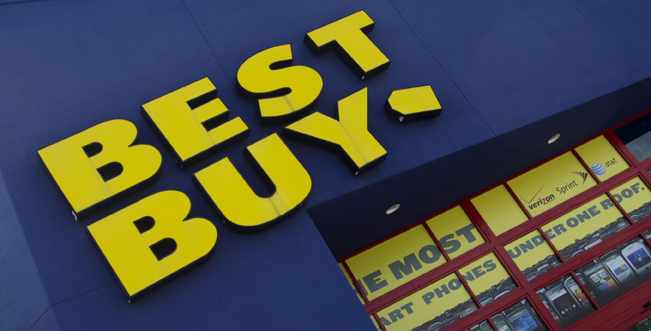
BEST BUY

The Best Buy logo is displayed on a store in Miami, Fla. Best Buy says fiscal second-quarter net income rose 60 percent as shoppers bought cell phones, appliances and tablet computers. (AP Photo/J Pat Carter) (Credit: J Pat Carter)

First, it was the new $200 printer — within hours of being extracted from its bubble-wrap womb, the contraption started making an awful wheezing sound.

Then it was the $10 stopwatch we bought to time my wife’s labor contractions — the moment it was torn out of its blister package, its digital screen flamed out.

Then it was our 3-year-old $500 television — the fuzzy lines started during late-night “Seinfeld” reruns and haven’t stopped.

And finally, it was the $25 lamp for my e-book reader — the light looked so useful … until it started emitting a hideous blue tint.

Welcome to my most recent teeth-clenching weekend spent in return lines at discount electronics stores — a weekend no doubt typical in what journalist Ellen Ruppel Shell calls the current age of “Cheap.” In her new book by that name, she argues that our economy has been reorganized around goods that sacrifice craftsmanship on the altar of low price.

Weekends like mine prove her point — and they represent a relatively new economic phenomenon. Whereas Great Depression America valued well-made utilitarian products and understood the inherent danger of bargain culture, Great Recession America prioritizes discounts at the expense of everything else.

Continue Reading
David Sirota

David Sirota is a best-selling author of the new book "Back to Our Future: How the 1980s Explain the World We Live In Now." He hosts the morning show on AM760 in Colorado. E-mail him at ds@davidsirota.com, follow him on Twitter @davidsirota or visit his website at www.davidsirota.com.  More David Sirota

Wednesday, Feb 8, 2012 8:00 PM UTC2012-02-08T20:00:00Zl, M j, Y g:i A T

Ellen stands up to One Million Moms

A conservative group calls for her removal from a JC Penney campaign, but the host responds with humor and heart

VIDEO
Ellen DeGeneres

Ellen DeGeneres

The conservative Christian group One Million Moms is angry. Angry like just-missed-an-awesome-sale angry. Sure, the down-home-sounding offshoot of the reliably right-wing American Family Association exists in a perpetual state of twisted knickers. It’s whipped itself into a frenzy of indignation at the not-quite-exclusionary-enough tactics of Macy’s, Levi’s, Jenny Craig and Oreos in just the past few months. But its outrage at JC Penney, the jeans supplier to at least 800,000 of those million moms, is especially intense of late.

Continue Reading
Mary Elizabeth Williams

Mary Elizabeth Williams is a staff writer for Salon and the author of "Gimme Shelter: My Three Years Searching for the American Dream." Follow her on Twitter: @embeedubMore Mary Elizabeth Williams

Tuesday, Feb 7, 2012 4:30 PM UTC2012-02-07T16:30:00Zl, M j, Y g:i A T

How the vultures took Jason Wu for Target

Target's new line by the beloved designer brought out bloody instincts in consumers. And I was there to witness it

wu_models

If you thought the End of Days was going to resemble a Chevy ad, you must not have been near a Target on Sunday. September’s Missonigeddon might have been intense, but it turned out to be small taters compared to the Jason Wupocalypse. This is how civilization ends. Not with a nuclear missile strike but with a run on kitty cat-festooned tote bags.

Continue Reading
Mary Elizabeth Williams

Mary Elizabeth Williams is a staff writer for Salon and the author of "Gimme Shelter: My Three Years Searching for the American Dream." Follow her on Twitter: @embeedubMore Mary Elizabeth Williams

Friday, Dec 2, 2011 9:24 PM UTC2011-12-02T21:24:00Zl, M j, Y g:i A T

Why Coke’s new can infuriated the Internet

Regular Coke in a white can? Someone forgot the lesson of New Coke -- don't mess with our soda

Coca-Cola

The misleading package has long been a go-to marketing move for off-brands. Who among us has not inadvertently picked up a bottle of John Adams beer in her time, or a big box of Special J cereal? Usually, it’s a clever – and quite deliberate — exploitation of our expectations. Corporations know that it’s the design that sells, that our eyes beeline for the familiar. But what happens when the original messes with our heads? Customers know that a green circle means Starbucks coffee, the golden arches mean McDonald’s. A red can is a Coke. Well, not so fast…

Continue Reading
Mary Elizabeth Williams

Mary Elizabeth Williams is a staff writer for Salon and the author of "Gimme Shelter: My Three Years Searching for the American Dream." Follow her on Twitter: @embeedubMore Mary Elizabeth Williams

Thursday, Dec 1, 2011 1:00 AM UTC2011-12-01T01:00:00Zl, M j, Y g:i A T

The argument against thrift

During economic hardship, we need to save less and spend more -- and rethink our relationship to consumer culture

thrift

 (Credit: Ye via Shutterstock)

This article was adapted from the new book "Against Thrift", from Basic Books.

We’re the most affluent people on the planet, us Americans — our choices among foods, ideas, clothes, schools, and destinations are almost without limit — and we love to shop. But we also know that consumer culture is bad for us. How come? In a word: excess. We’re afraid that we consume too many resources, that we save too little of our incomes, and that meanwhile we produce almost nothing of real value. We’re afraid that we can’t observe any limits on our consumption of goods, so that every substance, even food, begins to feel addictive, and every urge, even sex, begins to feel compulsive. When armed with credit cards, it seems, we’re unwilling to defer the immediate gratification of our desires, and we’re thus unable to “save for a rainy day.” We’re also afraid that we’re mere cattle — herded by corporations and “branded” by their admen. We’re especially afraid that consumer culture is making us fat.

Continue Reading

James Livingston is a professor of history at Rutgers University -- New Brunswick, where he has taught since 1990 on American economic, cultural and intellectual theory. He has received fellowships from the Smithsonian Institution, the Fulbright Foundation, and the Cullman Center for Scholars and Writers at the New York Public Library. He is the author of four previous books and is a regular contributor to the History News Network. He lives in New York City.   More James Livingston

Friday, Nov 18, 2011 4:00 PM UTC2011-11-18T16:00:00Zl, M j, Y g:i A T

The new age of consumer activism

Our understandable rage at corporations is behind customer-driven like Bank Transfer Day

Occupy Oakland protesters stand outside of a Wells Fargo bank in Oakland

Occupy Oakland protesters stand outside of a Wells Fargo bank in Oakland, Calif., Weds., Nov. 2, 2011.  (Credit: AP/Paul Sakuma)

Topics:

As we all know, America is angry. Really angry. To put it in pop culture terms, we’ve moved from the vaguely inspiring agita of Peter Finch in “Network” to the wild-eyed, primal-scream rage of Sam Kinison in “Back to School.”

When we pay attention to politics, we get peeved at Congress and the presidential candidates. When we tune into sports, we’re annoyed with squabbling players and owners. When we turn on the news, we fume at the smug pundits. And when it comes to the economy, we’re in a tizzy at big corporations.

Continue Reading
David Sirota

David Sirota is a best-selling author of the new book "Back to Our Future: How the 1980s Explain the World We Live In Now." He hosts the morning show on AM760 in Colorado. E-mail him at ds@davidsirota.com, follow him on Twitter @davidsirota or visit his website at www.davidsirota.com.  More David Sirota

Page 1 of 13 in Consumerism

Other News